Category
Manufacturer
Model
Premier
Premier is recognized for its extensive range of manufacturing equipment, serving multiple industries including food, pharmaceuticals, and consumer goods. Their machines are known for reliability and innovation in production processes.
FAQ:
What types of Premier manufacturing equipment are typically available on the used market?
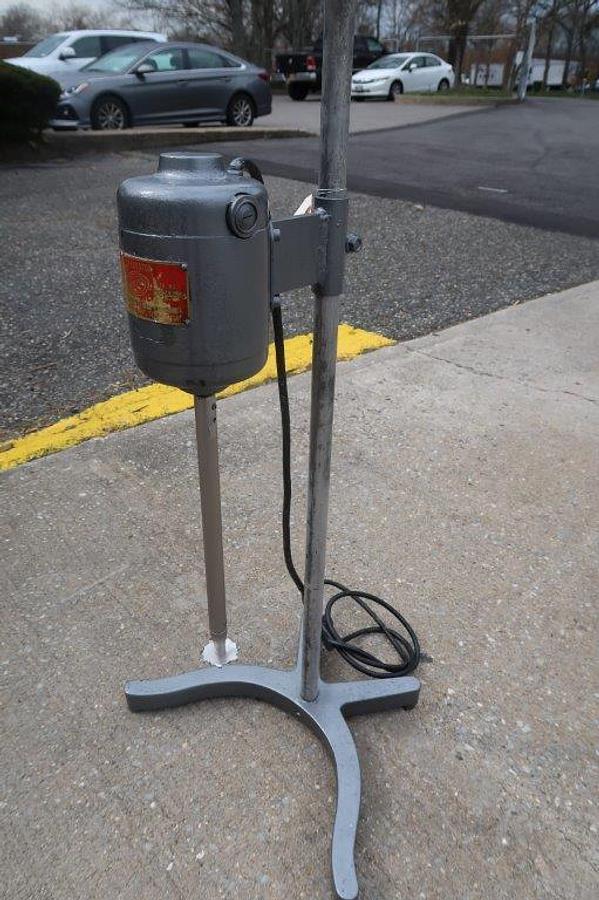
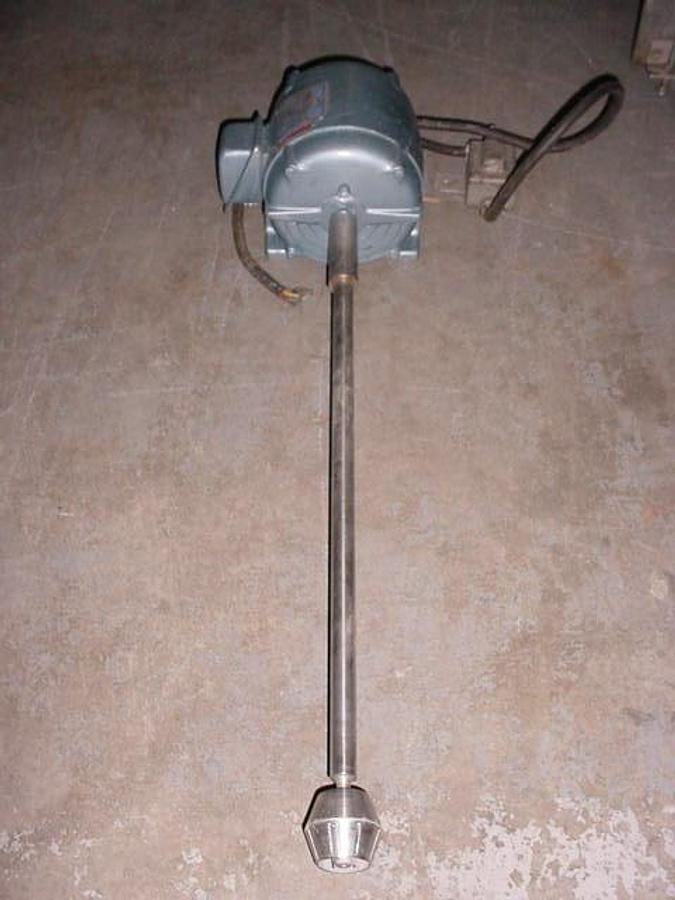
Premier has built a reputation across several industries for producing mixing, milling, and dispersion equipment that holds up well over years of production use. On the used market, buyers commonly find Premier dispersers and dissolvers, dispersion mixers, colloid mills, and supermills such as the QM-10 QMAX Navigator series. These machines serve food processing, pharmaceutical manufacturing, cosmetics, coatings, and consumer goods production, among other industries. Premier's range spans from smaller lab-scale units, like single-phase high-speed dispersers, to higher-horsepower production machines capable of handling demanding continuous-run applications.
Because Premier equipment is built for industrial durability, used units often retain strong mechanical integrity even after years of service, which makes them a practical choice for buyers looking to expand capacity or replace aging equipment without the lead times associated with sourcing a machine through a distributor. Availability on the used market fluctuates based on facility closures, production line changes, and equipment upgrades, so buyers with a specific model in mind should monitor reputable used equipment dealers who specialize in process and manufacturing machinery.
What should buyers know about purchasing used manufacturing equipment versus sourcing it through a distributor?
Buying used manufacturing equipment offers meaningful cost advantages, but it requires a different level of due diligence than purchasing through a distributor. The most significant difference is that used equipment is sold as-is, meaning there is no manufacturer-backed coverage and the buyer assumes responsibility for verifying the machine's condition before purchase. This puts a premium on selecting dealers with a long track record in the specific equipment category, since their expertise in evaluating machine condition is a direct proxy for buyer protection. Dealers who specialize in process equipment, for example, will know what wear patterns to look for on a colloid mill or disperser that a general reseller might miss.
The financial case for used equipment can be compelling. A used Premier supermill or high-speed disperser can often be sourced at a fraction of the cost of a comparable machine ordered through a distributor, with the added benefit of immediate or near-term availability rather than extended manufacturing lead times. Buyers should factor in the full landed cost, including freight, rigging, and any refurbishment or parts replacement needed after inspection, to get an accurate picture of total acquisition cost. For regulated industries like pharmaceuticals or food processing, buyers should also confirm that the machine's documentation and compliance history are sufficient for their facility's qualification requirements.
How can buyers verify the condition of used Premier equipment before purchasing?
Inspection is the most important step in any used equipment purchase, and reputable dealers will offer multiple options to accommodate buyers who cannot travel to the machine's location. In-person inspections are the most thorough approach, allowing a buyer or their technician to physically examine wear components, check seals and gaskets, review the electrical panel, and assess the overall mechanical condition of the machine. Some equipment may still be installed and running at a production facility, in which case the dealer can often arrange a live inspection at the plant, giving buyers a chance to observe the machine under operating conditions.
For buyers who cannot visit in person, video inspections and detailed photo documentation are widely offered. A thorough video walkthrough should cover the machine's exterior condition, any visible wear or repairs, the control panel, motor nameplate data, and any available service history. Buyers should ask specific questions during a video inspection rather than relying solely on the dealer's walkthrough. One important caveat: most used equipment dealers do not have the permitting or infrastructure to run full production trials, so functional testing is generally limited to verifying that motors turn, controls respond, and mechanical assemblies move freely. Buyers with strict performance requirements should factor this into their pre-purchase evaluation and, where possible, consult with a third-party equipment specialist.
What certifications and compliance documentation should buyers request for used manufacturing equipment?
For buyers in regulated industries such as pharmaceuticals, food processing, or medical device manufacturing, documentation is as important as the physical condition of the machine. Relevant certifications can include CE marking for equipment intended for use in European markets, FDA-compliant material certifications for food-contact surfaces, and documentation confirming that stainless steel components meet the grades specified for sanitary applications. Some facilities also require Installation Qualification and Operational Qualification documentation as part of their validation processes, and having the original equipment documentation can significantly reduce the time and cost of that work.
Buyers should ask the dealer for any available records including the original equipment manual, wiring diagrams, prior maintenance logs, and any compliance certificates that shipped with the machine. It is worth noting that documentation completeness varies widely on the used market, and older machines may have limited records available. In those cases, buyers can sometimes obtain technical documentation directly from the manufacturer, though the level of support a manufacturer provides for older models will depend on the machine's age and whether that model is still in their current product line. Consulting with the manufacturer before purchase is a practical step to gauge what ongoing support, parts availability, and documentation can be expected.
What does a Premier colloid mill do, and what industries use it?
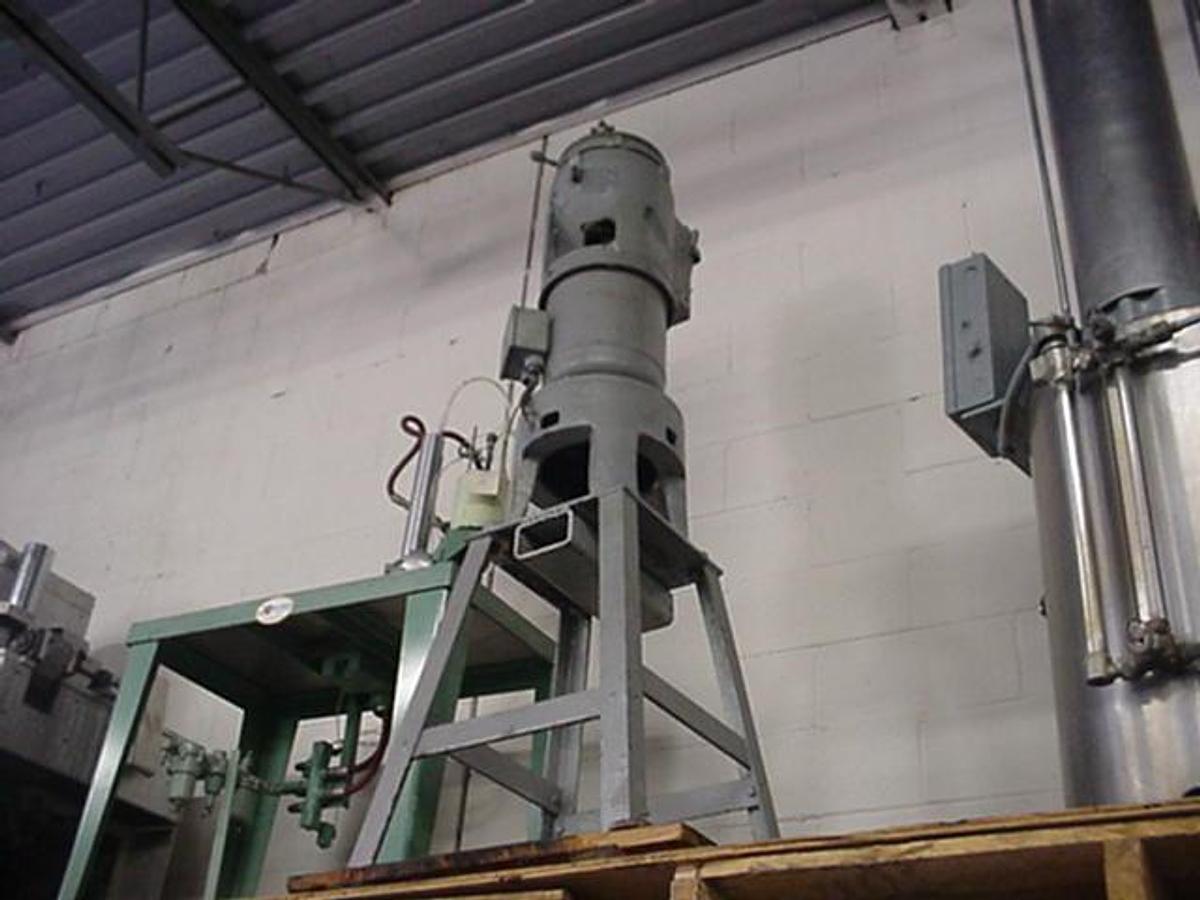
A colloid mill is a size-reduction and dispersion machine that processes materials by passing them through a narrow gap between a high-speed rotor and a stationary stator. The intense shear forces generated in that gap break down particles, reduce droplet size, and create stable emulsions or fine dispersions. Premier colloid mills, such as the 6-inch models that appear on the used market, are designed for continuous processing of viscous or semi-viscous materials and are capable of producing very fine particle distributions in a single pass. The gap between the rotor and stator is typically adjustable, which allows operators to tune the output to specific particle size targets.
The industries that rely on colloid mills are broad but tend to cluster around applications requiring fine emulsification or homogenization. Food manufacturers use them for products like nut butters, mustard, mayonnaise, and fruit preparations. Pharmaceutical producers use colloid mills to create stable suspensions and emulsions for oral or topical formulations. Cosmetics and personal care manufacturers process creams, lotions, and serums on this type of equipment. Chemical and coatings producers also use colloid mills for pigment dispersion and adhesive processing. Because of this cross-industry utility, a used Premier colloid mill in good condition can be adapted to a range of production environments with relatively minor changeover.
What is a supermill, and how does the Premier QM-10 QMAX Navigator fit into a production process?
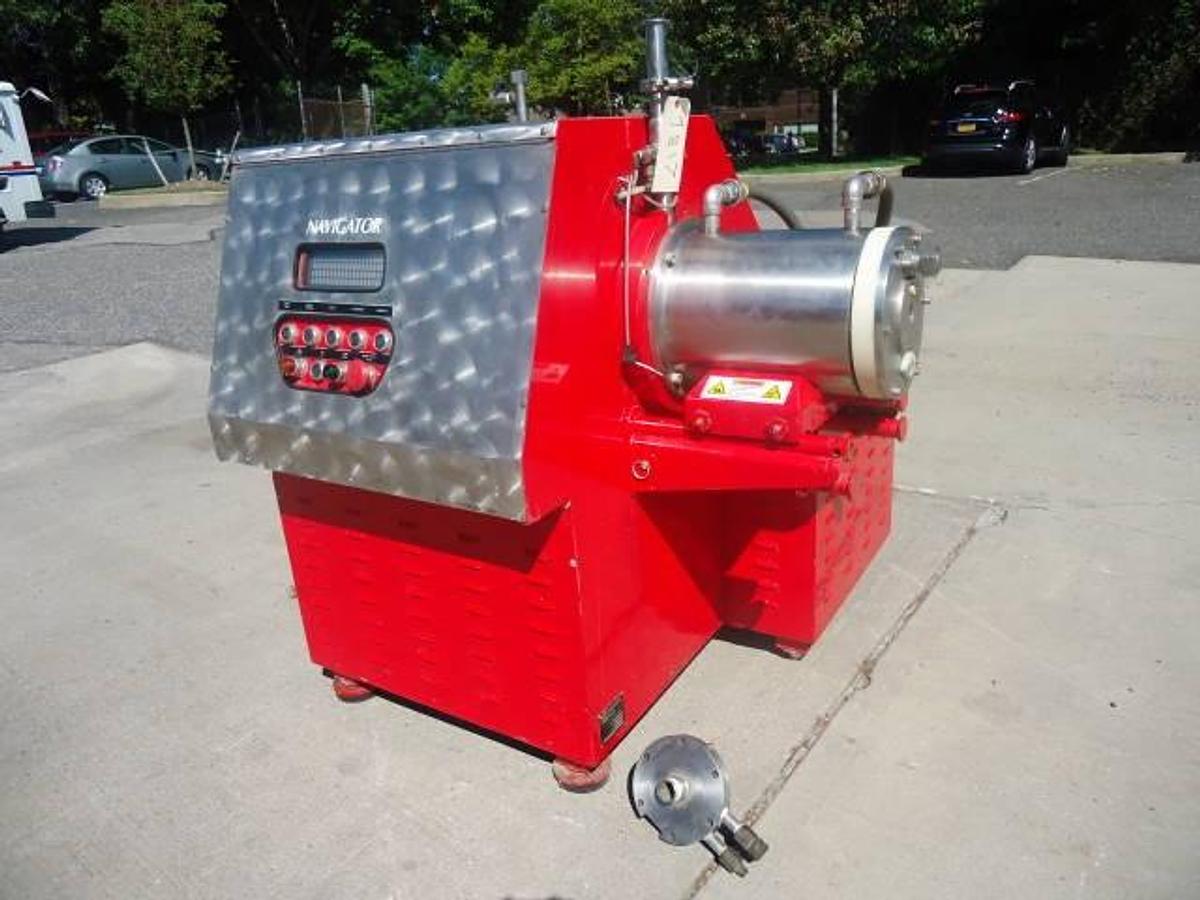
A supermill is a horizontal bead mill used to grind and disperse solid particles suspended in a liquid medium down to very fine particle sizes, often in the micron or sub-micron range. The process works by pumping a product slurry through a grinding chamber filled with small grinding media, typically ceramic or steel beads. As the media agitates at high speed, it imparts intense mechanical energy to the particles, breaking them down through impact and shear. Supermills are used when dispersers or colloid mills alone cannot achieve the particle fineness required for the end product.
The Premier QM-10 QMAX Navigator is a production-scale supermill equipped with a 50-horsepower motor, which positions it for high-throughput applications rather than lab or pilot-scale work. It is used in industries including inks, coatings, pigments, pharmaceuticals, and advanced materials where tight particle size distribution is critical to product performance. In a typical production line, the supermill operates downstream of a pre-mix or dispersion stage, receiving a pre-wetted slurry and refining it to the target fineness. Buyers evaluating a used QM-10 should pay particular attention to the condition of the grinding chamber, mechanical seal, and drive components, as these are the highest-wear areas on a horizontal bead mill.
What factors most affect the price of used Premier manufacturing equipment?
Several variables drive pricing on used Premier equipment, and understanding them helps buyers evaluate whether a listed price represents fair market value. Machine age and hours of use are obvious starting points, but condition relative to age matters more than age alone. A well-maintained disperser or mill that has been regularly serviced and stored properly will command a higher price than a comparable unit that has been run hard with deferred maintenance. The availability of replacement parts for a given model also affects value, since buyers will factor in the cost and difficulty of sourcing wear components when making a purchase decision.
Configuration and included accessories can move the price considerably. A supermill listed with its original control panel, documentation, and spare parts inventory is worth more than the same machine stripped of ancillary components. Market demand at the time of sale plays a role as well. When a particular industry is expanding capacity, demand for specific machine types rises and prices follow. Buyers who are flexible on timing and can monitor the market over several months often find better pricing than those with an urgent need. Total landed cost should always be the comparison benchmark, not just the asking price, since freight, rigging, and any required refurbishment can add meaningfully to the final acquisition cost.
What are typical shipping and freight considerations when buying used manufacturing equipment?
Shipping heavy manufacturing equipment is more involved than standard freight, and buyers should get a clear picture of all associated costs before committing to a purchase. The first consideration is packaging. Proper palletization or custom crating is essential to prevent damage in transit, and the level of packaging required depends on the machine's size, weight, and fragility. Dealers will typically quote packaging costs separately, and buyers should ask specifically what level of protection is included in the base price versus what will be billed as an add-on.
For larger machines like production-scale supermills or industrial dispersers, rigging is a separate cost that covers the labor and equipment needed to safely lift, move, and load the machine onto a truck or container. Rigging costs vary based on machine weight, the complexity of the move within the facility, and whether specialized lifting equipment is required. On the receiving end, buyers need to confirm that their facility has the equipment and clearances to unload and position the machine. Freight rates themselves fluctuate based on distance, carrier availability, and whether the shipment moves via flatbed, enclosed trailer, or container. Buyers should request a fully itemized landed cost estimate from the dealer that covers packaging, rigging, freight, and any applicable fuel surcharges or liftgate fees before finalizing the purchase.
What payment terms do used equipment dealers typically require?
The standard practice among used equipment dealers is to require full payment before a machine is released for shipping. This applies to the large majority of transactions, particularly for buyers purchasing from a dealer for the first time. The rationale is straightforward: once a machine leaves the dealer's facility, recourse for non-payment becomes significantly more complicated, and the nature of used equipment sales means there is no financing infrastructure built into the transaction the way there might be with a capital equipment distributor.
Some dealers extend payment terms to established repeat customers with a documented purchase history, but this is the exception rather than the rule and is generally negotiated on a case-by-case basis. Buyers who need financing for larger equipment purchases may want to explore third-party equipment financing options independently before approaching a dealer, as having financing in place simplifies and accelerates the transaction. Wire transfer is the most common payment method for used equipment purchases of significant value. Buyers should also clarify the dealer's policy on deposits when a machine is being held pending inspection or financing approval, as deposit terms and refundability vary by dealer.
How should buyers assess parts availability and long-term serviceability for used Premier equipment?
Parts availability is one of the most practical factors to evaluate before purchasing any used manufacturing equipment, and it deserves as much attention as the machine's current condition. The starting point is to contact Premier's manufacturer support team directly and ask about parts availability for the specific model and serial number being considered. Manufacturers will generally be straightforward about which models are still supported, which have limited parts availability, and which are effectively outside their current support scope. This conversation also gives buyers a sense of what technical support they can expect if they encounter issues after the machine is in production.
Beyond the manufacturer, buyers should consider the broader parts ecosystem for the machine type. High-wear components on dispersers and mills, such as seals, bearings, impeller blades, and grinding media, are often available through industrial supply channels independent of the original manufacturer, which reduces risk for older models. Buyers with in-house maintenance teams may be comfortable taking on a machine with limited manufacturer support if the mechanical design is straightforward and common components are readily available. Buyers who rely on outside service technicians should verify that qualified technicians familiar with the equipment type are accessible in their region before purchase, since specialized equipment can be difficult to service if local expertise is limited.