Category
Manufacturer
Model
FAQ:
What is a Pitco Mastermatic fryer and what makes it different from standard commercial fryers?
The Pitco Mastermatic is a commercial fryer line produced by Pitco Frialator, a brand with over a century of experience in commercial frying equipment. What sets the Mastermatic apart from standard commercial fryers is its built-in automatic oil filtration system. Most commercial fryers require staff to manually drain, filter, and refill oil, which is time-consuming and carries a burn risk. The Mastermatic handles this process automatically on a programmable schedule, which is a significant operational advantage in high-volume kitchen environments.
Beyond the filtration system, Pitco Mastermatic fryers are built for demanding foodservice applications. They are commonly found in restaurants, cafeterias, institutional kitchens, and catering operations where consistent output and oil quality matter. The combination of heavy-duty construction, high BTU output, and automated oil management makes the Mastermatic a step above entry-level commercial fryers. For operations that fry large volumes daily, the difference in oil longevity and labor savings can be substantial over time.
How does the automatic oil filtration system work on a Pitco Mastermatic fryer?
The automatic filtration system on Pitco Mastermatic fryers works by cycling oil from the fry tank through a filtration unit that removes food particles and carbonized debris, then returning the cleaned oil back to the tank. This process can be set on a programmable schedule, meaning it runs at regular intervals without requiring an operator to manually drain the fryer. The result is that oil stays cleaner longer, which directly affects the quality and consistency of fried food coming out of the unit.
The practical benefit is twofold. First, cleaner oil produces better-tasting food, since degraded oil imparts off-flavors. Second, the extended oil life reduces how frequently oil needs to be replaced. Studies and operator reports in the foodservice industry consistently show that proper filtration can extend oil life by 50% or more compared to fryers without filtration. That translates to measurable cost savings in oil purchasing, plus reduced labor time since staff are not manually filtering multiple times per shift. The reduced need to handle hot oil also lowers the risk of burn injuries in the kitchen.
What fuel types do Pitco Mastermatic fryers use?
Pitco Mastermatic fryers are available in gas configurations, running on either natural gas or propane depending on the specific model and how it was originally set up. Gas-fired models are by far the most common in commercial foodservice settings because they heat oil quickly and maintain temperature recovery efficiently during heavy use. BTU output on Mastermatic models typically ranges from around 90,000 to 150,000 BTUs depending on the model size, which gives these fryers the power needed to handle continuous high-volume frying without significant temperature drops between loads.
When purchasing a used Pitco Mastermatic, it is important to confirm which gas type the unit is configured for, since natural gas and propane require different orifices and regulators. Converting a unit from one gas type to the other is possible but requires the proper conversion kit and should be done by a qualified technician. Buyers should ask the seller to confirm the fuel configuration before purchasing to avoid compatibility issues with their facility's gas supply.
What oil capacity do Pitco Mastermatic fryers have, and how does that affect operating costs?
Pitco Mastermatic fryers generally hold between 40 and 80 pounds of oil depending on the model. This range makes them well-suited for medium to high-volume operations. A larger oil capacity means more thermal mass in the fry tank, which helps the fryer recover temperature faster after a cold load of food is dropped in. Faster temperature recovery means more consistent frying results and higher throughput during peak service periods.
From an operating cost standpoint, oil capacity matters because more oil means a higher upfront fill cost each time oil is changed. However, the Mastermatic's automatic filtration system offsets this by extending the usable life of each oil fill. An operation that might change oil every two or three days in a standard fryer could potentially stretch that to five or six days with regular automatic filtration, which adds up to significant savings over the course of a year. Buyers evaluating used Mastermatic units should factor in the oil capacity alongside their expected daily frying volume to determine which model size fits their operation.
What sizes and models of used Pitco Mastermatic fryers are typically available on the market?
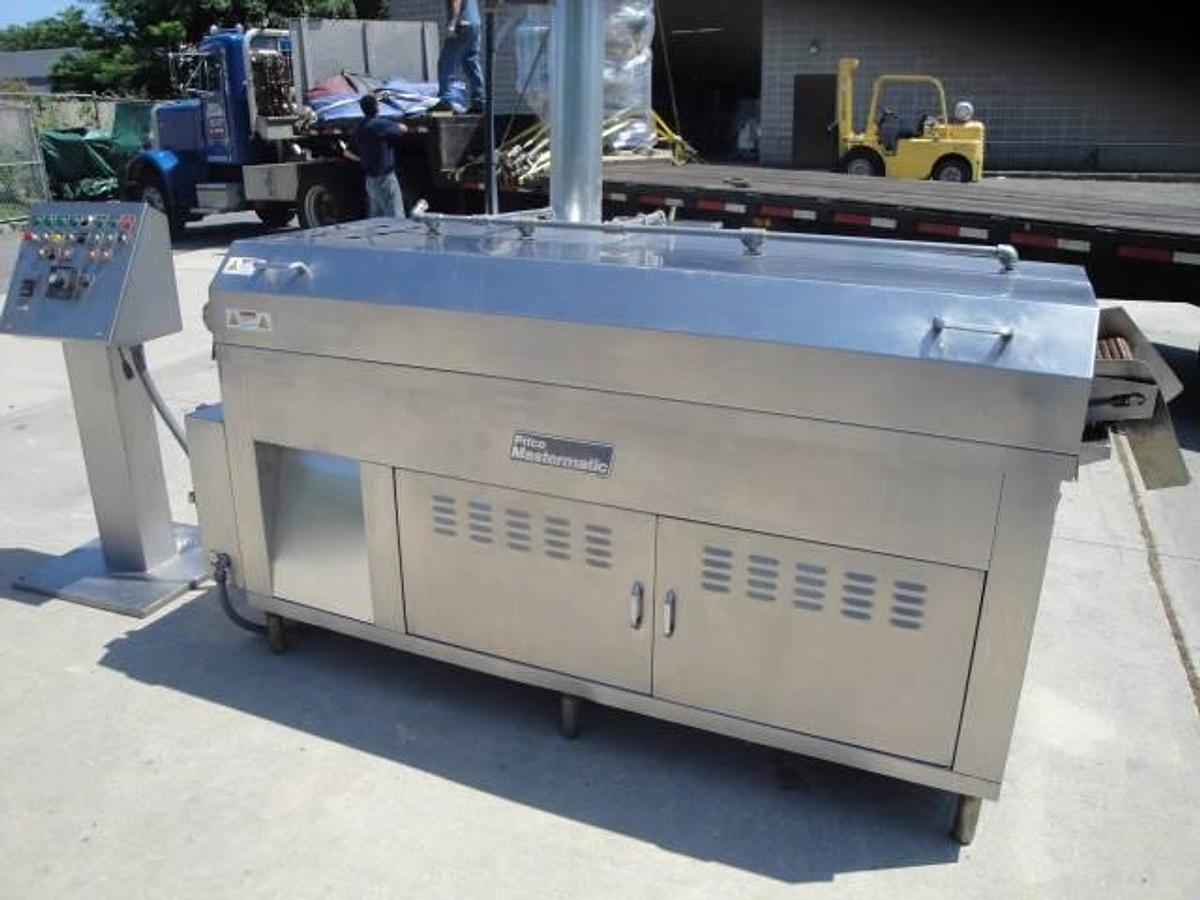
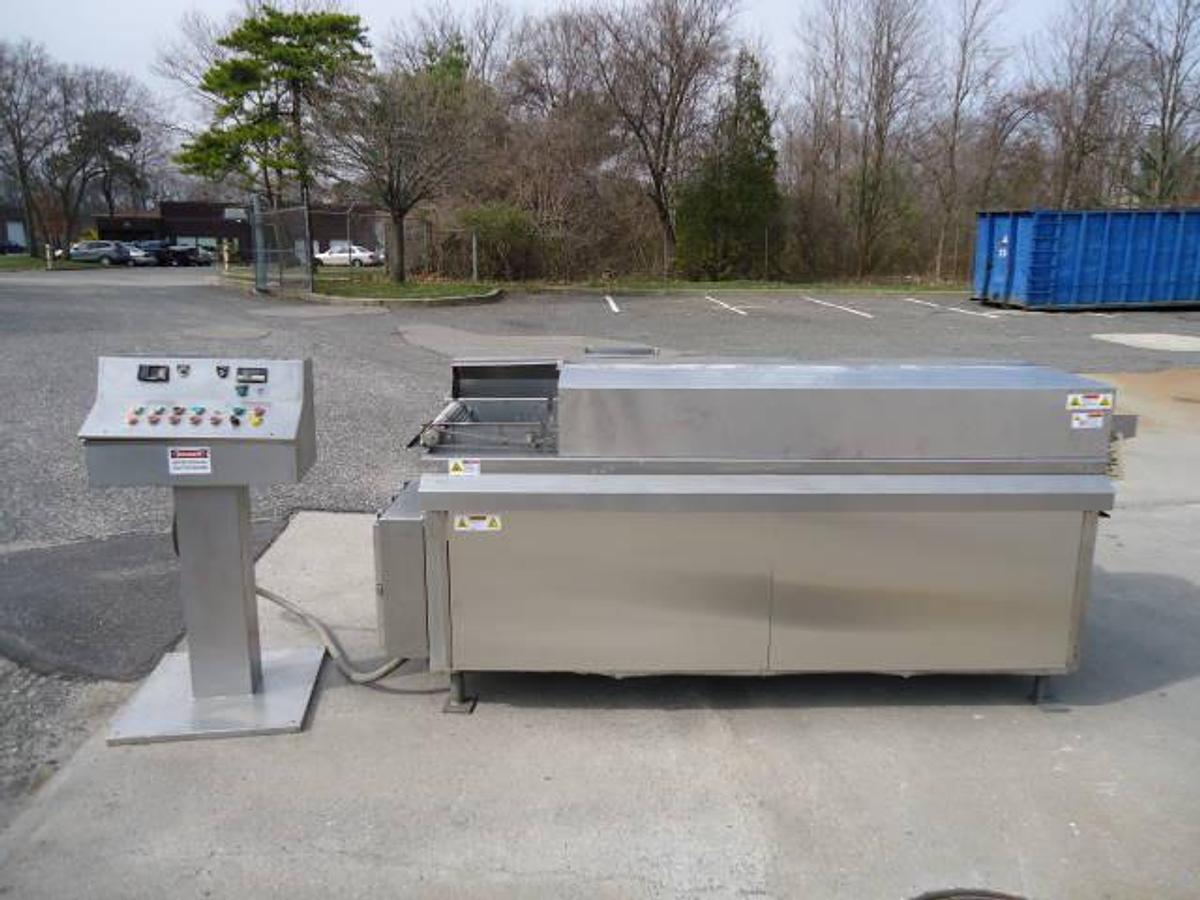
The Pitco Mastermatic line includes several models designed for different production levels. One of the more commonly seen models in the used equipment market is the SF400, which is a continuous belt gas fryer. Continuous belt fryers differ from standard drop basket fryers in that product moves through the oil on a conveyor belt, making them ideal for high-volume, consistent-output applications like snack food production, large cafeterias, or food processing operations. The SF400 is a stainless steel, gas-fired unit built for heavy-duty use.
Beyond the SF400, Pitco produced various Mastermatic configurations over the years, including floor model fryers with different tank sizes and filtration setups. Availability in the used market depends on what has come off the production floor at any given time, so the selection changes regularly. Buyers looking for a specific model or capacity should work with a used equipment dealer that specializes in commercial foodservice machinery, as they are most likely to source the right configuration and can provide accurate details on the condition and specifications of each unit.
What should buyers expect when purchasing a used Pitco Mastermatic fryer?
Buying a used Pitco Mastermatic fryer means purchasing the equipment in its current condition, as is. Unlike buying from a manufacturer, used equipment is sold without the backing of a factory warranty. This puts the responsibility of evaluating the machine's condition squarely on the buyer. Reputable used equipment dealers will typically offer inspection options, either in person at their facility, through a live video call, or by providing detailed video footage of the machine. Buyers should take advantage of these inspection opportunities and look closely at the condition of the fry tank, burner assemblies, filtration components, and stainless steel surfaces.
It is also worth contacting Pitco directly before purchasing to ask about parts availability and service support for the specific model being considered. Older models may have limited parts availability, which can affect the long-term serviceability of the unit. Selecting a dealer with a long track record in commercial foodservice equipment is important, since experienced dealers are more likely to accurately represent the condition of a machine and have the knowledge to answer technical questions. Taking the time to do this due diligence upfront significantly reduces the risk of unexpected repair costs after purchase.
Are Pitco Mastermatic fryers NSF certified and compliant with commercial kitchen health codes?
Pitco Mastermatic fryers were built to meet NSF International standards, which is the certification most commonly required by health departments for commercial foodservice equipment in the United States. NSF certification indicates that a piece of equipment meets specific standards for food safety, cleanability, and materials used in construction. For commercial kitchen operators, having NSF-listed equipment is typically a requirement to pass health inspections and maintain operating permits.
For used equipment, the NSF listing applies to the original design and construction of the model, not to its current condition. A used fryer that has been well-maintained and is structurally intact retains its compliance with the design standards it was built to. However, if components have been altered, improperly repaired, or are significantly damaged, a health inspector may flag the unit. Buyers should inspect used Mastermatic fryers carefully for any modifications or damage to food-contact surfaces and verify with their local health authority whether any additional documentation is required for used equipment installations.
How is a used Pitco Mastermatic fryer typically shipped, and what should buyers know about freight costs?
Pitco Mastermatic fryers are large, heavy pieces of commercial equipment, and shipping them requires careful planning. Used equipment dealers will typically palletize or crate the fryer to protect it during transit. The level of packaging required, whether a standard pallet, a built wooden crate, or a custom skid, affects the shipping cost. Buyers should ask the dealer specifically how the unit will be packaged and what that packaging cost includes before finalizing a purchase.
For larger or heavier Mastermatic models, loading and unloading may require rigging equipment such as a forklift or liftgate truck. These services come with additional costs that are not always included in a basic freight quote. Buyers should request a full landed cost breakdown from the dealer, covering packaging, rigging, freight, and any liftgate fees, so there are no surprises when the unit arrives. It is also worth confirming what the delivery point will be, since some freight carriers will only deliver to a loading dock, while others can arrange inside delivery for an added fee.
What payment terms do used equipment dealers typically offer for Pitco Mastermatic fryers?
Most used equipment dealers require full payment before a machine is shipped. This is standard practice in the used machinery industry and applies to commercial fryers like the Pitco Mastermatic. The reasoning is straightforward: once a large piece of equipment leaves the dealer's facility, it is difficult to recover if payment falls through. Buyers should be prepared to pay in full at the time of purchase or shortly before the unit ships.
Some dealers may extend payment terms to repeat customers or established buyers with a history of transactions, but this is not the norm for first-time purchases. Acceptable payment methods vary by dealer but commonly include wire transfer, ACH, or certified funds. Credit card payments may be accepted but sometimes carry a processing fee. Buyers should clarify payment expectations early in the purchasing process to avoid delays, especially if they need to arrange financing or internal approval before committing to a purchase.
What types of commercial operations benefit most from a Pitco Mastermatic continuous belt fryer like the SF400?
The Pitco Mastermatic SF400 is a continuous belt gas fryer, which means it is designed for operations that need to fry large, consistent quantities of product without stopping to load and unload baskets. Rather than batch frying, product moves through the oil on a conveyor belt at a controlled speed, emerging fully cooked on the other side. This makes it particularly well-suited for high-throughput environments like snack food manufacturers, large institutional cafeterias, contract food processors, and commissary kitchens that supply multiple locations.
Continuous belt fryers are also used in theme parks, stadiums, and other high-volume venues where the same product, such as french fries, onion rings, or battered items, needs to be produced in large quantities with minimal labor. The automation of the cooking process reduces the need for skilled fryer operators and produces more consistent results than hand-loaded basket fryers. For a buyer evaluating a used SF400, the key questions are whether the belt drive mechanism is functioning properly, whether the oil filtration system is intact, and whether the burner system is in good working order, all of which should be addressed during the inspection process.