Category
Manufacturer
Model
FAQ:
What sizes and capacities are available for used Permasan stainless steel tanks?
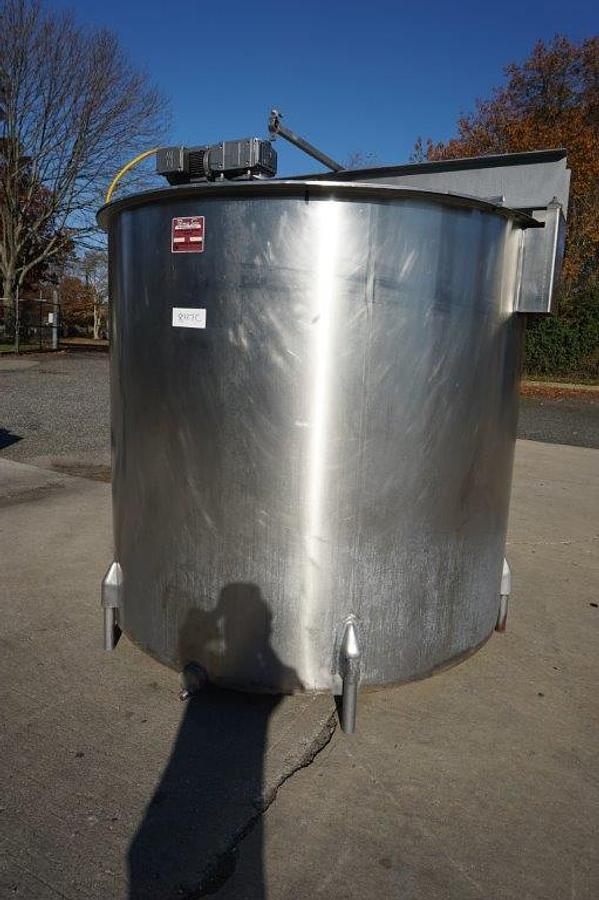
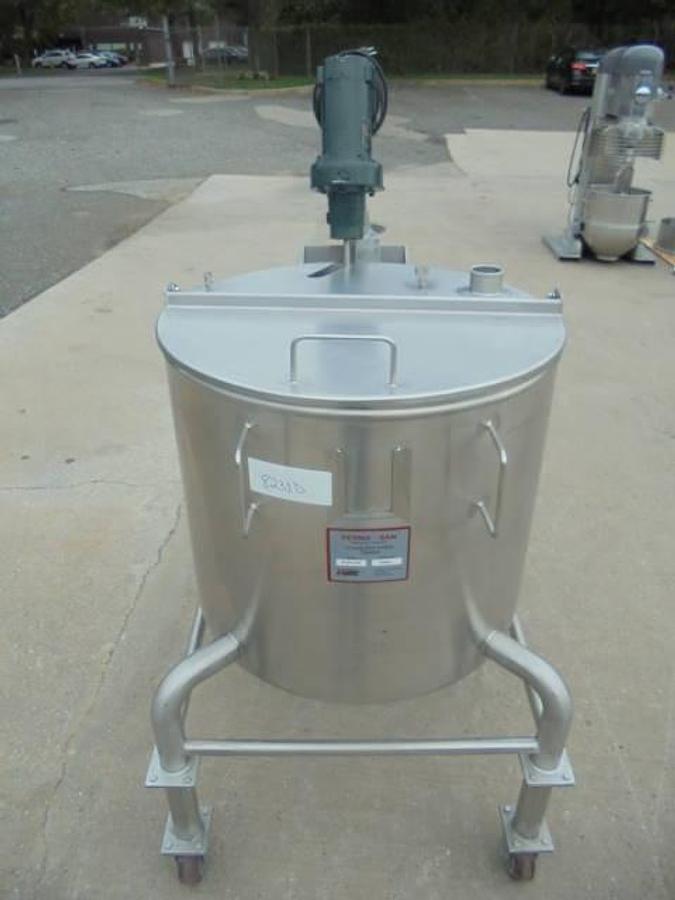
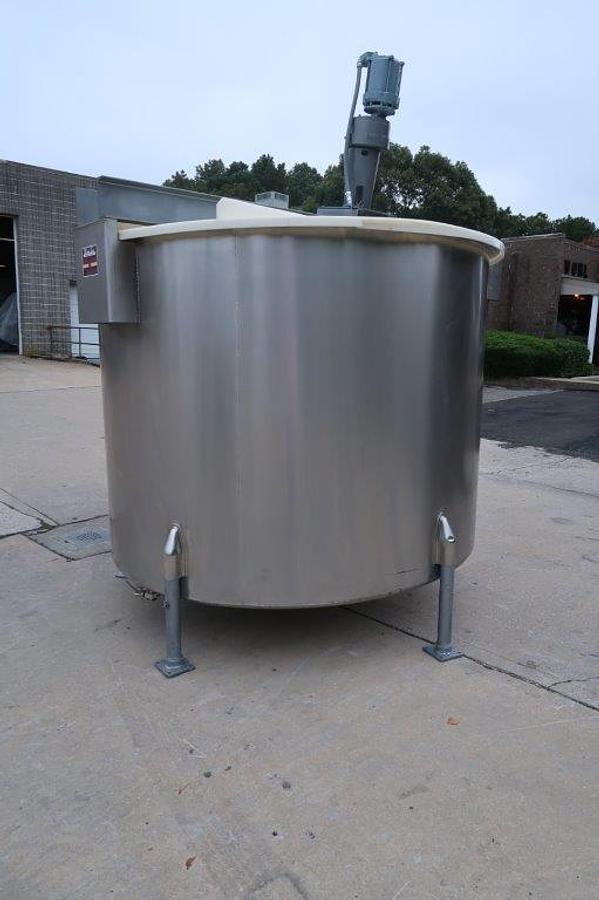
Used Permasan stainless steel tanks appear on the market across a wide range of capacities, making them suitable for everything from small-batch production to mid-scale industrial processing. Listings commonly include units in the 86-gallon range for portable sanitary applications, 100-gallon jacketed kettles for heated processing, 308-gallon mix tanks, 500-gallon scraper kettles, and larger vertical mix tanks in the 1,100 to 1,360-gallon range. This spread gives buyers meaningful flexibility depending on their production volume and floor space constraints.
When shopping for a used Permasan tank, capacity alone should not drive the decision. The tank's configuration matters just as much. A 500-gallon jacketed scraper kettle serves a very different purpose than a 500-gallon open-top mix tank, even though the volume is identical. Buyers should review the full specifications of each listing, including agitator type, jacket design, outlet sizing, and whether the unit is portable or fixed, to make sure the tank matches their actual process requirements.
What is the difference between 304 and 316 stainless steel in Permasan tanks, and which should I choose?
The distinction between 304 and 316 stainless steel comes down primarily to corrosion resistance and chemical compatibility. Both grades are austenitic stainless steels with a smooth, non-porous surface well suited to sanitary applications, but 316 stainless contains molybdenum, which gives it significantly better resistance to chlorides, acids, and aggressive cleaning agents. For that reason, 316 and 316L are the preferred grades in pharmaceutical manufacturing, chemical processing, and marine environments where chloride exposure is a concern. Some Permasan tanks, including certain jacketed scraper kettles, are specifically listed as 316SS, which is a meaningful spec for buyers in those industries.
For food and beverage applications that do not involve highly acidic or chloride-heavy products, 304 stainless is often perfectly adequate and tends to be more common in general-purpose mix tanks. When evaluating a used Permasan tank, the grade of stainless should be confirmed directly from the listing specifications or through the dealer, since the material grade affects not only corrosion performance but also compatibility with certain sanitizing chemicals used during CIP (clean-in-place) cycles. If the listing does not clearly state the grade, that is a question worth asking before purchase.
Are used Permasan stainless steel tanks food grade and suitable for sanitary applications?
Permasan has a long-standing reputation as a manufacturer of sanitary processing equipment, and their tanks are widely used in food, beverage, dairy, and pharmaceutical production. The construction typically features smooth interior welds, polished contact surfaces, and sanitary fittings designed to meet the hygiene standards required in regulated processing environments. Some Permasan units are built to 3-A Sanitary Standards, which is a key certification for dairy and food-grade applications, though buyers should verify the certification status of any specific used unit rather than assuming it applies universally across all models.
With used equipment, the sanitary condition of the tank at the time of purchase depends heavily on how it was maintained and cleaned during its service life. Buyers should request detailed photos of the interior surface, welds, and fittings, and if possible, arrange an in-person or video inspection to assess the condition of the contact surfaces. Surface pitting, weld defects, or damaged gaskets can compromise sanitary integrity, so a thorough pre-purchase inspection is especially important for any tank intended for food or pharmaceutical use.
What industries typically use Permasan stainless steel tanks?
Permasan stainless steel tanks are used across a broad range of industries that require hygienic, corrosion-resistant processing vessels. The food and beverage sector is among the most common, with applications in dairy processing, beverage blending, sauce and condiment production, and confectionery manufacturing. Pharmaceutical and nutraceutical producers rely on Permasan tanks for ingredient mixing, formulation, and storage where sanitary construction and material traceability are critical. Chemical processors also use these tanks for compounds that require corrosion-resistant containment, particularly when 316 stainless is specified.
Beyond those primary sectors, cosmetics and personal care manufacturers use Permasan tanks for lotions, creams, and liquid formulations. The availability of jacketed models with scraper agitators makes them particularly valuable for viscous or heat-sensitive products that require precise temperature control during mixing. The range of configurations available on the used market, from simple portable tanks to complex jacketed scraper kettles with high-speed turbines, means that buyers from many different production environments can often find a Permasan unit that fits their specific process.
What is a jacketed scraper kettle, and what is it used for in processing?
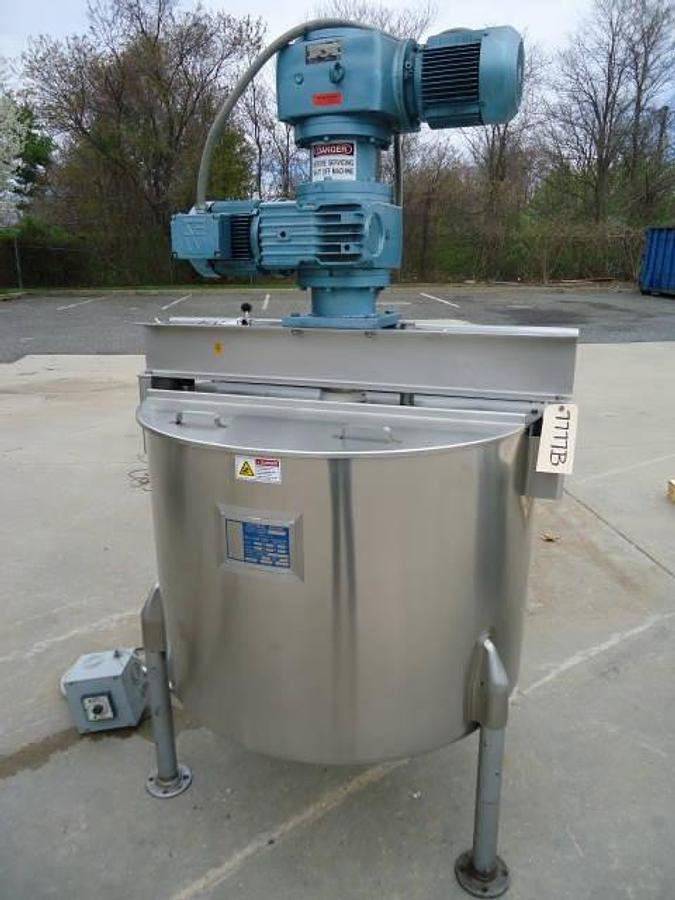
A jacketed scraper kettle is a type of processing vessel that combines two key features: a heating or cooling jacket surrounding the tank body, and a scraper agitator that continuously moves product away from the interior wall. The jacket allows a heat transfer medium, typically hot water, steam, or glycol, to circulate around the vessel, which heats or cools the product inside without direct flame contact. This indirect heating method gives processors precise temperature control, which is essential for products sensitive to overheating or scorching. Permasan jacketed scraper kettles, including 100-gallon and 500-gallon models, are well-regarded examples of this type of equipment.
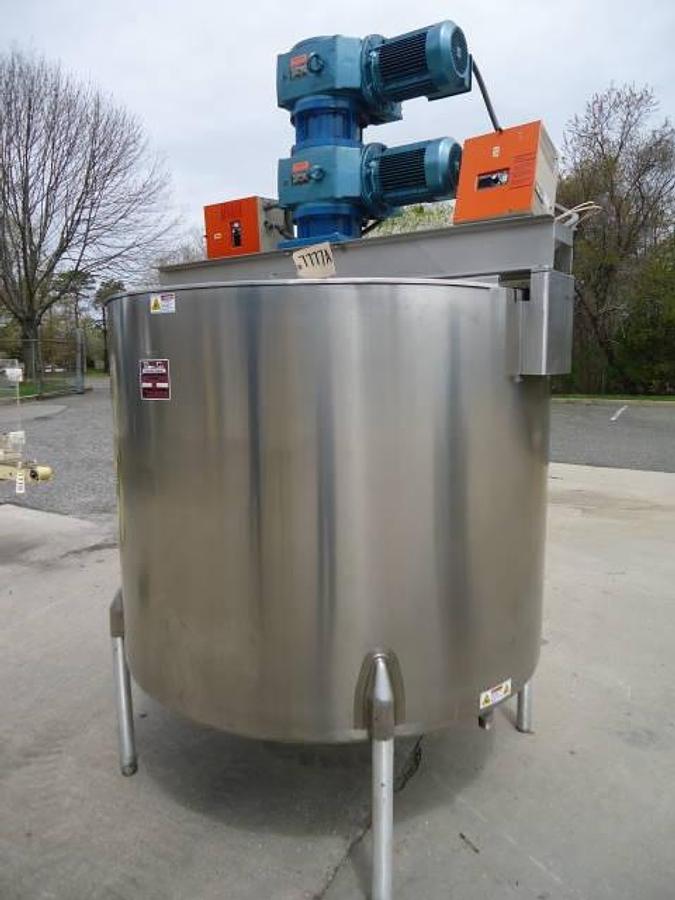
The scraper mechanism is particularly important for viscous products like chocolate, caramel, peanut butter, cheese sauce, or cosmetic creams that tend to build up on the heated wall surface. Without scraping, that layer of product can overheat, burn, or create inconsistent batch quality. The scraper blades keep the wall surface clean and continuously fold fresh product into the heat transfer zone, improving both efficiency and product consistency. Some Permasan kettles also include a high-speed turbine in addition to the scraper, which allows for simultaneous shear mixing and temperature-controlled processing in a single vessel.
What should I look for when inspecting a used Permasan stainless steel tank before buying?
A thorough inspection of a used Permasan tank should cover both the structural condition of the vessel and the functional condition of any mechanical components. On the structural side, the key areas to examine are the interior surface finish, the quality and integrity of welds, the condition of gaskets and seals, and the state of any nozzles, fittings, or valves. Surface pitting or corrosion on the interior contact surface is a serious concern for sanitary applications and can be difficult and expensive to remediate. Exterior cosmetic wear is generally less critical, but any signs of impact damage or deformation near the shell or jacket connections deserve closer attention.
For tanks with agitators, scrapers, or high-speed turbines, the mechanical components require their own evaluation. Buyers should ask whether the agitator drive is functional, whether the scraper blades show excessive wear, and whether any seals around the agitator shaft are intact. Reputable used equipment dealers will typically accommodate in-person inspections or provide detailed video walkthroughs of the equipment. Some tanks may still be installed in an active facility, which can allow for an operational assessment. Keep in mind that most dealers are not set up to run full production tests, so the inspection will generally focus on visual and mechanical condition rather than processing output.
How does buying a used Permasan tank compare to buying a new stainless steel processing tank?
The most obvious advantage of buying a used Permasan tank is cost. Stainless steel processing vessels, especially jacketed or agitated models, represent a significant capital investment when purchased directly from a fabricator. Used units can offer substantial savings, sometimes 50 to 70 percent below the cost of a comparable newly fabricated vessel, which makes it possible for smaller processors or startups to acquire quality equipment that would otherwise be out of reach. Permasan in particular has a reputation for building durable, well-constructed sanitary equipment, so used units often retain good functional value even after years of service.
The trade-off is that used equipment is sold as-is, without the support structure that comes with a purchase from a fabricator. There is no production warranty, lead times for custom configurations are not applicable since you are buying what exists, and the buyer takes on the responsibility of verifying condition through inspection. Parts availability can also vary depending on the age and model of the tank, so consulting with Permasan or a knowledgeable service technician about parts and support for a specific unit is a smart step before committing to a purchase. For buyers who do their due diligence, a used Permasan tank can deliver excellent value with manageable risk.
What are the typical shipping and rigging considerations for purchasing a used stainless steel tank?
Shipping a used stainless steel tank involves more logistical planning than most standard freight shipments. The weight and footprint of these vessels, especially larger units in the 1,000-gallon-plus range, typically require flatbed or specialized freight rather than standard LTL carriers. The tank needs to be properly secured, padded, and in many cases crated or palletized to prevent surface damage and movement in transit. Smaller portable tanks in the 86 to 100-gallon range are more manageable but still require careful preparation to protect fittings, agitator components, and polished surfaces during handling.
For larger tanks, professional rigging is often required both at the point of origin for loading and at the destination for unloading. Rigging involves the use of forklifts, cranes, or specialized lifting equipment to move heavy vessels safely, and that service carries its own cost that buyers should factor into the total landed price of the equipment. Before finalizing a purchase, buyers should ask the dealer for a detailed breakdown of packaging, rigging, and freight costs. Understanding the full delivered cost, not just the listed price of the tank, is essential for accurate budgeting.
What payment terms should I expect when purchasing used processing equipment like a Permasan tank?
Used equipment transactions in the industrial sector are generally structured around full payment prior to shipment. This is standard practice across the industry and reflects the nature of the transaction: once a used machine is shipped, the dealer has limited recourse if payment issues arise, so requiring cleared funds before releasing equipment protects both parties and keeps the process straightforward. Buyers should plan accordingly and have financing or capital in place before finalizing a purchase, since most dealers will not hold equipment for extended periods without payment.
Some dealers extend payment terms to repeat customers or established buyers with a track record of transactions, but this is the exception rather than the rule for first-time buyers. If financing is needed, buyers may want to explore equipment financing options through third-party lenders who specialize in used industrial machinery, as this can allow for payment to the dealer while spreading the cost over time. Regardless of payment method, buyers should ensure they receive clear documentation of the sale, including a description of the equipment, the agreed price, and any terms related to inspection or pickup.
What is a vertical mix tank, and how does it differ from a jacketed scraper kettle?
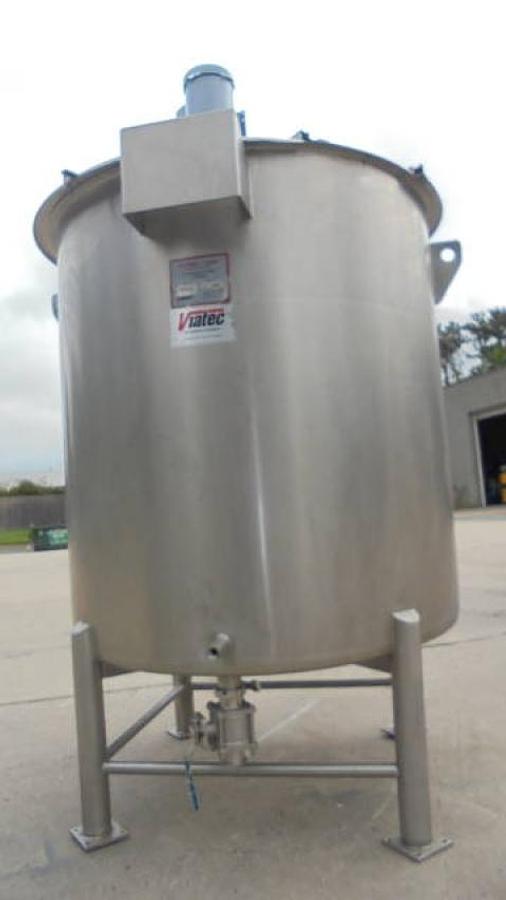
A vertical mix tank is a straightforward processing vessel designed primarily for blending, agitating, or storing liquid and semi-liquid products. The tank stands upright, and an agitator mounted at the top or bottom introduces mechanical energy into the product to keep it homogeneous, prevent settling, or incorporate ingredients. Permasan vertical mix tanks, including models in the 1,100 and 1,360-gallon range, are used in applications where consistent blending is the primary goal and where precise temperature control or high-viscosity handling are not the main requirements. These tanks are common in beverage production, liquid ingredient storage, and general food processing.
A jacketed scraper kettle is a more specialized piece of equipment. The jacket adds a heat transfer layer around the vessel, enabling heating or cooling of the product, and the scraper mechanism keeps viscous product from sticking to the heated wall. This makes jacketed scraper kettles the right choice for cooking, confectionery, thick sauces, or any application where temperature management and viscosity are both factors. The two tank types are not interchangeable: a vertical mix tank cannot replicate the temperature control or scraping action of a jacketed kettle, and a jacketed scraper kettle is generally more complex and expensive. Choosing between them depends entirely on the specific process requirements of the buyer.