Category
Manufacturer
Model
Peerless
Peerless specializes in manufacturing equipment for the food and beverage sector, particularly known for their efficient processing and packaging systems. Their machines are designed to enhance productivity and product quality.
FAQ:
What types of Peerless industrial mixers are available on the used equipment market?
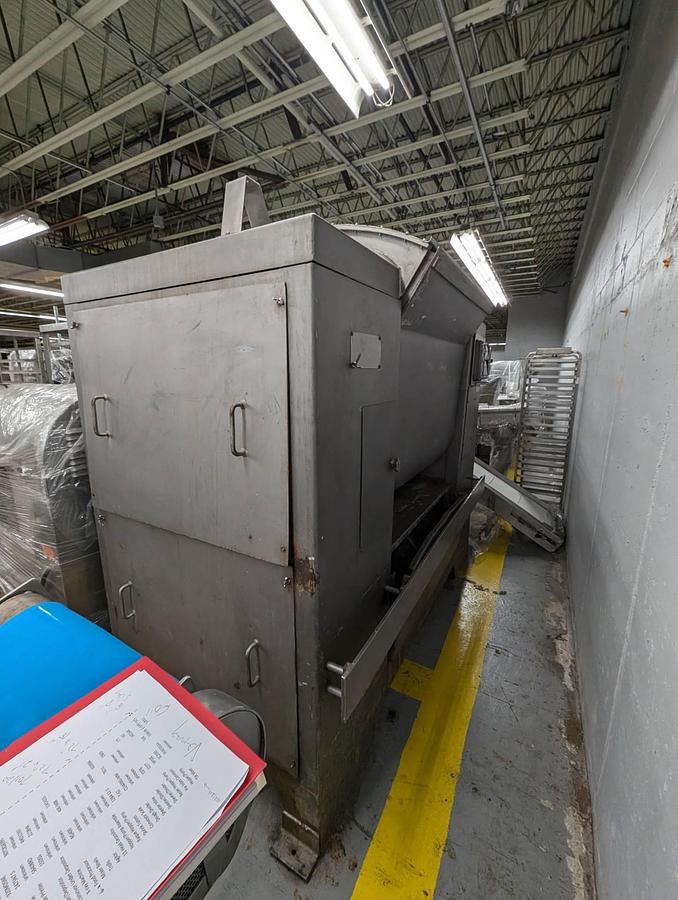
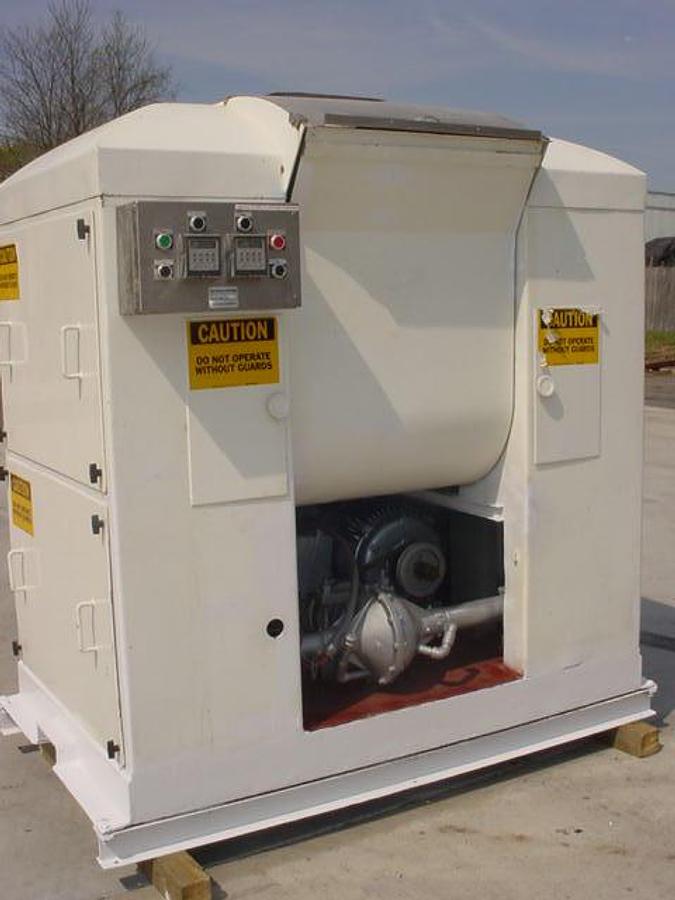
Peerless has built a broad lineup of industrial mixing equipment over the decades, and the used market reflects that variety. The most commonly found units include double sigma arm mixers, horizontal dough mixers, vertical batch mixers, and continuous mixers. Sigma arm mixers are particularly sought after in food processing because the overlapping blade geometry creates an intensive kneading action well suited to heavy, viscous materials like bread dough, pastry, and confectionery compounds. Capacities on used listings typically range from smaller 300 lb. stainless steel units up to 1,100 lb. sigma mixer models such as the DA-150, with horsepower ratings scaling accordingly, including configurations at 50 HP and above.
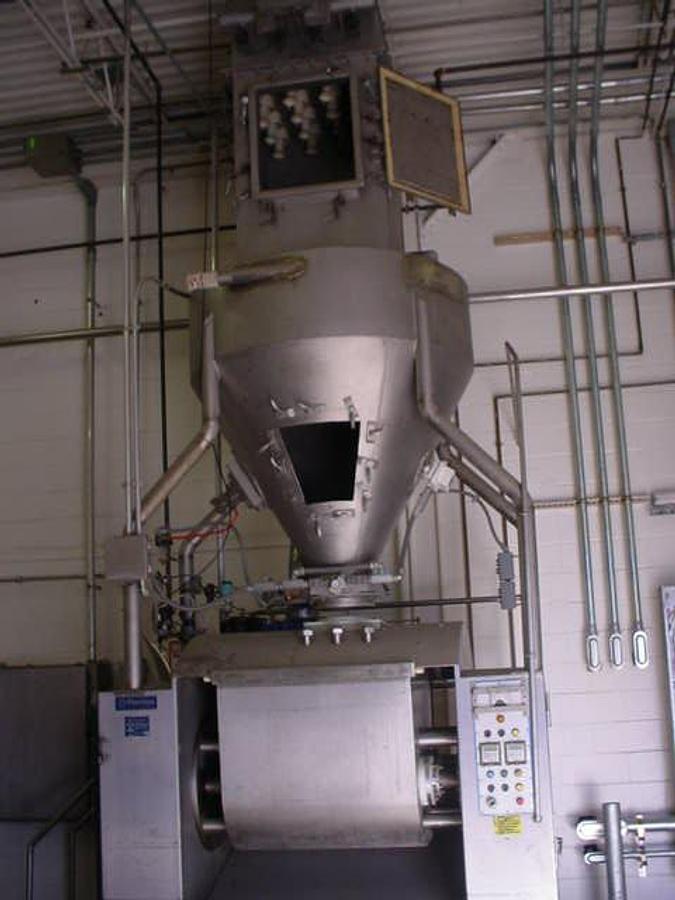
Beyond the sigma arm style, Peerless also produced horizontal continuous mixers designed for high-throughput baking operations where product moves through the mixing chamber in a steady stream rather than in discrete batches. These are less common on the secondary market but do appear when large bakeries upgrade or consolidate production lines. Buyers looking for a specific configuration should work with dealers who specialize in food processing equipment, since they are more likely to source the right Peerless model and can speak to the mechanical condition of individual units in detail.
What industries commonly use Peerless industrial mixers?
Peerless built its reputation primarily in the commercial baking and food processing industries. Large-scale bread, roll, and pastry producers have relied on Peerless sigma and horizontal mixers for decades because the machines handle the mechanical demands of stiff, high-gluten doughs that would overwhelm lighter-duty equipment. Industrial cookie and cracker manufacturers, pizza dough producers, and tortilla operations are also frequent users. Beyond bread-focused applications, Peerless mixers appear in confectionery plants handling fondant, nougat, and caramel, as well as in pet food manufacturing where similar dense, viscous mixing is required.
Outside of food, the sigma arm design has industrial applications in rubber compounding, adhesives, sealants, and certain chemical processing environments where thorough blending of thick materials is critical. The heavy-gauge stainless steel construction on food-grade Peerless models also makes them attractive to pharmaceutical and nutraceutical processors who need sanitary, easy-to-clean mixing surfaces. When buying a used Peerless mixer, it pays to confirm which industry the machine served previously, since a unit from a food plant will typically have different maintenance history and sanitation standards than one sourced from an industrial chemical operation.
Are used Peerless industrial mixers suitable for food-grade applications?
Many Peerless industrial mixers were built specifically for food-grade environments and were constructed with stainless steel contact surfaces, food-safe seals, and designs that comply with FDA and USDA standards. The sigma arm models listed on the used market, for example, feature stainless steel bowls and agitators that can be cleaned and sanitized to food processing standards. However, suitability for a specific food application depends on the condition and history of the individual machine, not just the model specification. A buyer should confirm that seals, gaskets, and any plastic or rubber components have not deteriorated, and that no non-food-safe lubricants or coatings were introduced during prior use in a non-food environment.
Inspecting a used Peerless mixer before purchase is the most reliable way to assess food-grade readiness. Dealers who specialize in food processing equipment can often provide video walkthroughs or arrange in-person inspections so buyers can evaluate the interior surfaces, drive components, and overall cleanliness of the machine. If the unit was previously used in a chemical or industrial application, additional reconditioning may be required before it is appropriate for food contact use. Consulting with a sanitation or food safety engineer during the evaluation process is a practical step for any operation with strict compliance requirements.
What mixing capacities do Peerless industrial mixers offer?
Peerless industrial mixers span a wide capacity range, which is one reason they appear across so many different production environments. On the used market, batch-style sigma arm mixers commonly surface in configurations ranging from roughly 300 lbs. to 1,100 lbs. of dough or product per batch. The 300 lb. stainless steel double sigma arm mixer suits mid-scale operations or specialty producers, while an 1,100 lb. unit like the DA-150 is geared toward high-volume commercial baking where throughput is a primary concern. Horsepower ratings climb alongside capacity, with larger models often requiring 50 HP drives or more to handle the torque demands of dense mixing loads.
For operations needing even higher throughput, Peerless also produced continuous horizontal mixers capable of processing thousands of pounds of dough per hour in a single pass. These systems are less frequently found on the secondary market but do become available when large industrial bakeries retool. Buyers should match mixer capacity not just to current production volume but to anticipated growth, since a well-maintained Peerless machine can remain in service for 20 years or more with proper upkeep. Oversizing slightly is often more economical in the long run than replacing a unit that has been consistently run at its maximum rated load.
What power requirements should buyers expect for Peerless industrial mixers?
Power requirements for Peerless industrial mixers vary significantly based on the model and capacity. Smaller batch mixers may operate on standard three-phase 208-240V electrical service, but mid-range and larger units commonly require 460V three-phase power, which is standard in most industrial and commercial food production facilities. The 50 HP drives found on larger sigma arm models draw substantial amperage, so buyers need to confirm that their facility's electrical infrastructure, including panel capacity, wiring gauge, and disconnect ratings, can support the machine before committing to a purchase. Running a mixer on undersized electrical service is a common and costly mistake.
Beyond electrical, some Peerless mixer configurations include pneumatic controls or require compressed air for certain functions, which adds another utility consideration. Before finalizing a purchase, it is worth requesting the machine's nameplate data or any available documentation from the dealer so an electrician can assess compatibility with the destination facility. If the machine is still installed at a production site, a video inspection that captures the nameplate and control panel can provide the necessary specifications. Factoring in any electrical upgrades or utility modifications as part of the total landed cost gives a more accurate picture of what the investment will actually require.
How should a buyer inspect a used Peerless industrial mixer before purchasing?
Inspecting a used Peerless mixer thoroughly is one of the most important steps in the buying process. Reputable used equipment dealers will typically accommodate in-person inspections, virtual walkthroughs, or video captures of the machine so buyers can assess its condition before committing. Key areas to evaluate include the condition of the mixing arms or agitators (checking for wear, cracks, or deformation), the integrity of the bowl and any sealing surfaces, the condition of the gearbox and drive components, and whether the electrical controls are intact and functional. If the machine is still installed and operational at a production facility, some dealers can arrange an inspection at the plant itself.
It is worth noting that most used equipment dealers do not have the permitting or infrastructure to run actual product through a machine during an inspection, so buyers should focus on mechanical condition rather than expecting a live production test. Listening for unusual sounds during a no-load run, checking for oil leaks around the gearbox, and examining wear patterns on the sigma arms can reveal a great deal about how the machine was maintained. Buyers who are not mechanically experienced with this type of equipment may benefit from bringing in a qualified millwright or equipment technician to assist with the evaluation. The cost of a professional inspection is modest compared to the cost of discovering mechanical problems after the machine has been shipped and installed.
What should buyers know about shipping and rigging a used Peerless industrial mixer?
Peerless industrial mixers are heavy, precision-built machines, and shipping them requires careful planning. Smaller units may be palletized and shipped via freight carrier, but larger sigma arm mixers, particularly those in the 800 to 1,100 lb. capacity range, often require custom crating to protect the mixing arms, bowl, and drive housing during transit. The level of packaging directly affects shipping cost, and buyers should ask dealers specifically what palletization or crating is included in the quoted price versus what will be added. Inadequate packaging is one of the more common causes of damage during transit, so it is worth paying for proper crating rather than cutting corners.
Loading and unloading large industrial mixers also typically requires rigging equipment such as forklifts or cranes, and those services carry their own costs. If the machine is being removed from an existing production facility, deinstallation rigging at the origin point may be a separate line item. At the destination, buyers need to have appropriate equipment available to unload and position the mixer, since these machines cannot simply be rolled off a truck. Getting a clear, itemized breakdown of packaging, loading, freight, and unloading costs from the dealer before purchase ensures there are no surprises in the total landed cost of the equipment.
What are typical payment terms when buying used Peerless industrial mixers from a dealer?
Used equipment dealers generally require full payment before a machine is released for shipping. This is standard practice across the industry and reflects the nature of the secondary equipment market, where machines are sold as-is and dealers need to confirm cleared funds before committing to logistics. Wire transfer is the most common payment method for transactions of this size, though some dealers also accept credit cards for smaller purchases, sometimes with a processing fee applied. Buyers should confirm accepted payment methods early in the negotiation to avoid delays once a deal is agreed upon.
Some dealers extend payment terms to repeat customers or established buyers with a track record of transactions, but this is the exception rather than the rule for first-time purchases. Buyers who need financing for used equipment purchases can explore third-party equipment financing companies that specialize in industrial machinery, as many banks and credit unions are not set up to handle used equipment loans efficiently. Having financing arranged in advance puts a buyer in a stronger position to act quickly when the right Peerless mixer becomes available, since desirable models at fair prices tend to move relatively fast on the secondary market.
What is the typical lifespan of a Peerless industrial mixer, and what affects longevity?
Peerless industrial mixers have a well-earned reputation for durability. Units that have been properly maintained often remain in productive service for 20 years or more, and it is not unusual to find machines on the used market that are significantly older yet still mechanically sound. The heavy-gauge construction and robust drive systems that Peerless used in their commercial and industrial lines were built to handle continuous, demanding production schedules, which means a well-cared-for machine can outlast many lighter-duty alternatives by a wide margin. This longevity is one of the primary reasons food processors and bakers seek out Peerless equipment on the secondary market even when the machines have years of prior use.
The factors that most affect how long a Peerless mixer remains serviceable include the quality of lubrication and gearbox maintenance, whether the machine was consistently operated within its rated capacity, and how thoroughly it was cleaned between production runs. Sigma arm mixers in food applications are particularly susceptible to accelerated wear if abrasive or high-sugar products are mixed without appropriate cleaning intervals. Buyers evaluating a used unit should ask about the maintenance history and, if possible, review any service records the seller can provide. Even without full documentation, a physical inspection of the gearbox oil condition, bearing surfaces, and mixing arm wear can give a reasonable indication of how the machine was treated during its prior service life.
How does buying a used Peerless industrial mixer compare to purchasing other brands on the secondary market?
Peerless occupies a specific niche in the used mixer market because of its strong association with high-capacity dough mixing and food processing. Buyers who need a machine capable of handling stiff, dense doughs at commercial or industrial scale often seek Peerless specifically because the sigma arm design and the build quality of these machines are well matched to that application. Comparable alternatives on the used market include brands like Artofex, Baker Perkins, and AMF, each with their own design philosophies and industry followings. The right choice depends heavily on the specific product being mixed, the required batch size, and the availability of parts and technical support for a given model.
One practical consideration when choosing between brands on the secondary market is parts availability. Older machines from any manufacturer may have components that are difficult to source, and it is worth contacting the manufacturer directly before purchasing to understand what level of support is available for a specific model and age of equipment. Peerless, now operating under CECO Environmental, may be able to provide guidance on parts availability for their legacy equipment. Dealers who specialize in food processing machinery are often the best source of honest information on this point, since they have direct experience with which machines are easy to keep running and which require creative sourcing for replacement components.