Category
Manufacturer
Model
Paul O. Abbe
Paul O. Abbe is known for its expertise in mixing and blending equipment for the chemical and food industries. Their machines are designed to optimize the mixing process for various materials.
FAQ:
What types of Paul O. Abbe equipment are commonly available on the used market?
Paul O. Abbe has produced a wide range of industrial processing equipment over its 100-plus year history, and the used market reflects that breadth. The most frequently available machines include ball mills, jar mills, pebble mills, rod mills, tumbling mills, double cone blenders, and ribbon blenders. Within those categories, buyers will find both laboratory-scale units and full production-scale machines, often in stainless steel or ceramic-lined configurations depending on the application they were built for.
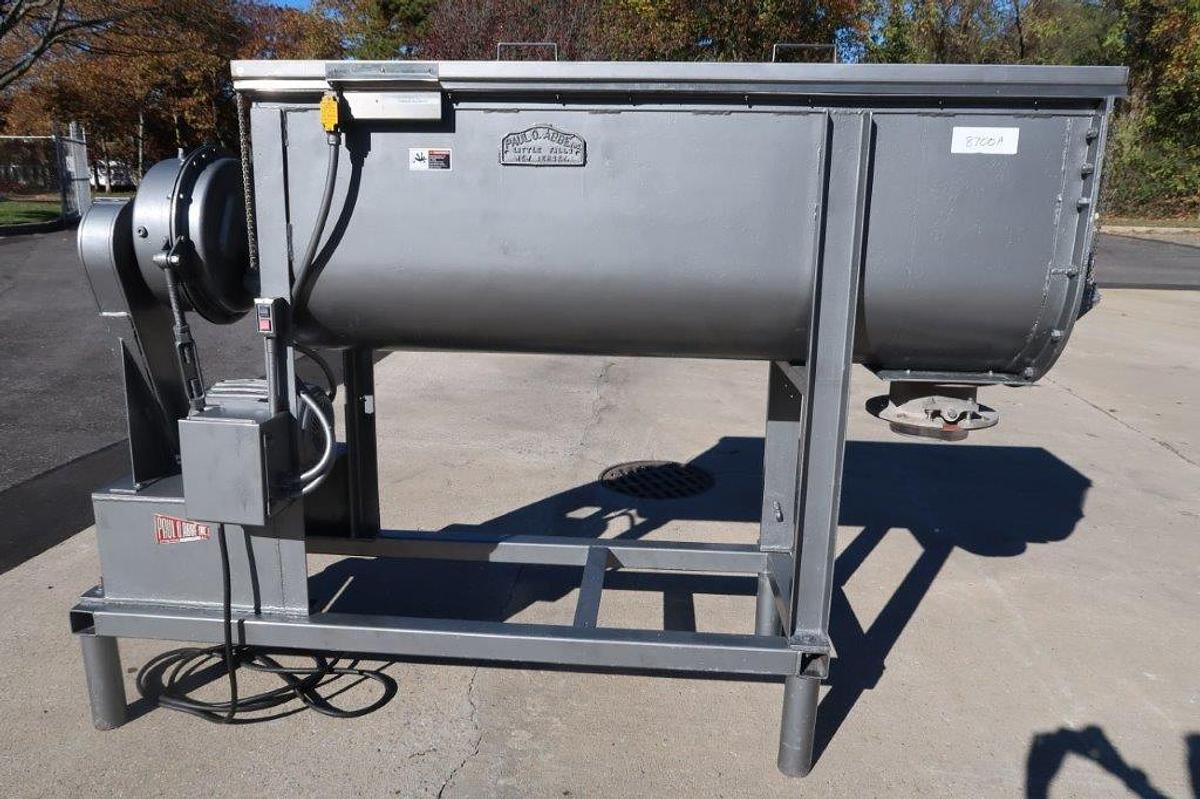
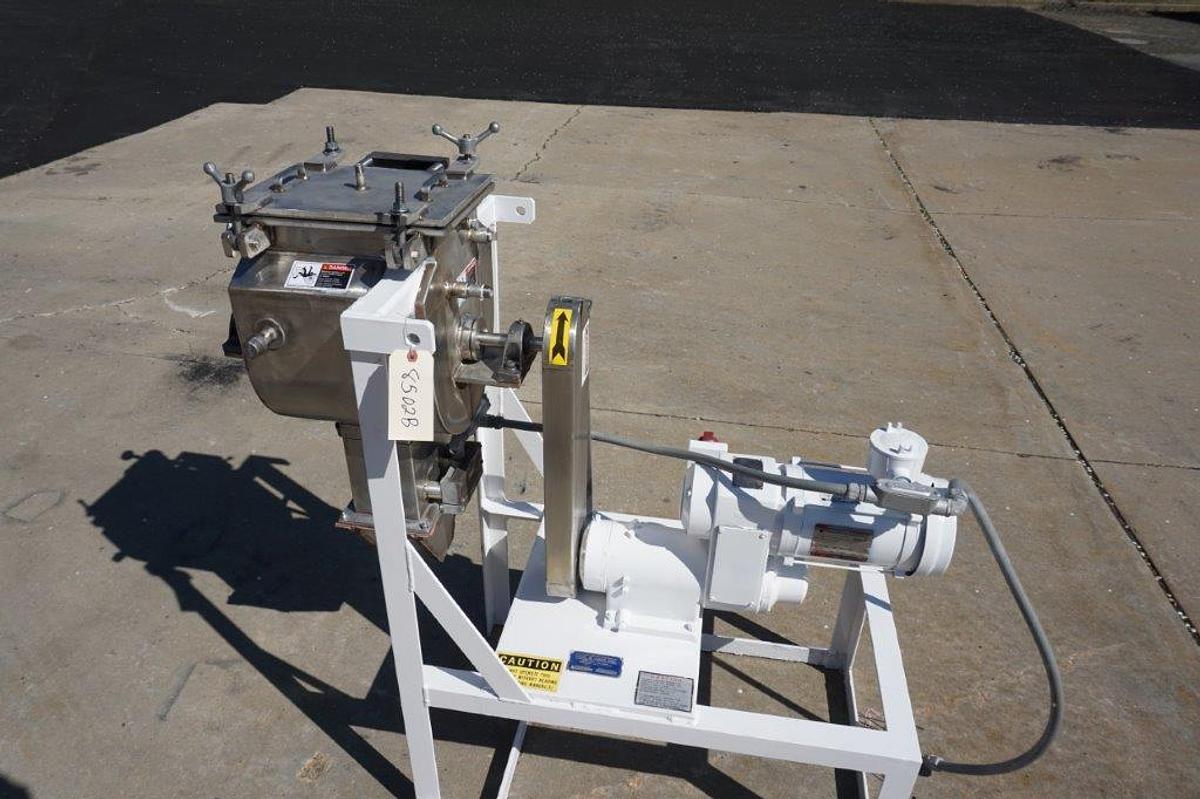
Mixing and blending equipment tends to be particularly common, including double ribbon blenders in various capacities and jacketed mixer designs suited for temperature-sensitive processing. Some units are built with explosion-proof (XP) electrical components for use in environments where flammable materials are handled. Buyers sourcing used Paul O. Abbe equipment should look carefully at the construction materials, motor specifications, and any jacketing or lining details, since these features significantly affect which applications the machine is suited for.
What industries use Paul O. Abbe milling and mixing equipment?
Paul O. Abbe equipment is used across a surprisingly wide range of industries, largely because the company has focused on precision size reduction and mixing for over a century. The pharmaceutical industry relies on their mills for grinding active ingredients to consistent particle sizes. Ceramics manufacturers use ceramic-lined pebble mills and ball mills to process raw materials without introducing metallic contamination. Chemical processors, food manufacturers, cosmetics producers, and mineral processing operations are also heavy users of Paul O. Abbe equipment.
Materials science laboratories and research institutions frequently use smaller jar mills and lab-scale ball mills for experimental work, while larger industrial facilities run continuous or batch production on full-scale units. The durability and repeatability of Paul O. Abbe machines make them attractive in regulated industries like pharmaceuticals and food processing, where consistent output is not optional. This cross-industry demand is one reason used Paul O. Abbe equipment retains its value and continues to circulate through the secondary market long after its initial production run.
What is the difference between a Paul O. Abbe ball mill, pebble mill, and rod mill?
All three are tumbling mills that reduce particle size through the motion of grinding media inside a rotating cylinder, but the type of media and the resulting grind characteristics differ in meaningful ways. A ball mill uses steel or ceramic balls as the grinding media, making it well suited for fine grinding across a range of materials. A pebble mill substitutes natural flint pebbles or ceramic media for the steel balls, which eliminates metallic contamination and makes it the preferred choice for color-sensitive, pharmaceutical, or food-grade applications. A rod mill uses long steel rods as the grinding media, which produces a coarser, more uniform grind and is typically used when a narrower particle size distribution is needed at a relatively coarse end product.
For buyers evaluating used equipment, the choice between these mill types comes down to the material being processed and the required output particle size. Ceramic-lined pebble mills are often sought after for pharmaceutical and ceramics work precisely because the lining and media prevent iron pickup. Ball mills with steel liners are more common in mineral processing and chemical applications where contamination is less of a concern. Rod mills appear less frequently on the used market but are valued in applications like ore processing and certain chemical grinding operations where product uniformity matters more than achieving ultra-fine particle sizes.
What capacity ranges are available in used Paul O. Abbe equipment?
Paul O. Abbe has manufactured equipment across an exceptionally wide capacity spectrum, which is one of the reasons their machines show up in settings ranging from university labs to large industrial plants. On the small end, jar mills and laboratory ball mills can process volumes of one gallon or less, making them practical for research, quality control testing, and small-batch specialty production. Mid-range units commonly found on the used market include mixers and mills in the 5 to 100 cubic foot range, which suits pilot-scale and moderate production environments. Large industrial units can exceed several thousand gallons in mixing capacity.
The 20 cubic foot double ribbon blender is a good example of a mid-range production unit that sees broad use in chemical and food processing applications. When evaluating capacity, buyers should consider not just the total vessel volume but also the working capacity, which is typically 50 to 60 percent of total volume for ribbon blenders and similar equipment. Motor horsepower, shaft speed, and material of construction are also important factors that scale alongside capacity and affect what the machine can practically handle in continuous or batch production.
How do I verify the condition of used Paul O. Abbe equipment before buying?
Condition verification is the most important step in any used equipment purchase, and reputable dealers will typically offer multiple ways to accomplish it. In-person inspections are the most thorough option and allow a buyer or their technician to physically examine wear surfaces, check for cracks or repairs in the vessel, assess the condition of seals and bearings, and review motor and drive components. For buyers who cannot travel, video inspections and detailed photo documentation are a practical alternative. Some equipment is still installed and running at a facility, in which case the dealer may be able to arrange an inspection at the actual plant where the machine is operating.
It is worth keeping in mind that most used equipment dealers do not have the permitting or production infrastructure to run actual product through a machine during an inspection. What can typically be demonstrated is that motors run, drives engage, and mechanical components move freely without unusual noise or resistance. Buyers with specific process requirements should also contact Paul O. Abbe directly to understand what technical support and parts availability exist for the particular model and age of equipment they are considering, since older machines may have limited manufacturer support. Selecting a dealer with a long track record in industrial processing equipment adds another layer of confidence that the machine has been accurately represented.
Are replacement parts available for older Paul O. Abbe machines?
Parts availability for used Paul O. Abbe equipment varies depending on the age and model of the machine. Paul O. Abbe has been manufacturing equipment for over a century, and while the company has continued to produce and support its product lines, older or discontinued models may have limited factory support. Buyers should contact Paul O. Abbe directly before purchasing a used unit to ask specifically about parts availability for that model, including wear items like liners, seals, grinding media, and drive components. This conversation is especially important for machines that are several decades old.
For many Paul O. Abbe designs, the mechanical simplicity of the equipment works in the buyer's favor. Ball mills, ribbon blenders, and similar machines have relatively few complex components, and many wear parts can be sourced from third-party suppliers or fabricated by a qualified machine shop. Stainless steel vessels and structural components typically have very long service lives and rarely need replacement. The more critical items to assess are the condition of the drive system, any specialized linings, and electrical components, particularly on explosion-proof units where replacement parts must meet specific certifications.
What should buyers know about shipping used Paul O. Abbe equipment?
Shipping industrial processing equipment like Paul O. Abbe mills and blenders involves more logistical planning than most freight shipments. The size and weight of these machines vary considerably, from compact lab jar mills that can ship on a standard pallet to large ribbon blenders or ball mills that require flatbed transport and heavy rigging for both loading and unloading. Buyers should ask the dealer specifically about how the equipment will be packaged or crated, since the level of preparation directly affects the risk of transit damage and will be reflected in the shipping cost.
For larger machines, rigging services at both the origin and destination are typically an added cost that buyers need to factor into the total landed price of the equipment. It is a good practice to get a clear picture of all freight-related charges before finalizing a purchase, including palletization or crating fees, rigging, carrier freight, and any required permits for oversized loads. Buyers who have a loading dock and forklift at their facility can sometimes reduce costs compared to those who need additional unloading services arranged at the delivery point.
What are typical payment terms for purchasing used Paul O. Abbe equipment?
Used industrial equipment transactions generally follow a straightforward payment structure. Most dealers require full payment before the equipment ships, which is standard practice across the industry and protects both parties in a transaction involving machinery that may be difficult to return or re-ship if a dispute arises after delivery. Wire transfer is the most common payment method for transactions of this size, though some dealers accept other forms of payment depending on the amount and the buyer's relationship with the seller.
Repeat customers or buyers with an established history with a particular dealer may occasionally be offered payment terms, but this is the exception rather than the rule for first-time transactions. Buyers who are new to purchasing used industrial equipment should budget for full payment upfront and factor that into their cash flow planning alongside shipping, rigging, installation, and any refurbishment costs that may be needed once the machine arrives.
What is a double ribbon blender and what is it used for?
A double ribbon blender is a type of horizontal mixing machine that uses two helical ribbon agitators mounted on a central shaft inside a trough-shaped vessel. The ribbons are configured so that one moves material in one direction along the outer path while the other moves material in the opposite direction along the inner path, creating a continuous counter-flow that produces thorough, relatively gentle mixing. This design is particularly effective for dry powders, granules, and pastes that need uniform blending without excessive shear or particle degradation.
Paul O. Abbe double ribbon blenders are used in food processing, chemical manufacturing, pharmaceutical production, and other industries where consistent batch blending is required. Stainless steel construction is standard for food-grade and pharmaceutical applications, and jacketed versions allow temperature control during mixing, which is useful for products that need to be heated, cooled, or kept at a specific temperature during the blending process. Explosion-proof electrical configurations are available for environments where flammable dusts or vapors may be present. Used ribbon blenders in the 20 cubic foot range are practical for mid-scale production and are among the more commonly available Paul O. Abbe units on the secondary market.
Does used Paul O. Abbe equipment come with a warranty?
Used industrial equipment is generally sold on an as-is basis, which is standard practice across the used machinery market. Warranties are typically only provided by manufacturers on equipment sold through authorized channels, and that coverage does not transfer when a machine changes hands on the secondary market. This means the responsibility for evaluating the condition and suitability of the equipment falls on the buyer, which is why thorough inspection before purchase is so important.
To reduce risk, buyers should prioritize dealers with a long, verifiable track record of selling industrial processing equipment and who specialize in the relevant equipment category. A reputable dealer will be transparent about what they know regarding the machine's history and condition, and will facilitate inspections rather than discourage them. Buyers should also reach out to Paul O. Abbe directly to understand what technical support, documentation, and parts availability exist for the specific model they are considering, since the manufacturer's ability to support older equipment can vary by model and production era.