Category
Manufacturer
Model
Packwest
Packwest focuses on providing packaging equipment for various sectors, including pharmaceuticals and consumer goods. Their range includes advanced labeling and cartoning machines that streamline the packaging process.
FAQ:
What types of packaging equipment does Packwest make?
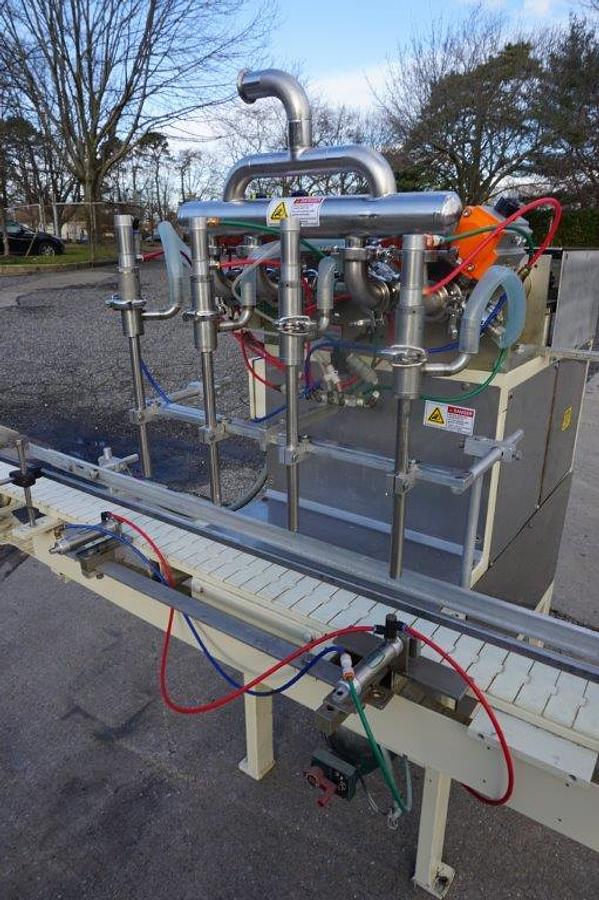
Packwest produces packaging equipment designed for high-volume production environments, with a focus on filling, labeling, cartoning, and product handling. Their lineup includes piston filling machines in both straight-line and rotary configurations, rotary unscrambling and accumulating tables, and advanced labeling systems suited to a range of container types and product formats. The straight-line piston fillers are available in configurations such as 4-piston models handling up to 32-ounce fills, while rotary piston fillers scale up to 8-head setups for higher throughput demands.
Beyond filling and labeling, Packwest equipment is engineered to integrate into broader packaging lines, making it practical for operations that need multiple stages of the packaging process to work in sequence. Their machines are built with stainless steel construction in many cases, which is a practical requirement for industries where sanitation and chemical resistance matter. Buyers shopping for used Packwest equipment will typically find filling machines and rotary tables among the most commonly available units on the secondary market.
What industries use Packwest packaging equipment?
Packwest packaging equipment is used across a range of industries, with pharmaceuticals and consumer goods being the most prominent. In pharmaceutical applications, the precision of piston filling machines and the accuracy of labeling systems are particularly valued, since dosing consistency and label compliance are regulatory requirements rather than optional features. Consumer goods manufacturers rely on Packwest equipment for high-speed, repeatable packaging of liquid and semi-liquid products across personal care, household chemical, and food-adjacent categories.
The equipment's stainless steel construction and rotary table designs also make it a practical fit for nutraceutical, cosmetic, and specialty chemical producers who need machinery that can handle a variety of container sizes and product viscosities. Because Packwest machines are designed to integrate into full production lines, they tend to attract buyers who are building or expanding packaging operations rather than those looking for a single standalone piece of equipment. Used Packwest machinery is particularly appealing to mid-size manufacturers who want proven industrial-grade equipment without the lead times associated with ordering directly from a manufacturer.
What should buyers know about purchasing used Packwest equipment instead of sourcing directly from a manufacturer?
Buying used Packwest equipment through a secondary market dealer is a fundamentally different process from placing an order with a manufacturer. Used machines are sold as-is, meaning there is no factory conditioning, and the buyer takes on responsibility for understanding the machine's current condition before committing to a purchase. This makes the inspection process critical. Reputable used equipment dealers will offer in-person inspections, video walkthroughs, or detailed photo documentation so that buyers can assess the machine's working order before any money changes hands.
One practical consideration is parts and manufacturer support. Before purchasing a used Packwest machine, it is worth contacting Packwest directly to determine whether the specific model and age of the equipment still has parts availability and technical support. Older or discontinued models may have limited manufacturer backing, which affects long-term serviceability. Buyers should also factor in that some used machines may still be in active production at a facility, in which case the dealer can often arrange an in-person inspection at the plant where the equipment is operating. Working with a dealer who specializes in packaging equipment specifically, rather than a general industrial reseller, tends to result in more accurate condition assessments and better guidance on fit for purpose.
How does a rotary piston filler work, and what makes it suitable for high-volume packaging lines?
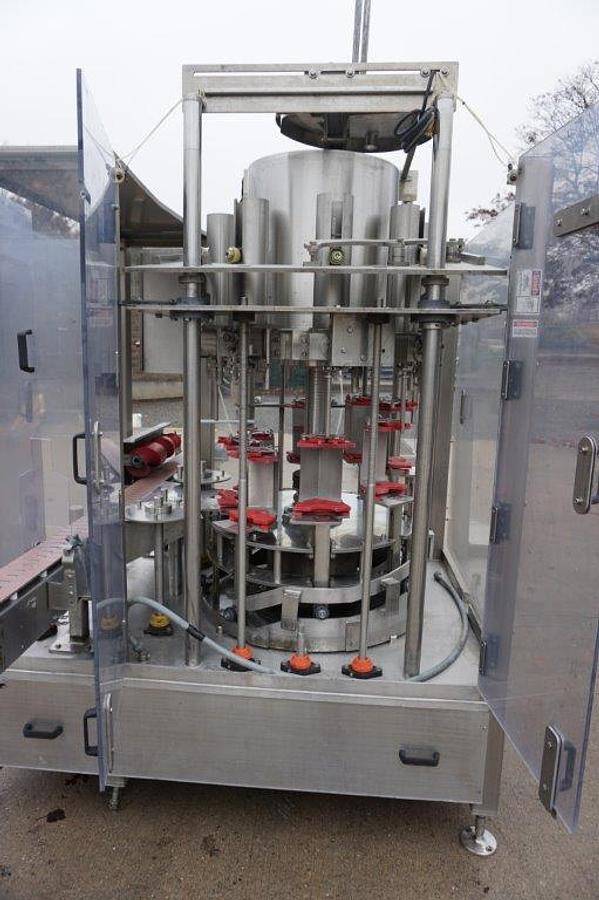
A rotary piston filler operates by cycling containers through a circular filling station where each fill head deposits a precise, pre-measured volume of product into the container as it passes beneath. The piston mechanism draws product from a supply hopper or tank and pushes a controlled volume through a nozzle, making it well suited for liquid and semi-liquid products where fill accuracy is important. The rotary design allows multiple fill heads, such as the 8-head configurations offered by Packwest, to operate simultaneously on a continuous carousel, which dramatically increases throughput compared to straight-line or single-head alternatives.
The key advantage of rotary piston fillers in high-volume environments is the combination of speed and consistency. Because each piston is calibrated to deliver the same fill volume, variation between containers is minimal, which matters for both regulatory compliance and product cost control. These machines are commonly found in pharmaceutical, personal care, and food production facilities where output rates and fill accuracy are non-negotiable. On the used equipment market, rotary piston fillers from established manufacturers like Packwest tend to hold their value reasonably well because the core mechanical components are durable and the machines can often be refurbished or resealed to extend their service life.
What is a rotary unscrambling and accumulating table, and where does it fit in a packaging line?
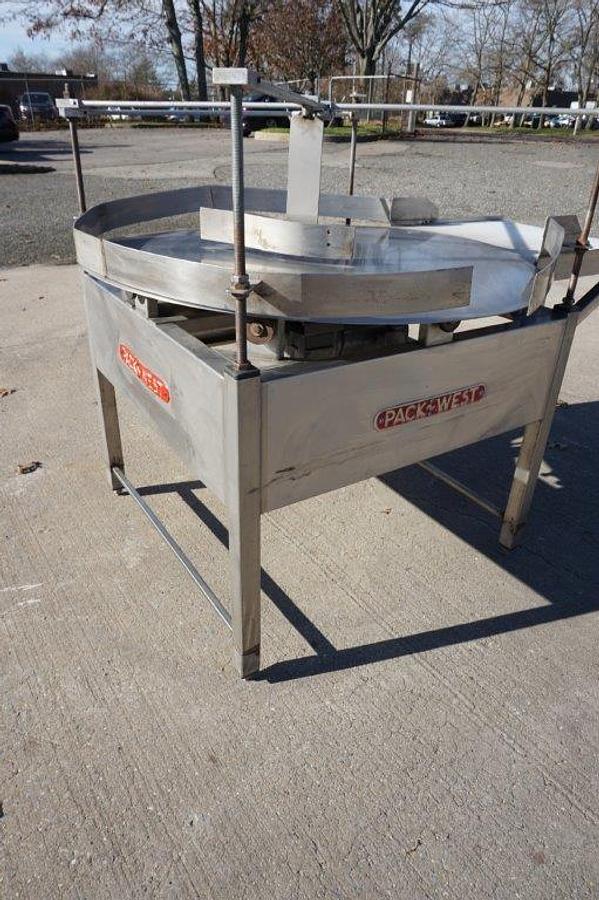
A rotary unscrambling and accumulating table is a piece of packaging line equipment that organizes randomly oriented containers, such as bottles or jars, into a single-file stream ready for downstream processing. Containers are fed onto a rotating circular table, and the centrifugal motion combined with guide rails or sorting mechanisms orients them correctly and feeds them onto a conveyor in sequence. The accumulating function also allows the table to act as a buffer, absorbing surges in container supply so that the filling or labeling equipment downstream receives a steady, controlled flow.
In a complete packaging line, the unscrambler typically sits at the very beginning of the process, feeding containers into fillers, cappers, and labelers in the correct orientation and at a consistent pace. Without this step, downstream equipment would need to handle irregularly spaced or misaligned containers, which increases jams and reduces overall line efficiency. Packwest's 48-inch diameter stainless steel rotary tables are sized for mid-to-high volume operations and are built with stainless steel to meet sanitation requirements common in pharmaceutical and consumer goods facilities. Used unscrambling tables in good condition are practical purchases for operations that are expanding their line speed or replacing aging equipment.
What is the typical price range for used Packwest packaging equipment?
Pricing for used Packwest packaging equipment varies considerably depending on the machine type, configuration, age, and overall condition. Simpler pieces like straight-line piston fillers in a 4-head configuration might be found in the range of a few thousand to tens of thousands of dollars, while more complex rotary systems with multiple fill heads or integrated accumulating tables can run significantly higher. Rotary piston fillers with 8 heads, for example, represent a more capital-intensive piece of equipment and are priced accordingly on the secondary market, often ranging from the mid-five figures upward depending on condition and included accessories.
Buyers should keep in mind that the listed price of a used machine is rarely the full landed cost. Shipping, rigging, crating, and any reconditioning or parts replacement needed after inspection all add to the total investment. Getting a clear picture of these costs upfront, including whether the machine needs special rigging for loading or unloading, is an important part of evaluating whether a particular used unit represents good value. Comparing the cost of a used Packwest machine to the lead time and price of sourcing equivalent capacity through other channels often makes the secondary market the more practical option for operations that need equipment on a faster timeline.
How should buyers inspect used packaging equipment before purchasing?
Inspecting used packaging equipment thoroughly before purchase is one of the most important steps a buyer can take to avoid costly surprises. Most reputable used equipment dealers offer at least one of three inspection options: an in-person visit to the dealer's facility, a live video walkthrough conducted remotely, or a detailed video recording of the machine in its current state. The goal in any of these formats is to get an accurate picture of the machine's mechanical condition, including the state of wear components, the condition of seals and gaskets, the functionality of controls, and any visible damage or corrosion.
One thing buyers should understand is that most used equipment dealers are not set up to run actual production tests with live product. Running a filling machine with real product, for example, requires production-level permitting and facilities that a typical dealer won't have. What dealers can usually demonstrate is that the machine powers on, that mechanical components move as expected, and that there are no obvious signs of damage. For machines that are still in active use at a manufacturing facility, dealers can sometimes arrange an inspection at the plant where the equipment is operating, which gives buyers the opportunity to see the machine running under real production conditions. Buyers should also ask about the machine's history, including what products it ran, how many shifts it operated, and when it was last serviced.
What are the shipping and logistics considerations for buying used packaging equipment?
Shipping used packaging equipment involves more planning than a typical freight shipment, and the costs can be substantial depending on the size and weight of the machine. Smaller units like benchtop fillers may ship on a standard pallet with appropriate blocking and bracing, but larger machines such as rotary filling systems or accumulating tables often require custom crating or skidding to prevent damage in transit. The level of packaging required directly affects the shipping cost, and buyers should ask dealers for a clear breakdown of what preparation is included in the quoted price versus what will be billed separately.
For heavier equipment, rigging is often a separate line item. Loading a large rotary table or multi-head filler onto a flatbed or into a container may require a forklift, crane, or specialized rigging crew, and the same applies on the receiving end. Buyers who are not set up to unload heavy machinery at their facility need to arrange for that capacity in advance. It is also worth confirming with the dealer whether the equipment will ship from the dealer's warehouse or directly from a third-party facility, since the latter can affect the logistics timeline and who is responsible for coordinating the pickup. Getting a full landed cost estimate, including freight, rigging, and crating, before finalizing a purchase is the practical way to avoid budget surprises.
What payment terms do used packaging equipment dealers typically offer?
The standard practice among used packaging equipment dealers is to require full payment before the equipment ships. This protects the dealer from non-payment on large-ticket items that are difficult to resell quickly if a transaction falls through. For buyers, this means having financing or capital in place before committing to a purchase, since most dealers will not hold equipment for extended periods without payment or a deposit. Some dealers may accept a deposit to hold a machine while the buyer arranges financing or completes their inspection, but the terms vary by dealer and situation.
Repeat customers with an established relationship with a dealer may occasionally be offered payment terms, but this is the exception rather than the rule in the used equipment market. Buyers who need financing should explore equipment financing through third-party lenders or their own banking relationships before beginning their search, so they can move quickly when the right machine becomes available. Used packaging equipment, particularly from established manufacturers like Packwest, can move quickly when priced well, so having financing pre-arranged is a practical advantage. Buyers should also clarify accepted payment methods, since wire transfers are common for large transactions and some dealers may not accept credit cards for purchases above a certain threshold.
How can a buyer verify that a used packaging equipment dealer is reputable?
Choosing a reputable dealer matters significantly in the used equipment market because buyers are taking on more responsibility for assessing condition than they would with a manufacturer purchase. A few practical indicators of a trustworthy dealer include years in business, specialization in a relevant equipment category, and a track record of transactions with verifiable references. Dealers who have been operating for many years and focus specifically on packaging or industrial equipment are generally better positioned to accurately represent the condition and suitability of machines than generalist resellers who handle all types of surplus assets.
Buyers should also look at how the dealer handles inspection requests. A dealer who is transparent about the machine's condition, willing to provide detailed photos or video, and open to arranging in-person visits is demonstrating confidence in what they are selling. Conversely, dealers who are evasive about inspection access or who push for quick decisions without adequate documentation are a reason for caution. Checking whether the dealer has a physical location, an established web presence, and a history of listing equipment in the relevant category over time are all reasonable due diligence steps. Consulting with the original equipment manufacturer about a specific machine's history or parts availability can also help a buyer cross-reference what the dealer is representing about the equipment.