Category
Manufacturer
Model
FAQ:
What types of Pacific filling machines are available on the used market?
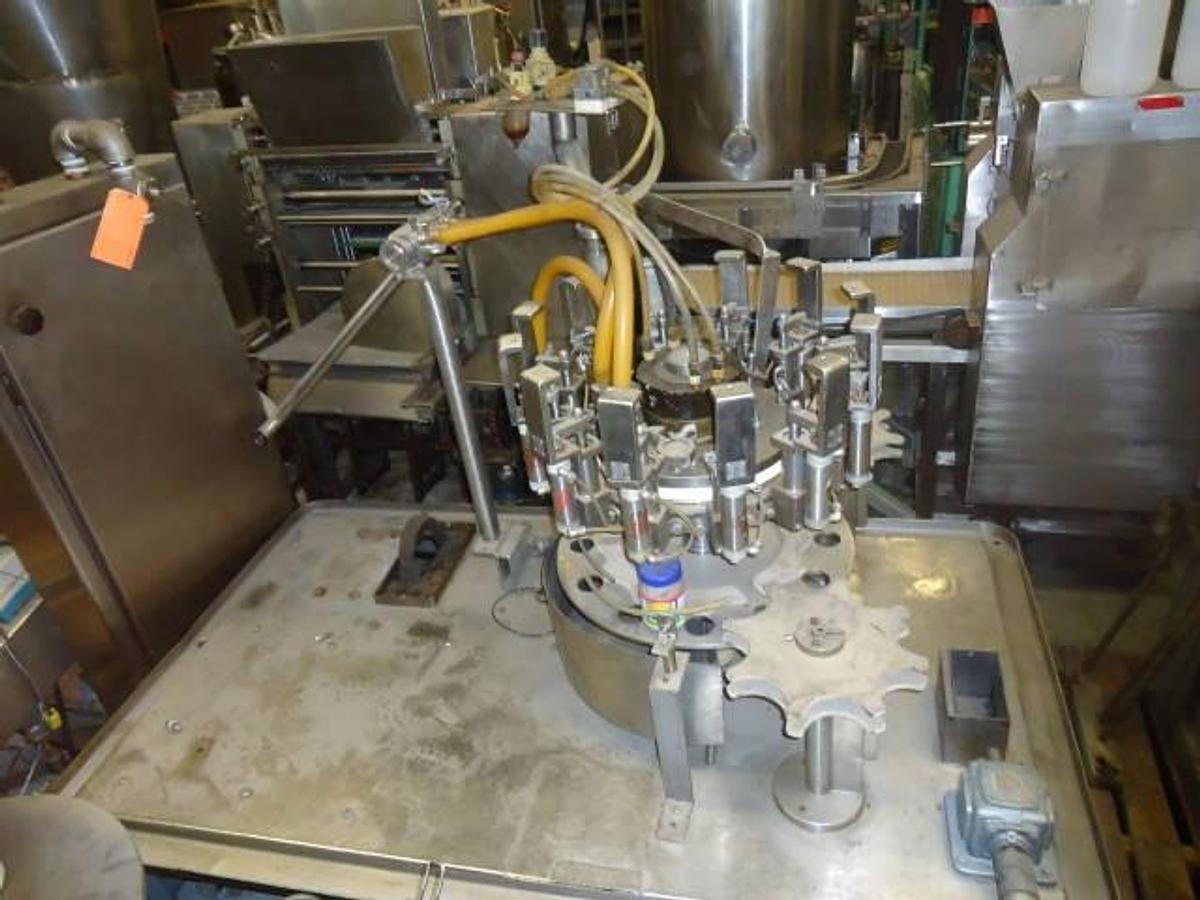
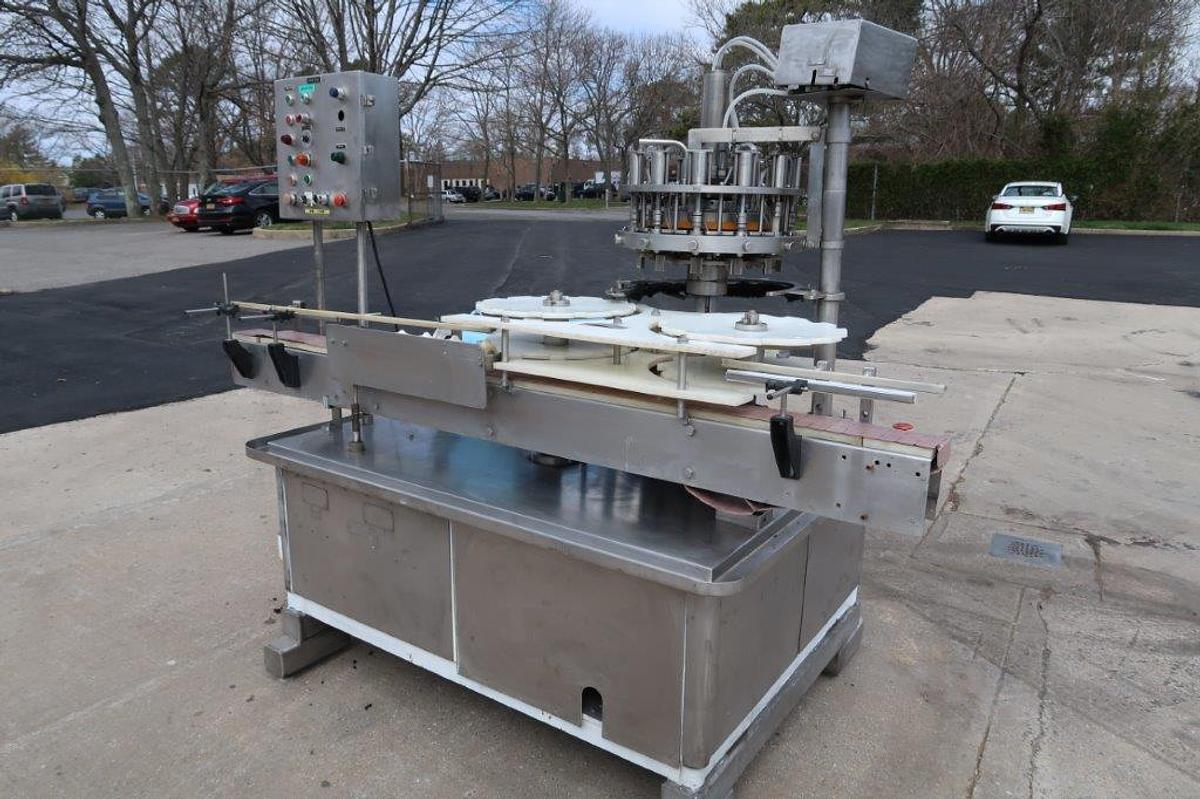
Pacific produces a range of filling machines designed for different production environments and product types. On the used market, buyers commonly find rotary filling machines, inline fillers, and positive displacement models. The 12-head rotary positive displacement filler is one of the more frequently listed configurations, built for high-volume food production where consistent fill accuracy and throughput are priorities. These machines vary in the number of fill heads, automation level, and the types of containers or closures they support.
Used Pacific filling machines span both semi-automatic and fully automatic configurations. Semi-automatic models are popular with small to mid-sized operations that need reliable filling without the capital cost of a fully automated line. Fully automatic rotary fillers, like the 12-head models designed for food use, are better suited to high-volume manufacturers that need continuous production with minimal operator intervention. Because these are pre-owned machines, available inventory shifts regularly, so buyers should check with specialized used packaging equipment dealers to see what configurations are currently in stock.
What industries commonly use Pacific filling machines?
Pacific filling machines are used across a broad range of industries, largely because their positive displacement and rotary filling technologies handle a wide variety of product viscosities and container types. The food and beverage industry is one of the most common applications, particularly for sauces, dressings, condiments, dairy products, and other pourable or semi-viscous foods. Pacific machines built for food use are typically constructed with stainless steel contact parts and designed to meet sanitary standards required in food processing environments.
Beyond food and beverage, Pacific fillers are found in pharmaceutical, cosmetics, chemical, and agricultural industries. Cosmetics manufacturers use them for creams, lotions, and gels. Chemical producers rely on them for liquid cleaning products, lubricants, and similar materials. The common thread across all these industries is the need for accurate, repeatable fills at production speeds that manual filling simply cannot match. When buying a used Pacific filler, it is worth confirming which industry the machine was previously used in, as this can affect the condition of seals, gaskets, and contact surfaces.
Are Pacific filling machines suitable for thick or viscous products like creams, gels, and sauces?
Yes, positive displacement filling machines, which include many Pacific models, are specifically well-suited to thick and viscous products. Unlike gravity or overflow fillers that rely on product flow, positive displacement fillers use a piston or rotary mechanism to push a precise, metered volume of product into each container. This makes them effective for handling sauces, creams, gels, pastes, and other products that would not flow reliably through simpler filling systems. The 12-head rotary positive displacement configuration, for example, is a design commonly used in food processing precisely because it handles viscous products consistently across all fill heads.
When evaluating a used Pacific filler for viscous product applications, buyers should pay close attention to the condition of the pistons, cylinders, and seals, as these components bear the most wear in high-viscosity applications. It is also worth confirming the machine's fill range and whether it can be adjusted to accommodate the specific viscosity and container size of your product. A reputable used equipment dealer should be able to provide video or in-person inspection access so buyers can assess the machine's current condition before committing to a purchase.
What fill accuracy can buyers expect from a used Pacific filling machine?
Positive displacement filling machines, the category that includes many Pacific models, are known for strong fill accuracy. In well-maintained machines, fill accuracy typically falls within plus or minus 0.5% to 1% of the target fill volume. This level of consistency is important for manufacturers because overfilling wastes product and increases per-unit costs, while underfilling can create compliance issues, particularly in food and pharmaceutical applications where net weight or volume claims are regulated.
With used machines, actual fill accuracy depends heavily on the condition of the machine at the time of purchase. Worn pistons, damaged seals, or poorly calibrated fill adjustments can all affect precision. Before purchasing a used Pacific filler, buyers should request a demonstration or video showing the machine in operation if possible. Keep in mind that most used equipment dealers do not have the production permits or facilities to run actual product through a machine during inspection, so buyers may need to assess condition through visual inspection, operational checks, and the dealer's knowledge of the machine's history.
What is the difference between a semi-automatic and a fully automatic Pacific filling machine?
Semi-automatic Pacific filling machines require an operator to position containers and initiate each fill cycle, either by foot pedal or manual trigger. The machine handles the metering and dispensing of product, but the operator controls the pace of production. These models are a practical choice for smaller operations, startups, or businesses that run multiple product types in shorter runs, since they typically have lower upfront costs and simpler setups. They also tend to be easier to clean and adjust between product changeovers.
Fully automatic Pacific filling machines, such as rotary multi-head configurations, handle container indexing, filling, and often capping or conveying without continuous operator involvement. These machines are designed for sustained high-volume production where throughput and consistency are the priority. A 12-head rotary filler, for instance, can fill significantly more containers per minute than a semi-automatic unit, making it a better fit for large-scale food or beverage manufacturers. On the used market, fully automatic machines carry higher price points but can offer strong value relative to buying equivalent equipment from a manufacturer, particularly for operations that need immediate production capacity.
How should buyers inspect a used Pacific filling machine before purchasing?
Inspecting a used filling machine thoroughly before purchase is one of the most important steps a buyer can take. Reputable used equipment dealers typically offer in-person inspections at their facility, or in some cases at the plant where the equipment is still located. If travel is not practical, dealers can often arrange video inspections or provide recorded video walkthroughs showing the machine's components, condition, and basic operation. Buyers should look closely at the fill heads, pistons, seals, gaskets, and any product-contact surfaces for wear, corrosion, or damage. On rotary machines, the indexing mechanism and drive components are also worth examining carefully.
One important thing to understand is that most used equipment dealers do not have the production permits or infrastructure to run actual product through a machine as part of an inspection. Operational checks, such as running the machine dry or with water, may be possible, but a full production test with the buyer's actual product is generally not feasible at a dealer's facility. For machines that are still in service at a production facility, the dealer may be able to arrange an inspection where the equipment is actively running. Buyers should also contact the manufacturer directly to understand what service support, parts availability, and technical documentation exist for the specific model and age of machine they are considering.
What should buyers know about shipping a used Pacific filling machine?
Shipping a used filling machine, particularly a large rotary multi-head unit, requires careful planning to avoid damage in transit. Machines should be properly palletized or crated before shipment, and the level of packaging required will affect the overall shipping cost. Larger, heavier machines may also require specialized rigging equipment for loading at the dealer's facility and unloading at the buyer's location. Rigging services are typically an added cost beyond standard freight charges, and buyers should ask dealers for a clear breakdown of all packaging, rigging, and freight costs before committing to a purchase.
The full landed cost of a used filling machine includes the purchase price plus all shipping-related expenses, which can be substantial for heavy industrial equipment. Buyers should request quotes that itemize crating or palletization fees, rigging, freight, and any delivery services needed at the destination. It is also worth confirming whether the machine will be shipped via flatbed truck, enclosed freight, or another method, as this can affect both cost and transit risk. Asking the dealer about their packaging process and how machines are prepared for shipment gives buyers a clearer picture of what to expect.
What payment terms are typical when buying a used Pacific filling machine?
Most used equipment dealers require payment in full before a machine is released for shipment. This is standard practice in the used industrial machinery market, where dealers take on the risk of acquiring, storing, and listing equipment. Accepted payment methods vary by dealer but commonly include wire transfer, ACH, and in some cases credit card for smaller purchases. Buyers should clarify accepted payment methods early in the process to avoid delays once a purchase decision is made.
For repeat customers or buyers with an established relationship with a dealer, some flexibility on payment timing may be available, but this is not the norm for first-time transactions. Buyers who need financing should explore equipment financing options through third-party lenders before approaching a dealer, as most used machinery dealers do not offer in-house financing programs. Understanding the full payment requirements upfront, including any deposits required to hold a machine while inspection or logistics are arranged, helps buyers plan accordingly and move efficiently when the right machine becomes available.
How difficult is it to clean and maintain a used Pacific filling machine?
Pacific filling machines designed for food use are generally built with sanitation in mind. Stainless steel construction on product-contact parts is standard for food-grade models, which simplifies cleaning and helps resist corrosion from acidic or high-moisture products. Many rotary and inline filling machines are designed to support clean-in-place (CIP) or clean-out-of-place (COP) procedures, where the filling components can be flushed or disassembled for thorough cleaning between product runs. The ease of disassembly and reassembly is a practical factor worth evaluating, particularly for operations that run multiple products or need to meet strict sanitation protocols.
For a used machine, maintenance considerations go beyond routine cleaning. Buyers should factor in the likely need to replace wear items such as seals, gaskets, O-rings, and fill nozzles, especially if the machine has seen significant production hours. Before purchasing, it is worth contacting the manufacturer to confirm parts availability for the specific model, since older machines may have limited support or discontinued components. A dealer who specializes in packaging equipment should be able to provide information about the machine's history and any known maintenance needs, which helps buyers budget realistically for getting the equipment into reliable production condition.
What should buyers look for when choosing a used Pacific filling machine dealer?
Selecting a dealer with a strong track record in packaging and food processing equipment is one of the most important decisions a buyer makes when purchasing used filling machinery. Because used machines are sold as-is, the dealer's knowledge of the equipment, transparency about its condition, and willingness to facilitate thorough inspections carry significant weight. Dealers who specialize in packaging machinery, rather than general industrial equipment, are more likely to accurately represent a filling machine's capabilities, fill range, and compatibility with specific products or container types. A long history in the industry is a meaningful indicator of reliability.
Buyers should also look at how a dealer handles inspection requests. A reputable dealer will readily accommodate in-person visits, video calls, or recorded walkthroughs of the machine. They should be able to answer detailed questions about the machine's prior use, production history if known, and the condition of key components. Dealers who are evasive about inspection or push buyers to commit without adequate review should be approached with caution. Checking references, looking at the breadth of the dealer's inventory, and confirming their experience with the specific type of equipment you are buying are all reasonable steps before making a significant capital purchase.