Category
Manufacturer
Model
PE
PE is known for its advanced manufacturing equipment for various industries, including automotive and food processing. Their focus on innovation ensures that they provide cutting-edge solutions.
FAQ:
What is PE labeling equipment and what industries use it?
PE labeling equipment refers to machines manufactured by PE (also known as P.E. Labellers) that are designed to apply pressure-sensitive labels to containers, bottles, and packaging across a wide range of industries. PE is recognized for its advanced manufacturing equipment used in sectors such as automotive, food processing, beverage, cosmetics, and chemical production. Their machines are built to handle high-volume production environments where label placement accuracy and throughput speed are critical operational requirements.
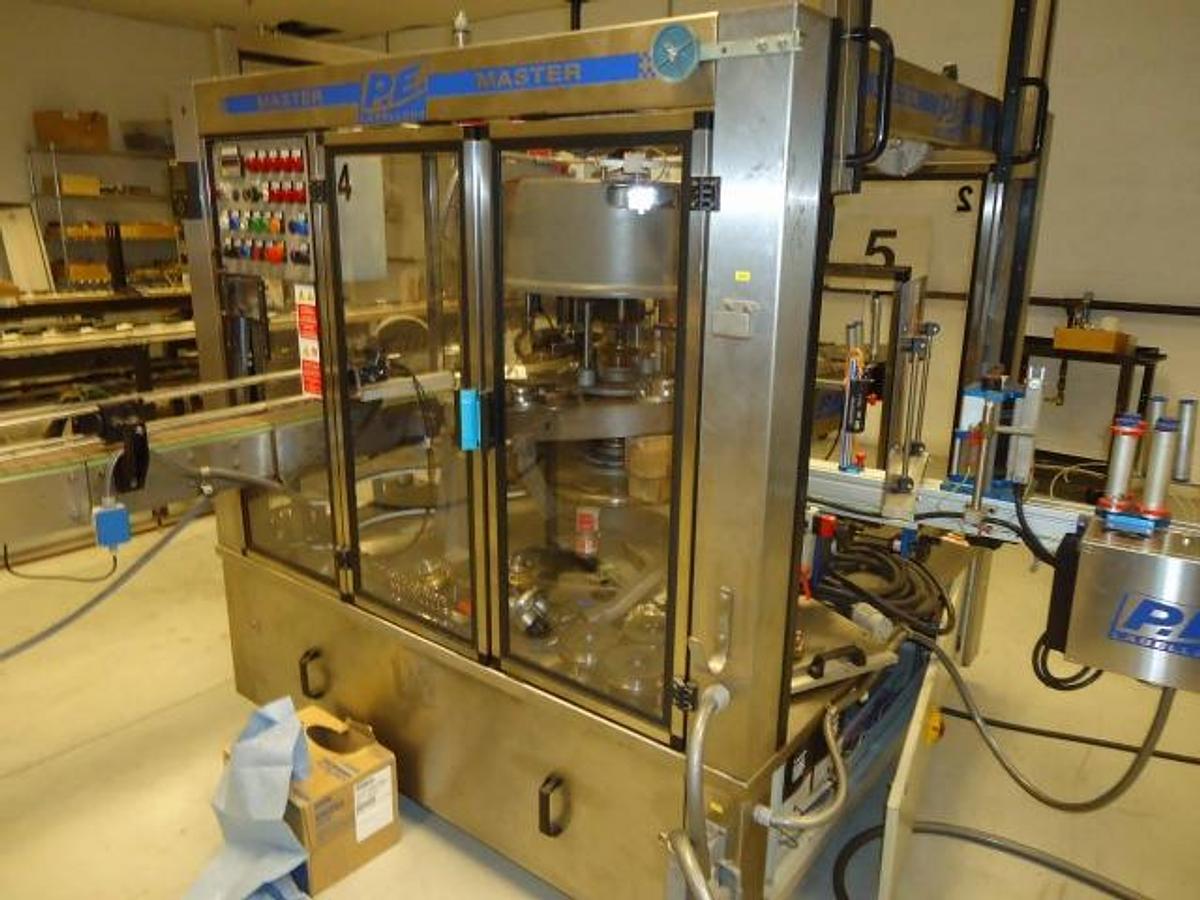
The PE "MASTER M" Front & Back Pressure Sensitive Rotary Labeler is one example of the type of equipment PE produces. This style of machine is designed to apply labels simultaneously to both the front and back of containers in a single pass, which is a common requirement in food and beverage packaging lines. Rotary labelers of this type are typically found in mid-to-high volume production facilities where consistent label registration and line speed are priorities. Buyers sourcing used PE labeling equipment should evaluate the specific model against their container type, label size requirements, and production throughput needs before purchasing.
What is the difference between a semi-automatic and a fully automatic PE labeling machine?
Semi-automatic PE labeling machines require an operator to manually feed containers into the machine one at a time or in small batches, while the labeling mechanism itself applies the label automatically. These units are better suited for lower-volume operations, short runs, or facilities that handle a wide variety of container sizes and need frequent changeovers. They generally have a smaller footprint and lower acquisition cost, making them a practical choice for small to mid-sized producers.
Fully automatic PE labeling machines, such as rotary labelers, integrate directly into a production line and apply labels continuously without manual container handling. These systems can process anywhere from roughly 20 labels per minute on entry-level configurations to well over 600 labels per minute on high-speed industrial setups. Rotary labelers in particular are designed for consistent, high-accuracy placement, often achieving label registration tolerances within plus or minus 1mm. When buying used fully automatic equipment, buyers should carefully inspect the machine's mechanical condition, verify that the control systems are functional, and confirm that the model supports the container dimensions and label formats required for their specific application.
What labeling speeds can PE labeling machines typically achieve?
Labeling speed varies considerably across PE machine models and configurations. Entry-level or older semi-automatic units may handle as few as 20 to 50 containers per minute, while mid-range automatic inline labelers typically operate in the 100 to 300 labels-per-minute range. High-speed rotary labeling systems, which are common in large-scale food and beverage facilities, can exceed 600 labels per minute under optimal conditions. The actual throughput achieved in a production environment depends on container shape, label size, adhesive type, and how well the machine has been maintained.
When evaluating a used PE labeling machine, it is worth asking the seller about the machine's rated speed versus the speed at which it was actually running in its previous production environment. Machines that were consistently run at or near their maximum rated speed may show more wear on drive components, applicator heads, and timing belts than units that operated at moderate throughput. Requesting a video inspection or in-person review of the machine running (if it is still in production at its current facility) is one of the most reliable ways to assess real-world speed capability before committing to a purchase.
Why do polyethylene containers present unique challenges for label adhesion?
Polyethylene has a naturally low surface energy, which makes it more difficult for adhesives to bond to compared to glass or rigid PVC. This is a well-known materials science characteristic of polyolefin plastics. When a label is applied to a PE surface without the correct adhesive formulation or sufficient application pressure, the result can be labels that peel, bubble, or fail to lay flat, which creates quality control issues and potential compliance problems for products that require legible labeling by regulation.
PE labeling machines address this through precise application pressure settings and, in many cases, wipe-down rollers or pressure pads that ensure full contact between the label and the container surface at the moment of application. Buyers sourcing used PE labeling equipment should verify that the pressure adjustment mechanisms are in good working order and confirm that the machine is compatible with the specific adhesive type used on their labels, whether that is a permanent acrylic, rubber-based, or specialty low-surface-energy adhesive. Consulting with a label converter about adhesive selection before finalizing equipment is a practical step that is often overlooked.
What should buyers inspect when purchasing used PE labeling equipment?
Used PE labeling equipment should be evaluated across several key areas before purchase. The mechanical components to prioritize include the label feed mechanism, applicator head, timing belts, drive motors, and any bottle-handling starwheels or conveyors that come with the machine. Wear on these parts directly affects label placement accuracy and line reliability. The control panel and HMI should also be tested to confirm that all functions are accessible and that there are no fault codes or error states that cannot be cleared.
Beyond the machine itself, buyers should research parts availability for the specific model they are considering. Older PE machines may have limited support from the manufacturer depending on the model year, so it is worth contacting PE directly to understand what replacement parts, technical documentation, and service support are available. Reputable used equipment dealers will typically accommodate in-person inspections at their facility or arrange video walkthroughs of the machine. If the equipment is still installed at a production facility, some dealers can coordinate an inspection at the plant, where the machine may even be observed running. Keep in mind that most used equipment dealers are not set up to run full production trials, so buyers should focus inspections on mechanical condition, completeness of the machine, and available documentation.
What is the typical price range for used PE labeling equipment?
Pricing for used PE labeling equipment varies based on machine type, age, condition, and the level of automation. Used semi-automatic label applicators at the lower end of the market can be found in the range of roughly $1,500 to $5,000, while used fully automatic inline labelers typically fall between $10,000 and $30,000 depending on the model and its condition. High-speed rotary labeling systems from established manufacturers like PE can command prices from $30,000 to well over $50,000 on the used market, particularly if they are late-model machines in good mechanical condition with a full complement of format parts.
Buyers should factor in more than just the purchase price when budgeting for used labeling equipment. Shipping, rigging, installation, and any refurbishment or parts replacement needed to bring the machine up to production-ready condition are all real costs that affect the total landed price. Asking the seller for a detailed breakdown of what is included with the machine, such as change parts for different container sizes, tooling, and documentation, helps avoid surprises after the sale. Comparing the total cost of a used PE labeler against the cost of a comparable used machine from another manufacturer is a reasonable step, particularly if parts availability or technical support differs between options.
How does a front and back pressure sensitive rotary labeler work?
A front and back pressure sensitive rotary labeler applies self-adhesive labels to two sides of a container in a single pass through the machine. Containers are fed into a rotating carousel or starwheel system that controls their position and orientation as they move through the labeling stations. At each station, a label is dispensed from a roll, peeled from its liner, and pressed onto the container surface by an applicator pad or wipe-down brush. The rotary design allows the machine to handle containers at high speeds while maintaining consistent label placement, because each container is held in a fixed position relative to the label applicator throughout the application cycle.
Pressure-sensitive labels, sometimes called self-adhesive labels, do not require heat or moisture to activate the adhesive, which simplifies the application process and reduces the number of mechanical components compared to heat-shrink or glue-based labeling systems. This makes pressure-sensitive rotary labelers a popular choice for food, beverage, and personal care packaging lines. When evaluating a used machine of this type, buyers should pay close attention to the condition of the applicator pads or rollers, the label web path components, and the container handling starwheels, as these are the highest-wear areas in normal operation.
What maintenance does PE labeling equipment typically require?
Routine maintenance on PE labeling machines covers both mechanical and electrical systems. On the mechanical side, regular tasks include cleaning the label feed path to prevent adhesive buildup, lubricating drive chains and bearings according to the manufacturer's service intervals, inspecting and replacing worn applicator pads or wipe-down rollers, and checking timing belt tension and condition. Adhesive residue from pressure-sensitive labels is one of the most common sources of mechanical issues in labeling equipment, as buildup on rollers and guides can cause label misfeeds and placement errors over time.
Electrical maintenance focuses on keeping sensors clean and properly aligned, since label detection sensors and container presence sensors are critical to accurate label placement. Control system software and drive parameters should also be documented so that settings can be restored if a component is replaced. For buyers purchasing used PE labeling equipment, obtaining the machine's service manual and any maintenance logs from the seller is valuable, as it provides a baseline for understanding the machine's history and what service may be due. If a service manual is not available from the seller, contacting PE directly to request documentation for the specific model is a worthwhile step before the machine is put into production.
Are used PE labeling machines compatible with different label sizes and container formats?
Most PE labeling machines are designed with adjustability built in, allowing operators to accommodate a range of label heights, label lengths, and container diameters within the machine's specified format range. Changeover between container sizes typically involves adjusting guide rails, starwheels, and applicator head height, and in some cases swapping out format-specific change parts such as container pockets or timing screws. The extent of adjustability varies by model, and buyers should confirm the specific format range of any used machine they are considering against their actual container dimensions.
One important consideration with used labeling equipment is whether the machine comes with a complete set of change parts for the formats it was previously used to run. Change parts are often sold separately or may have been retained by the previous owner, so it is worth asking the seller specifically what is included. Missing change parts can add cost and lead time after purchase, particularly if the parts need to be fabricated or sourced from the manufacturer. For older PE models, verifying that change parts are still available before finalizing a purchase is a practical step that can prevent production delays.
What should buyers understand about shipping and payment when purchasing used PE labeling equipment?
Shipping costs for used labeling equipment depend on the size and weight of the machine, the distance between the seller's location and the buyer's facility, and the level of packaging required to protect the machine in transit. Smaller label applicators may ship on a standard pallet, while larger rotary labeling systems typically require custom crating to prevent damage. Heavy or large machines may also require specialized rigging equipment for loading and unloading, which is an added cost that buyers should request a quote for upfront. Getting a full breakdown of packaging, rigging, freight, and any applicable fees before agreeing to a purchase price helps avoid unexpected costs.
On payment, most used equipment dealers require full payment before a machine is released for shipment. This is standard practice in the industry. Buyers who are unfamiliar with a particular dealer should take time to verify the seller's reputation and track record before sending payment. Requesting a thorough inspection, whether in person, via video call, or through detailed video footage of the machine, is a reasonable step that any reputable dealer should accommodate. Some dealers may offer payment terms to established customers with a prior purchase history, but buyers should not assume terms are available and should ask directly early in the process.