Category
Manufacturer
Model
Ohlson
Ohlson focuses on providing packaging solutions, particularly in the food and pharmaceutical sectors. They are known for their advanced filling and sealing machines that enhance production efficiency and product safety. Ohlson’s commitment to innovation ensures that their equipment meets the evolving needs of manufacturers.
FAQ:
What types of packaging equipment does Ohlson manufacture?
Ohlson is a U.S.-based packaging equipment manufacturer with a strong focus on weighing, filling, and bagging machinery. Their product line includes combination weighers, net weighers, auger fillers, form/fill/seal machines, bucket elevators, and single or multi-head weigh scales with integrated feeder and elevator systems. These machines are built for high-volume production environments where accuracy and throughput consistency matter. Ohlson's equipment is particularly well-regarded in dry goods packaging, where precise weight control is critical to both regulatory compliance and cost management.
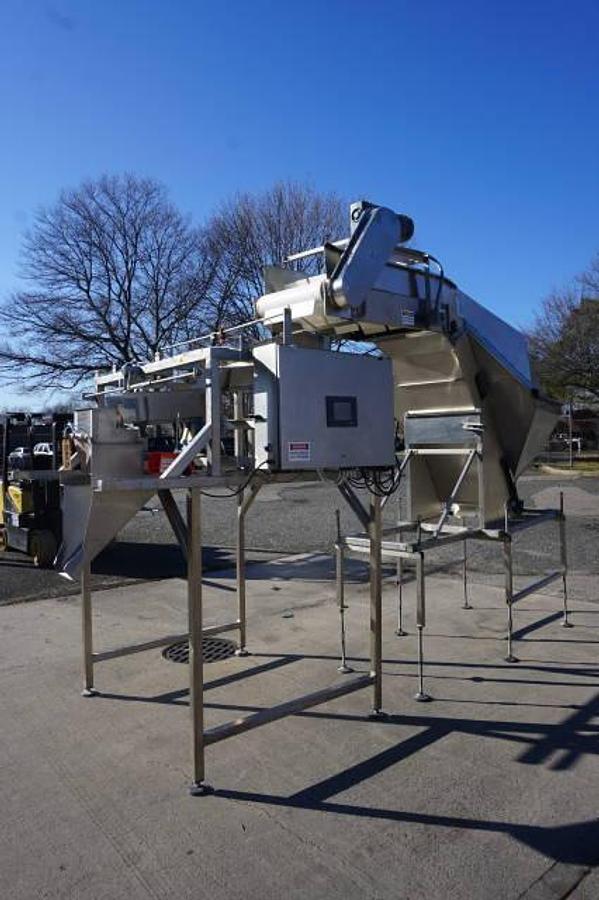
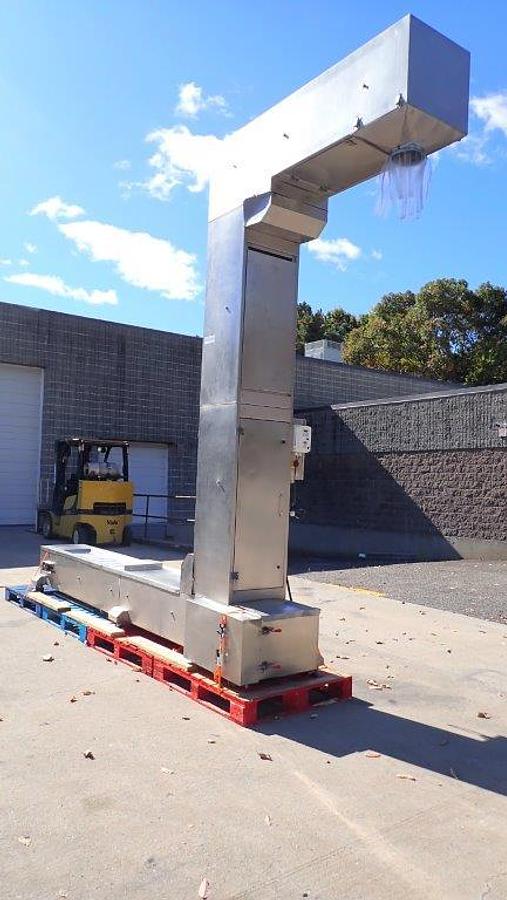
Their form/fill/seal machines are often paired with multi-head scales, such as 14-head scale configurations, to create complete automated packaging lines. Bucket elevators, including stainless steel models in the 11-foot range, are commonly used to feed product into weighing systems. The stainless steel construction found throughout much of their product line makes Ohlson equipment a natural fit for food-grade and pharmaceutical environments where sanitation standards are strict. Across all these machine categories, the brand has built a reputation for mechanical durability that contributes to strong resale value on the secondary market.
What industries is Ohlson packaging equipment best suited for?
Ohlson packaging equipment is primarily designed for the food and pharmaceutical sectors, though it sees significant use in industrial and consumer goods manufacturing as well. Within food production, the brand is especially popular for snack foods, coffee, pet food, nuts, seeds, frozen vegetables, and other dry or semi-dry goods that require accurate portion weighing before bagging or sealing. The stainless steel construction on many Ohlson machines supports the hygiene requirements that food and pharmaceutical manufacturers must meet, making the equipment compatible with facilities that follow USDA, FDA, or similar regulatory standards.
Beyond food and pharma, Ohlson equipment is used in chemical, hardware, and agricultural product packaging where consistent fill weights and reliable sealing are priorities. The combination weigher and auger filler designs translate well to any application involving granular, powdered, or small-piece products. Buyers evaluating used Ohlson machinery for a specific application should confirm that the machine's contact surfaces, seal types, and fill range align with their product characteristics, since used equipment may have been configured for a prior industry or product type that differs from the intended new use.
What should I know before buying used Ohlson packaging equipment?
Buying used Ohlson packaging equipment requires a clear-eyed assessment of the machine's current condition, configuration, and compatibility with your production line. Unlike purchasing directly from a manufacturer, used equipment is typically sold as-is, which places the responsibility of due diligence squarely on the buyer. Before committing to a purchase, request detailed photos, video footage, or ideally an in-person or live video inspection of the machine. Pay close attention to the condition of contact surfaces, seals, sensors, and any mechanical wear points like feeder belts or elevator chains. Ask the seller whether the machine was recently in production and, if so, what product it was running.
It is also worth consulting directly with Ohlson or an authorized service technician to understand what level of support, spare parts availability, and technical documentation exists for the specific model and age of machine you are considering. Older models may have limited parts availability, which can affect long-term operating costs. Reputable used equipment dealers with a history in the packaging industry are generally better positioned to provide accurate machine histories and facilitate thorough inspections than general auction platforms. Taking the time to verify the machine's working condition and parts support before purchase can prevent costly surprises after delivery.
Are replacement parts and technical support available for older Ohlson equipment models?
Parts availability for Ohlson equipment varies depending on the model and its production era. For many of their more widely distributed machines, such as combination weighers and auger fillers, replacement parts including load cells, sealing components, belts, and electronic control boards have historically been available through the manufacturer and through third-party parts suppliers. However, as machines age, the availability of certain proprietary components can become more limited, which is why buyers of used Ohlson equipment are strongly encouraged to contact Ohlson directly before finalizing a purchase to confirm what support exists for a specific model.
Technical support is another consideration that varies by machine age. Ohlson has maintained a presence in the U.S. market long enough that experienced service technicians familiar with their equipment can often be found through packaging industry networks, even for machines that are no longer in active production. Buyers should factor potential service and parts costs into their total cost of ownership calculation. A machine priced attractively on the secondary market can become a poor investment if critical components are no longer available or if local technical expertise is scarce. Asking the seller for any existing service records, manuals, or spare parts inventory that accompanies the machine is a practical step that experienced buyers rarely skip.
What is the typical price range for used Ohlson packaging equipment?
Pricing for used Ohlson packaging equipment varies considerably based on machine type, age, condition, configuration, and the current supply of comparable units on the secondary market. Entry-level or older single-head weigh scale systems might be found in the low thousands of dollars, while fully configured multi-head combination weigher systems integrated with form/fill/seal machines can command prices well into the tens of thousands. Stainless steel construction, low hours, recent calibration, and documented service history all tend to push prices higher, as buyers are paying a premium for reduced risk and faster integration into their production lines.
Ohlson equipment generally holds its value better than lesser-known brands on the secondary market, reflecting the industry's confidence in the brand's build quality and longevity. That said, buyers should be cautious about pricing that seems unusually low, as it may indicate undisclosed mechanical issues, missing components, or machines that have been sitting idle for extended periods without maintenance. Getting a fair market sense of pricing requires comparing multiple listings across reputable used equipment dealers who specialize in packaging machinery. Always factor in shipping, rigging, and any reconditioning costs when evaluating the true landed cost of a used Ohlson machine.
How does an Ohlson combination weigher work, and what products is it designed for?
An Ohlson combination weigher operates by distributing product across multiple weigh buckets simultaneously, then using a computer to calculate which combination of buckets adds up to the target fill weight within a defined tolerance. This approach allows the machine to achieve high accuracy at high speeds, far exceeding what a single-head or net weigh system can accomplish for the same product type. The number of heads, commonly ranging from 10 to 14 on Ohlson systems, directly affects both speed and accuracy since more buckets give the control system more combinations to choose from when hitting the target weight.
Combination weighers are best suited for free-flowing, discrete products where individual piece variation makes exact weight control difficult. Common applications include snack foods like chips and pretzels, frozen vegetables, coffee beans, nuts, candy, pet treats, and small hardware items. The machines are less effective for sticky, wet, or irregularly shaped products that tend to clump or bridge inside the weigh buckets. When evaluating a used Ohlson combination weigher, buyers should verify that the bucket liners, timing gates, and load cells are in good condition, as these are the components most subject to wear and most directly responsible for weighing accuracy.
What should I expect during an inspection of used Ohlson packaging equipment?
Inspections of used packaging equipment typically take one of three forms: in-person visits to the seller's facility, live video walkthroughs conducted remotely, or pre-recorded video captures of the machine that the seller provides. Each approach has its merits depending on geographic distance and the buyer's schedule. In-person inspections give the most complete picture since you can examine wear patterns, listen to the machine run, and check structural integrity directly. Video inspections, while less hands-on, can still reveal a great deal about a machine's condition if the seller is willing to run it through its paces on camera and show close-up footage of critical components.
Keep in mind that most used equipment dealers do not have active production facilities, so testing a machine with actual product is generally not possible at the dealer's location. If the machine is still installed at a manufacturing facility awaiting decommission, there may be an opportunity to observe it running in a production context, which is the most informative inspection scenario available. During any inspection, focus on the condition of contact surfaces, seals, sensors, drive systems, and the control panel. Ask for any available service records, operating manuals, and a list of any known issues or recently replaced parts. A thorough inspection, regardless of format, is the most effective tool a buyer has for managing risk on a used equipment purchase.
What speed and throughput rates can be expected from Ohlson filling and weighing machines?
Throughput rates for Ohlson packaging equipment depend heavily on the specific machine model, the number of weighing heads, the target fill weight, and the characteristics of the product being packaged. Multi-head combination weighers, particularly 14-head configurations, are capable of completing a high number of weighing cycles per minute. In practical production settings, these machines can often achieve anywhere from 40 to over 100 packages per minute depending on the fill weight and product flow characteristics. Lighter fill weights with free-flowing products tend to allow faster cycle rates, while heavier fills or products with irregular flow behavior require slower speeds to maintain accuracy.
Auger fillers and single-head weigh scales operate at lower throughput rates but are better suited for applications requiring very precise fills of powders or granular materials where combination weighing is not appropriate. When assessing a used Ohlson machine's throughput potential, buyers should request any available production data or ask the seller about the speeds the machine was running at its prior facility. It is also worth noting that actual throughput in a buyer's facility will depend on how well the machine integrates with upstream and downstream equipment, including conveyors, elevators, and bagging or sealing systems. A machine capable of high cycle rates will only deliver those rates if the surrounding line can keep up.
How does Ohlson equipment integrate with existing production lines and automation systems?
Ohlson packaging machines are generally designed to function as components within a larger integrated production line rather than as standalone units. Their combination weighers and auger fillers are built to interface with form/fill/seal machines, vertical baggers, conveyors, and bucket elevator feed systems. Many Ohlson machines use standard industrial communication protocols and can be connected to line control systems, though the ease of integration depends significantly on the age of the machine and the control architecture it uses. Older machines with legacy PLCs or proprietary control systems may require additional engineering work to communicate with modern automation platforms.
Buyers planning to integrate a used Ohlson machine into an existing automated line should document their current line's communication standards, physical dimensions, and throughput requirements before evaluating specific machines. Consulting with a controls engineer or a packaging line integrator familiar with Ohlson equipment is a practical step, particularly if the machine will need to synchronize timing with adjacent equipment. When the machine is still available for inspection at a prior production facility, observing how it was integrated there can provide useful reference points. Used equipment dealers who specialize in packaging machinery can often help buyers identify whether a specific Ohlson model is a practical fit for their line configuration before a purchase is finalized.
What are the shipping and logistics considerations when purchasing used Ohlson packaging equipment?
Shipping used packaging equipment involves more planning than most buyers anticipate, particularly for larger machines like multi-head combination weighers, form/fill/seal systems, or bucket elevators. The cost and complexity of shipping depends on the machine's size and weight, how it needs to be packaged or crated for transit, and whether specialized rigging is required for loading and unloading. Smaller components like single-head weigh scales may ship on standard pallets, while larger systems often require custom crating or skidding to prevent damage. Buyers should ask the seller for a detailed breakdown of packaging, rigging, and freight costs before agreeing to a purchase price, since these costs can add meaningfully to the total landed cost of the equipment.
For very large or heavy machines, a forklift or crane may be needed at both the origin and destination locations, and arranging that equipment is typically the buyer's responsibility at their facility. Freight carriers that specialize in industrial machinery are generally better equipped to handle these shipments than standard LTL carriers. Buyers should also confirm whether the machine will be fully disassembled, partially disassembled, or shipped intact, as this affects both shipping cost and the time required to reassemble and recommission the equipment after delivery. Asking for photos of how the machine will be packaged prior to shipment is a reasonable request that reputable sellers are accustomed to accommodating.