Category
Manufacturer
Model
FAQ:
What is an OAL Associates heat tunnel and what is it used for?
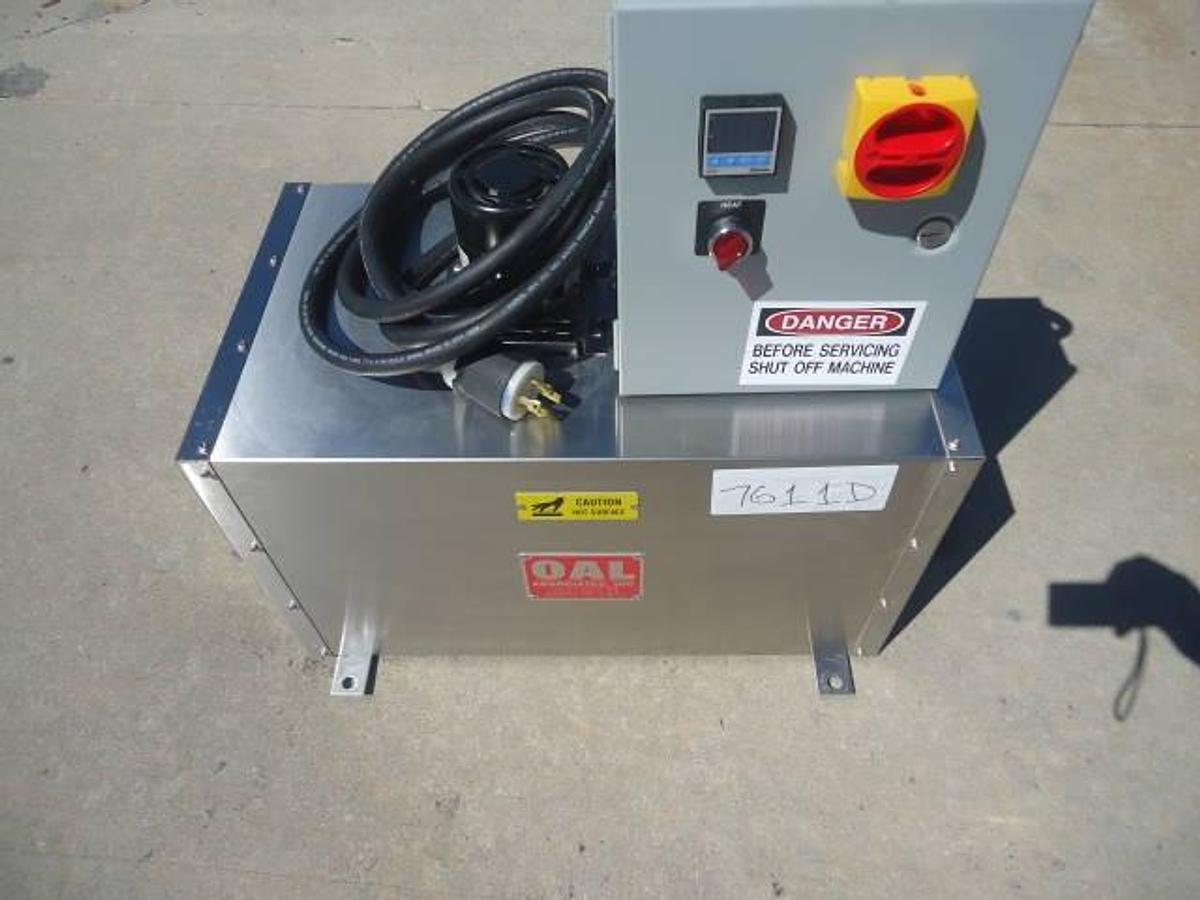
An OAL Associates heat tunnel is an industrial shrink packaging machine designed to apply controlled heat to products wrapped in shrink film, causing the film to contract tightly around the product for a finished, professional appearance. These machines are commonly used in production and fulfillment environments across industries including food and beverage, cosmetics, pharmaceuticals, retail product bundling, and promotional packaging. The tunnel format means products travel through on a conveyor belt while heated air surrounds them, producing consistent results at production-line speeds.
OAL Associates built a reputation for producing reliable, workhorse-style heat tunnels suited to mid-to-high volume packaging operations. The machines are typically found in facilities where consistent shrink quality and throughput efficiency matter. Buyers sourcing a used OAL Associates heat tunnel should pay close attention to the tunnel aperture size, conveyor belt width, and heating system type, as these factors determine what product sizes and film types the machine can handle effectively.
What shrink film types are compatible with OAL Associates heat tunnels?
OAL Associates heat tunnels are generally compatible with the most common shrink film types used in commercial packaging, including PVC (polyvinyl chloride), polyolefin (POF), and polyethylene (PE) films. The specific film compatibility of any given unit depends largely on the heating system it uses. Tunnels equipped with recirculating hot air systems tend to offer broader film compatibility and more even heat distribution, making them well-suited for polyolefin and polyethylene applications. Units with infrared heating elements can deliver more intense, directional heat, which works well for PVC but may require more careful calibration with thinner films.
For buyers evaluating a used OAL Associates heat tunnel, it is worth confirming the heating method before purchase, since this directly affects which films the machine will process cleanly. PVC film typically requires lower activation temperatures than polyolefin, so temperature range and control precision are important specs to verify. If a facility is running multiple film types, variable temperature control and adjustable conveyor speed become especially valuable features, as they allow operators to dial in settings for each application without mechanical modifications.
What tunnel opening sizes are typically available on OAL Associates heat tunnels?
OAL Associates heat tunnels were manufactured in a range of aperture sizes to accommodate different product dimensions and packaging configurations. Tunnel opening size, typically expressed as width by height, is one of the most critical specifications to verify before purchasing, since it determines the maximum product footprint the machine can handle. Smaller apertures are suited to compact consumer goods like cosmetics, bottles, or retail items, while larger openings are needed for multi-pack bundles, trays, or bulkier industrial products.
When shopping for a used OAL Associates heat tunnel, buyers should measure their largest product plus packaging and compare that against the listed tunnel opening dimensions, leaving adequate clearance on all sides for proper airflow and heat distribution. Insufficient clearance can result in uneven shrink, film burn, or product damage. Reputable used equipment dealers will typically list the tunnel aperture in the machine specifications, and buyers should request confirmation of this measurement along with conveyor belt width during the inspection process.
What temperature range do OAL Associates heat tunnels operate at?
OAL Associates heat tunnels are designed to operate across a temperature range broad enough to accommodate the activation requirements of common shrink films. In general, commercial heat tunnels of this type operate anywhere from roughly 250 degrees Fahrenheit up to 400 degrees Fahrenheit or higher, depending on the model and heating system. PVC films typically activate at lower temperatures, while polyolefin and polyethylene films may require higher heat settings to achieve a clean, tight shrink. Precise temperature control is therefore a key feature that affects both film performance and energy efficiency.
For a used machine, buyers should verify that the temperature control system is functioning accurately and that the heating elements are in serviceable condition. Uneven heat distribution caused by worn or partially failed elements can result in inconsistent shrink quality. During an inspection, whether in person or via video, it is reasonable to ask the seller to demonstrate the machine reaching and holding target temperatures. Consulting with the manufacturer about the specific model can also help buyers understand what replacement heating components are still available and what level of technical support to expect.
What conveyor speed range should buyers expect on an OAL Associates heat tunnel?
Conveyor speed on an OAL Associates heat tunnel controls how long a product spends inside the heated chamber, which directly affects shrink quality. Machines with variable speed control allow operators to slow the belt for products that need more dwell time, or increase speed for lighter films and higher throughput demands. Variable speed drives are considered a significant advantage in production environments where multiple product sizes or film types are run on the same line. Fixed-speed models are less flexible but may still be suitable for operations running a single, consistent product.
On used equipment, the condition of the drive motor and speed control system deserves close attention during inspection. Belt speed is typically measured in feet per minute, and buyers should confirm both the minimum and maximum speeds the unit can achieve. A machine that can no longer hold consistent belt speed may produce uneven shrink results and could indicate wear in the drive components. Asking the seller to demonstrate conveyor operation at various speeds during a video or in-person inspection is a practical way to assess this before committing to a purchase.
What power requirements do OAL Associates heat tunnels typically need?
OAL Associates heat tunnels are industrial machines that generally require three-phase electrical power, which is standard in manufacturing and warehouse environments but not always available in smaller facilities. Voltage requirements commonly fall at 208V, 230V, or 460V three-phase, depending on the model and configuration. Amperage draw can be substantial given the heating elements involved, so buyers need to confirm that their facility's electrical infrastructure can support the machine before purchase. Single-phase models do exist in the heat tunnel category but are less common at the production scale OAL Associates equipment typically targets.
Before finalizing a purchase, buyers should obtain the full electrical specification sheet for the specific unit, including voltage, phase, amperage, and total kilowatt draw. This information should be reviewed by a qualified electrician to confirm compatibility with the facility's power supply and panel capacity. Electrical incompatibility is one of the more costly surprises in used equipment purchases, since rewiring or transformer installation adds significant expense and downtime. Reputable used equipment dealers should be able to provide the nameplate specifications or documentation for the machine to support this evaluation.
What should buyers inspect when evaluating a used OAL Associates heat tunnel?
Buying used industrial packaging equipment requires a more deliberate inspection process than purchasing from a manufacturer, since the machine's history and current condition are the primary factors determining its value and reliability. For a used OAL Associates heat tunnel, key areas to evaluate include the condition of the conveyor belt (looking for fraying, warping, or uneven tracking), the heating elements (checking for burned-out sections or uneven heat zones), the temperature control system (confirming accurate readings and stable operation), and the drive motor and speed control (verifying smooth, consistent belt movement across the full speed range). The exterior frame and tunnel housing should also be checked for damage that could affect airflow patterns.
Used equipment dealers will typically accommodate in-person inspections or provide detailed video walkthroughs of the machine in its current state. Some units may still be installed and operating at the original production facility, which allows for a more thorough assessment. Keep in mind that most dealers do not have the permits or production infrastructure to run actual product through the machine during a demonstration, so buyers should focus on mechanical and electrical function rather than expecting a full production trial. Consulting with the OAL Associates manufacturer about the specific model can also help buyers understand what parts are still available and what the realistic service life of the unit might be.
Are replacement parts and technical support available for used OAL Associates heat tunnels?
Parts availability and manufacturer support for used OAL Associates heat tunnels will vary depending on the age and model of the specific machine. Older units may have limited support from the manufacturer, while more recent models are more likely to have replacement components still in circulation. Common wear items on heat tunnels include conveyor belts, heating elements, temperature controllers, and drive components, some of which are standard industrial parts that can be sourced from third-party suppliers even if the manufacturer no longer stocks them directly. Buyers should contact OAL Associates before purchasing to ask specifically about parts availability and technical documentation for the model they are considering.
This is an important step that many buyers overlook. A machine that is mechanically sound at the time of purchase could become difficult to maintain if critical components are no longer available. Asking the seller whether any spare parts are included with the machine is also worth doing, since previous owners sometimes retain extra belts, elements, or controllers. The age and model of the unit should factor into the purchase decision alongside price, since a lower-cost machine with no parts support may end up being more expensive to own over time than a slightly higher-priced unit with better manufacturer backing.
What industries commonly use OAL Associates heat tunnels?
OAL Associates heat tunnels are used across a broad range of industries where shrink-wrapped packaging is part of the production or fulfillment process. Food and beverage operations use them to bundle multipacks, wrap individual bottles or containers, and apply tamper-evident seals. Cosmetics and personal care manufacturers rely on heat tunnels for retail-ready packaging that requires a clean, tight shrink appearance. Pharmaceutical companies use them for tamper-evident overwraps, and retail product bundlers use them for promotional packaging and point-of-sale display configurations.
Beyond these primary sectors, heat tunnels from OAL Associates are also found in printing and publishing operations (for wrapping books and periodicals), hardware and industrial goods packaging, and e-commerce fulfillment centers where bundling and protective overwrapping are part of the outbound process. The versatility of a heat tunnel across film types and product sizes makes it a broadly applicable piece of equipment. Buyers sourcing a used unit should consider whether the machine's tunnel aperture, conveyor speed range, and heating system align with the specific products and volumes their operation requires.
What are the typical shipping and logistics considerations when purchasing a used OAL Associates heat tunnel?
Heat tunnels are industrial machines with significant weight and dimensional footprints, which means shipping costs and logistics planning are a meaningful part of the total purchase cost. Proper packaging is essential to prevent damage in transit. Depending on the size of the unit, this may involve custom crating rather than simple palletization. Larger or heavier machines may also require professional rigging services for loading at the seller's facility and unloading at the buyer's location, both of which add to the landed cost. Buyers should ask the seller for a detailed breakdown of packaging, rigging, and freight charges before finalizing the purchase so there are no surprises.
Freight for industrial equipment is typically quoted on a per-shipment basis and can vary considerably based on the machine's dimensions, weight, origin, destination, and the carrier used. For machines being shipped long distances or internationally, transit insurance is worth considering given the replacement cost of the equipment. Buyers should also confirm that their receiving facility has adequate dock equipment or forklift capacity to unload the machine safely upon arrival. Coordinating these logistics details in advance with the seller helps ensure the machine arrives in the same condition it was in at the time of inspection.