Category
Manufacturer
Model
FAQ:
What types of North Star freeze dryers are available on the used equipment market?
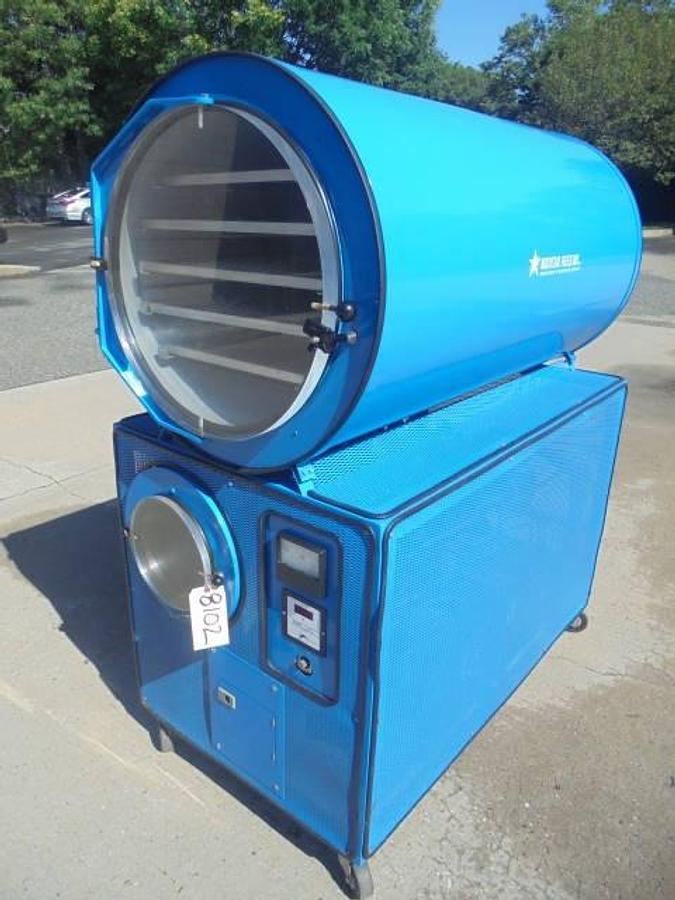
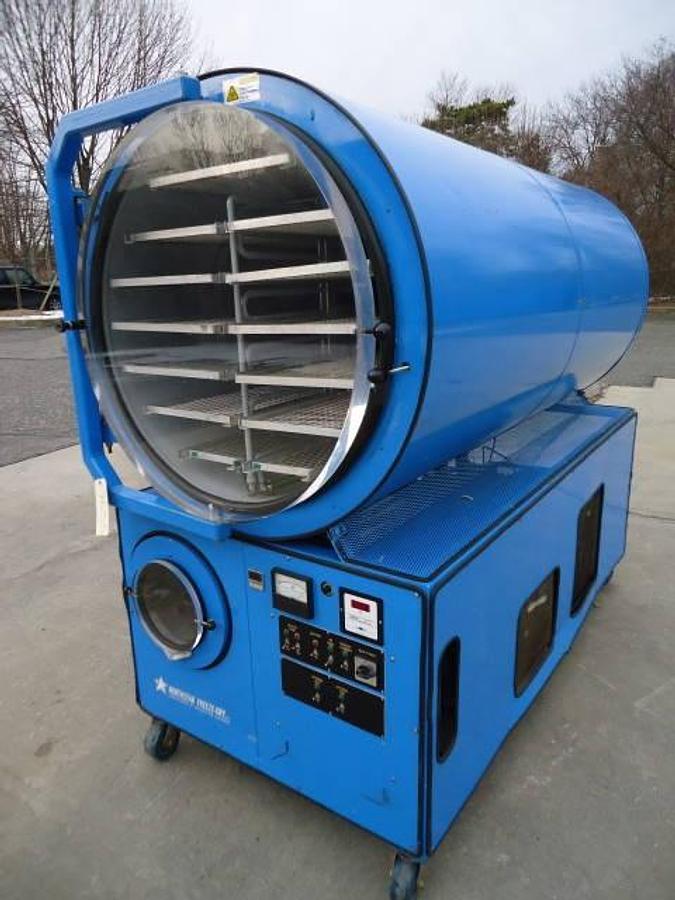
North Star freeze dryers appear in the used industrial equipment market in a range of configurations suited to commercial and light industrial applications. Two models that come up in used equipment listings include the North Star 2452 Freeze Dryer (single phase) and the Northstar 3680 Horizontal Freeze Dryer. The horizontal configuration on the 3680 is a design choice common in larger commercial units, where the chamber orientation allows for easier loading of product trays and can accommodate higher batch volumes than vertical cabinet-style machines.
Buyers shopping for used North Star freeze dryers should pay close attention to the model number and phase requirements, since a single-phase machine like the 2452 has different electrical requirements than three-phase industrial units. Confirming the electrical compatibility with your facility before purchasing is a practical step that can save significant retrofit costs. Used equipment dealers who specialize in food processing and pharmaceutical machinery are generally the most reliable source for these machines, as they tend to have the industry-specific knowledge to accurately describe the machine's condition and configuration.
How much does a freeze dryer cost, and what affects the price of used units?
Freeze dryer pricing spans a wide range depending on size, configuration, and intended application. Small home-use units from mainstream brands typically start around $2,000 to $5,000, while mid-range commercial machines can run $10,000 to $30,000, and large-scale industrial freeze dryers can exceed $100,000. Used equipment is priced significantly below those retail figures, but the actual discount depends on the machine's age, condition, capacity, and how much demand exists for that particular model in the secondary market.
For used freeze dryers specifically, several factors drive the final price: the condenser capacity (measured in kilograms of ice), the vacuum pump type (oil-free pumps command a premium because they reduce ongoing maintenance costs), chamber size, and the overall mechanical condition of the refrigeration system and vacuum components. A machine that has been well-maintained in a food production facility and recently decommissioned due to a line change will typically carry a higher price than one that has been sitting idle for years. Buyers should always factor in shipping, rigging, and any refurbishment costs when comparing prices across listings to understand the true landed cost.
What should buyers look for when inspecting a used North Star freeze dryer before purchasing?
A thorough inspection of a used freeze dryer should cover several critical systems. The refrigeration circuit is the most expensive component to repair, so buyers should look for evidence of refrigerant leaks, check the condition of the compressor, and ask whether the system holds vacuum properly. The vacuum pump is the second major item to evaluate. Oil-based pumps should have records of regular oil changes, while oil-free pumps should be checked for wear on the diaphragm or scroll components. The condition of the chamber seals, door gaskets, and shelf heating elements also matters, since these affect the machine's ability to run an efficient drying cycle.
Used equipment dealers will generally accommodate in-person inspections, virtual walkthroughs, or video captures of the machine so buyers can assess its current condition before committing. Some machines may still be operating at a production facility, which allows a buyer to observe the unit running under real conditions. Keep in mind that most dealers are not set up to test actual product runs, since food or pharmaceutical production requires separate permitting that a machinery dealer does not typically hold. Consulting with the manufacturer about parts availability and support for a specific model and serial number is also a smart step, since older machines may have limited parts availability regardless of their mechanical condition.
What is the lifespan of a freeze dryer, and how does age affect the value of a used machine?
A well-maintained commercial freeze dryer can remain in productive service for 15 to 25 years, though the actual lifespan depends heavily on how the machine was used, how consistently it was serviced, and the quality of its core components. The refrigeration compressor and vacuum pump are the components most likely to limit a machine's useful life, and replacement costs for these parts can be substantial on larger industrial units. Machines that processed highly acidic or corrosive products may show accelerated wear on chamber surfaces and seals compared to units used for standard food or pharmaceutical applications.
Age affects value in two distinct ways on the used market. Mechanically, an older machine carries more risk simply because its components have more hours on them and replacement parts may be harder to source. Commercially, older machines may also lack features that have become standard on more recent equipment, such as advanced process controls, data logging, or oil-free vacuum pumps. That said, age alone is not a reliable proxy for condition. A 15-year-old machine that received consistent preventive maintenance can be in better working order than a 5-year-old unit that was run hard without proper servicing. Buyers should weigh the machine's service history alongside its age when evaluating any used freeze dryer.
How does the freeze drying process work, and how long does a typical cycle take?
Freeze drying, technically called lyophilization, removes moisture from a product through a process called sublimation. The product is first frozen to a temperature typically between -40°F and -50°F, locking the water content into ice crystals. The chamber is then placed under a deep vacuum, which lowers the pressure enough that the ice transitions directly from solid to vapor without passing through a liquid phase. That vapor is captured on a refrigerated condenser coil inside the machine, leaving the product with its structure and most of its nutritional content intact but with 98% or more of its moisture removed.
Cycle times vary considerably depending on the product being dried, its initial moisture content, the thickness of the product slices, and the machine's shelf temperature and vacuum performance. Food products generally require anywhere from 20 to 40 hours per cycle, with denser or higher-moisture items like meats and dairy taking longer than fruits or vegetables. Pharmaceutical applications often involve more precisely controlled cycles that can run even longer to meet strict residual moisture specifications. On a used machine, buyers should factor in that worn vacuum pumps or refrigeration systems can extend cycle times beyond what the equipment was originally rated for, which directly affects throughput and operating costs.
What is the shelf life of food processed in a freeze dryer?
Properly freeze-dried food stored in airtight containers with oxygen absorbers can remain shelf-stable for 20 to 25 years under ideal storage conditions. That figure assumes the food was processed to a low residual moisture level (typically below 2%), packaged in Mylar bags or sealed cans with oxygen absorbers, and stored in a cool, dark environment away from temperature fluctuations. The long shelf life results from the combination of extremely low moisture content and the absence of oxygen, both of which are required for microbial growth and oxidative degradation.
In practice, shelf life varies by product type. Low-fat foods like fruits, vegetables, and lean meats tend to achieve the longest storage times. High-fat products such as whole eggs, avocados, and fatty meats have shorter shelf lives even after freeze drying because fat oxidizes over time regardless of moisture levels. For anyone evaluating a used freeze dryer for food production, the machine's ability to consistently achieve deep vacuum levels and low final product moisture is directly tied to whether the finished product will actually meet those long shelf-life targets. A machine with a degraded vacuum pump or refrigeration system may leave residual moisture levels that significantly shorten shelf life.
What types of food and products can be processed in a commercial freeze dryer?
Commercial freeze dryers are used across a wide range of food categories. Fruits and vegetables are among the most common applications, including berries, corn, peas, and leafy greens. Proteins such as cooked meats, poultry, and seafood are also regularly freeze dried for emergency food supplies, military rations, and backpacking meals. Dairy products including cheese, yogurt, and ice cream can be processed, as can full prepared meals, soups, and sauces. The pharmaceutical and nutraceutical industries use freeze drying extensively for biologics, vaccines, probiotics, and certain medications where heat-based drying would degrade the active compounds.
Beyond food and pharma, freeze drying is used in specialty applications including the preservation of botanical specimens, archival documents that have suffered water damage, and high-value electronics components. The key consideration for any application is that the product must be able to withstand freezing without structural damage that would compromise the final product's quality. Some products with very high sugar content, for example, can present challenges because the sugar matrix can interfere with proper ice crystal formation and sublimation. A used commercial freeze dryer from an industrial food processing background will generally be well-suited to most food applications, though buyers should confirm the machine's temperature range and capacity match their intended product.
What is the best freeze dryer for the money, and how do commercial units compare to home models?
The answer depends almost entirely on the intended volume and application. For home use and small-scale food preservation, Harvest Right is the dominant brand and is widely considered the best value in the consumer segment, with machines ranging from small to large home configurations. These units are designed for occasional use by individuals or small families and are priced accordingly. For anyone processing larger volumes, whether for a small food business, co-packing operation, or institutional food storage program, a used commercial freeze dryer typically offers a far better cost-per-pound-of-output ratio than stacking multiple home units.
Used commercial and industrial freeze dryers represent a middle ground that many buyers overlook. A used commercial machine purchased from a reputable equipment dealer can deliver significantly higher batch capacity than a home unit at a price that may be comparable to or only moderately higher than buying multiple consumer-grade machines. The trade-off is that used commercial equipment requires more due diligence during the buying process, since the buyer takes on more responsibility for assessing the machine's condition. Buyers who do their homework on inspections, service history, and parts availability often find that a used commercial freeze dryer delivers the best long-term value for anything beyond casual home use.
How does shipping and delivery work for a used industrial freeze dryer?
Shipping a used freeze dryer involves more logistics than typical freight because these machines are heavy, contain sensitive refrigeration components, and require careful handling to prevent damage in transit. Smaller units may be palletized and shipped via standard LTL freight carriers, while larger commercial machines often require specialized rigging equipment for loading and unloading. The cost of rigging, which involves cranes, forklifts, or other heavy-lift equipment, is typically an added expense on top of the base freight charge and should be factored into the total acquisition cost.
Packaging requirements also affect shipping costs. Proper crating protects the machine during transit and is especially important for units with delicate vacuum components or refrigeration lines that could be damaged by vibration or impact. Buyers should ask the dealer specifically about how the machine will be packaged, what rigging is required at the origin and destination, and what the estimated freight cost is to their facility. Getting a clear picture of all these costs upfront prevents surprises when the final invoice arrives. For very large machines, buyers may also need to arrange for a loading dock or forklift at their receiving location, since standard residential or small commercial deliveries may not have the equipment needed to offload safely.
What are the typical payment terms when buying a used freeze dryer from an equipment dealer?
Most used equipment dealers require payment in full before the machine is released for shipping. This is standard practice in the industry and applies to most buyers regardless of the purchase price. The reasoning is straightforward: once a machine ships, the dealer has limited recourse if a payment dispute arises, and the logistics of returning a large piece of industrial equipment are complicated and costly for all parties involved. Buyers should plan their financing or cash flow accordingly and not expect net payment terms on a first transaction.
Some dealers will extend payment terms to repeat customers with whom they have an established relationship, but this is the exception rather than the rule. Buyers who are unfamiliar with a particular dealer should treat full prepayment as the baseline expectation. To manage risk on their end, buyers can request detailed photos, video walkthroughs, or in-person inspections before committing to payment, and should verify the dealer's reputation and track record in the industry before sending funds. Working with dealers who have a long history of selling food processing or pharmaceutical equipment, and who can provide references or verifiable transaction history, is one of the most effective ways to purchase used machinery with confidence.