Category
Manufacturer
Model
National Instrument
National Instrument is a leader in test and measurement equipment, catering to industries such as automotive, aerospace, and electronics. Their advanced data acquisition systems and software solutions are widely used for performance testing and analysis.
FAQ:
What types of filling equipment does National Instrument manufacture?
National Instrument produces several distinct lines of liquid filling equipment, with their Filamatic brand being among the most recognized in the industry. The core product lines include piston fillers, overflow fillers, pump fillers, and net weight fillers. Each design addresses a different set of production requirements. Piston fillers, like the Filamatic DAB-32 and FUS-260 models, use a measured piston stroke to dispense a precise volume of product per cycle, making them well-suited for thick, viscous, or particulate-laden liquids. Overflow fillers work by filling containers to a consistent level rather than a fixed volume, which is ideal for clear bottles where visual uniformity on the shelf matters. Pump fillers handle free-flowing liquids and are often chosen for high-speed lines, while net weight fillers are used when fill accuracy by mass is the priority rather than volume.
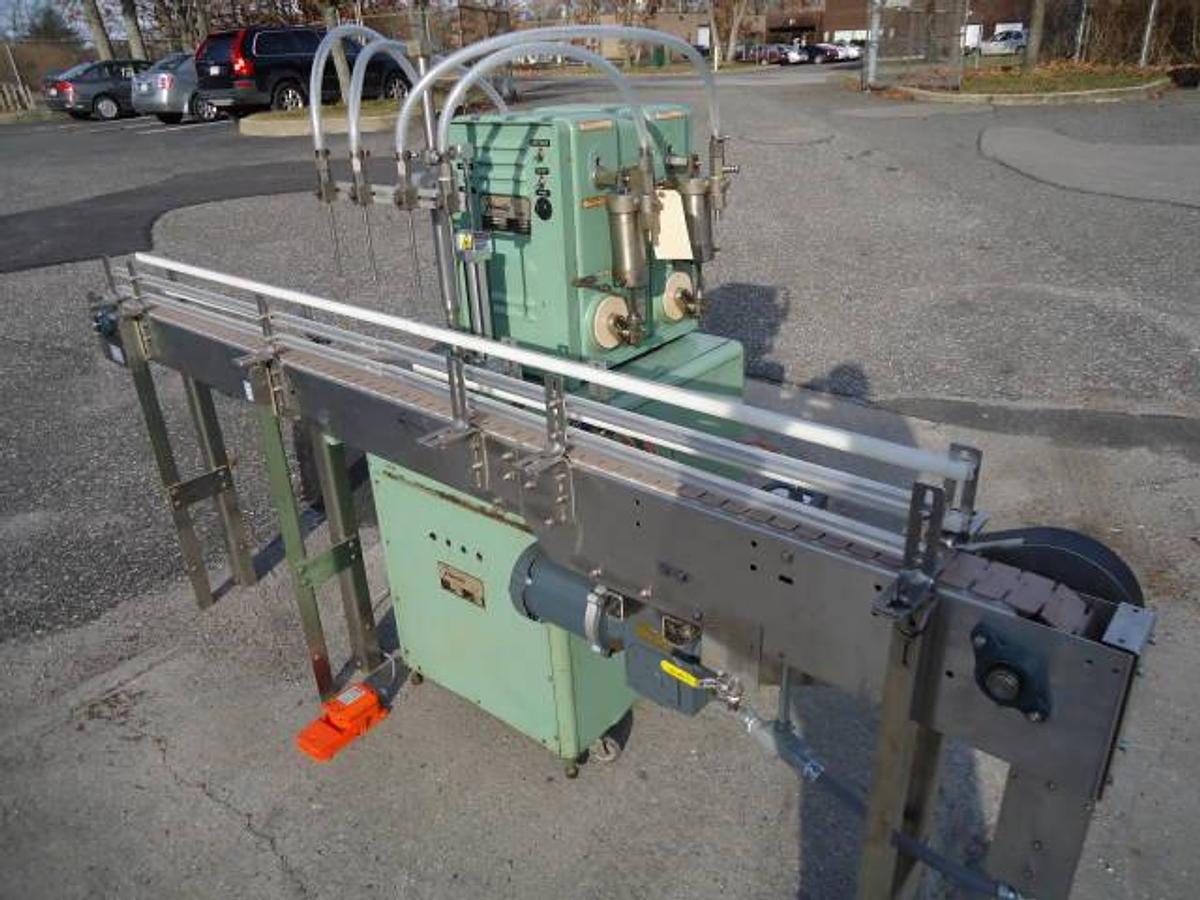
National Instrument also produces multi-head configurations, meaning a single machine frame can carry two, four, or more filling heads operating simultaneously to increase throughput. The four-piston filler with conveyor, for example, is a common configuration seen in mid-volume production environments. Many of their machines are built with stainless steel product contact parts and sanitary fittings, which is why they are so frequently found in pharmaceutical, cosmetic, food, and chemical manufacturing facilities. Understanding which filling principle a specific model uses is important when evaluating used equipment, since the mechanism directly determines which products it can handle effectively.
What industries use National Instrument Filamatic filling machines?
Filamatic filling machines from National Instrument have a strong presence in pharmaceutical and nutraceutical manufacturing, where fill accuracy and sanitary construction are non-negotiable. The machines are designed to meet the cleanliness standards expected in regulated environments, with product-contact surfaces that can be cleaned and sanitized between production runs. Cosmetics and personal care manufacturers are also heavy users of this equipment, particularly for products like lotions, serums, shampoos, and creams that require gentle, consistent filling without foaming or product degradation. The piston-filling mechanism is especially well-regarded for handling viscous formulas that would challenge simpler gravity-fed systems.
Beyond those core markets, National Instrument filling equipment is used in food and beverage production for sauces, dressings, syrups, and other pourable products, as well as in chemical and household products manufacturing for items like cleaners, lubricants, and adhesives. The versatility of the Filamatic line across such a wide range of industries is part of why these machines retain strong resale value on the secondary market. Buyers sourcing used equipment should confirm that the specific model they are considering was previously used in a compatible application, since a machine that processed industrial chemicals would require thorough cleaning and inspection before being redeployed in a food or pharmaceutical setting.
What should buyers know about purchasing used National Instrument filling equipment?
Buying used filling equipment requires more due diligence than purchasing from a manufacturer, because the machine's history, condition, and remaining service life are not guaranteed. The first step is verifying the exact model number and year of manufacture, since National Instrument has produced Filamatic machines across several generations and parts availability can vary significantly between older and current models. Contacting National Instrument directly to ask about support, spare parts, and documentation for a specific model number is a smart early step in the evaluation process. Older machines may have limited or discontinued parts support, which affects long-term operating costs and uptime.
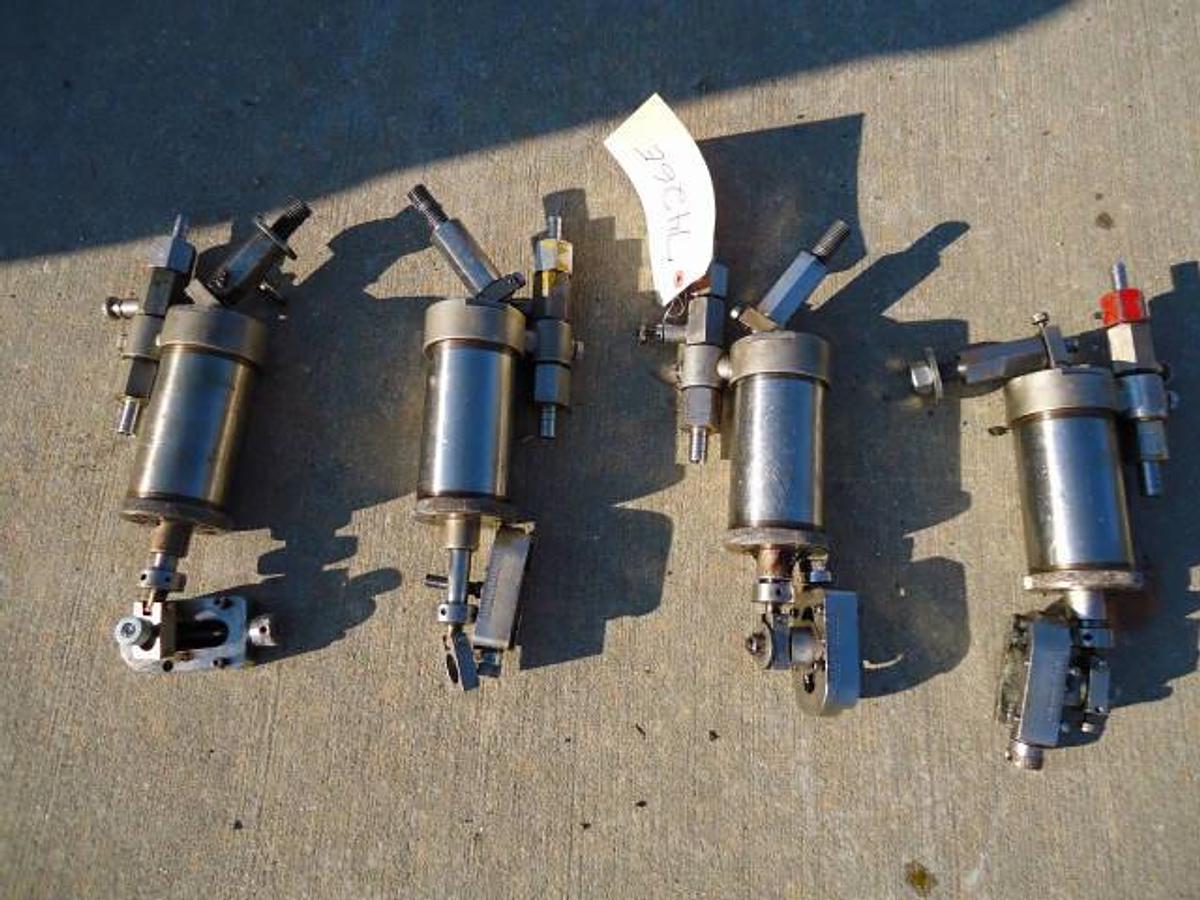
Buyers should also request a thorough inspection before committing to a purchase. Reputable used equipment dealers will typically accommodate in-person visits, live video walkthroughs, or recorded video of the machine operating. Keep in mind that most dealers do not have the production permits required to run actual product through a machine during a demonstration, so inspections focus on mechanical condition, completeness of components, and visual assessment of wear. Checking that all piston assemblies, seals, and product contact parts are present and undamaged is especially important for piston fillers, since those components are critical to fill accuracy and can be costly to replace. Used equipment is sold as-is, so a careful pre-purchase inspection is the buyer's primary protection.
What fill volumes are National Instrument piston fillers capable of handling?
National Instrument Filamatic piston fillers are built to cover a wide range of fill volumes, and the specific range depends on the model and the piston size installed. The DAB-32 model, for instance, references 32-ounce pistons, indicating it is configured for larger fill volumes suited to containers in that size range. Smaller Filamatic models can be adjusted to fill volumes as low as a few milliliters, making them suitable for vials, small bottles, and sample containers. The piston stroke is typically adjustable, allowing operators to dial in a precise fill volume within the machine's designed range without swapping major components.
Container compatibility is closely tied to fill volume, but also depends on the tooling and change parts installed on the machine. Bottle guides, conveyors, and fill nozzles are often size-specific, so a machine configured for 32-ounce round bottles may need different tooling to run smaller containers efficiently. When evaluating used Filamatic equipment, buyers should ask which change parts and piston sizes are included with the machine, since acquiring missing tooling separately can add cost and lead time. Confirming that the machine's volume range aligns with current production requirements before purchase avoids the expense of retrofitting or sourcing additional components after the fact.
How does a piston filler differ from an overflow filler, and which is right for my product?
A piston filler dispenses a fixed, measured volume of product per cycle by drawing liquid into a cylinder and then pushing it out through a nozzle into the container. This makes it highly accurate on a per-fill basis and well-suited for viscous products, products with particulates, or any application where fill-by-volume accuracy is the priority. Piston fillers handle a wide viscosity range, from thin liquids to thick pastes, which is why they are so common in pharmaceutical, cosmetic, and food applications. The trade-off is that piston fillers require more maintenance attention to seals and cylinders to maintain that accuracy over time.
An overflow filler works differently. It fills each container until the liquid reaches a preset level, with excess product flowing back into a reservoir. This method produces containers that look identical on the shelf, which is a significant advantage for retail products in clear bottles where visual consistency matters to consumers. Overflow fillers are best suited for thin, free-flowing liquids and are not appropriate for foamy or highly viscous products. The choice between the two comes down to the product's viscosity, the container type, and whether volumetric accuracy or visual fill-level consistency is the higher priority. For buyers looking at used National Instrument equipment, identifying which filling principle a specific machine uses is one of the first qualification steps before assessing condition or price.
What is the typical price range for used National Instrument Filamatic filling machines?
Pricing for used National Instrument Filamatic filling machines varies considerably based on model, configuration, number of filling heads, included accessories, and overall condition. A basic single or dual-head piston filler in average working condition might be priced in the low thousands of dollars, while a multi-head system with a conveyor, full change parts, and good mechanical condition can reach into the tens of thousands. Four-head configurations with integrated conveyors, like the Filamatic four-piston filler with conveyor, tend to command higher prices because they represent more production capacity and more included components.
Buyers should factor in more than just the purchase price when calculating the total cost of acquiring used filling equipment. Shipping, rigging, crating, and freight can add meaningful costs depending on the machine's size and weight and the distance it needs to travel. If change parts, replacement seals, or piston assemblies need to be sourced separately, those costs should be included in the budget. Getting a clear picture of the landed cost, meaning the machine price plus all costs to get it running at your facility, is the right way to compare options across different sellers and configurations. Requesting a detailed quote that breaks out all of those line items from the dealer is a reasonable and standard ask.
Are replacement parts available for used National Instrument Filamatic machines?
Parts availability for used National Instrument Filamatic equipment depends heavily on the model and how old it is. National Instrument has been producing Filamatic machines for decades, and while the company generally supports its equipment, older or discontinued models may have limited availability for certain components. Contacting National Instrument directly with the model number and serial number of a machine under consideration is the most reliable way to get an accurate answer about what parts are currently stocked or can be manufactured on request. This step is worth taking before finalizing a purchase, since parts scarcity can affect both repair timelines and operating costs.
For common wear items like seals, O-rings, and piston assemblies, there is often a secondary market through industrial parts suppliers and third-party rebuild shops that specialize in filling equipment. Some used equipment dealers also sell Filamatic piston assemblies as standalone components, which can be useful for buyers who need to replace or upgrade specific parts on a machine they already own. When purchasing a used Filamatic machine, asking the seller what spare parts, if any, are included with the sale is a practical step. Machines sold with a set of spare seals, extra pistons, or additional change parts represent better value and lower risk than machines sold with no accompanying components.
Can used National Instrument filling machines be integrated into an existing production line?
Used National Instrument Filamatic machines are generally designed for in-line production and can be integrated with upstream and downstream equipment such as unscramblers, cappers, labelers, and conveyors. Models that include a built-in conveyor, like the four-piston filler with conveyor, are particularly straightforward to incorporate into a line since the conveyor timing and indexing are already matched to the filling heads. For machines without an integrated conveyor, the buyer will need to ensure that the infeed and outfeed conveyor heights and speeds are compatible with the filler's requirements.
The practical complexity of integration depends on how different the used machine's specifications are from the existing line's layout and container format. Electrical compatibility is another consideration, since older machines may be wired for different voltage or control standards than a modern facility uses. A qualified equipment technician or the machine's manufacturer can help assess what modifications, if any, are needed to bring the machine into a current production environment. Buyers who plan to integrate a used filler into a running line should budget time and resources for installation, line balancing, and operator training in addition to the machine acquisition costs.
What should buyers ask a used equipment dealer before purchasing a National Instrument filling machine?
Before committing to a purchase, buyers should ask the dealer several specific questions to build a clear picture of the machine's condition and history. First, request the full model number, serial number, and approximate year of manufacture, then use that information to contact National Instrument directly about parts and technical support availability. Ask the dealer how the machine was used, what product it ran, and why it was decommissioned. A machine that was running a compatible product in a well-maintained facility is a very different proposition from one that was pulled from service due to mechanical failure. Ask for photos or video of all major components, including the piston assemblies, seals, product contact surfaces, and control panel.
On the logistics side, ask the dealer specifically how the machine will be packaged for shipping, whether rigging is included in the quoted price, and what the estimated freight cost is to your location. Most dealers require full payment before a machine ships, so understanding the total landed cost upfront prevents surprises. Ask whether an in-person or video inspection can be arranged, and if the machine is still installed at a production facility, ask whether it can be observed running. Finally, ask what spare parts, tooling, change parts, or documentation come with the machine. A thorough set of questions answered honestly by the dealer is a good indicator of the dealer's reliability and knowledge of the specific equipment they are selling.
What compliance standards or design considerations are relevant for National Instrument filling equipment used in regulated industries?
National Instrument Filamatic machines intended for pharmaceutical and food applications are typically built with sanitary design principles in mind. This includes stainless steel product contact surfaces, sanitary fittings, and designs that facilitate cleaning and sanitization between production runs. In regulated industries like pharmaceutical manufacturing, equipment is expected to support compliance with FDA current Good Manufacturing Practice (cGMP) regulations, which govern how production equipment is qualified, cleaned, and maintained. The machine itself does not carry a cGMP certification, but its design characteristics either support or complicate a facility's ability to meet those standards.
For buyers in regulated industries, the age and condition of a used machine's product contact components are especially important. Worn seals, pitted stainless steel surfaces, or damaged fittings can create cleaning validation challenges and potential contamination risks. Before deploying a used filling machine in a regulated environment, facilities typically go through an installation qualification and operational qualification process to demonstrate that the equipment performs consistently within defined parameters. Buyers should factor in the time and cost of that qualification work when evaluating used equipment options. Consulting with a process engineer or validation specialist familiar with filling equipment before purchasing is a practical step for any buyer in a regulated industry.