Category
Manufacturer
Model
FAQ:
What is a Multivac machine and what is it used for?
Multivac is a German-engineered brand widely regarded as one of the most trusted names in industrial vacuum packaging and food processing equipment. The company produces a broad range of machines designed to extend shelf life, reduce spoilage, and meet the strict hygiene and presentation standards required in commercial food production. Their equipment is used across meat processing, cheese production, deli operations, ready meal manufacturing, and broader food service industries. The core function of any Multivac machine is to remove oxygen from packaging, which inhibits bacterial growth and dramatically slows product deterioration.
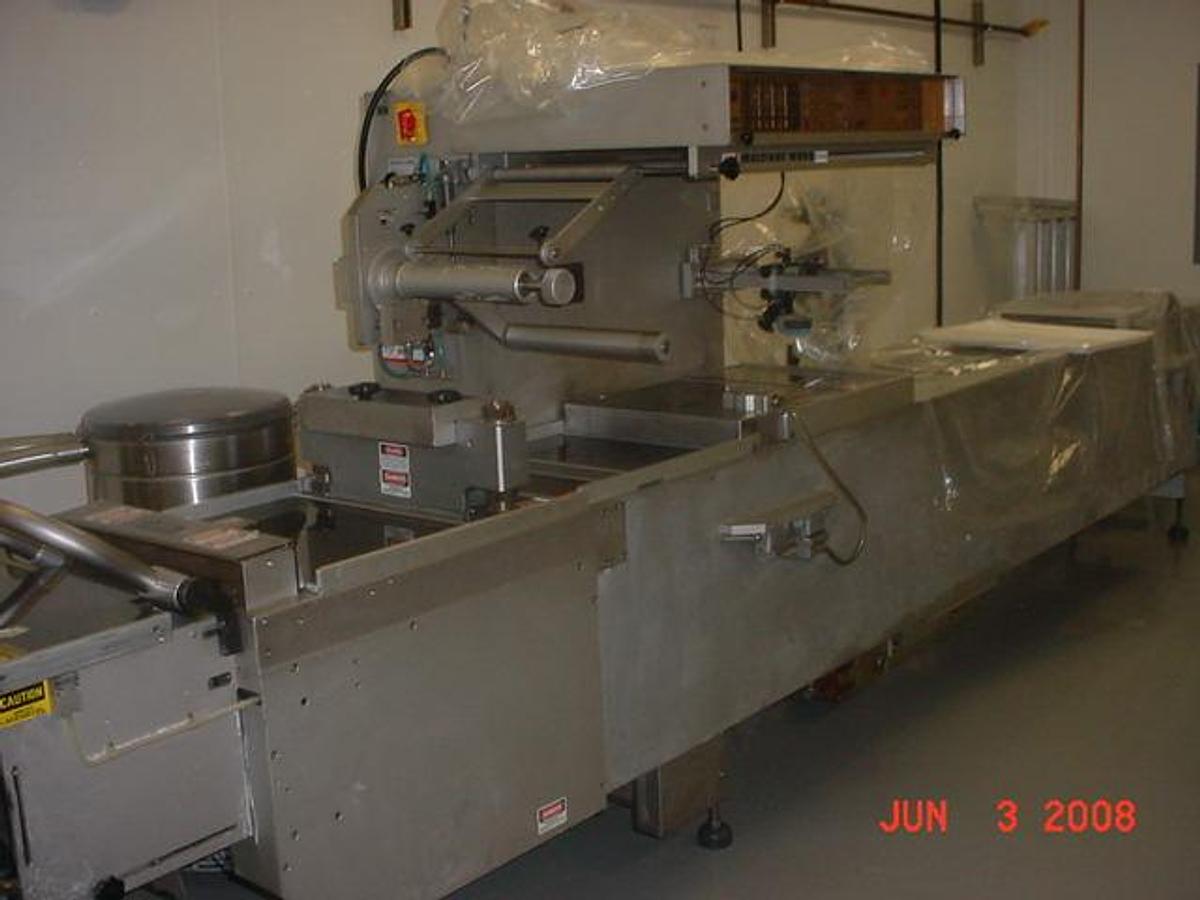
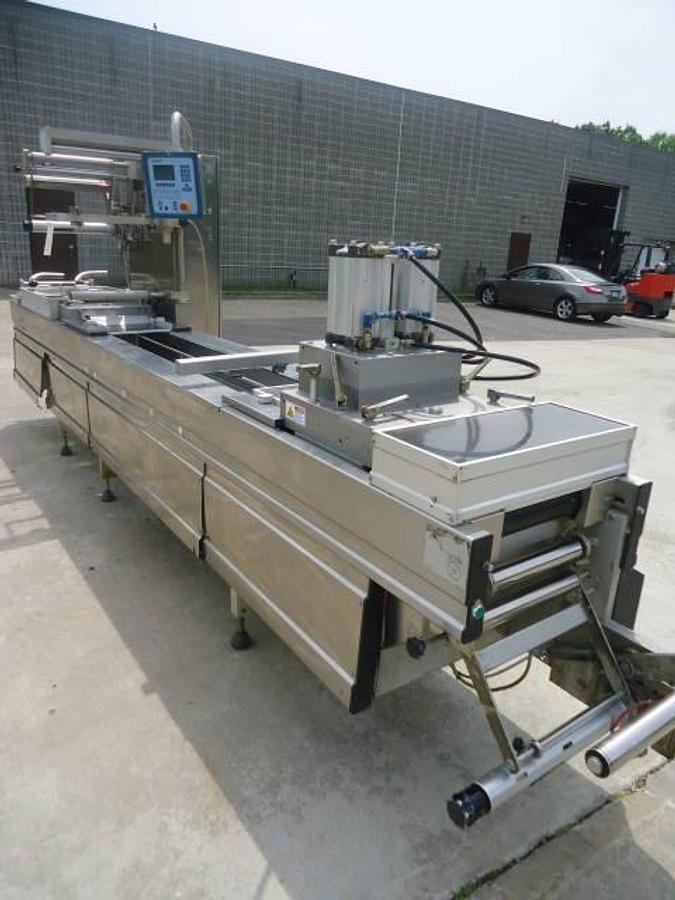
The product lineup covers several distinct machine categories. Chamber vacuum sealers are used for smaller-batch or portion-level packaging. Thermoforming machines, like the Multivac R230 and M855f-PC, handle high-volume continuous packaging by forming a bottom web of film, placing product, and sealing it under vacuum or modified atmosphere. Traysealing machines seal pre-formed trays, and belt vacuum sealers handle larger or irregularly shaped products. Each machine type serves a different production scale and packaging format, so buyers typically select based on throughput requirements, product type, and available floor space.
What types of used Multivac machines are commonly available for sale?
The used Multivac market includes several machine categories that appear with reasonable regularity, particularly as food manufacturers upgrade their lines or consolidate operations. Thermoforming machines are among the most commonly traded, with models like the Multivac R230 representing a well-known workhorse for continuous roll-stock vacuum and MAP (modified atmosphere packaging) applications. The M855f-PC is a more advanced thermoformer with PC-based controls, suited to higher-volume or more automated production environments. These machines are typically sold by dealers who have acquired them from food processing facilities that have either upgraded or closed.
Beyond thermoformers, used chamber machines and traysealing units also appear on the market, though availability at any given time depends on what has recently come out of production. Buyers looking for a specific model or configuration are generally best served by working with a dealer who specializes in food packaging and processing equipment, since general industrial dealers may not have the category knowledge to accurately represent the machine's condition or specifications. It is worth asking a dealer about the machine's production history, how many cycles it has logged if known, and whether any major components have been replaced or serviced prior to sale.
How much do used Multivac machines typically cost?
Pricing for used Multivac equipment varies considerably depending on the machine type, model, age, condition, and configuration. Entry-level or older chamber vacuum sealers can be found in the low thousands of dollars, while mid-range thermoformers in good working condition typically fall somewhere between $20,000 and $80,000. Larger, more sophisticated thermoforming lines with automation, advanced controls, or MAP capability can exceed $100,000 even in the used market, reflecting the significant cost of these machines when purchased from the manufacturer.
Buyers should factor in more than just the listed machine price. Shipping costs for large thermoformers can be substantial, especially if heavy-duty rigging is required for loading and unloading. Packaging and crating add further cost depending on the dealer's preparation standards. Installation, any required tooling or die sets specific to a product format, and potential refurbishment or parts replacement should also be budgeted. Getting a clear picture of the total landed cost before committing to a purchase is important, particularly for buyers new to acquiring used industrial packaging equipment.
What is the difference between a Multivac thermoformer and a chamber vacuum sealer?
A chamber vacuum sealer works by placing the entire product and bag inside an enclosed chamber. The machine evacuates air from the chamber, seals the bag, and then re-pressurizes. This process works well for smaller operations, portion packing, or products that require careful handling. Chamber machines are generally more compact and lower in cost, making them a practical choice for delis, butcher shops, or smaller food manufacturers running moderate volumes.
A Multivac thermoformer operates on a fundamentally different principle and is built for continuous, high-volume production. A roll of bottom film is fed through the machine, heated, and formed into cavities that match the shape of the product being packaged. Product is loaded into these cavities, a top film is applied, and the package is sealed under vacuum or a modified atmosphere gas blend before being cut into individual packs. The Multivac R230 is a classic example of this format. Thermoformers are significantly larger, faster, and more capital-intensive than chamber machines, but they produce a more consistent, professional-looking package at a much higher throughput rate. For high-volume food manufacturers, the efficiency gains typically justify the investment.
What food products can be packaged on a Multivac machine?
Multivac machines are used across an exceptionally wide range of food categories. Fresh and processed meats are among the most common applications, including whole cuts, ground meat, sausages, bacon, and deli slices. Cheese in block, sliced, and shredded formats is another major category, as vacuum packaging significantly extends shelf life by preventing mold growth. Ready meals, marinated products, seafood, poultry, and charcuterie are also routinely packaged on Multivac thermoformers and chamber machines.
Beyond protein and dairy, Multivac equipment is used for produce, snack foods, baked goods, and even non-food items that benefit from vacuum or modified atmosphere packaging. The specific machine configuration, including film type, tooling, and gas flush capability, determines what products a given machine can handle efficiently. Buyers acquiring a used Multivac machine should confirm that the tooling and die sets included with the machine match their intended product dimensions and packaging format, since tooling is often product-specific and can represent a meaningful additional cost if it needs to be fabricated.
What should buyers look for when inspecting a used Multivac machine?
A thorough inspection is the most important step in any used Multivac purchase. Reputable dealers typically offer in-person inspections, virtual walkthroughs, or detailed video documentation of the machine in its current state. If the machine is still installed at a production facility, it may be possible to observe it running product, which gives the clearest picture of its actual operating condition. If the machine has been decommissioned, buyers should at minimum request that it be powered on and cycled to verify that core functions operate correctly. Keep in mind that most dealers are not set up to run actual production, so full product testing at a dealer's facility is generally not possible.
Key areas to assess include the condition of the forming and sealing stations, the state of the heating elements, the integrity of seals and gaskets, the functionality of the vacuum pump, and the condition of any electronic or PC-based controls. For thermoformers like the R230 or M855f-PC, the film drive system and cutting mechanism are also worth examining closely. Asking for any available service records or maintenance history is reasonable, though documentation varies widely with used equipment. Consulting with a Multivac service technician independently before finalizing a purchase can be a worthwhile investment, particularly for higher-value machines.
Are parts and consumables readily available for used Multivac machines?
Multivac has a well-established global service and parts network, which is one of the practical advantages of buying within this brand. For machines that are not excessively old, spare parts including vacuum pump components, sealing elements, heating bars, and control system parts are generally obtainable through Multivac's service organization or through third-party parts suppliers. Consumables like packaging films are widely available from multiple film suppliers, since Multivac thermoformers use standard roll-stock formats that are not proprietary to the brand.
That said, parts availability can become more limited as machines age. Before purchasing a used Multivac machine, it is worth contacting Multivac directly to ask about parts support for the specific model and serial number in question. Older or discontinued models may have limited parts availability, which affects long-term serviceability and total cost of ownership. Buyers should factor this into their decision, particularly if the machine is intended as a primary production asset rather than a backup unit. A dealer who specializes in food packaging equipment will often have useful insight into which models are well-supported and which are approaching end-of-parts-life.
Is a used Multivac machine suitable for small food businesses?
Multivac equipment is primarily engineered for commercial and industrial production environments. Thermoforming machines in particular are large, require dedicated electrical service, and are designed for continuous high-volume operation. For a small business running low volumes, a full thermoformer may represent more machine than is practically needed, and the operating complexity can be a challenge without experienced staff. That said, smaller Multivac chamber machines are more accessible in terms of footprint, power requirements, and ease of operation, and these do appear in the used market at price points that smaller operations can realistically consider.
For a small food business evaluating used Multivac equipment, the key questions are throughput requirements, available floor space, electrical infrastructure, and staffing. If daily packaging volumes are modest, a used chamber machine may be a well-matched and cost-effective solution. If the business is scaling toward higher volumes or retail presentation standards, a smaller thermoformer could make sense. Consulting with a dealer who specializes in food packaging machinery, rather than a general equipment dealer, is the most reliable way to match machine size and type to actual production needs.
How long do Multivac machines typically last?
Multivac has a strong reputation for build quality and durability, and it is not unusual to find machines that have been in commercial production for 15 to 25 years or more. The brand's German engineering standards and use of robust mechanical components contribute to long operational lifespans when machines are properly maintained. This longevity is one of the reasons used Multivac machines retain meaningful resale value and remain practical purchases even when they are well into their service life.
Actual lifespan depends heavily on how the machine was maintained, how intensively it was run, and whether major components like vacuum pumps and heating elements were serviced or replaced on schedule. A machine from a well-run food facility with documented maintenance will generally be in significantly better condition than one from an operation where maintenance was deferred. Buyers should ask dealers as much as possible about the machine's operational history and, where feasible, arrange for an independent mechanical assessment before purchase. Since used machines are sold as-is, placing the machine in front of a qualified technician before finalizing the transaction is a reasonable precaution for any significant investment.
What are the typical shipping and payment considerations when buying a used Multivac machine?
Used Multivac thermoformers and other large packaging machines require careful handling during transit. Proper palletization or custom crating is typically necessary to prevent damage, and the cost of this preparation varies depending on the machine's size and the dealer's packaging standards. Larger thermoforming lines may require professional rigging equipment for loading at the origin and unloading at the destination, which adds to the total cost. Buyers should request a detailed breakdown of packaging, rigging, and freight charges from the dealer before committing to a purchase, since these costs can be substantial for heavy industrial equipment.
On payment, most used equipment dealers require full payment prior to shipping. Some dealers extend terms to repeat customers, but this is not the norm for first-time transactions. Buyers should clarify payment requirements early in the process and factor freight and handling into the total budget alongside the machine price. Understanding the full landed cost, which includes the machine, all shipping-related charges, and any immediate service or installation needs, gives a much more accurate picture of the actual investment required.