Category
Manufacturer
Model
FAQ:
What is a frozen block chipper flaker and what is it used for?
A frozen block chipper flaker is a heavy-duty food processing machine designed to break down solid frozen meat blocks into smaller chips or flakes without requiring any thawing. This is a critical capability in high-volume meat processing environments where waiting for product to defrost would slow production significantly and risk compromising food safety through temperature abuse. The machine accepts fully frozen blocks and reduces them to a consistent particle size that downstream equipment, such as grinders, mixers, or forming machines, can handle efficiently.
These machines are widely used across sausage manufacturing, burger patty production, pet food processing, and ready meal preparation. In each of these applications, consistent frozen particle size is important for achieving uniform texture and accurate portion weights in the finished product. By keeping the meat frozen throughout the size-reduction step, processors also preserve color, moisture retention, and microbial safety, all of which matter for product quality and shelf life.
What is the difference between the chipper function and the flaker function on these machines?
The two functions produce different particle geometries suited to different downstream processing needs. The chipper mode breaks frozen blocks into irregular chunks or dice-like pieces, typically used when the product will go into a grinder or mixer that can handle larger feed sizes. Chipping is generally a faster, higher-throughput operation and is common in sausage and burger production lines where the frozen meat needs to be reduced before final grinding.
The flaker mode produces thin, flat shavings or flakes from the frozen block surface. Flaked product has a much higher surface-area-to-mass ratio, which means it tempers or blends more quickly and evenly than chips. Flaking is often preferred in applications requiring rapid incorporation of frozen protein into a mix, such as certain ready meal formulations or emulsified meat products. Some machines offer both modes through interchangeable tooling or adjustable settings, giving processors flexibility across different product lines.
What types of frozen products can an MPBS frozen block chipper flaker process?
MPBS frozen block chipper flakers are built for a broad range of frozen protein products. Beef, pork, poultry, and fish are all commonly processed on these machines, making them versatile across multi-species meat processing facilities. The stainless steel construction is compatible with the varying fat contents, textures, and moisture levels found across these different protein types without risk of corrosion or flavor transfer between runs.
Beyond whole muscle and trim blocks, these machines are also used to process frozen fat blocks and offal, which are common ingredients in sausage and pet food formulations. The key requirement is that the product be in a solid frozen block form, typically the standard 25 kg or 60 lb block format common in the industry. Processors handling multiple species or product types benefit from machines that disassemble easily for cleaning between runs, which prevents cross-contamination and supports allergen management protocols.
What throughput capacity should buyers expect from an industrial frozen block chipper flaker?
Throughput capacity varies considerably depending on the model, the cutting configuration, and the density of the product being processed. Smaller industrial models typically handle several hundred kilograms per hour, while larger, higher-specification machines can exceed one thousand kilograms per hour under optimal conditions. For a busy sausage or burger production facility running multiple shifts, selecting the right capacity is critical to avoiding a bottleneck at the size-reduction stage.
Buyers evaluating used machines should pay close attention to the original manufacturer specifications for the specific model they are considering, as capacity figures are model-dependent and can vary significantly even within a single brand's lineup. It is also worth factoring in the condition of the cutting blades, since worn tooling on a used machine will reduce effective throughput and increase energy consumption. Asking the seller for details on the machine's service history and blade condition is a practical step before committing to a purchase.
What are the typical power and voltage requirements for an MPBS frozen block chipper flaker?
Frozen block chipper flakers are motor-driven industrial machines and require a three-phase electrical supply in most cases. The motor size varies by model and capacity, but industrial units commonly run on 380V to 480V three-phase power at 50 or 60 Hz depending on the country of manufacture and intended market. MPBS Industries is a UK-based manufacturer, so machines built for the European or UK market will typically be configured for 380-415V at 50 Hz.
Buyers purchasing a used MPBS machine for use in North America or other regions with different electrical standards should factor in the cost of rewiring or installing a step-up transformer before the machine can be operated. Confirming the exact voltage, phase, and frequency requirements with the seller before purchase avoids surprises at installation. Electrical compatibility is one of the more common overlooked costs when importing used food processing equipment across regions.
How easy is an MPBS frozen block chipper flaker to clean, and what hygiene standards do these machines meet?
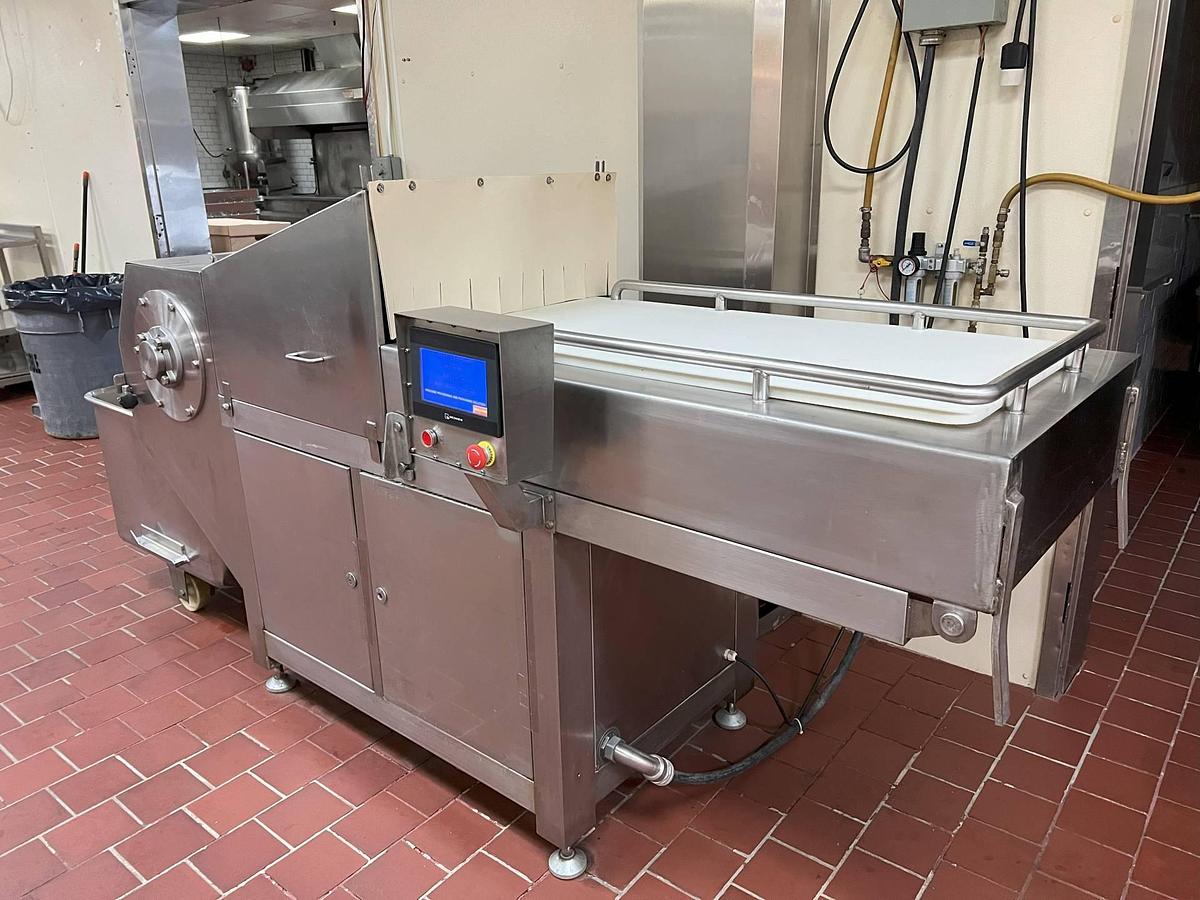
Hygiene is a primary design consideration for food-grade frozen block chipper flakers. MPBS machines are constructed from stainless steel, which resists corrosion, tolerates high-pressure washdowns, and does not harbor bacteria in the same way that painted steel or aluminum surfaces can. The front-mounted digital control pad on MPBS models keeps electrical components protected while still allowing easy access to the cutting chamber for cleaning. Machines designed for food processing environments are typically built to disassemble without tools or with minimal tooling so that cutting heads, blades, and contact surfaces can be removed, inspected, and sanitized between production runs.
Compliance with food safety standards such as CE marking for European markets or equivalent USDA and NSF guidelines for North American facilities is an important purchasing criterion. Buyers of used machines should verify the original compliance certifications for the specific unit and consult with their local food safety authority to confirm whether the machine meets current applicable standards in their facility. Standards and inspection requirements can evolve over time, so a machine that was fully compliant when manufactured may require modifications or additional documentation to satisfy a current audit.
What should buyers look for when inspecting a used MPBS frozen block chipper flaker before purchasing?
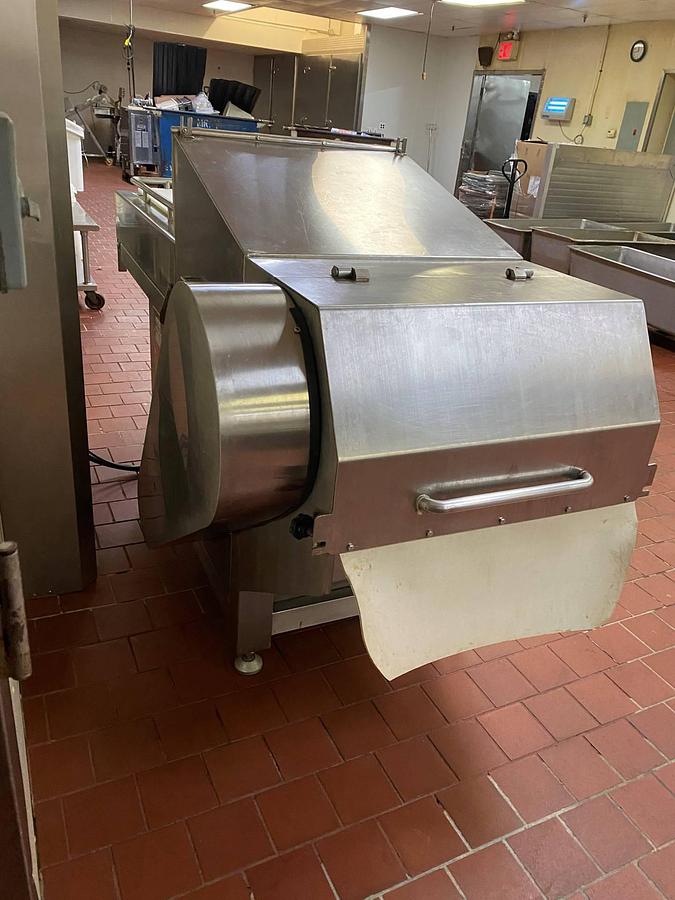
The most important areas to assess on a used frozen block chipper flaker are the condition of the cutting blades or flaking heads, the integrity of the stainless steel surfaces, and the operational state of the drive motor and gearbox. Blades are wear parts and may need replacement, which adds to the total cost of acquisition. Surface corrosion, pitting, or weld repairs on the hopper and cutting chamber can be indicators of heavy use or inadequate cleaning practices, and these are worth examining closely either in person or through a detailed video inspection.
Reputable used equipment dealers will typically accommodate in-person inspections or virtual walkthroughs via video call. In some cases, the machine may still be installed at the selling facility and can be inspected in a working environment. Keep in mind that most equipment dealers are not set up to run actual production tests, so a functional check is usually limited to confirming that the machine powers on and the cutting mechanism operates without unusual noise or vibration. Buyers should also contact the manufacturer directly to understand parts availability and service support for the specific model and age of machine they are considering.
What are the typical shipping and logistics considerations for buying a used frozen block chipper flaker?
Frozen block chipper flakers are heavy industrial machines, and shipping costs can be a significant portion of the total landed price. The machine will need to be properly palletized or crated before transport to prevent damage in transit. Depending on the seller's capabilities and the size of the unit, custom crating may be required, which adds to the shipping cost. Larger machines may also require forklift loading at the origin and forklift or crane unloading at the destination, and buyers should confirm whether rigging services are included or need to be arranged separately.
For international shipments, buyers need to account for customs duties, import taxes, and any compliance documentation required by the destination country. It is worth requesting a full breakdown of packaging, freight, and rigging costs from the seller before finalizing the purchase so that the true landed cost is clear. Freight quotes can vary considerably based on the carrier, the origin and destination, and whether the shipment moves by LTL, full truckload, or ocean container.
What payment terms do used equipment dealers typically require for a machine like this?
The standard practice among used equipment dealers is to require full payment before the machine is shipped. This applies to most transactions regardless of the buyer's location or the size of the purchase. The rationale is straightforward: once a machine leaves the seller's facility, the seller has limited recourse if payment issues arise. Buyers who are new to a particular dealer should expect to pay in full upfront, typically by wire transfer, though some dealers accept other forms of verified payment.
Some dealers extend payment terms to repeat customers or buyers with an established purchasing relationship, but this is at the dealer's discretion and not a standard offering. Buyers should ask about available payment options early in the process and clarify exactly when payment is due relative to inspection, crating, and shipment scheduling. Understanding the payment timeline helps avoid delays in getting the machine into production.
Why are frozen block chipper flakers preferred over thawing meat before processing?
Processing meat in its frozen state offers several practical advantages over thawing first. Keeping the product frozen through the size-reduction step significantly reduces microbial risk, since bacteria multiply rapidly as meat temperatures rise through the danger zone between 0 and 60 degrees Celsius. Frozen processing also preserves the physical structure of the meat, resulting in cleaner cuts, better particle definition, and less smearing or fat smearing compared to processing partially thawed or tempered product.
From a production efficiency standpoint, eliminating the thawing step saves time and reduces the need for refrigerated tempering space, which can be a significant facility cost. Processors can move directly from frozen storage to size reduction to grinding or mixing, which shortens the overall production cycle and reduces the window during which product quality can degrade. For high-volume operations running multiple product types, the ability to process directly from frozen also simplifies scheduling and inventory management.