Category
Manufacturer
Model
Modular Packaging
Modular Packaging offers a range of packaging solutions tailored for the pharmaceutical and food industries. They are recognized for their advanced filling and sealing machines, which ensure product integrity and compliance with industry regulations.
FAQ:
What is modular packaging equipment and how does it differ from traditional packaging systems?
Modular packaging equipment is built around interchangeable, self-contained units that can be added, removed, or reconfigured as production needs change. Unlike fixed-line systems, which are engineered as a single integrated machine for one specific purpose, modular systems let manufacturers mix and match components, such as filling stations, sealing heads, conveyors, and counting mechanisms, to build a line that matches their exact requirements. This architecture makes it far easier to adapt to new product formats, packaging materials, or output targets without scrapping the entire system.
Traditional packaging lines are often faster to run at peak capacity but carry a significant drawback: they are designed around one configuration, and changing that configuration is expensive and time-consuming. Modular systems trade some of that raw throughput for flexibility. For operations that handle multiple SKUs, seasonal product changes, or evolving regulatory requirements (particularly common in pharmaceuticals and food production), that flexibility tends to deliver a lower total cost of ownership over the life of the equipment. Buying used modular packaging equipment amplifies this advantage, since the capital outlay is considerably lower than purchasing a fixed-line system outright.
What industries use modular packaging equipment most often?
Modular packaging equipment sees the widest adoption in industries where product variety, regulatory compliance, and line flexibility matter most. Pharmaceuticals and nutraceuticals are among the heaviest users, relying on modular filling, counting, and sealing machines to handle tablets, capsules, liquids, and powders across many different container sizes and formats. Food and beverage manufacturers use modular systems for similar reasons, particularly when they need to run multiple product lines on a single footprint. Cosmetics, personal care, and consumer goods companies also turn to modular equipment to manage frequent packaging redesigns without replacing entire lines.
E-commerce fulfillment and contract packaging operations have become significant users as well, since their work by definition involves handling a wide variety of products and packaging types. Modular equipment from manufacturers like Modular Packaging Systems is specifically recognized for its pharmaceutical and food industry applications, with machines such as multi-lane tablet and capsule counters and stainless steel rotary accumulating tables designed to meet the hygiene and compliance standards those sectors demand. Used modular packaging equipment is particularly attractive for smaller contract packagers and growing manufacturers who need capable machinery without the capital expense of purchasing new fixed-line systems.
How scalable is modular packaging equipment as production needs grow?
Scalability is one of the core design principles behind modular packaging equipment. Because the system is built from discrete, compatible units, a manufacturer can start with a basic configuration and add modules over time as volume increases. A tablet counter, for example, might begin as a single-lane unit and later be expanded to a 12-lane configuration simply by adding counting channels rather than replacing the entire machine. Rotary accumulating tables can similarly be incorporated into a line to buffer product flow as upstream or downstream speeds increase. This incremental approach means capital is deployed in stages rather than all at once.
For used equipment buyers, scalability works in a particularly practical way. A company can purchase a pre-owned modular unit that fits current production volumes at a fraction of the cost of a new fixed-line machine, then source additional compatible modules from the secondary market as the business grows. The key is confirming compatibility between modules before purchase, which a knowledgeable used equipment dealer can help assess. Buyers should also check with the original manufacturer to understand what integration support is available for older model numbers, since parts availability and technical documentation can vary by age and configuration.
What should I look for when buying used modular packaging equipment?
The condition of the mechanical and electrical components is the starting point for any used modular packaging equipment purchase. Buyers should pay particular attention to wear points specific to the machine type: on rotary tables, inspect the turntable surface, drive motor, and varispeed mechanism for signs of excessive wear or damage. On tablet and capsule counters, the counting channels, vibratory feed mechanisms, and electronic sensors are the components most likely to show fatigue from high-cycle use. Stainless steel contact surfaces should be examined for pitting, corrosion, or repairs that could affect sanitary compliance in food or pharmaceutical environments.
Beyond the physical condition of the machine, buyers should research the dealer's track record and specialization. Reputable used equipment dealers who focus on packaging machinery will have deeper knowledge of what they are selling and will typically accommodate in-person or video inspections before purchase. Buyers should also contact the manufacturer directly to understand what level of technical support, spare parts, and documentation is still available for the specific model being considered, since older machines may have limited manufacturer support. Getting clarity on shipping, rigging, and crating costs upfront is equally important, as landed cost can differ significantly from the listed price depending on machine size and destination.
What does a modular packaging rotary table do, and what specifications matter most?
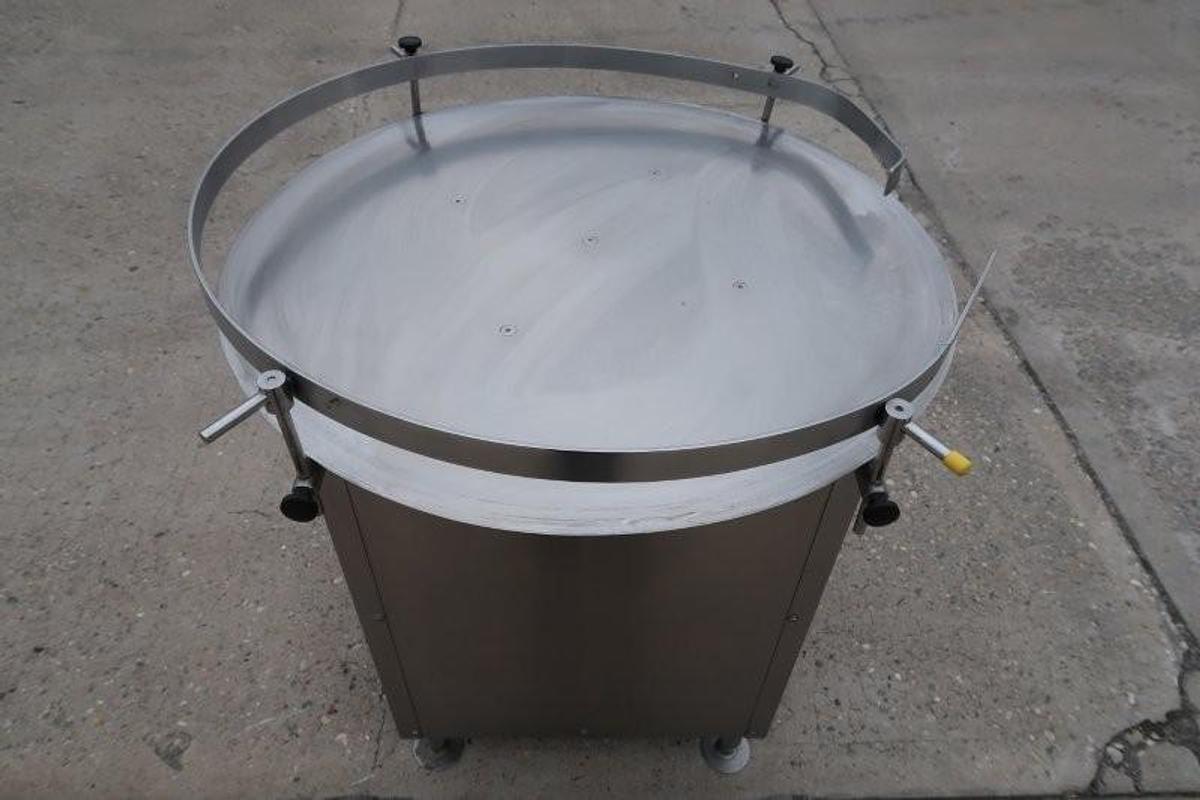
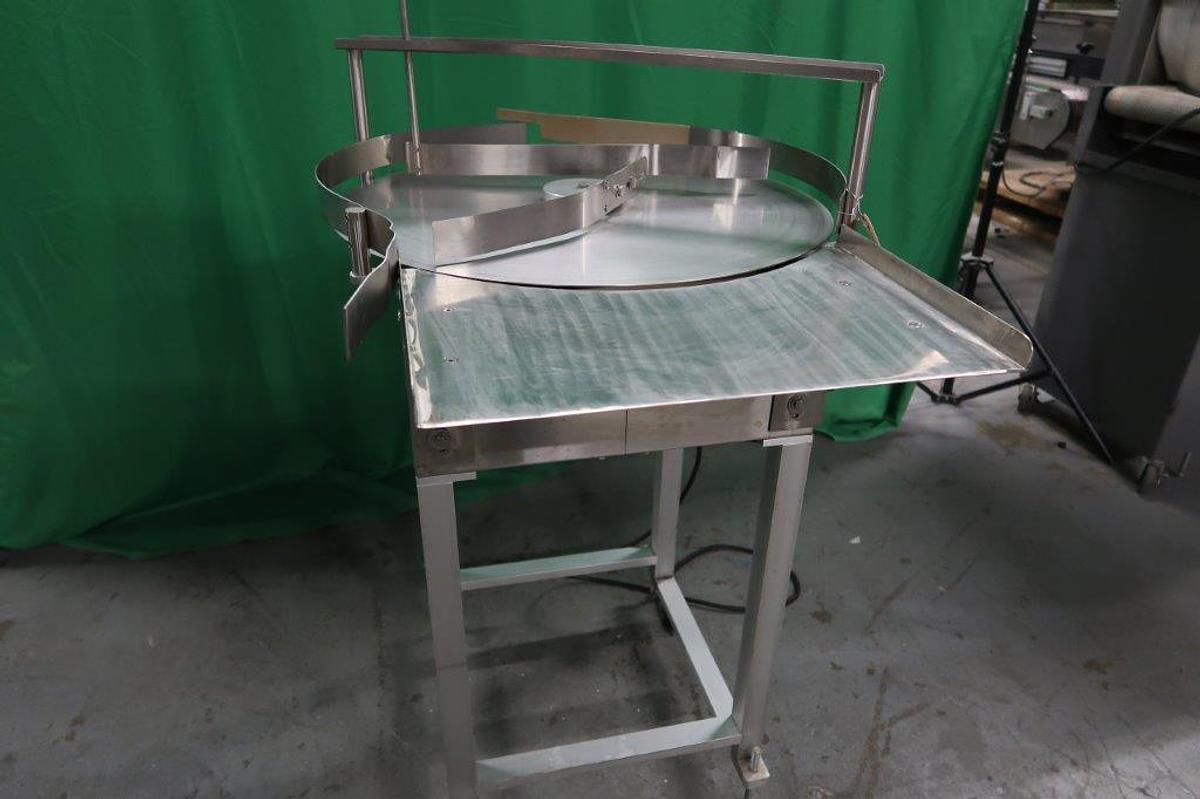
A rotary accumulating table serves as a buffer and flow-control point within a packaging line. Containers or products coming off one piece of equipment (a filler or labeler, for example) are fed onto the rotating turntable, which holds them in a controlled, organized mass until the downstream machine is ready to accept them. This prevents bottlenecks and reduces the risk of product jams, tipping, or damage that can occur when machines run at slightly different speeds. In pharmaceutical and food applications, stainless steel construction is standard because it can withstand repeated washdowns and meets sanitary design requirements.
The specifications that matter most are table diameter, surface material, and drive type. Diameter determines how much buffer capacity the table provides: a 36-inch table holds considerably more product than a 24-inch unit, which matters on faster lines or when downstream stoppages are common. Varispeed drives allow operators to adjust rotation speed to match line conditions rather than running at a fixed rate, which adds flexibility. Unscrambling tables include an additional shelf or guide rail system that orients randomly placed containers into a single-file stream, making them useful at the front end of a filling line. When purchasing a used rotary table, buyers should verify that the drive motor and speed control are fully functional and confirm the table diameter and surface condition match their line requirements.
How do multi-lane tablet and capsule counters work, and when does a 12-lane configuration make sense?
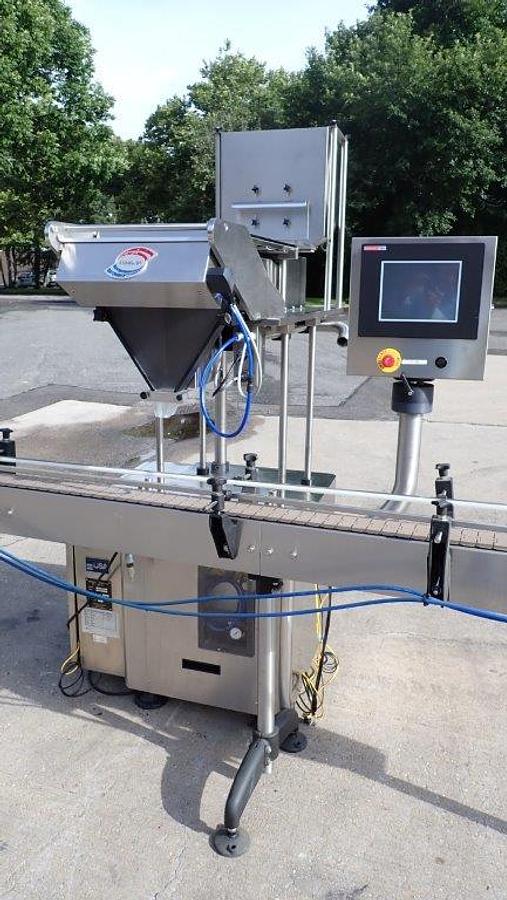
Tablet and capsule counters use vibratory feed systems to move product across a series of counting channels, where optical or electronic sensors detect and count each individual tablet or capsule as it falls into the container below. The number of lanes determines how many containers can be filled simultaneously or how quickly a single container can be filled with a precise count. Single-lane counters are common in lower-volume or clinical packaging environments, while multi-lane machines are used where throughput is the priority. A 12-lane counter, for instance, can fill multiple bottles in parallel, dramatically increasing output per minute compared to a single-lane unit.
A 12-lane configuration makes the most sense for mid-to-high volume pharmaceutical or nutraceutical operations that are filling standard bottle sizes with a consistent tablet or capsule product. The trade-off is that multi-lane machines are more complex to clean, set up, and maintain, and they require a reliable upstream supply of product to keep all lanes running efficiently. Buying a used 12-lane counter can represent significant savings over a new unit, but buyers should inspect each counting channel individually and verify that all sensors are functioning correctly, since replacing sensors or vibratory components on a multi-lane machine can be a meaningful repair cost if multiple channels are faulty.
What is the typical price range for used modular packaging equipment?
Pricing for used modular packaging equipment varies widely depending on the machine type, its age, condition, and the complexity of the configuration. Smaller, simpler units such as a 24-inch stainless steel rotary accumulating table might be available in the low thousands of dollars on the secondary market, while a multi-lane tablet counter or a complete modular filling and sealing system from a recognized manufacturer like Modular Packaging Systems can run from tens of thousands into the six-figure range depending on the configuration and condition. Machines that were originally sold at a high price new will generally retain more residual value on the used market, particularly if they are well-maintained and from a manufacturer with strong industry recognition.
Buyers should treat the listed price as only part of the total acquisition cost. Rigging, crating, and freight charges can add meaningfully to the final landed cost, especially for larger or heavier machines that require specialized loading equipment. In-person or video inspections before purchase are a practical way to confirm that a machine's condition justifies the asking price. Buyers should also budget for any refurbishment, spare parts, or installation work that may be needed once the machine arrives. Getting quotes on those items before committing to a purchase gives a much clearer picture of the true cost of bringing a used machine into production.
Can used modular packaging equipment be integrated with an existing production line?
Yes, modular packaging equipment is specifically designed with integration in mind, and used machines can generally be incorporated into existing lines provided the physical dimensions, speeds, and interface points are compatible. The modular design philosophy means that individual units (rotary tables, counters, fillers, sealers) are meant to work alongside other equipment rather than as a closed, proprietary system. That said, integration always requires some degree of engineering work: conveyor heights need to match, line speeds need to be coordinated, and electrical connections need to be verified for compatibility with the facility's power supply and control systems.
Buyers should gather detailed specifications on any used machine they are considering, including dimensions, drive specifications, electrical requirements, and any control system details, and compare those against their existing line before purchasing. A used equipment dealer who specializes in packaging machinery can often help identify potential integration issues in advance. It is also worth contacting the machine's manufacturer to ask about available documentation, wiring diagrams, and whether the model in question has known compatibility considerations with other common packaging line components. Some older machines may require a controls upgrade or minor mechanical modification to communicate effectively with newer downstream or upstream equipment, and understanding those requirements upfront prevents costly surprises after delivery.
What does the inspection process look like when buying used modular packaging equipment?
Inspections are a standard part of buying used packaging machinery, and reputable dealers will accommodate them in several formats. An in-person inspection is the most thorough option: the buyer or their representative visits the dealer's facility (or in some cases the plant where the equipment is still installed) to examine the machine directly, check for wear, test any powered components, and review the overall condition firsthand. Video inspections have become a widely accepted alternative, where the dealer captures detailed footage of the machine, including close-ups of key components, and walks the buyer through its condition remotely. Static photo sets are the most basic form of documentation but should be considered a starting point rather than a substitute for a more detailed review.
One practical limitation buyers should understand is that most used equipment dealers do not have the production permits or facility setup required to run actual product through a machine during an inspection. What can typically be demonstrated is that powered components (motors, drives, sensors, vibratory systems) operate correctly and that the machine cycles as expected. For machines that are still installed and running at a production facility, a live in-plant inspection may be possible, which gives the buyer a clearer picture of real-world performance. Buyers should ask the dealer specifically what the inspection will cover, what documentation is available (manuals, maintenance records, prior service history), and whether any components have been replaced or repaired, before making a purchasing decision.
What are the payment and shipping expectations when purchasing used modular packaging equipment?
Most used equipment dealers require full payment before a machine is released for shipping. Some dealers extend payment terms to established customers with a purchase history, but buyers who are purchasing from a dealer for the first time should expect to pay in full upfront. Wire transfer is the most common payment method for machinery transactions of any significant size. Buyers should confirm accepted payment methods and any associated fees before finalizing a purchase agreement.
Shipping costs depend heavily on the size and weight of the machine, the destination, and the level of packaging required to protect it in transit. Smaller units like rotary tables may ship palletized, while larger or more complex machines typically require custom crating to prevent damage during loading, transport, and unloading. Heavy machines may also require specialized rigging equipment for loading at the dealer's facility and unloading at the buyer's location, and those rigging costs are usually separate from the freight quote. Buyers should ask for a detailed breakdown of all shipping-related charges, including palletization or crating, rigging, freight, and any destination handling fees, before agreeing to a purchase, so the full landed cost is understood in advance.