Category
Manufacturer
Model
Modern Packaging
Modern Packaging specializes in providing packaging equipment for various industries, including food and consumer goods. They are known for their innovative packaging solutions that enhance product presentation and shelf life.
FAQ:
What types of packaging equipment does Modern Packaging manufacture?
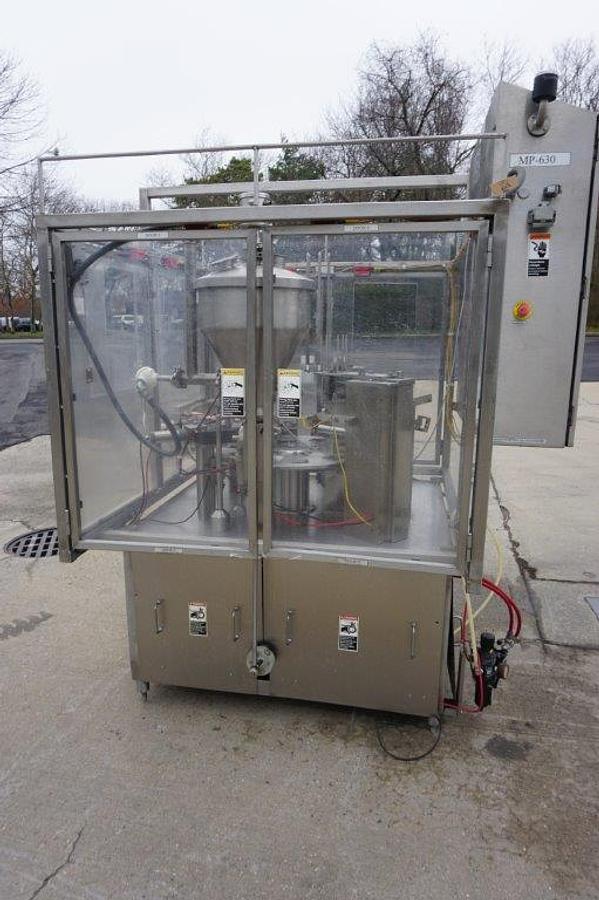
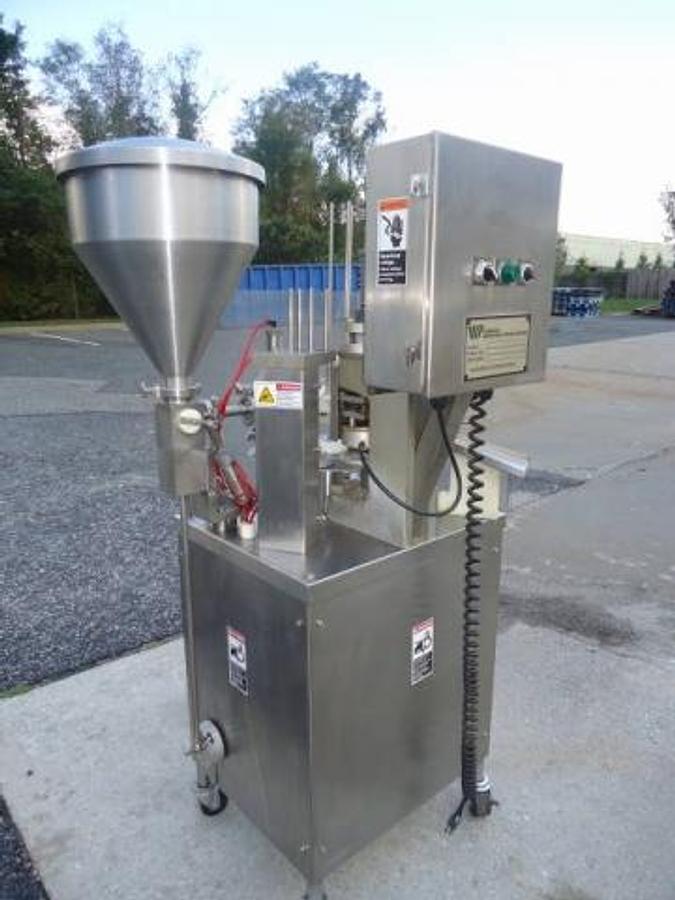
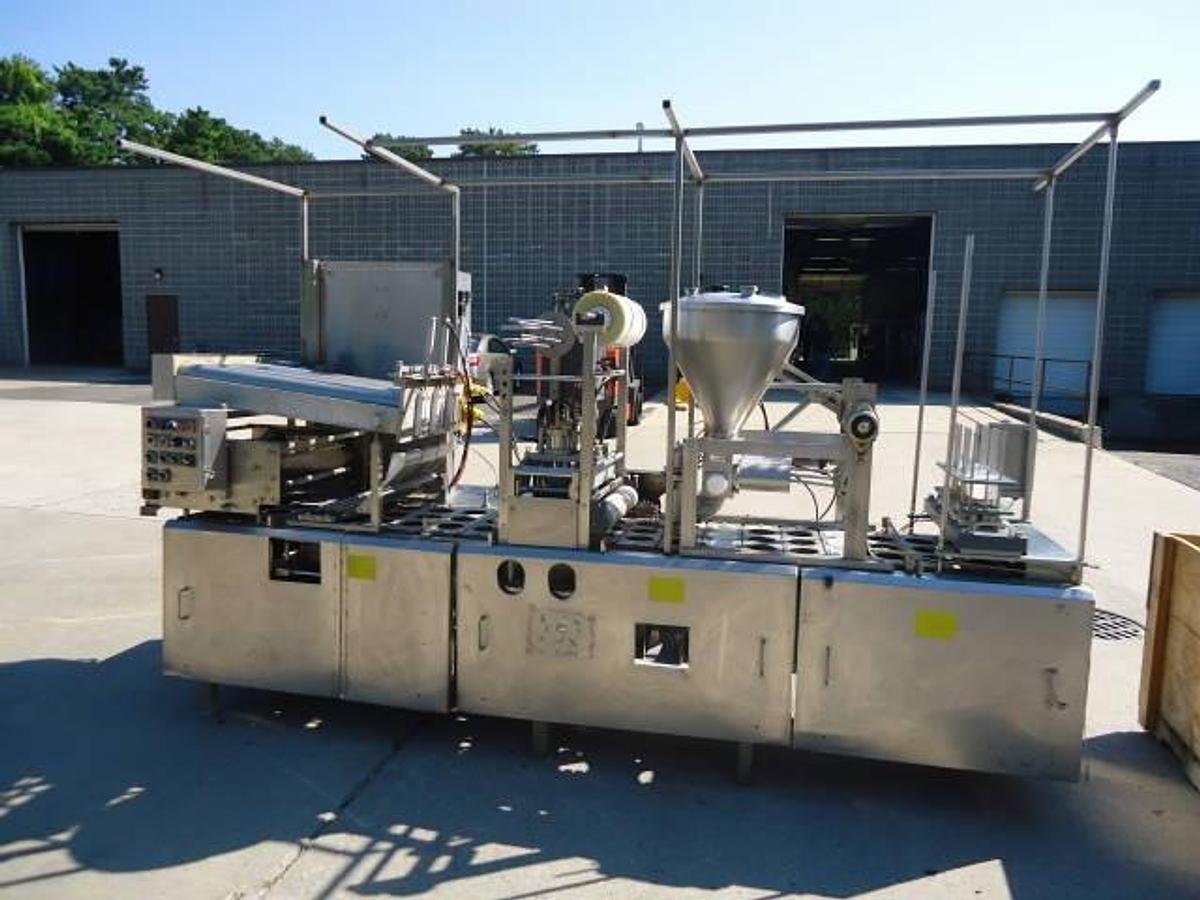
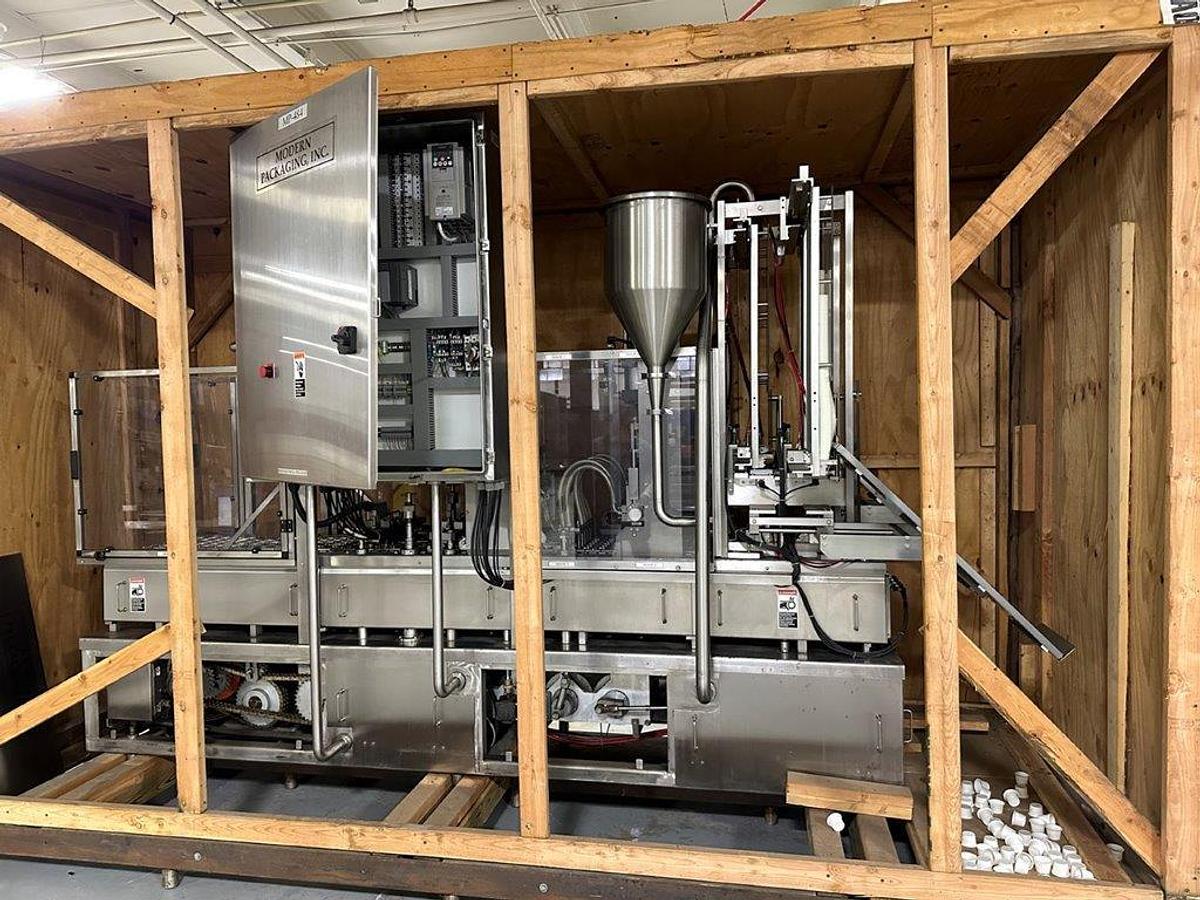
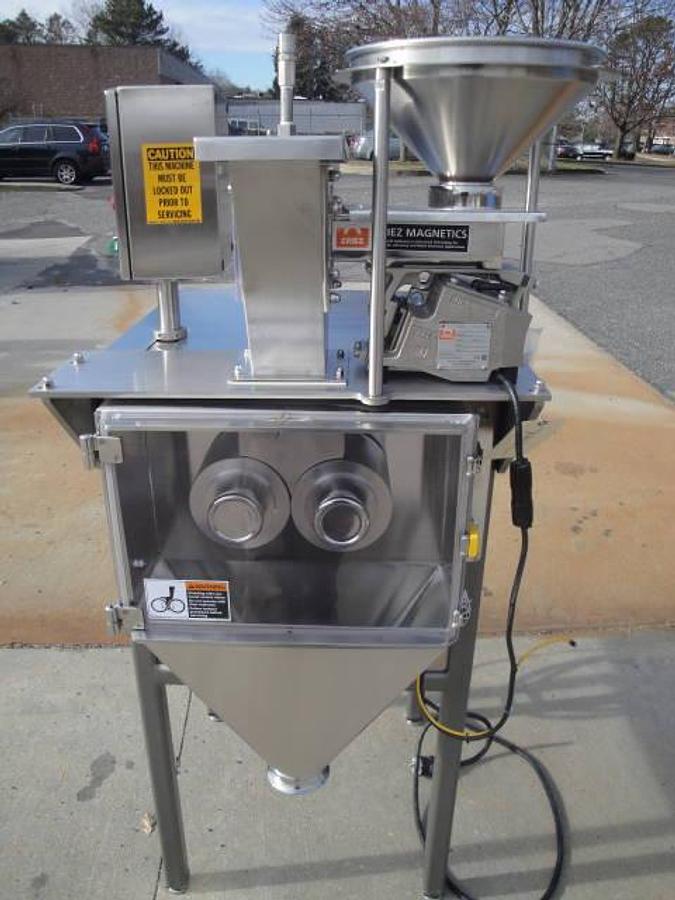
Modern Packaging is a manufacturer known for cup filling and sealing machinery, primarily serving food, beverage, and consumer goods industries. Their product line includes rotary cup filling and sealing machines (such as the MR Series), multi-lane cup filler/sealer/lidder systems in stainless steel construction, and the Winpak SR6DC rotary cup filler-sealer. They also produced dry processing equipment under the MPE brand, including the Gran-U-Lizer pharmaceutical dry grinding mill. The common thread across their lineup is high-throughput, hygienic design suited for production environments that require consistent fill accuracy and reliable sealing.
Their cup filling and sealing machines are particularly well-regarded in dairy, yogurt, deli, and portioned food applications, where precise fill volumes and tamper-evident seals are required. Multi-lane configurations, such as 3-lane and 5-across models, allow producers to dramatically increase output without multiplying floor space. Used Modern Packaging machines are actively sought by food processors looking to expand capacity or replace aging equipment, making them a relatively liquid asset in the secondary market.
What should I look for when buying used packaging equipment?
The condition of the mechanical and electrical systems is the starting point for any used packaging equipment evaluation. Key areas to assess include the state of wear on filling heads, sealing dies, conveyor belts, and drive components. Electrical cabinets should be inspected for corrosion, damaged wiring, or outdated control systems that may be difficult to support. For stainless steel food-grade machines, check for pitting, cracks in welds, or surface corrosion that could harbor bacteria and create compliance issues. Asking the seller for maintenance records, if available, gives useful insight into how the machine was operated and serviced during its working life.
Beyond the machine itself, buyers should think carefully about parts availability and manufacturer support for the specific model and age of the equipment. Contacting the manufacturer directly to ask about spare parts, service manuals, and technical support is a step many buyers skip but should not. Older or discontinued models may have limited parts availability, which affects long-term operating costs. Reputable used equipment dealers will typically accommodate in-person or video inspections so buyers can assess the machine's actual condition before committing. Choosing a dealer who specializes in packaging machinery rather than a generalist reseller adds another layer of confidence, since they are more likely to accurately represent the equipment's capabilities and limitations.
How much does used packaging equipment typically cost?
Pricing for used packaging equipment spans a wide range depending on the type of machine, its age, condition, and original complexity. Entry-level semi-automatic units can be found for a few thousand dollars, while mid-range automatic systems from established manufacturers typically fall somewhere between $15,000 and $150,000. High-speed, multi-lane rotary filling and sealing systems from brands like Modern Packaging can command prices in the $50,000 to $200,000+ range on the secondary market, depending on configuration and condition. The used market offers significant savings compared to buying equivalent equipment built today, which is one of the primary reasons food processors and contract packagers actively source pre-owned machinery.
Beyond the purchase price, buyers should factor in the full landed cost of the equipment. This includes freight and rigging charges, any reconditioning or parts replacement needed before startup, installation and commissioning labor, and operator training. A machine purchased at an attractive price can become less of a bargain if it requires extensive electrical upgrades or hard-to-source replacement parts. Getting a clear picture of these downstream costs before finalizing a purchase is a standard practice among experienced equipment buyers.
What is the difference between semi-automatic and fully automatic packaging machines?
Semi-automatic packaging machines require an operator to handle at least one step in the process, whether that is placing containers, initiating a fill cycle, or removing finished product. They are generally lower in cost, simpler to maintain, and well-suited for smaller production runs or operations that package a wide variety of product types and sizes. Their flexibility makes them popular with startups, specialty food producers, and contract packagers who run short batches. The tradeoff is throughput: semi-automatic machines typically produce far fewer units per hour than automated alternatives, and labor costs per unit are higher.
Fully automatic packaging lines run with minimal operator intervention once set up, handling everything from container indexing and filling to sealing, lidding, and discharge. Industrial-grade systems can achieve speeds ranging from 50 to well over 1,000 units per minute depending on the machine type and product. Modern fully automatic machines often include servo-driven mechanisms, touchscreen HMI controls, and integrated quality monitoring. For high-volume food and beverage production, the labor savings and consistency of a fully automatic system typically justify the higher capital cost. When evaluating used automatic equipment, buyers should pay particular attention to the control system's age, since older PLCs and proprietary software can be difficult and expensive to support.
What industries commonly use cup filling and sealing machines?
Cup filling and sealing machines are workhorses in any industry that packages a product into a pre-formed or form-fill-seal cup or tray. The most common application is in dairy and refrigerated foods: yogurt, sour cream, cottage cheese, pudding, and portioned dips all rely heavily on rotary or inline cup fillers. Beverage producers use them for single-serve juice, coffee, and flavored drink cups. Deli and prepared foods manufacturers use them for portioned salads, sauces, and side dishes. The pharmaceutical and nutraceutical industries also use cup and tray filling equipment for unit-dose powders, gels, and supplements, though with stricter hygienic and validation requirements.
The equipment's versatility across product types is one reason used cup filling and sealing machines hold their value reasonably well. A stainless steel rotary cup filler that ran yogurt in one facility can often be retooled to handle a different viscous product with relatively modest changeover work. Multi-lane systems, like the 3-lane and 5-across configurations that Modern Packaging produced, are especially attractive to mid-to-large scale producers because they multiply output without requiring a proportional increase in floor space or labor. Buyers from food processing, contract packaging, private label, and institutional food service regularly seek this type of equipment on the secondary market.
How do I determine the right packaging equipment for my production volume?
Start by calculating your required output in units per hour or units per shift, then build in a buffer of at least 15 to 20 percent above your current peak demand to account for growth and unplanned downtime. A machine running at its absolute maximum rated speed continuously will wear faster and leave no room for line imbalances. Once you have a realistic target throughput, you can match it against the rated capacities of available equipment. For cup filling and sealing applications, for example, a 5-across machine running at moderate speed may achieve the same output as a single-lane machine running flat out, with better reliability and lower stress on components.
Beyond raw speed, consider your product mix and how frequently you change over between formats. If you run many SKUs with different cup sizes or fill weights, quick-changeover capability becomes as important as throughput. Machines that require hours of tooling changes between runs can erode the productivity gains from higher speed. Also think about your facility's utilities, floor space, and workforce skill level, since a highly automated system requires trained operators and reliable maintenance support. Consulting with a dealer who specializes in packaging machinery and being transparent about your actual production requirements will generally lead to better equipment matches than shopping purely on price or nameplate speed.
What safety and sanitary standards should food-grade packaging equipment meet?
For food and beverage applications, packaging equipment should be designed and constructed to meet recognized sanitary standards. In North America, the key reference points are the standards published by 3-A Sanitary Standards (for dairy and fluid food equipment) and NSF International, as well as FDA regulations governing food contact materials. Equipment built to these standards typically uses food-grade stainless steel (304 or 316 grades), smooth welds with no crevices where product can accumulate, and components that can be fully disassembled for cleaning. Washdown-rated electrical enclosures (IP65 or higher) are standard on equipment intended for wet sanitation environments.
For pharmaceutical dry processing equipment, such as grinding mills used in tablet or capsule manufacturing, the relevant framework is cGMP (current Good Manufacturing Practice) as defined by the FDA and, for international markets, guidelines from the International Council for Harmonisation (ICH). When buying used equipment for regulated industries, buyers should verify that the machine's design is compatible with their validation requirements and that documentation such as equipment drawings, material certifications, and calibration records is available. The age of the machine matters here: older equipment may predate current sanitary design standards and require modifications before it can be used in a compliant production environment. Discussing these requirements with both the equipment dealer and your quality team before purchase is strongly advisable.
How does the inspection process work when buying used packaging machinery?
Reputable used equipment dealers typically offer buyers the opportunity to inspect machinery before purchase, either in person at the dealer's facility, remotely via live video call, or through detailed video recordings of the machine. The goal of any inspection is to get an accurate picture of the equipment's current condition, including its mechanical integrity, completeness of parts, and general state of wear. For machines that are still installed and running at a production facility, the dealer can sometimes arrange for the buyer to visit the plant and observe the equipment in operation, which provides the most reliable assessment of its working order.
Buyers should keep in mind that most used equipment dealers do not have the permits or production infrastructure to run actual product through a machine during a demonstration. Testing with live product typically requires food-grade facilities, regulatory permits, and production staff, none of which a machinery dealer will ordinarily have. What dealers can show is that the machine powers up, that mechanical systems cycle correctly, and that there are no obvious defects in the structure or controls. Buyers with specific performance requirements may want to arrange a more detailed inspection with their own technician or a third-party machinery appraiser, particularly for high-value purchases. Asking the right questions during inspection, such as the machine's last known production date, reason for decommissioning, and any known issues, helps fill in gaps that a visual review alone may not reveal.
What are typical shipping and rigging costs for used packaging equipment?
Shipping costs for used packaging machinery vary considerably based on the machine's size and weight, the origin and destination, and the level of packaging or crating required to protect it in transit. Smaller tabletop or countertop units may ship on a standard pallet via LTL freight for a few hundred dollars. Mid-size machines typically require custom crating, which adds both material and labor costs on top of the freight charge. Large rotary filling and sealing systems, multi-lane configurations, or heavy grinding mills may weigh several thousand pounds and require flatbed trucking, specialized blocking and bracing, and professional rigging at both ends of the shipment.
Rigging, which involves the use of forklifts, cranes, or other lifting equipment to load and unload machinery, is almost always an added cost that buyers need to budget for separately. At the destination, the buyer is responsible for having adequate equipment and personnel to receive the machine safely. Before finalizing a purchase, buyers should ask the dealer for a complete breakdown of packaging, rigging, and freight costs so they understand the full landed price of the equipment. What looks like a competitive purchase price can change meaningfully once crating and freight are added, particularly for heavy machinery shipped across long distances or internationally.
What payment terms do used equipment dealers typically require?
The standard practice in the used equipment industry is payment in full prior to shipment. This applies to the large majority of transactions, particularly with buyers who are purchasing from a dealer for the first time. Accepted payment methods commonly include wire transfer, ACH, and in some cases credit card for smaller purchases. Dealers require prepayment primarily because used machinery, unlike a standardized product, is a one-of-a-kind asset that is effectively taken off the market once a sale is agreed upon, and reversing a transaction once a machine has been prepared for shipment is operationally difficult.
Some dealers will offer extended payment terms, installment arrangements, or net terms to established customers with a track record of repeat purchases. Third-party equipment financing is another option that buyers sometimes arrange independently through specialty lenders who focus on industrial and manufacturing assets. If financing is important to your purchase decision, it is worth discussing with the dealer early in the process, since some dealers have relationships with financing partners they can refer buyers to. Regardless of payment structure, buyers should ensure they receive clear documentation of the sale terms, including a description of the equipment, any included accessories or spare parts, and the agreed shipping arrangements, before funds are transferred.