Category
Manufacturer
Model
Mazzoni
Mazzoni is known for its packaging machinery tailored for the food industry, particularly in the production of vacuum packaging solutions. Their machines help extend shelf life and maintain product freshness.
FAQ:
What types of soap machinery does Mazzoni manufacture?
Mazzoni LB is an Italian manufacturer based in Busto Arsizio with decades of experience producing equipment for the soap industry. Their product range covers the full soap production process, including amalgamators, refiners, vacuum plodders, extruders, stamping machines, and continuous saponification plants. They also supply complete turnkey production lines for manufacturers who need an end-to-end solution rather than individual pieces of equipment. The brand is considered a premium name in soap machinery, partly because of its Italian engineering heritage and the durability built into its designs.
On the processing side, Mazzoni builds equipment suited to both toilet soap and laundry soap production. Specific machines available on the used market include models like the Mazzoni Duplex B-100 Combo Soap Vacuum Plodder, the M100 Soap Extruder, and the St-A Semi-Automatic Soap Press. These machines represent different stages of the soap manufacturing process, from extrusion and refinement through to final pressing and shaping. Buyers looking for a single piece of equipment to fill a gap in an existing line, or those assembling a complete production setup from used machinery, will typically find Mazzoni models well-represented in the secondary market.
What is a soap vacuum plodder and what role does it play in soap production?
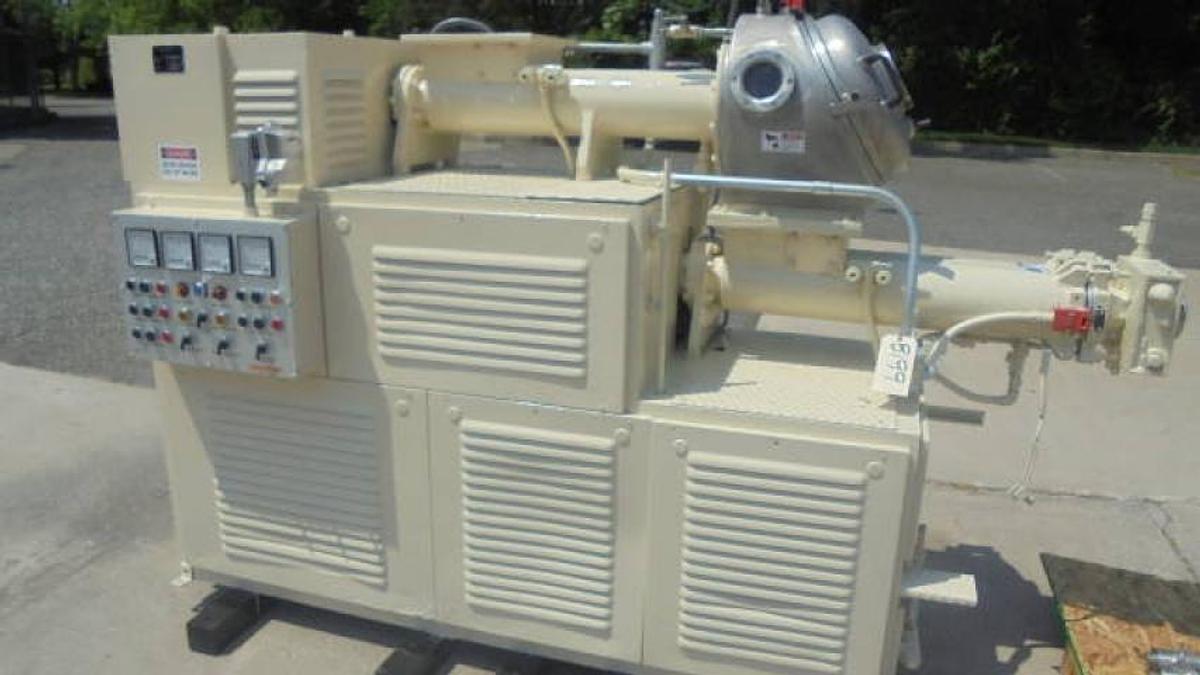
A soap vacuum plodder is a machine that processes soap mass by forcing it through a die under vacuum conditions to remove air pockets and create a dense, uniform bar or noodle. The vacuum chamber eliminates trapped air, which would otherwise cause surface cracking, uneven texture, or poor lather in the finished bar. The output is a continuous log or strand of soap that can then be cut and stamped into individual bars. Plodders are considered one of the most critical pieces of equipment in a soap finishing line because the quality of the extrusion directly affects the appearance and performance of the final product.
Duplex plodders, such as the Mazzoni Duplex B-100, combine two plodding stages in a single machine. The first stage refines and homogenizes the soap mass, while the second stage extrudes it under vacuum into the final form. This two-stage approach improves the density and surface quality of the bar compared to a single-stage plodder. Used duplex vacuum plodders from established manufacturers like Mazzoni are sought after in the secondary market because they are mechanically straightforward, have long service lives, and can handle a wide range of soap formulations including both toilet and laundry grades.
What is the production capacity of Mazzoni soap processing lines?
Mazzoni designs equipment across a wide range of output levels, which is one reason the brand appears in facilities of very different scales. At the lower end, individual machines like portable extruders are suited to smaller batch operations or facilities that are scaling up production gradually. At the industrial end, complete Mazzoni saponification and finishing lines can process several tons of soap per hour, making them practical for large-scale manufacturers supplying regional or global markets. The specific capacity of any given machine depends on the model, the configuration, and the soap formulation being processed.
For buyers evaluating used Mazzoni equipment, capacity is one of the first specifications to confirm. A machine rated for a particular output under ideal conditions may perform differently depending on its age, maintenance history, and the type of soap being produced. When reviewing a used machine, it is worth asking the seller for any available production records or technical documentation that can help verify whether the equipment's rated capacity aligns with actual operational history. Consulting with a Mazzoni-authorized technician or the manufacturer directly can also help buyers understand what output to realistically expect from a specific model and vintage.
What should I look for when inspecting used Mazzoni soap machinery before buying?
Buying used industrial machinery requires a more thorough evaluation process than purchasing new equipment, since there is no manufacturer backing the condition of the machine. For Mazzoni soap equipment specifically, the key areas to examine include the condition of the screw and barrel on plodders and extruders (wear here directly affects output quality), the integrity of seals and vacuum components, the state of the electrical controls and motors, and any visible signs of corrosion or improper repair work. Asking for maintenance logs or service records gives a clearer picture of how the machine was used and whether routine upkeep was performed consistently.
Reputable used equipment dealers will typically accommodate in-person inspections at their facility, or arrange video walkthroughs and recorded demonstrations if travel is not practical. In some cases, the machinery may still be installed at the facility where it was originally used, and an inspection can be arranged on-site. Keep in mind that most equipment dealers are not set up to run full soap production tests, since that requires production permitting and raw materials beyond what a resale operation would maintain. The goal of the inspection is to assess the mechanical condition of the machine accurately, not necessarily to run a complete production trial. Buyers with specific technical concerns should consider bringing in an independent engineer or contacting Mazzoni directly to ask about support and parts availability for the model in question.
Are spare parts and technical support available for used Mazzoni soap machinery?
Parts and support availability for used Mazzoni equipment depends significantly on the age and model of the machine. Mazzoni LB has been manufacturing soap machinery for decades, and while the company generally maintains a reputation for supporting its installed base, older or discontinued models may have limited parts availability through the manufacturer. Contacting Mazzoni directly before purchasing a used machine is a practical step, since the manufacturer can confirm whether parts are still stocked, whether technical documentation is available, and what level of support a buyer should expect for a particular model year.
Beyond the manufacturer, the secondary market for Mazzoni parts is reasonably active given the brand's long history and widespread installation base. Third-party machining shops can often fabricate wear components like screws, barrels, and die plates if manufacturer parts are no longer available. The mechanical simplicity of many Mazzoni designs, which is one of the reasons the equipment tends to have a long operational life, also makes it more accessible to local maintenance teams and independent technicians. Buyers should factor parts sourcing into their total cost of ownership calculation before committing to a purchase, particularly for older machines where the price may look attractive but ongoing maintenance costs could be higher.
What is the difference between a soap extruder and a soap plodder?
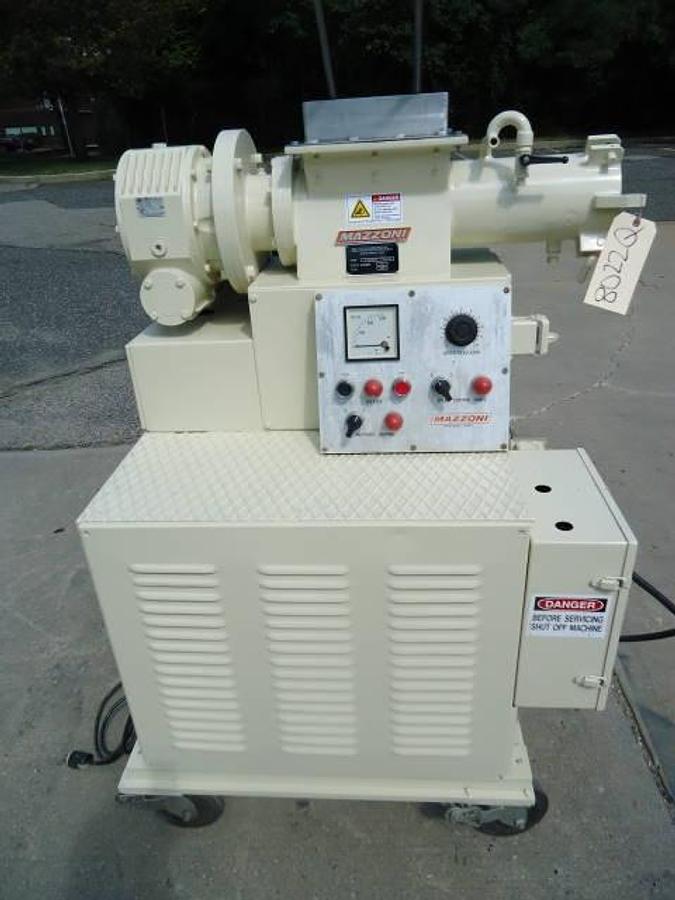
The terms extruder and plodder are sometimes used interchangeably in the soap industry, but they can describe machines with slightly different functions depending on the context. A plodder is the traditional term for the screw-driven machine that pushes soap mass through a die to form a continuous bar or log. Vacuum plodders add a vacuum chamber to the process to remove air, which improves the density and surface quality of the extruded soap. The Mazzoni M100 Soap Extruder, for example, is a portable machine designed for extrusion tasks, while the Duplex B-100 Combo Soap Vacuum Plodder combines two processing stages with vacuum treatment in a single unit.
In practical terms, the distinction matters most when a buyer is trying to match a machine to a specific point in their production process. A standalone extruder may be used for initial processing or for specialty applications, while a duplex vacuum plodder is typically positioned at the end of the finishing line just before cutting and stamping. Understanding where a specific used machine fits in the overall production sequence helps buyers avoid purchasing equipment that does not align with their existing line configuration. Sellers of used Mazzoni equipment can usually clarify the intended application of each model, and Mazzoni's published technical literature provides additional detail on how each machine type integrates into a complete soap production line.
What is a semi-automatic soap press and when is it used in soap manufacturing?
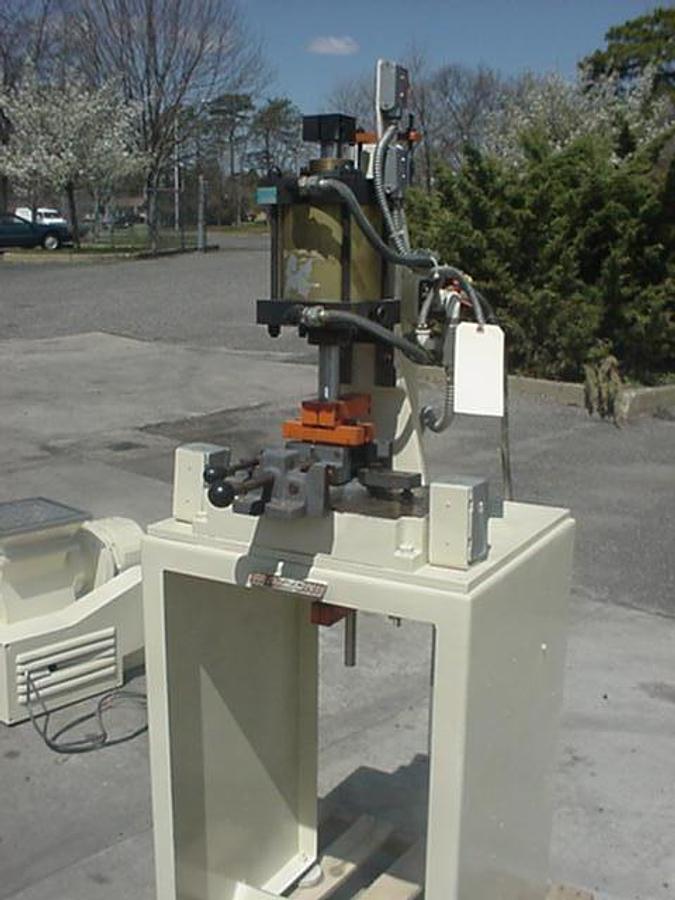
A semi-automatic soap press, such as the Mazzoni St-A, is a machine that stamps or presses extruded soap logs into finished bars with defined shape, weight, and surface detail. In a semi-automatic configuration, an operator is involved in part of the process, typically loading or positioning the soap log, while the stamping cycle itself is automated. This makes semi-automatic presses a practical choice for smaller production volumes or for operations that produce multiple bar formats and need to change dies frequently without the complexity of a fully automated stamping line.
Soap presses work by cutting a slug from the extruded log and then compressing it between two dies that imprint the bar shape and any surface branding or texture. The quality of the finished bar depends on the precision of the dies, the consistency of the soap mass coming from the plodder, and the stamping pressure applied. Used semi-automatic presses like the Mazzoni St-A are popular in the secondary market because they are mechanically reliable, relatively compact, and can be integrated into a range of production setups without requiring a fully automated line. Buyers should confirm that the dies included with a used press match their intended bar format, or budget for custom die fabrication if the existing tooling does not fit their product specifications.
What is the typical price range for used Mazzoni soap machinery?
Pricing for used Mazzoni soap equipment varies considerably based on the type of machine, its age, overall condition, and what accessories or tooling are included in the sale. Individual machines like portable extruders or semi-automatic presses tend to be priced lower than complete duplex vacuum plodder systems or full production line configurations. At the lower end of the market, smaller or older Mazzoni machines in as-is condition can be found in ranges that make them accessible to small and mid-size producers. Complete lines or well-maintained larger machines from more recent production years command significantly higher prices.
Because used machinery is sold without manufacturer backing, the condition of the equipment at the time of purchase is the primary driver of value. A machine that has been properly maintained, comes with documentation, and has been recently serviced will generally be priced higher than one sold strictly as-is with no service history. Buyers should also account for costs beyond the purchase price, including shipping, rigging, any refurbishment or parts replacement needed before startup, and installation. Getting a clear picture of the total landed cost before committing to a purchase helps avoid situations where a low sticker price ends up being offset by significant downstream expenses.
How does shipping and logistics work when purchasing used soap machinery?
Shipping used industrial soap machinery involves more planning than standard freight because of the size, weight, and sensitivity of the equipment. Machines need to be properly secured, palletized, or crated before transport to prevent damage in transit. The level of packaging required depends on the machine's dimensions and fragility, and costs will vary accordingly. Larger pieces of equipment, such as duplex plodders or complete line components, may require specialized rigging for loading at the seller's facility and unloading at the buyer's location. Rigging is typically an additional cost that buyers should confirm with the seller before finalizing a purchase.
Buyers should ask the seller for a detailed breakdown of packaging, rigging, and freight costs to understand the full landed price of the equipment before committing. International shipments involve additional considerations including customs documentation, import duties, and compliance with any applicable regulations in the destination country. Most used equipment dealers require full payment before the machine ships, though some may offer different terms to established customers with a prior purchase history. Confirming all logistics details in writing before the transaction is completed helps avoid misunderstandings about who is responsible for each cost and what the buyer should expect at the time of delivery.
How do I evaluate a used equipment dealer selling Mazzoni soap machinery?
The used industrial machinery market includes dealers with widely varying levels of expertise and integrity, so evaluating the seller is just as important as evaluating the machine itself. A dealer who specializes in food and soap processing equipment will generally have more relevant knowledge about Mazzoni machines than a generalist reseller, and is more likely to accurately describe a machine's condition and application. Look for dealers with a verifiable track record, including years in business, customer references, and a history of transactions in the soap or personal care manufacturing sector. Dealers who are willing to accommodate in-person or video inspections and answer detailed technical questions are generally more trustworthy than those who resist scrutiny.
Because used machinery is typically sold as-is, the burden of verifying condition falls on the buyer. A reputable dealer will be transparent about what they know and do not know about a machine's history, and will not make claims they cannot support. It is also worth checking whether the dealer has experience with the export and shipping process if the equipment needs to travel internationally, since logistics errors can cause damage or delays that are difficult to resolve after the fact. Taking the time to research the dealer, ask for references, and request thorough documentation of the machine's condition before purchase significantly reduces the risk of ending up with equipment that does not meet expectations.