Category
Manufacturer
Model
Marion
Marion is a manufacturer of equipment for the food processing industry, specializing in cooking and cooling systems. Their machines are designed to optimize production processes while maintaining high food safety standards.
FAQ:
What types of Marion industrial mixers are available on the used equipment market?
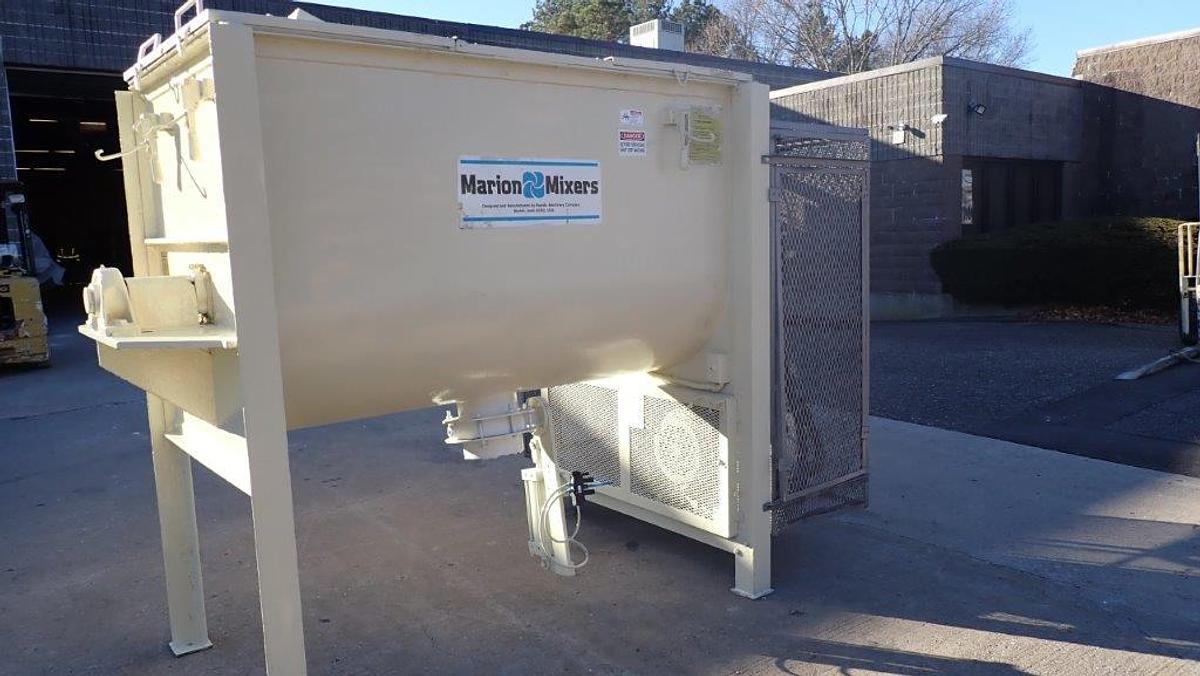
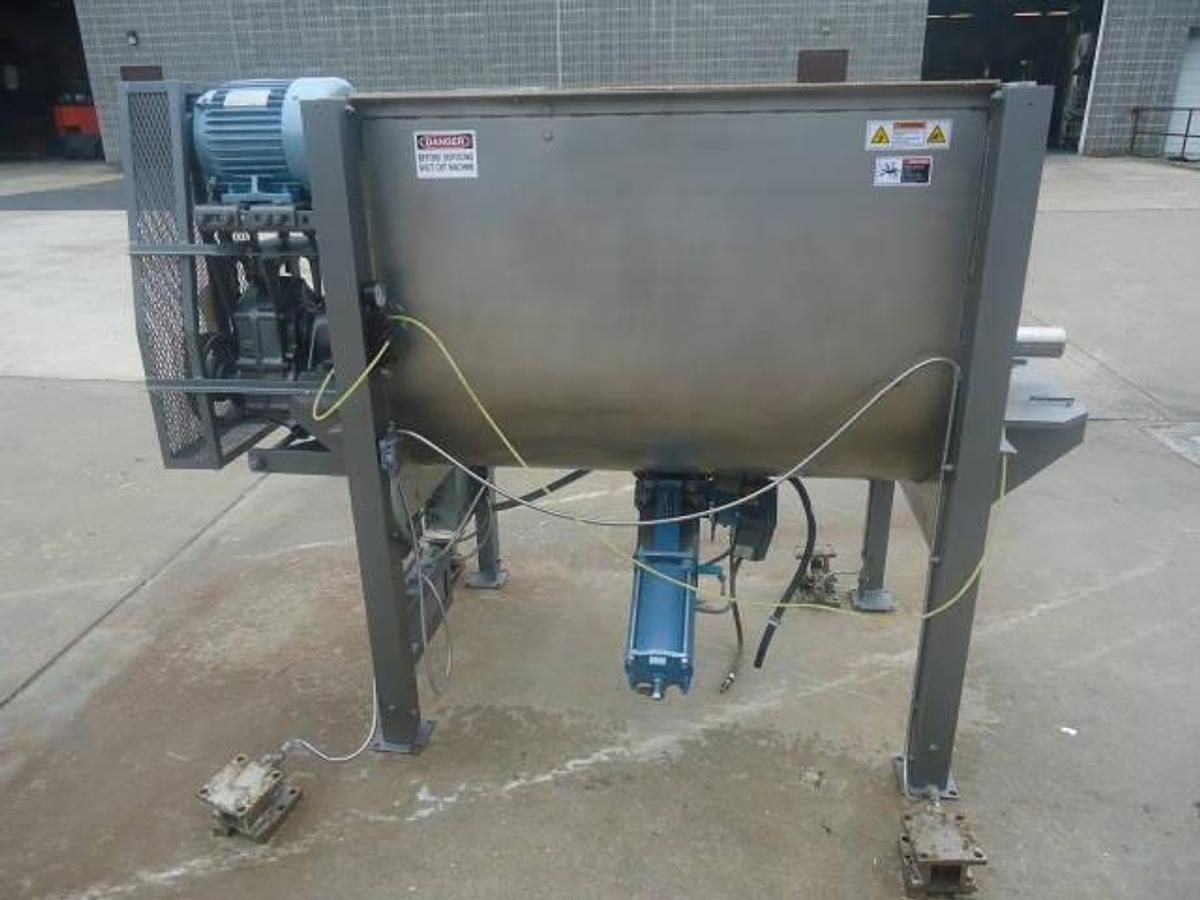
Marion produces several distinct mixer designs, and all of them appear regularly in the used equipment market. The most common types include plow mixers (sometimes called paddle mixers), ribbon blenders, and double ribbon blenders. Plow mixers use rotating plow-shaped blades to lift and fold material in a tumbling motion, which makes them particularly effective for blending dry powders, granules, and semi-moist materials without degrading particle structure. Ribbon blenders use inner and outer helical ribbons that move material in opposite directions simultaneously, producing fast, thorough blends in a single batch cycle.
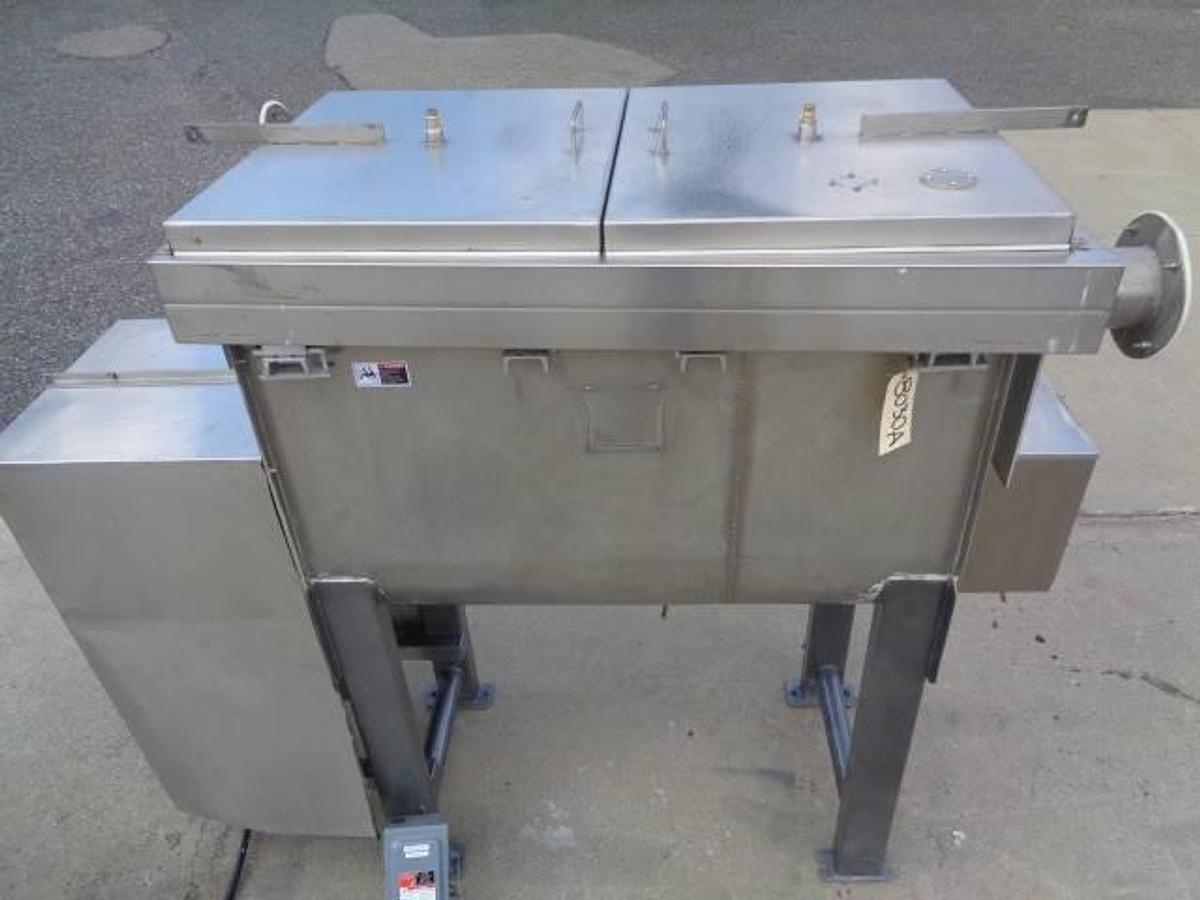
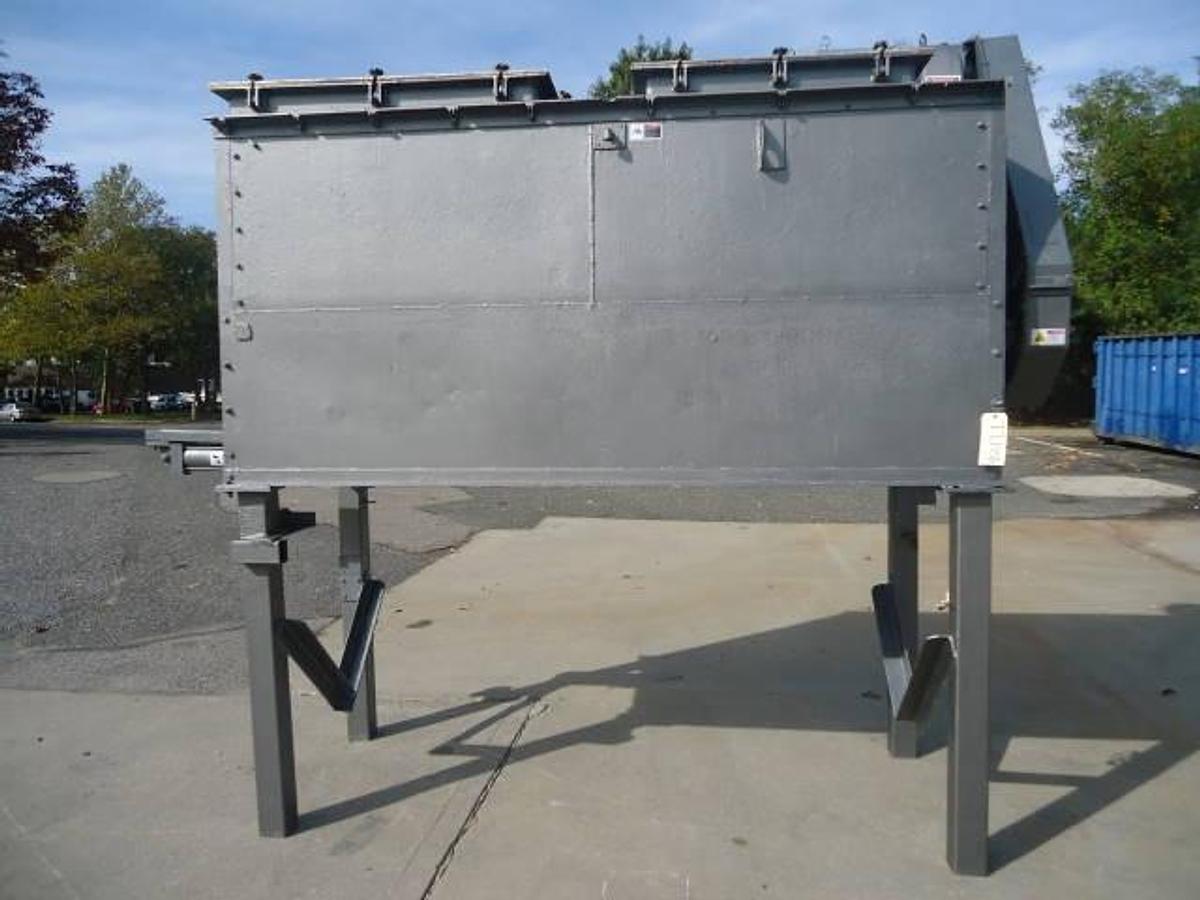
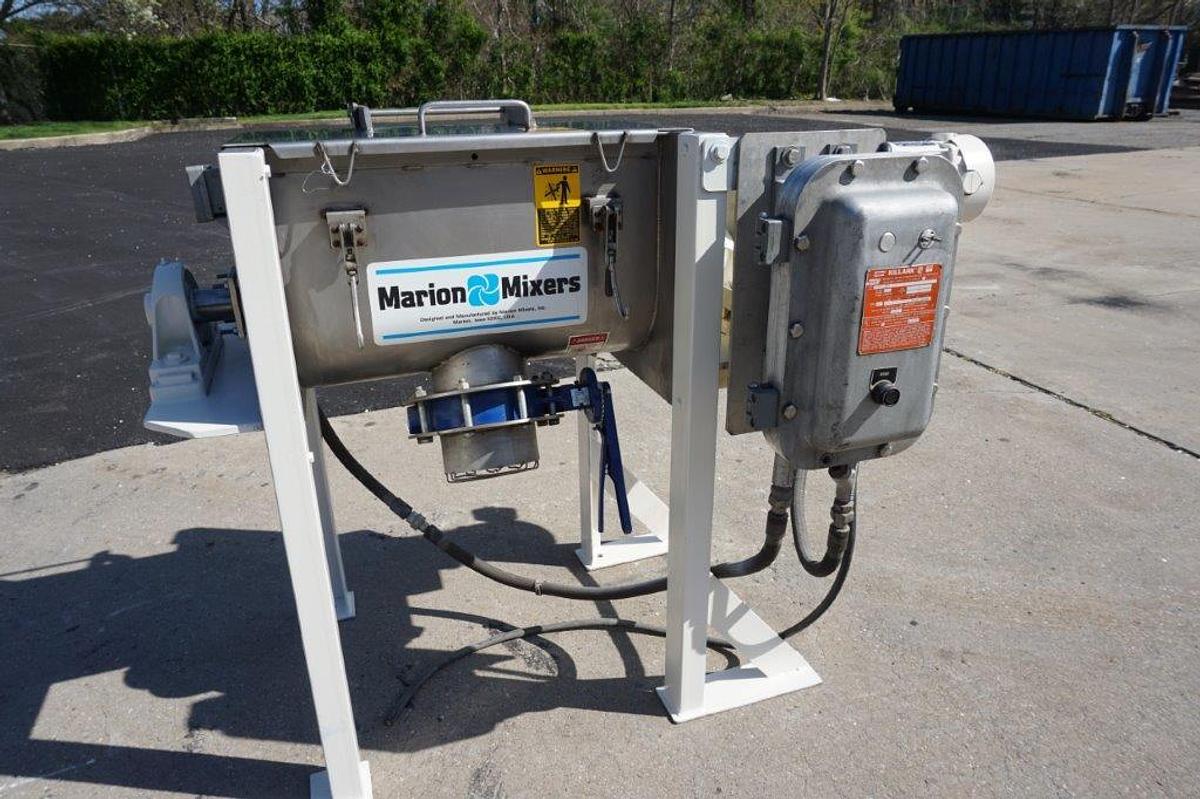
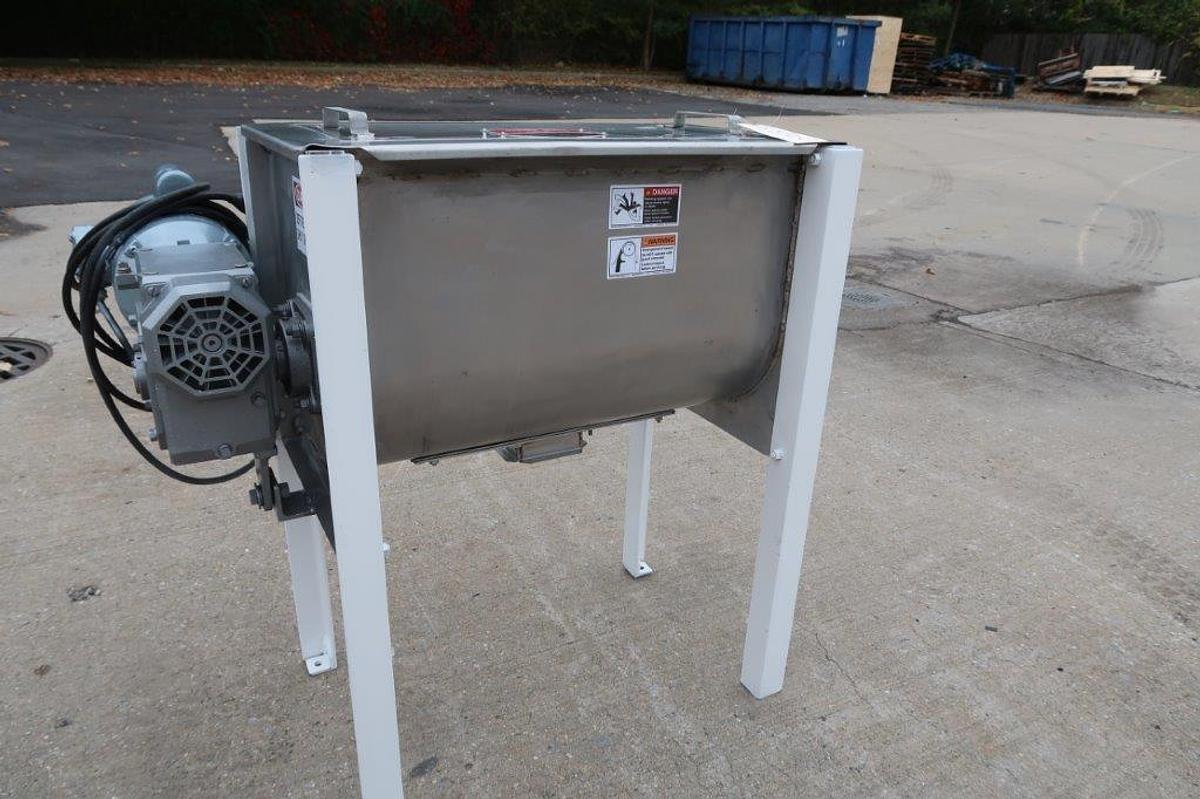
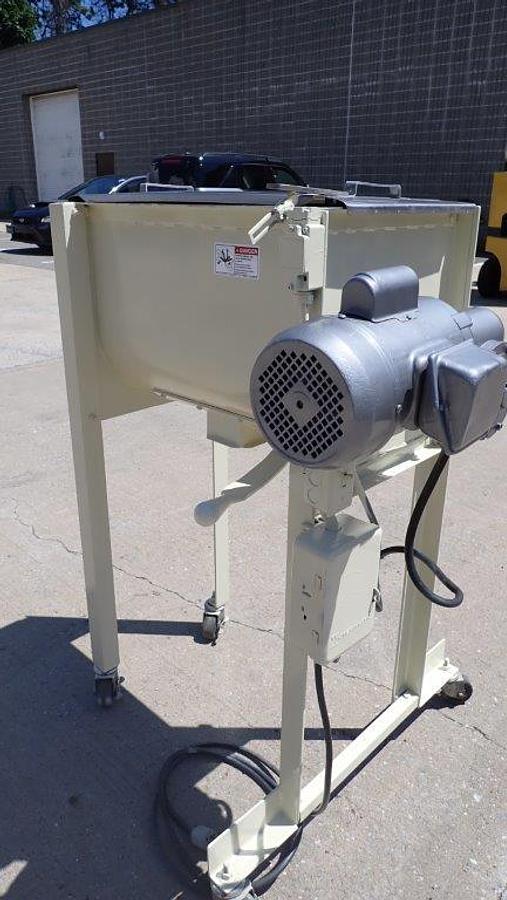
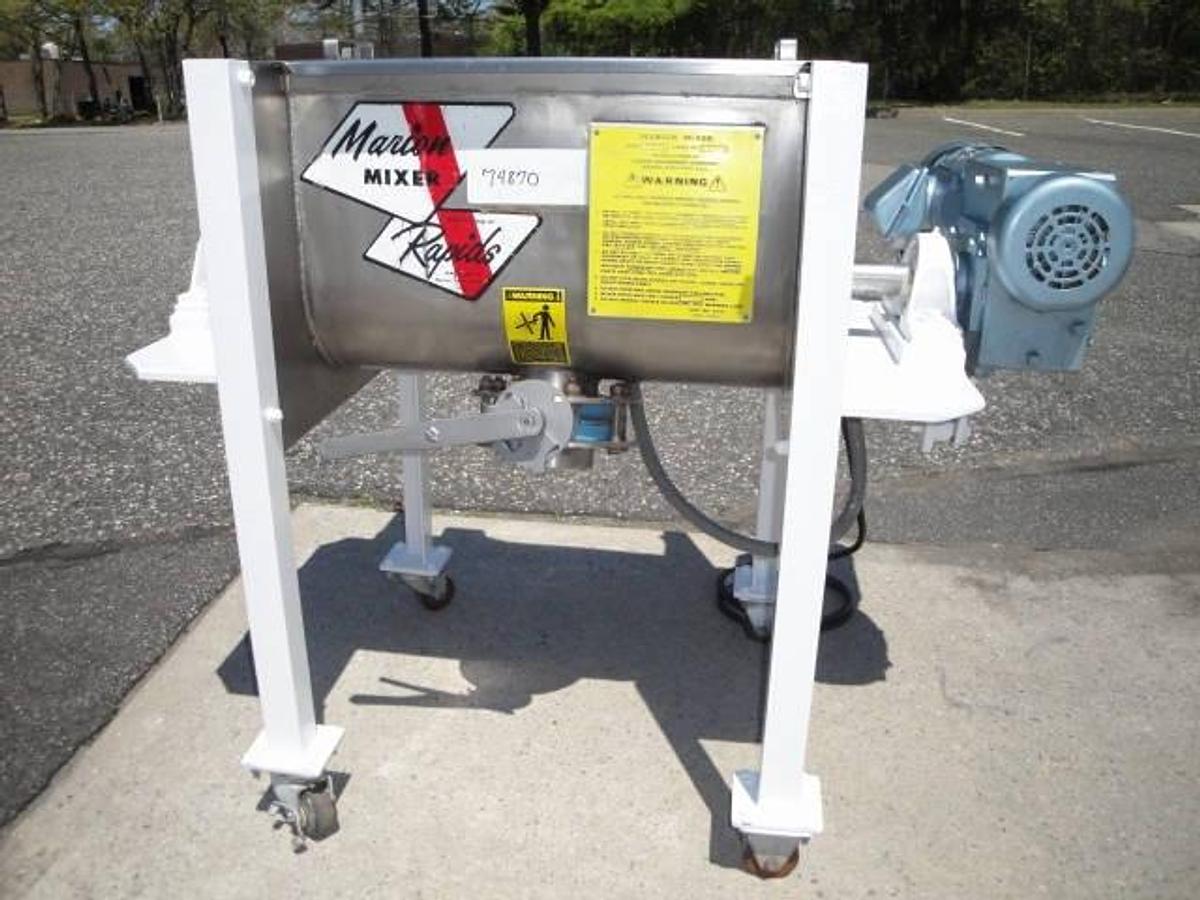
Used Marion mixers are available across a wide range of configurations, including portable units as small as 2 cubic feet and large stationary units exceeding 80 cubic feet. Construction materials vary by listing as well. Stainless steel models are common for food-grade and sanitary applications, while some units are built for industrial or chemical processing environments. Specific features like explosion-proof motors, center bottom discharge ports, and single-phase electrical configurations also appear in used inventory, so buyers with specific process requirements have a reasonable chance of finding a unit that matches their needs without purchasing brand-new equipment.
What mixing capacities do used Marion industrial mixers typically come in?
Used Marion mixers span a broad range of batch capacities, which is one of the reasons they appeal to such a wide range of processors. On the smaller end, portable laboratory or pilot-scale units are available in 1.5 to 2 cubic foot capacities, which are useful for product development, small batch production, or facilities with limited floor space. Mid-range units in the 10 to 24 cubic foot range are common in food processing and chemical blending environments where moderate throughput is required. Larger industrial units, such as the 45 cubic foot and 80 cubic foot models that appear in used inventory, are designed for high-volume batch production.
Capacity in cubic feet does not always translate directly to weight capacity, since bulk density varies significantly by material. A 45 cubic foot mixer handling a light powder will process a very different weight per batch than the same unit handling a dense granular product. Buyers should calculate their required batch weight in pounds or kilograms and then cross-reference that against the rated capacity of a specific used unit. Sellers of used Marion equipment can typically provide the nameplate specifications or original documentation that lists working capacity, which helps buyers confirm a machine is appropriately sized for their application before committing to a purchase.
What industries use Marion industrial mixers?
Marion mixers were designed with food processing as a primary application, and that remains their most common use. In food manufacturing, they are used to blend dry ingredients like flour, sugar, spices, and seasoning blends, as well as semi-moist products and coated snack foods. The stainless steel construction and sanitary design features on many Marion models make them compliant with food safety standards, which is a key requirement in that industry. Specific food segments that rely heavily on this type of equipment include pet food, bakery ingredients, confectionery, and ready-to-eat meal components.
Beyond food processing, Marion mixers are used in chemical manufacturing, pharmaceuticals, agriculture (particularly for blending fertilizers and feed), and mineral processing. The plow mixer design is especially valued in applications where gentle blending is needed to preserve particle integrity, such as in pharmaceutical granulation or specialty chemical production. Because used Marion equipment retains the mechanical characteristics of the design, buyers from non-food industries often purchase food-grade stainless steel units and repurpose them for chemical or agricultural blending, taking advantage of the durable construction even when sanitary certification is not a strict requirement.
What materials can Marion industrial mixers handle?
Marion mixers are built to handle a wide range of material types, which is part of what makes them so common across multiple industries. Dry free-flowing powders and granules are the most straightforward application. The plow and ribbon designs move these materials efficiently without creating dead zones in the mixing chamber. Semi-moist and sticky materials can also be processed, though the specific blade configuration and motor horsepower of a given unit will determine how well it handles high-viscosity or cohesive products. Some Marion models are equipped with choppers or intensifier bars that break up agglomerates during mixing, which is useful for materials that tend to clump.
Viscous pastes and wet materials require more torque, so buyers looking at used Marion mixers for those applications should pay close attention to the horsepower rating of the drive motor on any specific unit. A 7.5 HP unit suitable for dry blending may not have enough power for a dense, wet product. Stainless steel models are appropriate for food, pharmaceutical, and chemical products that require corrosion resistance or cleanability, while carbon steel units are typically used for non-reactive bulk materials like minerals, aggregates, or certain agricultural products. Discussing the intended material with the equipment seller before purchase helps confirm that a particular used unit is a good mechanical fit for the application.
What are the power and electrical requirements for Marion industrial mixers?
Marion industrial mixers are manufactured with a range of motor sizes and electrical configurations depending on the mixer capacity and intended application. Smaller units, such as 1.5 to 2 cubic foot models, may be configured for single-phase power, which makes them easier to install in facilities without three-phase electrical service. Larger units, particularly those in the 10 cubic foot and above range, typically require three-phase power and are driven by motors ranging from 7.5 HP to 30 HP or more depending on the batch size and material being processed. The 45 cubic foot Marion plow mixer, for example, is equipped with a 30 HP motor, which reflects the torque requirements of moving large volumes of material.
When purchasing a used Marion mixer, buyers should verify the motor specifications listed on the unit's nameplate and confirm that their facility's electrical service is compatible. Voltage configurations (such as 208V, 230V, or 460V three-phase) vary between units, and mismatches can require rewiring or transformer installation, which adds to the total cost of bringing the machine into service. Some used units may also carry explosion-proof motor designations, which are required in facilities where flammable dust or vapors are present. Buyers should confirm with their electrical contractor whether the motor on a specific used unit meets their local safety and code requirements before finalizing a purchase.
Are used Marion industrial mixers a reliable choice for production environments?
Marion mixers have a strong reputation for durable construction, and that durability is a primary reason they hold their value in the secondary market. The heavy-gauge stainless steel or carbon steel fabrication used in Marion equipment tends to age well, and the mechanical simplicity of ribbon and plow mixer designs means there are fewer components that can fail compared to more complex mixing technologies. Many used Marion units have been decommissioned not because of mechanical failure but because a facility upgraded capacity, changed product lines, or closed operations entirely, leaving equipment that still has substantial working life remaining.
That said, reliability in a used machine depends heavily on its maintenance history and operating conditions. Buyers should request as much documentation as possible, including any available service records, and take advantage of inspection opportunities offered by the seller. In-person inspections allow a buyer or their technician to check wear on blades, seals, bearings, and discharge mechanisms. Video inspections are a practical alternative when travel is not feasible. It is also worth contacting the manufacturer directly to ask about parts availability and technical support for a specific model and serial number, since older or discontinued configurations may have limited support options. Selecting a used equipment dealer with a track record in food processing or industrial mixing equipment adds another layer of confidence in the transaction.
How should buyers inspect a used Marion mixer before purchasing?
Inspecting a used Marion mixer before purchase is one of the most important steps in the buying process, and reputable used equipment dealers will typically offer several options to facilitate this. In-person inspections are the most thorough approach. A buyer or their maintenance technician can physically examine the mixing chamber, blades or ribbons, seals, bearings, discharge valve, and drive components. They can also assess the overall condition of the frame and any signs of wear, corrosion, or prior repairs. Some used Marion mixers are still installed at operating facilities, in which case the dealer can arrange access to the site so the buyer can see the machine in its current working environment.
For buyers who cannot travel, video inspections and detailed photo documentation are widely available alternatives. A good seller will capture the interior of the mixing chamber, the condition of the blades, the motor nameplate, the discharge mechanism, and any visible wear points. One important limitation to keep in mind is that used equipment dealers are generally not set up to run production tests with actual product, since doing so would require food safety permitting and production infrastructure that a resale operation does not typically have. The inspection is therefore focused on mechanical condition rather than process performance. Buyers with specific performance requirements may want to consult with a process engineer who can evaluate whether a machine's specifications are suited to their application based on the inspection findings.
What should buyers expect regarding shipping and delivery of a used Marion industrial mixer?
Shipping a used industrial mixer involves more logistical complexity than shipping standard freight, and buyers should factor those costs into their total budget from the start. Smaller portable Marion mixers in the 1.5 to 2 cubic foot range can often be palletized and shipped via standard LTL freight carriers, but they still need to be properly secured and protected to prevent damage in transit. Larger units, such as 24, 45, or 80 cubic foot mixers, require more substantial packaging, potentially including custom crating, and the loading process at the seller's facility typically involves a forklift or crane. Rigging costs for loading and unloading heavy equipment are usually quoted separately from the base freight charge.
Buyers should ask the seller for a detailed breakdown of all costs involved in getting the machine to their facility, including packaging, rigging, freight, and any special handling requirements at the destination. The total landed cost can differ significantly from the listed equipment price, particularly for large or heavy units being shipped long distances. Unloading at the buyer's facility also needs to be planned in advance. If the receiving facility does not have a loading dock or appropriate lifting equipment, arrangements for a crane or rigger at the destination will need to be made before the shipment arrives. Getting these details sorted out before purchase avoids delays and unexpected expenses once the machine is in transit.
What are typical payment terms when buying a used Marion mixer from a dealer?
Payment practices in the used industrial equipment industry are fairly consistent across dealers. In most cases, full payment is required before a machine is released for shipping. This applies whether the buyer is purchasing a small portable blender or a large industrial plow mixer. The requirement for payment in advance reflects the nature of the secondary market, where machines are often one-of-a-kind inventory items and dealers need to confirm funds before committing to packaging, rigging, and logistics. Wire transfer is the most common payment method for transactions of this size, though some dealers may accept other forms depending on the transaction.
Buyers who have an established relationship with a particular dealer may find that more flexible terms are available over time, but first-time buyers should plan for full upfront payment as the standard expectation. Before sending payment, buyers should confirm all the details of the transaction in writing, including the machine's condition as described, what is included with the purchase, the agreed shipping terms, and the timeline for delivery. Taking time to vet the dealer's reputation through references, industry associations, or their track record in the market is a reasonable step before committing funds to any used equipment purchase of significant value.
What is the difference between a Marion plow mixer and a Marion ribbon blender?
Plow mixers and ribbon blenders are both batch mixing technologies, but they work on different mechanical principles and are better suited to different applications. A plow mixer uses a horizontal shaft fitted with plow-shaped blades that rotate through the material. As the plows turn, they lift and fold the product in a three-dimensional tumbling motion, which creates a very thorough mix without requiring the material to travel far along the length of the vessel. This design is particularly effective for materials that are fragile, cohesive, or need to be coated, since the action is relatively gentle and can be precisely controlled. Some Marion plow mixers also include high-speed choppers that break up agglomerates during the mix cycle.
A ribbon blender uses two concentric helical ribbons, an inner ribbon and an outer ribbon, that rotate on the same shaft but move material in opposite directions. The outer ribbon moves product toward the center of the trough while the inner ribbon moves it toward the ends, creating a counter-flowing pattern that produces fast, uniform blending. Ribbon blenders tend to be efficient for dry powders and granular materials and are a common choice in food ingredient and chemical applications where speed of mixing is a priority. The double ribbon blender in the Marion product line takes this a step further with an additional ribbon set for more intensive blending action. Choosing between the two designs for a used purchase depends on the specific material characteristics, required blend time, and discharge requirements of the application.