Category
Manufacturer
Model
Manesty
Manesty specializes in manufacturing equipment for the pharmaceutical sector, particularly in tablet compression and coating. Their machines are designed to meet stringent regulatory requirements and are widely used in drug production.
FAQ:
What is a Manesty tablet press and what is it used for?
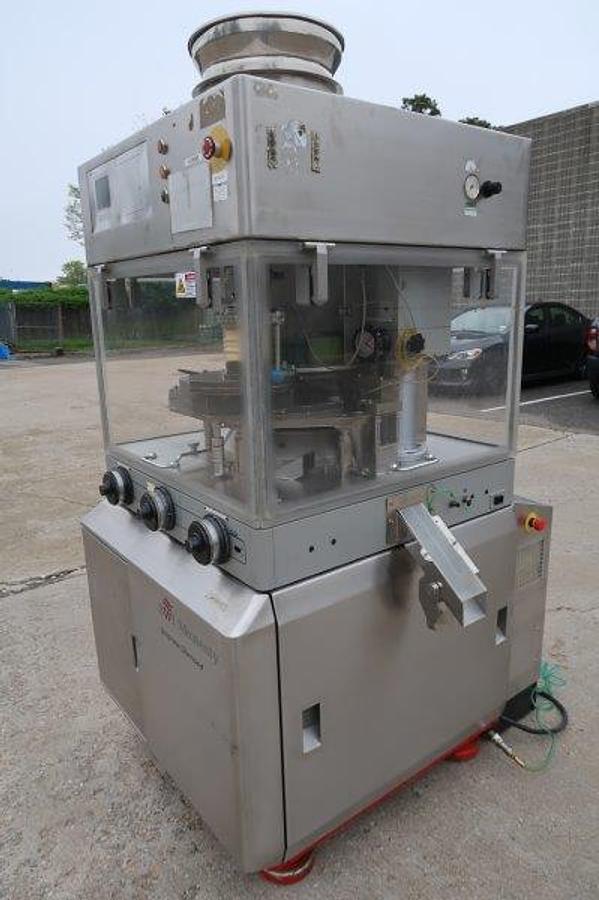
Manesty is a British pharmaceutical equipment brand with a long history of manufacturing tablet compression machinery for the pharmaceutical and nutraceutical industries. Manesty tablet presses are designed to compress powdered or granulated materials into uniform tablets of consistent weight, hardness, and thickness. Their machines are built to meet stringent regulatory requirements, making them a trusted choice in drug production environments where quality control is non-negotiable.
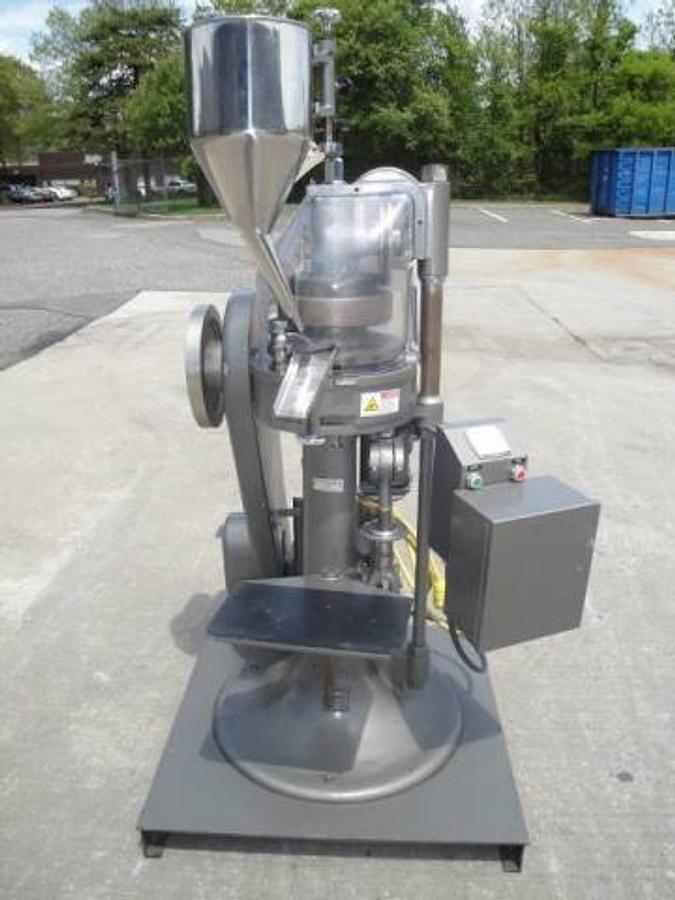
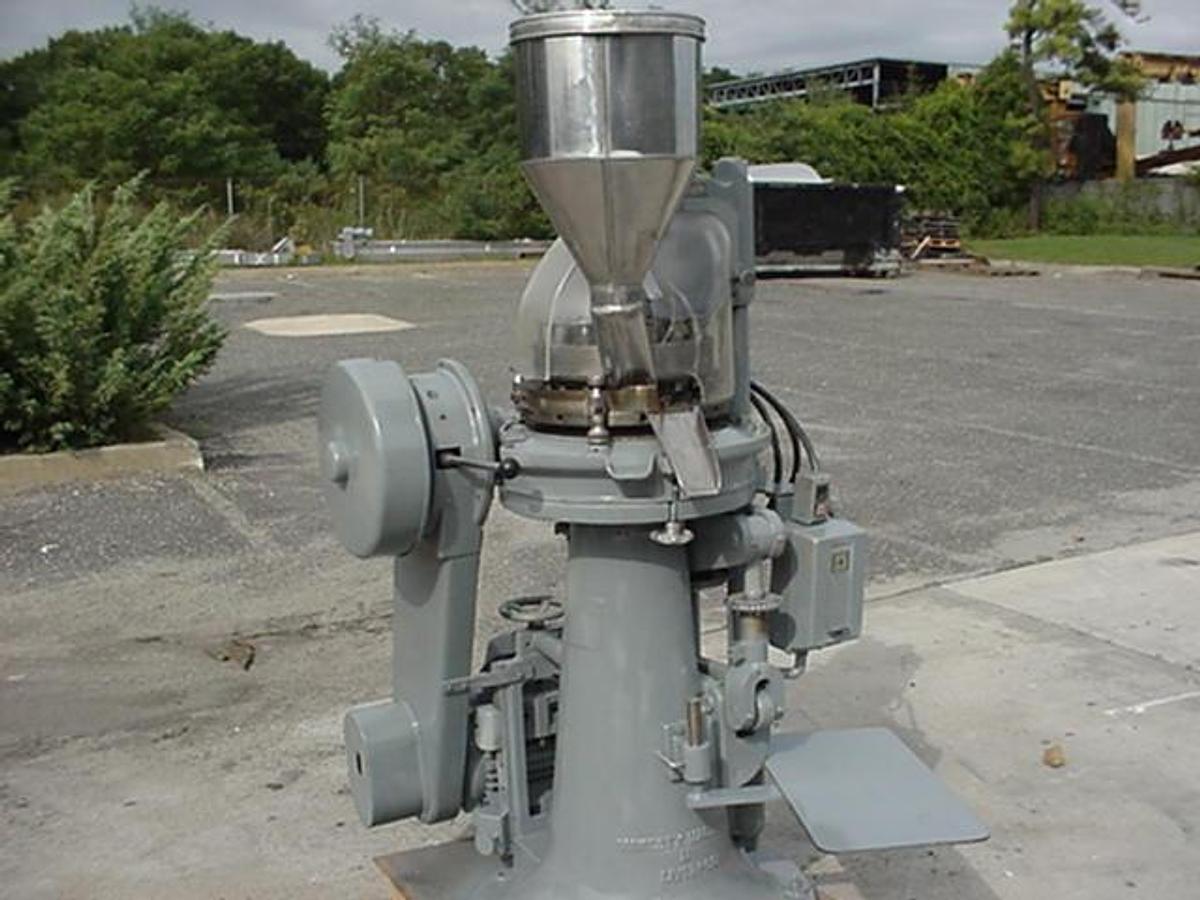
The equipment spans a range of configurations, from single-punch presses suited to small-batch or laboratory work, to multi-station rotary presses capable of high-volume production. Manesty machines are widely used by pharmaceutical manufacturers, contract packagers, nutraceutical producers, and research facilities. Because the brand built its reputation around reliability and regulatory compliance, used Manesty presses remain in demand long after they leave active production lines.
What Manesty tablet press models are commonly available on the used equipment market?
Several Manesty models appear regularly on the used pharmaceutical equipment market, each designed for different production scales and applications. The Unipress is a well-known rotary press suited for mid-range production volumes. The B3B is a 16-station rotary tablet press that has been widely used in pharmaceutical manufacturing for decades. The D3RY is another 16-station rotary model, often found in keyed configurations for added tooling security. The E2 is a single-punch press, making it a practical choice for development work, small batches, or pilot-scale production.
Other Manesty models that surface in the used market include the Betapress, Novapress, Rotapress, and Sviac, each with varying station counts, output capacities, and tooling compatibility. When evaluating any used Manesty press, buyers should confirm the specific model designation, station count, and whether the machine is configured for B or D tooling, as these details directly affect production capacity and the cost of sourcing punches and dies.
What is the typical production capacity of a Manesty rotary tablet press?
Production capacity on a Manesty rotary tablet press depends primarily on the number of stations, the turret speed, and the tooling configuration. A 16-station model like the B3B or D3RY will produce significantly fewer tablets per hour than a higher-station press running at comparable speeds. As a general reference point, rotary tablet presses in this class can range from tens of thousands to several hundred thousand tablets per hour depending on the model and operating conditions. Single-punch machines like the Manesty E2 are designed for much lower output, typically suited to laboratory or small-scale development work rather than commercial production.
Buyers should request the machine's technical specifications from the seller, as actual output figures depend on the tablet formulation, compression dwell time, and the condition of the press. Used equipment may have been modified or may show wear that affects maximum throughput. Consulting the machine's documentation or reaching out to the manufacturer's support channels can help establish realistic production expectations for a specific unit.
What tooling standards are Manesty tablet presses compatible with?
Manesty tablet presses are generally compatible with TSM (Tablet Specification Manual) and EU tooling standards, which are the two most widely adopted punch and die standards in the pharmaceutical industry. This compatibility is a practical advantage for buyers, because TSM and EU tooling is produced by numerous tooling manufacturers globally, making replacement punches and dies relatively straightforward to source. The specific tooling type required, most commonly B or D tooling, depends on the individual Manesty model, so confirming this detail before purchase is important.
For keyed configurations, such as those found on certain D3RY models, the keyway on the punch guides the die to prevent rotation during compression, which is particularly relevant for shaped or embossed tablets. Buyers sourcing used Manesty presses should verify whether the existing tooling is included in the sale, and if so, assess its condition carefully. Worn or damaged punches and dies will need to be replaced before the machine can produce tablets within specification, and that cost should be factored into the total acquisition budget.
Do used Manesty tablet presses meet current GMP and regulatory compliance standards?
Manesty tablet presses were designed with pharmaceutical-grade manufacturing in mind, and many models were built to meet the Good Manufacturing Practice (GMP) standards that were current at the time of their manufacture. However, regulatory expectations evolve over time, and an older used machine may require inspection, upgrades, or documentation review before it can be operated in a fully compliant production environment. Buyers operating in FDA-regulated or EMA-regulated markets should assess whether the machine's construction materials, cleanability, and control systems align with current GMP guidelines.
Practically speaking, buyers should engage their quality assurance team early in the evaluation process. A used Manesty press that has been well-maintained and properly documented may qualify for installation qualification (IQ) and operational qualification (OQ) processes with relatively modest effort. Machines that lack maintenance records or have been significantly modified may require more extensive validation work. Consulting with a pharmaceutical equipment specialist or a validation consultant before committing to a purchase is a sound approach, especially for regulated production environments.
Are spare parts still available for older Manesty tablet presses?
Parts availability for older Manesty machines varies depending on the model and its age. Because Manesty built a large installed base of equipment over many decades, a secondary market for spare parts exists through specialist pharmaceutical equipment suppliers, tooling manufacturers, and dealers who stock components for legacy machines. Common wear parts such as punches, dies, cam tracks, and compression rolls can often be sourced from third-party suppliers who manufacture to TSM or EU tooling standards.
For more model-specific components, buyers are advised to contact the current manufacturer support channels to understand what level of parts and technical support is still available for a particular machine. Older or discontinued models may have limited factory support, which makes the condition of the machine at the time of purchase even more critical. When evaluating a used Manesty press, asking the seller for documentation of recent maintenance and any parts that have been replaced gives a clearer picture of the machine's ongoing serviceability.
What should buyers inspect when evaluating a used Manesty tablet press?
A thorough inspection of a used Manesty tablet press should cover both mechanical condition and documentation. On the mechanical side, key areas include the condition of the turret and stations, the state of the cam tracks, the compression rolls, the feeder system, and the tablet ejection mechanism. Signs of excessive wear, corrosion, or damage to contact parts are red flags, particularly in a pharmaceutical application where product contamination is a concern. The drive system, including the motor and gearbox, should also be assessed for smooth operation and unusual noise.
Reputable used equipment dealers typically accommodate in-person inspections at their facility, or can arrange video inspections and detailed photo documentation for buyers who cannot travel. Some machines may still be installed at the facility where they were last used, allowing for an inspection in a production context. Keep in mind that most dealers do not have the permitting required to run actual pharmaceutical production, so live tablet compression testing is generally not feasible during an inspection. Buyers should also request any available maintenance records, calibration logs, and prior validation documentation, as this paperwork can significantly reduce the qualification burden after purchase.
What is the typical price range for a used Manesty tablet press?
Pricing for used Manesty tablet presses varies considerably based on the model, station count, age, condition, and what accessories or tooling are included in the sale. Single-punch models like the E2 are generally at the lower end of the price spectrum, while multi-station rotary presses in good working condition command higher prices. The condition of the machine is often the single biggest factor in pricing. A well-maintained press with documentation and recently serviced components will typically be priced higher than one sold strictly as-is with no service history.
Buyers should also account for costs beyond the purchase price itself. Shipping, rigging, and crating can add meaningfully to the total landed cost, particularly for heavier rotary presses that require specialized freight handling. If the machine needs any refurbishment, replacement parts, or validation work before entering production, those costs should be estimated before finalizing a budget. Requesting a detailed quote that breaks out the machine price, packaging, freight, and any applicable rigging fees gives a more accurate picture of the true acquisition cost.
What should buyers understand about shipping and logistics for a used Manesty tablet press?
Tablet presses are precision pharmaceutical machines, and proper packaging is essential to prevent damage during transit. Smaller single-punch machines may be palletized and shrink-wrapped, while larger rotary presses typically require custom crating to protect sensitive components like the turret, compression rolls, and control panel. The level of packaging required directly affects shipping costs, and buyers should ask the dealer for a detailed breakdown of crating, rigging, and freight charges before committing to a purchase.
Larger Manesty rotary presses may require heavy-duty rigging equipment for loading at the dealer's facility and unloading at the buyer's site. This is an added cost that is easy to overlook when comparing machine prices. Buyers should confirm with the seller whether rigging is included in the quoted price or billed separately, and whether the machine will be shipped via flatbed, enclosed freight, or another method. Understanding the full landed cost, including the machine price, crating, rigging, and freight, is the only way to make an accurate comparison between machines listed at different price points.
What payment terms do used pharmaceutical equipment dealers typically require?
Most used equipment dealers require full payment prior to releasing a machine for shipping. This is standard practice in the used machinery industry and applies broadly regardless of the type of equipment being purchased. Buyers who are unfamiliar with this model sometimes expect terms similar to those offered by manufacturers or distributors, but the used market operates differently. Payment in full before shipment protects the dealer and is a long-established norm that buyers should plan for when budgeting a purchase.
Some dealers may offer payment terms to established customers with a prior purchasing history, but this is the exception rather than the rule for first-time buyers. Wire transfer is the most common payment method for transactions of this size. Buyers should also factor in the timeline between payment and delivery, as crating, freight scheduling, and transit time can add days or weeks to the process depending on the origin and destination. Clarifying the expected lead time from payment to delivery is a practical step that helps buyers plan installation and commissioning schedules accurately.