Category
Manufacturer
Model
FAQ:
What is a Loma Lock metal detector and what is it used for?
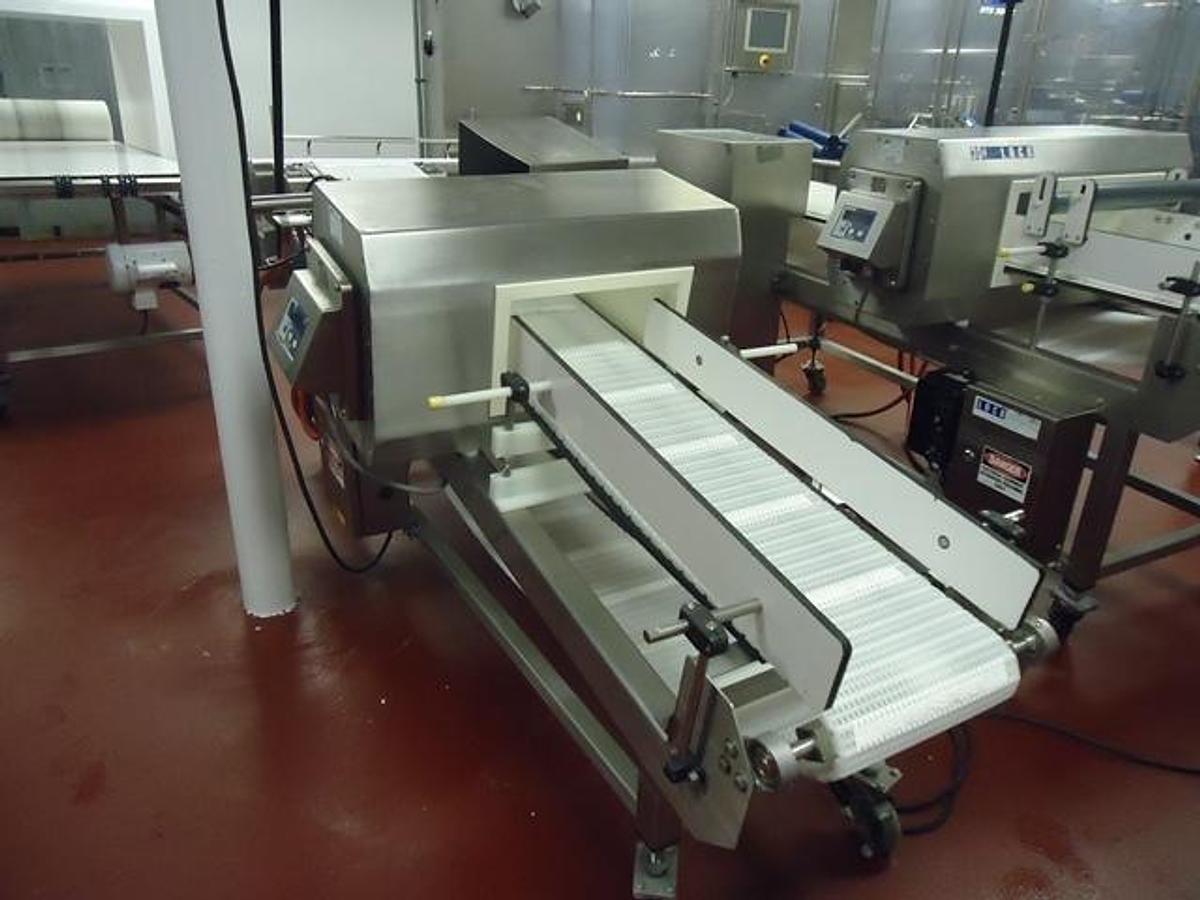
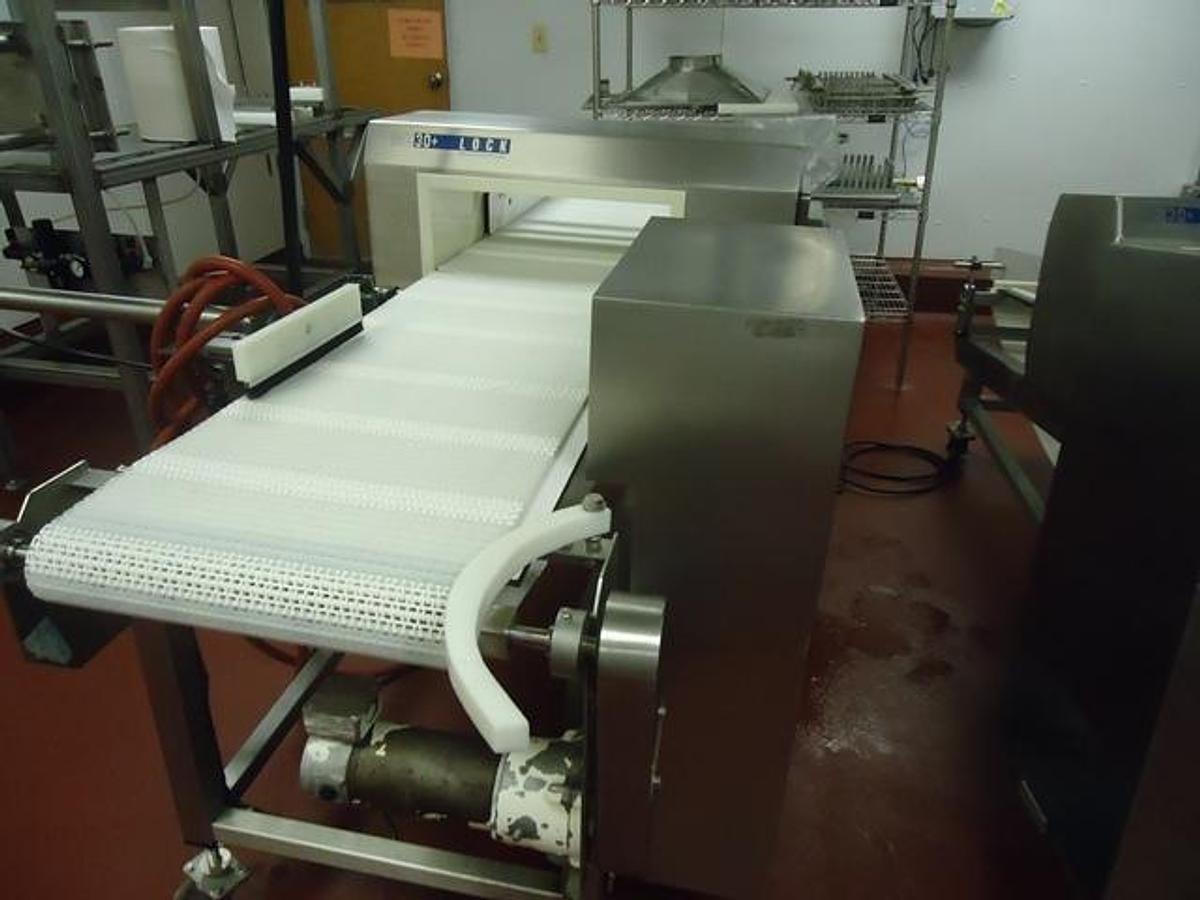
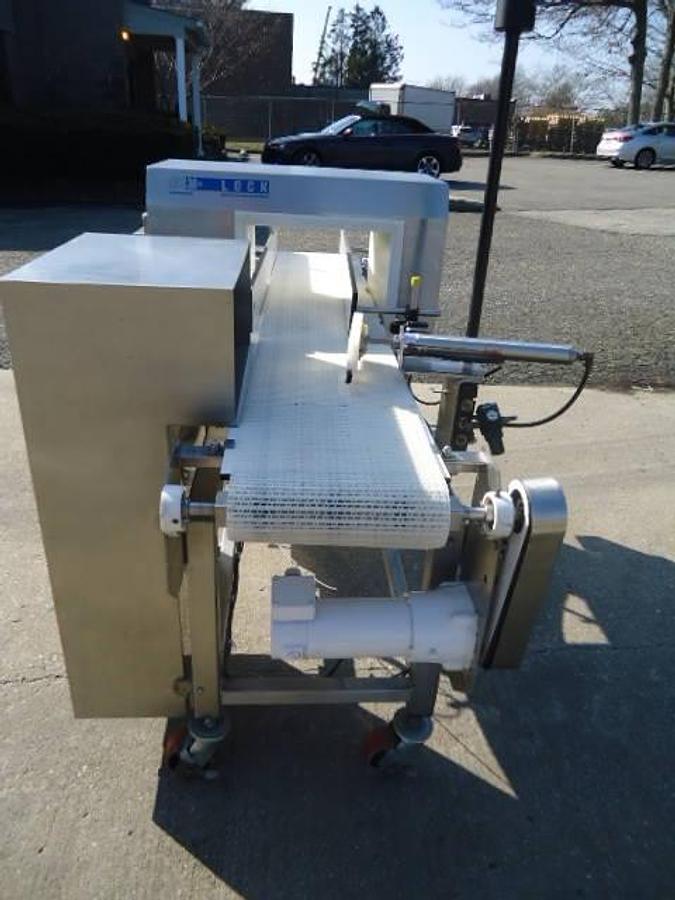
Loma Lock metal detectors are conveyorized inspection systems designed to detect metallic contaminants in products moving along a production line. The "Lock" designation refers to Loma's inline detection systems commonly used across food processing, pharmaceutical manufacturing, and packaging operations. These machines are built to catch ferrous, non-ferrous, and stainless steel contaminants before products reach consumers or move further down a production line, making them a critical quality control checkpoint in regulated industries.
The conveyorized design means products pass through an aperture on a belt system, allowing for continuous inline inspection without interrupting production flow. Loma Lock units are typically constructed with stainless steel frames suited for washdown environments, which is a standard requirement in food and pharmaceutical facilities. The aperture dimensions vary by model. For example, available used units include configurations such as 13.75 inches wide by 6.5 inches high, 19.5 inches wide by 6.5 inches high, and 13.75 inches wide by 8.5 inches high, each suited to different product sizes and conveyor setups.
What contaminants can a Loma Lock metal detector detect?
Loma Lock metal detectors are designed to identify three primary categories of metallic contaminants: ferrous metals (such as iron and steel), non-ferrous metals (such as aluminum, copper, and brass), and stainless steel. Ferrous detection is generally the most straightforward, as these metals have a strong magnetic signature. Non-ferrous metals are slightly more challenging but still reliably detected by modern digital signal processing systems. Stainless steel is historically the most difficult metal to detect, particularly in food applications where the product itself can have a high moisture or mineral content that creates signal interference.
The challenge with stainless steel detection is especially significant in food processing, where stainless steel equipment is ubiquitous and therefore a common source of contamination. Loma systems are engineered with this in mind, using multi-frequency or phase-discrimination technology to separate product signal from contaminant signal. Buyers sourcing used Loma Lock units for food production should verify the specific sensitivity specs of the individual machine they are considering, as detection thresholds can vary by model, aperture size, and the product type being inspected.
What industries use Loma Lock metal detectors?
Loma Lock metal detectors see the widest use in food processing, where regulatory pressure and retailer codes of practice make inline metal detection essentially mandatory. Applications span fresh and frozen meat, poultry, seafood, baked goods, dairy, confectionery, and packaged dry goods. Beyond food, these machines are also used in pharmaceutical manufacturing to detect metallic contamination in tablets, capsules, and bulk powders, as well as in packaging operations where foil or metallic components could mask or interfere with detection.
The stainless steel construction and washdown-rated design of Loma Lock units make them particularly well suited for wet processing environments, such as fresh meat or seafood lines, where equipment is regularly hosed down with water and cleaning agents. Industrial and chemical manufacturers also use conveyorized metal detectors for quality control on non-food products, though food and pharma represent the primary markets. When evaluating a used Loma Lock unit, buyers should consider whether the aperture size and conveyor configuration match the specific product dimensions and line speed of their intended application.
Are Loma Lock metal detectors compliant with food safety standards like HACCP and BRC?
Loma Systems, as a brand under Illinois Tool Works (ITW), has built its product line with major food safety frameworks in mind, including HACCP (Hazard Analysis and Critical Control Points), BRC (British Retail Consortium), and IFS (International Featured Standards). Metal detection is explicitly identified as a Critical Control Point under HACCP plans for most food manufacturers, and equipment that supports audit documentation, reject confirmation, and sensitivity validation is strongly preferred by food safety auditors.
For buyers purchasing a used Loma Lock unit, it is worth noting that compliance is partly a function of the machine's condition and calibration, not just its model designation. A used machine will need to be validated and tested against the sensitivity requirements specified in a facility's HACCP plan before it can be formally logged as a CCP. Buyers should also check with the manufacturer directly to understand what level of technical support and documentation is available for the specific model and serial number they are considering, as older units may have limited support resources available.
What should buyers know about purchasing a used Loma Lock metal detector?
Buying a used Loma Lock metal detector requires more due diligence than purchasing other types of used equipment, primarily because metal detectors are precision instruments whose sensitivity and calibration can degrade over time. The aperture size, operating frequency, and signal processing capabilities of a specific unit determine what it can detect and at what sensitivity level. Buyers should request detailed specifications for the individual machine, not just the product line, and ask whether the unit has been tested or serviced recently.
Reputable used equipment dealers will typically offer in-person or video inspections so buyers can assess the machine's physical condition, check for wear on the conveyor components, and verify that the control panel and rejection system are functional. Since used machinery is sold as-is, the burden of inspection falls on the buyer. It is also advisable to contact Loma Systems directly before purchasing to confirm parts availability and technical support for the specific model, as older or discontinued units may have limited manufacturer support. Selecting a dealer with a long track record in food processing or industrial equipment specifically will reduce the risk of purchasing a machine that cannot be put back into production.
What aperture sizes are available for used Loma Lock metal detectors?
Aperture size is one of the most critical specifications when selecting a conveyorized metal detector, because the opening must accommodate the largest cross-section of the product being inspected while still maintaining adequate detection sensitivity. As a general rule, larger apertures reduce sensitivity, so matching the aperture as closely as possible to the product size is important. Used Loma Lock units on the market include configurations such as 13.75 inches wide by 6.5 inches high, 19.5 inches wide by 6.5 inches high, and 13.75 inches wide by 8.5 inches high, covering a range of mid-size production applications.
The inclined conveyor variant is also available in used inventory, which is designed for products that need to be elevated between processing stages. Buyers should measure their product dimensions and conveyor height requirements before selecting a unit. If the available aperture is significantly larger than the product, sensitivity to small contaminants may be reduced, and additional testing or calibration may be needed to meet the detection thresholds required by a facility's quality program. Consulting with a technician familiar with Loma equipment before finalizing a purchase can help confirm that a specific used unit is appropriate for the intended application.
How does a conveyorized metal detector differ from a pipeline or gravity-feed metal detector?
A conveyorized metal detector uses a belt conveyor to move solid or packaged products through a detection aperture at a controlled speed. This design is suited for discrete items such as packaged foods, boxed products, or individual portions that maintain their shape during inspection. The belt speed and aperture dimensions are matched to the product and line configuration, and a rejection mechanism (such as an air blast, pusher arm, or diverter gate) removes flagged products from the line automatically.
Pipeline metal detectors, by contrast, are designed for liquid, paste, or pumped product applications where the product flows through a sealed tube rather than passing on a belt. Gravity-feed detectors are used for free-falling bulk materials such as grains, powders, or granules. Loma Lock conveyorized units are specifically built for the belt-driven application, making them the right choice for facilities inspecting solid or packaged goods. Buyers replacing an existing conveyorized detector should confirm that the belt width, aperture height, and conveyor height of the used unit are compatible with their existing line layout before purchasing.
What should buyers ask when inspecting a used Loma Lock metal detector before purchase?
A thorough pre-purchase inspection of a used Loma Lock metal detector should cover both the mechanical and electronic components of the machine. On the mechanical side, buyers should examine the conveyor belt for wear, cracking, or contamination, check the frame and aperture housing for physical damage or corrosion, and verify that the rejection mechanism operates correctly. On the electronics side, the control panel should power up without errors, and the unit should ideally be demonstrated running a basic test with ferrous and non-ferrous test pieces to confirm the detection circuit is functional.
Buyers should also ask the dealer how long the machine has been out of production, whether it was decommissioned or is still running in a facility, and whether any service records or calibration history are available. Some used machines are still in active production at a plant and can be inspected on-site in operating condition, which provides a much clearer picture of performance. Dealers who specialize in food processing equipment are generally better positioned to answer technical questions about Loma units than general industrial equipment dealers. Video inspection is a reasonable alternative when in-person visits are not practical, and most reputable dealers will accommodate this request.
What are the typical shipping and logistics considerations for a used Loma Lock metal detector?
Conveyorized metal detectors are moderately heavy pieces of equipment, and the aperture coil assembly is sensitive to mechanical shock, so proper packaging during transit is important. Depending on the size of the unit and the dealer's standard process, machines may be shipped on a pallet or in a custom crate. Crating provides better protection but adds to shipping costs. Buyers should ask the dealer specifically what packaging method will be used and whether the cost is included in the quoted price or billed separately.
Larger units or those being moved from a production facility may require rigging equipment for loading, which is typically an additional cost. Freight charges will vary based on the origin location, destination, freight class, and whether liftgate service is needed at the delivery point. Buyers should request a full landed cost breakdown before committing to a purchase so there are no surprises at delivery. If the machine is coming from an active production facility, coordinating the removal date with both the dealer and the facility will also be part of the logistics planning process.
What payment terms are typical when buying used metal detection equipment?
Most used equipment dealers require full payment before a machine ships. This is standard practice in the used machinery industry and applies broadly regardless of the type of equipment being purchased. The reasoning is straightforward: once a machine leaves the dealer's control, verifying its condition becomes difficult, and used equipment transactions do not carry the same buyer protections as retail consumer purchases. Buyers should be prepared to wire funds or arrange another agreed-upon payment method before the machine is released for shipping.
Some dealers may offer payment terms to established customers with a prior purchase history, but this is not the norm for first-time buyers. Buyers who are unfamiliar with a particular dealer should research the company's history and reputation in the industry before sending payment. Asking for references from past customers, checking industry-specific directories, and confirming that the dealer has experience with food processing equipment specifically are reasonable steps to take before completing a transaction. A dealer with a long track record in industrial food equipment is generally a safer choice than a general liquidator or auction platform with no specialization.