Category
Manufacturer
Model
FAQ:
What is a pressure sensitive labeler and how does it work?
A pressure sensitive labeler applies pre-printed labels to containers or products using a peel-and-apply mechanism. The machine unwinds a roll of labels, peels each label away from its liner at a curved peel plate or beak, and presses it onto the product surface using a wipe-down pad, roller, or air jet. No glue, heat, or solvents are involved. The label stock itself carries a pre-applied adhesive that activates under light pressure, which is where the name comes from.
This technology is widely used across food and beverage, pharmaceutical, chemical, and personal care industries because it handles a broad range of label materials and container types without requiring specialized consumables. Labels can be paper, film, foil, or specialty stock. Machines range from bench-top semi-automatic units where an operator hand-feeds each container, to fully automatic inline systems that integrate with conveyors and apply labels at high speed with no manual intervention between cycles.
What types of containers are Labeling Technologies pressure sensitive labelers compatible with?
Labeling Technologies machines are built to handle a wide variety of container shapes and materials. Round bottles, jars, cans, and tubes are common applications, as are flat-sided containers like boxes, cartons, and pouches. Certain models, including three-sided automatic labelers, are specifically designed to apply labels to three faces of a container in a single pass, which is useful for products that require front, back, and top or side labeling simultaneously.
Compatible materials include glass, plastic (HDPE, PET, PP, and others), metal, and paperboard. The key variable is surface consistency. Containers need to be dimensionally consistent from piece to piece for automatic inline models to maintain label placement accuracy. Semi-automatic bench-top configurations give operators more control over placement and can sometimes accommodate a wider range of irregular shapes that fully automatic systems might struggle with.
What is a three-sided automatic pressure sensitive labeler used for?
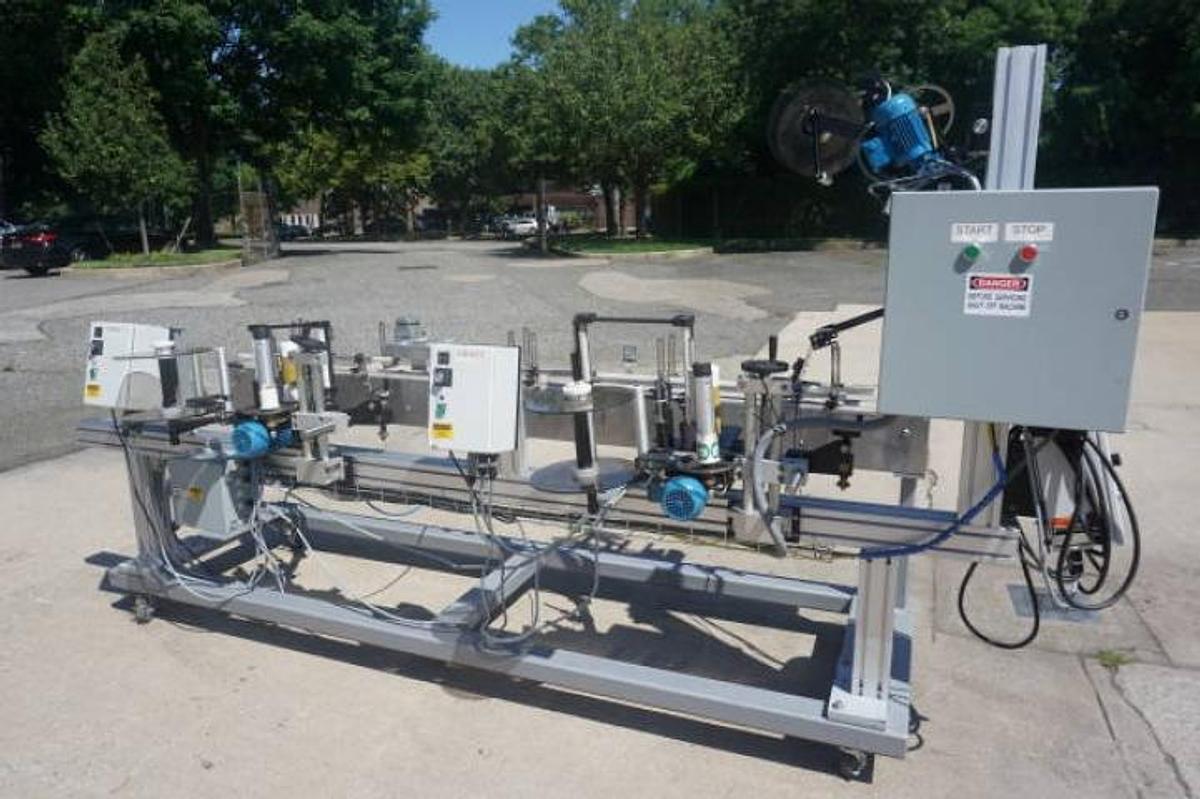
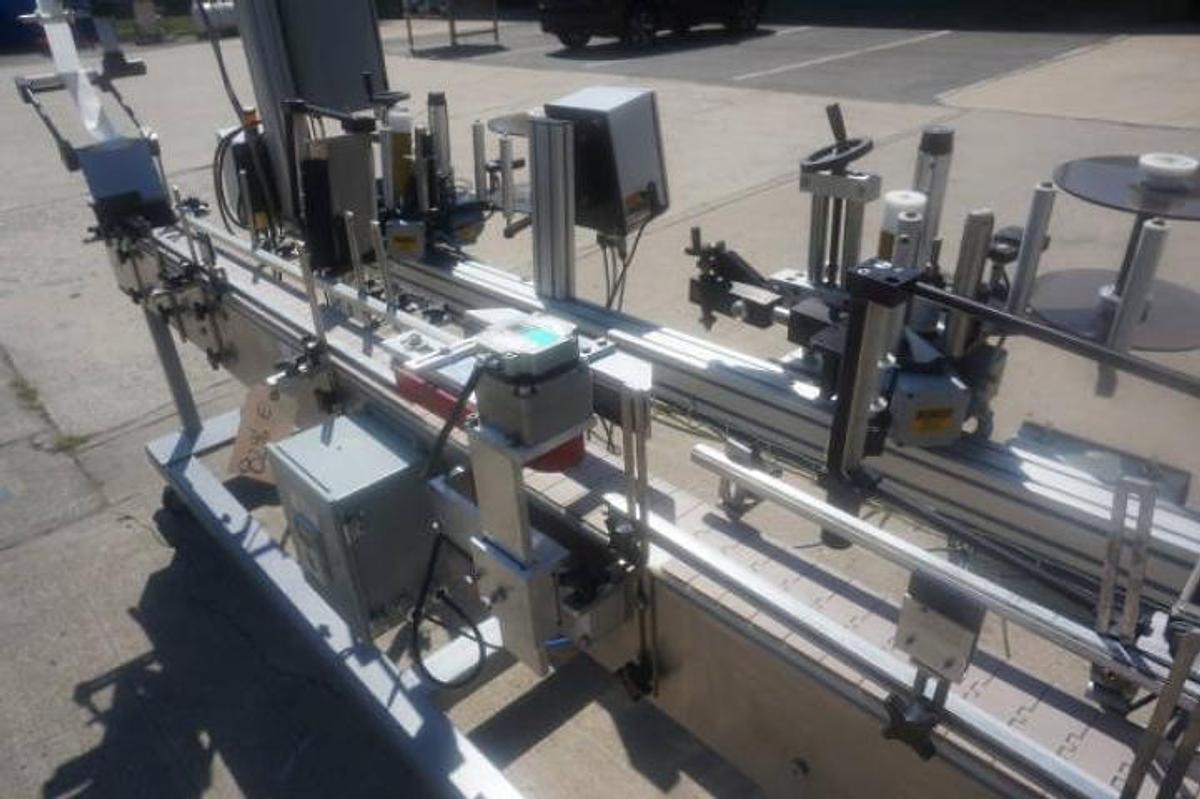
A three-sided automatic pressure sensitive labeler applies labels to three distinct surfaces of a product in a single pass through the machine. This is particularly common for retail products that carry a front panel label, a back panel label, and either a top or bottom label, such as boxed goods, flat pouches, blister packs, or certain bottle formats. Running all three labels in one pass eliminates the need for multiple separate labeling stations, which saves floor space and reduces handling.
These machines are typically inline units that integrate with a product conveyor. Products are fed in, the labeling heads apply each label in sequence or simultaneously, and the finished product exits fully labeled. For operations that need GHS-compliant labeling on chemical containers or detailed regulatory labeling on pharmaceutical packaging, three-sided labelers are a practical way to get all required label panels applied consistently and at production speed.
What label sizes and formats can Labeling Technologies machines handle?
The label size range a Labeling Technologies machine can handle depends on the specific model, but most are designed to accommodate a broad spectrum of label widths and lengths through mechanical adjustments to the label head, peel plate, and applicator components. Smaller bench-top semi-automatic models typically handle labels ranging from roughly half an inch to several inches in width, while larger automatic inline models can accommodate wider label stocks suited for full-wrap or large-panel applications.
Label format compatibility generally includes die-cut labels on rolls with standard core sizes, and many models can be adjusted for different label gap sizes and roll diameters. When evaluating a used Labeling Technologies machine, it is worth confirming the specific label width range, maximum roll diameter, and core size the unit accepts, since these specs directly affect whether the machine will work with your existing label supply. Sellers of used equipment can typically provide model documentation or assist with identifying specifications.
What is the typical labeling speed for Labeling Technologies pressure sensitive labelers?
Labeling speed varies significantly between semi-automatic and automatic models. Semi-automatic bench-top units are operator-paced, meaning throughput depends on how quickly the operator presents containers to the machine, but typical rates for experienced operators fall somewhere in the range of 20 to 60 containers per minute depending on container size and label complexity. These machines are well-suited for startup operations, short runs, and contract packagers handling multiple SKUs.
Automatic inline Labeling Technologies models are capable of considerably higher throughput, with many designed for small to mid-size production environments running anywhere from 60 to several hundred labels per minute depending on the model, label size, and product format. When sourcing a used machine, the rated speed of the specific model is a useful benchmark, but actual production speed should be verified during an inspection if possible, since wear on components like the drive system, label sensor, and applicator head can affect real-world performance.
What utilities or infrastructure do pressure sensitive labelers require to operate?
Most semi-automatic pressure sensitive labelers run on standard single-phase electrical power and require no compressed air, making them easy to deploy on a benchtop with minimal infrastructure. This is one reason they are popular with smaller operations and startups. The electrical requirements are typically modest, and the machines can often be plugged into a standard outlet without dedicated circuits.
Automatic inline models may require three-phase power depending on the drive configuration, and some models use pneumatic components for label wipe-down or product handling, which would require a compressed air supply at a specified pressure and volume. When evaluating a used automatic labeler, it is important to confirm the exact power requirements and whether any pneumatic components are present, since retrofitting a facility for compressed air or three-phase power adds cost. Sellers of used equipment can usually provide the machine's electrical and utility specifications from the model documentation or nameplate data.
How difficult is changeover on Labeling Technologies labelers when switching between different products or label sizes?
Labeling Technologies machines are generally designed with production flexibility in mind. Many models feature tool-free or minimal-tool adjustments for changing label head height, product guides, and applicator position, which reduces the time and skill required to switch between different container sizes or label formats. For operations running multiple SKUs, this kind of quick-change design directly affects how much downtime occurs between production runs.
On used machines, the ease of changeover also depends on the condition of the adjustment mechanisms. Worn or corroded guide rails, stripped knobs, or damaged applicator components can make changeover more difficult than the machine was designed to be. During an inspection of a used Labeling Technologies labeler, it is worth going through a simulated changeover if possible, or at minimum examining the condition of the adjustment hardware, to get a realistic sense of how the machine will perform in your facility.
What industries commonly use Labeling Technologies pressure sensitive labelers?
Labeling Technologies machines are found across a broad range of industries, largely because pressure sensitive labeling is a versatile, clean process that works with most container types and label materials. Food and beverage producers use them for bottles, jars, cans, and pouches. Pharmaceutical and nutraceutical manufacturers rely on them for precise label placement on bottles and blister packs where regulatory compliance requires consistent, accurate application. Chemical and industrial product companies use them for GHS-compliant hazard labeling.
Personal care and cosmetics, cannabis and hemp, and contract packaging operations are also frequent users of this equipment. The rugged stainless steel and aluminum construction common to Labeling Technologies machines makes them a reasonable fit for environments that require washdowns or have strict hygiene standards, such as food processing and pharmaceutical production. This durability is part of why used Labeling Technologies equipment retains its appeal in the secondary market even after years of production use.
What should buyers inspect when purchasing a used Labeling Technologies pressure sensitive labeler?
Buying used labeling equipment puts the responsibility of condition assessment squarely on the buyer, so a thorough inspection is essential. Key areas to examine include the condition of the label drive and feed system, the peel plate or beak for wear or damage, the applicator roller or pad, product guide rails and adjustment mechanisms, and the electrical controls and sensors. Label sensors in particular are prone to drift or failure and can be a source of misfires or label placement errors. Any signs of corrosion, bent components, or improvised repairs should be noted.
Most reputable used equipment dealers will accommodate in-person inspections or provide detailed video walkthroughs of the machine. Some machines may still be installed at the facility where they were used, allowing for an inspection under production or near-production conditions. Keep in mind that dealers typically do not have the permits or infrastructure to run actual production, so testing with your specific product and labels may not be possible. It is also worth contacting the manufacturer directly to ask about parts availability and technical support for the specific model you are considering, since older models may have limited support.
What is the typical price range for used Labeling Technologies pressure sensitive labelers?
Used Labeling Technologies pressure sensitive labelers vary considerably in price depending on the model, configuration, age, and condition. Semi-automatic bench-top models tend to be the most affordable, often ranging from a few hundred to a few thousand dollars on the used market. Automatic inline models, particularly multi-sided labelers or those with more sophisticated controls and higher throughput capacity, typically command higher prices that can range from several thousand dollars into the tens of thousands depending on complexity and condition.
The landed cost of used equipment also includes shipping, rigging, and any crating or palletization required to move the machine safely. Larger or heavier automatic labelers may require forklift rigging for loading and unloading, which adds to the total cost. Buyers should ask sellers for a complete breakdown of packaging and freight costs before committing to a purchase so there are no surprises. Payment terms for used equipment are typically full payment prior to shipment, though some dealers may offer terms to established customers.