Category
Manufacturer
Model
Key Technology
Key Technology is a leader in providing sorting and inspection systems for the food industry, particularly known for their optical sorting machines. Their technology enhances product quality and reduces waste in production lines.
FAQ:
What types of sorting equipment does Key Technology manufacture?
Key Technology produces a range of sorting and inspection systems built primarily for food processing applications. Their product line includes optical sorters, vibratory conveyors, and processing systems designed to handle high-volume production lines. Among their most recognized platforms are the Veryx digital sorter and the Manta inspection system, both of which use advanced camera and sensor technology to detect and remove defective product or foreign material before it reaches the consumer.
Beyond optical sorters, Key Technology also manufactures vibratory feeding and conveying equipment, including the Iso-Flo line of shakers and feeders. These machines are used to meter, spread, and convey product at controlled rates, making them a common pairing with optical sorting systems on food processing lines. The breadth of their equipment line means processors can often source multiple pieces of a production line from a single manufacturer, which simplifies integration and parts sourcing.
What industries use Key Technology sorting equipment?
Key Technology sorting and conveying equipment is used predominantly in food processing, where product quality, food safety, and throughput efficiency are critical. Common applications include frozen vegetable processing, nut and dried fruit handling, snack food production, fresh produce packing, and potato processing. The equipment is also found in facilities handling coffee, seeds, and other agricultural commodities where defect removal and foreign material detection are regulatory and commercial priorities.
Because Key Technology operates under the TOMRA group, their equipment has been deployed across a global customer base spanning North America, Europe, Asia, and beyond. This widespread adoption across food categories means that used Key Technology machines are relatively familiar to production engineers and maintenance teams, which can reduce the learning curve when integrating a pre-owned unit into an existing line. Processors in industries adjacent to food, such as pet food and nutraceuticals, also use optical sorting technology with similar detection requirements.
How does Key Technology's optical sorting technology work?
Key Technology optical sorters use a combination of color cameras, near-infrared (NIR) sensors, and in some models laser detection to analyze product as it passes through the machine at high speed. Each piece of product is imaged in real time, and the system's software compares what it sees against programmed acceptance parameters. When a defect, foreign material, or off-spec piece is detected, a precisely timed air ejector fires to remove that piece from the product stream without disrupting the surrounding acceptable product.
The detection capability varies by model and configuration. Color cameras identify surface discoloration, rot, and visual defects. NIR sensors can detect differences in material composition that are invisible to the human eye, such as internal defects or certain types of foreign material like plastic or rubber. Laser-based detection adds another layer of analysis for specific applications. This multi-sensor approach is what allows Key Technology sorters to achieve high accuracy rates while maintaining the throughput speeds required in commercial food processing environments. When evaluating a used unit, prospective buyers should verify which sensor types are installed, as configurations differ across model generations.
What is the typical throughput capacity of Key Technology sorting machines?
Throughput capacity on Key Technology sorters varies considerably depending on the model, the number of lanes or channels in the machine, and the product being sorted. Smaller, single-lane units may handle a few thousand pounds per hour, while larger multi-lane systems designed for high-volume frozen vegetable or potato processing lines can process tens of thousands of pounds per hour. The Veryx platform, for example, is available in multiple belt widths and configurations specifically to accommodate different production volumes.
For buyers evaluating a used machine, matching the sorter's rated capacity to the actual production line requirements is one of the most important steps. A machine that is undersized will create bottlenecks, while an oversized unit may represent unnecessary capital expenditure. Specifications like belt width, the number of ejector zones, and the model generation all influence real-world throughput. Consulting the machine's original specification sheet alongside the listing details, and if possible speaking with a dealer who specializes in food processing equipment, will help clarify whether a particular unit is the right fit for a given application.
What should buyers know about purchasing used Key Technology sorting equipment?
Used Key Technology sorting equipment is sold on the secondary market by specialized machinery dealers. Because these are pre-owned machines, they are typically offered on an as-is basis, which means the responsibility for verifying the machine's condition falls on the buyer. Selecting a dealer with a long track record in food processing equipment is one of the most practical ways to reduce risk, as experienced dealers are more likely to accurately represent the condition of a machine and provide useful context about its history and configuration.
Before committing to a purchase, buyers should request an inspection, either in person, via video call, or through video footage of the machine in its current state. Some machines may still be installed at a production facility where a live inspection can be arranged. Keep in mind that most equipment dealers are not set up to run production tests with actual product, so inspections focus on the mechanical and electrical condition of the machine rather than a full production trial. Buyers should also contact Key Technology or TOMRA directly to understand what level of technical support, software updates, and parts availability to expect for the specific model and age of machine being considered, since older models may have more limited manufacturer support.
What are the advantages of buying used Key Technology equipment over sourcing other brands?
Key Technology has a strong reputation in the food processing industry built over decades of installations across a wide range of applications. That market presence means used machines are more readily available on the secondary market compared to some competing brands, and there is a larger installed base of operators and technicians who are familiar with the equipment. For a processing facility that already runs Key Technology machines, adding a used unit of the same platform can simplify training, spare parts stocking, and maintenance procedures.
The total cost of ownership argument for Key Technology equipment also carries over to the used market. A well-maintained used optical sorter from a recognized manufacturer like Key Technology can deliver sorting accuracy and throughput that would be difficult or impossible to replicate with manual inspection, even when the machine is several years old. Buyers should weigh the purchase price against the expected reduction in product giveaway, labor costs, and food safety liability. The fact that Key Technology now operates under TOMRA, a company with significant global resources and a focus on sorting technology, can also mean better long-term access to technical expertise compared to brands that are no longer actively supported.
What is the Key Technology Iso-Flo vibratory shaker and what is it used for?
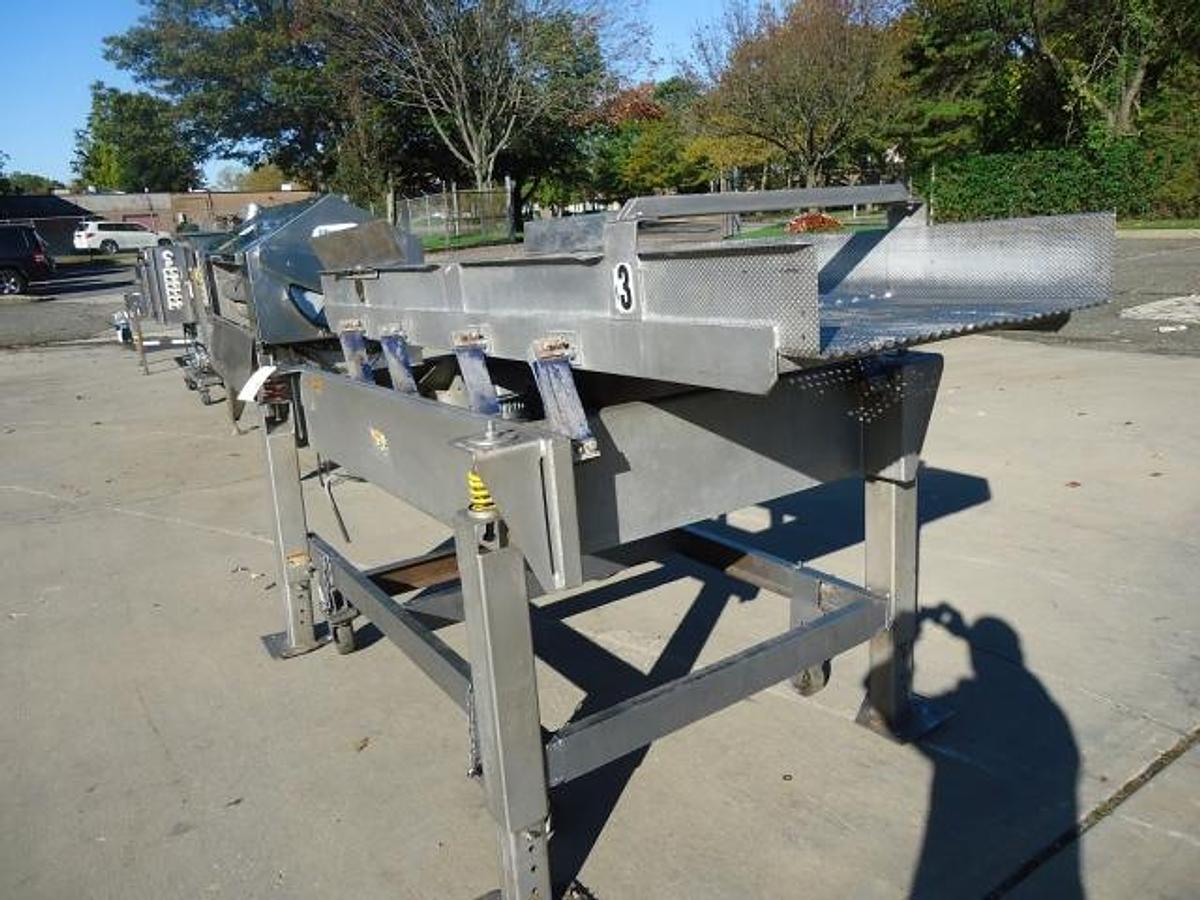
The Iso-Flo is a line of vibratory conveyors and shaker feeders manufactured by Key Technology. These machines use controlled vibration to move, spread, and meter product along a production line, and they are a staple in food processing facilities handling bulk products like vegetables, fruits, nuts, and snack foods. The Iso-Flo design is known for its ability to convey product gently while also spreading it into a uniform, single-layer flow, which is particularly important when feeding product into an optical sorter or inspection system downstream.
Iso-Flo units are typically constructed with stainless steel contact surfaces to meet food industry sanitation requirements, and they are built for continuous-duty operation in demanding production environments. On the used market, Iso-Flo shakers and feeders appear frequently because they have been widely deployed across the food processing industry for many years. When evaluating a used Iso-Flo unit, buyers should inspect the drive mechanism, the condition of the pan or trough surface, and the isolation mounts, as these are the components most subject to wear over time. Replacement parts for Iso-Flo systems are generally available through Key Technology and TOMRA's parts network, though availability for older models should be confirmed before purchase.
How does the inspection process work when buying used sorting equipment?
Reputable used equipment dealers typically offer buyers the option to inspect machines before finalizing a purchase. Inspections can take place in person at the dealer's facility, at the plant where the equipment is currently installed, or remotely through a video call or pre-recorded video walkthrough of the machine. The goal of any inspection is to get an accurate picture of the machine's current mechanical and electrical condition, including the state of cameras, sensors, ejector systems, belts or conveyors, and the control interface.
It is worth understanding that most equipment dealers are not licensed or equipped to run full production trials with actual food product, since that requires food-grade facility permitting that goes beyond what a typical machinery dealer operates. Inspections therefore focus on visual and operational checks rather than a live production run. Buyers with specific technical questions about a machine's software version, sensor calibration history, or last known production use should raise those questions directly with the dealer during the inspection process. For complex optical sorting systems, having a qualified technician or engineer participate in the inspection, either in person or on a video call, can help identify any issues that a non-specialist might miss.
What are typical shipping and logistics considerations for Key Technology sorting equipment?
Sorting equipment from Key Technology ranges from relatively compact vibratory feeders to large multi-lane optical sorting systems, and the logistics requirements vary accordingly. Smaller units like Iso-Flo shakers may ship on standard pallets with appropriate blocking and bracing, while larger sorters often require custom crating to protect sensitive camera systems, electronics, and structural components during transit. The level of packaging directly affects shipping costs, so buyers should ask the dealer for a clear breakdown of what palletization or crating is included in the quoted price.
Larger machines may also require specialized rigging for loading at the origin and unloading at the destination. Forklift access is not always sufficient for heavy or awkwardly sized equipment, and crane or rigger services add to the total landed cost. Buyers should factor in the full cost of freight, rigging, and any required permits for oversized loads before comparing prices across listings. Dealers experienced in food processing equipment will generally be able to provide freight estimates or connect buyers with logistics providers familiar with moving industrial machinery, which can simplify the process considerably.
What payment terms do used equipment dealers typically offer for sorting machinery?
Most used equipment dealers require full payment before a machine is released for shipping. This is standard practice in the secondary machinery market and applies to sorting equipment purchases as well. Some dealers may extend payment terms to established customers with a prior purchasing history, but first-time buyers should generally expect to pay in full upfront. Payment methods vary by dealer and may include wire transfer, ACH, or other arrangements depending on the transaction size and the buyer's location.
For buyers who need financing, the most common path is to arrange it independently through a third-party equipment lender or a bank that offers machinery financing, rather than relying on dealer-provided terms. Some buyers also use sale-leaseback structures or equipment leasing companies to spread the cost of a used machine over time. Before entering into any purchase agreement, buyers should confirm the exact payment requirements with the dealer, including any deposit structure if the machine is being held, and clarify what documentation will be provided upon payment to confirm transfer of ownership.