Category
Manufacturer
Model
Kason
Kason manufactures a variety of industrial separation and screening equipment, catering to industries such as food processing, pharmaceuticals, and chemicals. Their vibratory and centrifugal separators are popular for their reliability and performance.
FAQ:
What sizes of Kason vibratory screeners are typically available on the used market?
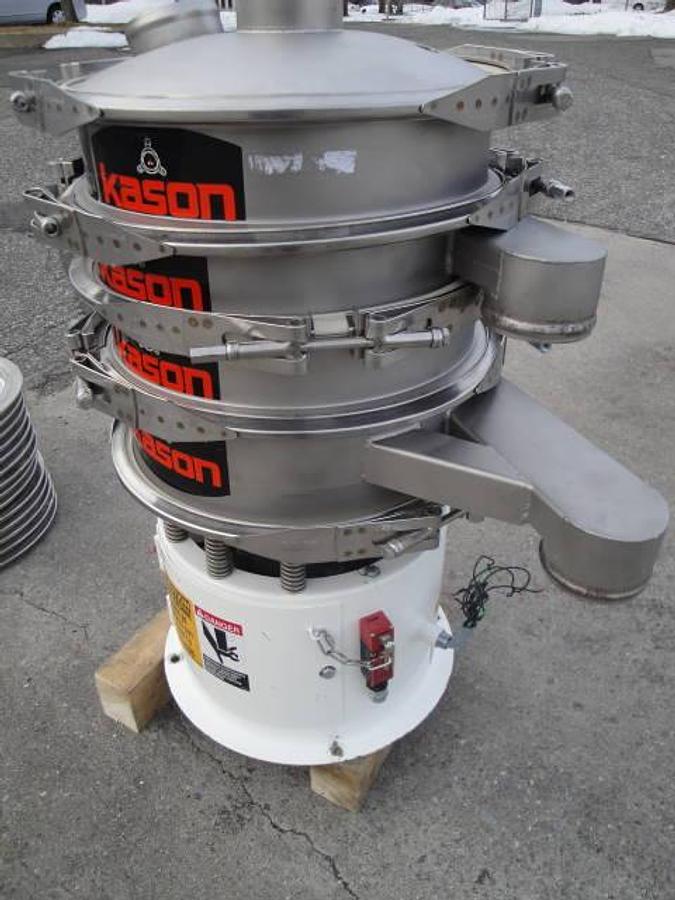
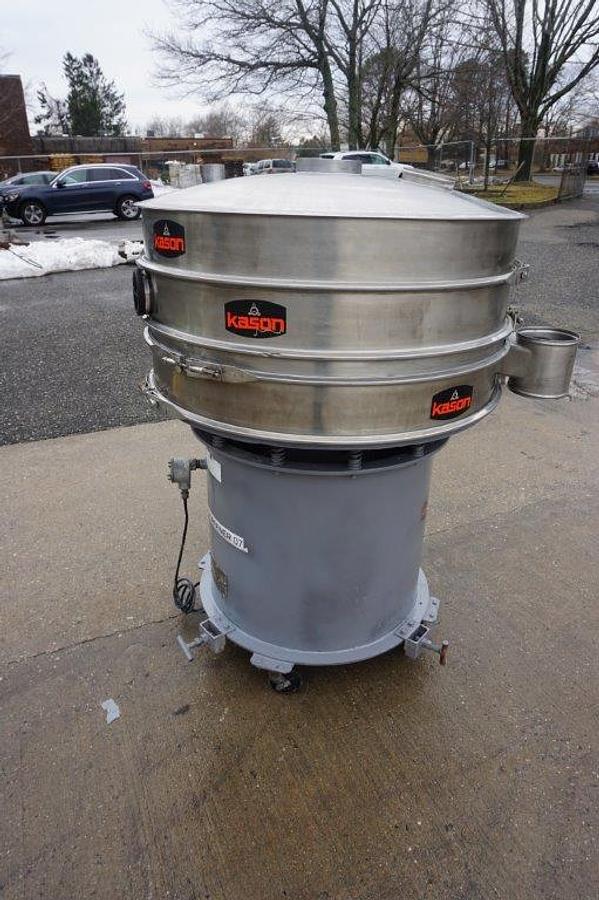
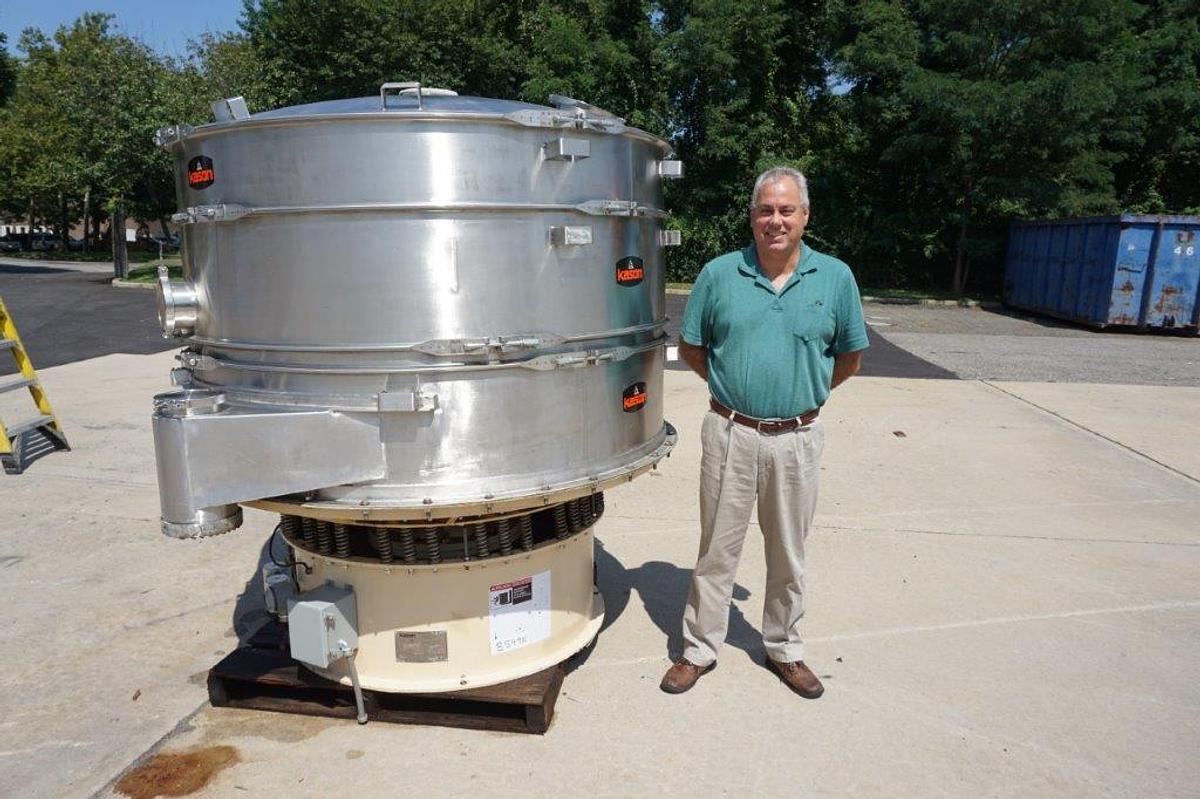
Kason vibratory screeners span a wide range of diameters, making them adaptable from smaller batch operations to full-scale industrial production. The VIBROSCREEN line runs from 18 inches up to 100 inches or more in diameter, and used units across much of that range appear regularly on the secondary market. Common sizes found through used equipment dealers include 18-inch, 48-inch, and 72-inch diameter units, with both single-deck and multi-deck configurations available depending on what a given facility decommissioned.
When shopping for a used Kason screener, the deck count matters as much as the diameter. A double-deck 72-inch unit, for example, can simultaneously separate material into three fractions, which would otherwise require multiple machines. Buyers should confirm the number of decks, the deck spacing, and whether the motor is included, since some used listings are sold without a drive motor and that needs to be factored into the total acquisition cost.
What materials can Kason vibratory screeners process?
Kason vibratory screeners are designed to handle a broad range of materials, including dry powders, granules, pellets, liquids, slurries, and wet or sticky bulk solids. Their circular vibratory motion creates a three-dimensional screening action that keeps material moving across the screen surface efficiently, which makes them effective even with materials that tend to blind or clog conventional flat-deck screeners. Common applications include flour, sugar, salt, resins, pigments, pharmaceutical powders, chemical compounds, and liquid-solid separations in food processing.
The construction material of the screener plays a role in what it can safely process. Stainless steel units are the standard choice for food-grade, pharmaceutical, and corrosive chemical applications, while carbon steel frames may appear in mineral or aggregate processing. When buying used, confirming the metallurgy of the contact surfaces is important, particularly if the intended application involves food or regulated pharmaceutical production where material compatibility is a compliance issue.
What industries use Kason vibratory screeners?
Kason vibratory screeners are found across a wide cross-section of industries, which is one reason used units retain strong demand on the secondary market. Food processing is one of the largest application areas, covering everything from grain milling and spice sifting to liquid clarification in beverage production. Pharmaceutical manufacturers rely on Kason screeners for particle size classification and contamination removal in powder blending lines. Chemical producers use them for pigment grading, resin separation, and bulk solid scalping.
Beyond those three core industries, Kason screeners also appear in plastics compounding, mineral processing, and agricultural product handling. Their sanitary design options make them particularly attractive to regulated industries, while their scalability from small-diameter lab units to large industrial machines means the same equipment family can serve a startup pilot line or a high-volume production facility. This broad applicability is part of why used Kason screeners hold their value and why buyers in almost any bulk solids or liquid processing industry should consider them.
Are used Kason vibratory screeners reliable, and what should buyers look for?
Kason screeners have a strong reputation for durability in industrial settings, and well-maintained used units can deliver years of additional service life. The circular vibratory design has relatively few moving parts compared to linear or gyratory screeners, which means there are fewer wear points and the machines tend to age predictably. That said, the condition of any specific used unit depends heavily on how it was operated, what materials it processed, and how consistently it was maintained by the previous owner.
Buyers evaluating a used Kason screener should pay close attention to the condition of the screen frames and tensioning hardware, the integrity of the discharge spouts and gaskets, the state of the rubber isolation mounts, and whether the eccentric weight drive motor runs smoothly without excessive vibration or noise. Inspecting the screen mesh panels themselves is also critical since those are consumable items that may need replacement. Reputable used equipment dealers will typically accommodate in-person or video inspections so buyers can assess actual condition before committing to a purchase.
How do Kason vibratory screeners compare to brands like Sweco or Russell Finex?
Kason, Sweco, and Russell Finex all produce circular vibratory screeners that operate on similar principles, and all three brands are well-regarded in bulk solids and liquid processing. The differences come down to design details, available sizes, and how each brand approaches sanitary construction. Sweco is often cited as the category originator and has an extremely broad parts and service network. Russell Finex is a UK-based manufacturer known for high-precision sifting and hygienic design. Kason, based in the United States, is particularly recognized for its scalable diameter range and strong presence in food and pharmaceutical applications.
On the used market, all three brands are sought after, and the right choice often comes down to which unit is available in the needed size and configuration at a given time. Parts availability is a practical consideration for any used purchase, and buyers should contact the manufacturer directly to understand what support, screens, and replacement components are available for a specific model and age of machine before finalizing a purchase. Age and model generation can meaningfully affect parts availability.
Do Kason vibratory screeners meet sanitary or FDA compliance standards?
Kason offers screener configurations specifically designed for sanitary applications, including stainless steel contact surfaces, crevice-free welds, quick-release clamps, and tool-free disassembly for cleaning. These design features are aligned with FDA and GMP requirements commonly enforced in food processing and pharmaceutical manufacturing. The stainless steel construction resists corrosion and does not harbor bacteria in the way that painted carbon steel surfaces might, which is a basic prerequisite for many regulated production environments.
When purchasing a used Kason screener for a regulated application, buyers need to verify that the specific unit they are acquiring is actually the sanitary-grade stainless steel version and not a general industrial model. Not all Kason screeners are built to the same specification. It is also worth noting that a used machine may require cleaning, re-certification, or internal inspection before it can be introduced into a GMP-compliant production line. Consulting with the relevant regulatory or quality assurance team before installation is a practical step that buyers in pharmaceutical or food manufacturing should plan for.
What screen mesh sizes are available for Kason vibratory screeners?
Kason vibratory screeners can be fitted with screen panels spanning a very wide mesh range, from coarse scalping screens used to remove large particles or foreign material down to fine mesh panels capable of classifying particles in the sub-100-micron range. The specific mesh options depend on the screener diameter and deck configuration, but the circular tensioned screen design Kason uses is compatible with a broad range of woven wire and synthetic mesh materials. This flexibility is one reason the machines are used across so many different industries and applications.
For buyers purchasing a used Kason screener, the screen panels included with the machine may or may not match the mesh size needed for their process. Screen panels are replaceable and are generally available through Kason directly or through third-party screen suppliers who manufacture to Kason frame dimensions. Buyers should confirm the frame diameter and tensioning system of the unit they are purchasing so they can source correctly sized replacement screens. In some cases, the screens included with a used unit may be worn or damaged and should be budgeted as an immediate replacement item.
What maintenance does a Kason vibratory screener require, and are replacement parts easy to source?
Routine maintenance on a Kason vibratory screener centers on a handful of components that experience wear over time. The eccentric weight motor bearings are the most critical item and should be inspected and lubricated on a schedule determined by the motor manufacturer's specifications and the intensity of use. The rubber isolation mounts that sit between the screener base and the floor absorb vibration and degrade gradually, so periodic inspection and replacement keeps the machine running efficiently and prevents excessive stress on the frame. Screen panels themselves are consumable and need to be checked regularly for tears, blinding, or distortion, particularly in high-volume or abrasive applications.
Replacement parts for Kason screeners are generally available through Kason Corporation directly, and third-party suppliers also manufacture compatible screen panels and wear components for many models. That said, the age and model of a specific used machine can affect parts availability, so buyers should contact Kason before purchasing a used unit to confirm that motors, screens, and key components are still supported for that particular model. Having that conversation upfront avoids surprises down the road and helps buyers accurately estimate the total cost of ownership beyond the initial purchase price.
What is the difference between a single-deck and multi-deck Kason vibratory screener?
A single-deck Kason vibratory screener passes material over one screen surface, producing two fractions: material that passes through the screen (undersize) and material that does not (oversize). This configuration is well suited to scalping applications where the goal is simply to remove oversized particles or foreign material from a product stream, or to basic liquid-solid separation. The Kason Model K40-FT-SS, for example, is a single-deck low-profile scalper designed for high-throughput scalping and sifting in a compact footprint.
Multi-deck configurations stack two or more screen surfaces within the same circular housing, each with a progressively finer mesh from top to bottom. A double-deck unit produces three fractions simultaneously, and a triple-deck unit produces four. This is useful when a process requires particle size classification into multiple grades in a single pass, which would otherwise require multiple machines in series. The 72-inch double-deck and 18-inch triple-deck units that appear in used equipment inventories are good examples of how multi-deck screeners can consolidate separation steps. Buyers should confirm that all decks and associated hardware are present and intact when purchasing a used multi-deck unit.
What should buyers understand about shipping and inspection when purchasing a used Kason vibratory screener?
Used Kason vibratory screeners vary considerably in size and weight depending on the diameter and deck count, which has a direct impact on shipping logistics and cost. Smaller 18-inch units can typically be palletized and shipped via freight carrier, while larger 48-inch or 72-inch machines may require crating and specialized rigging for both loading at the seller's facility and unloading at the destination. Buyers should ask the dealer specifically about packaging, rigging requirements, and whether a forklift or crane is needed at the receiving end. Getting a clear picture of the total landed cost before committing to a purchase prevents budget surprises.
Inspection is a critical step before purchasing any used industrial screener. Reputable used equipment dealers will accommodate in-person visits, live video calls, or provide detailed video footage of the machine so buyers can assess its condition. Some units may still be installed and operating at a production facility where a plant-floor inspection can be arranged. Keep in mind that dealers generally cannot run product through the machine for a live production test, as that requires production permitting they do not hold. The inspection should focus on physical condition, motor operation, screen frame integrity, and the condition of gaskets and discharge hardware. Payment in full before shipment is standard practice in the used equipment industry.