Category
Manufacturer
Model
FAQ:
What is the JMJ-1 capsule polishing machine used for?
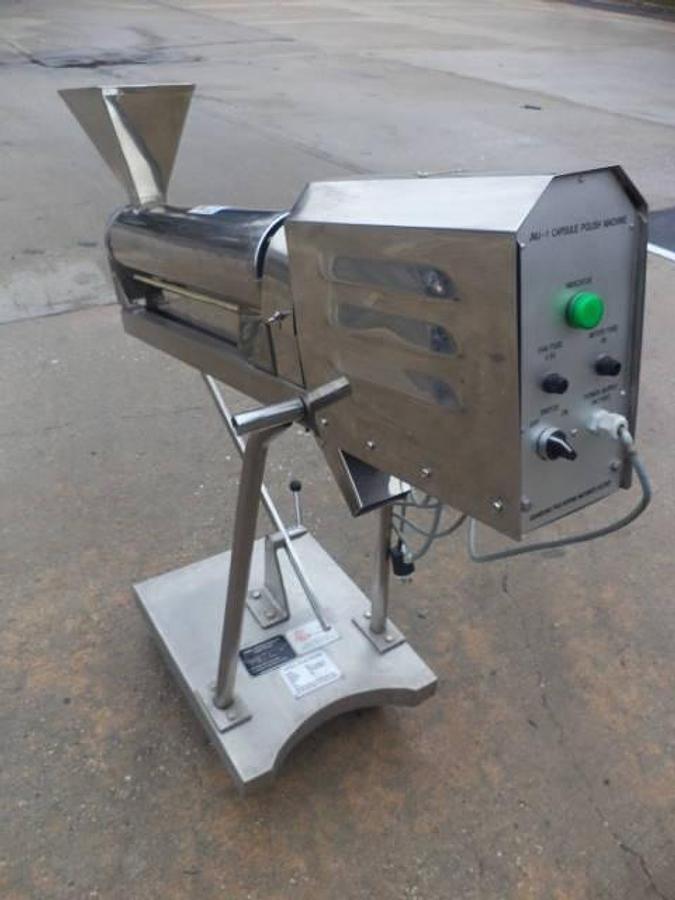
The JMJ-1 is a single-row capsule polishing machine designed for use in pharmaceutical, nutraceutical, and health supplement manufacturing. Its primary function is to remove residual dust, powder, and debris from the outer surface of filled capsules, leaving them clean and visually uniform before packaging. This step matters both for product presentation and for meeting cleanliness standards in regulated production environments.
The machine typically uses a rotating brush or velvet belt mechanism to gently buff capsule surfaces without applying enough force to crack or deform the shell. Because it handles capsules after the filling stage, it is usually positioned at the tail end of a capsule production line, often paired with a deduster or integrated dust collection system. Its compact, single-row design makes it a practical fit for small to mid-sized operations, R&D labs, and contract manufacturers who need reliable polishing without the footprint of a high-volume industrial unit.
What capsule sizes is the JMJ-1 compatible with?
The JMJ-1 is generally compatible with a range of standard hard-shell capsule sizes, most commonly sizes 00, 0, 1, 2, and 3. These cover the vast majority of capsule formats used in pharmaceutical and nutraceutical production, from larger supplement capsules down to smaller dosage forms. Compatibility can vary slightly depending on the specific configuration of a given unit, so buyers evaluating a used JMJ-1 should confirm which size ranges the machine was set up to handle and whether any change parts are included.
Some units may require adjustment or a change of guide channels and brush components to switch between capsule sizes. When purchasing a used machine, it is worth asking whether the seller has documentation, tooling, or spare parts that support multiple size formats. This is especially relevant for operations that run more than one capsule size, since having the correct change parts on hand avoids production delays after installation.
What is the typical production capacity of the JMJ-1 per hour?
The JMJ-1 is positioned as an entry-level to mid-range polishing machine, and its throughput reflects that. Depending on capsule size and machine condition, output typically falls in the range of roughly 10,000 to 50,000 capsules per hour, with smaller capsule sizes generally moving through at higher counts per unit of time. These figures can vary based on feed rate, line speed settings, and how well the machine has been maintained.
For small and medium-sized manufacturers, this capacity range is usually sufficient to keep pace with a matching capsule filling machine without creating a bottleneck. Larger high-speed production environments may find the JMJ-1 better suited as a secondary or backup unit rather than a primary polisher. Buyers sourcing a used JMJ-1 should ask the seller about the machine's last known operating speed and whether it was running at full capacity or a reduced rate, as this can give useful context about its current mechanical condition.
Does the JMJ-1 capsule polishing machine include a dust collection function?
Many JMJ-1 units are configured with a built-in dust collector or deduster, which captures the fine powder and debris removed during the polishing process. This is a significant practical feature because pharmaceutical and nutraceutical production environments are typically required to control airborne particulates, and loose powder accumulating around equipment creates both hygiene and safety concerns. An integrated dust collection system helps contain that material at the source.
When evaluating a used JMJ-1, it is important to confirm whether the dust collection component is present and functional, since some units may have been sold or separated from their original dust collector over time. The condition of the collection bag, filter, and any associated ducting should be part of any inspection. Buyers should also verify that the deduster meets the particulate control requirements of their facility, particularly if operating under GMP or similar regulatory frameworks.
What are the power requirements for the JMJ-1 capsule polishing machine?
The JMJ-1 is a single-phase machine, which is one of its practical advantages for smaller production facilities. Single-phase power is standard in most commercial and light industrial settings, meaning the machine can typically be plugged into existing electrical infrastructure without requiring a dedicated three-phase power supply or costly electrical upgrades. Voltage requirements are commonly 110V or 220V depending on the region of manufacture and intended market, so buyers should confirm the specific voltage of any unit they are considering.
Power consumption for a machine of this type is relatively modest, consistent with its entry-level to mid-range positioning. That said, buyers sourcing a used unit should check the machine's nameplate data for exact electrical specifications and confirm compatibility with their facility's available power before completing a purchase. If the voltage does not match local supply, a step-up or step-down transformer may be needed, which adds to the total landed cost of the equipment.
What materials is the JMJ-1 constructed from, and does it meet GMP standards?
The JMJ-1 is commonly constructed with 304-grade stainless steel for the surfaces and components that come into direct or indirect contact with capsules. Stainless steel at this grade is resistant to corrosion, easy to clean, and widely accepted in pharmaceutical manufacturing environments as a hygienic material. This construction supports compliance with Good Manufacturing Practice (GMP) requirements, which mandate that equipment be designed to minimize contamination risk and be cleanable without degrading over time.
That said, GMP compliance is ultimately a function of how a machine is used, maintained, and validated within a specific facility, not just its material composition. A used JMJ-1 may have wear, surface scratches, or component replacements that affect its cleanability or compliance status relative to a freshly manufactured unit. Buyers operating in regulated environments should have the machine inspected by qualified personnel and assessed against their internal validation protocols before placing it into production. Consulting with the manufacturer about available documentation, such as material certificates or engineering drawings, can also support the qualification process.
Can the JMJ-1 be integrated into a capsule filling production line?
Yes, the JMJ-1 is designed to function as part of a broader capsule production line rather than as a standalone unit. It is typically positioned directly after the capsule filling machine, receiving filled capsules via a chute, conveyor, or direct connection and returning polished capsules to the line for inspection and packaging. This inline configuration keeps the production process continuous and avoids the need for manual handling between filling and polishing stages.
Integration specifics depend on the capsule filling equipment already in place. Feed height, capsule transfer angle, and throughput speed all need to be matched between the polisher and the upstream filler to avoid jams or capsule damage. When purchasing a used JMJ-1, buyers should review the machine's inlet and outlet dimensions and compare them against their existing equipment. Some adjustment or fabrication of a connecting chute may be required. Sellers of used equipment can often provide dimensional drawings or photos that help buyers assess compatibility before committing to a purchase.
Is the JMJ-1 a good fit for small-scale pharmaceutical or nutraceutical production?
The JMJ-1 is widely regarded as an entry-level to mid-range capsule polishing solution, which makes it a natural fit for small and medium-sized manufacturers, contract packagers, and R&D or pilot-scale operations. Its single-row design, single-phase power requirements, and relatively compact footprint mean it can be accommodated in facilities that do not have the space or electrical infrastructure for larger industrial polishing equipment. For operations running batch sizes in the tens of thousands of capsules per shift, the JMJ-1 typically provides adequate throughput without over-specifying for the application.
Purchasing a used JMJ-1 can be a particularly cost-effective approach for smaller operations trying to minimize capital expenditure while still achieving a professional-grade polished product. Used machines in good working condition can perform comparably to newer units for straightforward polishing tasks, provided they have been properly maintained and inspected before purchase. Buyers should factor in any reconditioning, spare parts, or tooling costs when comparing the total investment against other options on the market.
What should buyers inspect when evaluating a used JMJ-1 capsule polishing machine?
A thorough inspection of a used JMJ-1 should cover several key areas. The polishing mechanism, whether a brush or velvet belt, should be examined for wear, fraying, or uneven contact surfaces, since a degraded polishing element will produce inconsistent results and may need immediate replacement. The stainless steel contact surfaces should be checked for deep scratches, pitting, or corrosion that could harbor contamination. The dust collection system, if included, should be tested to confirm it draws adequate suction and that filters or bags are intact. Electrical components, including the motor, switches, and wiring, should be visually inspected for signs of damage or improvised repairs.
Reputable used equipment dealers will typically accommodate in-person inspections at their facility or provide detailed video walkthroughs of the machine in its current condition. Some machines may still be installed at the facility where they were last used, in which case an inspection can sometimes be arranged at that location. Keep in mind that most dealers do not have the production permits required to run actual product through the machine during an inspection, so functional testing is generally limited to confirming that the machine powers on, the polishing mechanism rotates, and the dust collector operates. Buyers should also contact the machine's manufacturer to understand what level of technical support and parts availability to expect for the specific model and age of the unit they are considering.
What are the typical shipping and payment considerations when buying a used JMJ-1?
Used equipment dealers typically require full payment before a machine is shipped, though some may offer flexible terms to established repeat customers. Buyers should clarify payment expectations early in the purchasing process to avoid delays. Because the JMJ-1 is a relatively compact machine compared to larger pharmaceutical equipment, shipping costs are generally more manageable, but the final cost will depend on the level of packaging required, the distance involved, and whether any special handling is needed for the dust collection components or fragile electrical parts.
Proper crating or palletization is important to prevent damage in transit, and charges will vary based on how the seller prepares the machine for shipment. Buyers should ask the seller for a detailed breakdown of packaging, freight, and any rigging or loading fees to understand the full landed cost before finalizing the purchase. If the machine is being shipped internationally, import duties, customs clearance fees, and compliance with local electrical standards are additional factors to account for. Getting clarity on all of these costs upfront helps avoid surprises after the sale is complete.