Category
Manufacturer
Model
Jg Machine Works
Jg Machine Works provides custom machining services and equipment for various industries. They are known for their precision machining and fabrication capabilities, catering to clients in the aerospace and automotive sectors.
FAQ:
What types of equipment does JG Machine Works manufacture?
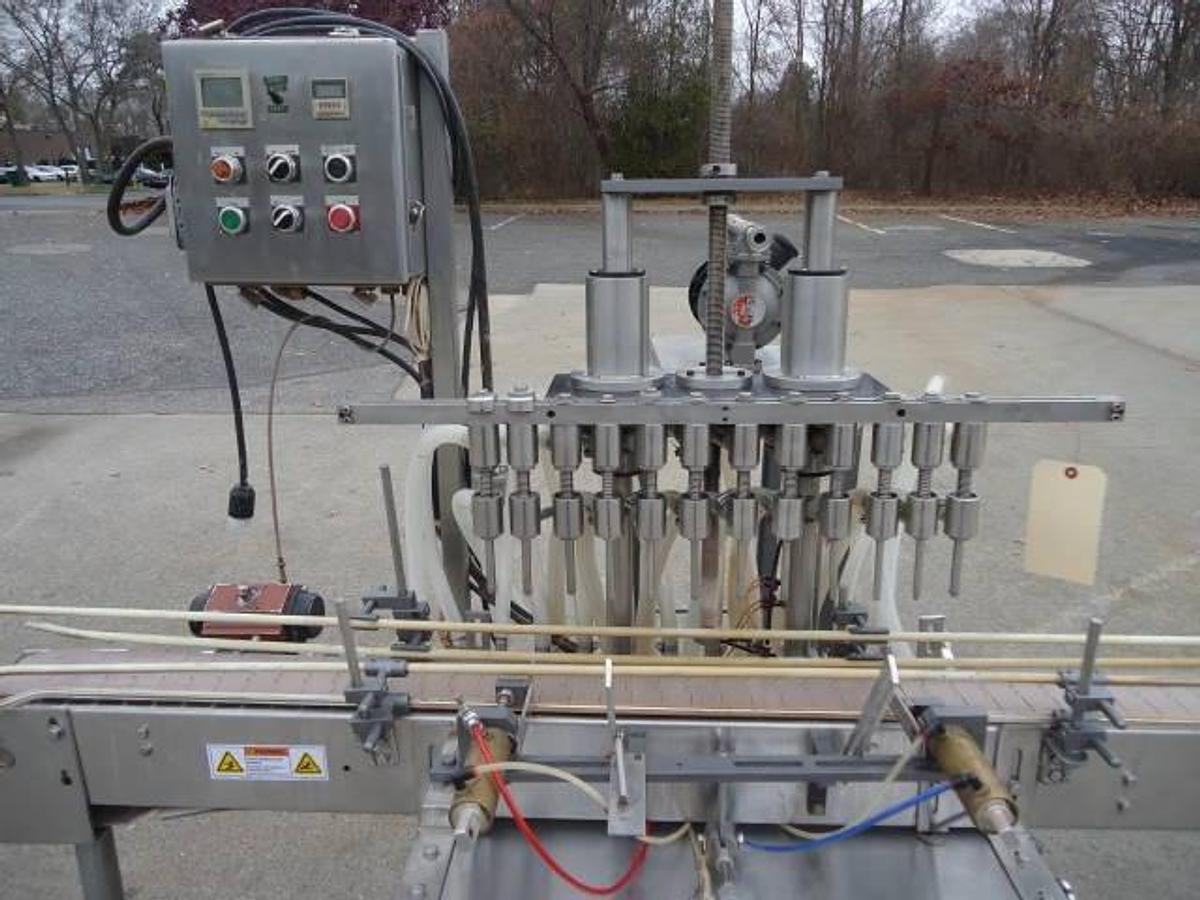
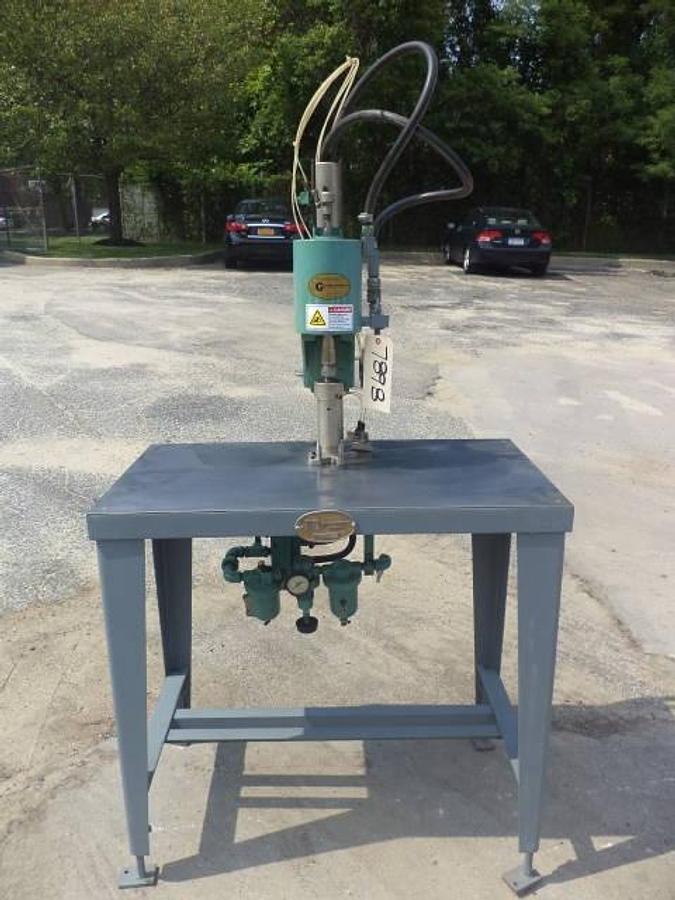
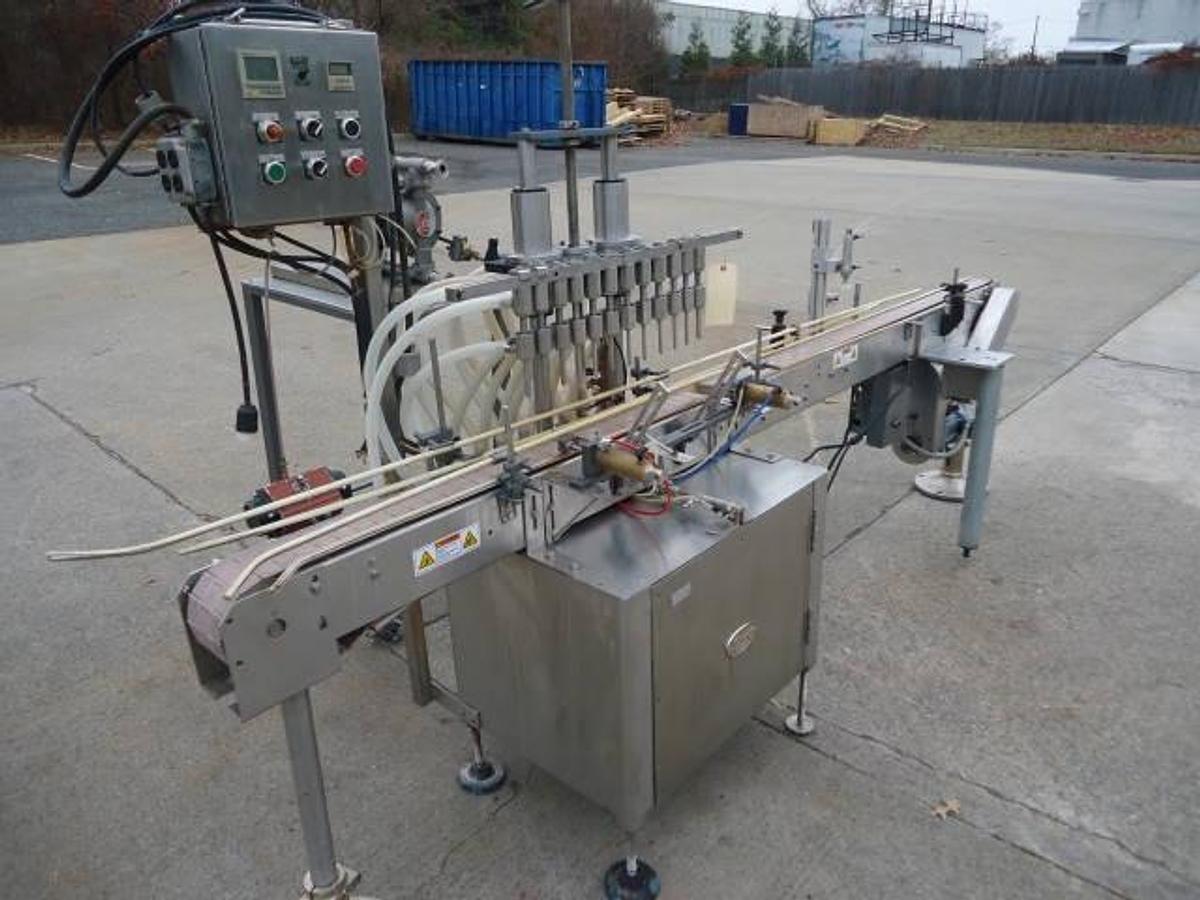
JG Machine Works produces specialized packaging and filling machinery, with a product line that includes aerosol crimpers, rotary unscrambling and accumulating tables, and multi-spout automatic pressure gravity fillers. Their bench top air operated crimpers are a commonly seen model in the used equipment market, available both as standalone units and mounted on stands. The twelve-spout automatic pressure gravity filler represents the higher-capacity end of their lineup, designed for production environments that require consistent, high-volume liquid filling operations.
Beyond filling and crimping equipment, JG Machine Works is associated with custom machining services and fabrication capabilities. Their machinery tends to serve industries where precision and repeatability matter, including aerospace and automotive applications. Buyers searching for used JG Machine Works equipment should expect to find a relatively focused product range rather than a broad general-purpose catalog, which makes the brand a recognizable name among buyers with specific packaging or machining needs.
What industries use JG Machine Works equipment?
JG Machine Works equipment appears across several industries, with particular relevance in packaging, aerospace, and automotive manufacturing. Their aerosol crimpers and pressure gravity fillers are well-suited to consumer products and industrial packaging operations, where precise sealing and filling are critical to product quality and safety. Companies producing aerosol-packaged goods, for example, rely on crimping equipment to maintain consistent seal integrity across high production volumes.
On the machining and fabrication side, JG Machine Works has a reputation for serving clients in aerospace and automotive sectors, where tight tolerances and material quality are non-negotiable. These industries demand equipment that can hold precise specifications over repeated production cycles. Buyers from contract manufacturing shops, Tier 1 and Tier 2 automotive suppliers, and aerospace component fabricators are among those most likely to seek out used JG Machine Works machinery when expanding or replacing production capacity.
What should buyers look for when evaluating used JG Machine Works equipment?
Condition documentation is the starting point for any serious evaluation of used industrial equipment. Buyers should request detailed photos that include all working surfaces, control panels, serial numbers, and any visible wear points. For crimpers and filling equipment specifically, the condition of sealing heads, filling nozzles, and drive mechanisms directly affects production quality, so those components deserve close attention. If available, maintenance logs or service records give a clearer picture of how the machine was used and whether it received regular upkeep.
Beyond documentation, buyers should take advantage of inspection opportunities. Reputable used equipment dealers typically accommodate in-person inspections, virtual walkthroughs, or video captures of the machine in its current state. Some equipment may still be installed at the facility where it was last used, allowing for a live demonstration. Keep in mind that most dealers operate under different permitting than production facilities, so running actual product through a machine during inspection is generally not possible. The goal is to get an accurate, honest picture of the machine's mechanical condition and operational status before committing to a purchase.
Are used JG Machine Works machines sold with a warranty?
Warranties on used industrial equipment work differently than what buyers might expect from purchasing directly through a manufacturer. Used equipment dealers typically sell machinery on an as-is basis, meaning the responsibility for assessing condition falls on the buyer prior to purchase. This is standard practice across the used machinery market, not specific to any one brand or dealer. Because the machines have prior production history, the variables in condition, wear, and maintenance make blanket warranties impractical for most dealers to offer.
Given this reality, buyers should focus their due diligence on thorough pre-purchase inspection rather than relying on post-sale protection. It is also worth contacting JG Machine Works or the equipment manufacturer directly to understand what level of technical support, parts availability, and service documentation exists for the specific model being considered. Older models or discontinued lines may have limited manufacturer support, while more recent models might still have accessible parts and service networks. Choosing a dealer with a long track record of selling industrial machinery adds an important layer of accountability to the transaction.
How does shipping work for used industrial packaging machinery?
Shipping used industrial equipment like crimpers, filling machines, and rotary tables requires more planning than standard freight. Proper packaging is critical to preventing damage in transit, and the level of preparation needed varies by machine size and fragility. Smaller bench top units may be adequately protected with palletization and stretch wrap, while larger machines like multi-spout fillers or rotary accumulating tables typically require custom crating to protect mechanical components and control systems during handling. Buyers should ask dealers specifically what packaging method will be used and whether that cost is included in the quoted price.
For heavier or more complex machines, rigging for loading and unloading adds another cost layer. Moving a large filling system or a stainless rotary table safely requires specialized equipment and trained riggers, and those charges are generally separate from freight costs. Buyers should request a full breakdown of packaging, rigging, and shipping costs upfront to understand the true landed cost of the equipment before finalizing a purchase. International shipments carry additional complexity, including customs documentation, import duties, and compliance with destination country regulations, so those buyers should clarify all logistics details with the dealer early in the process.
What are the typical payment terms for purchasing used industrial equipment?
Most used equipment dealers require full payment before a machine ships. This is the standard approach across the industry and reflects the practical realities of selling pre-owned machinery, where the dealer needs payment confirmation before releasing equipment for loading and transport. Buyers should expect to provide payment in full once a purchase agreement is reached and before any shipping arrangements are made. Wire transfer is the most common payment method for transactions of this size, though dealers may accept other forms depending on the transaction.
Some dealers extend payment terms to buyers with an established purchasing history, but this is typically reserved for repeat customers rather than first-time buyers. Buyers who need financing should explore equipment financing through third-party lenders that specialize in industrial machinery, as these lenders understand the asset class and can often move quickly on approvals. Before finalizing any purchase, it is worth asking the dealer directly about available payment options, since policies can vary. Getting clarity on payment expectations early prevents delays once both parties are ready to close the deal.
How do rotary unscrambling and accumulating tables work in a packaging line?
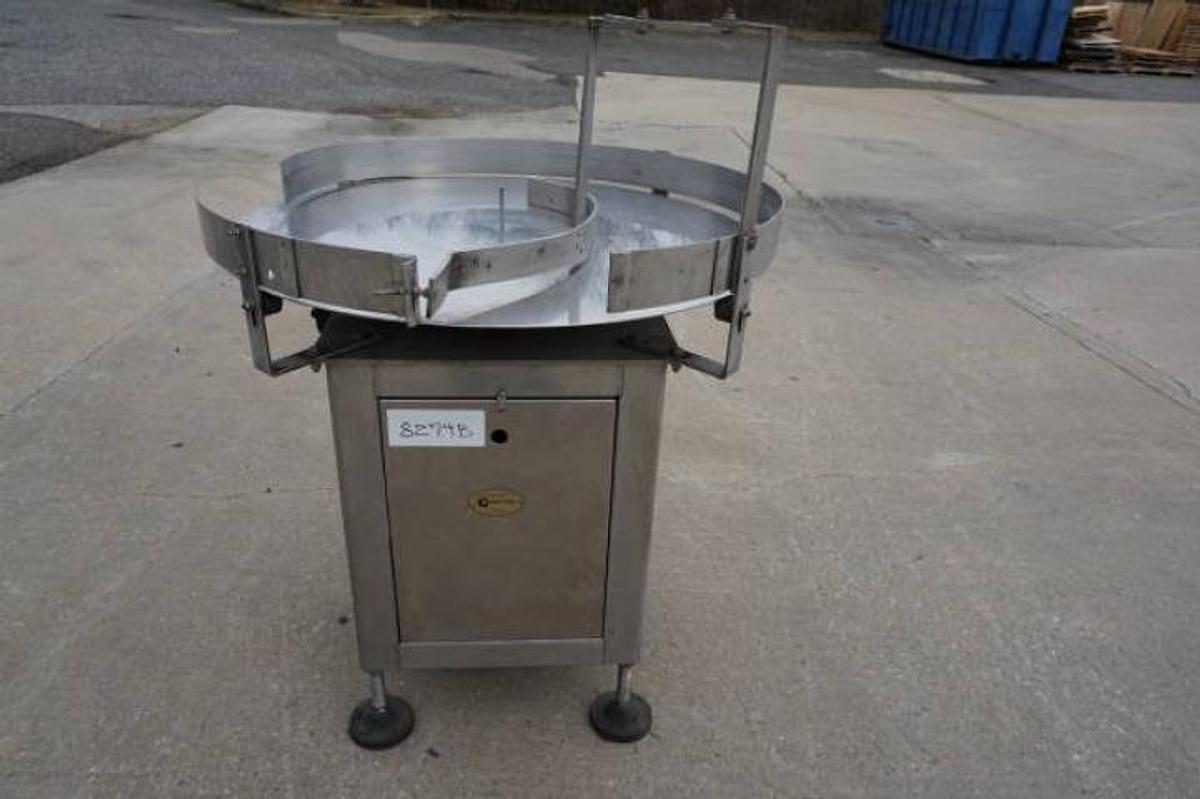
Rotary unscrambling and accumulating tables serve as a buffer and orientation station within a packaging or filling line. Containers are fed onto the rotating table surface, and the centrifugal motion combined with guide rails directs them into a single-file stream for downstream processing. The variable speed control allows operators to match the table's output rate to the speed of filling, capping, or labeling equipment further along the line, preventing bottlenecks or container pile-ups. Stainless steel construction, as seen on the JG Machine Works 35-inch diameter model, is standard for food, beverage, and pharmaceutical applications where sanitation and corrosion resistance are required.
Accumulating tables also serve a practical purpose during line stoppages. When downstream equipment pauses for a changeover or brief maintenance, containers continue to feed onto the rotating surface and accumulate without jamming or tipping. This reduces line downtime and gives operators a window to address issues without halting upstream production entirely. For facilities running high-speed filling lines, a well-sized accumulating table is an important component that directly affects overall line efficiency. Buyers evaluating a used rotary table should check the condition of the drive motor, the table surface for warping or damage, and the guide rail adjustability for different container sizes.
What is an aerosol crimper and how is it used in production?
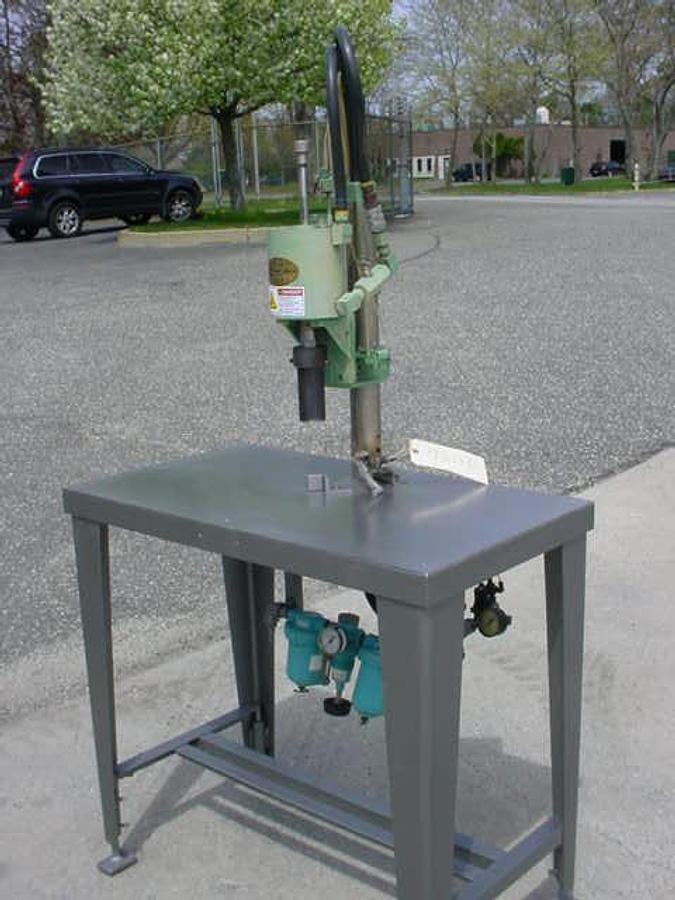
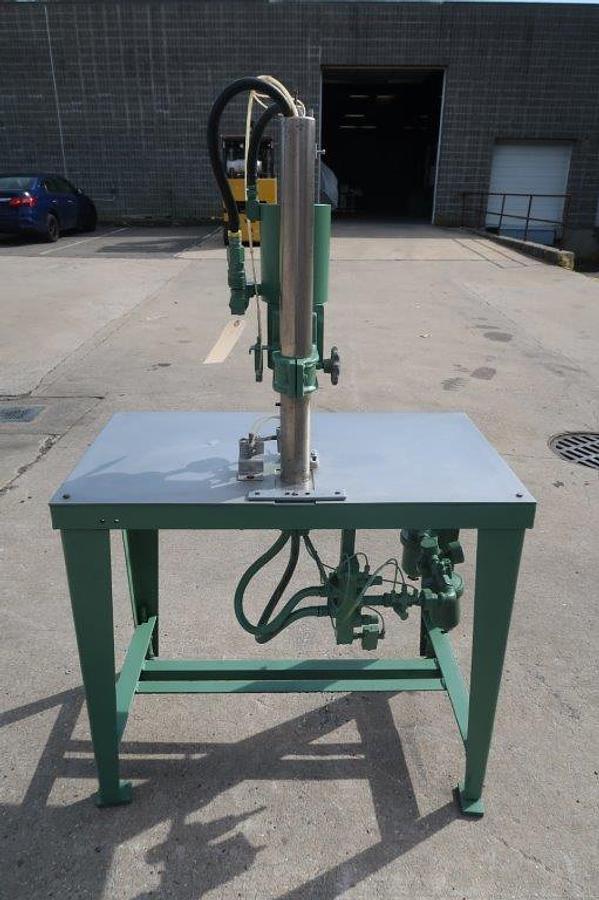
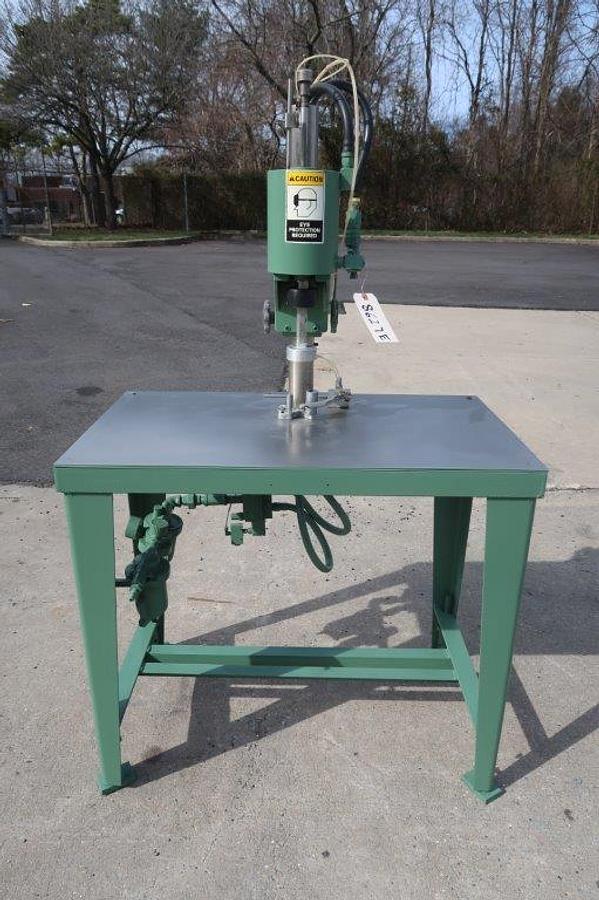
An aerosol crimper is a piece of packaging equipment used to attach and seal the valve assembly onto an aerosol can body. The crimping process forms a tight mechanical seal between the can's top rim and the valve cup, which is essential for containing pressurized contents safely. Bench top air operated crimpers, like those produced by JG Machine Works, use compressed air to drive the crimping head downward with consistent force, producing a uniform seal across each can. The bench top format makes these units practical for smaller production runs, laboratory settings, or contract filling operations where floor space is limited.
Proper crimp quality is directly tied to product safety in aerosol manufacturing. An under-crimped or over-crimped seal can result in leaks, pressure failures, or product rejection during quality control checks. For this reason, buyers evaluating a used aerosol crimper should pay close attention to the condition of the crimping dies and the consistency of the air pressure system. Testing the crimping head travel and inspecting for wear on contact surfaces are important steps during any pre-purchase inspection. Used crimpers in good mechanical condition can offer significant cost savings compared to purchasing new equipment, provided the buyer takes the time to verify the machine's current operating state.
How does a twelve-spout automatic pressure gravity filler work?
A twelve-spout automatic pressure gravity filler uses a combination of gravity and controlled pressure to fill containers with liquid product at multiple stations simultaneously. The twelve-spout configuration means twelve containers are filled in each cycle, which significantly increases throughput compared to single or dual-head fillers. Pressure gravity filling is particularly effective for thin to medium-viscosity liquids, including water-based products, cleaning solutions, and certain food-grade liquids. The system typically uses a pressurized holding tank elevated above the fill heads, and fill volume is controlled by either timed fill cycles or level-sensing mechanisms.
For production facilities evaluating a used twelve-spout filler, the key inspection points include the condition of the fill nozzles, the integrity of the product contact surfaces (especially if stainless steel construction is required for sanitary applications), and the function of the timing or volumetric control system. Drips, inconsistent fill levels, or slow cycle times on a used machine often trace back to worn nozzle seals or a miscalibrated control system, both of which are generally serviceable issues. Buyers should ask whether the machine was last used in a food-grade or chemical application, as prior product exposure affects cleaning requirements and material compatibility assessments before putting the machine into service.
What should buyers ask a used equipment dealer before purchasing industrial machinery?
A thorough list of questions before purchasing used industrial equipment can prevent costly surprises after the machine arrives. Buyers should ask about the machine's operating history, including what it was used to produce, how many shifts it ran, and when it was last in active service. Knowing whether a machine was decommissioned recently or has been sitting idle for years makes a significant difference in assessing its readiness for production. Asking for photos or video of the machine running, or arranging an in-person or virtual inspection, gives buyers a more accurate picture than descriptions alone. Serial numbers should be confirmed so buyers can cross-reference with the manufacturer regarding parts availability and service documentation for that specific model.
Buyers should also get a complete cost picture before agreeing to a purchase. This means asking specifically about packaging method, rigging requirements, freight costs, and any other charges that affect the total amount paid to receive the machine at their facility. Payment terms, lead time from purchase to shipment, and the dealer's process for handling discrepancies discovered upon delivery are all worth discussing upfront. Working with a dealer who has a long history in the industrial equipment market and who specializes in the relevant equipment category reduces risk considerably. A dealer familiar with packaging machinery, for example, will be better positioned to answer technical questions and provide accurate condition assessments than a generalist auction house.