Category
Manufacturer
Model
Italpast
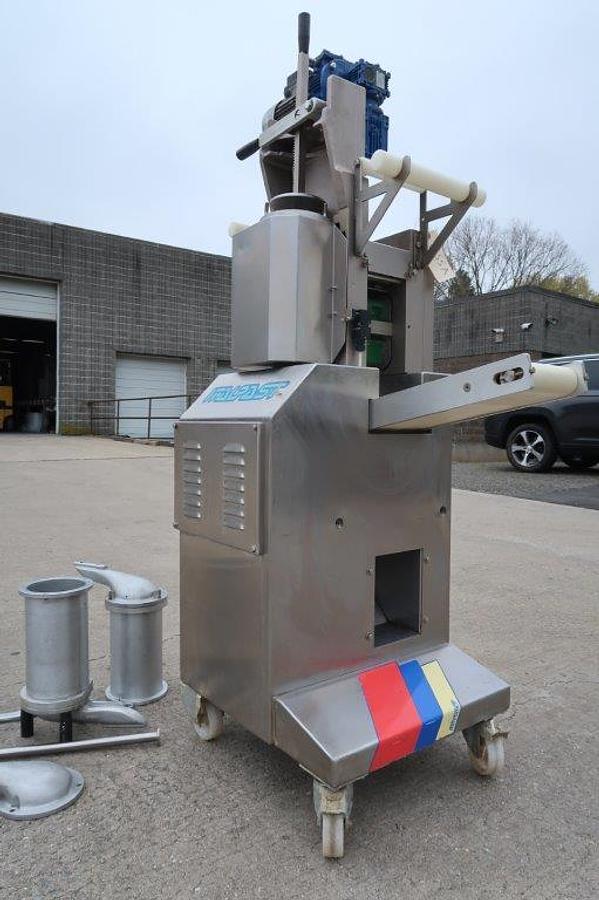
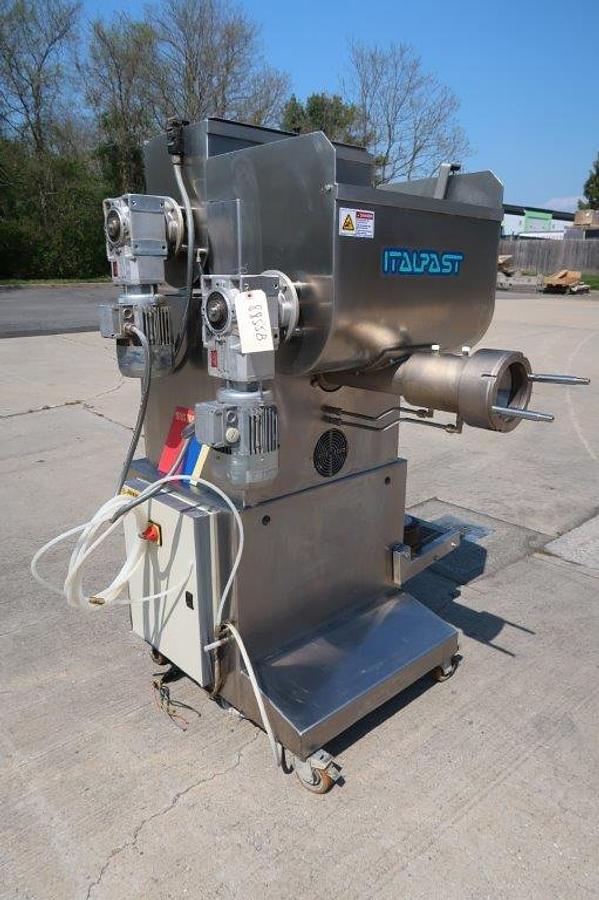
Italpast focuses on providing advanced machinery for the pasta production sector. Their equipment is designed to optimize production processes and ensure product quality.
FAQ:
What types of pasta can Italpast machines produce?
Italpast manufactures equipment that covers a wide range of pasta formats, from extruded short and long cuts to filled pasta varieties. Their extruder and press models, such as the MAC-200 and MAC100-VRE, handle a broad spectrum of shapes by accepting interchangeable dies. Swapping dies allows a single machine to produce formats like rigatoni, spaghetti, fusilli, penne, and many regional specialty shapes. For filled pasta, Italpast also produces dedicated ravioli machines like the RA-120, which is designed specifically for forming and sealing stuffed pasta at consistent weights and dimensions.
The type of die used in extrusion has a significant impact on the finished product. Bronze dies, which are commonly associated with Italpast equipment, produce pasta with a slightly rough, porous surface texture. That texture helps sauces cling to the pasta, which is a quality characteristic prized by artisan producers and premium restaurant brands. Teflon-coated dies, by contrast, produce a smoother surface and are typically used in higher-volume commercial operations where throughput speed is prioritized over surface texture. Buyers sourcing used Italpast equipment should confirm which dies are included with the machine and whether additional die sets are available separately.
What is the production capacity of Italpast pasta machinery?
Italpast builds equipment across a meaningful range of output levels, making their machines relevant to artisan pasta shops, mid-scale manufacturers, and larger commercial operations alike. On the lower end, models like the MAC-200 are suited to smaller-batch production environments. Moving up the range, the MAC100-VRE fresh pasta extruder is rated at 150 kg per hour, which places it firmly in the mid-to-commercial tier. The RA-120 ravioli machine handles approximately 80 kg per hour of filled pasta, a respectable output for a stuffed pasta line.
When evaluating production capacity on a used machine, buyers should consider more than just the rated output figure. Actual throughput can vary based on the pasta format being produced, the hydration level of the dough, ambient temperature in the production space, and the overall condition of the machine. A unit that has been well-maintained and recently serviced may perform close to its rated specifications, while one that has seen heavy use without proper upkeep could fall short. Arranging an inspection, whether in person or via video, before purchasing is the most reliable way to assess a used machine's real-world output capability.
Are Italpast machines suitable for small businesses or only industrial use?
Italpast produces equipment across a range of scales, so the brand is not limited to large industrial facilities. Models like the MAC-200 pasta extruder are well-suited to small-to-medium pasta shops, restaurant production kitchens, and specialty food producers who need consistent, repeatable output without the footprint or cost of a full industrial line. The RA-120 ravioli machine, rated at 80 kg per hour, is a practical choice for an artisan producer who wants to automate filled pasta production without committing to a large-scale manufacturing setup.
That said, the right model depends heavily on the specific production goals of the business. A small pasta shop producing a few dozen kilograms per day has very different needs than a food manufacturer running multi-shift production. Buyers should map their required daily output against each machine's hourly capacity, factoring in realistic run times and cleaning cycles. Purchasing a used Italpast machine can be a cost-effective way for a smaller operation to access Italian-engineered pasta equipment that would otherwise be out of budget if purchased through a manufacturer's dealer network.
What should buyers know about purchasing used Italpast pasta machinery?
Buying used pasta machinery from a reputable dealer is a well-established practice in the food equipment industry, and Italpast machines are commonly available on the secondary market. The key considerations are the machine's condition, its maintenance history, and the availability of ongoing parts support. Italian-engineered equipment like Italpast is generally built to high durability standards, which means well-maintained units can remain productive for many years after their initial installation. However, buyers should be selective about the source and should prioritize dealers who specialize in food processing or pasta machinery specifically, as they are better positioned to accurately represent the condition of the equipment.
Because used equipment is typically sold as-is, the burden of verifying condition falls on the buyer. Requesting an inspection, whether in person at the machine's location or through a detailed video walkthrough, is a standard and reasonable step before committing to a purchase. Buyers should also contact Italpast or an authorized service provider to understand what level of parts and technical support is available for the specific model and production year they are considering, since older or discontinued models may have more limited support options than more recent ones.
Does Italpast pasta machinery come with a warranty when purchased from a used equipment dealer?
Manufacturer warranties are typically tied to the purchase of equipment directly from the manufacturer or an authorized dealer network, and they generally do not transfer to subsequent owners on the secondary market. Used equipment dealers almost universally sell machinery on an as-is basis, meaning there is no warranty coverage provided by the seller. This is standard practice across the used industrial equipment industry and is not specific to Italpast or pasta machinery.
Given that reality, buyers need to take a more proactive approach to risk management before purchasing. This means conducting thorough inspections, reviewing any available maintenance records, and asking the dealer detailed questions about the machine's operating history. It is also worth reaching out directly to Italpast to understand what factory support, spare parts availability, and service documentation exist for the specific model being considered. Choosing a dealer with a long track record in food processing equipment, and one who is willing to facilitate inspections, significantly reduces the uncertainty that comes with buying used machinery without warranty coverage.
What spare parts are available for Italpast pasta machines, and how easy are they to source?
Parts availability for Italpast equipment varies depending on the model's age and whether it is still part of the manufacturer's active product lineup. For relatively recent models, Italpast and authorized service centers typically stock or can order common wear components such as extrusion screws, barrel liners, dies, seals, and drive components. These are the parts most likely to need replacement in a production environment, and their availability is a practical factor in the long-term operating cost of the machine. Buyers should contact Italpast directly before purchasing a used unit to confirm parts support for that specific model and year.
For older or discontinued models, parts sourcing can be more challenging. Some buyers work with third-party machine shops to fabricate replacement components, particularly for dies and other non-proprietary parts. Others source parts through the broader Italian food machinery service network, which has experience working across multiple pasta equipment brands. When evaluating a used Italpast machine, factoring in parts availability alongside the purchase price gives a much more accurate picture of the true cost of ownership over time.
What are the power and electrical requirements for Italpast pasta machinery?
Italpast machines are manufactured in Italy and are built to European electrical standards, which typically means three-phase power at 380-400V, 50Hz. Buyers in North America, where the standard industrial supply is 460-480V, 60Hz, will generally need to account for voltage conversion and may also need to address the frequency difference, which can affect motor speed and therefore machine output. The specific power draw varies by model and size, with smaller extruders requiring a few kilowatts and larger production lines drawing significantly more. The exact electrical specifications for each machine should be confirmed with the seller or sourced from the manufacturer's documentation for that model.
Before purchasing a used Italpast machine for installation in a facility outside Europe, it is worth consulting with an industrial electrician who has experience with imported food processing equipment. In some cases, motors can be rewound or replaced to match local electrical standards, and variable frequency drives can help address frequency differences while also providing useful speed control. These modifications add cost and should be factored into the total acquisition budget alongside the machine price, shipping, and any rigging or installation expenses.
How should buyers inspect a used Italpast pasta machine before purchasing?
Inspections are a standard part of purchasing used food processing equipment, and reputable dealers will typically offer buyers the option to inspect machinery in person, through a live video call, or via detailed video recordings of the machine. The goal of any inspection is to get an accurate picture of the equipment's current condition, including the state of mechanical components, the condition of stainless steel surfaces, the functionality of controls, and any visible signs of wear or damage. If the machine is still installed and running at a production facility, some dealers can arrange for the buyer to observe it in operation, which provides the clearest view of its working order.
It is worth understanding that most used equipment dealers are not set up to run full production tests, as food production requires separate permitting and facilities that a machinery dealer does not typically maintain. Buyers should focus their inspection on mechanical and electrical condition rather than expecting a live pasta-making demonstration. Asking specific questions about hours of operation, the last time key components were serviced or replaced, and whether any repairs have been made to the machine provides useful context that a visual inspection alone cannot capture. For higher-value purchases, hiring an independent equipment appraiser or technician familiar with pasta machinery to conduct or accompany the inspection is a reasonable step.
What are the shipping and logistics considerations for used Italpast pasta machinery?
Shipping pasta machinery, particularly larger extruders and production lines, requires careful planning. The equipment must be properly packaged to prevent damage in transit, and the level of packaging required, whether basic palletization or full wooden crating, will affect the shipping cost. Heavier and larger machines typically require professional rigging for loading at the seller's location and unloading at the buyer's facility. Rigging services are generally an added cost on top of freight charges and should be discussed with the dealer upfront so the buyer can calculate the full landed cost of the equipment before committing to a purchase.
For buyers importing Italpast machinery from outside their country, additional considerations include customs duties, import taxes, and the time required for customs clearance. International freight for industrial machinery is almost always handled by specialized freight forwarders rather than standard parcel carriers, and transit times can range from a few days for domestic shipments to several weeks for international ocean freight. Buyers should ask the dealer for a detailed breakdown of packaging, rigging, freight, and any other logistics costs to avoid surprises after the sale is agreed upon.
What payment terms are typical when purchasing used Italpast machinery from a dealer?
The standard practice among used equipment dealers is to require full payment before the machine is released for shipping. This applies broadly across the industry and is not specific to any one dealer or equipment type. The reasoning is straightforward: once a machine leaves the seller's facility, the seller has limited recourse if payment issues arise. Buyers should plan their financing and cash flow accordingly, particularly for larger purchases where the total cost including shipping and installation can be substantial.
Some dealers extend payment terms to repeat customers or buyers with established relationships, but this is the exception rather than the rule for first-time transactions. Buyers who need financing for equipment purchases may want to explore equipment financing options through their bank or a third-party lender before approaching a dealer, as having financing pre-arranged speeds up the transaction and gives the buyer a clearer sense of their budget. Wire transfer is the most common payment method for used industrial machinery transactions, though specific accepted payment methods will vary by dealer.