Category
Manufacturer
Model
Imaje
Imaje is a leading manufacturer of coding and marking solutions, serving multiple industries including food, beverage, and pharmaceuticals. Their products are renowned for their reliability and innovation, particularly their high-resolution inkjet printers and laser marking systems.
FAQ:
What types of Imaje inkjet coders are available on the used equipment market?
Imaje produces several distinct inkjet technologies, and all of them appear with some regularity on the used equipment market. The most commonly traded are Continuous Inkjet (CIJ) machines, which include popular series like the 9020, 9040, and 9450. CIJ coders are favored in high-speed production lines because they print without contact at very fast line speeds, making them a staple in food, beverage, and pharmaceutical packaging. Drop-on-Demand (DOD) and Thermal Inkjet (TIJ) models also surface on the used market, though less frequently than CIJ units.
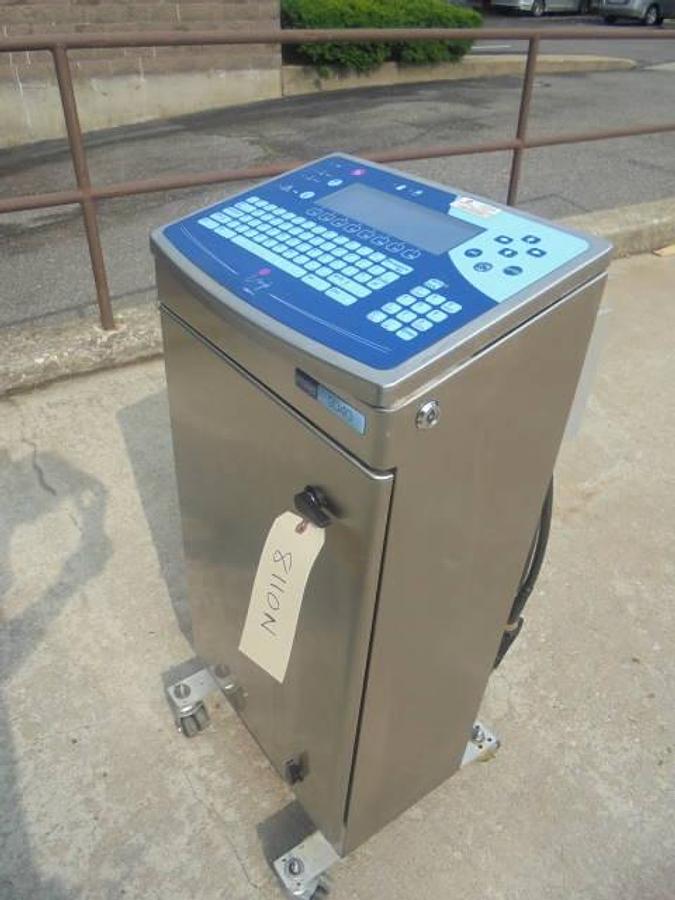
Within the CIJ category, buyers will find models built for different environments. The Imaje 9040, for example, is available in a stainless steel configuration designed for washdown environments common in food processing plants. The 9020 series covers lighter-duty applications and is available in single-phase electrical configurations, which matters when matching equipment to a facility's power supply. When shopping used, it pays to know exactly which series and configuration you need before evaluating listings, since the model number alone does not always capture every relevant specification.
What industries use Imaje inkjet coders, and why are they so widely adopted?
Imaje inkjet coders have found a home in a wide range of industries precisely because coding and marking requirements exist almost everywhere a product moves through a supply chain. Food and beverage manufacturers use them to print expiration dates, lot codes, and batch numbers directly onto bottles, cartons, and flexible packaging. Pharmaceutical companies rely on them for serialization and traceability codes that meet regulatory requirements. Automotive, electronics, cosmetics, and chemical manufacturers also use Imaje equipment to mark parts, components, and containers at high throughput.
The reason Imaje equipment holds such a strong position across these sectors comes down to a combination of print reliability and the ability to mark on difficult substrates at production-line speeds. CIJ technology in particular can print on curved, porous, or irregular surfaces without slowing the line, which is a practical advantage over label-based alternatives. Because the brand is globally recognized and has been in the market for decades under the Markem-Imaje umbrella, replacement parts and technical knowledge are relatively accessible, which matters a great deal when evaluating used equipment for ongoing production use.
Are used Imaje inkjet coders a reliable choice for production environments?
Used Imaje inkjet coders can be a very practical choice for production environments, provided the buyer does proper due diligence before purchasing. Imaje equipment has a reputation for being built to industrial standards, and the 9000-series CIJ coders in particular are known for low maintenance requirements and long service lives. Many of these machines have been running continuously in production facilities for years before being decommissioned, which speaks to their durability. That said, the condition of any specific used unit depends entirely on how it was maintained, how heavily it was used, and how it was stored after decommissioning.
Buyers should prioritize sourcing from reputable used equipment dealers who specialize in industrial coding and marking machinery and have a documented track record. A good dealer will offer an inspection, either in person or via video, so the buyer can assess the machine's current condition before committing. It is also worth contacting Markem-Imaje directly to ask about parts availability and support for the specific model and age of machine you are considering, since older models may have limited parts availability. Used equipment is sold as-is, so a thorough pre-purchase inspection is the buyer's primary protection.
What should buyers inspect before purchasing a used Imaje inkjet coder?
A thorough inspection of a used Imaje inkjet coder should cover both the mechanical and electronic condition of the machine. On the mechanical side, look at the printhead for signs of clogging, corrosion, or physical damage. Check the ink system components, including the pump, filters, and ink lines, for wear or leaks. The cabinet and electrical connections should be examined for any signs of damage from harsh cleaning chemicals or moisture, which is particularly relevant for machines that operated in food processing environments. If the machine includes a stainless steel enclosure, verify that the seals are intact.
On the software and controls side, confirm that the machine powers on and that the interface is functional. Ask the dealer whether the machine has been tested and whether they can demonstrate it running, even without printing on actual product. Most used equipment dealers do not have the production permits required to run actual substrates through a coder, so a functional demonstration typically means powering the unit and cycling through its controls. Dealers often accommodate in-person or video inspections, and buyers should take advantage of this. Asking about the machine's history, including the industry it was used in and its maintenance records if available, adds important context that no visual inspection alone can provide.
What surfaces and materials can Imaje inkjet coders print on?
One of the practical strengths of Imaje CIJ coders is their ability to print on a wide variety of substrates without requiring direct contact. Common surfaces include glass bottles, plastic containers (PET, HDPE, PVC), aluminum cans, cardboard cartons, paperboard, flexible films, and metal parts. The non-contact printing method means the coder can handle curved, irregular, or textured surfaces that would be problematic for stamping or labeling equipment. Print height and character size can typically be adjusted to suit different substrate distances and line configurations.
The specific ink used plays a large role in adhesion and readability on a given substrate. Imaje offers inks formulated for porous surfaces like cardboard, non-porous surfaces like glass and plastics, and specialty applications requiring resistance to heat, moisture, or chemicals. When buying a used Imaje coder, it is important to confirm which ink type the machine was previously configured for, since switching ink chemistry can sometimes require flushing and reconfiguration of the ink circuit. Consulting with an ink supplier or the manufacturer about compatibility before purchase can prevent costly surprises after the machine arrives.
What print resolution and speed can buyers expect from Imaje inkjet coders?
Imaje CIJ coders are designed for high-speed industrial production, and their performance specifications reflect that. Line speeds for CIJ models typically range from several hundred to over a thousand meters per minute depending on the model and the number of print lines required. Print resolution on standard CIJ machines is generally in the range of 5x5 to 7x9 dot matrix characters, which is sufficient for date codes, lot numbers, barcodes, and simple alphanumeric strings. For applications requiring higher resolution graphics or logos, Imaje also produces high-resolution inkjet systems capable of producing more detailed marks.
Print speed and resolution are inversely related in most inkjet systems: higher resolution requires more passes or slower line speeds, while simpler character sets can be applied at maximum throughput. When evaluating a used Imaje coder, buyers should match the machine's rated specifications to their actual production line speed and marking requirements. A machine that was previously used in a slower production environment may not be configured to meet the demands of a faster line without reconfiguration or upgrades. Checking the model's published technical specifications against your production requirements before purchase is a straightforward way to avoid a mismatch.
What inks and consumables are compatible with Imaje inkjet coders?
Imaje CIJ coders use a closed ink circuit that requires three main consumables: ink, makeup fluid (also called solvent), and periodic filter replacements. Imaje formulates its own inks and makeup fluids, and these are the most straightforward choice for maintaining print quality and protecting the ink system components. However, third-party compatible inks are available from several suppliers and are commonly used in the aftermarket, often at a lower cost per liter. Buyers should be aware that using non-OEM inks can affect print quality, may void any remaining manufacturer support, and in some cases can cause compatibility issues with the ink circuit materials.
For used machines, it is worth asking the dealer what ink and solvent the machine was last running, since residual ink chemistry in the lines and printhead will need to be compatible with whatever consumables you plan to use going forward. Switching ink types typically requires a full flush of the ink circuit, which is a manageable process but adds time and cost to commissioning. Consumable costs are a meaningful part of the total cost of ownership for any CIJ coder, so factoring in ink consumption rates and solvent usage alongside the purchase price gives a more accurate picture of what the machine will actually cost to operate over time.
How difficult is it to install and set up a used Imaje inkjet coder?
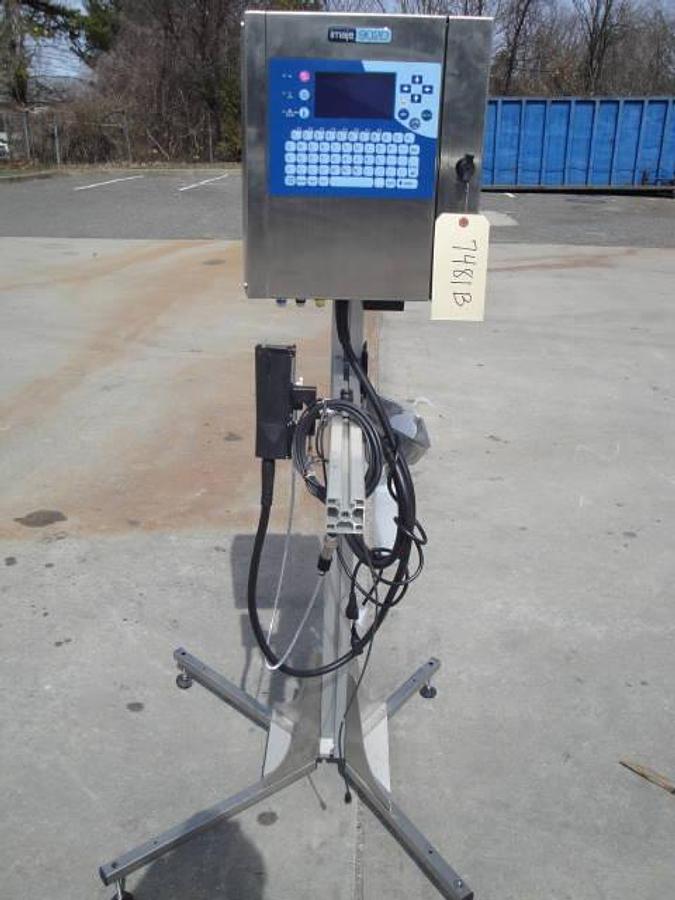
Imaje inkjet coders are designed for integration into production lines, and the physical installation is generally straightforward for someone with experience in industrial equipment. The coder cabinet is typically positioned near the conveyor line, with the printhead mounted on an adjustable bracket at the appropriate distance and angle from the substrate. Electrical requirements vary by model, so confirming the machine's voltage and phase requirements against available facility power is an essential first step. Single-phase models like certain versions of the 9020 series are easier to integrate into facilities that do not have three-phase power readily available.
The more involved part of setup is usually the software configuration: programming the messages, adjusting print parameters, and calibrating the printhead distance and throw for the specific substrate. Imaje coders use proprietary software interfaces, and the learning curve varies depending on the operator's familiarity with CIJ equipment. For buyers without in-house expertise, working with a service technician who has experience with Imaje equipment is advisable, particularly for the initial commissioning. Contacting Markem-Imaje about support options for the specific model is also worthwhile, since the level of technical support available from the manufacturer can vary based on the age and model of the machine.
What is the typical price range for used Imaje inkjet coders?
Pricing for used Imaje inkjet coders varies considerably based on model, age, condition, and included accessories. Entry-level CIJ models and older units from the 9000 series can be found at the lower end of the used market, sometimes in the range of a few thousand dollars, while more capable or more recently manufactured models in good working condition can command significantly higher prices. Stainless steel variants designed for food-grade or washdown environments typically carry a premium over standard cabinet configurations due to the added cost of the enclosure materials and the demand from food and beverage buyers.
Beyond the purchase price itself, buyers should account for the full landed cost of the equipment. Shipping charges for inkjet coders depend on the size and weight of the unit, the packaging required to protect it in transit, and whether any specialized rigging is needed for loading and unloading. Consumables, installation, and any service or calibration work needed to bring the machine into production are additional costs that can add up quickly. Getting a clear picture of all these costs before committing to a purchase helps avoid surprises and makes it easier to compare the total investment against buying a different model or sourcing from a different seller.
What should buyers know about shipping and payment when purchasing a used Imaje inkjet coder?
Shipping a used inkjet coder requires careful packaging to prevent damage in transit, and the cost will depend on the size and weight of the machine, the destination, and the level of crating or palletization required. Smaller benchtop coders can often be shipped on a standard pallet with foam protection, while larger cabinet-style units may require custom wooden crating. If the machine is located in a facility that requires a forklift or crane for loading, rigging charges will be added to the shipping cost. Buyers should ask the dealer for a detailed breakdown of packaging, rigging, and freight costs before finalizing a purchase so there are no surprises on the final invoice.
On payment, most used equipment dealers require full payment before the machine ships. Some dealers extend payment terms to established repeat customers, but buyers purchasing from a dealer for the first time should expect to pay in full upfront. Wire transfer is the most common payment method for used industrial equipment transactions. Confirming the dealer's payment process, getting a written invoice that clearly describes the equipment and its condition, and understanding the inspection options available before payment are all reasonable steps that protect the buyer's interests in any used equipment purchase.