Category
Manufacturer
Model
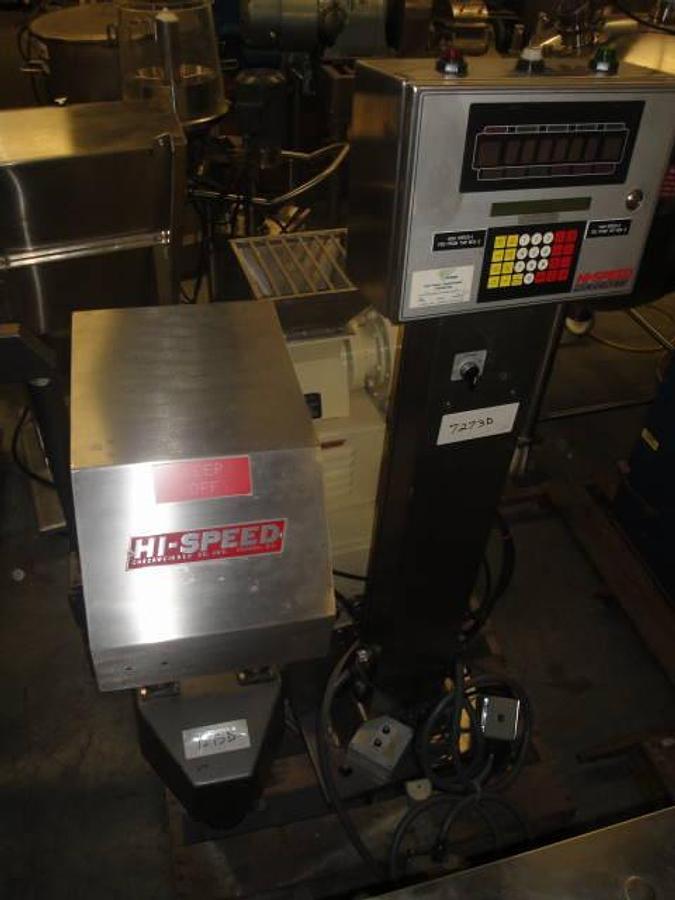
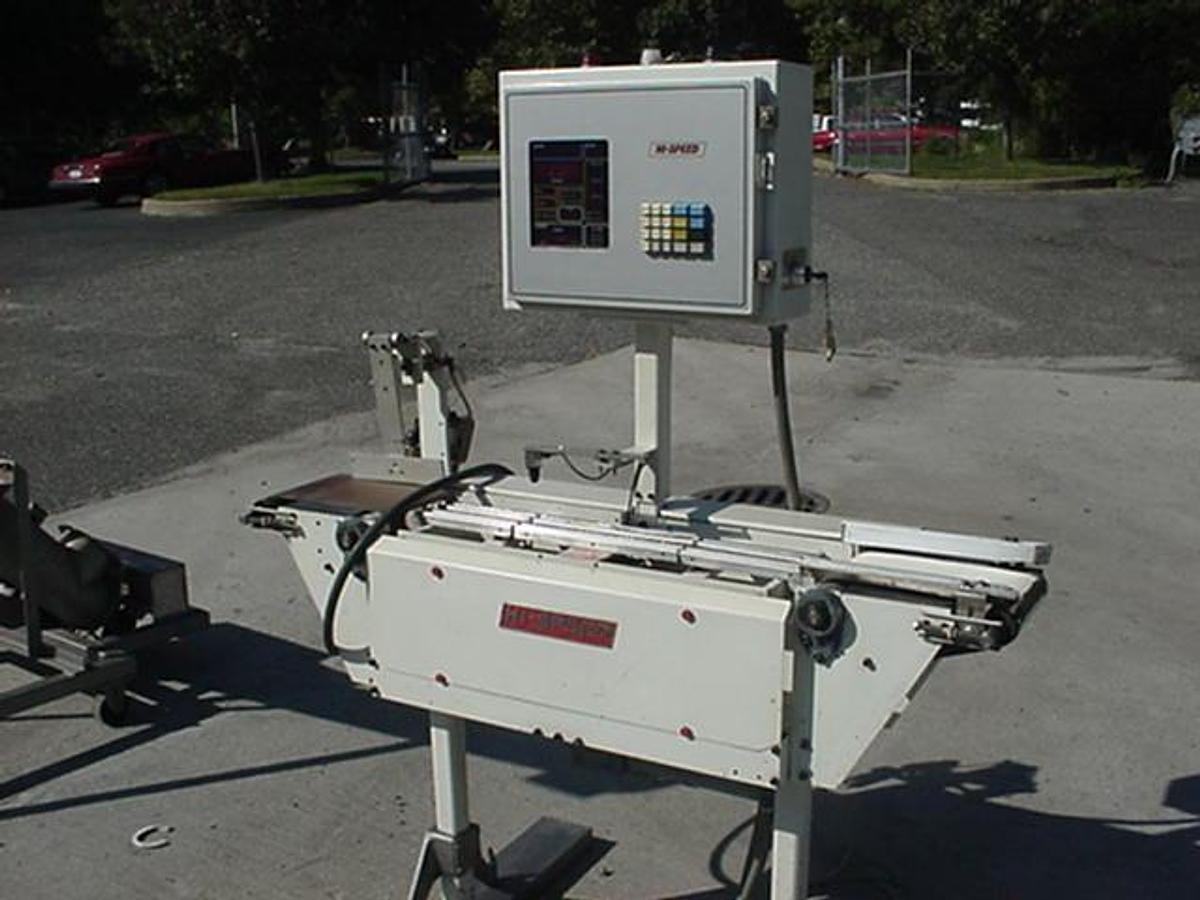
Hi-Speed
Hi-Speed specializes in packaging machinery, particularly known for their high-speed filling and sealing machines. They cater to the food and beverage sectors, providing solutions that enhance efficiency and product quality.
FAQ:
What is a hi-speed checkweigher and how does it work?
A hi-speed checkweigher is a dynamic, in-motion weighing system designed to inspect and verify the weight of products as they move along a production line, without stopping or slowing the conveyor. Products pass over a high-precision load cell or weigh platform at full line speed, and the system captures a weight reading in milliseconds. The machine then compares that reading against pre-set upper and lower tolerance limits. Products that fall outside those limits are flagged and typically diverted or rejected automatically before they continue downstream.
The core advantage over static or manual spot-checking is throughput. A capable hi-speed checkweigher can inspect hundreds to over a thousand products per minute, depending on the model, product size, and line configuration. Hi-Speed, the brand, has built a long reputation in packaging machinery with models like the Micromate, K-1 Inline, and CM6400SS-CM checkweighers, all of which are designed around this same principle of continuous, non-stop weight verification. The system typically includes a data logging interface so operators can track statistical process control (SPC) data, monitor trends, and generate compliance reports over time.
What industries are hi-speed checkweighers best suited for?
Hi-speed checkweighers are used across a wide range of industries, but they are most heavily concentrated in food and beverage manufacturing, pharmaceuticals, nutraceuticals, personal care, and consumer packaged goods. In food production, checkweighers help manufacturers comply with net content labeling laws and avoid costly overfill, which directly erodes margin on high-volume lines. Beverage and dairy producers rely on them for filled container verification, while meat, poultry, and seafood processors use them for portioning accuracy and traceability.
Pharmaceutical and nutraceutical applications have particularly tight tolerance requirements, where checkweighers are used to confirm tablet counts, capsule fill weights, and blister pack completeness. The Hi-Speed brand, which has roots in packaging machinery for food and beverage sectors specifically, built its equipment around the demands of these environments. Used Hi-Speed checkweigher models like the CM6400SS-CM, with stainless steel construction, reflect the hygienic design demands of wet or washdown production environments. Any industry where consistent product weight is tied to regulatory compliance, customer satisfaction, or process efficiency is a strong candidate for this type of equipment.
What weight accuracy tolerances can hi-speed checkweighers achieve?
Accuracy is one of the most important specifications to evaluate when selecting a hi-speed checkweigher. Top-performing models can achieve tolerances as tight as plus or minus 0.1 grams under ideal conditions, though real-world accuracy in a production setting typically falls in the range of plus or minus 0.1g to plus or minus 0.5g depending on the product type, line speed, and environmental factors like vibration or air turbulence. Heavier products generally allow for slightly wider tolerances in absolute terms, while lightweight products such as pharmaceutical tablets or single-serve snack portions demand the tightest possible accuracy.
Several factors influence the achievable accuracy on any given line. Conveyor belt stability, product orientation consistency, and the condition of the load cell all play a role. On used checkweighers, the condition of the weigh cell and the calibration history of the machine are worth verifying during inspection. Reputable used equipment dealers will typically accommodate in-person or video inspections so buyers can assess the mechanical and electronic condition of the machine before purchase. Consulting the Hi-Speed manufacturer directly is also advisable, as they can confirm what accuracy specifications are realistic for a specific model given its age and design generation.
What is the typical price range for a used hi-speed checkweigher?
Used hi-speed checkweighers vary considerably in price depending on the model, age, condition, included features, and the seller. Entry-level or older models in basic configurations can be found in the range of a few thousand dollars, while more capable inline systems with integrated rejection, stainless steel frames, and data connectivity can run anywhere from $10,000 to $40,000 or more. Specialty pharmaceutical or high-precision models at the top end of the market may exceed that range. The Hi-Speed brand, being a well-established name in packaging machinery, tends to hold value reasonably well in the used market because replacement parts and manufacturer support are more accessible than with obscure or discontinued brands.
Buyers should factor in more than just the listed machine price. Shipping, rigging, and crating costs can add meaningfully to the total landed cost, particularly for larger inline systems that require special handling. If the machine needs calibration, electrical upgrades to meet current facility requirements, or mechanical reconditioning, those costs should be estimated before purchase. Most used equipment dealers require full payment prior to shipping, though some may offer terms to established repeat customers. Getting a clear picture of all costs upfront, including any integration or installation work, helps avoid surprises after the machine arrives.
Can hi-speed checkweighers be integrated with automatic rejection systems?
Yes, automatic rejection is one of the standard features buyers should expect on most production-grade hi-speed checkweigher models. When the weigh system detects a product outside the programmed tolerance band, a rejection mechanism is triggered to remove that product from the line before it reaches packaging or shipping. The most common rejection methods include air jet blasters (which work well for lightweight products), pusher arms (suitable for more substantial packages), diverter gates, and drop-through or flip-down conveyor sections. The choice of rejection mechanism depends on the product type, line speed, and downstream layout.
On used machines, the condition and functionality of the rejection system is an important part of the pre-purchase inspection. Buyers should confirm that the reject mechanism actuates correctly, that sensors detecting the reject confirmation are working, and that the reject bin or conveyor interface is intact. Some facilities also require a reject confirmation sensor, which verifies that a flagged product actually left the line rather than passing through undetected. This is particularly important in pharmaceutical and food safety applications. When inspecting a used Hi-Speed checkweigher, asking the dealer to demonstrate the rejection system during a video or in-person walkthrough is a reasonable and standard request.
What should buyers look for when inspecting a used hi-speed checkweigher before purchase?
A thorough inspection of a used checkweigher should cover both the mechanical and electronic components of the machine. On the mechanical side, buyers should examine the condition of the conveyor belts, the weigh bridge or platter, the frame for corrosion or damage, and the rejection mechanism for proper actuation. Stainless steel models like the Hi-Speed CM6400SS-CM are more resistant to corrosion, but welds, seams, and contact surfaces should still be checked for wear or damage that could affect hygiene compliance. The load cell, which is the heart of the weighing system, should be assessed for physical damage and ideally verified with a calibration check.
On the controls and software side, buyers should confirm that the HMI (human-machine interface) powers up and functions correctly, that stored product programs are accessible, and that any communication ports or data outputs are operational if integration with plant systems is planned. Reputable used equipment dealers will typically offer in-person inspections, live video walkthroughs, or recorded video of the machine running. Keep in mind that most dealers do not have the permits or production setup to run actual product through the machine, so functional testing is generally limited to demonstrating conveyor movement, controls operation, and rejection actuation. Consulting Hi-Speed directly about the specific model can also help buyers understand what parts are still available and what level of technical support to expect.
Do hi-speed checkweighers meet FDA, USDA, or other regulatory compliance standards?
Hi-speed checkweighers used in food, beverage, and pharmaceutical production are typically designed to support compliance with several regulatory frameworks, though the machine itself is a tool and compliance ultimately depends on how it is implemented and maintained within a facility. In the United States, food manufacturers are subject to FDA net content regulations and USDA requirements in meat and poultry processing, both of which mandate accurate weight verification of finished products. A properly calibrated and validated checkweigher is a key part of meeting those requirements. In pharmaceutical applications, checkweighers are often part of a validated process under FDA 21 CFR Part 11 requirements, which govern electronic records and audit trails.
For international markets, EU Directive 76/211/EEC governs the average weight system for pre-packaged goods, and checkweighers must be capable of generating the statistical data needed to demonstrate compliance. IP65 or IP69K ingress protection ratings are commonly specified in food and pharmaceutical environments to ensure the machine can withstand washdown cleaning procedures without damage to electronics or motors. When purchasing a used checkweigher, buyers should verify the machine's original design specifications against their facility's current compliance requirements. The age of the machine and its software version can affect whether it supports the data logging and audit trail features required by modern regulatory standards, so checking with the Hi-Speed manufacturer about software support for a specific model is a practical step before committing to a purchase.
What is the maximum throughput speed of a hi-speed checkweigher?
Throughput capacity on hi-speed checkweighers is measured in products per minute (PPM) and varies widely based on the model, the size and weight of the product being inspected, and the required accuracy level. Many production-grade checkweighers are capable of inspecting 200 to 600 products per minute under standard conditions, while specialized high-speed models designed for small, lightweight products (such as single-serve pouches or pharmaceutical blister packs) can reach 1,000 PPM or higher. The Hi-Speed brand, which has historically focused on food and beverage packaging applications, designed its checkweigher models to handle the throughput demands of high-volume production lines in those sectors.
It is worth understanding that rated throughput speeds are typically achieved under controlled conditions with consistent, uniform products. In real production environments, factors like product spacing on the infeed conveyor, product orientation variability, and the weight range being inspected can all affect the practical throughput rate. On used machines, conveyor belt wear and motor condition can also influence whether the machine achieves its rated speed reliably. When evaluating a used Hi-Speed checkweigher, asking the dealer about the machine's production history and the types of products it was previously running can give useful context about whether its throughput capabilities are a good match for the intended application.
Are hi-speed checkweighers compatible with existing production lines and conveyor systems?
Compatibility with an existing production line depends on several factors including conveyor height, belt width, product dimensions, line speed, and the infeed and outfeed conveyor configurations on either side of the checkweigher. Most checkweigher manufacturers, including Hi-Speed, design their machines to integrate into standard inline conveyor systems, but the specific frame height, belt width, and conveyor length of the checkweigher section need to match the dimensions of the surrounding line. Adjustable leg heights are common on many models, which provides some flexibility for matching conveyor heights across different facility setups.
Electrical compatibility is another consideration, particularly with used equipment. Older machines may be wired for voltage or phase configurations that differ from a facility's current power supply, which may require an electrician to make modifications before the machine can be commissioned. Communication interfaces are also worth checking if the buyer intends to connect the checkweigher to a plant network, MES system, or ERP platform. Newer production environments increasingly expect OPC-UA or Ethernet-based data connectivity, and older used machines may have serial or proprietary communication ports that require additional interface hardware. Getting the machine's full electrical and mechanical specifications from the dealer before purchase, and reviewing them with the facility's engineering team, is the most reliable way to confirm compatibility before committing.
What are the shipping and handling considerations when buying a used hi-speed checkweigher?
Checkweighers contain precision load cells and electronic components that are sensitive to shock and vibration during transit, so proper packaging is critical. Reputable used equipment dealers will crate or palletize machines appropriately for the size and fragility of the equipment, but the level of packaging required, and the associated cost, can vary. Buyers should ask the dealer specifically how the machine will be packaged, whether a custom crate is being built, and what the estimated freight cost is to their facility. Larger inline checkweigher systems may require forklift loading at the origin and unloading at the destination, and in some cases a rigging crew may be needed, which adds to the total landed cost.
For machines that are still installed at a production facility rather than sitting in a dealer's warehouse, the logistics can be more involved. The machine may need to be disconnected from a live production line, which requires coordination between the dealer and the facility where it is currently located. Buyers should also ask whether the machine will be tested or powered up before it ships, and whether any documentation such as manuals, calibration records, or electrical schematics will be included. Most used equipment dealers require full payment before the machine ships. Understanding the complete cost picture, including freight, rigging, and any reconditioning needed after delivery, helps buyers make an accurate comparison between available machines.