Category
Manufacturer
Model
Hamilton
Hamilton is a leading provider of precision measurement instruments, particularly for the pharmaceutical and biotechnology industries. Their product line includes advanced sensors and analytical equipment that ensure quality control in manufacturing processes.
FAQ:
What is a Hamilton jacketed kettle and what is it used for?
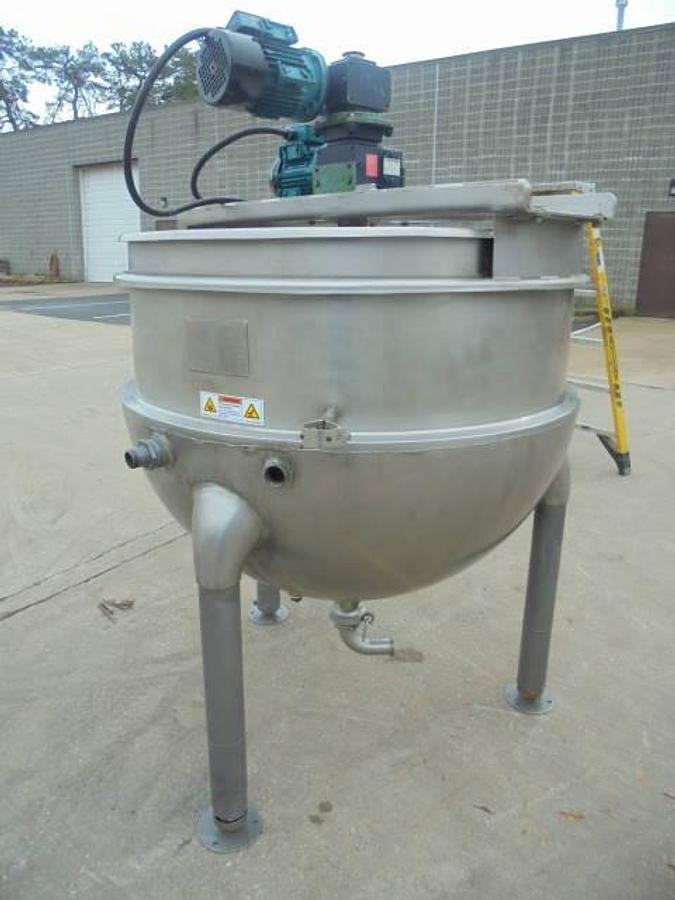
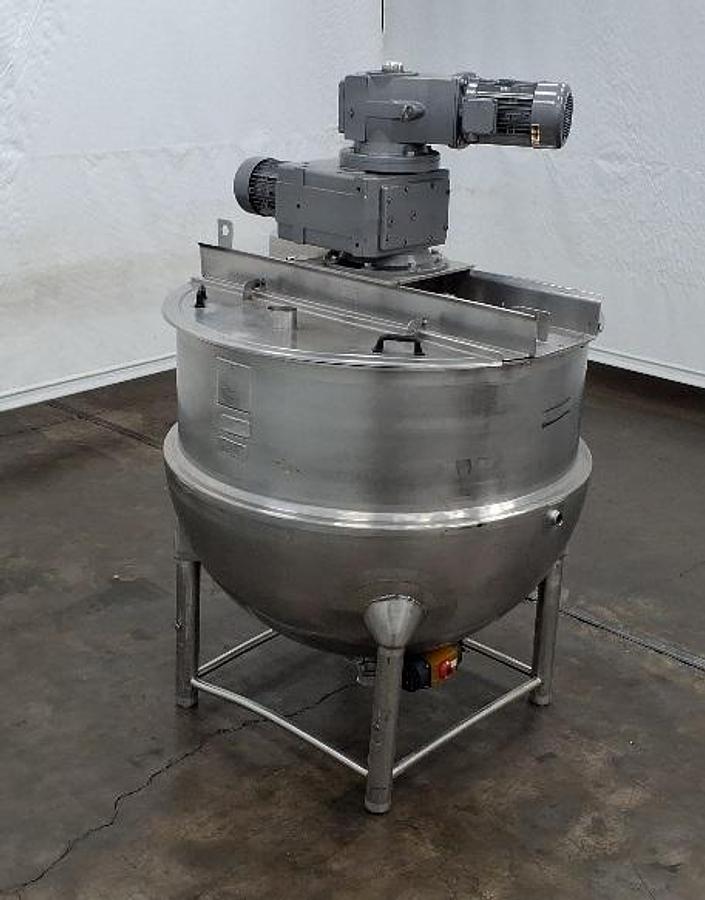
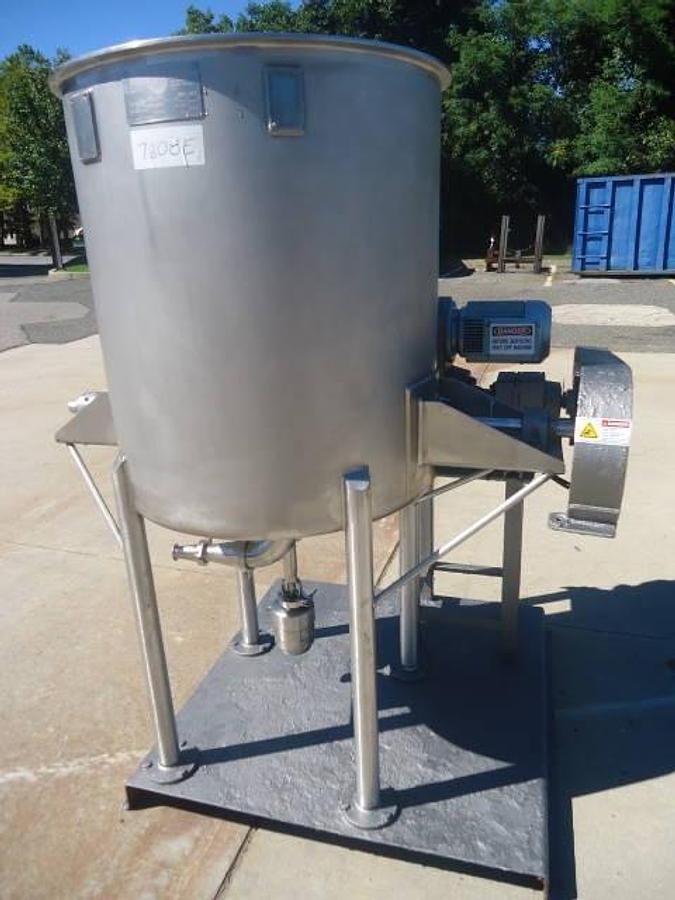
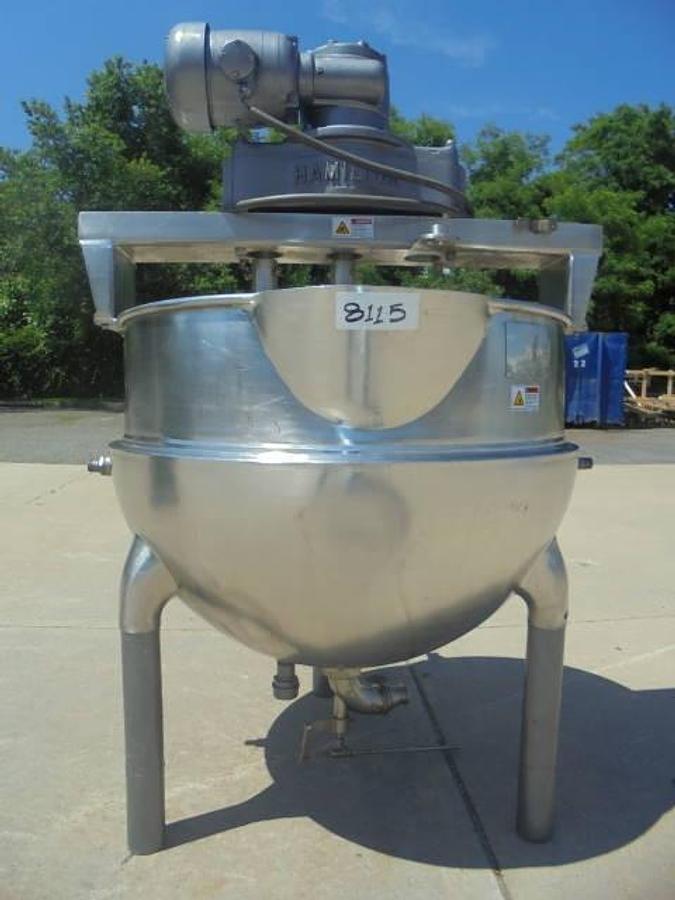
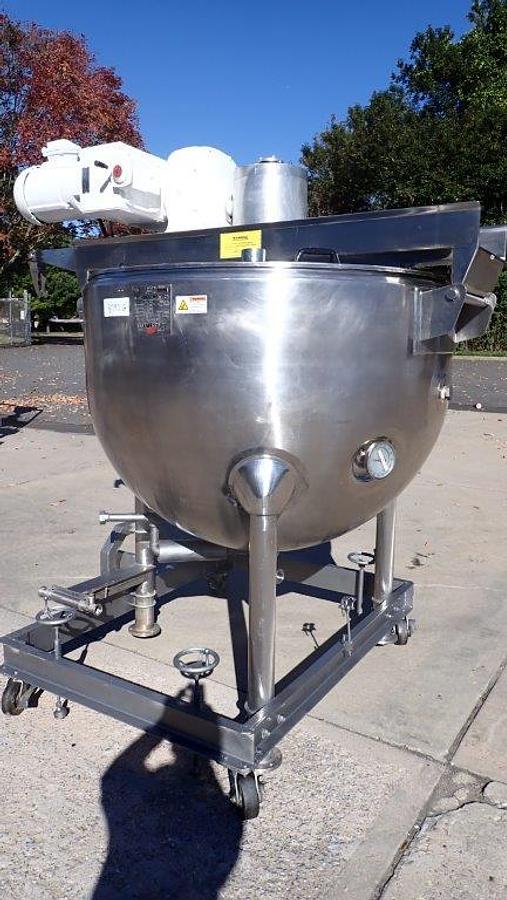
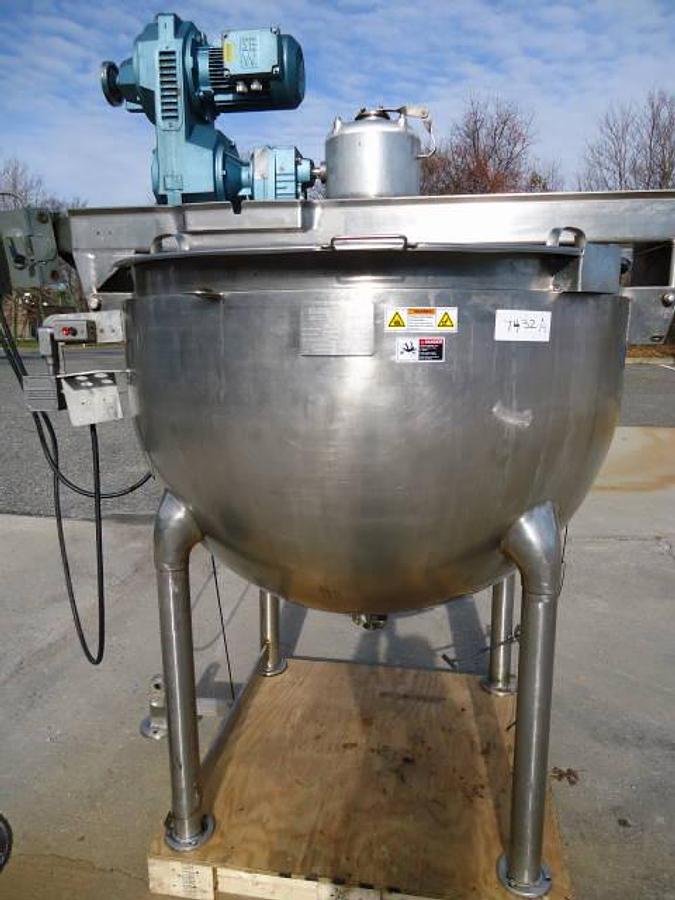
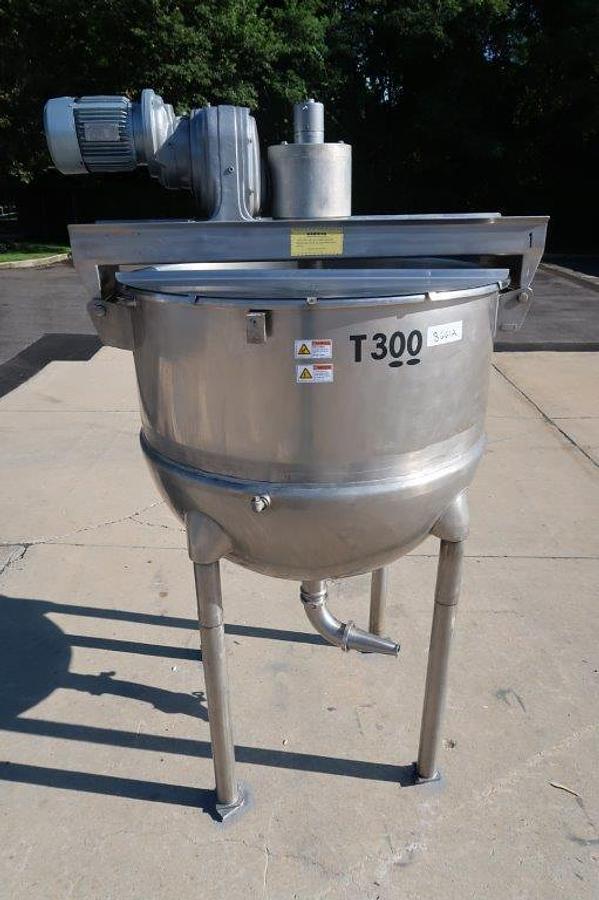
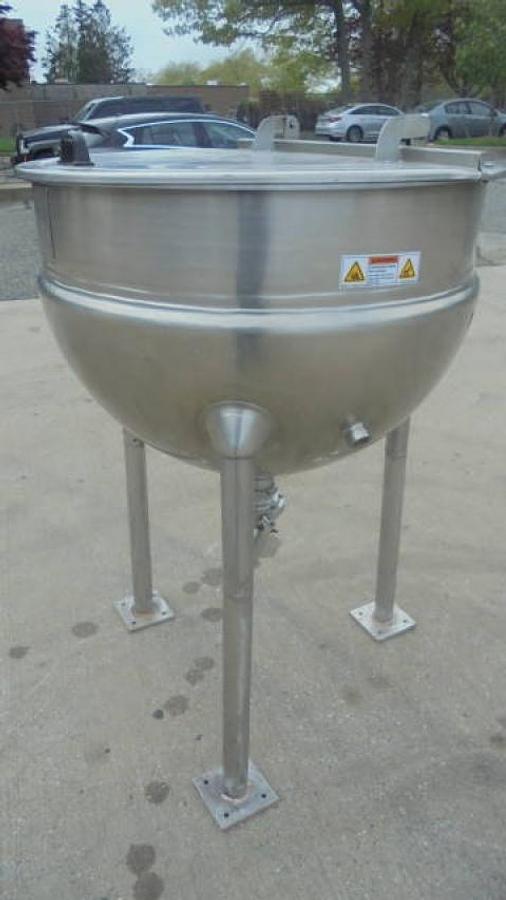
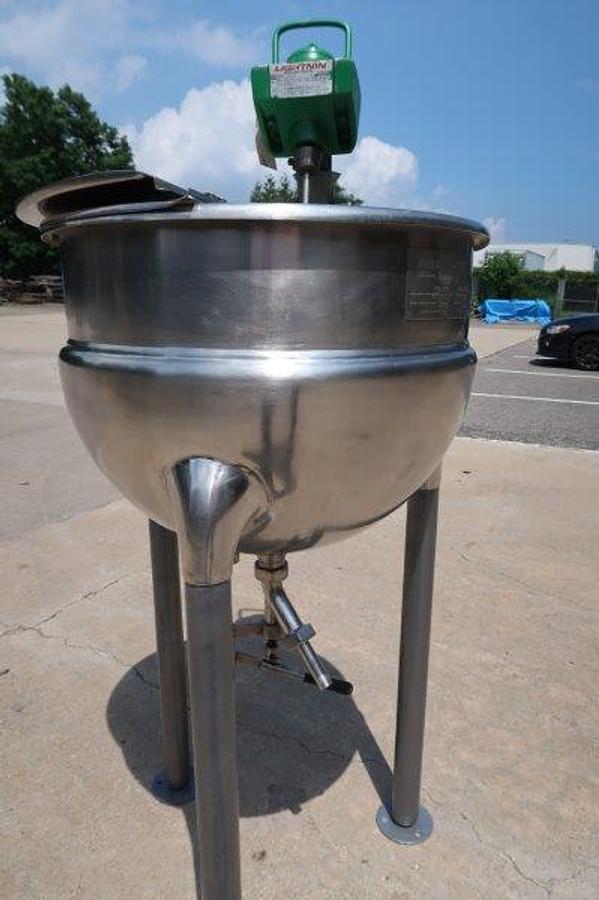
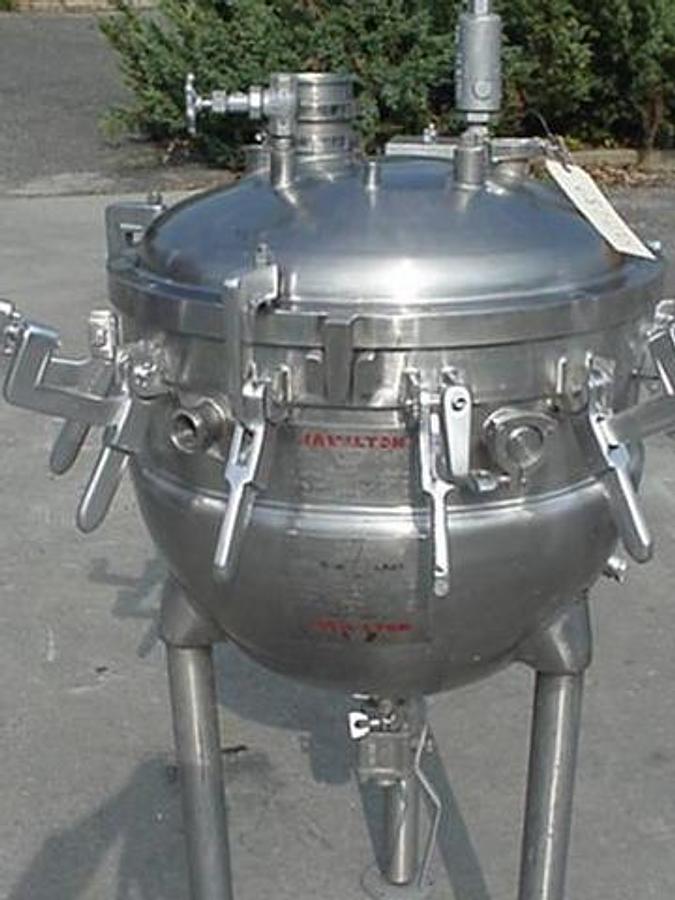
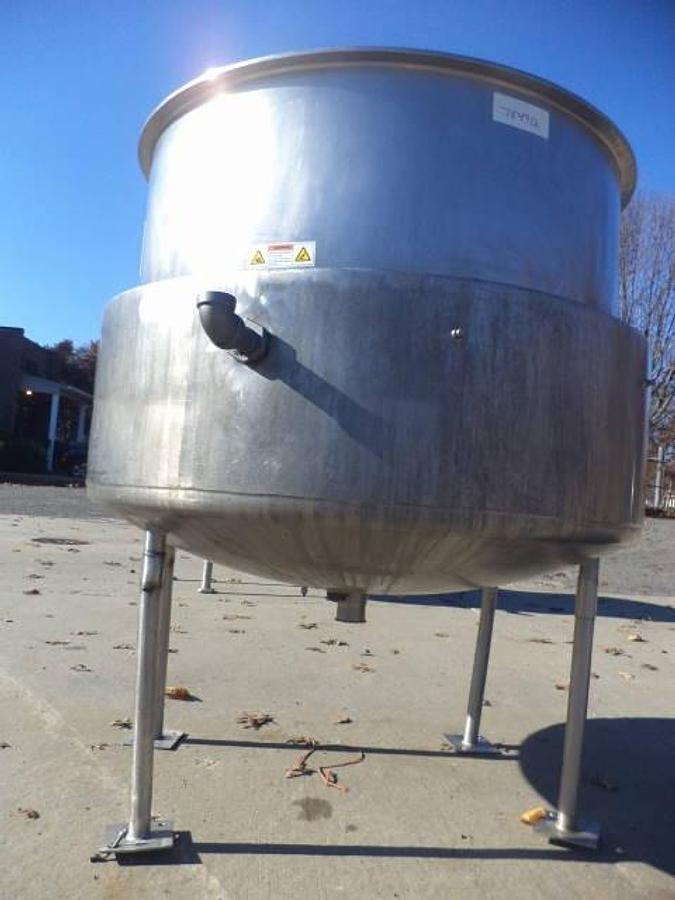
A Hamilton jacketed kettle is a heavy-duty industrial mixing vessel designed for cooking, blending, and processing large batches of food, pharmaceutical, or chemical products. The jacket refers to a sealed outer layer surrounding the vessel wall, through which steam or hot water circulates to heat the contents evenly and consistently. This indirect heating method gives processors precise temperature control without scorching or hot spots, which is critical in applications like sauce production, confectionery, cosmetics manufacturing, and pharmaceutical compounding.
Hamilton kettles are built to handle demanding production environments and are commonly constructed from 316 stainless steel, which offers excellent corrosion resistance and meets sanitary standards for food-grade and pharmaceutical use. They are available in a wide range of capacities, from compact 30-gallon units suited for small-batch production up to 350-gallon vessels for high-volume manufacturing. Many models also incorporate agitation systems, such as double motion scrapers or anchor agitators, to keep viscous products moving and prevent buildup on the vessel walls during processing.
What sizes of used Hamilton kettles are typically available on the market?
Used Hamilton kettles span a broad range of capacities, making it possible to find a unit that fits almost any production scale. Common sizes available in the secondary market include 30-gallon, 50-gallon, 60-gallon, 80-gallon, 125-gallon, 150-gallon, 200-gallon, 250-gallon, 300-gallon, and 350-gallon models. Smaller units in the 30 to 80-gallon range are popular with specialty food producers, research kitchens, and pilot-scale operations, while larger vessels in the 200 to 350-gallon range are typically sought by mid-to-large-scale food manufacturers, cosmetics producers, and contract processors.
The availability of any specific size at a given time depends on what has come off production lines and entered the resale market. Buyers with flexible capacity requirements often find better value by considering a size slightly above or below their target, since pricing on used industrial kettles is heavily influenced by what happens to be available at the time of purchase. Working with a used equipment dealer that specializes in food and pharmaceutical processing equipment gives buyers the best chance of locating the right size within a reasonable timeframe.
What jacket pressure ratings should buyers look for in a used Hamilton kettle?
Jacket pressure ratings on Hamilton kettles vary significantly across models and directly affect what heating media can be used and at what temperatures. Used Hamilton kettles on the market carry jacket ratings ranging from 40 PSI on lighter-duty models up to 125 PSI on higher-pressure units, with some hemispherical models rated at 90 PSI or 110 PSI. A higher jacket pressure rating generally allows the use of higher-temperature steam, which translates to faster heat-up times and the ability to process products that require elevated cooking temperatures.
Buyers should match the jacket pressure rating to their specific process requirements and facility steam supply. A 40 PSI jacket is adequate for many standard food processing applications, while pharmaceutical, confectionery, or high-viscosity chemical processing often demands 90 PSI or higher. It is also worth confirming the jacket's condition and pressure vessel certification status during inspection, since aging seals, corrosion, or prior repairs can affect safe operating pressure. Consulting with a process engineer before purchasing is a practical step, especially when the kettle will be used in a regulated production environment.
What agitation types are found in Hamilton industrial kettles?
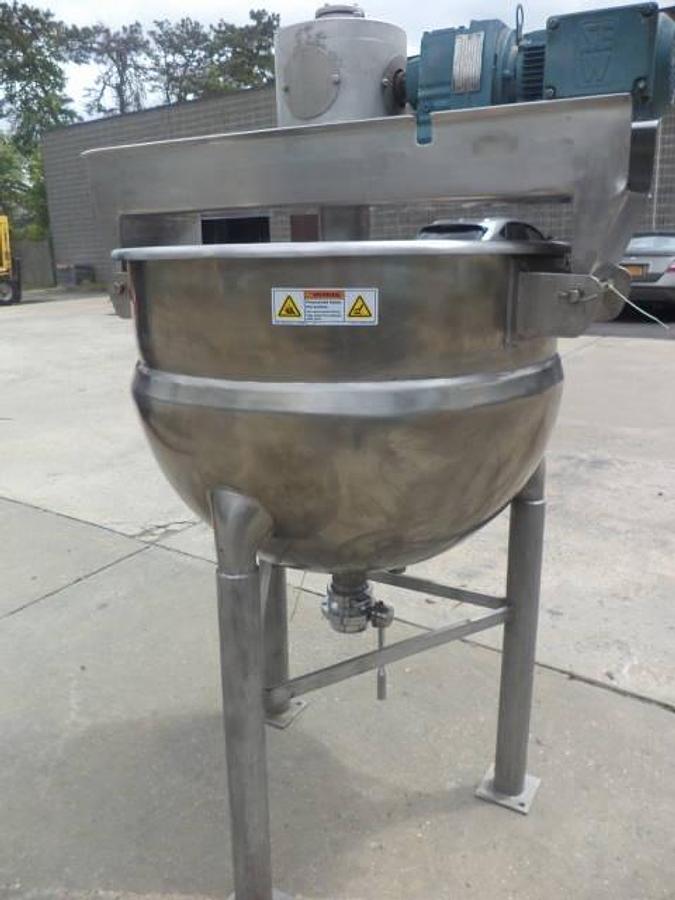
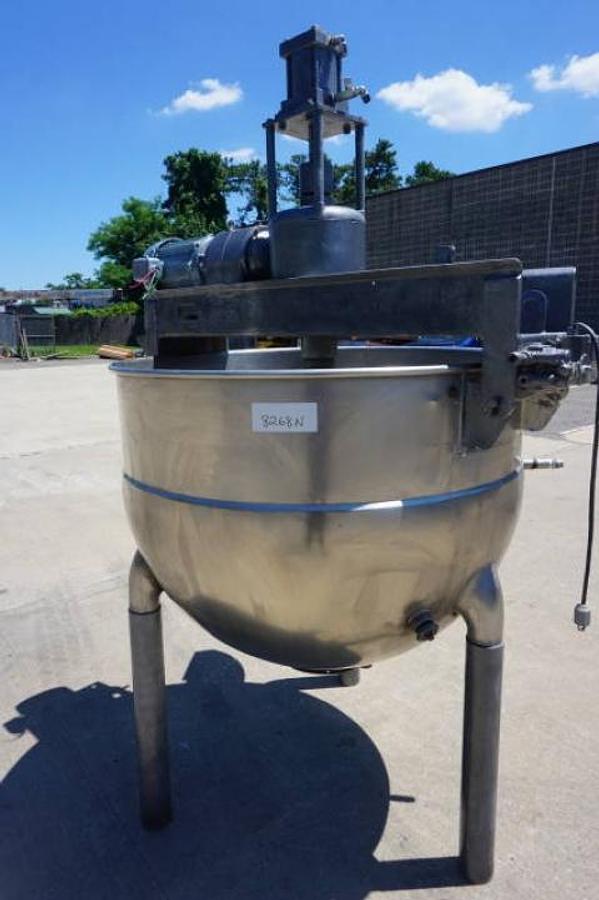
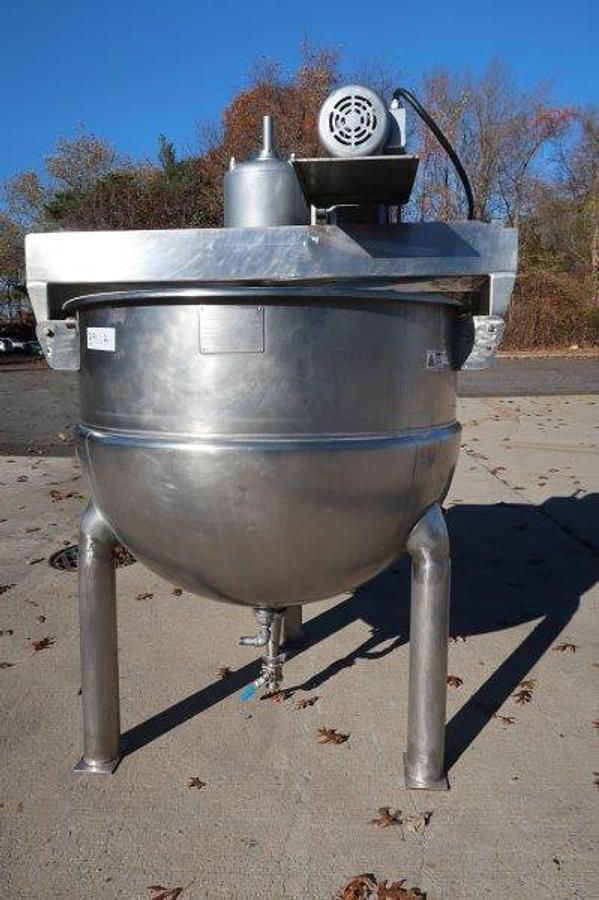
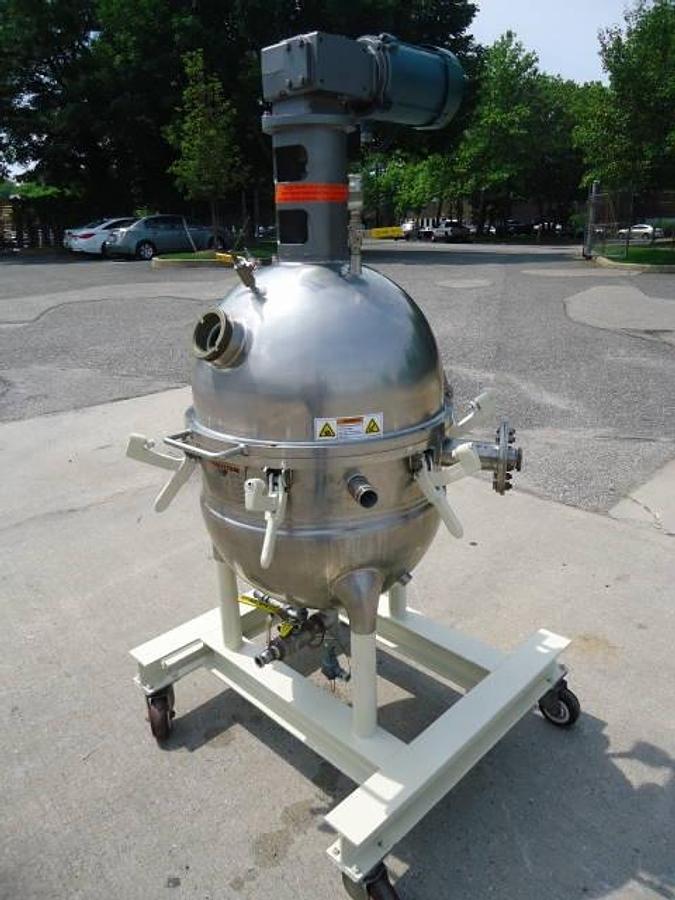
Hamilton kettles are manufactured with several agitation configurations designed to handle different product viscosities and processing requirements. The most common type found in the used equipment market is the double motion kettle, which features two independently driven agitators, typically a sweep arm that moves product away from the vessel walls and a counter-rotating inner agitator that works the center of the batch. This configuration is especially effective for thick, viscous products like caramel, peanut butter, tomato paste, and similar materials that would otherwise stick or burn.
Other agitation styles include scraper kettles, which use spring-loaded or fixed blades to continuously wipe the heated surface and prevent scorching, and anchor agitators suited for moderately viscous products. Some Hamilton models also incorporate a squirrel cage agitator, which is a high-shear mixing element better suited for lower-viscosity applications. Tilt-out agitation designs are available on certain models, allowing the agitator assembly to swing away from the vessel for easier cleaning and product discharge. Buyers should carefully match the agitation type to their product characteristics, since using the wrong agitator style can result in poor mixing, product damage, or excessive equipment wear.
What is the difference between a hemispherical kettle and a standard jacketed kettle?
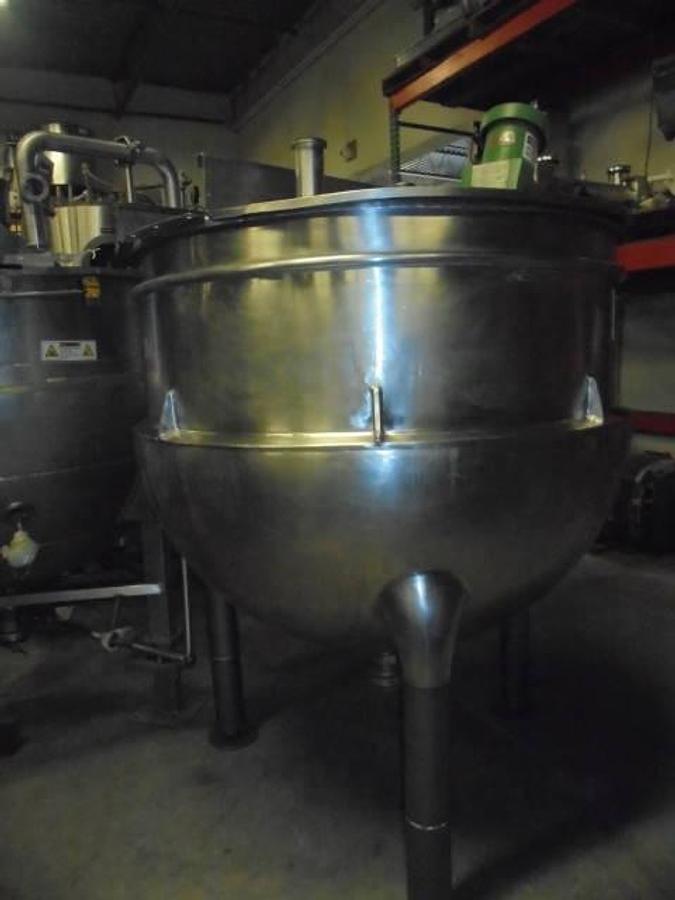
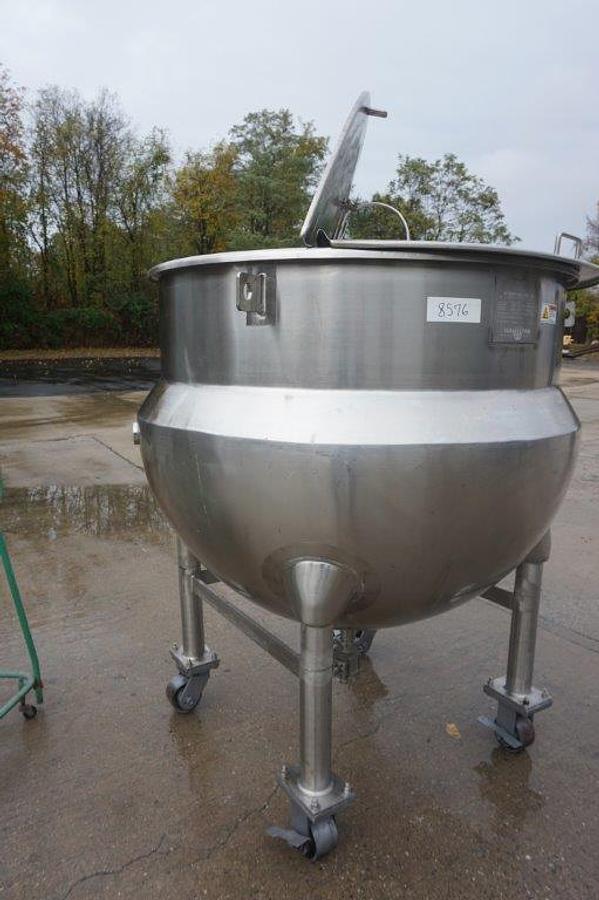
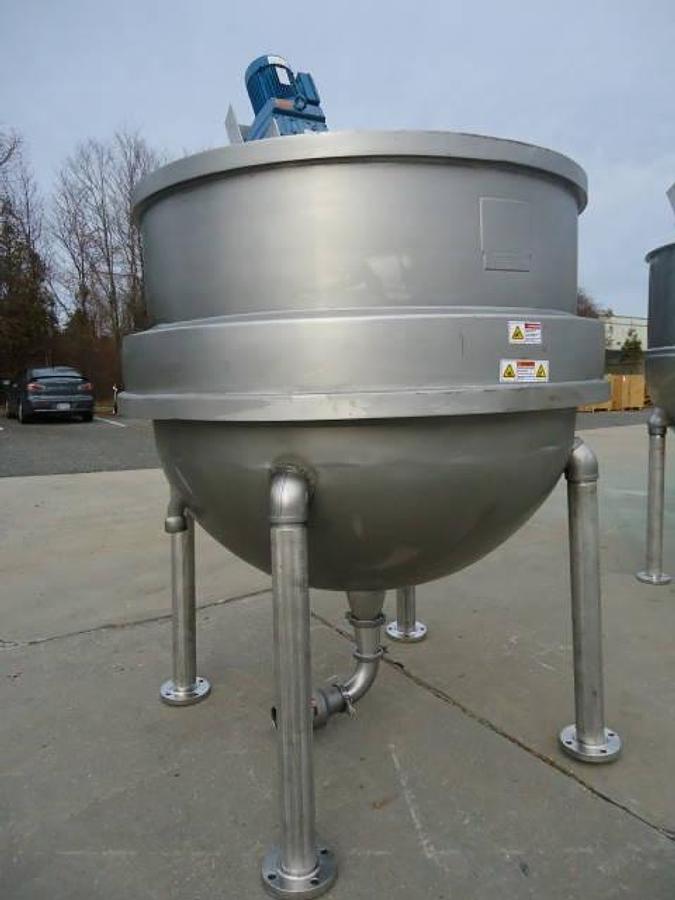
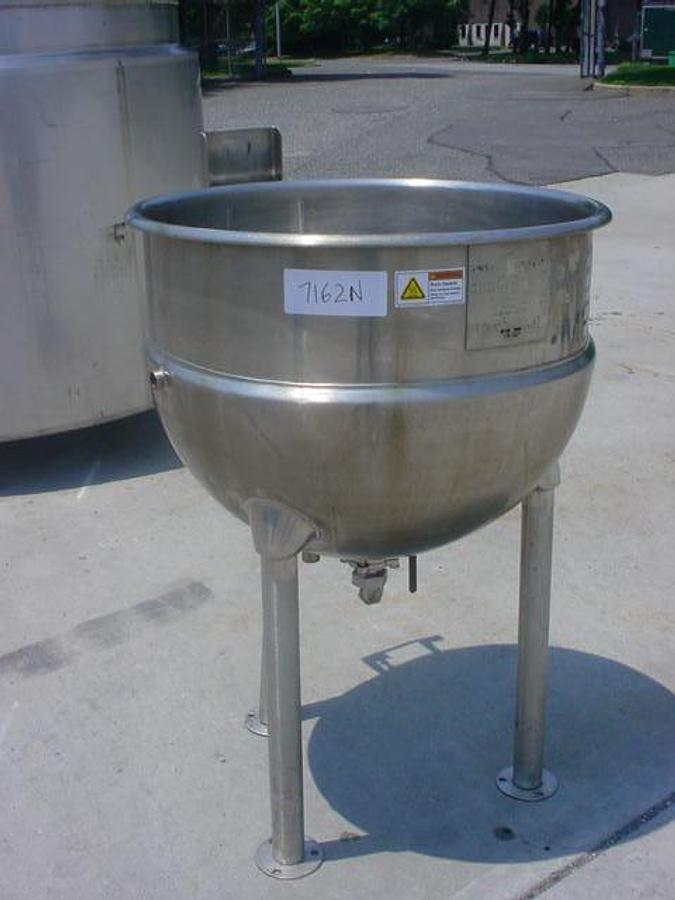
The primary difference lies in the shape of the vessel bottom. A standard jacketed kettle typically has a flat or gently curved bottom, while a hemispherical kettle features a rounded, dome-shaped bottom that curves continuously from the sidewall. The hemispherical design provides a larger heated surface area relative to the vessel volume, which improves heat transfer efficiency and reduces the likelihood of product settling in corners or dead zones. This makes hemispherical kettles particularly well suited for cooking sauces, soups, and other pourable products where thorough heating and easy drainage are priorities.
From a cleaning and discharge standpoint, the rounded bottom of a hemispherical kettle also tends to be easier to clean and allows for more complete product evacuation through a bottom-mounted discharge valve. Hamilton offers hemispherical models in both standard and inclined configurations, with inclined versions tilting the vessel for even more complete discharge of thick or dense products. Used Hamilton hemispherical kettles are available in capacities ranging from 80 gallons to 350 gallons, and many are constructed from 316 stainless steel with jacket pressure ratings suited for steam heating at various operating pressures.
What should buyers inspect when evaluating a used Hamilton kettle?
A thorough inspection of a used Hamilton kettle covers several key areas. The interior vessel surface should be examined for pitting, corrosion, weld repairs, or surface roughness that could compromise sanitary standards or indicate prior chemical damage. The jacket should be checked for leaks, corrosion, and any evidence of prior pressure-related repairs. Agitator shafts, bearings, and seals are common wear points and should be assessed for play, leakage, or unusual noise during operation. The drive motor and gearbox should also be inspected, and if possible, run under load to confirm smooth operation.
Reputable used equipment dealers will typically accommodate in-person inspections at their facility or at the plant where the equipment is currently located. Video inspections and detailed photo documentation are also commonly offered when travel is not practical. Buyers should keep in mind that most equipment dealers are not set up to run full production trials, since operating a food or pharmaceutical production facility requires permits and certifications beyond what a machinery dealer maintains. The goal of the inspection is to accurately assess the mechanical and structural condition of the kettle, not to replicate a full production run. Engaging a qualified equipment inspector or process engineer to accompany you during the review is a worthwhile investment for higher-value purchases.
What stainless steel grades are used in Hamilton kettles, and why does it matter?
Hamilton kettles are commonly constructed from 304 or 316 stainless steel, with 316 SS being the more prevalent grade found in food-grade and pharmaceutical models. The difference between the two grades comes down to corrosion resistance. Grade 316 contains molybdenum, which significantly improves resistance to chlorides and acidic cleaning agents. This makes it the preferred material for processing acidic foods like tomato products, citrus-based sauces, and vinegar-containing recipes, as well as for pharmaceutical and cosmetic applications where aggressive CIP (clean-in-place) chemicals are routinely used.
For buyers purchasing used equipment, the stainless grade matters both for compatibility with their products and for long-term durability. A 316 SS vessel that has been properly maintained will resist pitting and surface degradation far better than a 304 SS unit exposed to the same cleaning protocols. When reviewing used Hamilton kettles, the product listing or equipment documentation should specify the stainless grade. If this information is unclear, it can often be verified by the dealer or confirmed through the equipment's serial number and manufacturer records. Choosing the correct grade upfront avoids costly issues with contamination, corrosion, or regulatory compliance down the line.
How is shipping handled for large used industrial kettles like Hamilton models?
Shipping a large industrial kettle involves considerably more logistics than standard freight. Equipment in the 30 to 350-gallon range typically requires heavy-duty palletization or custom crating to prevent damage during transit. The level of packaging required depends on the size, weight, and configuration of the kettle, and the associated costs will vary accordingly. Buyers should request a detailed breakdown of packaging, rigging, and freight charges from the dealer before finalizing a purchase, since the landed cost of the equipment can be meaningfully higher than the listed price once all shipping components are factored in.
For larger kettles, specialized rigging equipment is often needed to safely load the vessel onto a flatbed or enclosed trailer, and similar rigging may be required at the destination for unloading. Some kettles weigh several thousand pounds and cannot be handled with standard pallet jacks or forklifts. Buyers should confirm in advance that their facility is equipped to receive and position heavy equipment. Freight carriers experienced with industrial machinery are generally preferable to standard LTL carriers, as they are better equipped to handle oversized and overweight loads without damage.
What payment terms do used industrial equipment dealers typically require?
Most used industrial equipment dealers require full payment prior to shipping the equipment. This is standard practice in the industry and reflects the nature of the secondary machinery market, where dealers are moving individual pieces of equipment rather than maintaining ongoing supply relationships. Payment is typically accepted by wire transfer, though some dealers may accept other forms depending on the transaction size and buyer relationship. Buyers who have an established purchasing history with a particular dealer may occasionally be offered payment terms, but this is the exception rather than the rule for first-time transactions.
Buyers should factor payment timing into their acquisition planning, particularly when equipment needs to be coordinated with a facility installation schedule. Confirming payment requirements early in the negotiation process avoids delays once a purchase decision is made. It is also worth clarifying with the dealer exactly when title transfers and when the equipment is released for shipment after payment is received, since processing times can vary.
What industries commonly use Hamilton jacketed kettles?
Hamilton jacketed kettles are found across a wide range of processing industries, with food manufacturing being the most common application. Producers of sauces, soups, jams, confections, dairy products, dressings, and condiments rely on jacketed kettles for consistent, controlled batch cooking. The ability to heat large volumes evenly while continuously agitating the product makes these kettles well suited for anything from fruit preserves to peanut butter to hard candy production. The 316 stainless construction and sanitary design of Hamilton vessels also make them compliant with food safety standards in most regulatory frameworks.
Beyond food processing, Hamilton kettles are used in pharmaceutical manufacturing for mixing and cooking active ingredients and excipients, in cosmetics production for blending creams, lotions, and balms, and in specialty chemical processing where precise temperature control and corrosion-resistant materials are required. Research and development facilities sometimes use smaller-capacity Hamilton kettles for pilot-scale batch testing before scaling up to full production. The versatility of the jacketed kettle design, combined with Hamilton's reputation for well-built equipment, has made these vessels a long-standing choice across multiple industries.