Category
Manufacturer
Model
Groen
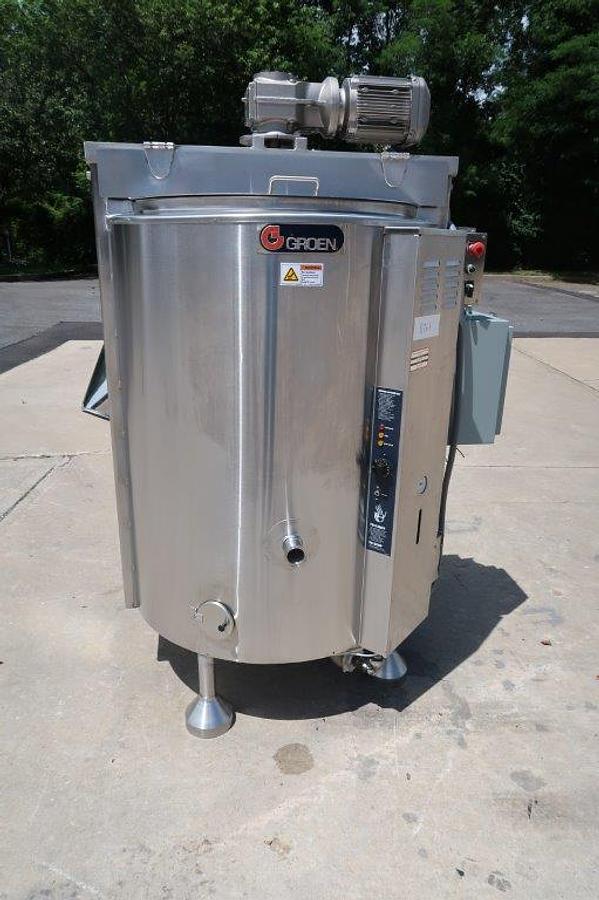
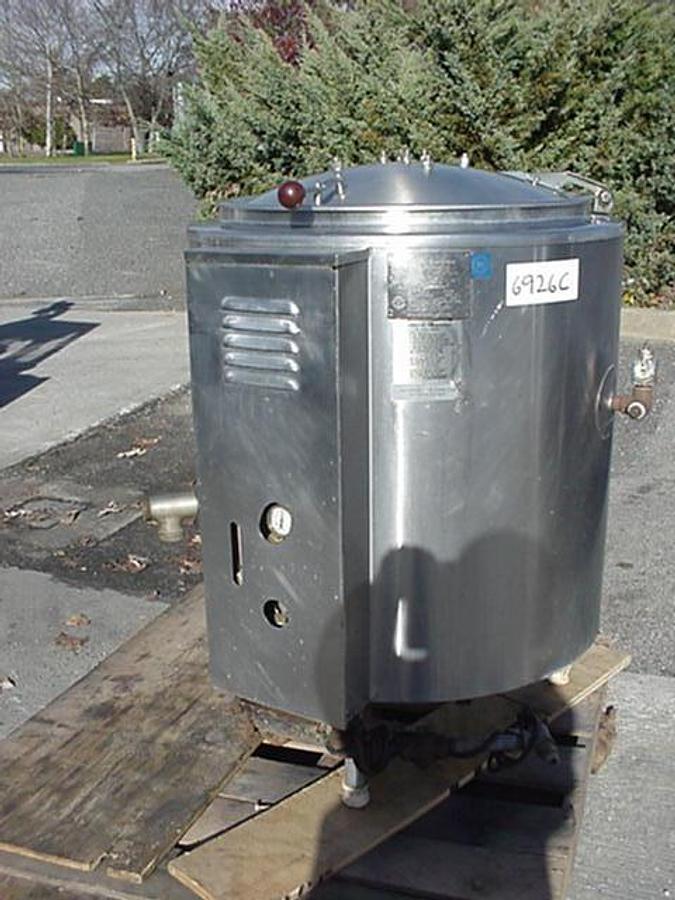
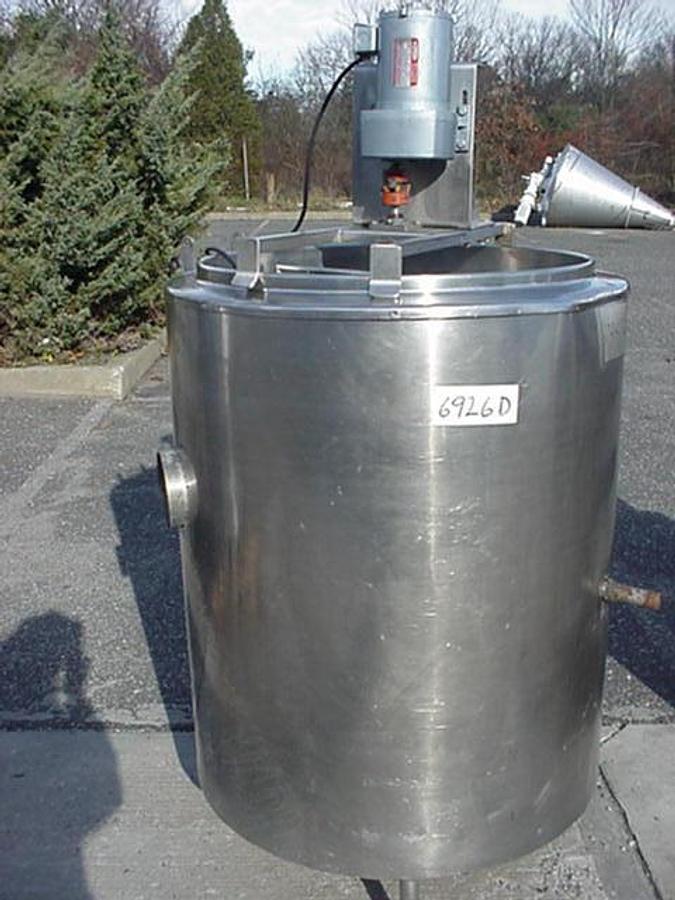
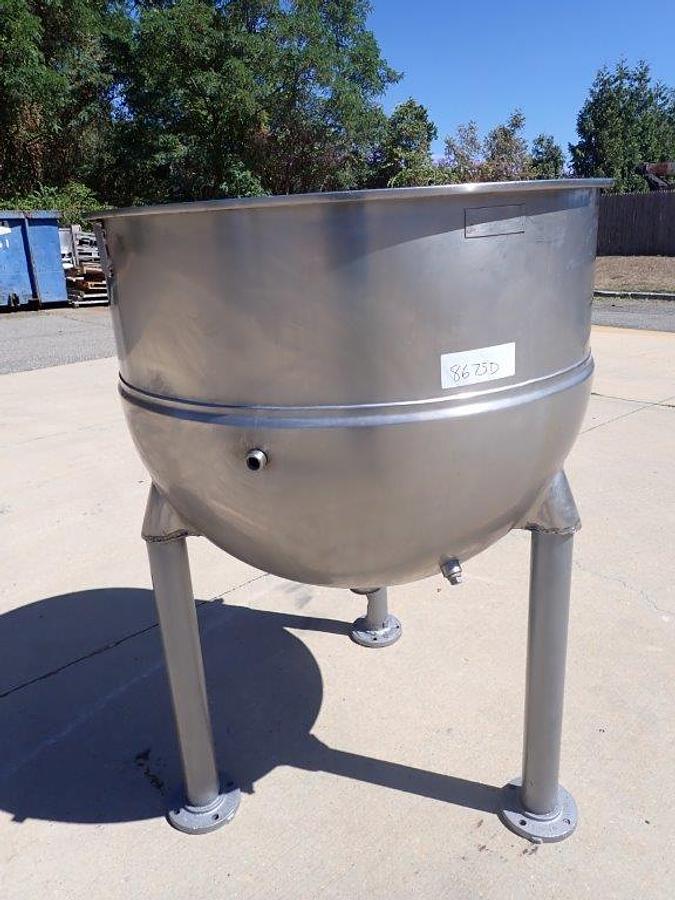
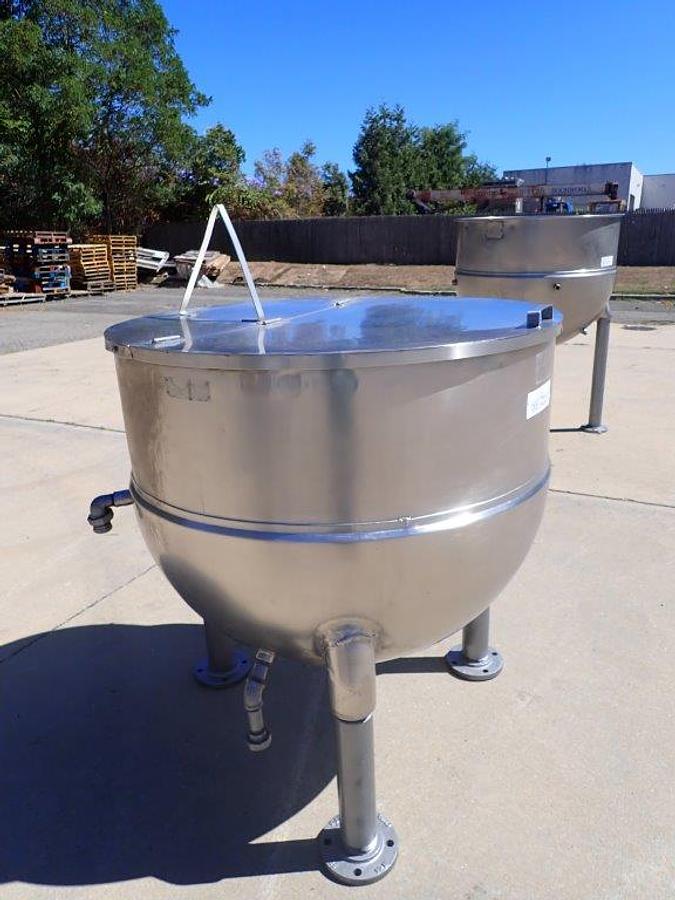
Groen is a leader in manufacturing cooking and food preparation equipment for the food service industry. Their products, including steamers and kettles, are designed to optimize cooking processes and enhance food quality.
FAQ:
What sizes of used Groen kettles are typically available on the market?
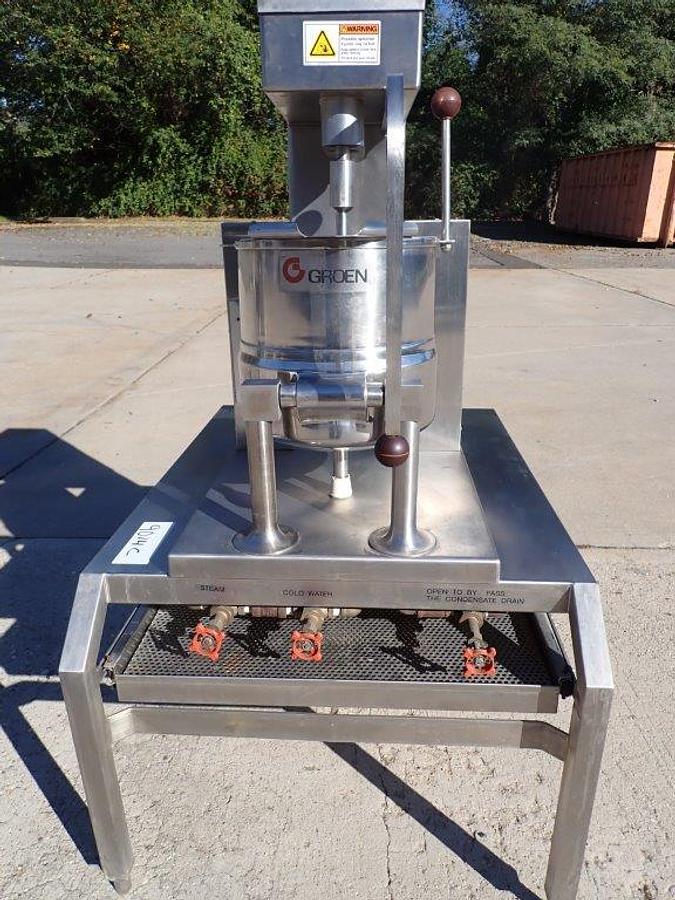
Used Groen kettles span an exceptionally wide range of capacities, making them practical for everything from small-batch production to large-scale industrial food processing. On the smaller end, 5-gallon and 10-gallon models are common and well-suited for specialty sauces, confections, or pilot batches. Mid-range sizes like 40-gallon, 60-gallon, 80-gallon, and 100-gallon kettles are among the most frequently traded units, as they fit the throughput demands of institutional kitchens, catering operations, and mid-sized food manufacturers. At the larger end of the spectrum, 150-gallon, 200-gallon, 300-gallon, 600-gallon, and even 750-gallon or 1,000-gallon units do appear in the used equipment market, though they tend to move quickly given the demand for high-capacity processing vessels.
The sheer variety of sizes available in the secondary market reflects how widely Groen kettles were deployed across food service and food manufacturing over the decades. Buyers shopping for used units should keep in mind that availability at any given time depends on what facilities are decommissioning or upgrading their equipment. It pays to work with a dealer who specializes in food processing machinery, since they tend to carry a broader and more consistently refreshed inventory of Groen equipment across the full size range.
What types of Groen kettles are available when buying used?
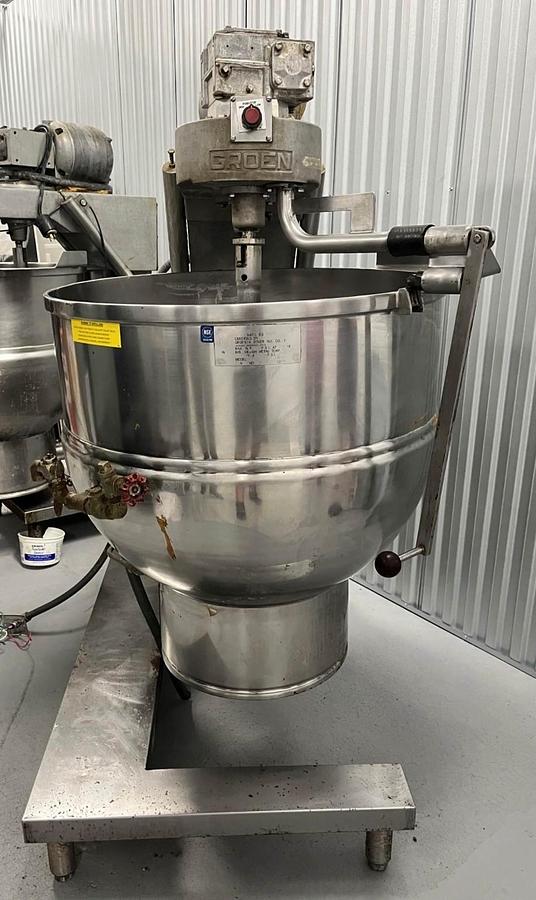
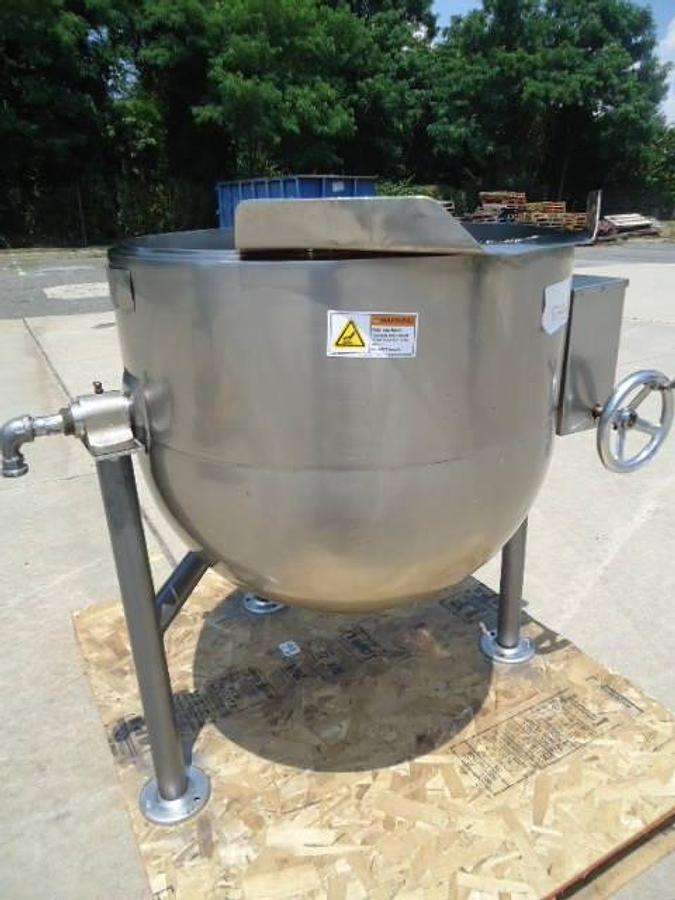
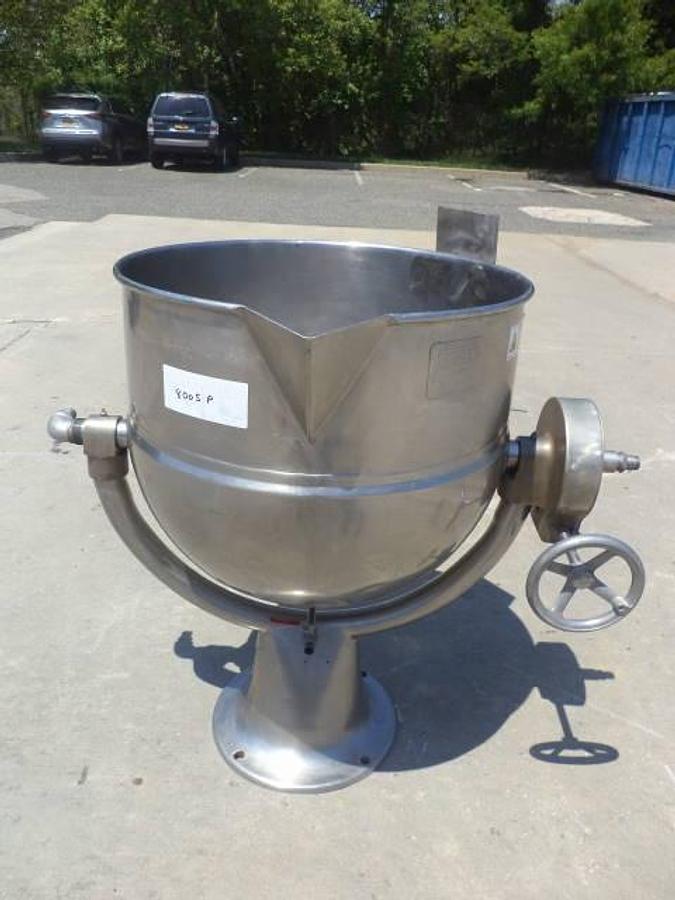
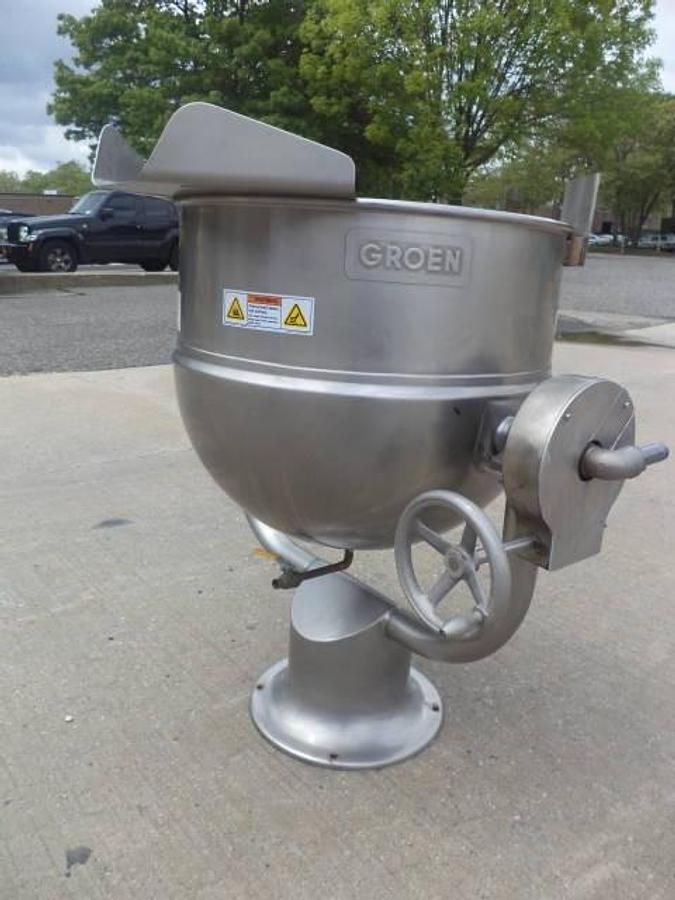
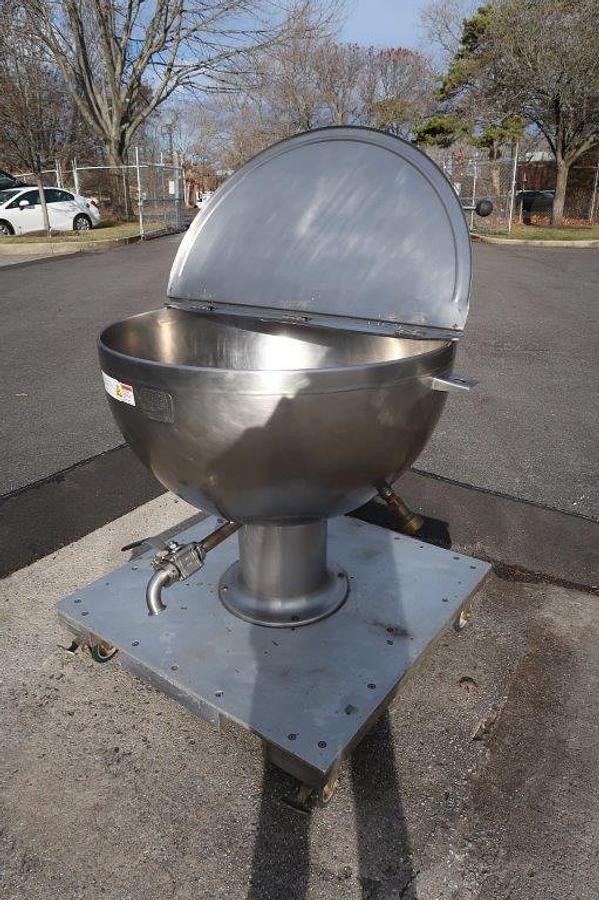
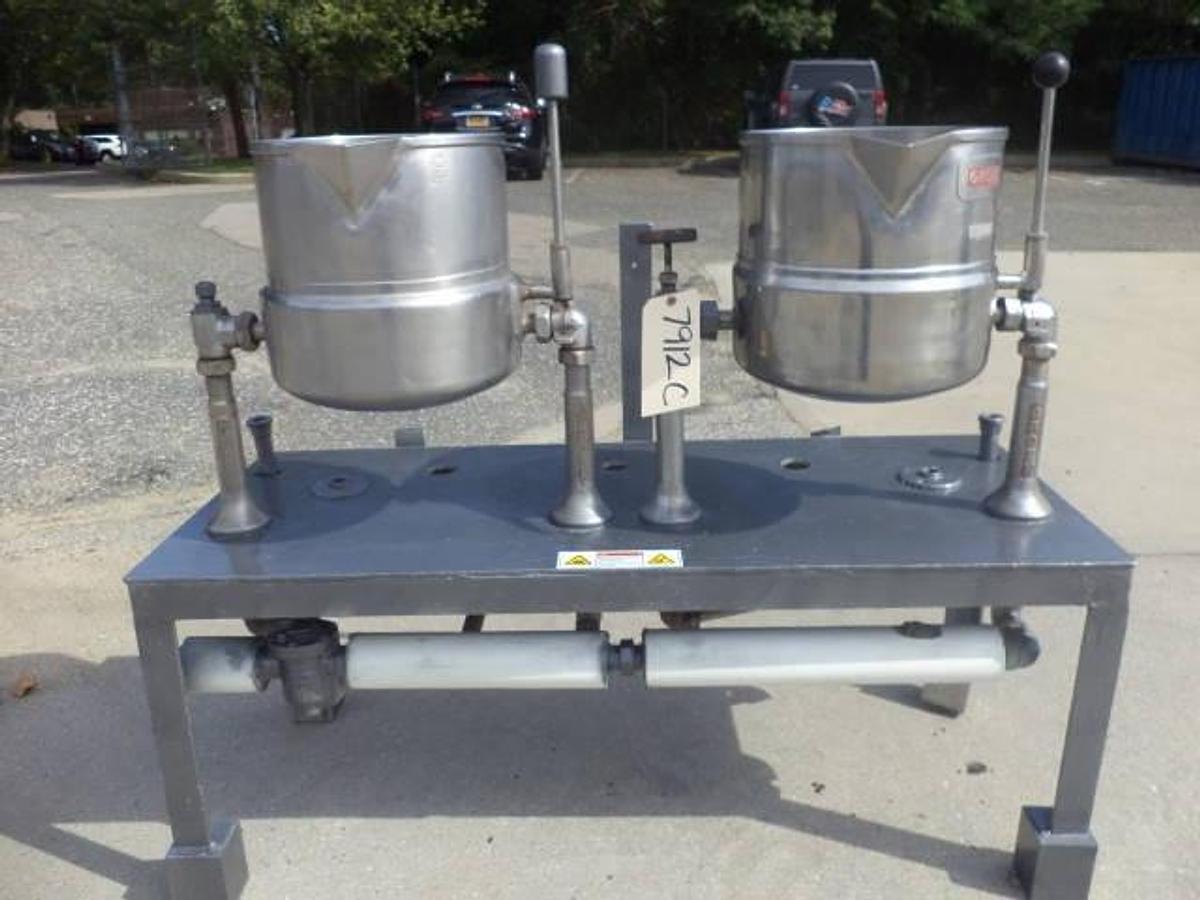
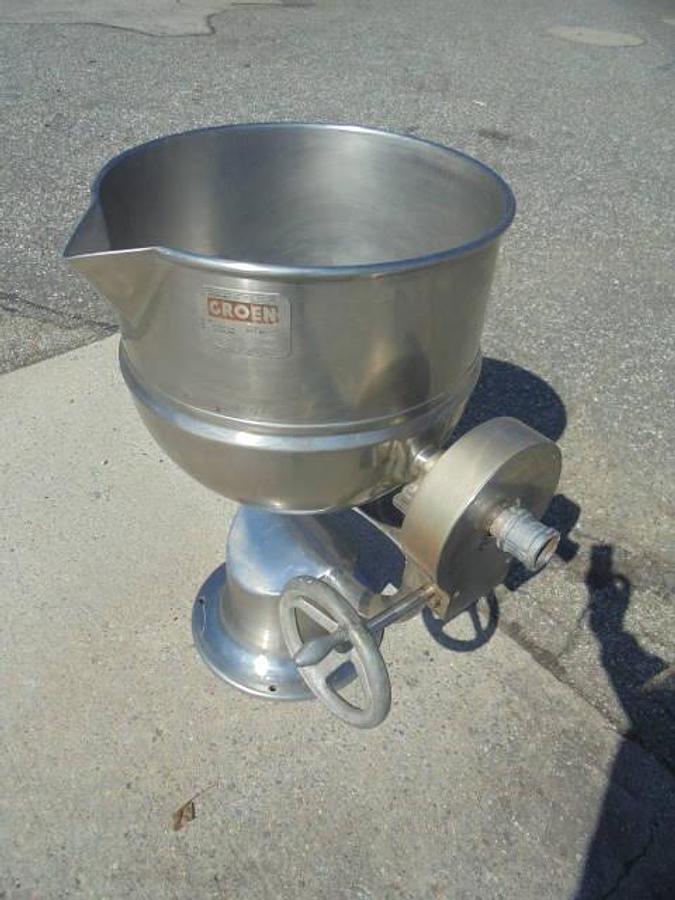
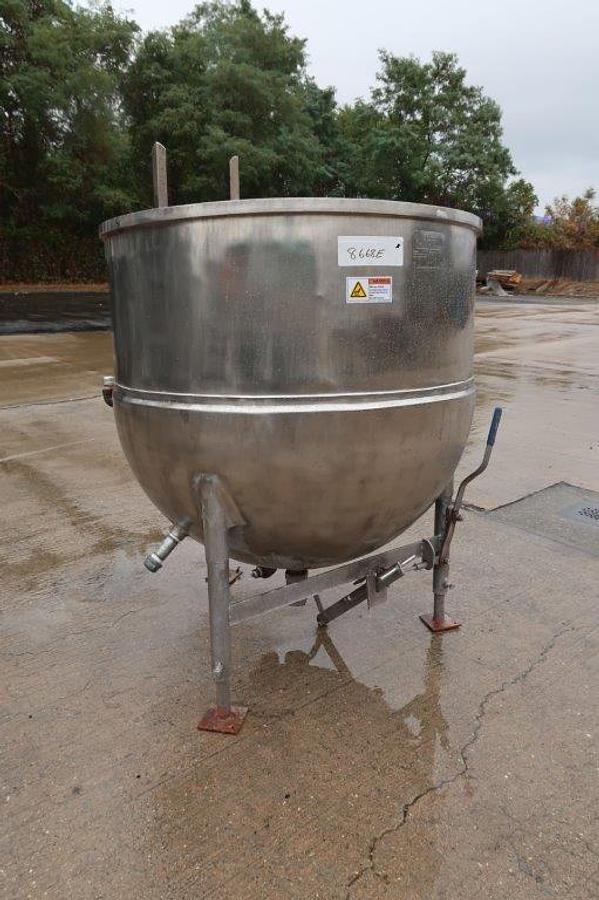
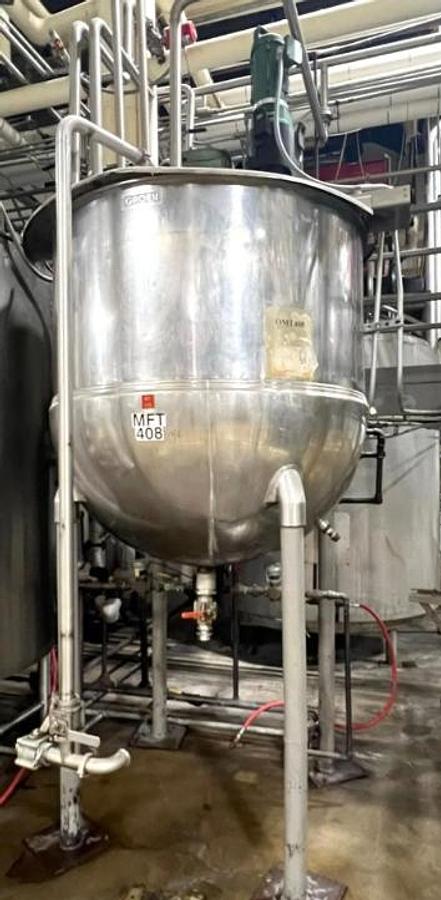
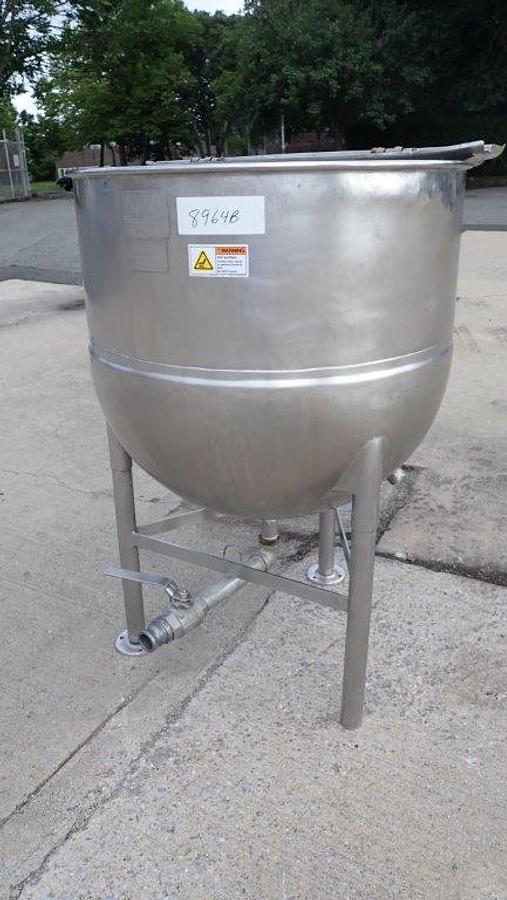
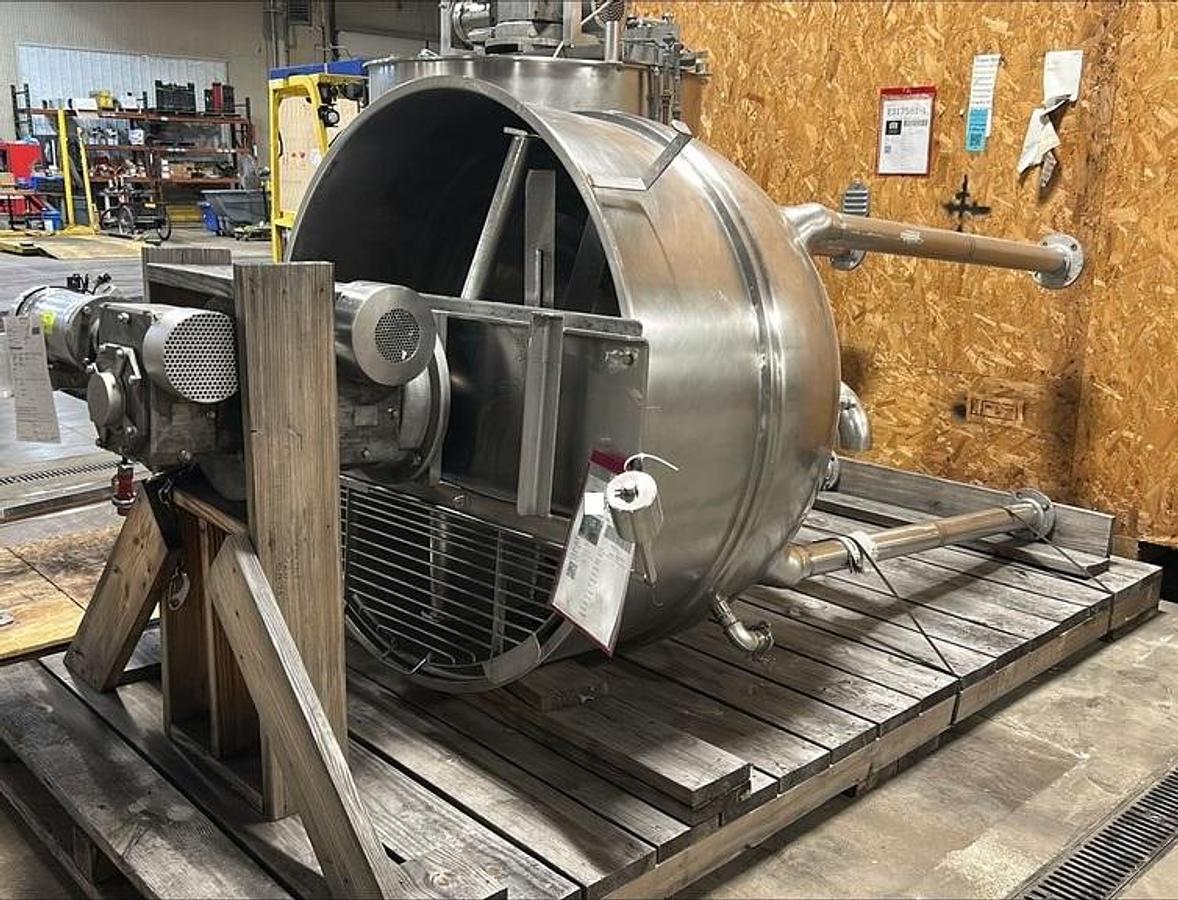
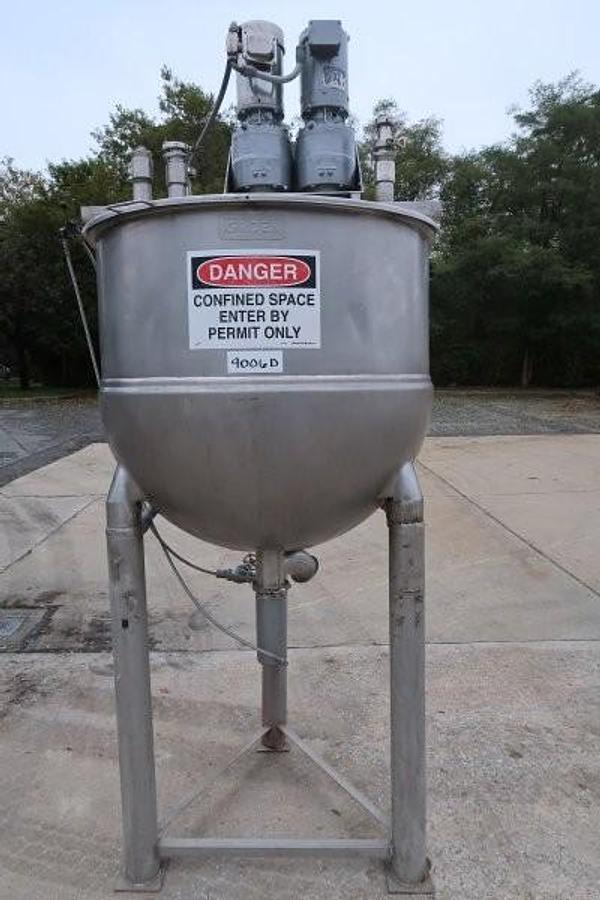
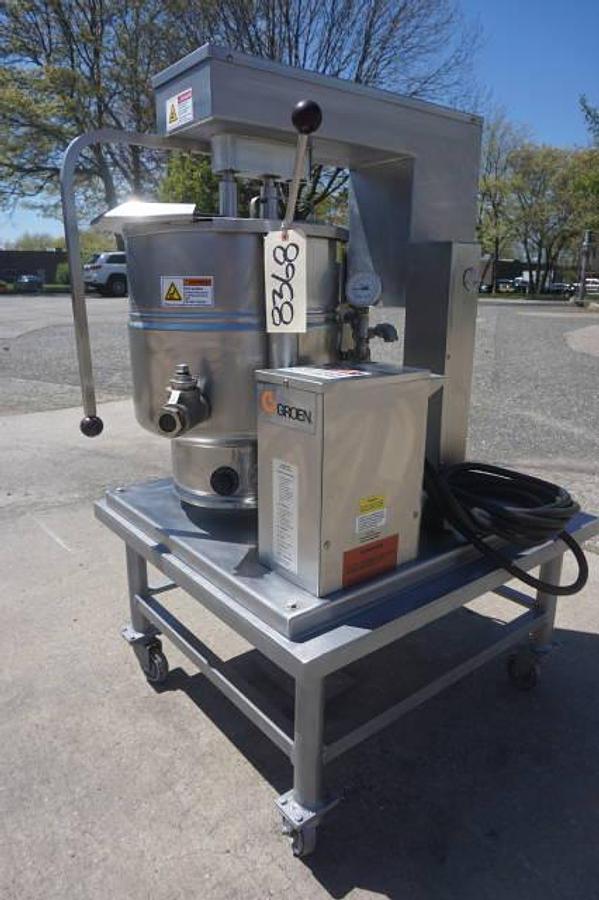
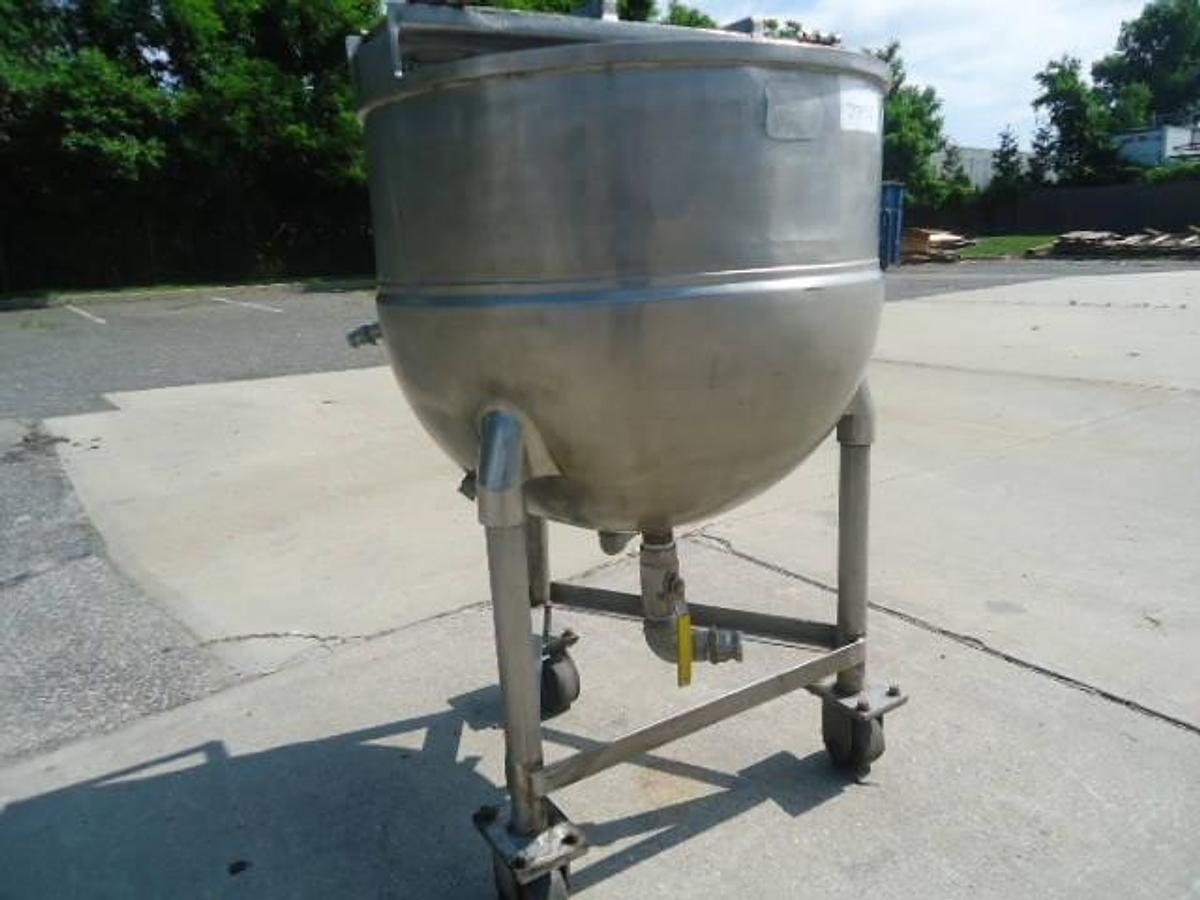
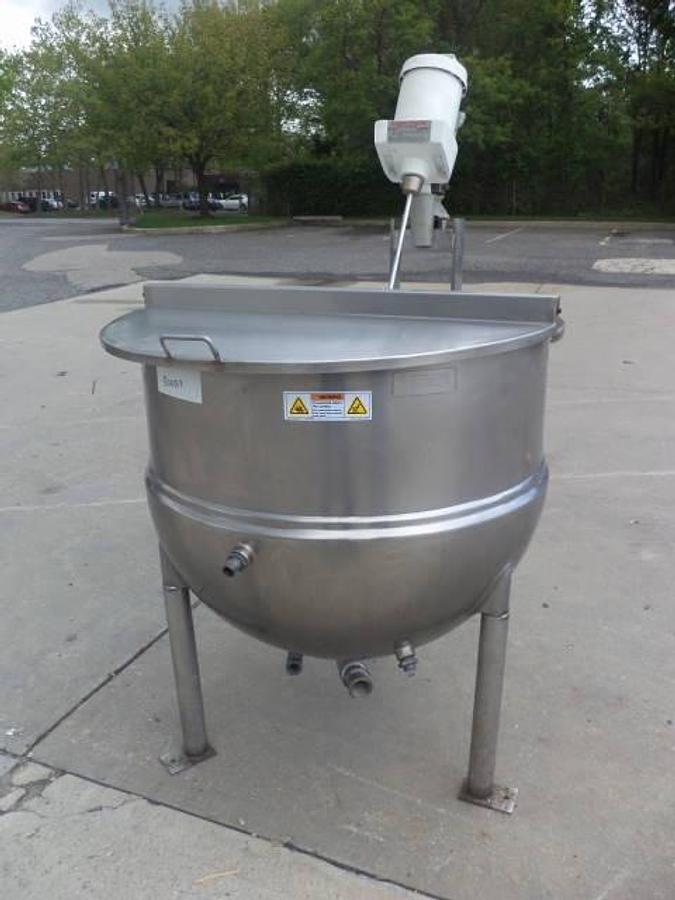
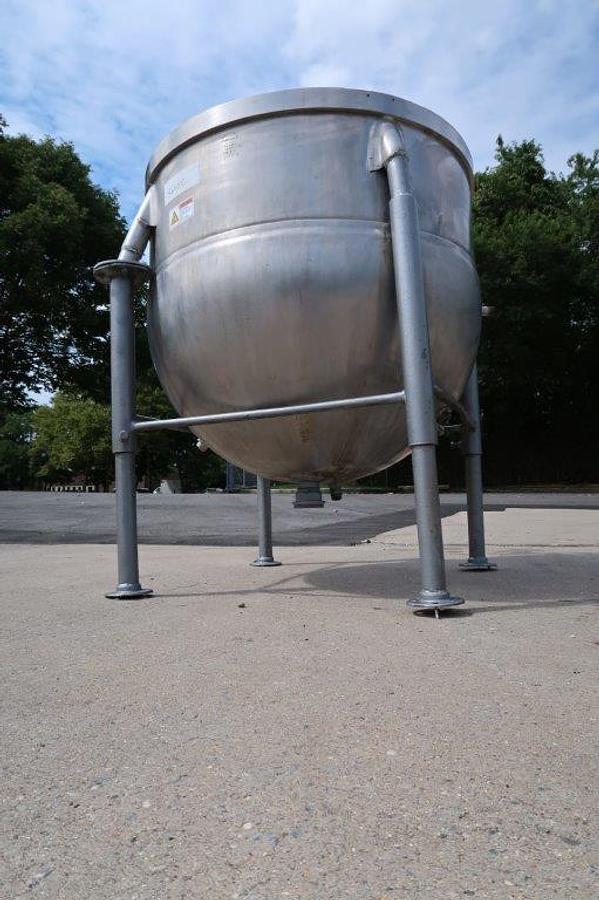
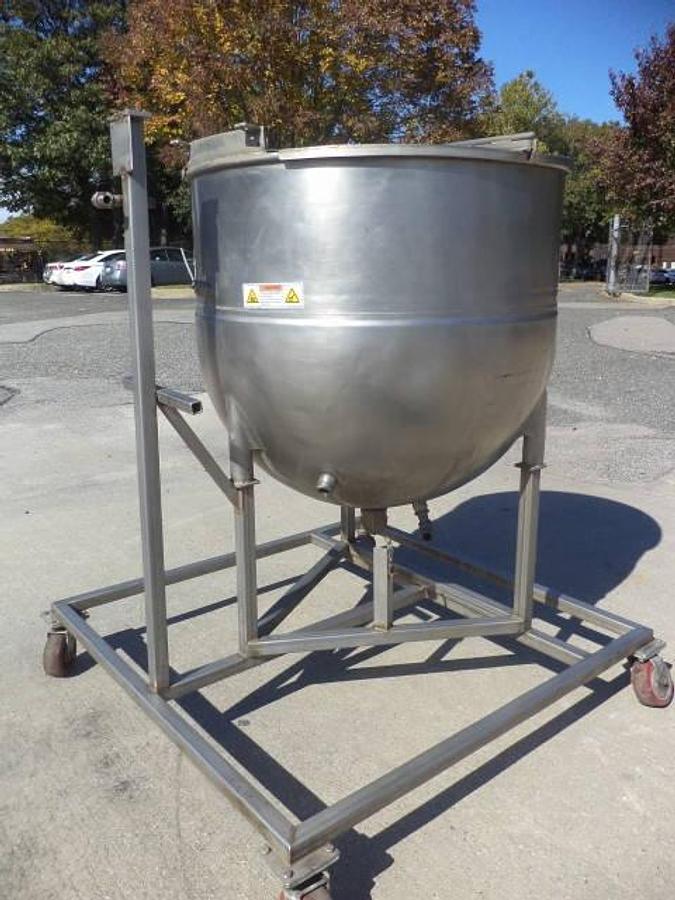
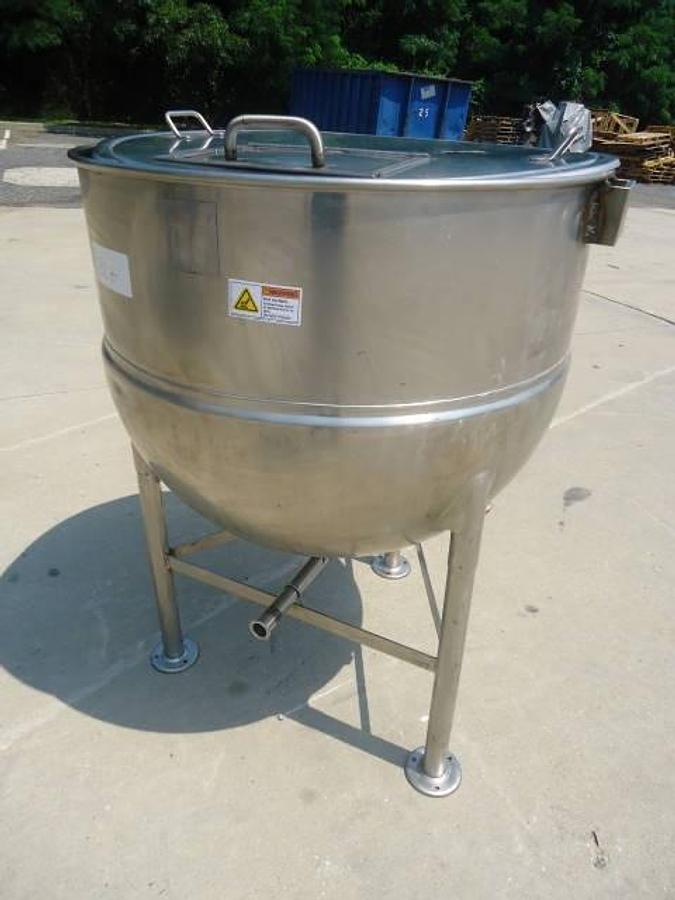
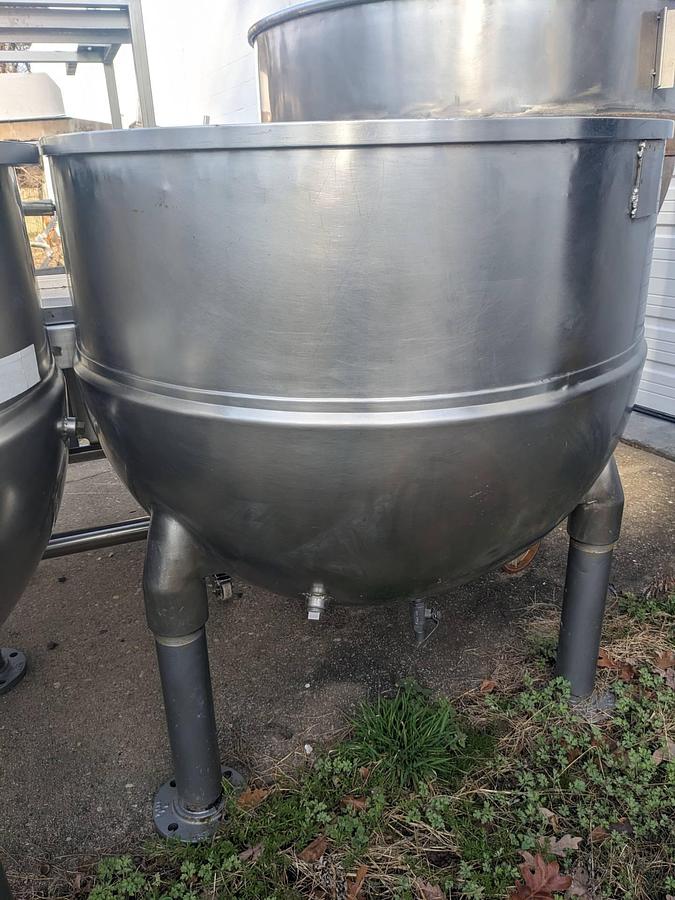
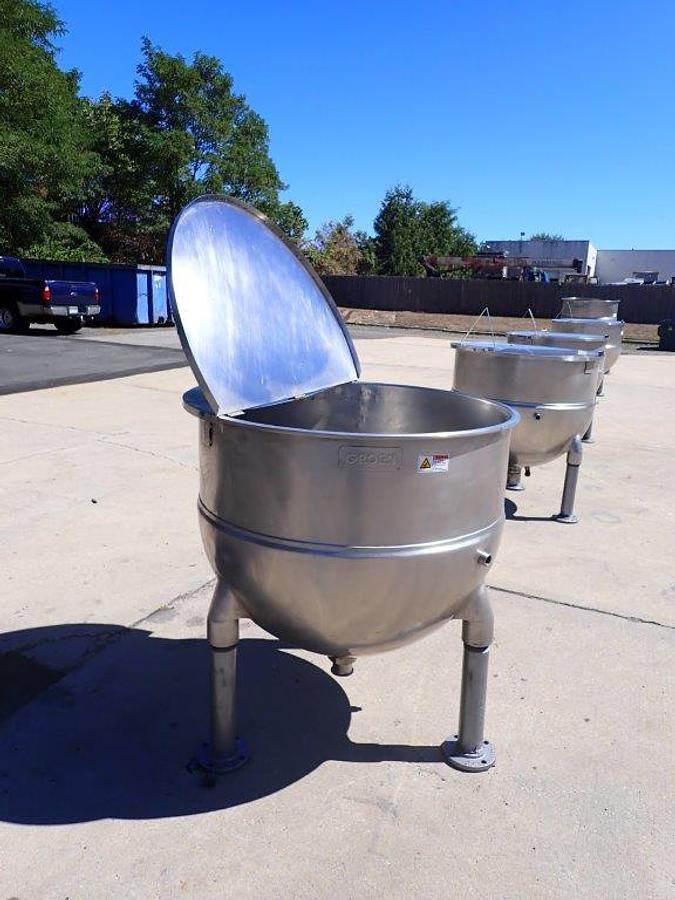
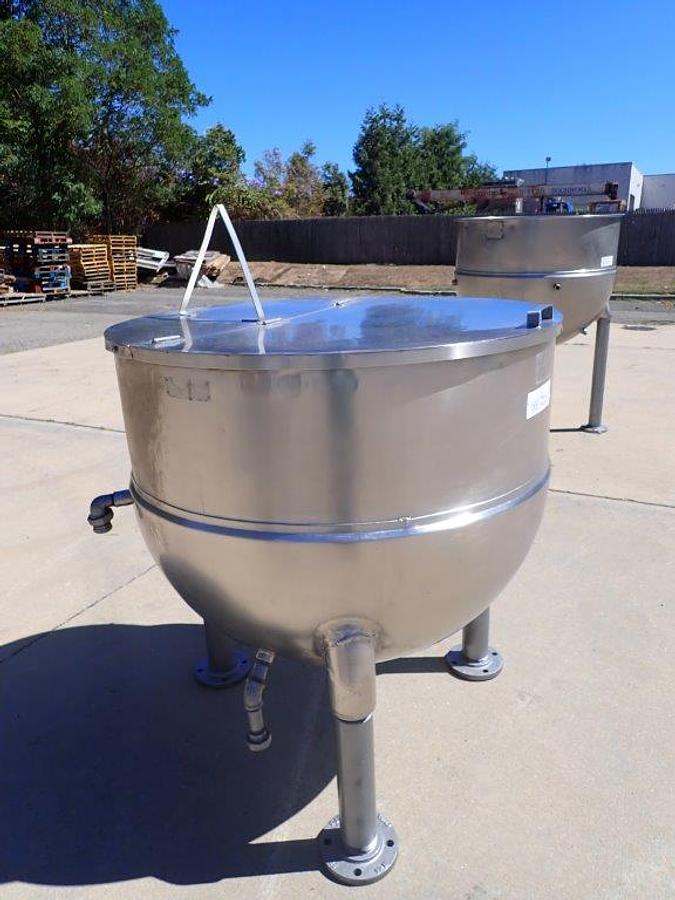
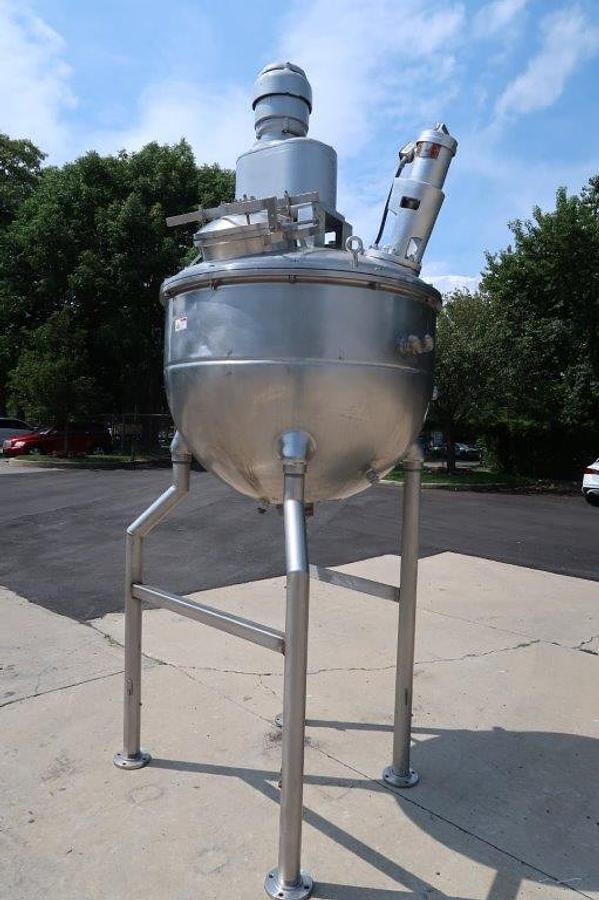
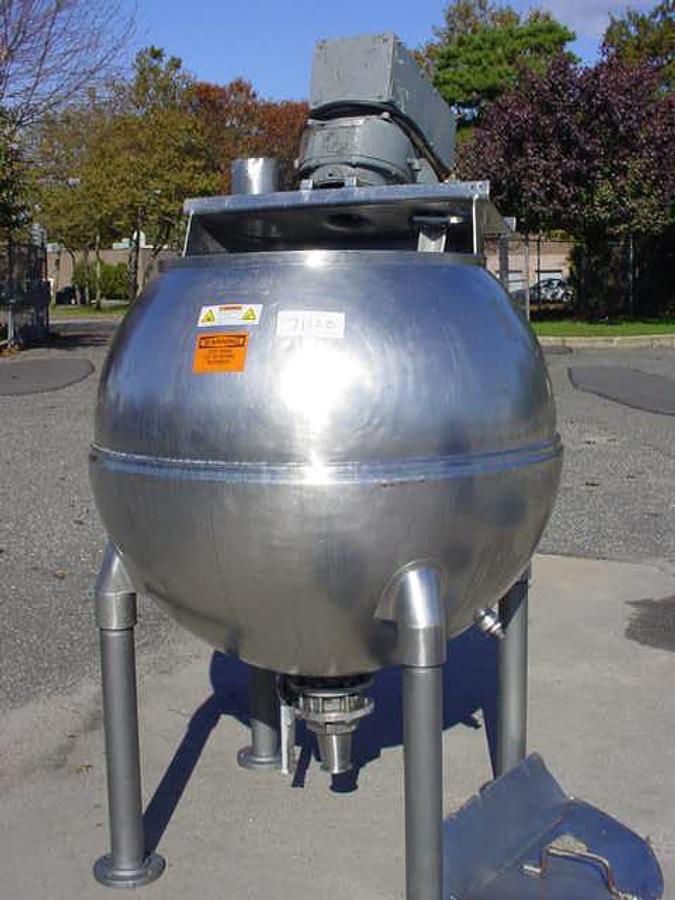
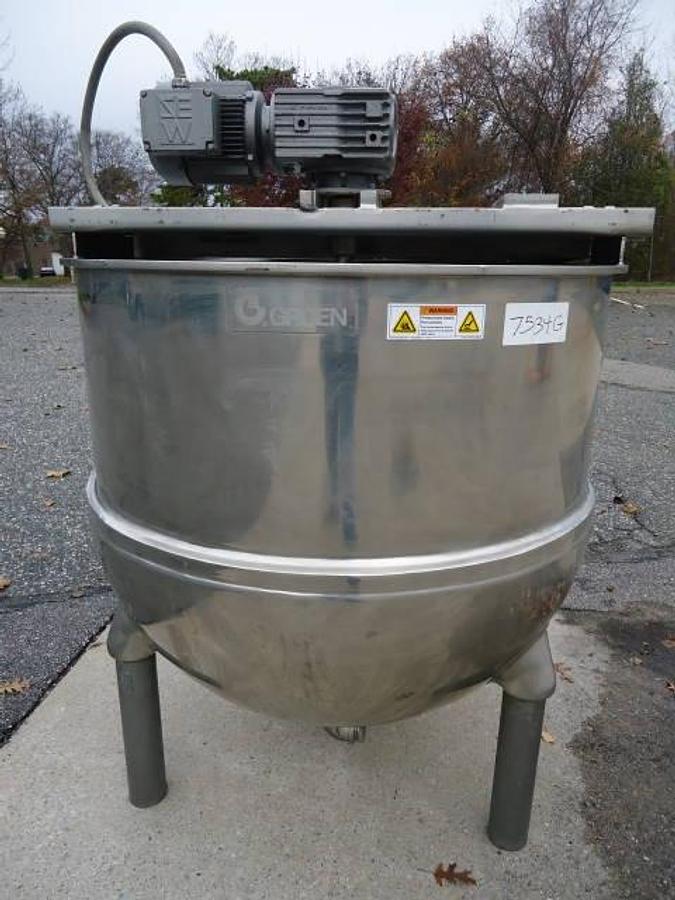
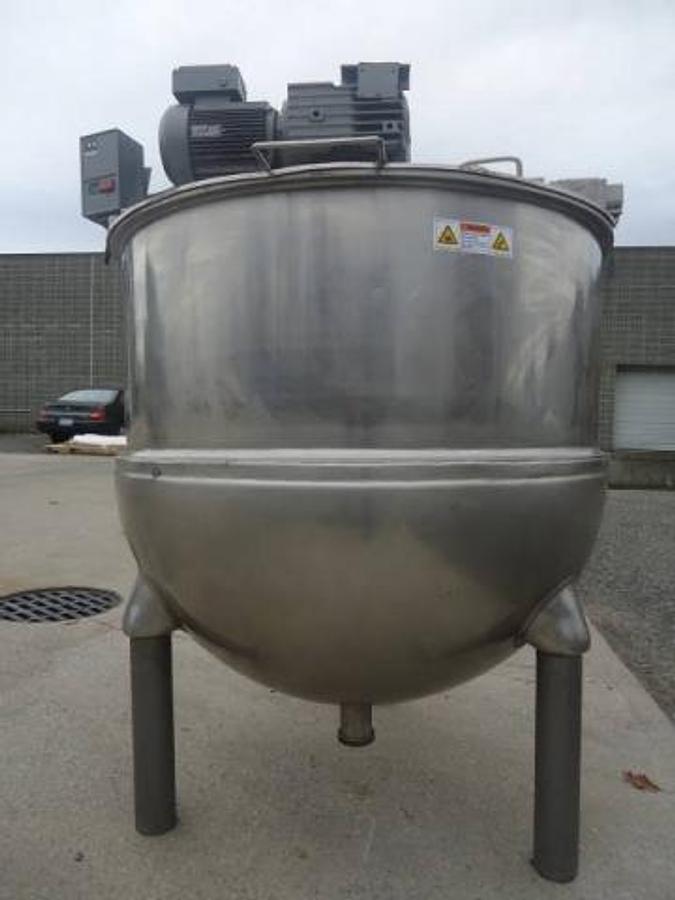
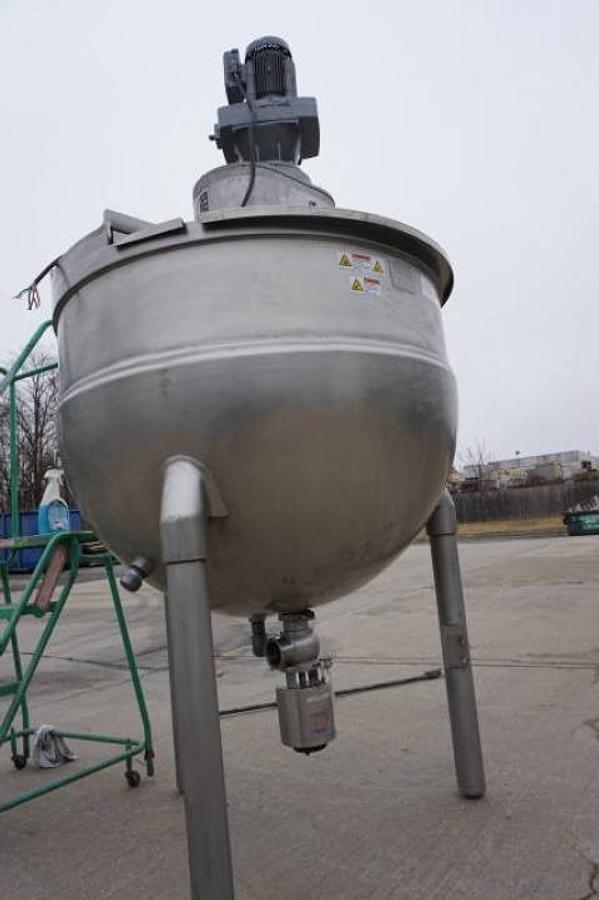
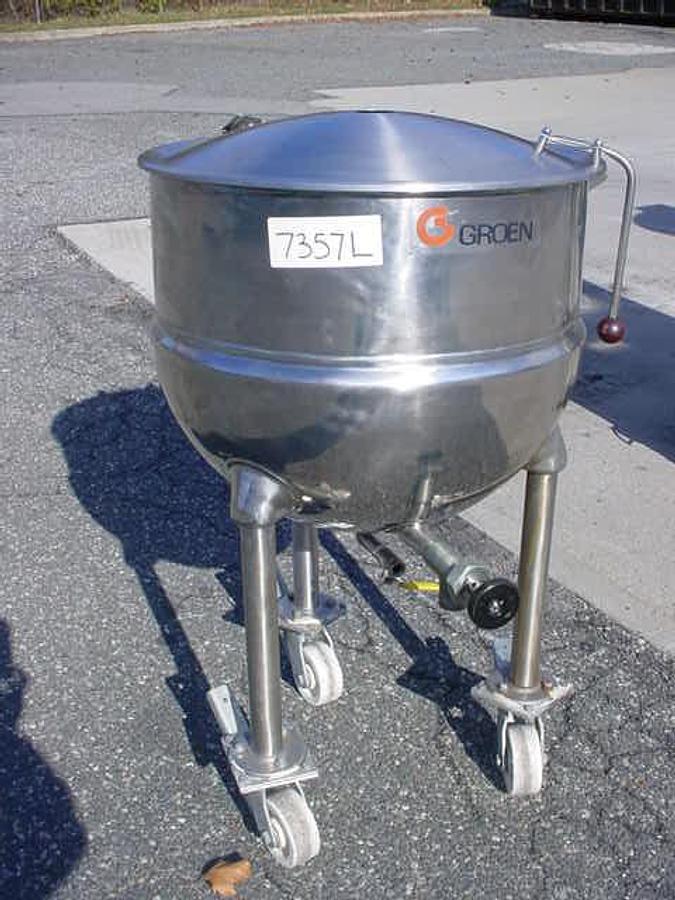
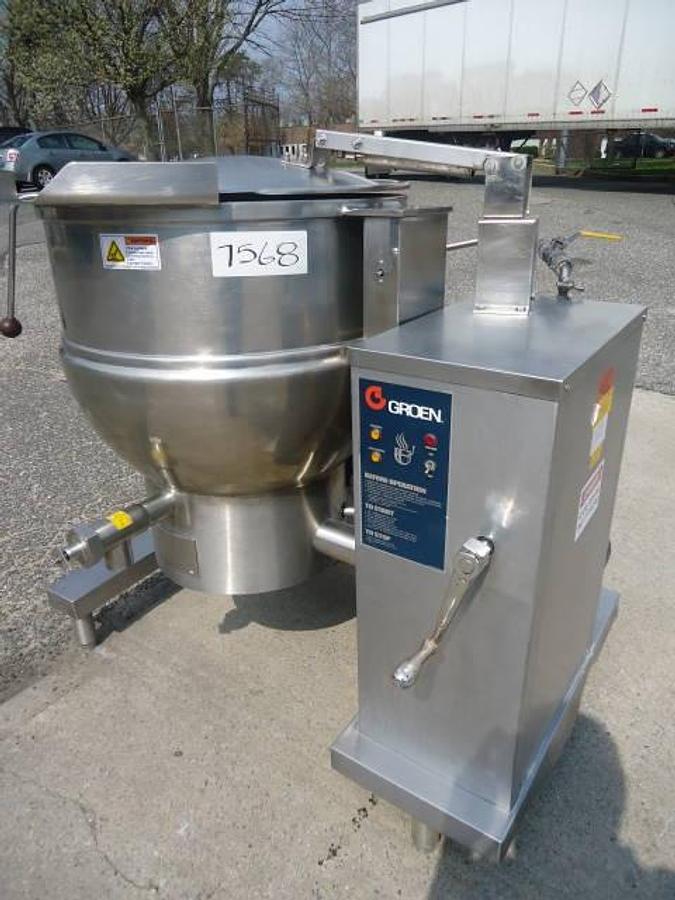
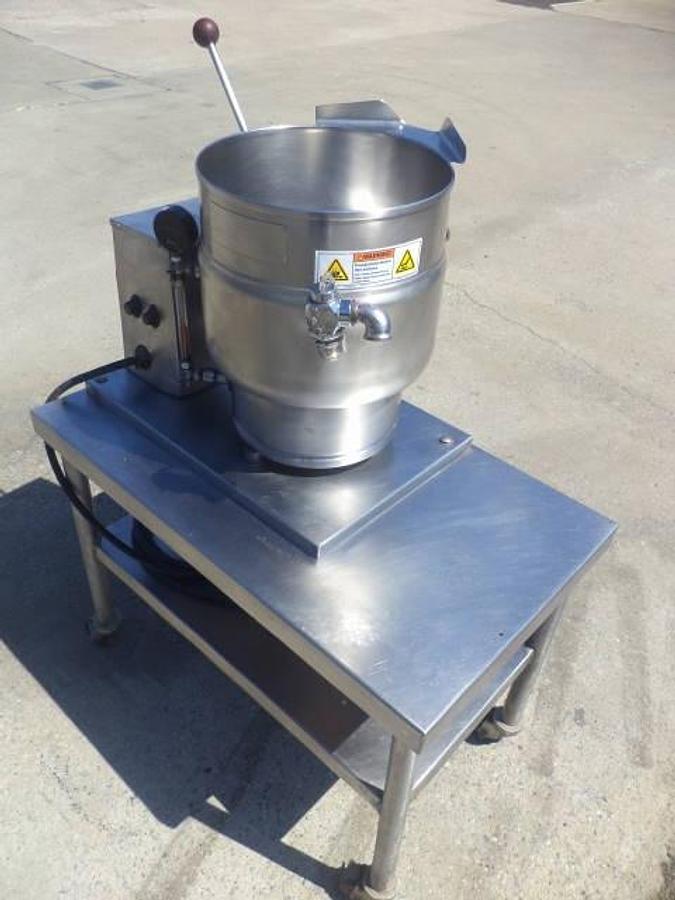
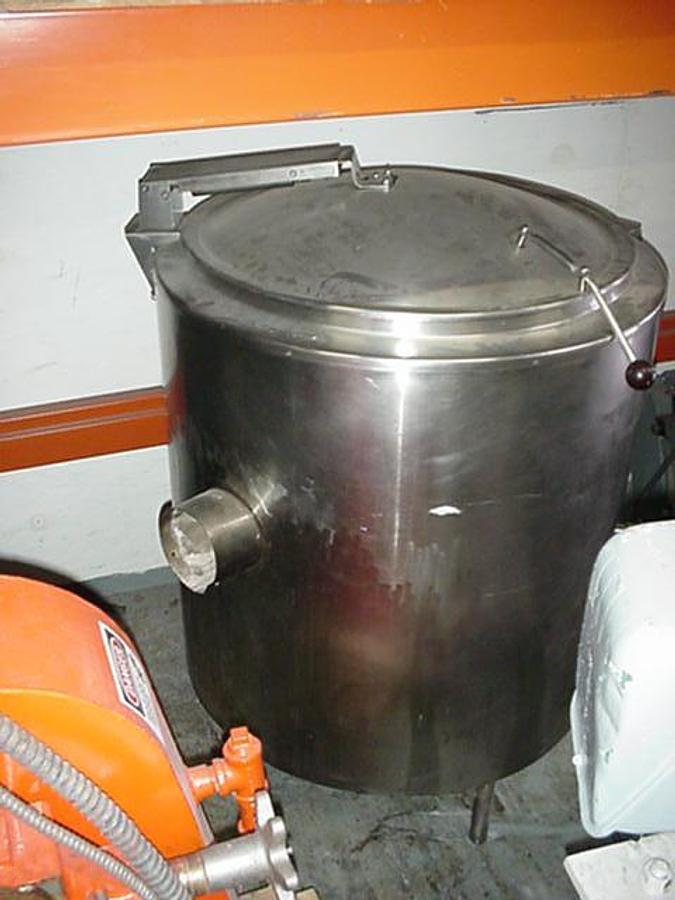
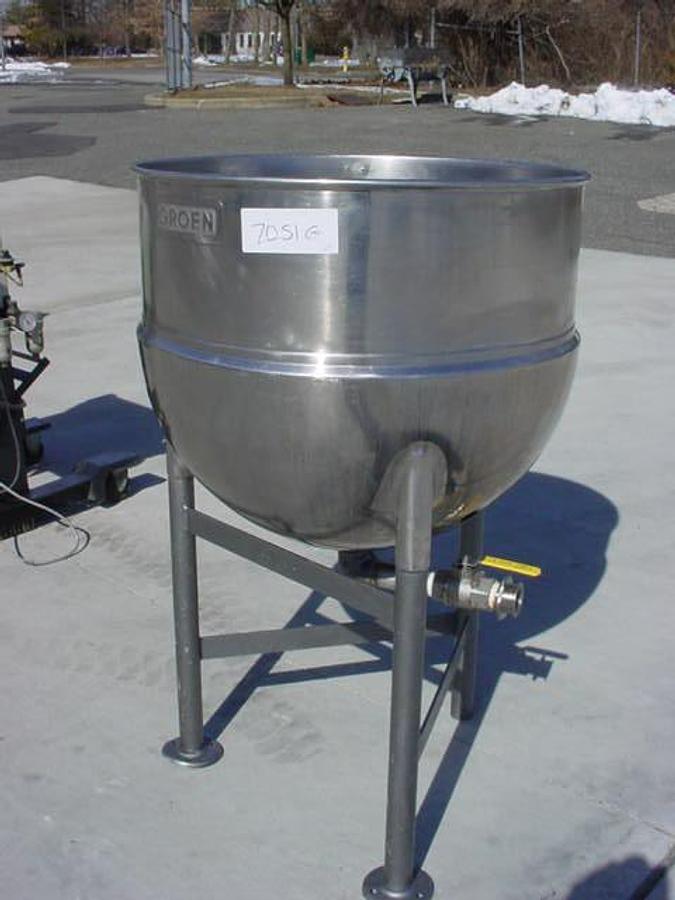
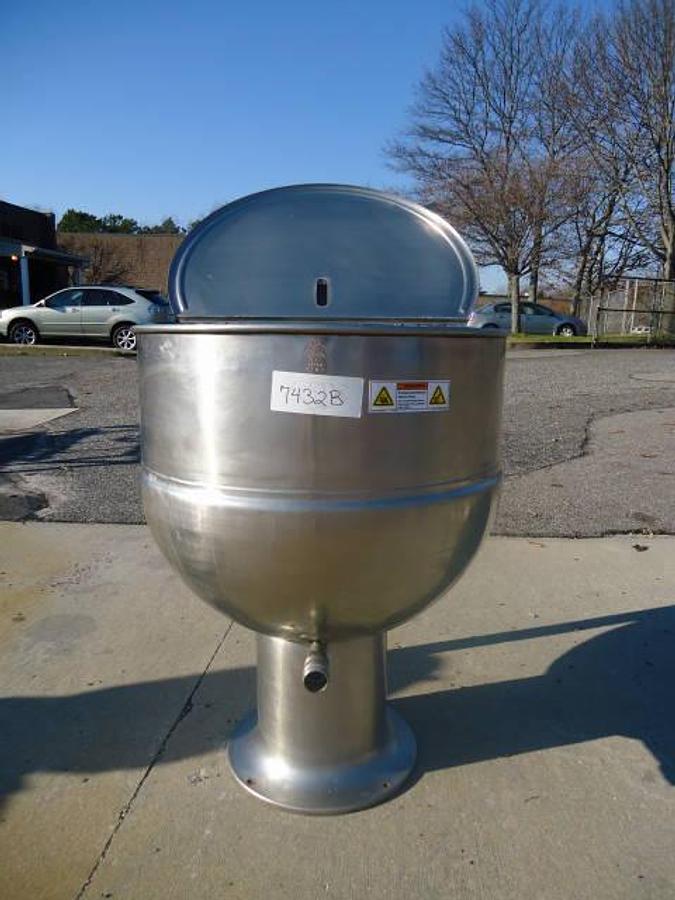
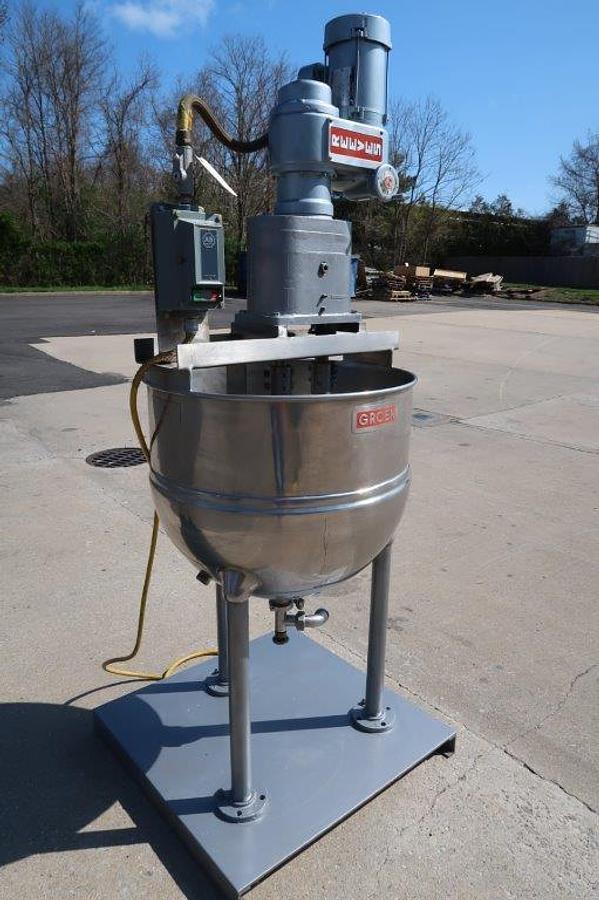
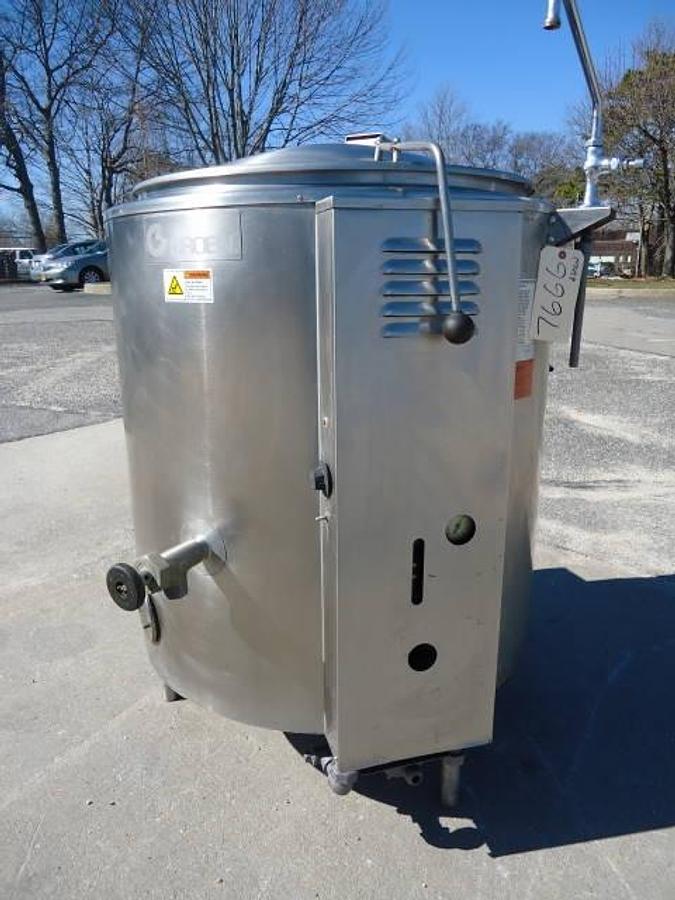
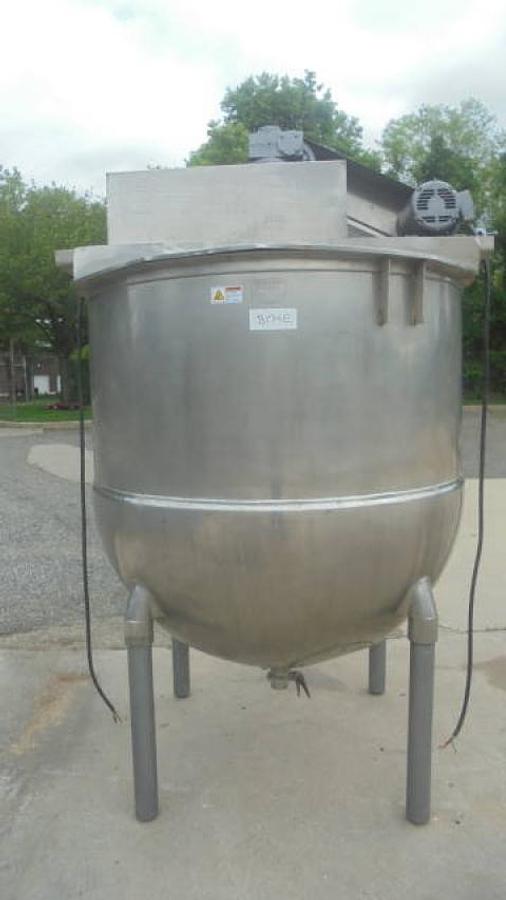
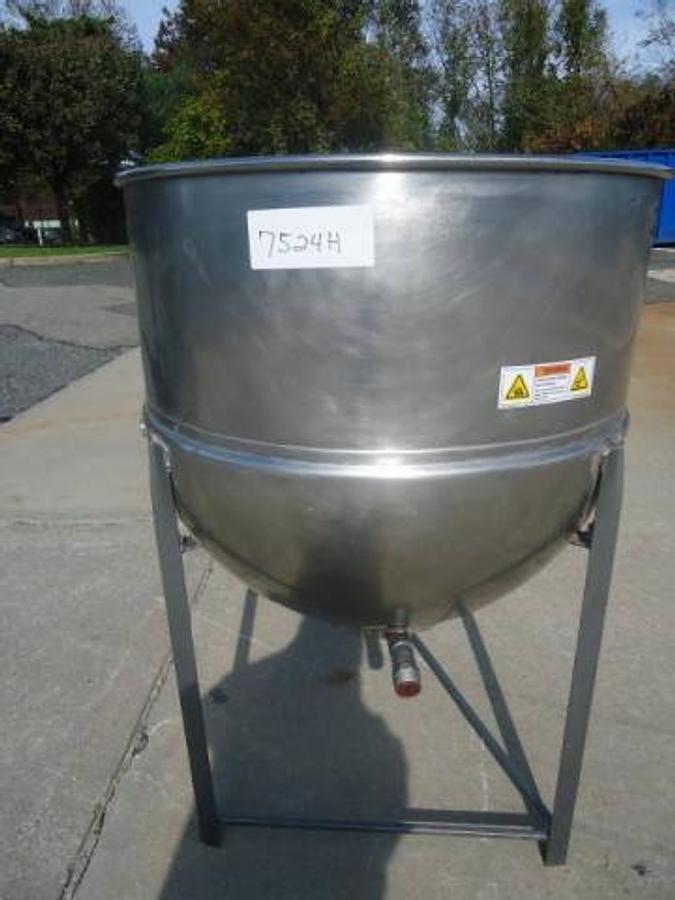
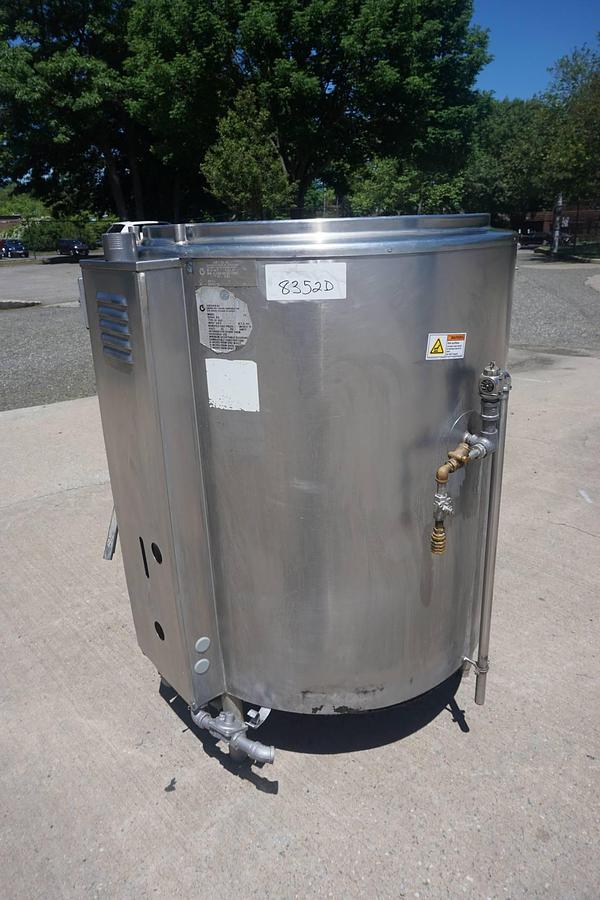
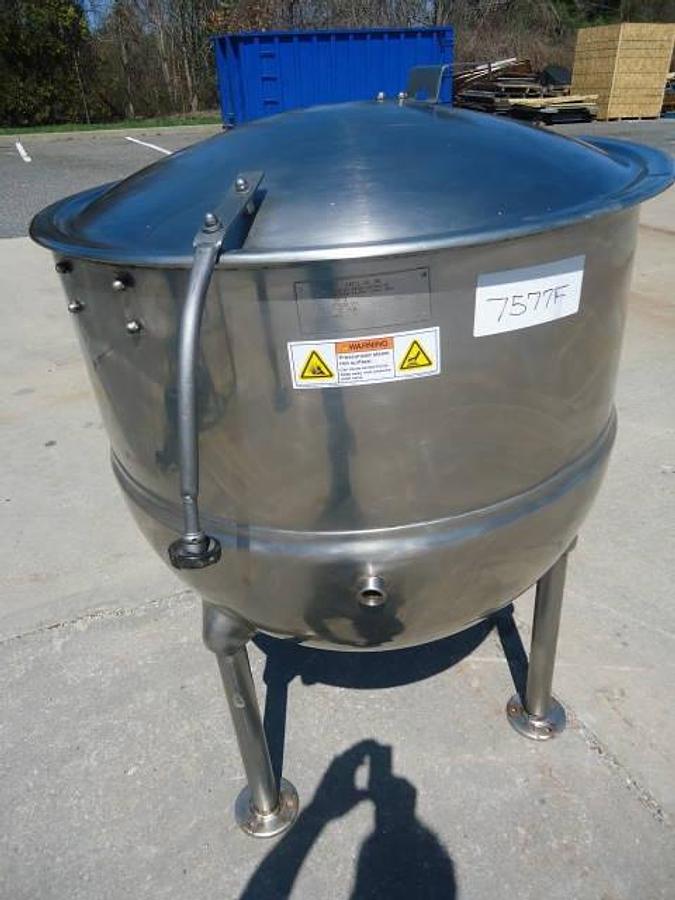
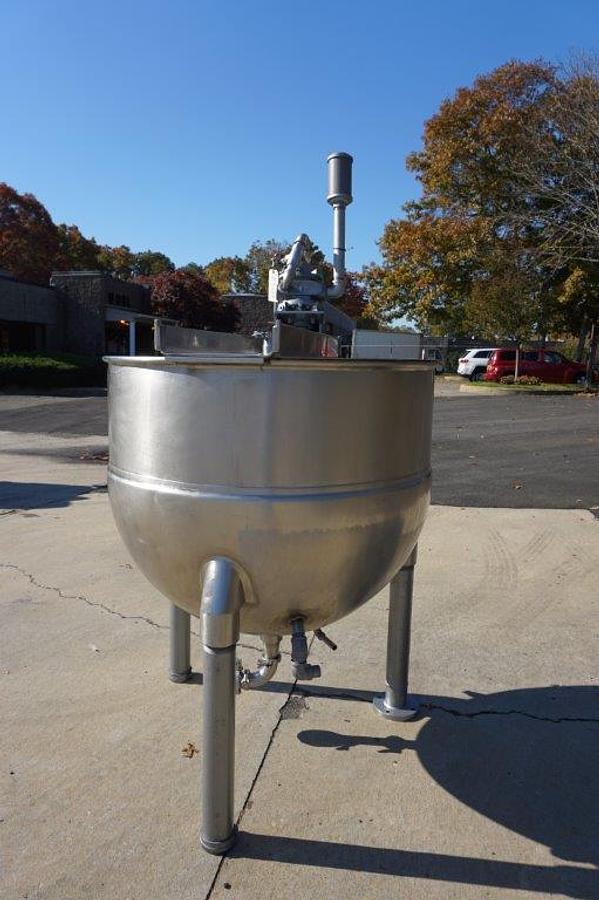
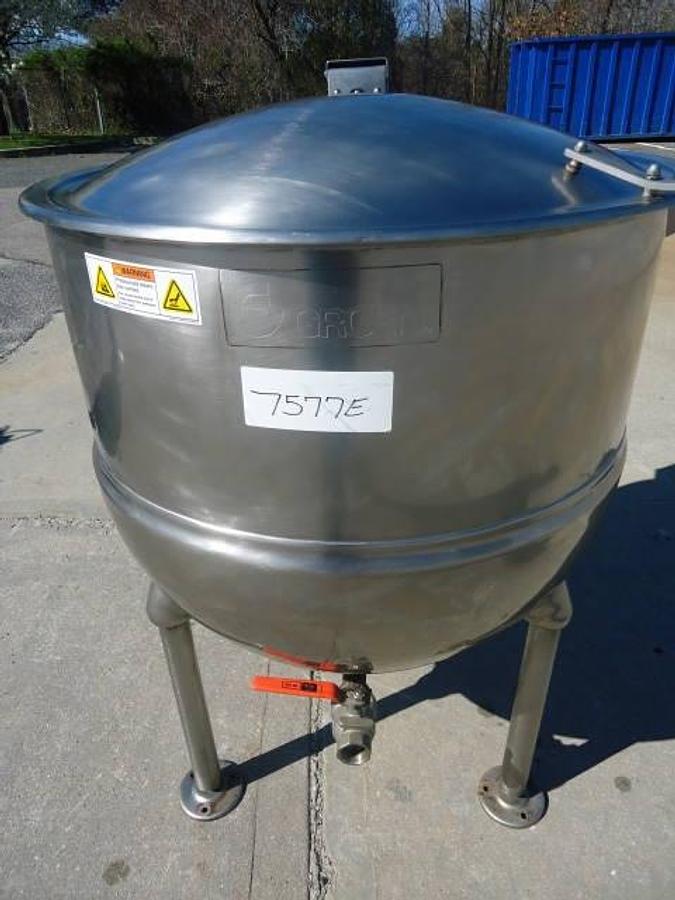
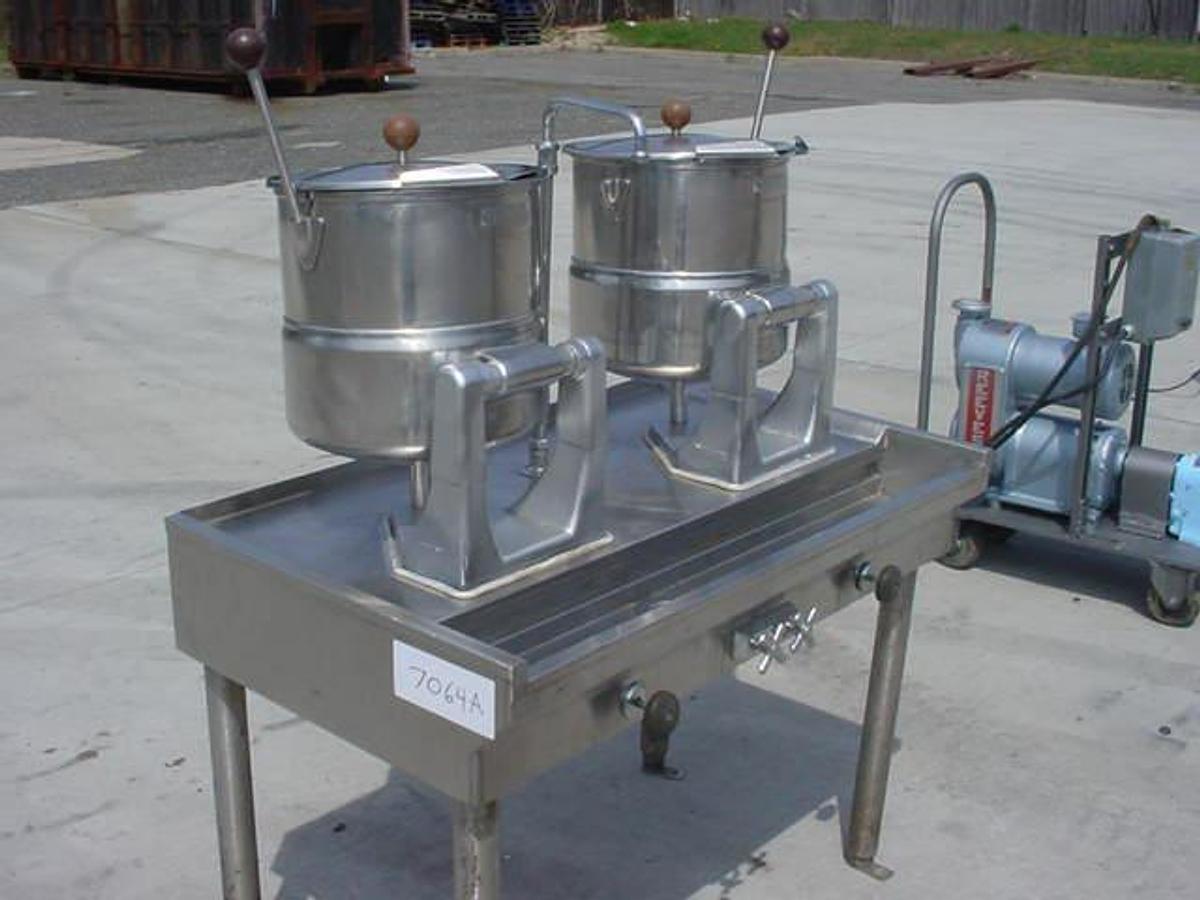
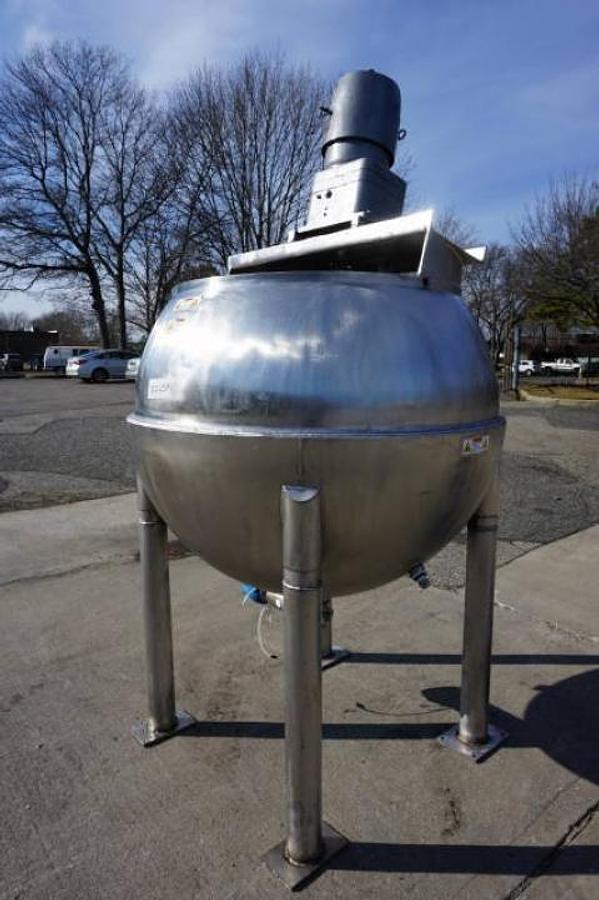
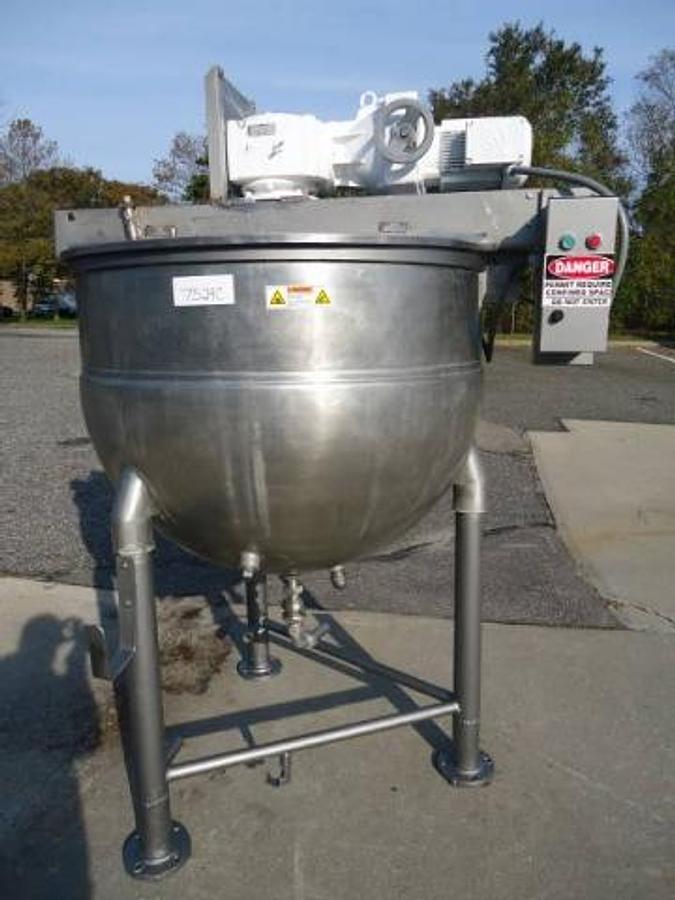
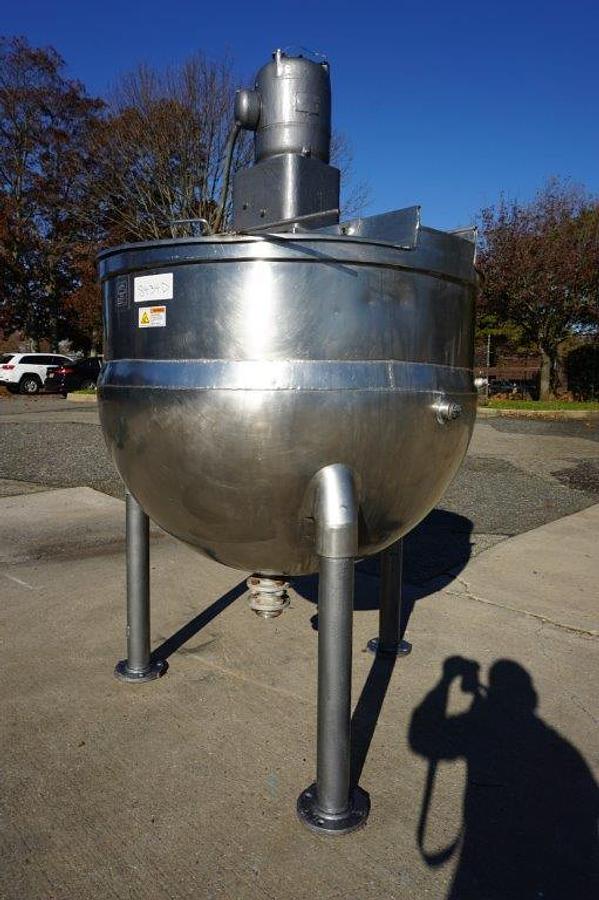
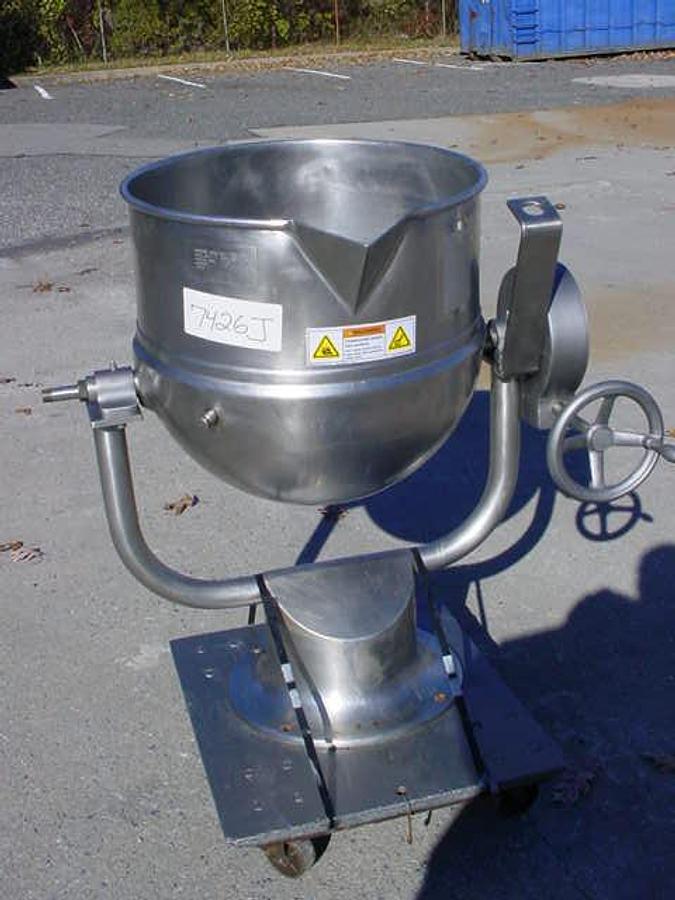
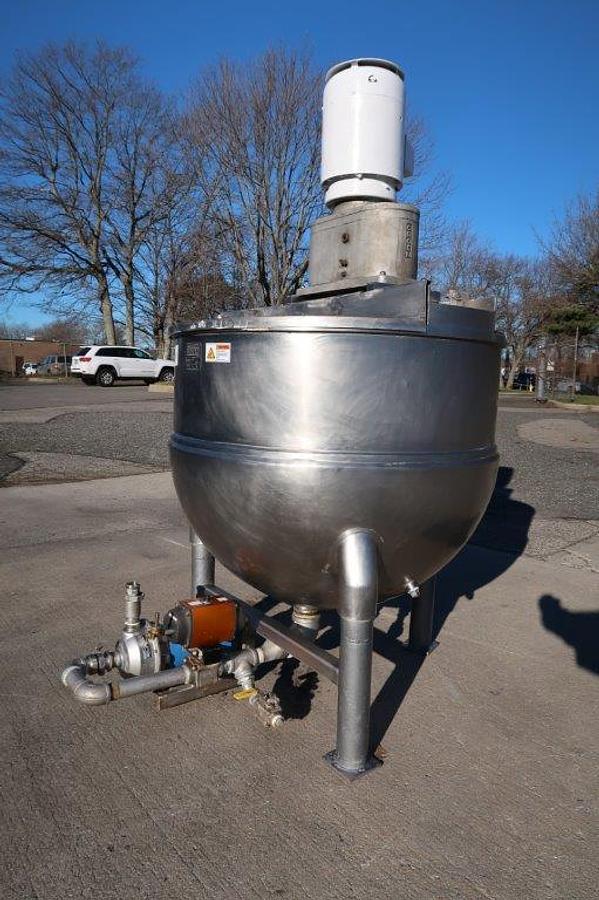
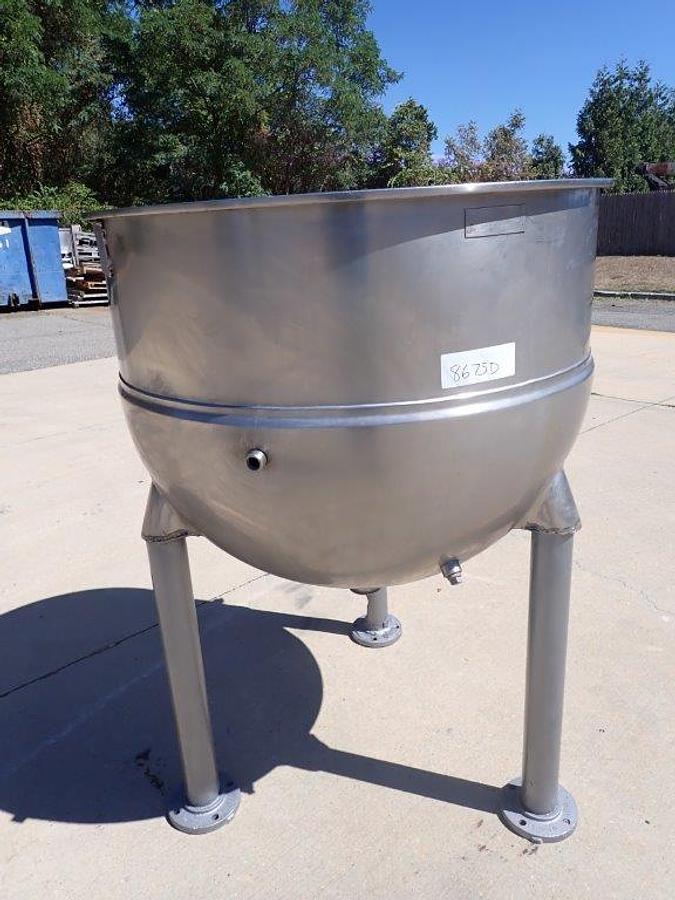
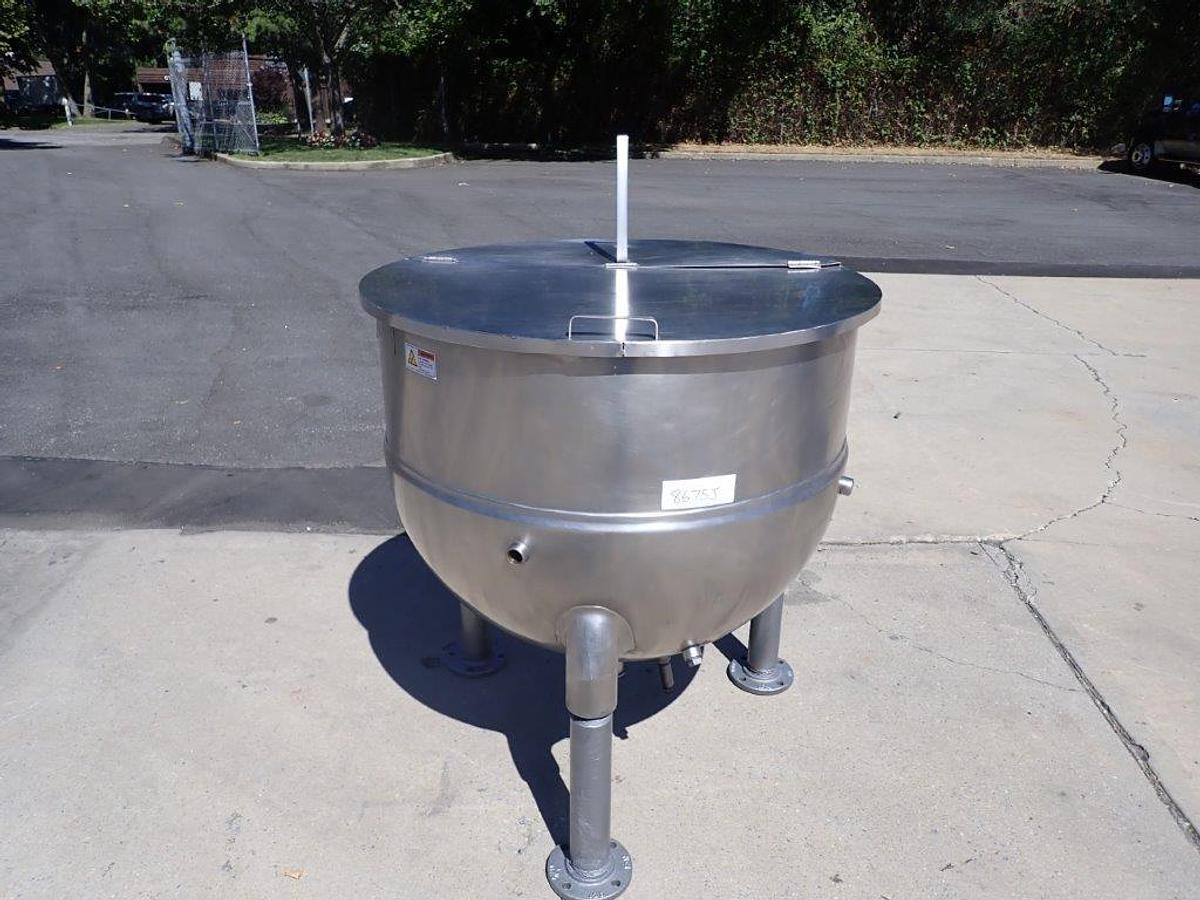
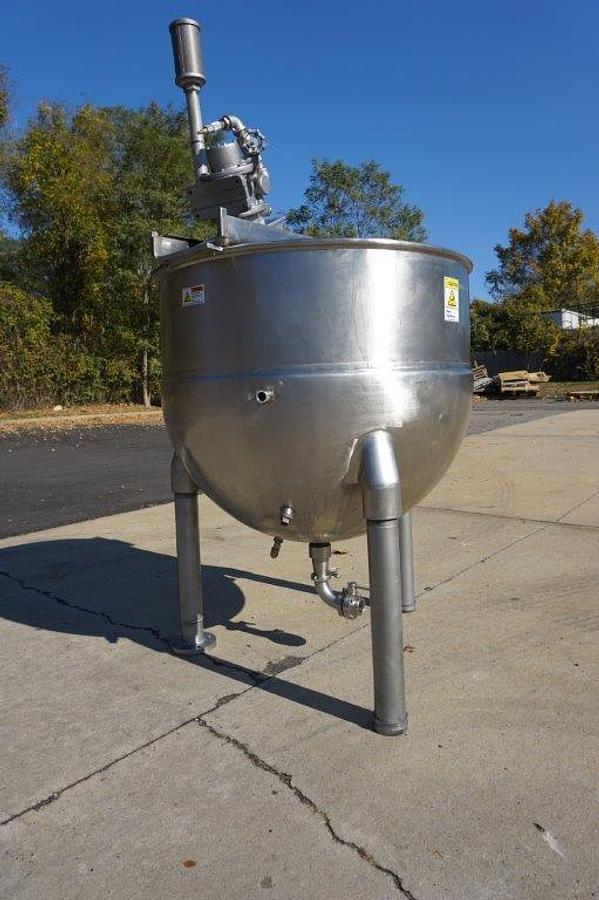
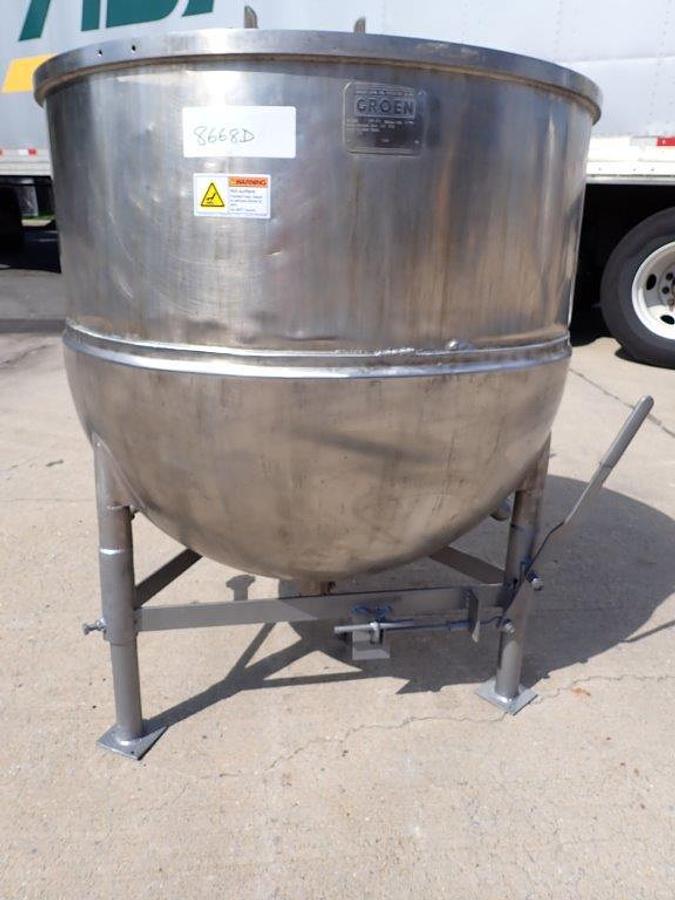
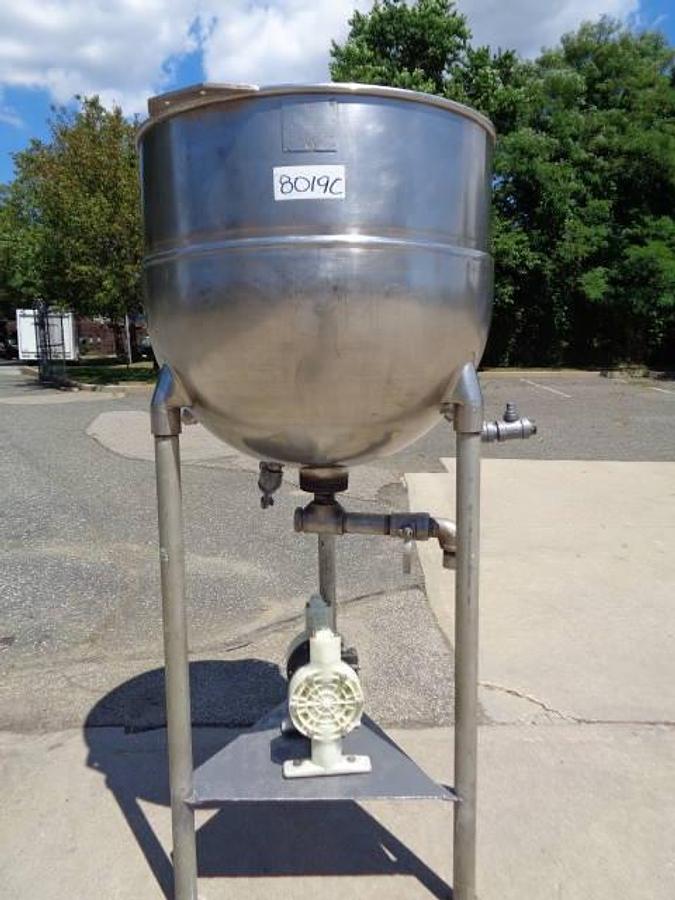
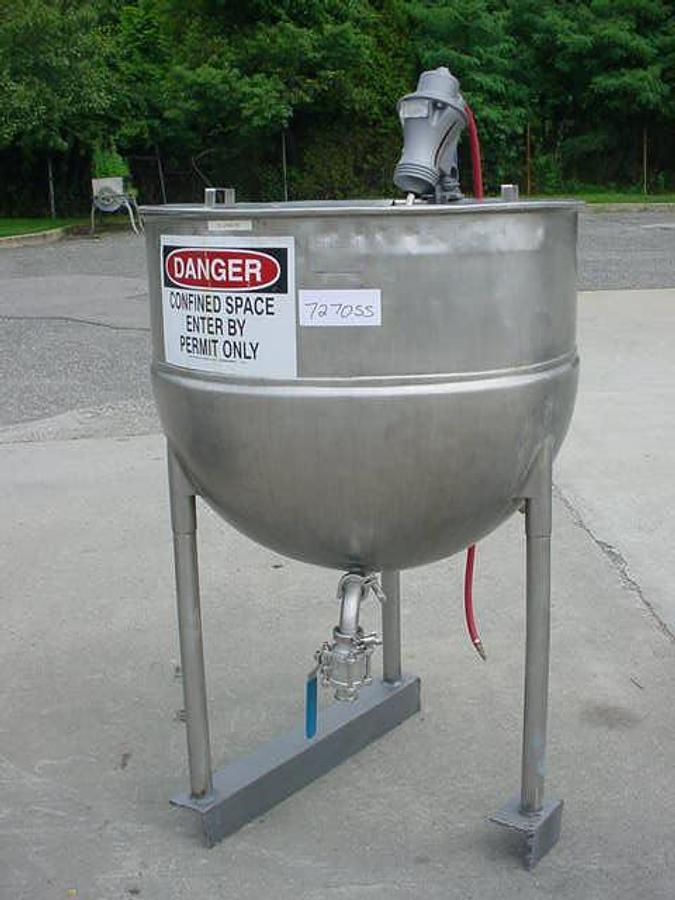
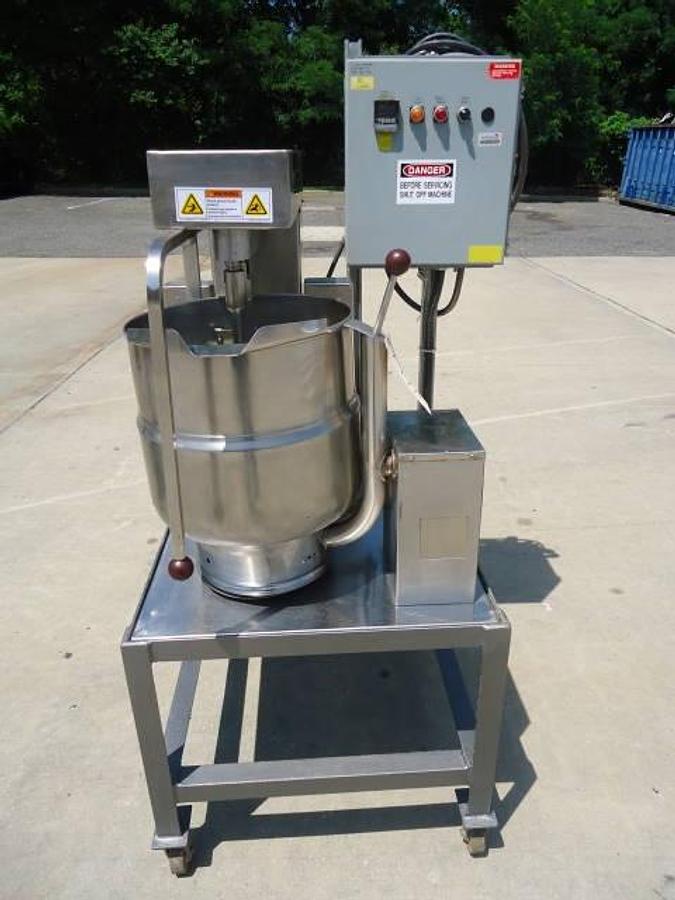
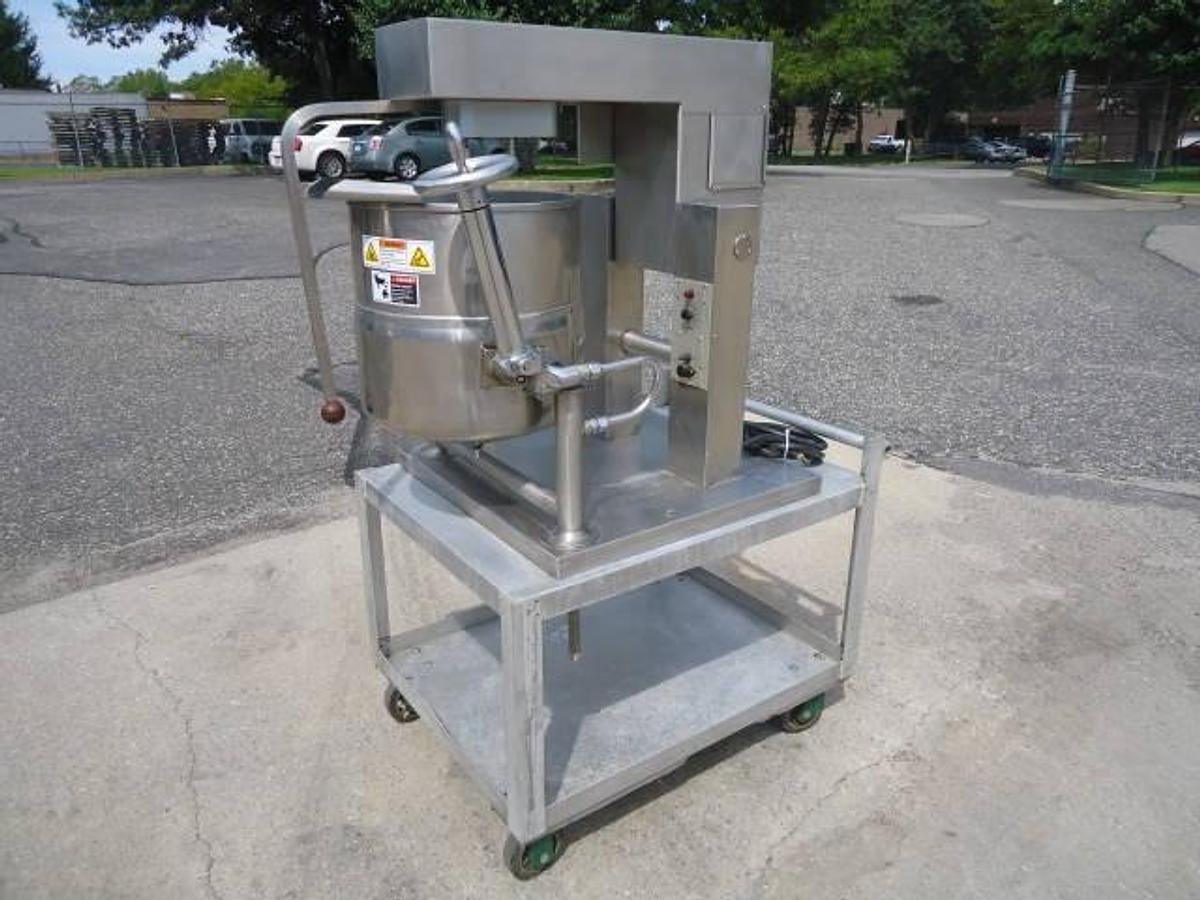
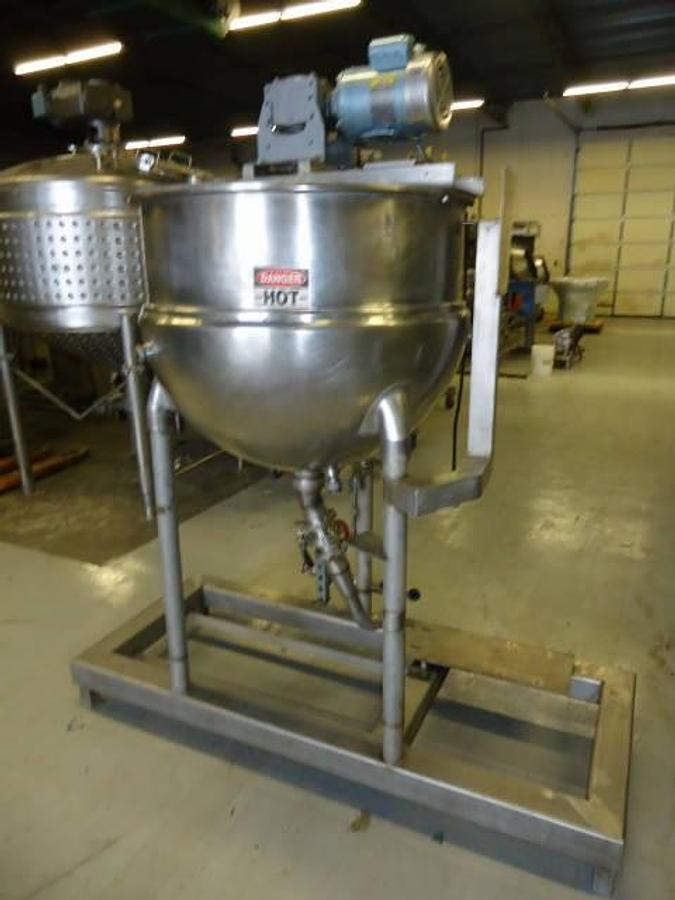
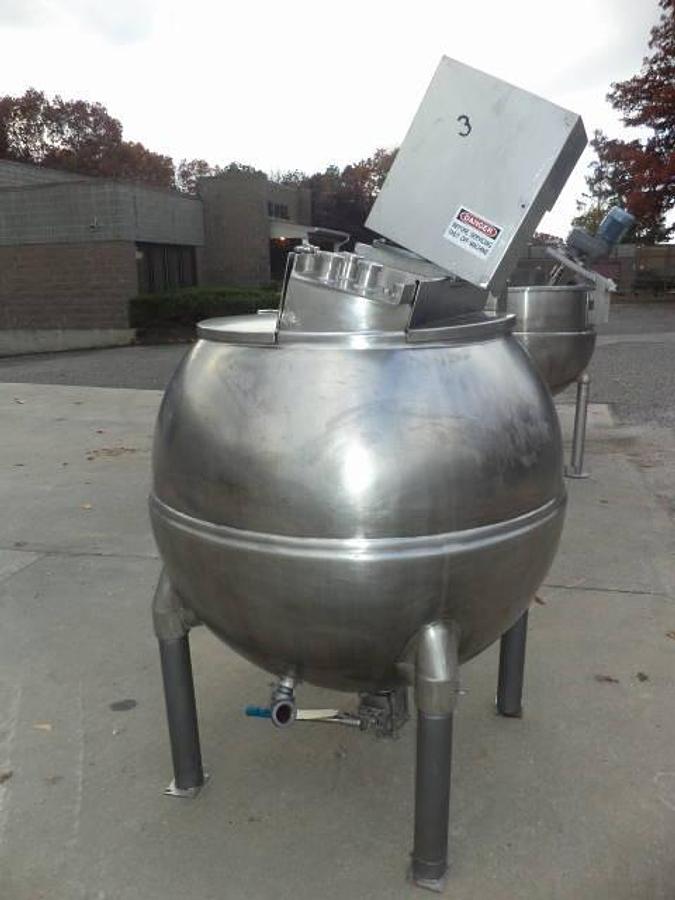
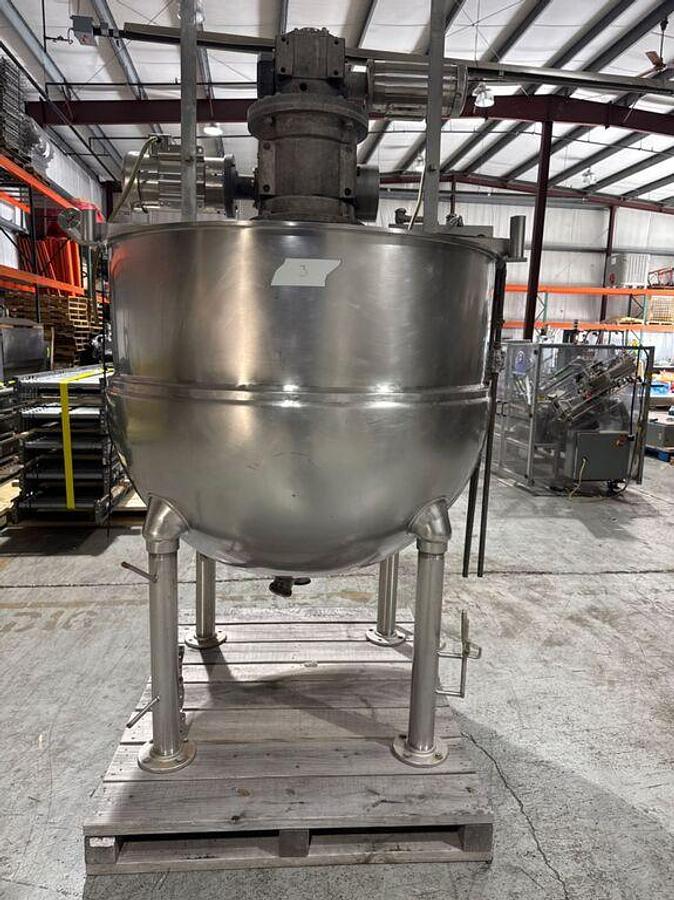
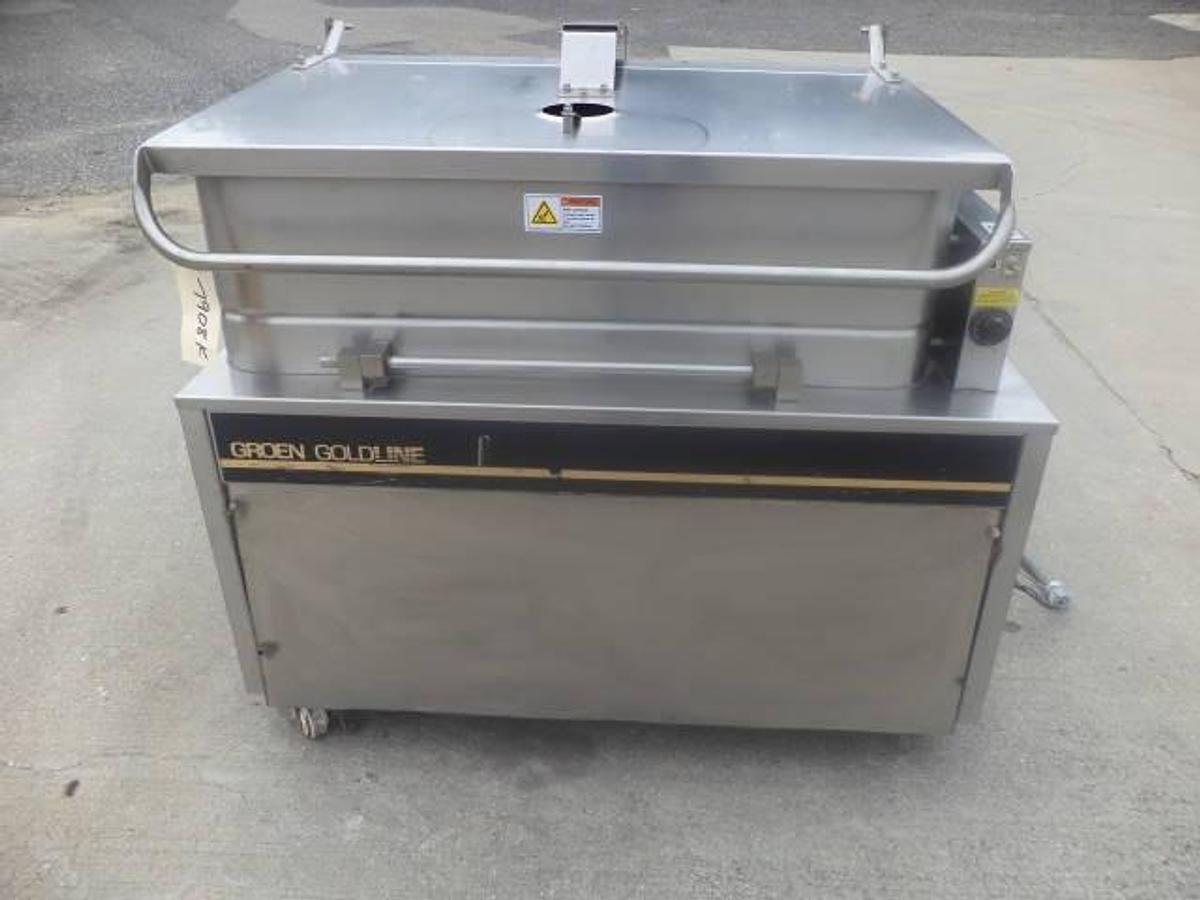
The Groen kettle lineup covers a broad range of designs, and the used market reflects that variety well. Jacketed kettles are the most common type, using steam circulated through a surrounding jacket to heat product evenly without direct flame contact. Within that category, buyers will encounter hemispherical kettles, which have a rounded bowl profile that promotes consistent mixing and heat distribution, and are often favored for soups, sauces, and similar liquid-heavy products. Tilt kettles allow the vessel to tip forward for easy discharge without pumps or additional equipment, which is a practical feature for operations handling smaller batches or thicker products.
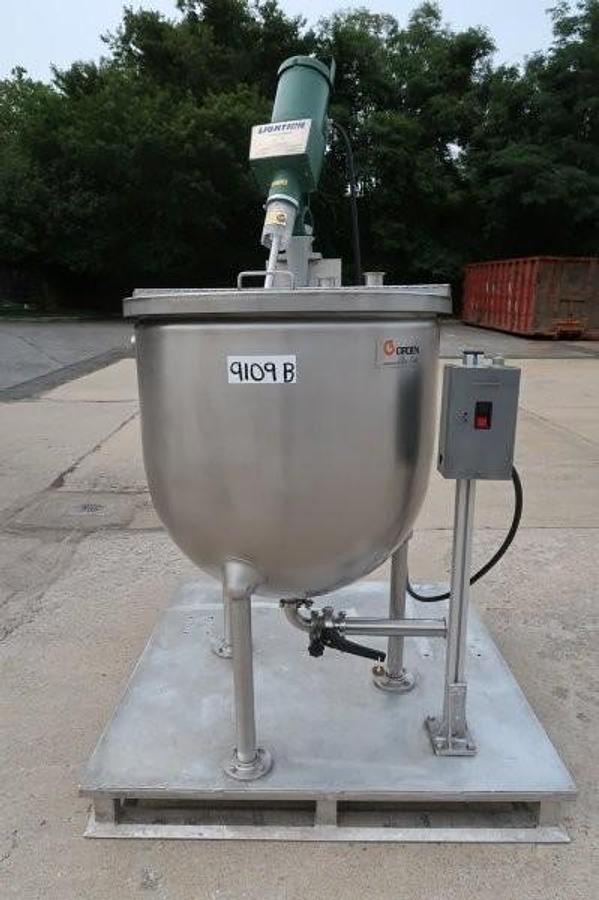
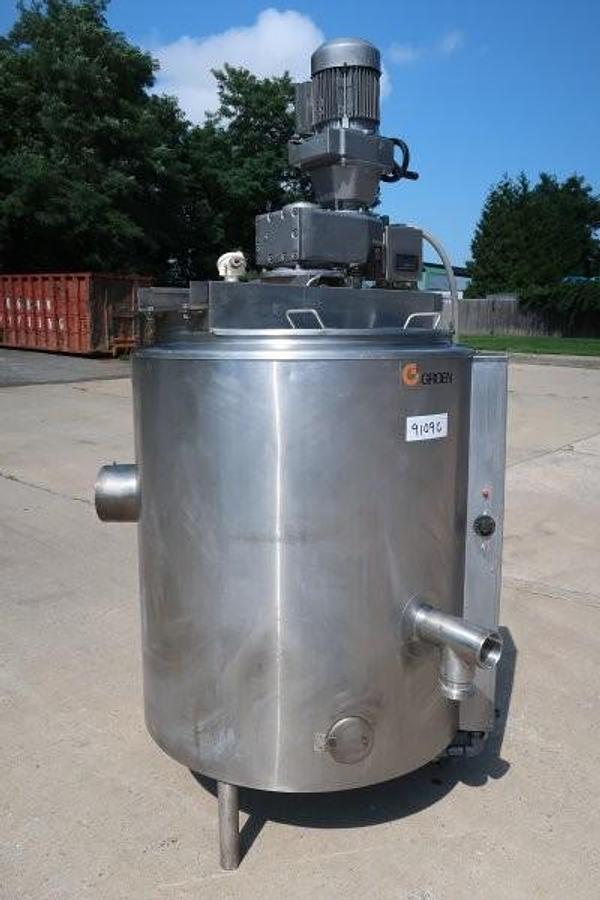
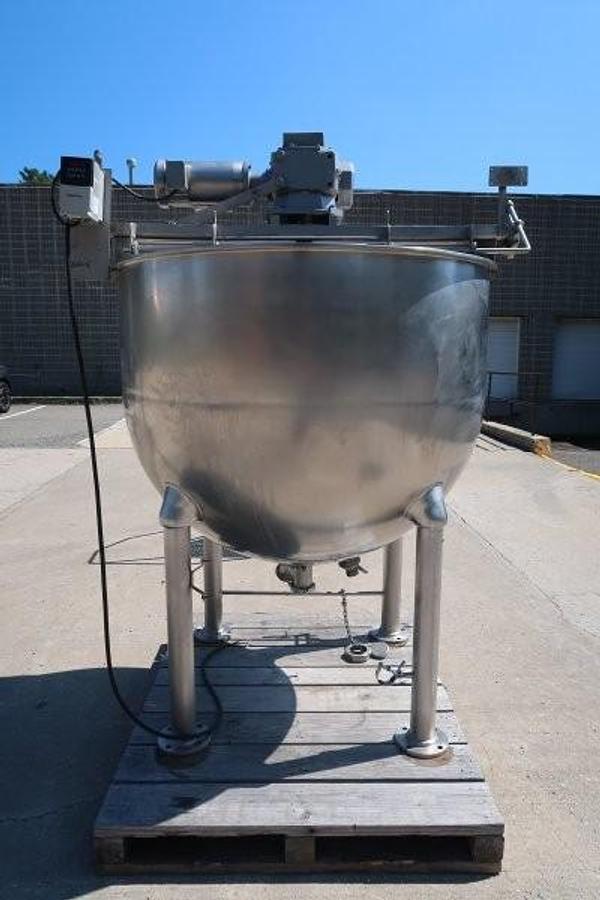
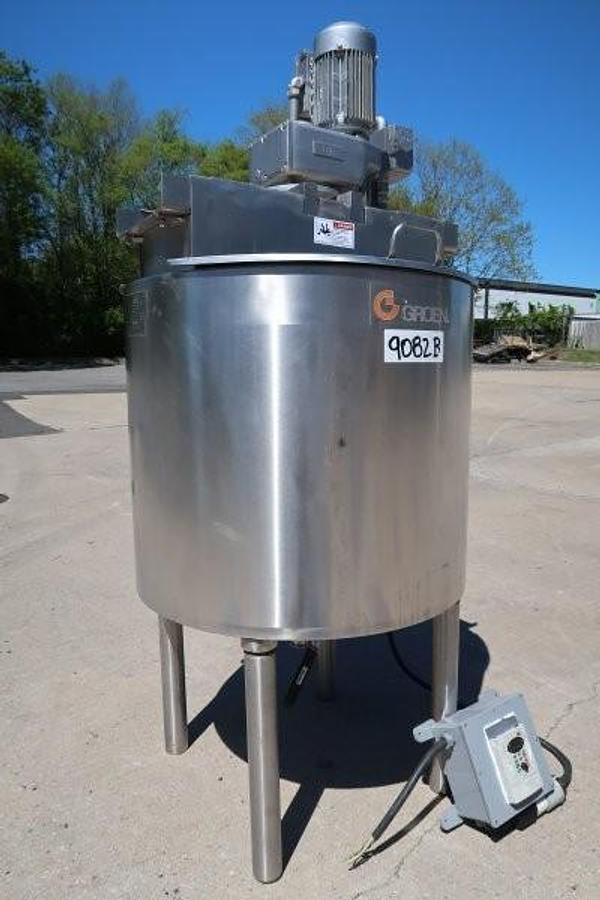
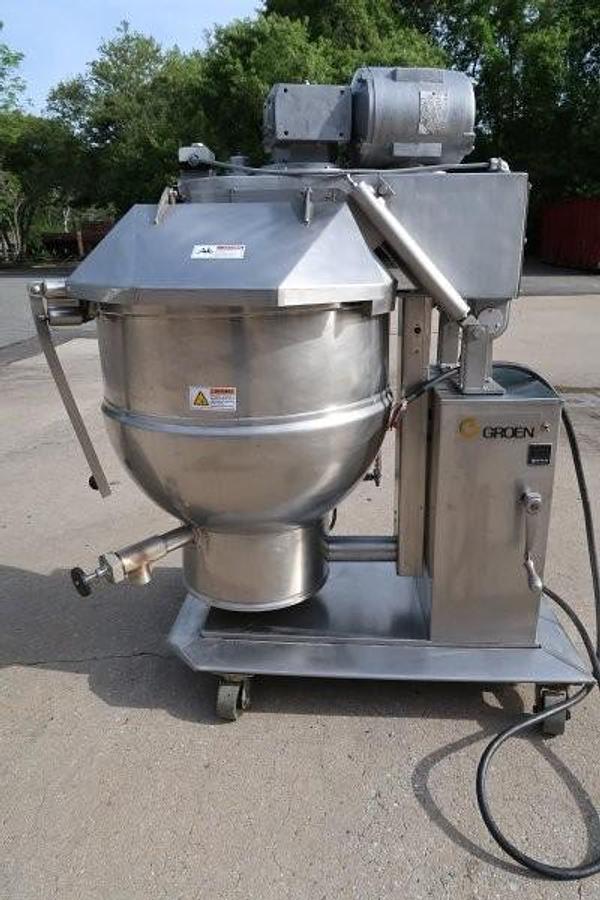
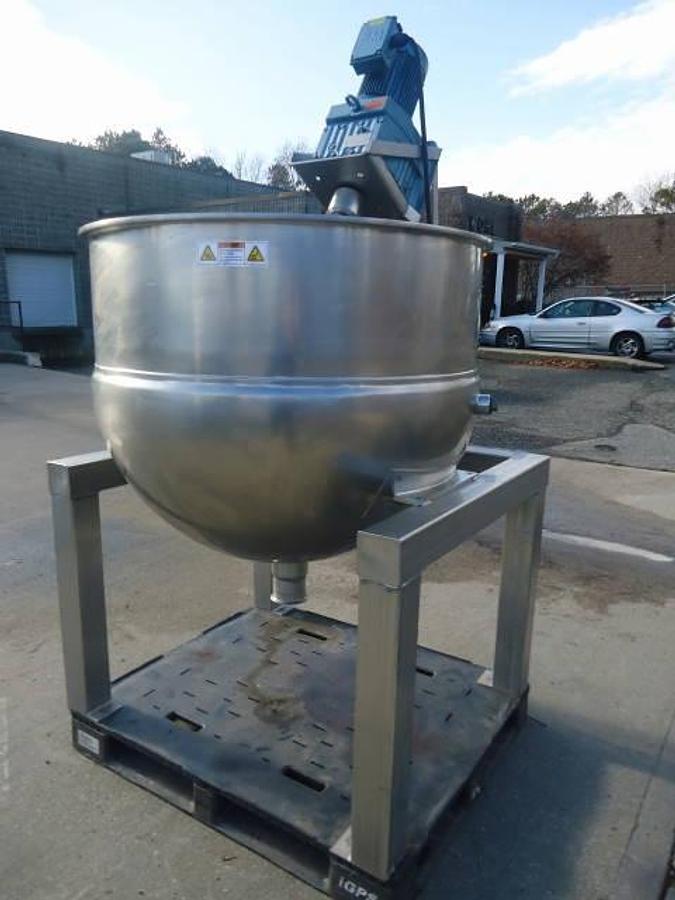
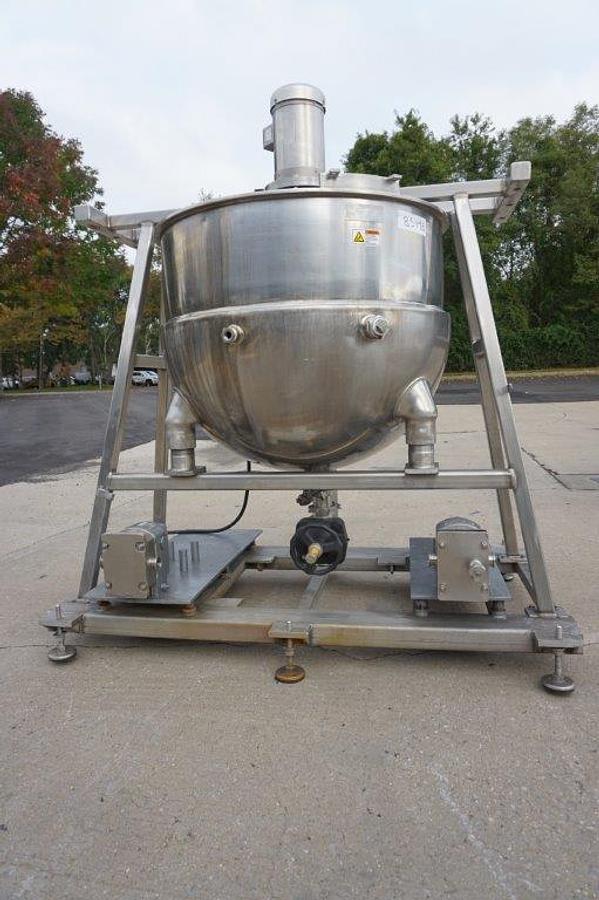
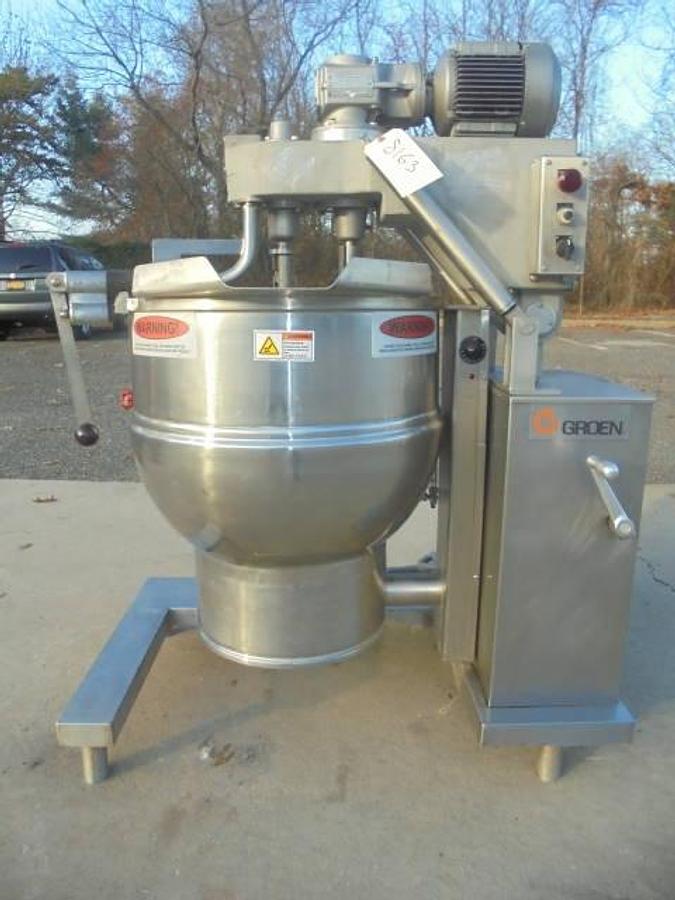
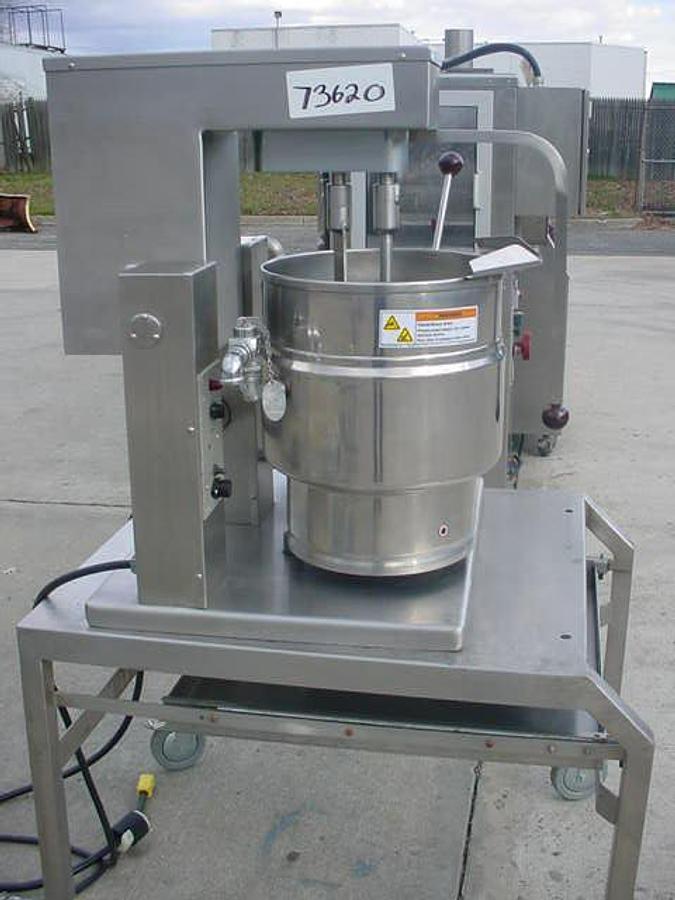
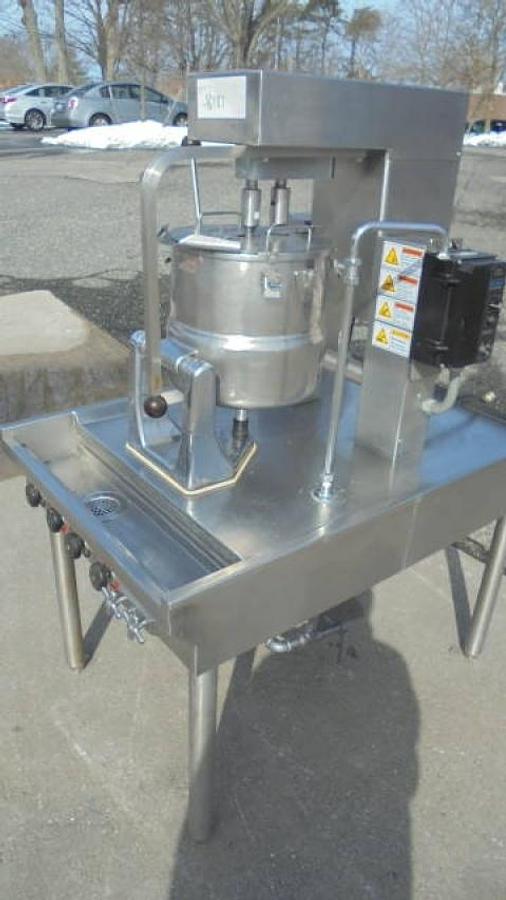
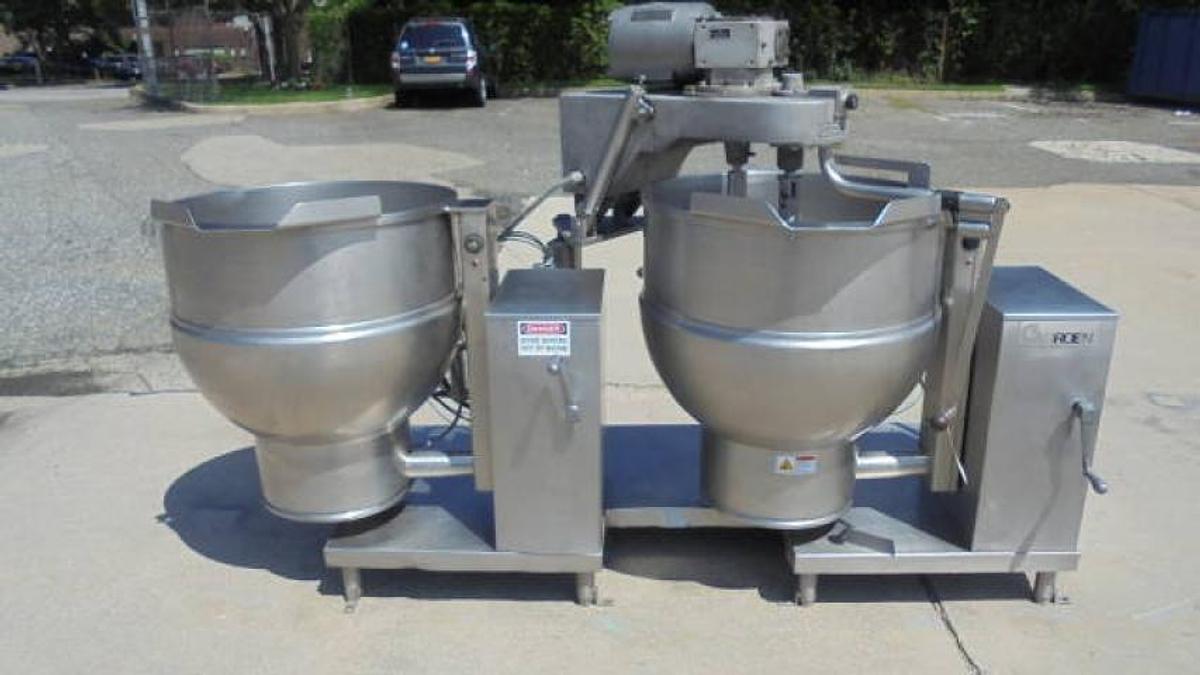
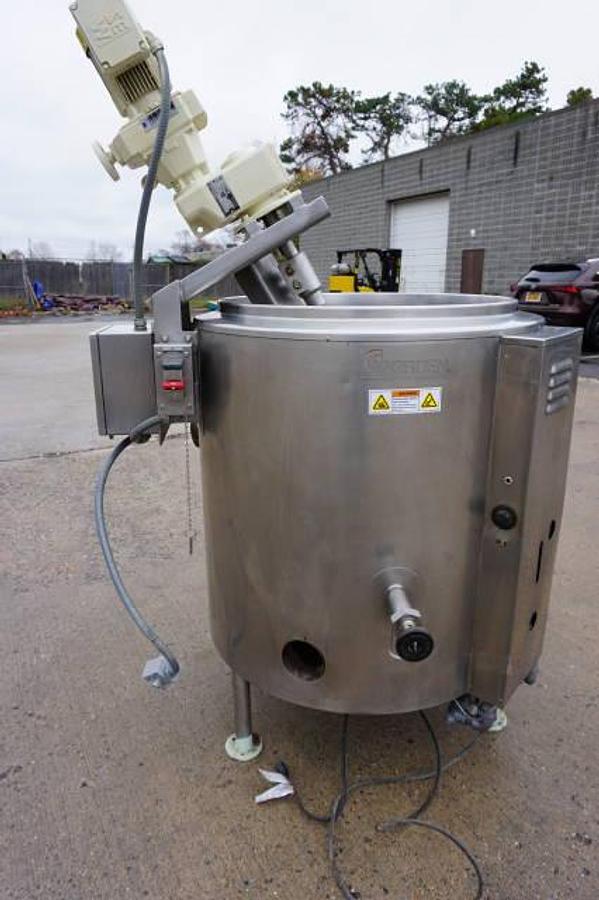
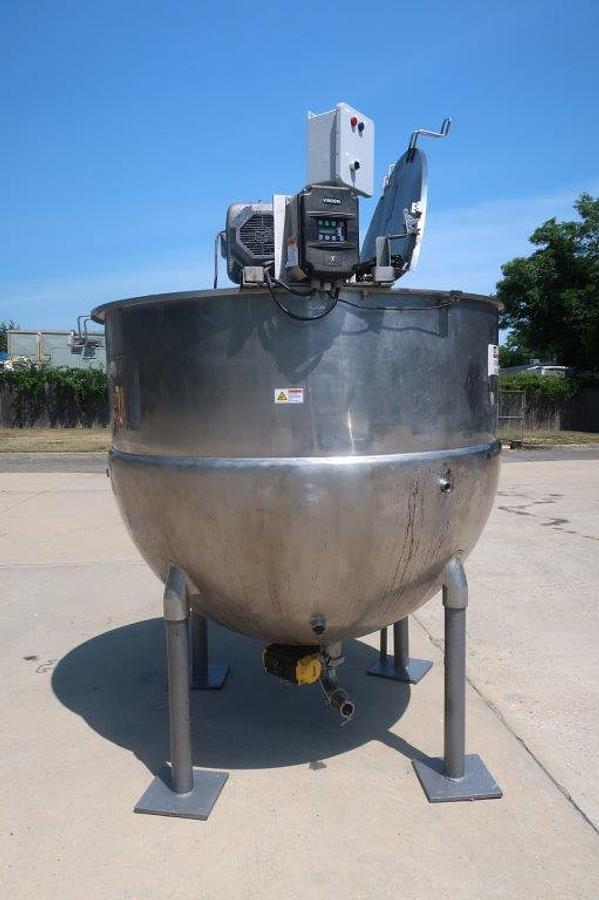
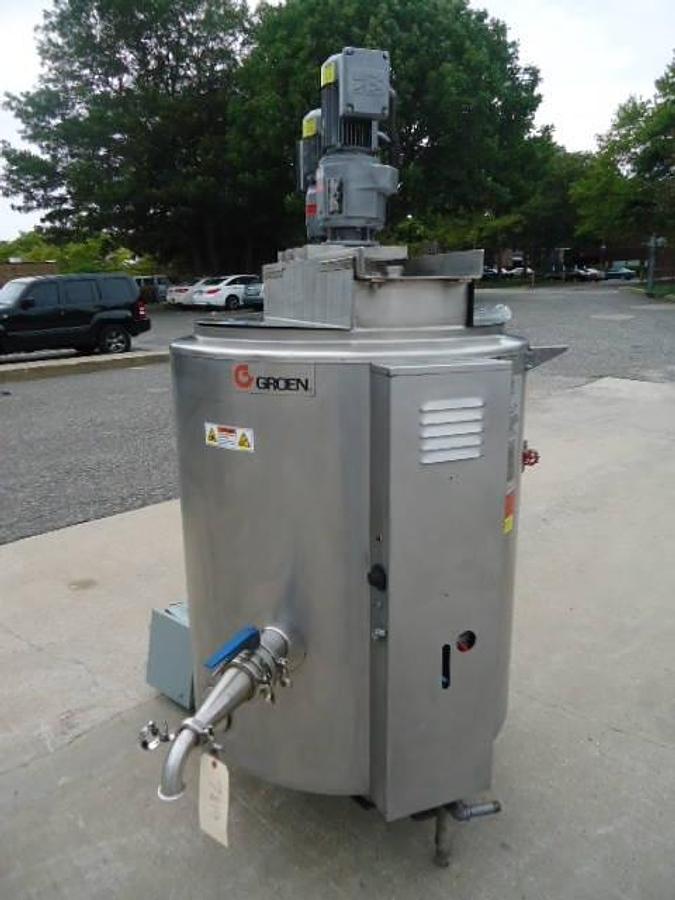
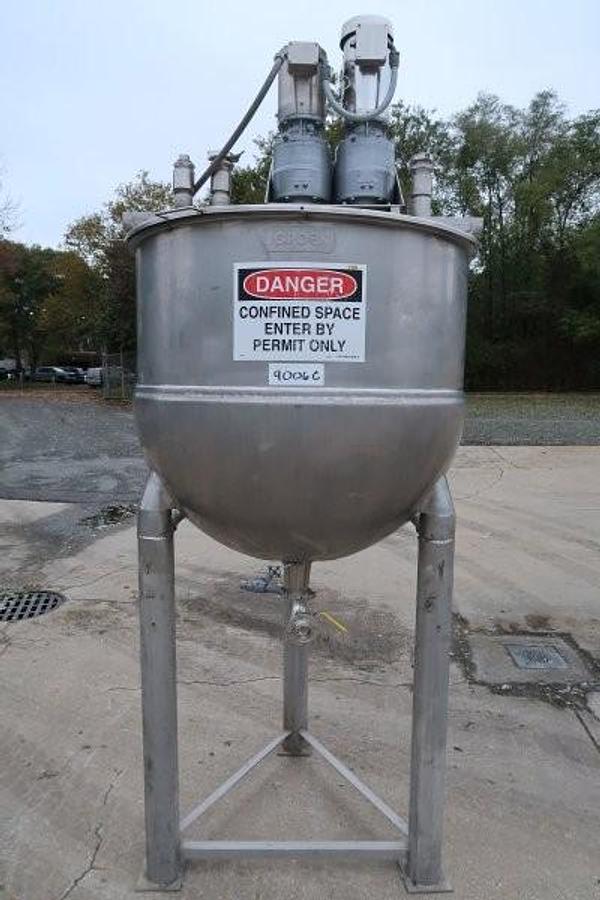
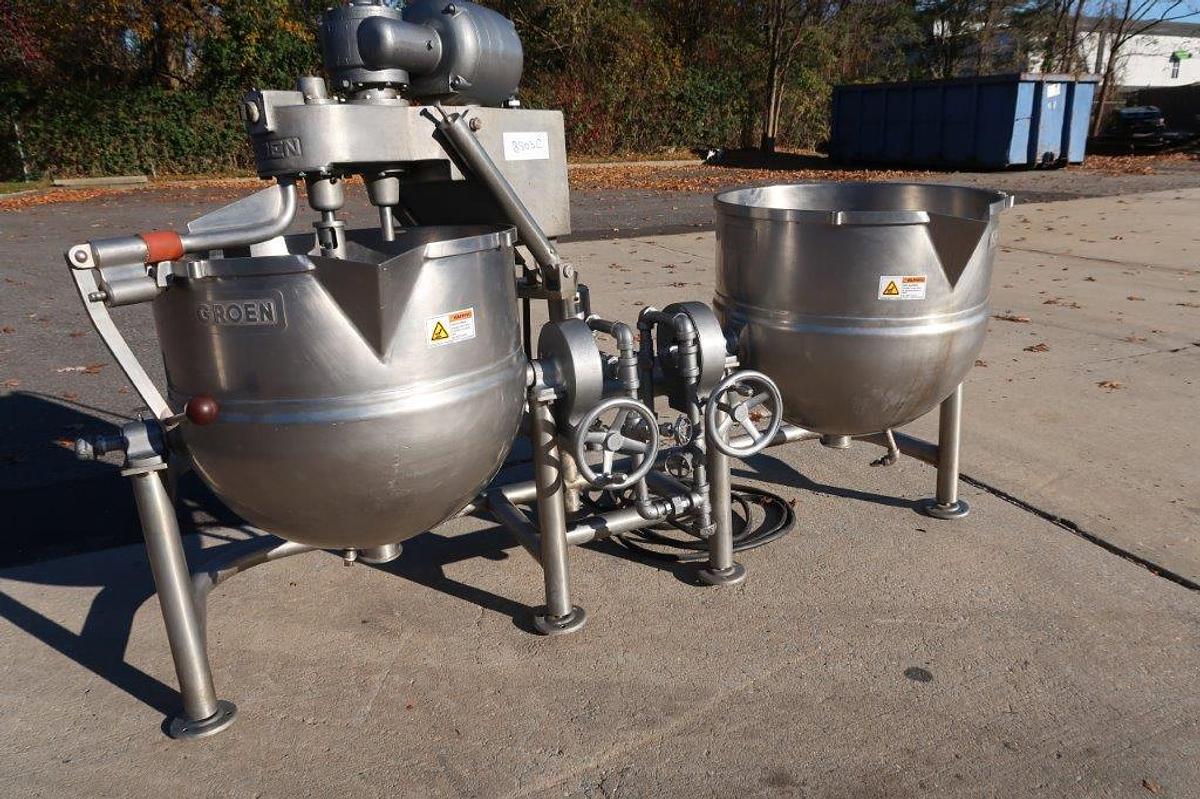
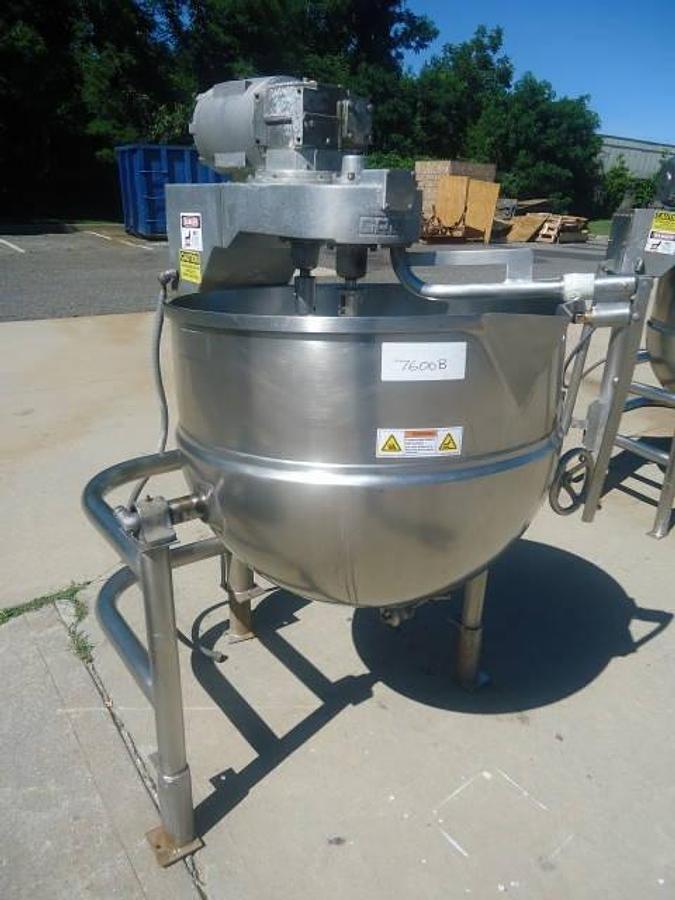
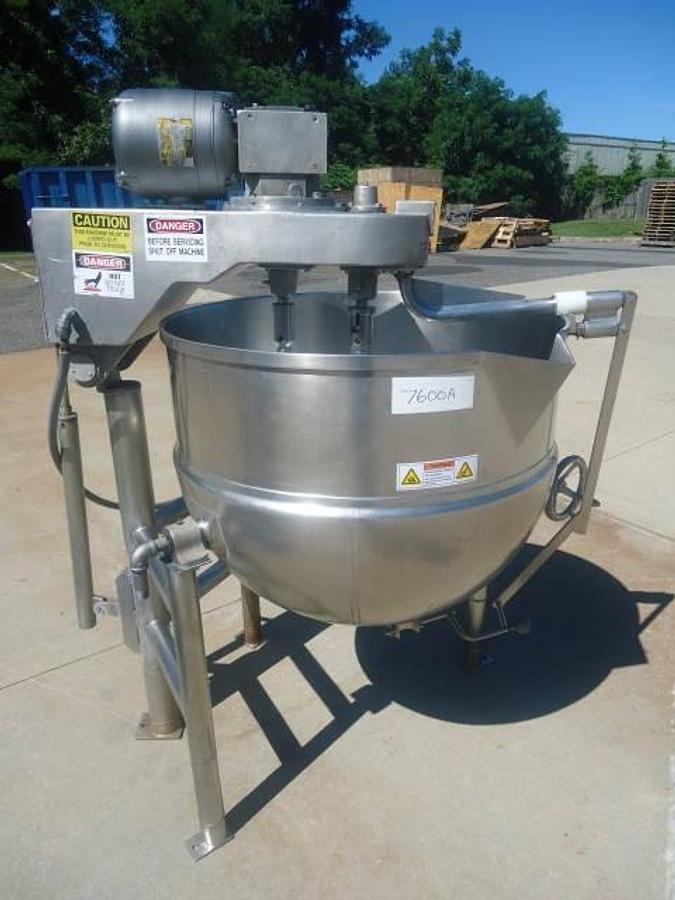
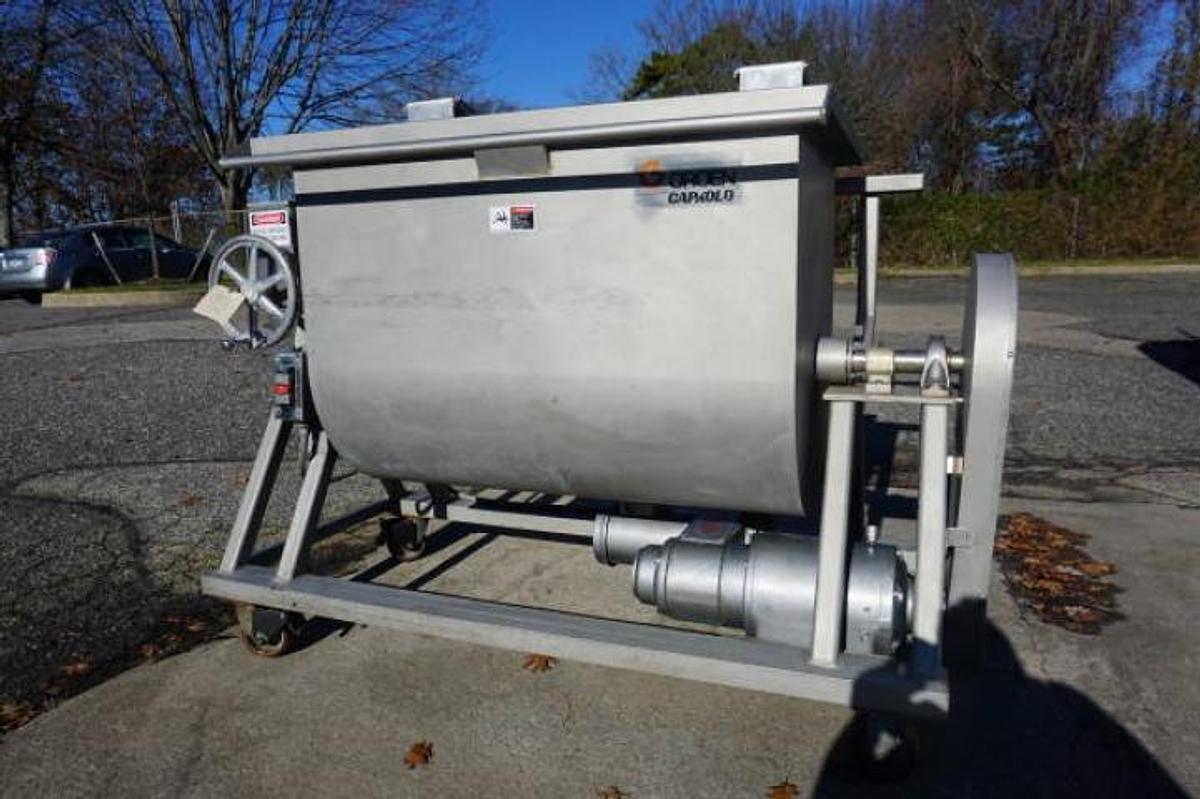
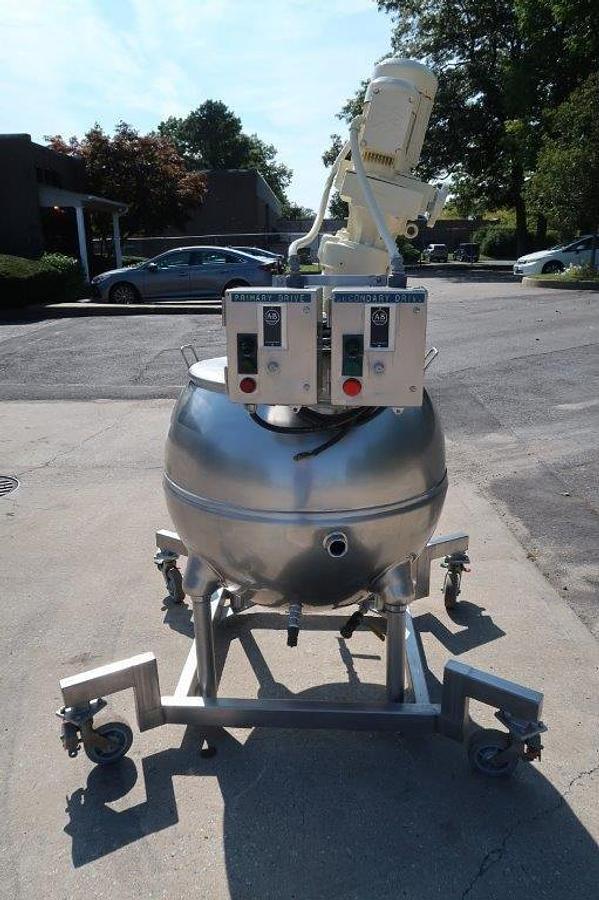
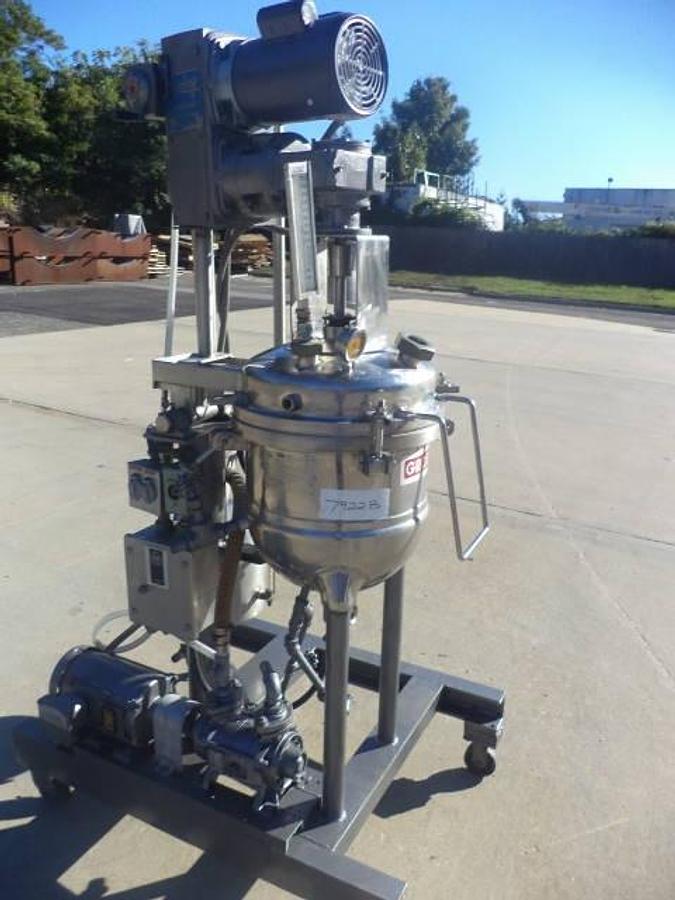
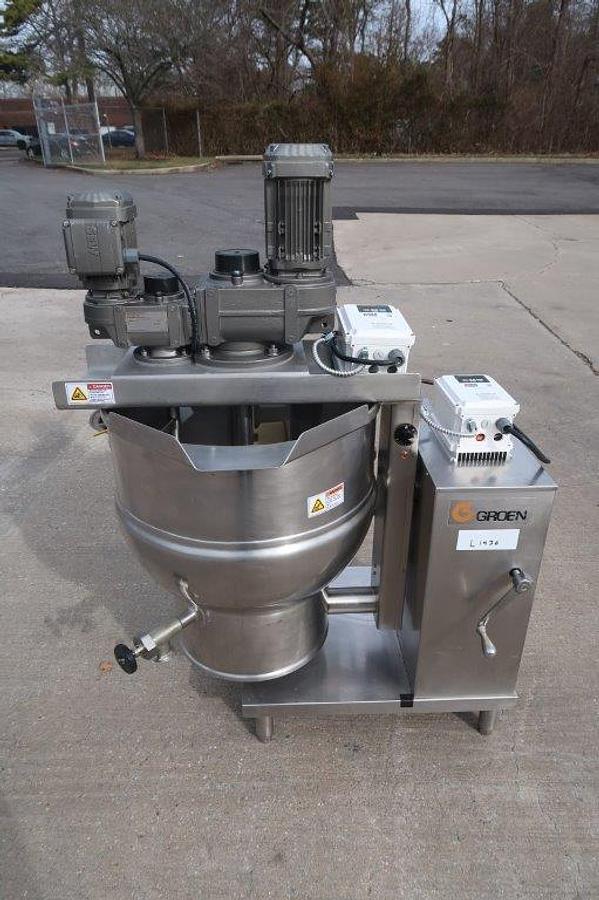
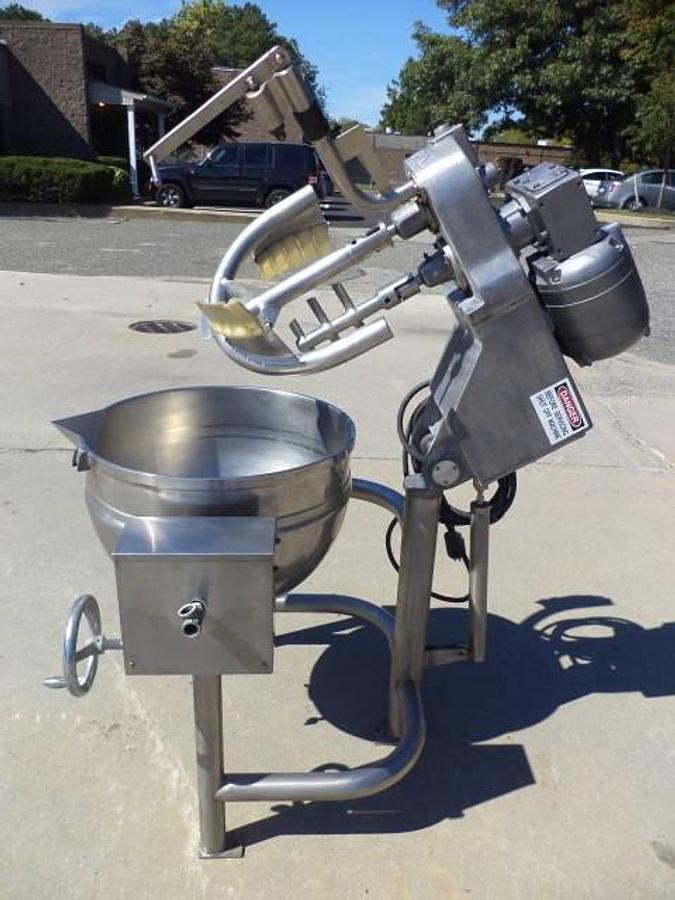
Beyond basic jacketed designs, the used Groen market also includes agitated and mixing kettles in several configurations. Twin action and dual motion kettles use counter-rotating agitators to prevent scorching and ensure uniform cooking, which is critical for products like custards, puddings, or high-sugar formulations. Scraper agitated models add a wall-scraping element that keeps product from sticking to the kettle wall during cooking. More specialized units include inclined agitated (INA) kettles, triple motion mixing kettles, and closed pressure mixing kettles for applications requiring controlled-atmosphere cooking. Gas-fired self-contained models and electric self-contained models are also available for facilities that lack a central steam supply, since these units generate their own steam internally rather than relying on a plant boiler.
What is the difference between a self-contained Groen kettle and a steam-jacketed kettle that requires a boiler?
The distinction comes down to how the kettle generates the heat needed to cook product. A steam-jacketed kettle that requires a boiler connection draws live steam from a central plant steam supply and routes it through the jacket surrounding the kettle bowl. These units depend entirely on the facility having an adequate boiler and steam distribution system already in place. They tend to be more efficient in large-scale operations where a central boiler is already running, since the boiler can serve multiple pieces of equipment simultaneously. The tradeoff is that installation requires proper steam piping, pressure regulation, and condensate return lines, which adds to setup costs and complexity.
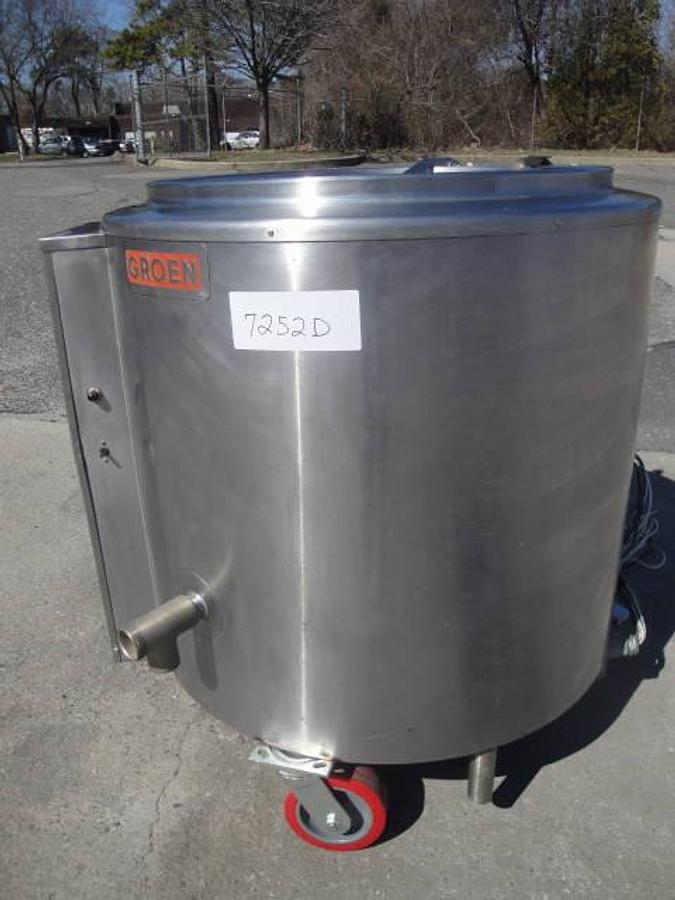
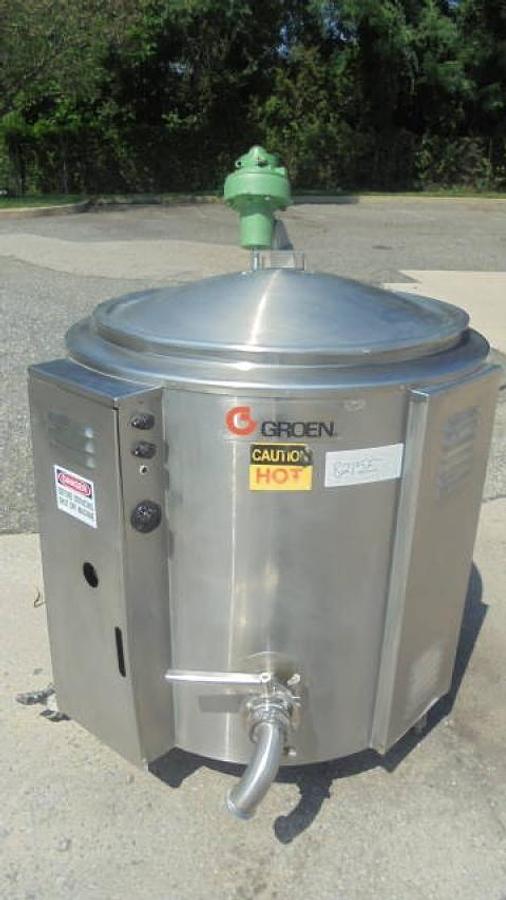
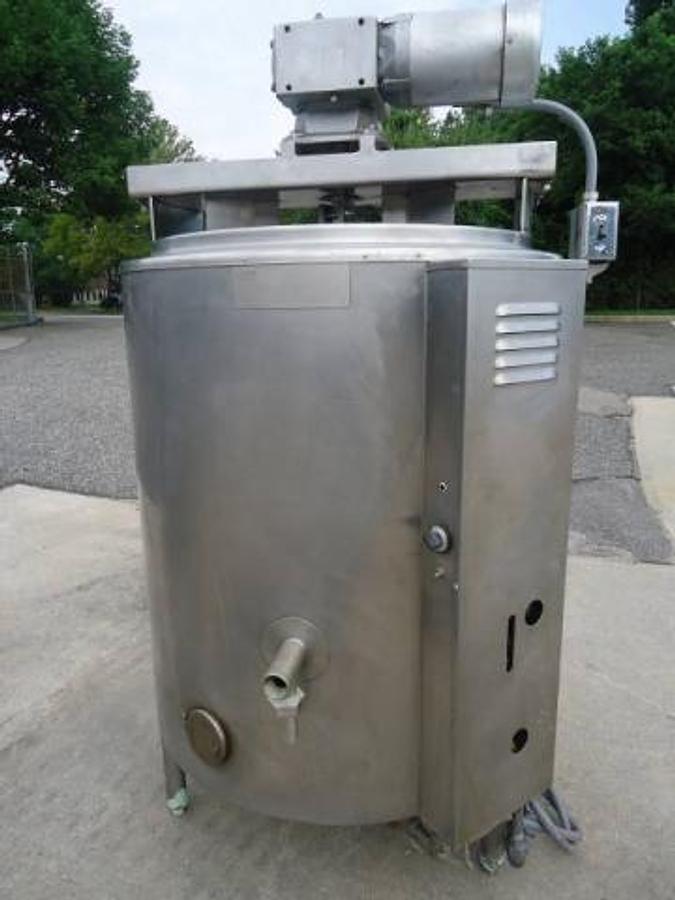
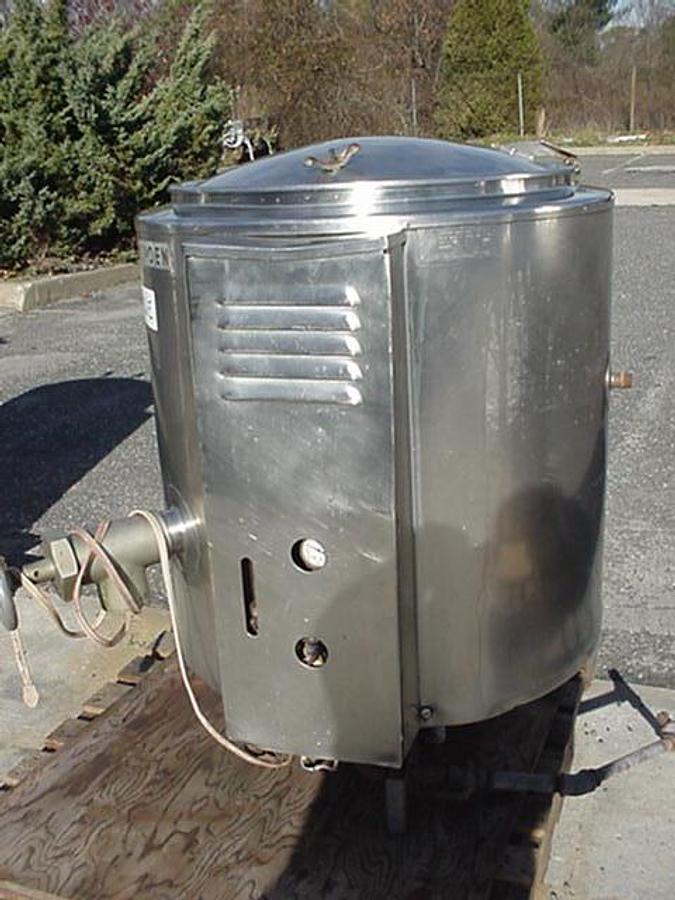
Self-contained Groen kettles, by contrast, have a built-in heating element, either gas-fired or electric, that generates steam within the jacket without any external boiler connection. This makes them far more flexible from an installation standpoint. A self-contained unit can be placed in a kitchen or facility that has no steam infrastructure at all, requiring only the appropriate gas or electrical service. For buyers purchasing used equipment, this distinction is worth clarifying before making a purchase, since the infrastructure requirements directly affect total installed cost. When inspecting a used unit, buyers should confirm whether it is truly self-contained or designed for boiler connection, and verify that the heating components are intact and functional.
What should buyers inspect when purchasing a used Groen kettle?
Buying used process equipment requires a more hands-on evaluation than purchasing off a spec sheet. For Groen kettles, the jacket integrity is one of the most important things to assess. The steam jacket surrounding the kettle bowl operates under pressure, and any history of over-pressurization, corrosion, or improper repair can create safety risks or performance problems. Buyers should ask about the jacket's pressure rating and confirm it matches the specifications listed on the unit. Reviewing any available maintenance records or pressure vessel inspection history is worth doing when that documentation exists.
Beyond the jacket, the condition of the agitator assembly, drive motor, gearbox, and seals matters significantly for mixing and scraper models. Worn scrapers, bent agitator arms, or a failing gearbox can be costly to repair, so these components deserve close attention during any inspection. The stainless steel bowl itself should be examined for pitting, deep scratches, weld repairs, or signs of chemical damage. Reputable used equipment dealers will typically accommodate in-person inspections or provide detailed video walkthroughs of the machine so buyers can evaluate its condition before committing. Some kettles may still be installed and running at the selling facility, which offers the best opportunity to observe the unit under actual operating conditions, though dealers generally cannot run production batches themselves due to permitting constraints.
Is buying a used Groen kettle worth it compared to buying new equipment?
For most commercial food operations and food manufacturers, used Groen kettles represent a compelling value proposition. Groen has a long track record of building heavy-duty, stainless steel cooking equipment that holds up well over many years of production use. A well-maintained used unit can perform at the same functional level as a comparable piece of current equipment, often at a fraction of the cost. This price difference is especially significant for larger-capacity kettles, where the cost of a new unit can be substantial. Purchasing used frees up capital that can be directed toward other parts of a facility buildout or expansion.
The key to making a used purchase worthwhile is due diligence on the specific unit. Not all used kettles have been maintained equally, and condition varies considerably depending on how the equipment was used, what products ran through it, and how well it was cleaned and serviced. Buyers should prioritize dealers who specialize in food processing equipment, since they are better positioned to accurately describe a machine's condition and history. It is also worth contacting Groen directly to ask about parts availability and technical support for the specific model under consideration, since older or discontinued models may have more limited support. When the inspection checks out and parts are available, a used Groen kettle typically delivers strong long-term value.
What jacket pressure ratings are common on used Groen kettles, and why does it matter?
Groen kettles are manufactured with a range of jacket pressure ratings, and the used market reflects that variety. Common ratings seen on available units include 40 PSI, 45 PSI, 80 PSI, 90 PSI, 100 PSI, and 125 PSI. The jacket pressure rating determines the maximum steam pressure the jacket can safely handle, which in turn affects cooking temperatures and heat transfer rates. Higher-pressure jackets allow for faster, more intense heating, which can be important in high-throughput production environments where cycle times matter. Lower-pressure jackets are sufficient for gentler cooking applications like soups, sauces, and dairy-based products.
From a regulatory standpoint, the jacket on a steam kettle is classified as a pressure vessel, and in most jurisdictions these vessels are subject to inspection and certification requirements under ASME or equivalent standards. When buying a used kettle, buyers should confirm that the jacket's rated pressure matches their facility's steam supply pressure and that the unit has not been modified or repaired in ways that could compromise its pressure integrity. Some facilities require current pressure vessel certifications before equipment can be put into service, so it is worth checking local requirements before finalizing a purchase. A dealer familiar with food processing equipment should be able to provide whatever documentation is available for the specific unit.
What power source options are available for used Groen kettles?
Used Groen kettles are available in three main configurations based on heat source: electric self-contained, gas-fired self-contained, and steam-jacketed units that connect to an external plant boiler. Electric self-contained models use electric heating elements to generate steam within the jacket, and they require the appropriate electrical service, typically three-phase power at voltages that vary by model. These units are a practical choice for facilities without gas lines or steam infrastructure, and they tend to offer precise temperature control. Gas-fired self-contained models use natural gas or propane burners to generate steam, and they are often preferred in facilities where gas is readily available and energy costs favor gas over electricity.
Steam-jacketed kettles designed for boiler connection are the third category and are common in larger food manufacturing and institutional settings where a central boiler already serves multiple pieces of equipment. These units do not have their own heating source and rely entirely on the facility's steam supply. When evaluating a used kettle, buyers need to match the unit's power source configuration to what their facility can support. Switching a kettle from one energy type to another is generally not practical, so confirming compatibility before purchase is essential. Dealers can usually provide the electrical or utility specifications for each unit, and buyers should factor in any infrastructure upgrades needed when calculating total landed and installed cost.
How does the shipping and logistics process typically work for used Groen kettles?
Shipping a used commercial kettle is more involved than freight-shipping standard palletized goods, and buyers should plan accordingly. Groen kettles, particularly larger models in the 100-gallon to 750-gallon range, are heavy and structurally complex pieces of equipment. Proper packaging is critical to prevent damage in transit, and costs will vary depending on whether the unit requires simple palletization, a custom crate, or full enclosed crating with internal bracing. Buyers should ask dealers specifically about how each unit will be prepared for shipment, since the level of packaging directly affects both the protection the equipment receives and the freight cost.
For larger kettles, rigging is typically required to safely load the unit onto a flatbed or enclosed trailer at the dealer's location, and similar rigging may be needed at the receiving facility for unloading. Rigging services are generally an added cost beyond standard freight charges. Buyers should request a detailed breakdown of all shipping-related costs, including packaging, rigging, freight, and any fuel surcharges, to understand the full landed cost of the equipment before committing to a purchase. For very large units, it may also be worth confirming that the receiving facility has adequate dock access, overhead clearance, and floor load capacity to accommodate the kettle upon arrival.
What are the typical payment terms when purchasing used Groen kettles from a dealer?
Most used equipment dealers require payment in full before a machine ships. This is standard practice in the industry and reflects the nature of used equipment transactions, where the seller needs to confirm funds before releasing a piece of equipment that may have been held or reserved for a buyer. Payment methods vary by dealer but commonly include wire transfer, ACH, or other secure payment channels. Credit card payments may be accepted in some cases, though dealers occasionally apply processing fees for card transactions on higher-value equipment.
For buyers with an established relationship with a particular dealer, some flexibility on payment timing may be available, but this tends to apply to repeat customers rather than first-time transactions. Buyers should ask about payment expectations early in the process so there are no surprises once a purchase decision is made. It is also worth clarifying what happens in the event of a dispute over the equipment's condition after delivery, since used equipment is typically sold as-is and the inspection process prior to purchase is the primary mechanism for protecting the buyer's interests. Thorough inspection before payment is therefore the most important step a buyer can take.
What industries and applications commonly use Groen kettles?
Groen kettles have a long history of use across a wide range of food service and food manufacturing environments. In institutional food service, they are standard equipment in hospital kitchens, school cafeterias, correctional facilities, and military dining operations, where the ability to cook large volumes of soups, stews, gravies, and sauces efficiently is a daily requirement. Catering companies and contract food service operations also rely heavily on jacketed kettles for batch cooking prior to events or service periods. The consistent, even heat distribution of a steam jacket makes these kettles particularly well-suited to temperature-sensitive products that would scorch or separate under direct heat.
On the food manufacturing side, Groen kettles are used by processors producing sauces, condiments, jams, confections, dairy products, and prepared foods at scale. The availability of agitated and scraper models makes them suitable for viscous or particulate-heavy products that require continuous movement during cooking to prevent sticking or uneven heat exposure. Specialty food producers, co-manufacturers, and pilot plant operations also use smaller Groen kettle models for recipe development and small-batch production. The breadth of available configurations, from simple tilt kettles to complex triple-motion pressure mixing vessels, means that Groen equipment shows up across virtually every segment of the commercial food industry.