Category
Manufacturer
Model
FAQ:
What is a Gemcomatic machine and what is it used for?
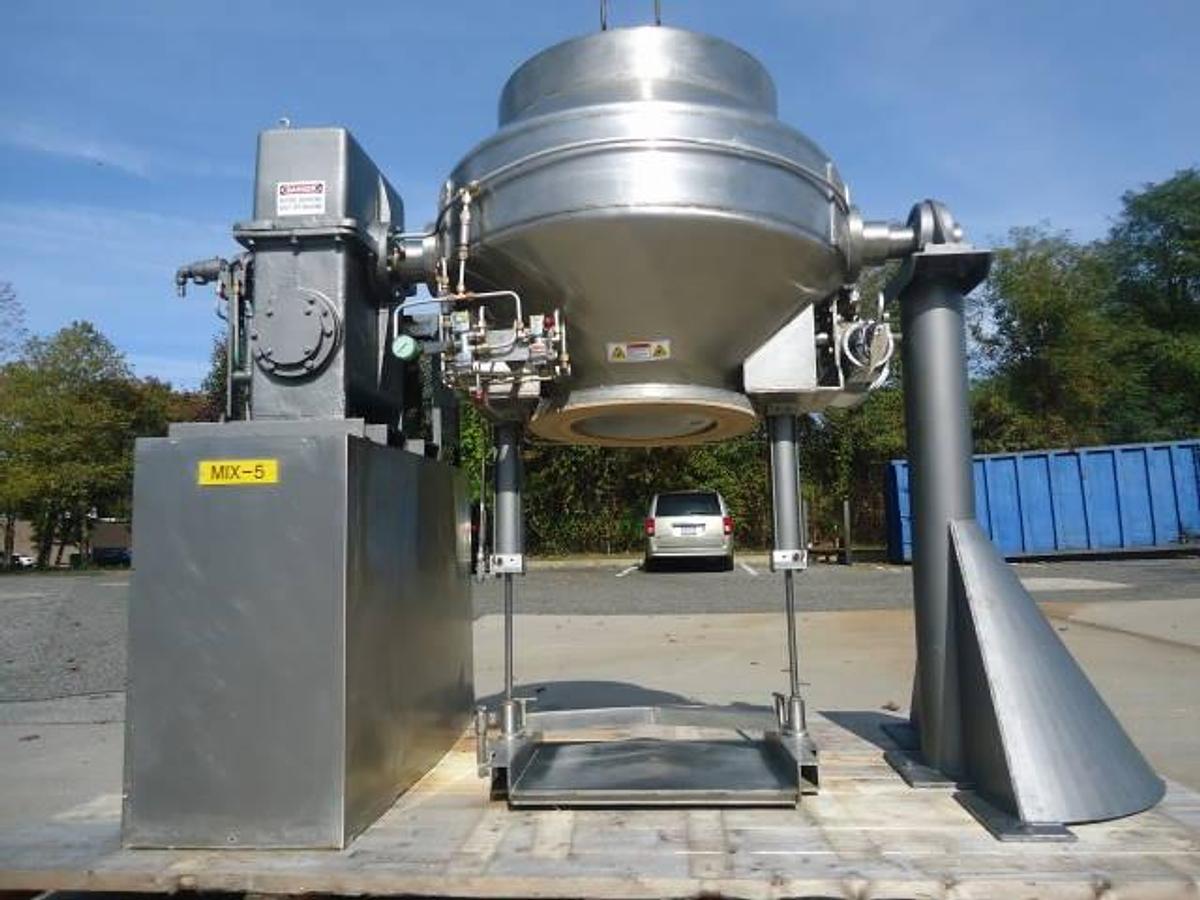
Gemcomatic is a brand of industrial blending and mixing equipment that has been used across pharmaceutical, food processing, chemical, and related manufacturing industries. The double cone blender is one of the most recognized Gemcomatic designs, built to tumble and mix dry powders, granules, and similar bulk materials in a rotating stainless steel vessel. The double cone geometry allows materials to fold and cascade evenly through the blending chamber, which reduces segregation and produces consistent batch-to-batch uniformity without the need for internal agitators that can damage fragile particles.
Gemcomatic blenders have been favored in industries where sanitary construction and precise blending are critical. The stainless steel construction makes cleaning and validation straightforward, which matters a great deal in pharmaceutical and food-grade environments. Units like the 10 cubic foot double cone blender are well suited for mid-scale production runs where operators need reliable, repeatable mixing results. Because these machines were built to industrial standards, used Gemcomatic equipment can still perform reliably in production settings when properly maintained and inspected prior to purchase.
What models of used Gemcomatic equipment are typically available on the market?
The most commonly encountered Gemcomatic equipment on the used market is the double cone blender, available in a range of capacities. A 10 cubic foot stainless steel double cone blender is one specific configuration that surfaces in the used equipment market, and it represents a mid-range capacity suitable for batch blending in pharmaceutical, nutraceutical, and specialty chemical applications. Capacities on available units can vary considerably, from smaller lab-scale machines to larger production-scale vessels, depending on what individual facilities are decommissioning at any given time.
Beyond capacity, buyers will encounter differences in drive configurations, discharge valve types, loading height, and whether the unit includes a vacuum loading system or an intensifier bar for more demanding blending requirements. Stainless steel construction is standard across most Gemcomatic blenders intended for regulated industries, though the specific grade and surface finish can vary by model and age. When evaluating available units, it pays to note the working capacity versus total vessel volume, the condition of seals and discharge hardware, and whether any tooling or accessories are included with the machine.
What should I inspect before buying used Gemcomatic equipment?
Buying used industrial blending equipment requires a methodical inspection process, and Gemcomatic double cone blenders are no exception. The most critical areas to examine are the interior and exterior stainless steel surfaces for pitting, corrosion, weld repairs, or product residue that could indicate prior use with reactive or contaminating materials. The discharge valve, seals, and gaskets should be checked for wear, as these components affect both product containment and cleanability. The drive system, including the motor, gearbox, and any belts or chains, should be evaluated for unusual noise, wear, or signs of deferred maintenance.
Reputable used equipment dealers will typically accommodate in-person inspections at their facility or, in cases where the machine is still located at the selling plant, can arrange access for the buyer or a third-party inspector. Video inspections and detailed photo documentation are also commonly offered when travel is not practical. Keep in mind that most dealers do not have the production permits or facility setup required to run actual product through a blender during inspection, so functional testing is generally limited to observing the machine run empty. Buyers should also contact the manufacturer directly to understand what level of technical support and spare parts remain available for the specific model and production year they are considering.
What is the typical price range for used Gemcomatic blending equipment?
Pricing for used Gemcomatic double cone blenders varies based on several factors: vessel capacity, overall condition, age, included accessories, and how urgently the seller needs to move the equipment. Smaller units or machines in average cosmetic condition tend to be priced lower, while larger-capacity blenders in excellent mechanical condition with documentation and accessories command higher prices. The spread between a worn entry-level unit and a well-maintained larger machine can be significant, sometimes ranging from a few thousand dollars to well above that depending on configuration.
Beyond the purchase price, buyers should factor in the full landed cost of the equipment. Shipping charges for heavy industrial blenders are not trivial, and costs will depend on the level of packaging or crating required, the distance being shipped, and whether specialized rigging equipment is needed for loading and unloading. Larger or heavier machines may require a crane or forklift with significant capacity, which adds to the overall acquisition cost. Getting a complete breakdown of purchase price, rigging, crating, and freight before committing to a purchase gives a much clearer picture of the true cost of the equipment.
Are replacement parts available for Gemcomatic blending equipment?
Parts availability is one of the more important practical questions buyers should address before purchasing any used industrial blender, and Gemcomatic equipment is worth researching carefully on this front. Common wear items like seals, gaskets, discharge valves, and drive belts may be available through industrial supply channels, third-party seal manufacturers, or directly from the equipment manufacturer depending on the model's age and production status. Some components are standard enough across the industry that sourcing equivalents is straightforward, while others may be more model-specific.
The most reliable way to gauge parts availability is to contact the manufacturer directly with the model number and serial number of the machine in question. Manufacturers can typically advise on whether replacement parts are still stocked, whether engineering drawings or specifications are available to fabricate components, and what level of technical support they can offer for a machine of that age. Buyers should do this research before finalizing a purchase rather than after, since parts availability can significantly affect the long-term serviceability and value of the equipment.
What industries use double cone blenders like the Gemcomatic?
Double cone blenders are workhorses in any industry that requires gentle, thorough mixing of dry powders or granules without generating excessive heat or mechanical stress on the material. Pharmaceutical manufacturing is one of the most common applications, where consistent blending of active ingredients with excipients is critical for dosage uniformity and regulatory compliance. Nutraceuticals, vitamins, and dietary supplements follow a similar logic, as do food processing operations that blend spice mixes, powdered flavorings, or dry ingredient blends.
Beyond those sectors, double cone blenders see use in specialty chemical production, cosmetics manufacturing, and agricultural chemical blending. The stainless steel construction of machines like the Gemcomatic double cone blender makes them particularly well suited for industries with strict sanitation requirements or where product purity and cross-contamination prevention are priorities. The relatively simple mechanical design, with no internal agitators or complex internal geometry, also makes cleaning validation more manageable in regulated environments, which is a meaningful operational advantage.
How does a double cone blender work, and why is the design effective?
A double cone blender operates by rotating a vessel shaped like two cones joined at their widest points around a horizontal axis. As the vessel turns, the material inside tumbles and cascades from one cone into the other in a continuous, gentle rolling motion. This tumbling action promotes diffusive mixing, where particles gradually redistribute throughout the batch without the shearing or impact forces that come from paddle or ribbon blenders. The result is a homogeneous mixture that is well suited for fragile granules, cohesive powders, or blends where particle size or coating integrity needs to be preserved.
The design is also practical from a cleaning and discharge standpoint. The conical geometry directs material toward the central discharge valve, which minimizes product holdup and makes emptying the vessel efficient. For industries that run multiple products through the same equipment, this matters both for yield and for cross-contamination control. The relatively straightforward mechanical design, typically a motor and gearbox driving the vessel through trunnions, means there are fewer complex components to maintain compared to more elaborate mixing technologies, which contributes to the long service life that well-maintained units like the Gemcomatic are known for.
How should used Gemcomatic equipment be shipped, and what are the logistics involved?
Shipping a used industrial blender like a Gemcomatic double cone blender requires more planning than shipping standard freight. The machine needs to be properly secured, padded, and either palletized or crated depending on its size, weight, and the distance it is traveling. Smaller units may ship on a heavy-duty pallet with appropriate bracing, while larger machines typically require custom wooden crating to protect protruding components like trunnions, the discharge valve assembly, and the drive system. The level of packaging directly affects both the shipping cost and the likelihood of the machine arriving undamaged.
Loading and unloading are separate considerations. Larger double cone blenders can weigh several thousand pounds, which means a standard liftgate truck is not sufficient. Forklift access at both the origin and destination is the minimum requirement, and some machines may need crane rigging for safe handling. Buyers should ask the dealer for specifics on the machine's weight, footprint, and the rigging equipment used for loading before arranging receiving logistics at their facility. Getting a clear picture of packaging, rigging, and freight costs upfront is the best way to avoid surprises in the total cost of acquiring the equipment.
What payment terms are typical when purchasing used industrial blending equipment?
Used equipment transactions in the industrial machinery market generally follow a straightforward payment structure. Most dealers require payment in full before the equipment is released for shipping or pickup. This is standard practice across the industry and reflects the nature of used equipment sales, where the seller needs confirmation of cleared funds before committing to preparing and loading a machine. Wire transfer is the most common payment method for transactions of this size, though some dealers may accept other forms of payment depending on the circumstances.
For buyers with an established purchasing history with a particular dealer, some flexibility on payment timing may be available, though this is handled on a case-by-case basis rather than as a standard offering. Buyers who are new to a dealer should expect to pay in full prior to shipment. It is worth clarifying payment expectations early in the conversation, along with any deposit requirements if the machine needs to be held while financing or facility preparation is arranged. Getting all terms confirmed in writing before transferring funds is a basic but important step in any used equipment purchase.
What is the expected service life of a Gemcomatic double cone blender, and what affects longevity?
Double cone blenders are mechanically simple machines, and that simplicity contributes directly to their longevity. A well-built stainless steel blender that has been properly maintained can remain in service for decades. The vessel itself, assuming no corrosion damage or structural repairs from misuse, tends to be the most durable component. The drive system, including the motor, gearbox, and any associated bearings or seals, will require more routine attention over time, but these are generally serviceable components that can be replaced or rebuilt as needed.
The factors that most affect the remaining useful life of a used Gemcomatic blender are the operating environment it came from, how consistently it was maintained, and whether it was used within its rated capacity. Machines from pharmaceutical or food-grade facilities are often in better cosmetic and mechanical condition because those environments typically enforce strict maintenance and cleaning protocols. Equipment from less regulated settings may show more wear. Buyers should ask about the machine's service history, the types of materials it processed, and whether any major repairs or modifications were made during its prior service life. A thorough inspection before purchase is the most reliable way to assess how much productive life remains in a specific unit.