Category
Manufacturer
Model
FAQ:
What is an FPEC paddle blender and what is it used for?
FPEC paddle blenders are industrial mixing machines manufactured by FPEC Corporation, a U.S.-based company with a long history of building food processing equipment for the meat and protein industries. The machines use rotating paddle assemblies to blend, mix, and tumble large volumes of product in a controlled, repeatable way. They are built specifically for the demands of commercial food production, where consistency and sanitation are non-negotiable.
In practice, these blenders are used for a wide range of applications: blending ground meat, incorporating seasonings and curing agents, marinating whole muscle cuts, and supporting emulsification processes in sausage and deli meat production. Some models, like the 2,500 lb. Vacuum CO2 Paddle Blender, add vacuum and carbon dioxide injection capabilities, which help extend product shelf life, reduce oxidation, and maintain color in fresh meat products. That combination of features makes FPEC paddle blenders a preferred choice for mid-size to large-scale meat processors who need reliable, sanitary, high-volume blending equipment.
What are the key features of the FPEC 2,500 lb. Vacuum CO2 Paddle Blender?
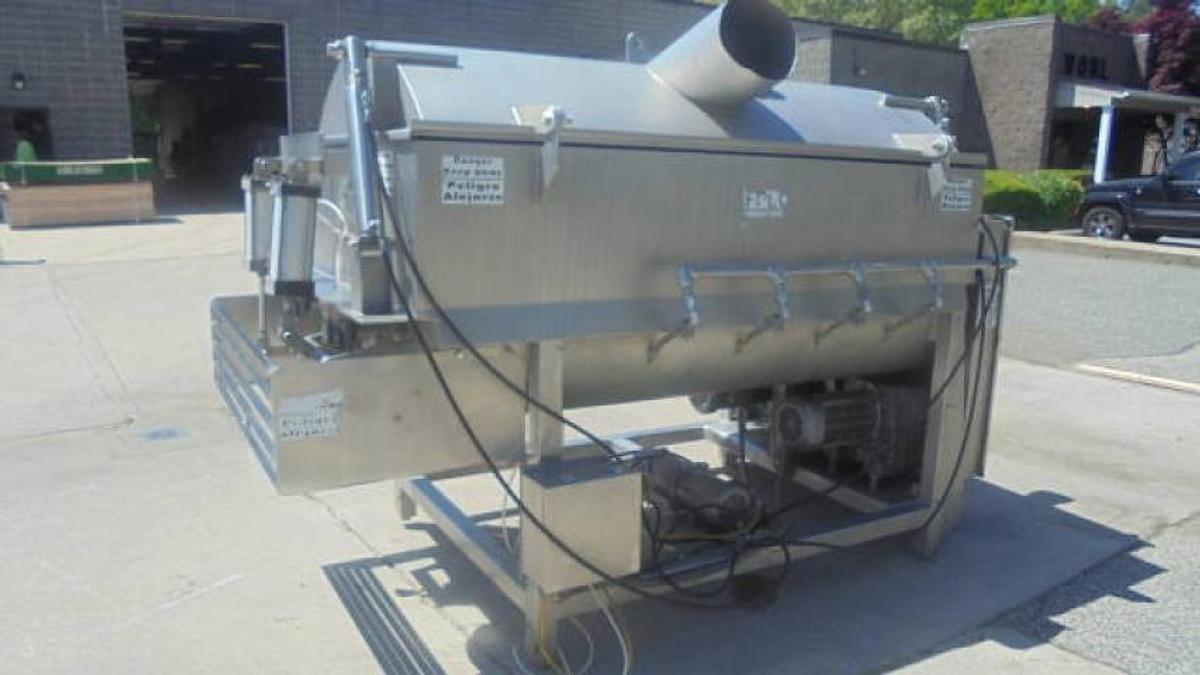
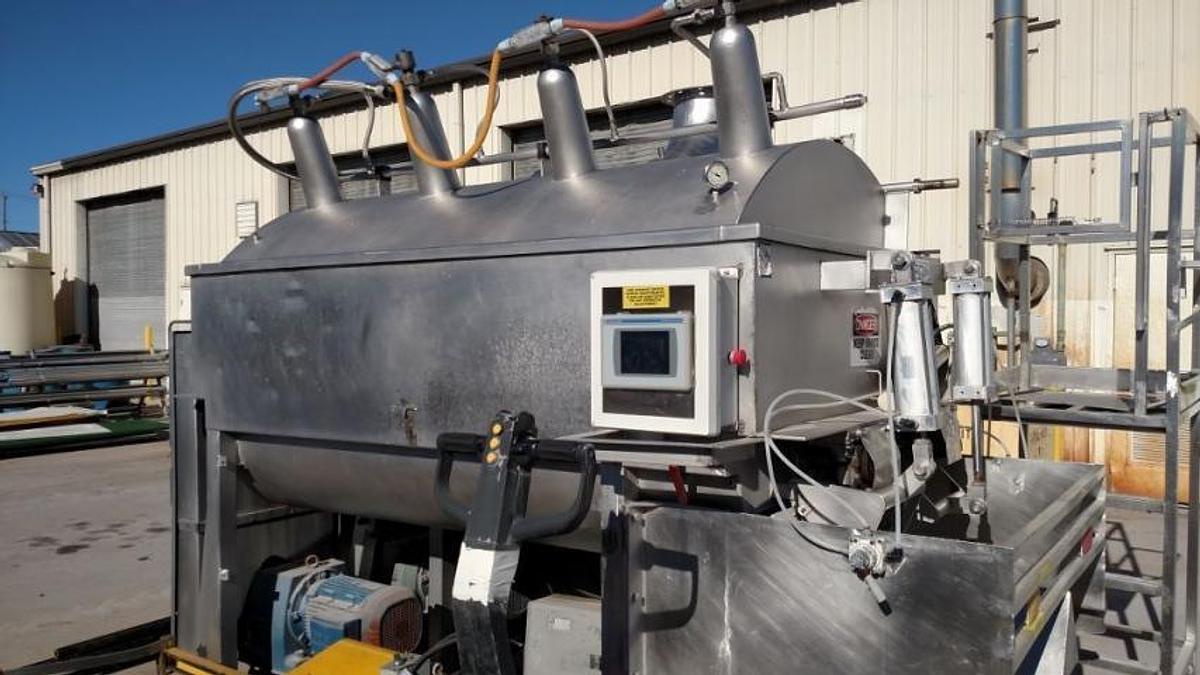
The FPEC 2,500 lb. Vacuum CO2 Paddle Blender is a heavy-duty industrial mixer designed for large-scale food processing operations. Its 2,500-pound capacity makes it well-suited for high-throughput production environments where batches need to be processed quickly and efficiently. The vacuum function removes oxygen from the blending chamber during operation, which is critical for preserving meat color, reducing bacterial growth risk, and improving the overall quality of the finished product. CO2 injection adds another layer of product protection by introducing an inert gas environment that further inhibits oxidation.
The hydraulic lid is another practical feature on this model. Rather than requiring manual effort to open and close a heavy lid on a machine of this size, the hydraulic system handles that work automatically, reducing physical strain on operators and speeding up cycle times. This type of design reflects the demands of a production floor where efficiency and worker safety both matter. For a buyer sourcing a used FPEC paddle blender, the presence of these integrated systems means the machine is capable of handling sophisticated processing requirements that go well beyond basic mixing.
What industries use FPEC paddle blenders?
FPEC paddle blenders are built primarily for the meat and protein processing industries, and that is where the vast majority of these machines are deployed. Beef, pork, poultry, and seafood processors use them for ground meat blending, whole muscle marination, and seasoning incorporation at commercial scale. The machines are also found in facilities producing sausages, hot dogs, deli meats, and other further-processed protein products where precise, even mixing of ingredients is essential to product quality and food safety compliance.
Beyond traditional meat processing, some food manufacturers use paddle blenders for pet food production, dry ingredient blending, and other applications that require gentle but thorough mixing of large batches. The stainless steel construction and sanitary design of FPEC equipment make the machines adaptable to any food-grade production environment where cleanability and durability are priorities. Buyers from contract manufacturing, private label food production, and institutional food service operations have all found these machines useful depending on their specific processing needs.
What materials are FPEC paddle blenders made from, and are they food-grade compliant?
FPEC paddle blenders are constructed with stainless steel as the primary material for all product-contact surfaces. Stainless steel is the standard choice for commercial food processing equipment because it resists corrosion, does not absorb odors or bacteria, and can withstand the repeated high-pressure washdowns that food production facilities require at the end of every shift. The paddle assemblies, blending drum, and interior surfaces are all designed with sanitation in mind, minimizing crevices and hard-to-clean areas that could harbor contamination.
FPEC equipment is designed to meet USDA and NSF sanitation standards, which are the benchmarks that meat processing facilities and food manufacturers must adhere to for regulatory compliance. NSF certification, in particular, indicates that a piece of equipment has been evaluated for its ability to be cleaned and sanitized effectively. Buyers sourcing a used FPEC paddle blender should inspect the condition of all stainless surfaces, seals, and gaskets carefully, as wear on these components can affect both sanitation performance and the machine's ability to hold vacuum pressure during operation.
What should buyers inspect when purchasing a used FPEC paddle blender?
Buying a used FPEC paddle blender requires a careful evaluation of several mechanical and sanitary components. The condition of the stainless steel drum and paddle assemblies is a good starting point. Look for cracks, pitting, or heavy wear on product-contact surfaces, as these can compromise both food safety and structural integrity. The hydraulic system on lid-equipped models should be checked for leaks and smooth operation. On vacuum models, the seals and gaskets around the lid and any vacuum ports are critical, since worn seals will prevent the machine from achieving and holding the vacuum levels needed for effective processing.
Reputable used equipment dealers will typically accommodate in-person or video inspections so buyers can assess the machine's current condition before committing to a purchase. Some machines may still be installed at an active production facility, where an inspection can be arranged at the plant. Keep in mind that most used equipment dealers are not set up to run actual product through a machine during an inspection, since that would require food production permitting they do not hold. The goal of any inspection is to get an accurate picture of mechanical condition, cleanliness, and the presence of all original components. Buyers should also contact FPEC directly to understand parts availability and service support for the specific model and age of machine they are considering.
How does vacuum blending in a paddle blender benefit meat processing?
Vacuum blending removes oxygen from the blending chamber while the machine is in operation. In meat processing, oxygen is the enemy of product quality. It accelerates oxidation, which causes the brownish discoloration that consumers associate with spoilage, even when a product is still safe to eat. By blending under vacuum, processors can maintain the bright red color of fresh beef and the appealing appearance of other protein products through packaging and into the retail case. This directly affects consumer perception and can reduce product shrink due to appearance-related markdowns.
CO2 injection, found on models like the FPEC 2,500 lb. Vacuum CO2 Paddle Blender, takes this a step further by flooding the chamber with carbon dioxide before or during the blend cycle. CO2 is an inert gas that displaces oxygen and creates an environment where bacterial growth is slowed significantly. This can extend the shelf life of fresh and further-processed meat products without relying on additional chemical preservatives. For processors focused on clean-label products or those supplying retailers with strict shelf-life requirements, a vacuum CO2 paddle blender is a meaningful operational advantage over conventional atmospheric blending.
What capacity range do FPEC paddle blenders come in?
FPEC paddle blenders are available across a fairly wide capacity range, from smaller batch models suited to pilot production or specialty processing up to large industrial units capable of handling thousands of pounds per cycle. The 2,500 lb. capacity models are on the larger end of the spectrum and are designed for high-volume commercial operations where throughput is a primary concern. Smaller FPEC paddle blenders exist for processors who run shorter, more frequent batches or who have space constraints in their facility.
For buyers sourcing used equipment, the available inventory at any given time will depend on what has recently come off production floors and entered the secondary market. Larger capacity machines like the 2,500 lb. models tend to come from major protein processing facilities that are upgrading, consolidating, or closing lines. Buyers should match the machine's capacity to their actual production requirements, factoring in not just batch size but also cycle time, loading and unloading logistics, and the footprint of the machine in their facility. Oversizing a blender relative to actual batch needs can lead to inefficient blending and inconsistent results.
Are replacement parts available for used FPEC paddle blenders?
Parts availability for FPEC equipment depends on the age and specific model of the machine. FPEC Corporation has been manufacturing food processing equipment for decades, and for many of their blender models, replacement components such as seals, gaskets, paddle assemblies, and hydraulic parts can still be sourced either directly through the manufacturer or through third-party industrial parts suppliers. Before purchasing a used FPEC paddle blender, it is worth contacting FPEC directly to ask about support and parts availability for the specific model you are considering, since older or discontinued models may have more limited support.
Buyers should also factor parts availability into their total cost of ownership calculation. A machine that is priced attractively on the secondary market but requires a hard-to-find seal or a discontinued hydraulic component could end up costing significantly more to bring back to full working order than the purchase price suggests. Inspecting the machine thoroughly before buying and asking the seller for any documentation, manuals, or spare parts that come with the unit can help avoid surprises after the sale. Dealers who specialize in food processing equipment are generally better positioned to advise on parts sourcing than general industrial auction platforms.
What should buyers expect regarding shipping and delivery of a used FPEC paddle blender?
FPEC paddle blenders at the 2,500 lb. capacity level are large, heavy pieces of industrial equipment, and moving them requires planning. Proper packaging is essential to prevent damage in transit. Depending on the machine's size and the seller's capabilities, it may be crated, skidded, or secured to a flatbed for transport. Buyers should ask the dealer specifically about how the machine will be packaged and what that packaging is designed to protect against, since the level of preparation directly affects the risk of damage during shipping.
Rigging costs are a real consideration for machines of this size. Loading at the origin and unloading at the destination may require forklifts, cranes, or specialized rigging crews, all of which add to the total landed cost of the equipment. Buyers should request a full breakdown of packaging, rigging, and freight costs from the dealer before finalizing a purchase, so there are no surprises when the machine arrives. For international shipments, customs documentation and import duties will also factor into the total cost. Payment for used industrial equipment is typically required in full before the machine is released for shipping, though some dealers may offer terms to established customers with a prior purchasing history.
How does buying a used FPEC paddle blender compare to purchasing new processing equipment?
The primary advantage of buying a used FPEC paddle blender is cost. Industrial food processing equipment at this capacity level represents a significant capital investment when purchased directly from a manufacturer. Sourcing a used machine through a reputable dealer can reduce that cost substantially, making it possible for smaller processors, startups, or facilities expanding on a tight budget to access equipment that would otherwise be out of reach. FPEC has a strong reputation for building durable, long-lasting equipment, which means a well-maintained used machine can deliver years of reliable service at a fraction of the cost of a comparable new unit.
The trade-offs are real, though. Used equipment is sold as-is, without the coverage that comes with a manufacturer's purchase. The condition of the machine depends entirely on how it was maintained and operated in its previous installation. Lead times are generally shorter for used equipment since the machine already exists and just needs to be inspected, purchased, and shipped, whereas new equipment often involves extended manufacturing and delivery timelines. Buyers who do their due diligence through thorough inspection, parts availability research, and careful selection of a reputable dealer with a track record in food processing equipment tend to have the best outcomes with used machinery purchases.