Category
Manufacturer
Model
Fords Holmatic
Fords Holmatic manufactures automated packaging systems for the food and beverage industries. Their machines are recognized for their efficiency and ability to handle a wide range of packaging formats.
FAQ:
What types of packaging equipment does Fords Holmatic manufacture?
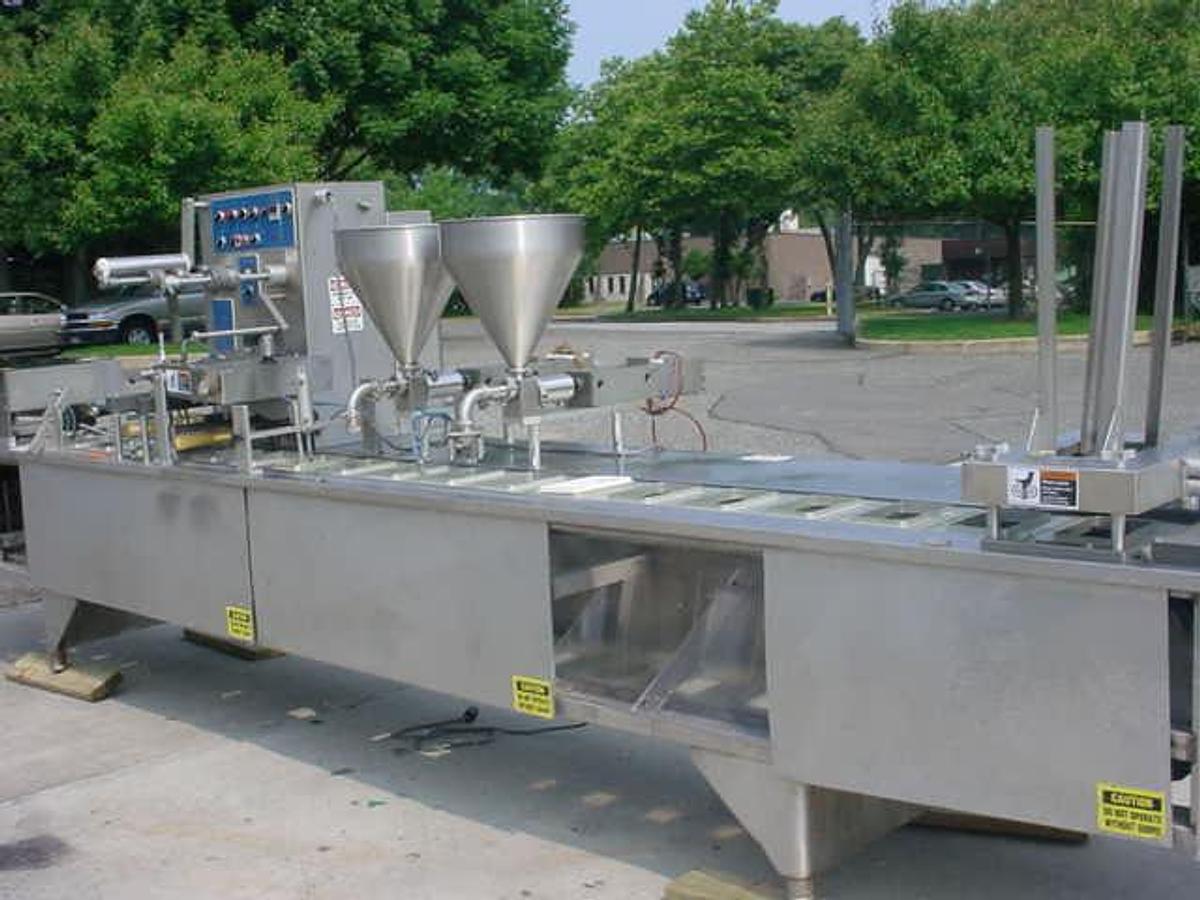
Fords Holmatic produces automated packaging machinery with a strong focus on filling, capping, sealing, and cup or tray packaging systems. Their product range has historically served the food and beverage industries, with machines designed to handle a wide variety of packaging formats efficiently. Specific equipment types that appear on the used market include single piston fillers, air-operated filling systems, and complete cup or tray packaging lines such as the PR-2S model.
Beyond food and beverage applications, Fords Holmatic equipment has also found use in pharmaceutical, cosmetic, and nutraceutical production environments. The machines earned a reputation for precise dosing and consistent output, which made them attractive to industries where accuracy and hygiene standards carry significant weight. Because of their durable construction and long operational lifespan, used Fords Holmatic machines continue to circulate on the secondary market well after their original production runs ended.
What industries are Fords Holmatic machines best suited for?
Fords Holmatic equipment was designed with high-volume, automated packaging in mind, making it well suited for food and beverage production lines where speed and consistency are critical. Cup and tray filling and sealing systems from this manufacturer have been used extensively for dairy products, prepared foods, sauces, and similar liquid or semi-liquid goods. The machines are built to integrate into continuous production environments and handle repetitive packaging tasks with minimal manual intervention.
Beyond food and beverage, the pharmaceutical and nutraceutical sectors have historically valued Fords Holmatic equipment for its accuracy and the hygienic design principles built into many of its filling and sealing machines. Cosmetic manufacturers have also made use of certain models for filling creams, gels, and similar products. When sourcing a used Fords Holmatic machine, buyers should confirm that the specific model and configuration they are considering aligns with their industry's hygiene, accuracy, and regulatory requirements, since individual machines vary in their original design intent.
Why is there still demand for used Fords Holmatic packaging equipment?
Fords Holmatic built a strong reputation over decades for producing machinery with heavy-duty construction and long operational life. Many of their machines were engineered to run continuously in demanding production environments, which means well-maintained units can remain functional and productive long after the manufacturer's active production period ended. This durability is a primary reason why used Fords Holmatic equipment continues to attract buyers rather than being discarded in favor of entirely different machinery brands.
Cost is another significant factor. Purchasing a used Fords Holmatic machine at a fraction of the price of comparable modern equipment allows smaller food processors, pharmaceutical contract manufacturers, and startup production facilities to access reliable automated packaging capability without the capital outlay of buying brand-new machinery. For operations that already run Fords Holmatic equipment and want to expand capacity or replace a worn unit with a familiar machine, sourcing a used model from the secondary market is often the most practical path forward.
What should buyers know about inspecting used Fords Holmatic equipment before purchasing?
Inspecting used packaging machinery before committing to a purchase is one of the most important steps a buyer can take, and Fords Holmatic equipment is no exception. Reputable used equipment dealers will typically offer in-person inspections, virtual walkthroughs, or detailed video captures of the machine so that buyers can assess its current condition. Some machines may still be installed and operational at a production facility, which provides an opportunity to observe the equipment running under real conditions. Others may be decommissioned and in storage, in which case a thorough visual and mechanical inspection becomes even more critical.
Buyers should keep in mind that most used equipment dealers are not set up to run full production trials, as that would require product, permitting, and operational infrastructure beyond what a typical dealer maintains. The inspection process is therefore focused on mechanical condition, completeness of components, signs of wear or damage, and the availability of documentation such as technical manuals or electrical schematics. Requesting all available paperwork as part of the purchase is strongly advised, since documentation for older Fords Holmatic models can be difficult to locate independently after the sale is complete.
Are spare parts and replacement components still available for Fords Holmatic machines?
Parts availability for Fords Holmatic equipment depends heavily on the specific model and how long ago it was manufactured. As a British packaging machinery manufacturer whose active production period has passed, sourcing factory-direct replacement parts can be challenging. Buyers should contact the manufacturer or any successor entities directly to understand what level of parts support remains available for the particular model they are considering. Older or discontinued models may have limited or no manufacturer support for spare components.
In practice, many operators of used Fords Holmatic machinery rely on a combination of approaches to keep their equipment running. These include sourcing used or surplus parts from the secondary market, working with specialist engineering shops that can fabricate replacement components from drawings or worn originals, and cannibalizing parts from a second non-operational machine. Before purchasing, it is worth asking the seller whether any spare parts, tooling, or change parts are included with the machine, as this can significantly affect the long-term cost and ease of keeping the equipment in service.
What is the typical price range for used Fords Holmatic packaging equipment?
Pricing for used Fords Holmatic machinery varies considerably depending on the type of machine, its age, mechanical condition, completeness, and any included tooling or documentation. A single-component machine such as a piston filler will generally be priced lower than a complete integrated packaging line. Machines that are confirmed operational and come with full documentation, change parts, and spare components will command higher prices than units sold strictly for parts or in unknown condition.
Because these are used machines sold on the secondary market, there is no fixed price list. Buyers should request detailed quotes from dealers that include all associated costs, not just the machine price. Shipping, rigging, crating, and freight costs can add meaningfully to the total landed cost, particularly for larger or heavier packaging line equipment. Getting a clear picture of the full cost before committing to a purchase helps avoid budget surprises and allows for a fair comparison between different available units.
What are the typical production speeds and output capacities of Fords Holmatic filling and sealing machines?
Production speeds for Fords Holmatic filling and sealing equipment vary by model and the specific product being packaged. Cup and tray filling and sealing lines from this manufacturer were designed for commercial and industrial production environments, meaning they were built to handle meaningful output volumes rather than small-batch or artisan-scale work. Specific throughput figures depend on factors such as container size, fill volume, product viscosity, and the configuration of the particular machine.
When evaluating a used Fords Holmatic machine for a specific application, buyers should request the machine's technical specifications from the seller if available, and cross-reference them against the production demands of their own facility. It is also worth consulting with a qualified packaging machinery technician who can assess whether the machine's rated capacity is still achievable given its age and condition. Machines that have been well maintained and are mechanically sound should be capable of performing close to their rated specifications, but condition plays a significant role in actual throughput.
How should buyers approach payment and shipping logistics when purchasing used Fords Holmatic equipment?
Most used equipment dealers require full payment before a machine is released for shipping. Some dealers may offer extended payment terms to established repeat customers, but first-time buyers should plan for payment in full upfront. Buyers should clarify accepted payment methods with the dealer early in the process to avoid delays once a purchase decision is made.
Shipping costs for packaging machinery can be substantial and should be factored into the total budget from the start. Smaller machines may require basic palletization, while larger or more complex packaging lines will need custom crating and heavy-duty rigging for safe loading and unloading. Freight costs depend on the origin and destination, the weight and dimensions of the equipment, and the level of packaging required to prevent damage in transit. Buyers should ask the dealer for a detailed breakdown of all shipping-related costs, including rigging, crating, and freight, to understand the full landed cost of the equipment before finalizing the purchase.
Is Fords Holmatic equipment considered legacy or obsolete, and does that affect usability?
Fords Holmatic is generally considered a legacy packaging machinery brand, meaning the company is no longer actively manufacturing equipment in the way it once did. This does not automatically make the machines obsolete for production purposes. Many Fords Holmatic units remain in active service because they were built to a high mechanical standard and can continue to perform reliably when properly maintained. The question of usability is really one of condition, parts availability, and whether the machine's design is compatible with current production requirements.
The practical implications of legacy status are mainly felt in areas like technical support, software or controls updates for electronically controlled models, and parts sourcing. Older mechanical models with simpler pneumatic or electromechanical controls tend to be easier to service independently than more complex automated systems. Buyers should assess how much technical support they are likely to need and whether they have access to engineering resources capable of servicing the equipment. Consulting with the manufacturer or a specialist packaging machinery technician before purchasing can help clarify what level of ongoing support to expect for a specific model.
What documentation should buyers request when purchasing a used Fords Holmatic machine?
Documentation is one of the most valuable assets that can accompany a used packaging machine, and buyers should make every effort to obtain it as part of the purchase. For Fords Holmatic equipment, useful documentation includes the original operator's manual, maintenance and service manuals, electrical schematics, pneumatic diagrams, and any parts lists or exploded-view drawings that were supplied with the machine. This material is often difficult to locate independently for older or discontinued models, making it far easier to obtain from the seller at the time of purchase than to track down afterward.
In addition to technical documentation, buyers should request any available service history records, calibration logs, or records of past repairs or modifications. Understanding what work has been done on a machine over its life helps set realistic expectations about its current condition and what maintenance may be needed going forward. If the seller does not have documentation available, it is worth contacting the manufacturer directly to determine whether manuals or parts information can still be obtained for the specific model being considered.