Category
Manufacturer
Model
FAQ:
What is a Forberg mixer and how does it work?
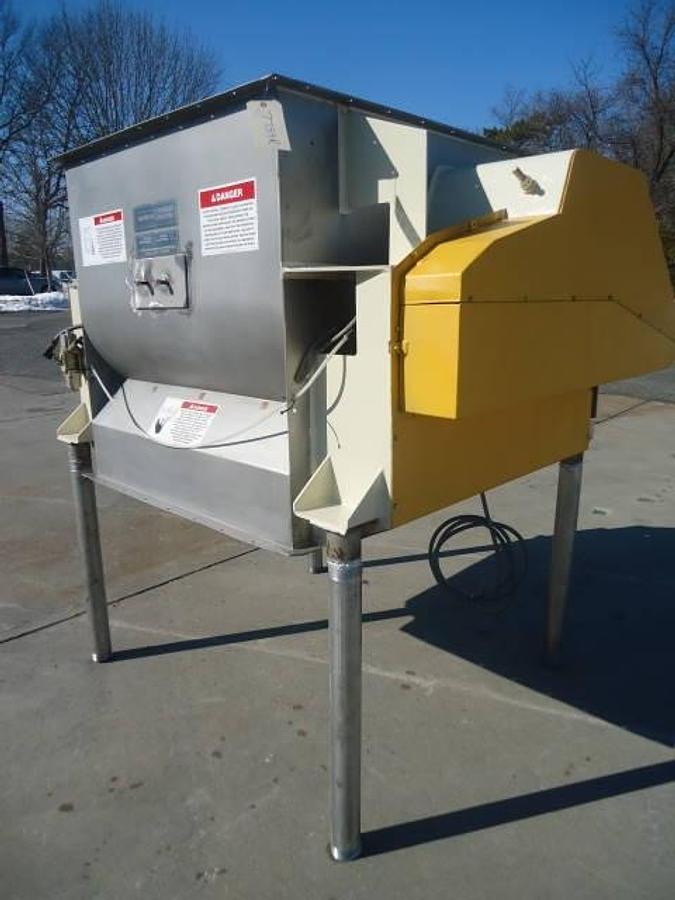
A Forberg mixer is a twin-shaft batch mixer that uses what the manufacturer calls a fluidized zone mixing principle. Two counter-rotating paddle shafts are positioned at the bottom of a horizontal trough. As the paddles spin, they lift and suspend the material in a momentary fluid-like state, allowing particles to intermingle rapidly and evenly throughout the batch. The result is an exceptionally homogeneous mix achieved in cycle times that often fall between 15 and 30 seconds, far faster than conventional ribbon blenders or single-shaft paddle mixers that may require several minutes to reach the same level of uniformity.
The design also keeps mechanical stress on the product to a minimum. Because the material is briefly suspended rather than dragged or compressed, fragile granules, coated particles, and heat-sensitive ingredients retain their structure through the mixing cycle. This combination of speed and gentleness is why Forberg units have become a preferred choice in industries where both blend quality and product integrity matter. The Norwegian-manufactured machines are built to tight tolerances, which contributes to their reputation for longevity and strong resale value in the used equipment market.
What are the different types of industrial mixers?
Industrial mixers are broadly divided into batch mixers and continuous mixers. Batch mixers process a fixed quantity of material per cycle and are the most common type in food processing, pharmaceuticals, and specialty chemicals, where recipe accuracy and cleanout between runs are priorities. Within the batch category, the main designs include ribbon blenders, paddle mixers, fluidized zone mixers (such as the Forberg twin-paddle style), ploughshare mixers, and high-intensity turbine mixers. Each design differs in how agitators move material, how long a cycle takes, and how gently or aggressively the product is handled.
Continuous mixers, by contrast, receive a steady feed of ingredients at one end and discharge a blended stream at the other, making them well suited for large-volume, single-recipe production lines. Beyond those two main categories, mixers are further classified by orientation (horizontal vs. vertical), by the number of shafts, and by the materials of construction, with stainless steel being standard for food, pharmaceutical, and chemical applications. Selecting the right type depends on batch size, required blend uniformity, the fragility of the ingredients, cleaning requirements, and whether the process is wet, dry, or somewhere in between.
What industries use Forberg mixers?
Forberg mixers appear across a wide range of process industries, largely because their short cycle times and gentle action translate well to many different materials. In food manufacturing, they are used for dry seasoning blends, bread mixes, infant formula, pet food, and snack coatings. The aquaculture and animal feed sectors rely on them heavily because feed pellets and coated additives need thorough distribution without crumbling. Pharmaceutical and nutraceutical producers value the design for blending active ingredients with excipients where precise uniformity directly affects dosage accuracy.
Beyond food and pharma, Forberg units are found in chemical processing plants handling powders, granules, and some paste-like materials, as well as in plastics compounding where additives must be evenly distributed through a polymer base. The common thread across all these applications is the need for fast, consistent blending with minimal product degradation. That versatility, combined with the machines' durability, is part of why used Forberg mixers remain in demand and hold their value reasonably well compared to less specialized equipment.
What materials can a Forberg mixer handle?
Forberg mixers are designed primarily for dry and semi-moist free-flowing materials, including powders, granules, pellets, flakes, and crumbles. The fluidized zone action works best when particles can be briefly suspended, so the equipment performs exceptionally well with ingredients that have relatively low moisture content and do not clump aggressively. It is also capable of introducing small amounts of liquid additions, such as oils, molasses, or coatings, through spray nozzles during the mixing cycle, which is common in animal feed and food seasoning applications.
The gentle paddle action makes Forberg units particularly suitable for fragile or friable materials where breakage is a concern, such as coated granules, expanded extrudates, or dried herbs. Heat-sensitive ingredients also benefit because the short cycle time limits frictional heat buildup. The machines are less suited for heavy, sticky pastes or very high-viscosity wet materials, where a sigma blade or planetary mixer would be a better fit. When evaluating a used Forberg mixer, buyers should confirm that the specific model and configuration align with the moisture level, particle size, and bulk density of their intended product.
How does a Forberg mixer compare to a ribbon blender in mixing speed and efficiency?
The speed difference between a Forberg-style fluidized zone mixer and a conventional ribbon blender is substantial. A ribbon blender typically requires two to five minutes to achieve a homogeneous blend, depending on the ingredients and fill level. A Forberg mixer running the same type of dry material can reach equivalent or superior uniformity in 15 to 30 seconds. For a production line running multiple batches per hour, that difference compounds quickly and can significantly increase throughput without adding equipment or floor space.
Efficiency goes beyond cycle time. Ribbon blenders rely on a spiral flight that moves material in opposing directions, which means some zones of the mixer receive more agitation than others and dead spots near the end walls can be an issue. The twin-paddle fluidized zone design suspends the entire batch simultaneously, so there are fewer areas of uneven blending. The tradeoff is that ribbon blenders tend to handle a wider range of viscosities and wetter materials more readily, while the Forberg design excels specifically with free-flowing dry and semi-moist products. For buyers comparing used equipment, the right choice depends heavily on the specific materials and production demands of their process.
What sizes and batch capacities are available for Forberg industrial mixers?
Forberg produces mixers across a broad capacity range, from small laboratory and pilot-scale units holding a few liters up to large industrial machines capable of processing several thousand liters per batch. The model numbering system generally reflects the working volume in liters, so a unit like the FZM-18 indicates an 18-liter capacity, which is suited to small-batch production, R&D work, or specialty runs. Larger production models scale up considerably, with mid-range units commonly found in the hundreds of liters and full-scale industrial configurations reaching into the thousands.
When shopping for a used Forberg mixer, capacity is one of the first specifications to match against your production requirements. Batch weight capacity, not just volume, also matters because bulk density varies widely between products. A unit sized for a light powder may be undersized by weight for a dense granule at the same fill volume. Buyers should also check the drive motor horsepower relative to the intended material, as denser or slightly cohesive products require more power to achieve proper fluidization. Reviewing the full nameplate data and any available documentation on a used machine helps confirm that the specific unit is appropriate for the application.
What should buyers look for when evaluating a used Forberg mixer?
Condition of the paddle shafts and seals is one of the most important things to assess on a used Forberg mixer. The paddles themselves can wear over time, particularly when processing abrasive materials, and worn paddles reduce mixing efficiency. Shaft seals prevent product from migrating into the bearings, so any sign of product contamination around the bearing housings is worth investigating before purchase. The interior of the mixing trough should be inspected for wear, pitting, cracks, or signs of corrosion, especially on stainless steel units used in food or pharmaceutical applications where surface integrity matters for cleaning and sanitation.
Reputable used equipment dealers will typically accommodate in-person inspections or provide detailed video walkthroughs of the machine so buyers can assess its current condition. Some machines may still be installed at an operating facility, in which case the dealer can often arrange access for a direct inspection. Keep in mind that most used equipment dealers are not set up for live product testing, as running a full production trial requires permitting and facilities beyond what a standard dealer operates. Buyers should also contact the manufacturer directly to understand what parts and technical support are available for the specific model and age of the machine they are considering, since older models may have limited parts availability.
Are used Forberg mixers reliable, and what supports their resale value?
Forberg mixers have a strong reputation for durability, which is one reason they hold their value better than many competing brands in the used equipment market. The machines are manufactured in Norway to tight engineering tolerances, with heavy-gauge construction and relatively straightforward mechanical designs that make them less prone to catastrophic failure and easier to service over a long service life. Many used units available on the market have been running in production environments for a decade or more and remain mechanically sound, which reflects the quality of the base construction.
That said, the reliability of any specific used machine depends on how it was maintained, what materials it processed, and how many hours it accumulated. A unit that ran abrasive dry chemicals will show more wear than one used for light food powders. Buyers should select dealers who specialize in process and food equipment rather than general industrial machinery, as specialized dealers are more likely to accurately represent the condition of a Forberg unit and understand what wear patterns are normal versus concerning. Checking the dealer's track record and asking detailed questions about the machine's history, including what product it was used for and whether it was regularly maintained, gives a much clearer picture of what to expect.
What are the cleaning and sanitary requirements for a Forberg mixer used in food or pharmaceutical production?
Forberg mixers intended for food and pharmaceutical use are typically constructed from stainless steel with smooth, crevice-minimized interior surfaces that facilitate thorough cleaning. The twin-shaft design does create some areas around the paddle mounts and shaft seals that require careful attention during cleanout, as product can accumulate in those zones. Most food and pharmaceutical-grade units are designed to allow the discharge door to open fully and the interior to be accessed for manual cleaning or, in some configurations, cleaned in place using spray nozzles.
For buyers evaluating a used Forberg mixer for regulated applications, the condition of interior welds and surface finishes is critical. Pitting, cracks, or rough weld seams can harbor bacteria or cross-contaminate products and may not meet current sanitary standards even if the machine was compliant when it was built. A thorough inspection of the interior surfaces, seals, and any spray nozzle ports is essential before purchasing a used unit for food or pharma use. Buyers should also verify that the machine's current configuration, including materials of construction and seal types, is compatible with any cleaning agents or sanitizers used in their facility, as some elastomers and coatings are not compatible with aggressive CIP chemicals.
What should buyers understand about shipping and payment when purchasing a used industrial mixer?
Used industrial mixers like Forberg units are heavy, precision machines that require careful handling from the moment they leave the seller's facility. Proper packaging is essential to prevent damage in transit, and costs will vary depending on whether the machine is palletized, crated, or requires custom skidding. Larger units often need professional rigging for loading and unloading, which is an added expense that buyers should factor into the total landed cost before committing to a purchase. Asking the dealer upfront for a complete breakdown of packaging, rigging, and freight charges avoids surprises once the machine is ready to ship.
On the payment side, most used equipment dealers require full payment before a machine ships. Some dealers extend terms to established repeat customers, but first-time buyers should generally plan to pay in full prior to shipment. Because used industrial equipment is typically sold as-is, the inspection process carries significant weight. Buyers should take full advantage of any inspection options offered, whether in person, via live video call, or through detailed video documentation provided by the dealer, to confirm the machine's condition before funds are transferred. Understanding both the total landed cost and the machine's actual condition are the two most important steps in making a sound purchasing decision.