Category
Manufacturer
Model
Flexicon
Flexicon provides bulk handling and processing equipment for the food, pharmaceutical, and chemical industries. They are known for their innovative conveyor systems and material handling solutions that improve operational efficiency.
FAQ:
What types of bulk materials can Flexicon flexible screw conveyors handle?
Flexicon flexible screw conveyors are designed to move a wide range of bulk materials, including free-flowing powders, granules, pellets, flakes, and fibrous or stringy materials. The key to this versatility lies in the screw profile selection. Flexicon manufactures several screw configurations, including standard helical, round wire, flat wire, and others, each suited to different material characteristics. Round wire screws work well for free-flowing granules, while flat wire designs are better for materials that tend to pack or bridge. This variety of options makes it possible to match the conveyor to the specific behavior of a given material rather than forcing a compromise.
Materials that are fragile, abrasive, or prone to clumping can generally be handled with the right screw selection, though buyers of used equipment should verify which screw profile is installed and whether it suits their application. The tube and screw are the only moving parts in the conveying section, which limits the number of contact surfaces that could cause degradation. Flexicon conveyors have been used across food processing, pharmaceutical manufacturing, chemical production, plastics compounding, and agricultural applications, reflecting the broad material compatibility of the platform.
What industries commonly use Flexicon flexible screw conveyors?
Flexicon flexible screw conveyors are found across a broad range of process industries. Food and beverage manufacturers use them to move ingredients like flour, sugar, spices, coffee, and snack food components. Pharmaceutical producers rely on them for moving active ingredients and excipients in sanitary environments. Chemical and plastics processors use them for resins, pigments, additives, and other bulk solids. Agricultural operations use them for grain, seed, and feed materials. The common thread across all these industries is the need to move dry bulk solids reliably without complex infrastructure.
The reason Flexicon conveyors appear so frequently across different sectors is the combination of flexible routing, simple construction, and the availability of sanitary or food-grade configurations. Many of the used units available on the market are stainless steel models that were originally installed in food or pharmaceutical facilities, which means buyers in those industries can often find equipment that already meets their basic material contact requirements. Buyers should still verify construction details, surface finishes, and screw profiles when evaluating used units for regulated applications.
What makes the flexible screw design different from a standard rigid screw conveyor?
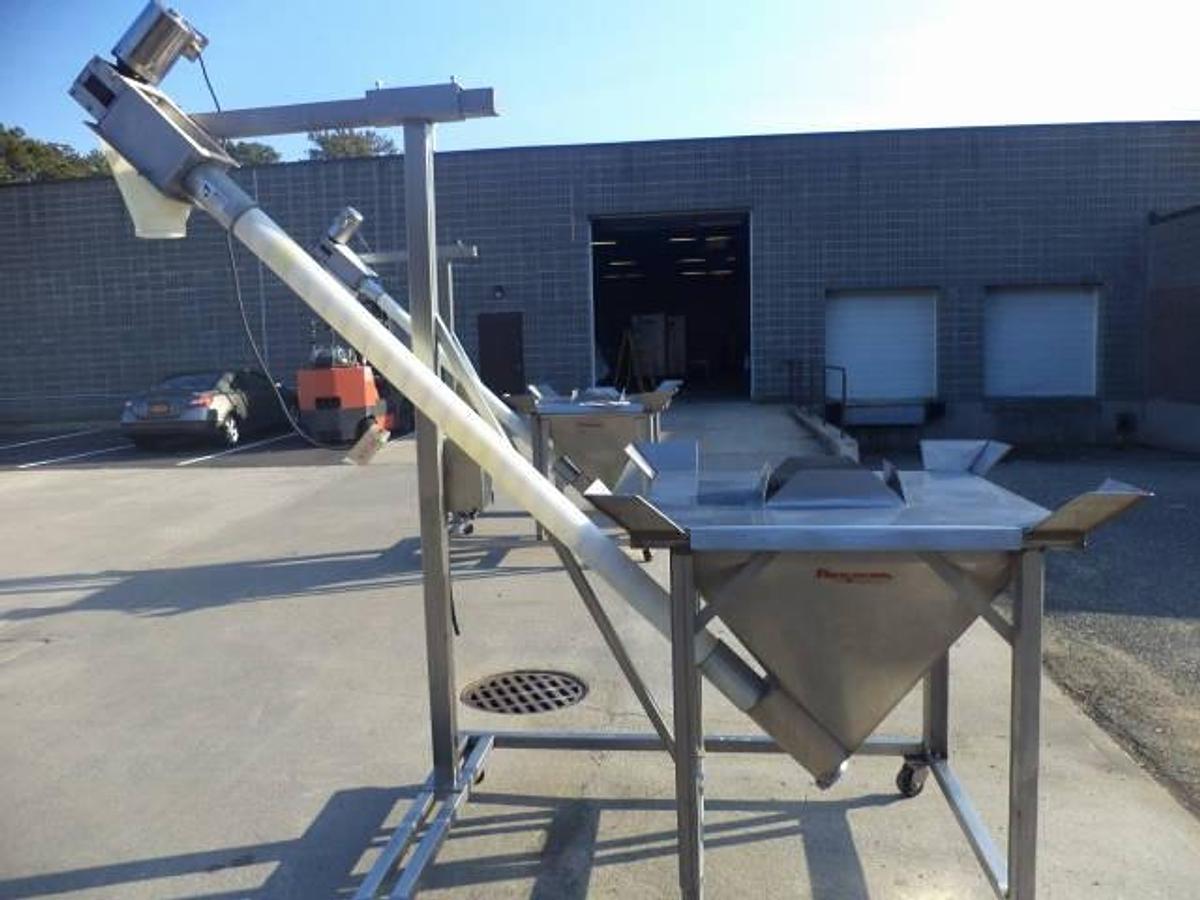
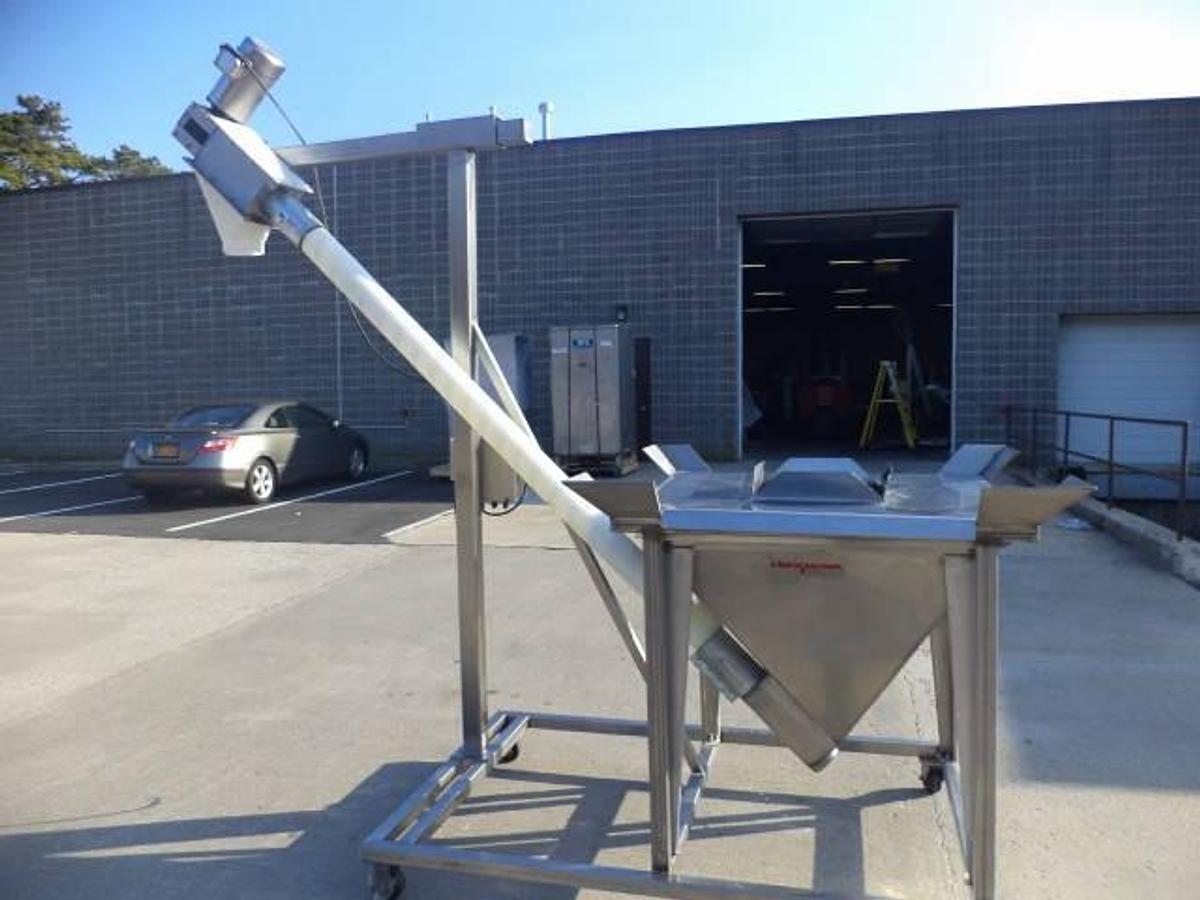
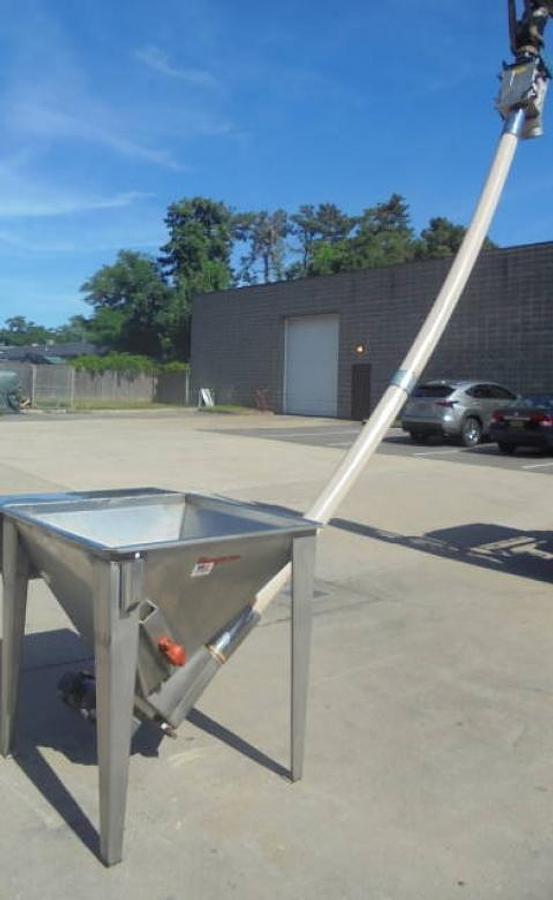
A standard rigid screw conveyor requires a straight, fixed-angle installation path. The flexible screw conveyor uses a rotating helical screw inside a flexible plastic or stainless steel tube, which allows the conveying path to curve around obstacles, change elevation, and adapt to irregular facility layouts without requiring a straight run. This means the inlet can be positioned at floor level or at a hopper discharge, and the outlet can be routed to a mezzanine, a mixer, a bag filler, or any elevated discharge point, even if the path between them is not a straight line.
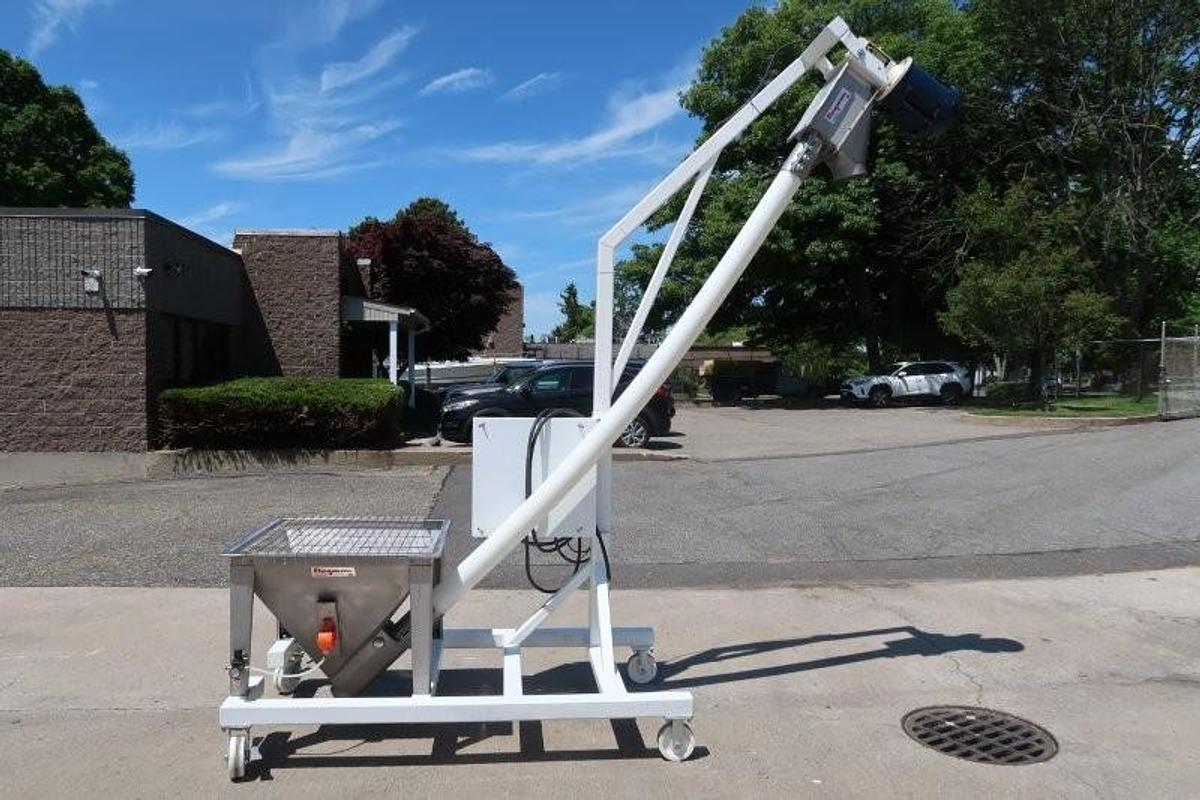
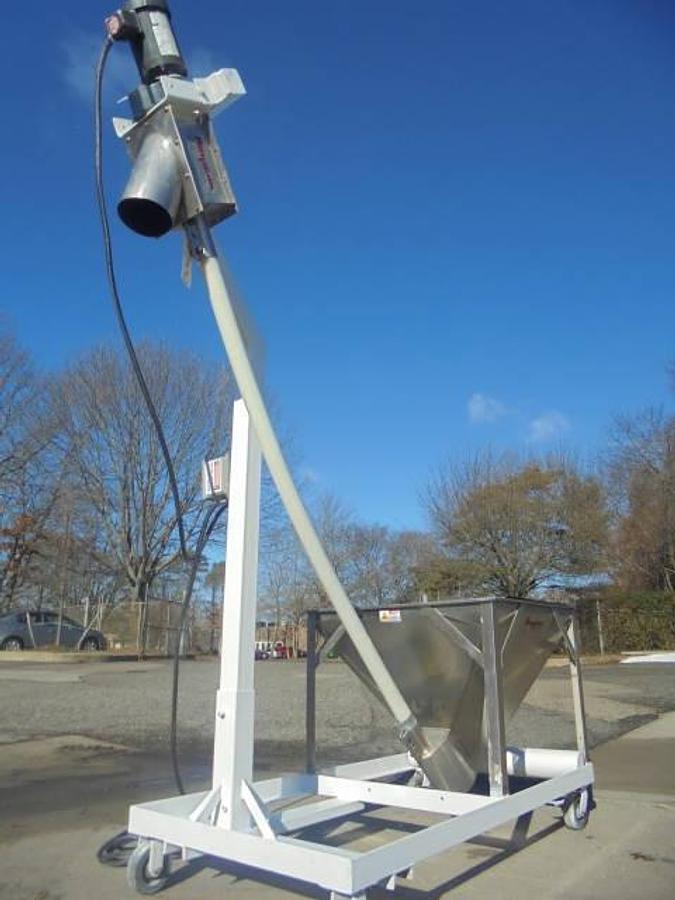
This routing flexibility significantly reduces the need for structural modifications or dedicated conveyor corridors. Portable configurations, which are common in the Flexicon product line, add another layer of adaptability by allowing the conveyor to be repositioned between different process points as production needs change. The mechanical simplicity of the design, with the tube and screw being the primary moving components, also means there are fewer wear points compared to belt conveyors, drag chain conveyors, or pneumatic systems. For facilities with constrained layouts or multiple material streams, this combination of flexibility and simplicity is a significant practical advantage.
Are used Flexicon flexible screw conveyors suitable for food-grade or pharmaceutical applications?
Many used Flexicon flexible screw conveyors were originally built for food or pharmaceutical service and are constructed from sanitary-grade stainless steel with smooth internal surfaces and minimal crevices. These features make them compatible with food-grade and pharmaceutical applications in principle, but buyers need to evaluate each unit individually rather than assuming suitability based on brand alone. Key factors to confirm include the material of construction for the tube, screw, hopper, and any seals or gaskets, whether the surfaces show wear, pitting, or contamination that would be difficult to clean, and whether any prior materials conveyed would pose a cross-contamination risk.
Used equipment dealers who specialize in food and pharmaceutical machinery can often provide documentation or photos that help buyers assess these factors. Video or in-person inspections are strongly recommended for any unit intended for a regulated application. Buyers should also consult with Flexicon directly to understand what replacement parts, such as screws, tubes, and seals, are available for older models, since maintaining sanitary integrity over time depends on the ability to source food-contact replacement components. The age and model of the unit will affect what level of manufacturer support is available.
What should buyers inspect when evaluating a used Flexicon flexible screw conveyor?
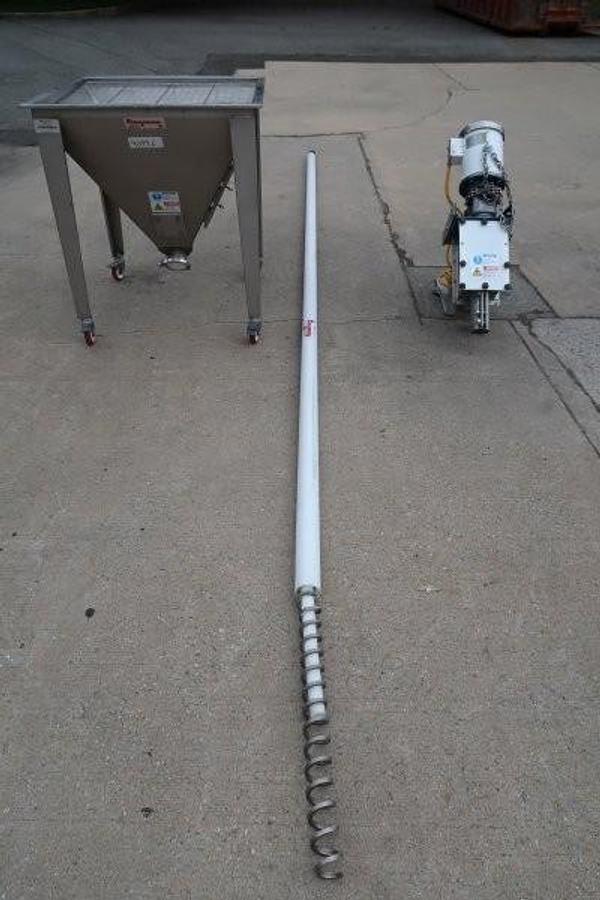
A thorough inspection of a used flexible screw conveyor should cover several key areas. The screw itself should be examined for wear, deformation, or corrosion, since a worn or damaged screw will affect conveying efficiency and may cause material degradation. The flexible tube should be checked for cracks, abrasion wear, or any deformation that could affect the screw's rotation or create dead zones where material accumulates. The drive motor and gearbox should be assessed for condition, and buyers should confirm that the motor specifications match their facility's power supply requirements. Hoppers, lump breakers, and vibrators, where present, should also be inspected for wear and proper function.
Reputable used equipment dealers will accommodate in-person inspections or provide detailed video walkthroughs of the machine. Some units may still be installed and running at a production facility, which allows buyers to observe the conveyor in operation, though dealers typically cannot test it with a buyer's specific product. For units that are decommissioned and in storage, a static inspection combined with motor testing can still reveal a great deal about condition. Buyers should ask dealers specific questions about the unit's service history, the materials it previously conveyed, and whether any components have been replaced. This due diligence is especially important with used equipment, since there is no manufacturer warranty on pre-owned machinery.
What diameter options are typically available for Flexicon flexible screw conveyors, and how does diameter affect capacity?
Flexicon flexible screw conveyors are produced in several tube diameters, with common sizes including 2.5-inch and 4-inch diameter models, among others. Tube diameter is one of the primary factors that determines volumetric conveying capacity. A 2.5-inch diameter conveyor is suited for lower-throughput applications or situations where space is constrained, while a 4-inch diameter unit can move significantly greater volumes of material per unit time. The actual throughput also depends on screw speed, material bulk density, and the angle of incline, so diameter alone does not define capacity.
When evaluating used Flexicon conveyors, buyers should match the tube diameter to their required throughput and the physical size of the material being conveyed. Oversized granules or agglomerates that approach the tube diameter can cause bridging or blockages, so there is a practical upper limit on particle size relative to tube diameter. Used inventory tends to reflect the most common industrial sizes, with 4-inch stainless steel units appearing frequently given their prevalence in food and chemical processing. Buyers with specific capacity requirements should calculate their needed throughput and confirm that the unit under consideration can meet it at a reasonable operating speed.
What is the typical price range for used Flexicon flexible screw conveyors?
Pricing for used Flexicon flexible screw conveyors varies considerably based on tube diameter, construction material, configuration, and overall condition. Smaller or simpler carbon steel units tend to be priced lower, while larger stainless steel models, particularly those with additional features like lump breakers, vibrators, hoppers, or portable base frames, command higher prices. As a general reference point, used flexible screw conveyors from recognized manufacturers like Flexicon are typically priced well below the cost of comparable new equipment, which can make them an attractive option for facilities looking to expand capacity or replace aging equipment without a large capital outlay.
Buyers should factor in the full landed cost when comparing options. Shipping, rigging, crating, and any refurbishment or parts replacement needed to bring the unit into service can add meaningfully to the purchase price. Requesting a detailed quote from the dealer that breaks out equipment price, packaging, freight, and any applicable rigging charges gives a more accurate picture of total acquisition cost. Since used equipment is sold as-is, building in a budget for inspection, cleaning, and any necessary component replacement is a reasonable precaution before committing to a purchase.
Can Flexicon flexible screw conveyors be used at variable incline angles?
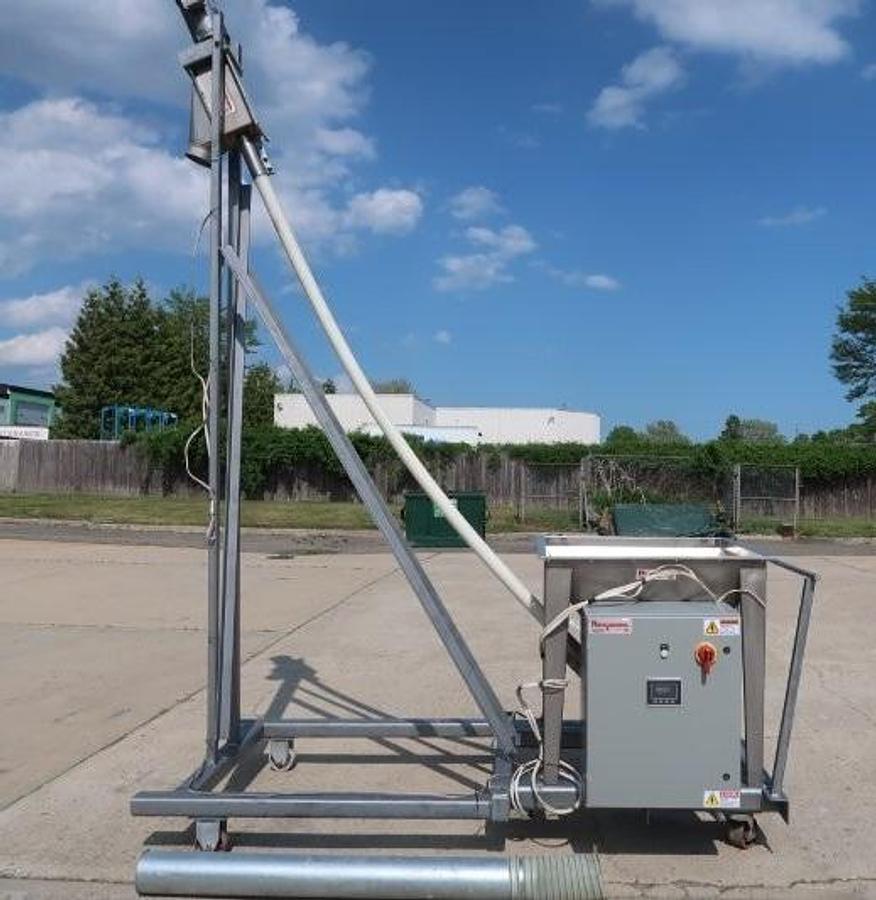
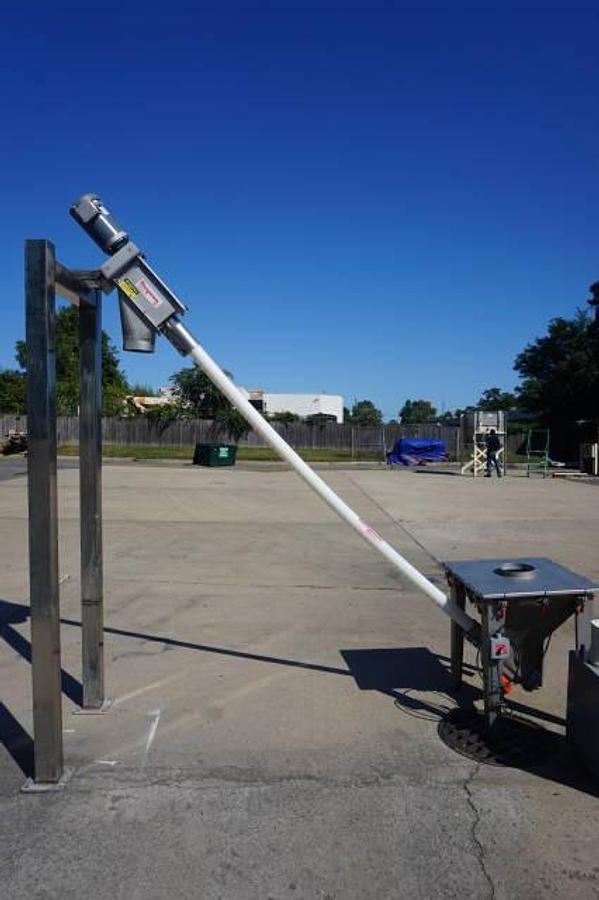
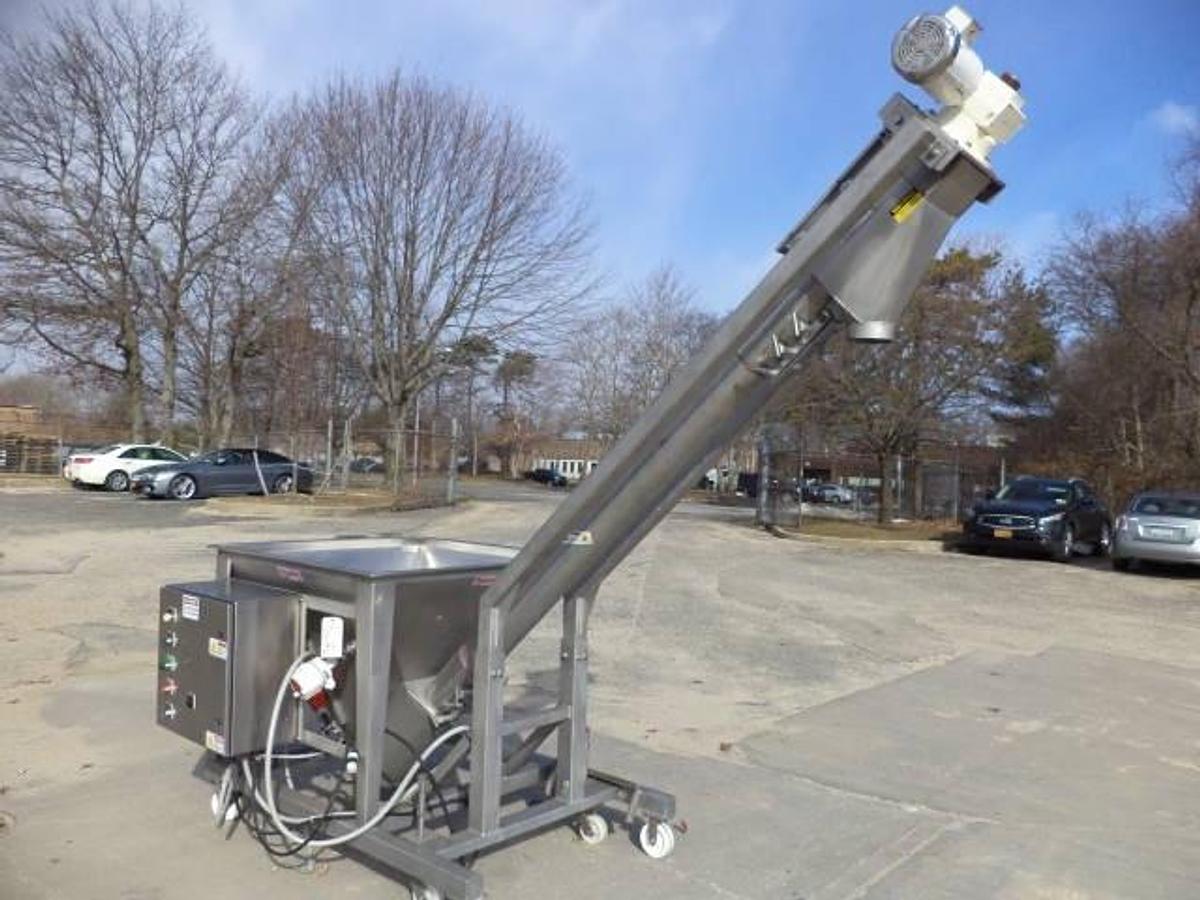
Yes, one of the practical advantages of the flexible screw design is the ability to convey material at a range of incline angles, including steep inclines that would challenge other conveyor types. The rotating screw moves material forward regardless of the tube orientation, so the conveyor can be routed from a low inlet point upward to an elevated discharge at angles that can approach vertical in some configurations. This makes the design well suited for applications where material needs to be elevated from a floor-level hopper or bulk bag unloader to an overhead process vessel, mixer, or packaging machine.
The maximum practical incline depends on the material being conveyed. Free-flowing materials with low bulk density can generally be conveyed at steeper angles without significant capacity loss, while dense or cohesive materials may experience reduced throughput at very steep angles. Used Flexicon units listed as inclined models are already configured with the motor and support structure positioned for angled operation, which simplifies installation. Buyers evaluating portable inclined units should confirm that the base frame and support structure are intact and that the unit's discharge height is compatible with their process equipment.
What are the cleaning and sanitation requirements for Flexicon flexible screw conveyors?
Flexible screw conveyors are generally considered easier to clean than enclosed drag chain or pneumatic conveying systems because the tube and screw can be disassembled relatively quickly. On most Flexicon models, the screw can be withdrawn from the tube for inspection and cleaning, and the tube itself can be flushed or wiped down depending on the material residue. Stainless steel construction simplifies sanitation because the surfaces resist corrosion and can withstand cleaning agents appropriate for food or pharmaceutical environments. Smooth internal finishes reduce the tendency for material to adhere to surfaces.
For facilities with strict sanitation protocols, the frequency and method of cleaning will depend on the materials being conveyed, allergen control requirements, and regulatory standards that apply to the operation. Buyers of used stainless steel Flexicon conveyors intended for sanitary service should inspect the internal surfaces carefully for scratches, pitting, or worn areas that could harbor residue and complicate cleaning. Gaskets, seals, and any plastic components should also be assessed for condition and compatibility with the cleaning agents used in the facility. Replacement tubes and screws are available from Flexicon for many models, so worn contact parts can be refreshed even on older used units, provided the model is still supported.
How does buying a used Flexicon flexible screw conveyor differ from buying a new one, and what should buyers be aware of?
Buying a used Flexicon flexible screw conveyor offers a meaningful cost advantage over purchasing new equipment, and the mechanical simplicity of the design means that well-maintained used units can provide reliable service for many years. However, the buying process requires more diligence. Used equipment is sold as-is, without manufacturer warranties, so the buyer takes on responsibility for assessing condition, confirming suitability for their application, and identifying any components that may need replacement before or shortly after commissioning. This is why selecting a reputable dealer with a track record in industrial and process equipment is important.
Buyers should request as much documentation as possible, including photos, video, or an in-person inspection, and should ask the dealer about the unit's service history and the materials it previously handled. Contacting Flexicon directly is also worthwhile to confirm parts availability and any technical support limitations for older models. Payment in full prior to shipment is standard practice in the used equipment market. Shipping costs, crating, and rigging for loading and unloading should be clarified upfront so buyers understand the total cost before committing. Taking these steps reduces the risk associated with purchasing used machinery and helps ensure the equipment is a good fit for the intended application.