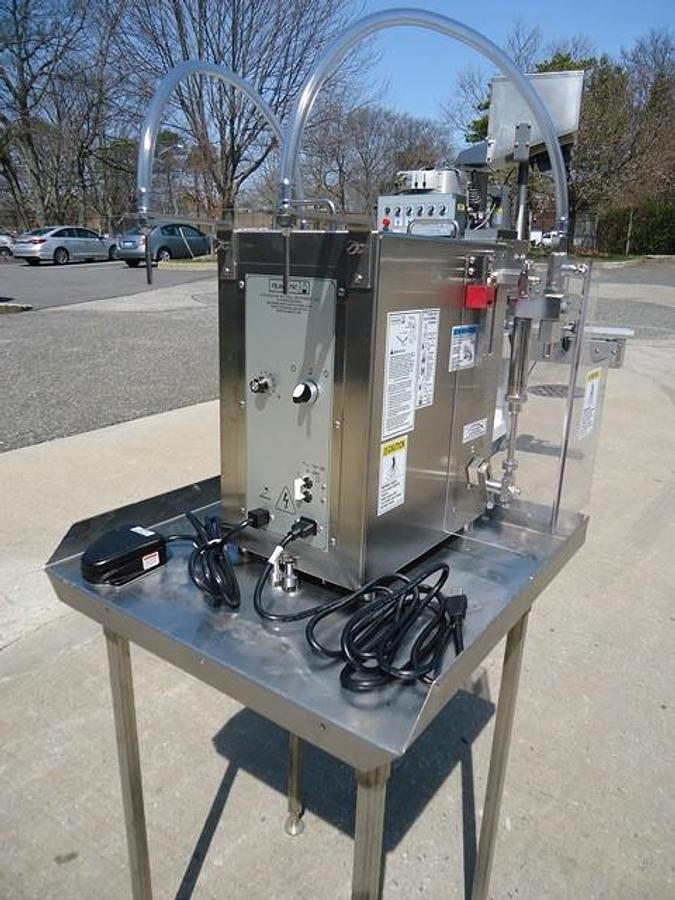
Category
Manufacturer
Model
Filamatic
Filamatic is a key player in the liquid filling industry, providing equipment for pharmaceuticals, cosmetics, and food products. They are especially known for their customizable filling machines that cater to various container types and sizes.
FAQ:
What types of products can Filamatic filling machines handle?
Filamatic filling machines are designed to handle a wide range of liquid and semi-liquid products across multiple industries. Their piston-filling technology is particularly well-suited for thin, free-flowing liquids like water-based solutions, oral medications, and beverages, but the same platform also performs reliably with thicker, more viscous materials. Products like gels, creams, lotions, syrups, oils, and even particulate-laden suspensions fall within the operational range of many Filamatic models, depending on the piston size and valve configuration selected.
The machines are used across pharmaceutical, nutraceutical, cosmetic, food and beverage, and chemical manufacturing environments. Because Filamatic builds its equipment with customizable filling heads and interchangeable components, a single machine can often be adapted to fill different product types by swapping pistons, nozzles, or product contact parts. This flexibility is one of the main reasons the brand has maintained such a strong presence in regulated industries where product changeovers are routine.
What fill volume ranges do Filamatic machines support?
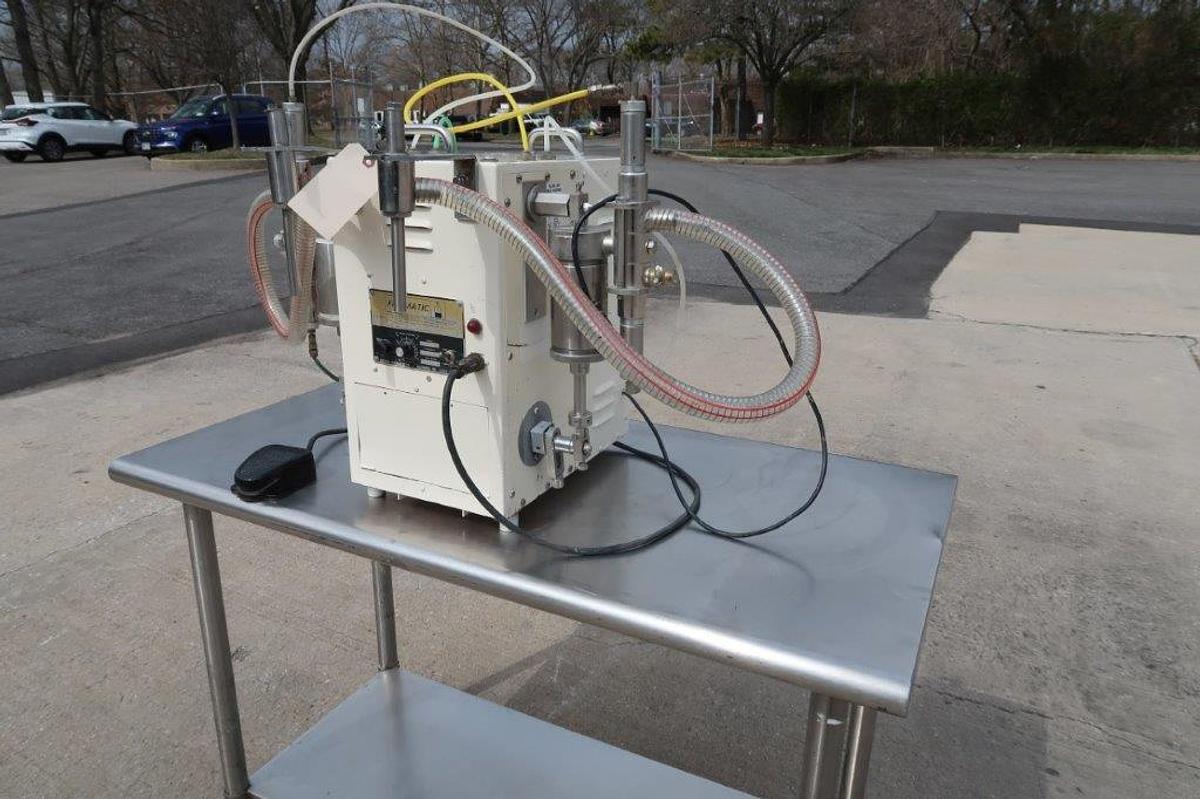
Filamatic machines cover a broad spectrum of fill volumes, making them practical for both small-dose pharmaceutical applications and larger-volume consumer product fills. Specific models available on the used market reflect this range clearly. For example, the Filamatic DAB-8 tabletop two-head piston filler is configured with 260cc pistons, the DAB-32-2 twin piston table top unit comes with 36-ounce pistons, and the 14-head automatic piston filling machine runs 280cc pistons. At the higher end, an eight-piston automatic model is equipped with 520cc pistons.
This variety means buyers can find a Filamatic machine sized appropriately for their specific fill target, whether that is a 5ml pharmaceutical vial or a 32-ounce bottle of personal care product. Piston fillers in general allow for precise volume adjustment, and Filamatic machines are known for achieving fill tolerances within plus or minus 0.5% or better, which is a meaningful specification in industries where dosing accuracy is regulated or where product giveaway directly affects margins.
What industries commonly use Filamatic filling machines?
Filamatic filling machines have built a strong reputation across several regulated and non-regulated industries over decades of production. Pharmaceutical and nutraceutical manufacturers rely on them heavily because of their precision and the ability to meet Good Manufacturing Practice standards. Cosmetic and personal care companies use them to fill creams, serums, shampoos, and similar products. Food and beverage producers, particularly those working with sauces, oils, dressings, and syrups, also turn to Filamatic equipment because of its hygienic design and repeatable accuracy.
Chemical and industrial liquid manufacturers round out the common user base. Because Filamatic machines are built with product contact materials that can be specified for corrosive or aggressive formulations, they find use well beyond traditional consumer goods. The brand's long history, dating back to the 1940s under National Instrument LLC in Baltimore, Maryland, means there is a large installed base across all of these sectors, which in turn creates a steady supply of used machines when facilities upgrade, consolidate, or change product lines.
What is the difference between semi-automatic and fully automatic Filamatic filling machines?
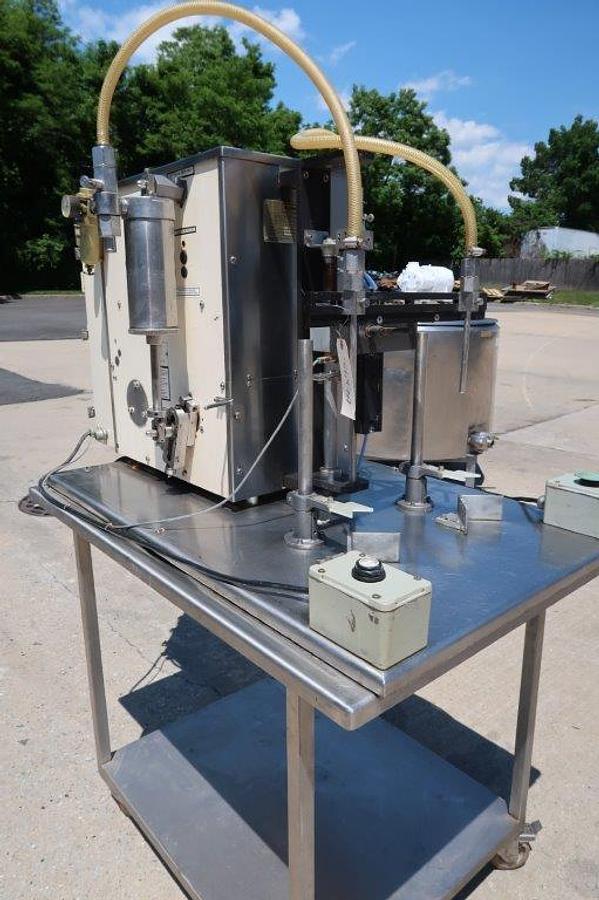
Semi-automatic Filamatic machines, often tabletop units like the DAB series, require an operator to position containers and typically initiate each fill cycle manually or with a foot pedal. They are well-suited for small-batch production, R&D environments, start-up operations, or facilities that run a high number of product changeovers and need flexibility. Their simpler mechanical design also tends to make them easier to maintain and adjust, which is an advantage in settings where dedicated maintenance staff may not be available.
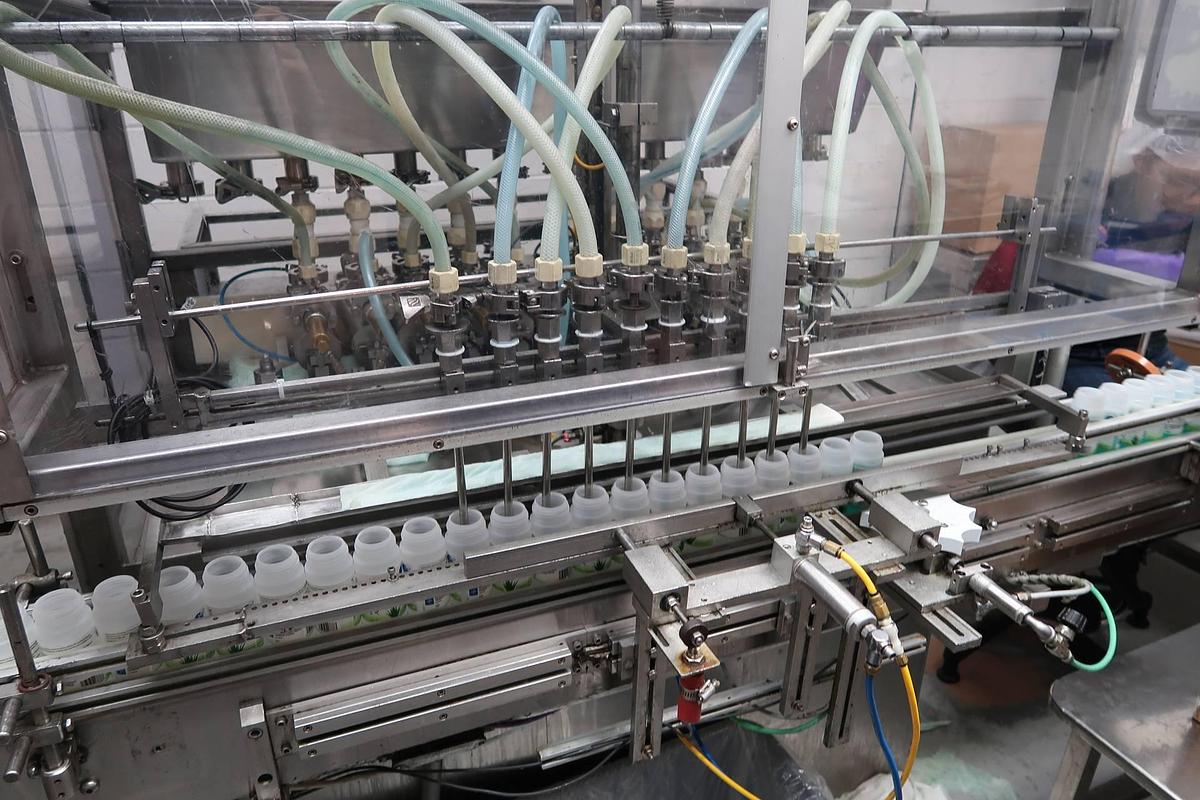
Fully automatic Filamatic machines integrate container indexing, filling, and in some cases capping or conveying into a continuous production line with minimal operator intervention. Models like the 14-head automatic piston filler are designed for sustained high-volume output, where consistent speed and throughput are priorities. The choice between the two configurations depends on production volume requirements, available floor space, budget, and how frequently the line needs to be reconfigured for different containers or products. Both types appear regularly on the used equipment market and can represent strong value compared to purchasing the same capability as unused equipment.
How accurate are Filamatic piston filling machines?
Piston filling is one of the more precise volumetric filling technologies available, and Filamatic machines are generally recognized for achieving fill tolerances within plus or minus 0.5% or better under normal operating conditions. This level of accuracy is significant in pharmaceutical and nutraceutical applications where regulatory compliance requires consistent dosing, and it also matters in any production environment where product giveaway adds up over large run volumes. The piston mechanism works by drawing a fixed, adjustable volume of product into a cylinder and then dispensing it directly into the container, which limits the variability introduced by factors like container geometry or foaming.
On used machines, actual fill accuracy in service will depend on the condition of the pistons, cylinders, valves, and seals. Worn or damaged product contact components can affect repeatability, which is one reason thorough inspection before purchase matters. Buyers evaluating a used Filamatic machine should ask about the condition of the piston and valve assemblies specifically, and factor in the cost of any replacement parts needed to restore the machine to its intended performance specifications.
What should buyers look for when purchasing a used Filamatic filling machine?
Buying used filling equipment requires a more deliberate evaluation process than purchasing from a manufacturer, since the machines arrive without production history documentation in most cases. The most important areas to assess are the condition of product contact parts, including pistons, cylinders, seals, valves, and fill nozzles, since these components wear over time and directly affect fill accuracy and sanitary performance. Electrical components, drive systems, and control panels should also be checked, particularly on fully automatic models where the integration of multiple systems adds complexity.
Reputable used equipment dealers will typically offer in-person inspections, video walkthroughs, or recorded video captures of the machine so buyers can assess its condition before committing. Some machines may still be installed at a production facility where the equipment is actively running or has recently been decommissioned, which can provide useful context about its operating history. Buyers should also contact Filamatic's manufacturer, National Instrument LLC, to understand parts availability and technical support options for the specific model and age of machine they are considering, since older models may have more limited support resources.
Do Filamatic filling machines meet FDA or GMP compliance requirements?
Filamatic machines are designed with pharmaceutical and regulated industry applications in mind, and many models are built to comply with Good Manufacturing Practice standards. Features that support GMP compliance typically include stainless steel product contact surfaces, tool-free or quick-disassembly components for cleaning and sanitization, and designs that minimize dead legs or areas where product can pool and degrade. These characteristics make Filamatic equipment a common choice in FDA-regulated pharmaceutical and nutraceutical manufacturing environments.
For buyers considering used Filamatic machines, it is worth noting that compliance in practice depends not just on the machine's design but on its current condition and how it is integrated into a validated production environment. A used machine may require cleaning, inspection, and potentially replacement of worn product contact parts before it can be put into service in a regulated facility. Buyers in pharmaceutical or food applications should plan for a qualification and validation process appropriate to their regulatory obligations, and should consult with their quality and compliance teams early in the purchasing process.
What is the typical production speed of Filamatic filling machines?
Production speed on Filamatic machines varies considerably depending on the model, number of filling heads, product viscosity, and container type. Tabletop semi-automatic units like the DAB series are designed for lower-volume production and are typically operated at the pace of the operator managing container placement and cycle initiation. Fully automatic multi-head models, such as the 14-head piston filler, are built for sustained line production and can achieve significantly higher throughput measured in containers per minute, though actual speeds depend on fill volume and product flow characteristics.
As a general reference point, multi-head automatic piston fillers in this category are commonly capable of filling anywhere from several hundred to over a thousand containers per hour under optimal conditions, with larger fill volumes per cycle naturally reducing cycle rates. Buyers evaluating a specific used machine for a production application should request technical documentation if available, or ask the seller for any known specifications on the unit. Running the machine through a cycle demonstration during inspection, even without product, can give a useful indication of mechanical condition and approximate cycle timing.
What are the typical payment terms when buying a used Filamatic filling machine from a dealer?
Used equipment dealers generally require full payment before a machine is released for shipping. This is standard practice across the industry and applies to most transactions regardless of machine size or price. Some dealers may extend payment terms to established customers with a prior purchasing history, but buyers who are new to a particular dealer should expect to pay in full upfront. Accepted payment methods vary by dealer but commonly include wire transfer, ACH, and in some cases credit card for smaller purchases.
Because used machinery is typically sold as-is without the protections that come with manufacturer-backed purchases, buyers should treat the payment and inspection process as closely linked. Completing a thorough inspection, whether in person, by video, or through detailed photos and documentation provided by the seller, before finalizing payment is the most practical way to reduce risk. Understanding the full landed cost of the equipment, including packaging, rigging, freight, and any applicable taxes or import duties, is also important before committing to a purchase.
How is a used Filamatic filling machine typically shipped, and what should buyers expect for freight costs?
Shipping a filling machine involves more logistics than standard freight, and costs can vary significantly depending on the size and weight of the equipment, the origin and destination, and the level of packaging required. Smaller tabletop units like the Filamatic DAB series can often be palletized and shipped via standard LTL freight carriers, while larger multi-head automatic machines may require custom crating and heavier-duty rigging for both loading at the origin and unloading at the destination. Rigging services, which involve the use of forklifts, cranes, or specialized equipment to move heavy machinery safely, are typically an additional cost beyond the base freight rate.
Buyers should ask the seller for a detailed breakdown of all shipping-related costs before finalizing a purchase, including palletization or crating fees, rigging charges, freight to destination, and any liftgate or inside delivery requirements at the receiving facility. Having the right unloading equipment arranged in advance at the buyer's facility is important, particularly for heavier automatic filling machines that cannot be moved with standard pallet jacks. Getting a clear picture of the total landed cost, including freight and handling, helps avoid surprises and allows for accurate comparison of different machines offered at different price points.