Category
Subcategory
Manufacturer
Model
Doboy/Sig
Doboy/Sig is known for its precision-driven packaging machinery, catering to food, pharmaceutical, and consumer goods sectors.
FAQ:
What types of packaging machinery does Doboy/SIG manufacture, and which models appear most often on the secondary market?
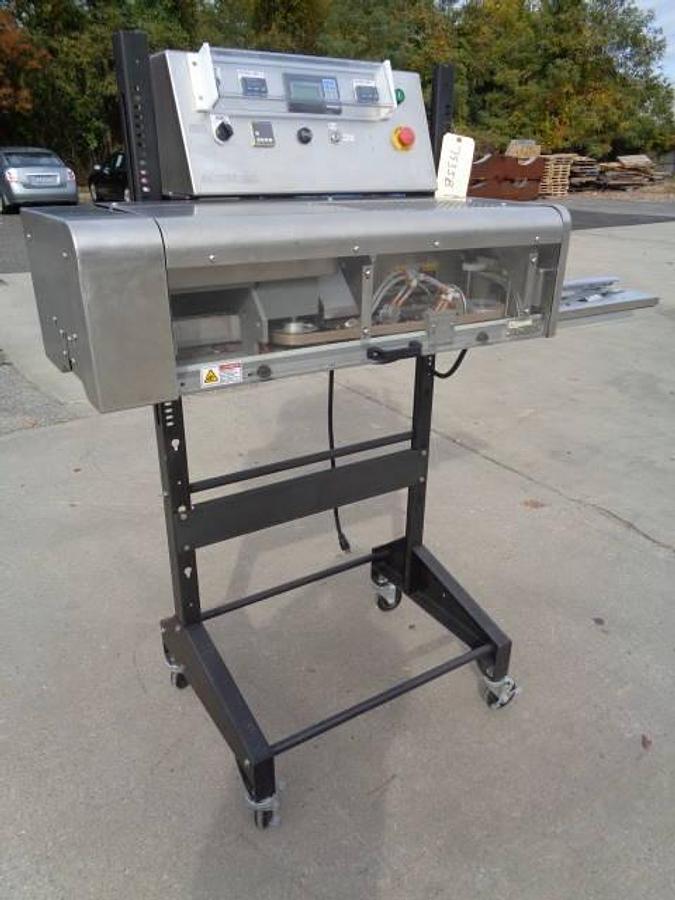
Doboy/SIG produces a broad range of packaging equipment, with horizontal flow wrappers being the most recognized and widely used product line. Other equipment types include continuous band sealers, pouch filling machines, overwrappers, cartoners, and strappers. The B-500M Continuous Band Sealer is one example of a medical-grade machine that surfaces in the used equipment market. Horizontal flow wrappers from the SIG Pack Doboy series are particularly common on the secondary market because they were produced in large quantities and deployed across many industries over several decades.
Models that buyers encounter most frequently include the Doboy Strapper, various Doboy Horiz configurations, and SIG Pack Doboy series wrappers. The brand's reputation for durability means many of these machines remain fully operational long after their initial installation, which is a primary reason they hold strong resale value. Buyers shopping the secondary market will find machines suited to a wide range of production speeds and product types, from compact units designed for lower-volume lines to high-speed machines built for continuous industrial production.
What is the history behind the Doboy and SIG brands, and how did they become one combined brand?
Doboy was a U.S.-based packaging machinery manufacturer with a long history of producing reliable wrapping and sealing equipment for North American food and consumer goods manufacturers. The company became particularly well known for its horizontal flow wrappers, which became a standard piece of equipment in bakery, candy, and snack food production lines. At some point, Doboy was acquired by SIG Pack, a Swiss packaging machinery conglomerate with a broad portfolio of equipment brands serving global markets. The acquisition brought together Doboy's established North American presence and SIG's engineering resources and international distribution network.
The result was the combined brand commonly referred to as Doboy/SIG, which continued to produce and support the existing Doboy equipment lines while integrating them into SIG's broader product family. This history matters to buyers of used equipment because it affects parts sourcing, technical documentation availability, and manufacturer support. Machines built under the Doboy name before the acquisition and those built under the SIG Pack Doboy designation afterward may have different engineering standards, electrical configurations, and available service resources. Understanding which generation of machine you are purchasing helps set realistic expectations for ongoing maintenance.
What industries and applications are Doboy/SIG packaging machines best suited for?
Doboy/SIG equipment was designed with precision and throughput in mind, which made it a strong fit for industries where consistent, high-speed packaging is critical. The food industry has historically been the largest user of this equipment, with bakery goods, candy bars, crackers, snack foods, and confectionery products among the most common applications for horizontal flow wrappers. The pharmaceutical and medical device sectors also rely on Doboy/SIG machines, particularly for sealing applications where integrity and repeatability are non-negotiable. The B-500M Continuous Band Sealer, for example, is a medical-grade machine designed specifically for those demanding environments.
Beyond food and pharma, Doboy/SIG equipment is used in personal care, hardware, and general consumer goods packaging. The machines' ability to handle a wide variety of product sizes, shapes, and film types makes them adaptable across many production environments. Buyers from contract packaging operations often find Doboy/SIG equipment appealing precisely because of this flexibility. A single horizontal flow wrapper, for instance, can be retooled with different film rolls and change parts to accommodate multiple product SKUs, which is a significant operational advantage for facilities running diverse product lines.
What is the typical price range for used Doboy/SIG packaging machinery?
Pricing for used Doboy/SIG equipment varies considerably depending on the machine type, model, age, condition, and any included tooling or change parts. Entry-level or older sealing machines can be found at relatively modest price points, while high-speed horizontal flow wrappers in good working condition command significantly higher prices. As a general reference point, used horizontal flow wrappers from established brands like Doboy/SIG often range anywhere from a few thousand dollars for older or non-running machines to well over $50,000 for newer, well-maintained units with low hours and current controls packages. Medical-grade sealing equipment tends to carry a premium due to the specificity of its design and the regulatory environments it serves.
Buyers should factor in more than the asking price when calculating the true cost of acquisition. Rigging, crating, freight, and any reconditioning work needed after delivery all contribute to the total landed cost. It is worth asking the selling dealer for a detailed breakdown of these costs upfront. Additionally, sourcing any missing change parts or spare components before or shortly after purchase can add to the total investment, particularly for older machines where certain parts may require sourcing through specialty suppliers or fabrication.
Are replacement parts and spare components still available for older Doboy/SIG machines?
Parts availability for Doboy/SIG equipment depends heavily on the age and specific model of the machine in question. For machines produced during the active SIG Pack Doboy era, many mechanical components, wear parts, and electrical items may still be available through the manufacturer's current support channels or through authorized service networks. However, for older Doboy machines built before the SIG acquisition, parts availability can be more limited, and buyers may need to rely on aftermarket suppliers, used parts dealers, or custom fabrication for certain components. Consulting directly with the manufacturer or their current service organization before purchasing a machine is a practical step that helps buyers understand what level of ongoing support they can realistically expect.
Some buyers proactively address the parts question by purchasing a second machine of the same model as a parts donor, particularly when acquiring older equipment at a low price point. Others work with experienced packaging machinery technicians who can fabricate or source equivalent components. Electrical controls are often the most challenging area for older machines, as obsolete PLCs and drives can be difficult to replace with exact matches. In those cases, a controls upgrade may be the most cost-effective long-term solution. Regardless of the approach, understanding the parts landscape before committing to a purchase helps avoid costly surprises after the machine arrives.
How should a buyer verify the condition and working history of a used Doboy/SIG machine before purchasing?
Verifying the condition of used packaging equipment is one of the most important steps in the buying process, and reputable dealers will accommodate multiple forms of inspection. In-person inspections are generally the most thorough option, allowing a buyer or their technician to physically examine the machine, check for wear on critical components, review any available maintenance logs, and assess the condition of electrical panels, drives, and controls. Some machines are still installed and running in production facilities at the time of sale, which provides the added benefit of seeing the equipment operate under real conditions. In those cases, the dealer typically coordinates access with the facility owner.
For buyers who cannot travel, video inspections and detailed photo documentation are widely offered alternatives. A thorough video walkthrough should cover the machine running (if possible), close-up views of the sealing heads or forming components, the condition of the film path, and the state of the electrical cabinet. Buyers should ask specific questions about any visible wear, recent repairs, and whether the machine was decommissioned or actively running up until the time of sale. Keep in mind that most used equipment dealers do not have the permitting or infrastructure to run actual production through a machine, so functional testing is generally limited to powering the machine up and cycling it through its motions rather than running live product. Engaging a qualified packaging machinery technician to accompany or conduct the inspection on your behalf is a sound investment, especially for higher-value purchases.
What are the power and utility requirements for Doboy/SIG horizontal flow wrappers and band sealers?
Power requirements for Doboy/SIG packaging equipment vary by model and the era in which the machine was manufactured. Most industrial horizontal flow wrappers operate on three-phase electrical power, commonly at 208-230V or 460V in North American configurations, though machines originally installed in European facilities may be configured for 380-400V three-phase power and may require a transformer or electrical conversion before use in the U.S. Band sealers and smaller sealing machines are more likely to operate on single-phase power, though this depends on the specific model. Compressed air is required for many Doboy/SIG machines that use pneumatic components for product feeding, film tension control, or jaw actuation.
Buyers should request the full machine specifications, including the electrical schematic and utility requirements, from the seller before finalizing a purchase. This documentation helps facility engineers confirm that the existing power infrastructure can support the machine or identify what modifications are needed. For machines that have been in storage or decommissioned for an extended period, it is also worth having an electrician inspect the wiring and control components before powering the machine up for the first time. Utility compatibility is a practical detail that is easy to overlook during the excitement of acquiring equipment, but addressing it before delivery prevents delays and unexpected costs during installation.
What should buyers understand about shipping and rigging costs for used Doboy/SIG equipment?
Shipping costs for used packaging machinery are rarely simple to estimate without knowing the machine's dimensions, weight, origin location, and destination. Doboy/SIG horizontal flow wrappers and similar equipment can be substantial in size and weight, which typically means they require professional rigging for loading at the origin and unloading at the destination. Rigging involves the use of forklifts, cranes, or specialized equipment to safely move heavy machinery, and these services are typically quoted separately from freight charges. Buyers should ask the dealer to provide a detailed breakdown of all costs involved, including any palletization, crating, or skidding needed to protect the machine during transit.
The level of packaging required directly affects shipping costs. A machine that is carefully crated with blocking and bracing to protect sensitive components will cost more to prepare for shipment than one placed on a simple pallet, but the added protection reduces the risk of damage in transit. For long-distance or international shipments, crating is generally considered the safer option. Buyers receiving large equipment should also confirm in advance that their facility has the appropriate unloading equipment available, since a delivery truck arriving without a way to offload the machine creates immediate logistical problems. Clarifying all of these details with the dealer before purchase ensures there are no surprises when the machine arrives.
What payment terms are typically offered when purchasing used Doboy/SIG packaging machinery?
Used equipment transactions are generally structured around payment in full before the machine ships. This is standard practice across the used packaging machinery industry and reflects the nature of selling pre-owned capital equipment where the seller needs to confirm cleared funds before releasing inventory. Wire transfer is the most common payment method for transactions of this size, though some dealers accept other forms of payment depending on the arrangement. Buyers who have an established purchasing history with a particular dealer may occasionally be offered more flexible terms, but this is the exception rather than the rule for first-time transactions.
For buyers who need financing, third-party equipment financing companies specialize in used machinery purchases and can often structure loans or leases around pre-owned industrial equipment. Arranging financing in advance of making an offer is a practical approach that speeds up the transaction once a deal is agreed upon. Buyers should also be aware that the full cost of the transaction includes not just the machine price but also any agreed-upon rigging, crating, and freight charges, all of which are typically invoiced and paid before the equipment leaves the seller's location. Understanding the complete financial picture before committing to a purchase prevents delays and misunderstandings at the time of payment.
Why do used Doboy/SIG machines retain strong resale value compared to other packaging equipment brands?
The resale value of used packaging equipment is driven by a combination of brand reputation, build quality, and the breadth of industries that can use the equipment. Doboy/SIG machines earned a strong reputation over decades of production for being reliable, well-engineered, and capable of maintaining consistent performance over long production runs. Many of these machines were built with robust mechanical components and straightforward designs that make them easier to maintain and repair than more complex or proprietary systems. It is not uncommon to find Doboy/SIG horizontal flow wrappers that have been running in production for 20 years or more and are still performing reliably, which speaks directly to the quality of the original engineering.
Another factor supporting resale value is the wide applicability of the equipment. A horizontal flow wrapper that can handle bakery products, medical devices, hardware, and consumer goods is attractive to a much larger pool of potential buyers than a machine designed for a single narrow application. This broad demand keeps prices relatively firm even as machines age. The brand's recognition among packaging engineers and maintenance technicians also plays a role. Buyers are more willing to pay a fair price for equipment they or their team already know how to operate and maintain, reducing the learning curve and integration risk that sometimes accompanies less familiar brands.