Category
Manufacturer
Model
Day
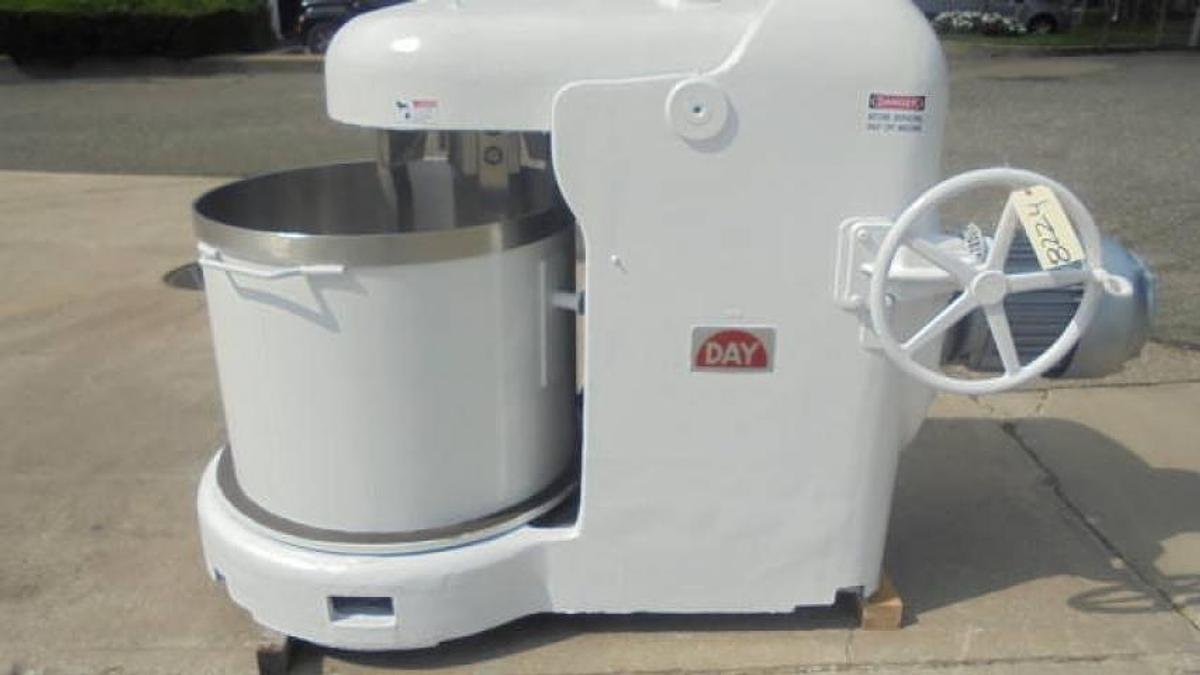
Day is known for its comprehensive range of manufacturing equipment tailored for the construction and agricultural industries. Their product offerings include concrete mixers and agricultural machinery, which are designed for durability and high performance. Day’s machines are widely used in various production environments.
FAQ:
What types of industrial mixers and blenders does Day Equipment manufacture?
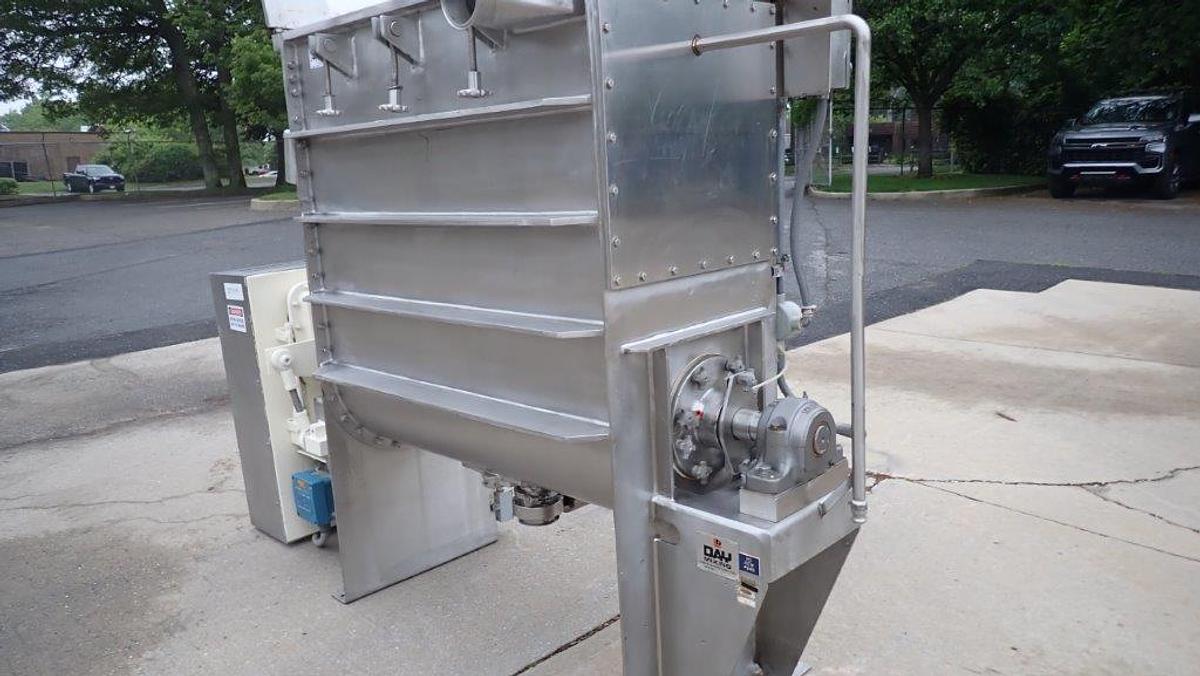
Day Equipment Corporation produces a wide range of industrial mixing and blending equipment designed for diverse production environments. Their core product lineup includes double ribbon blenders, double arm sigma blade mixers, pony mixers, and laboratory-scale mixing units. Each machine type is engineered for a specific class of materials and mixing requirements, so the right choice depends heavily on the viscosity, batch size, and end-use application of the materials being processed.
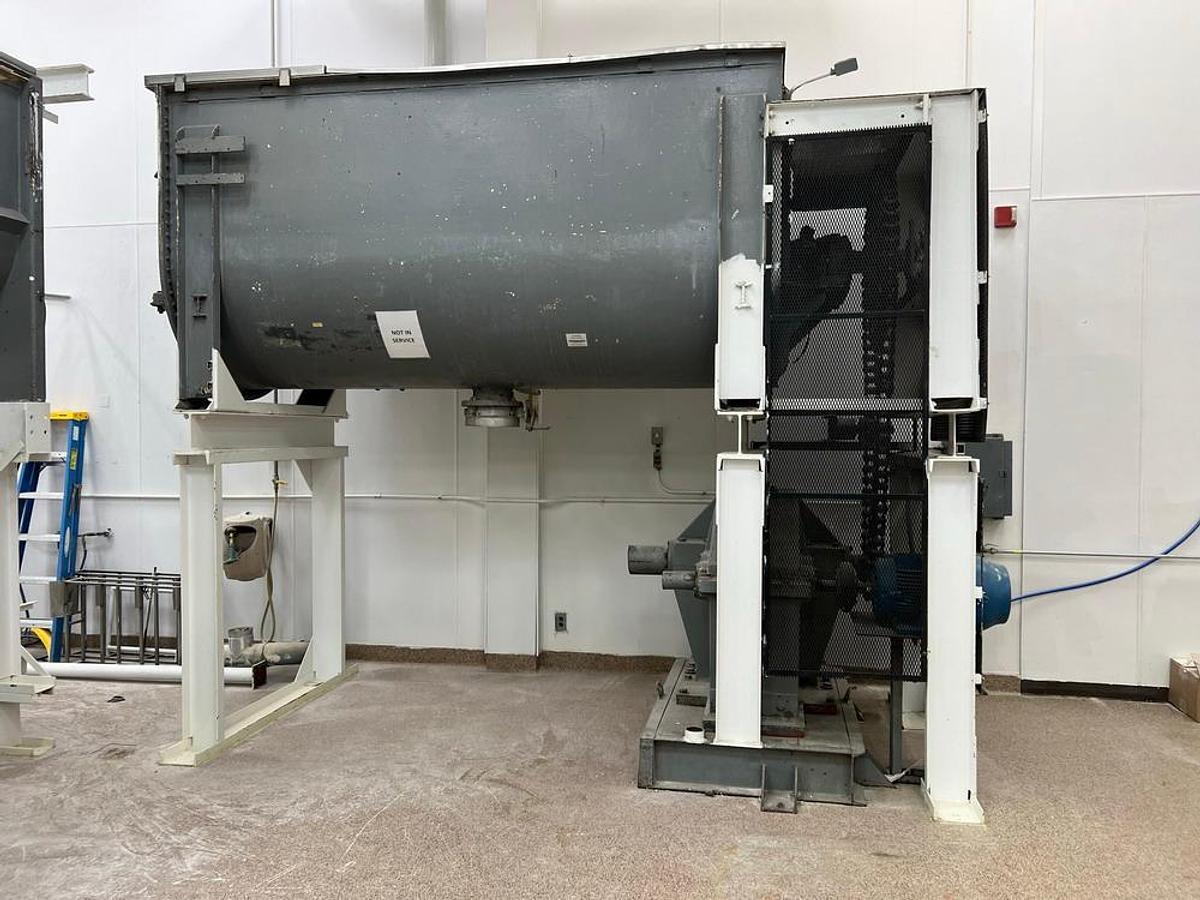
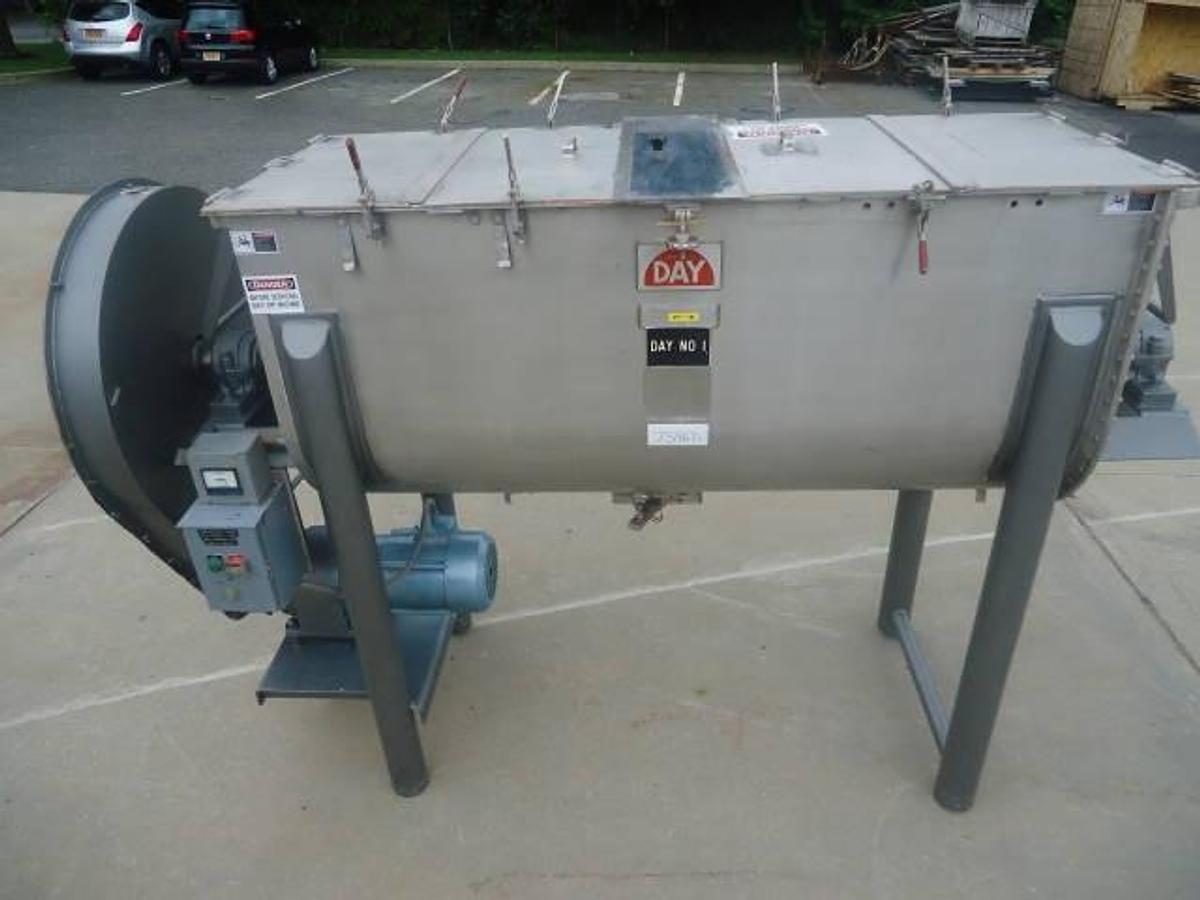
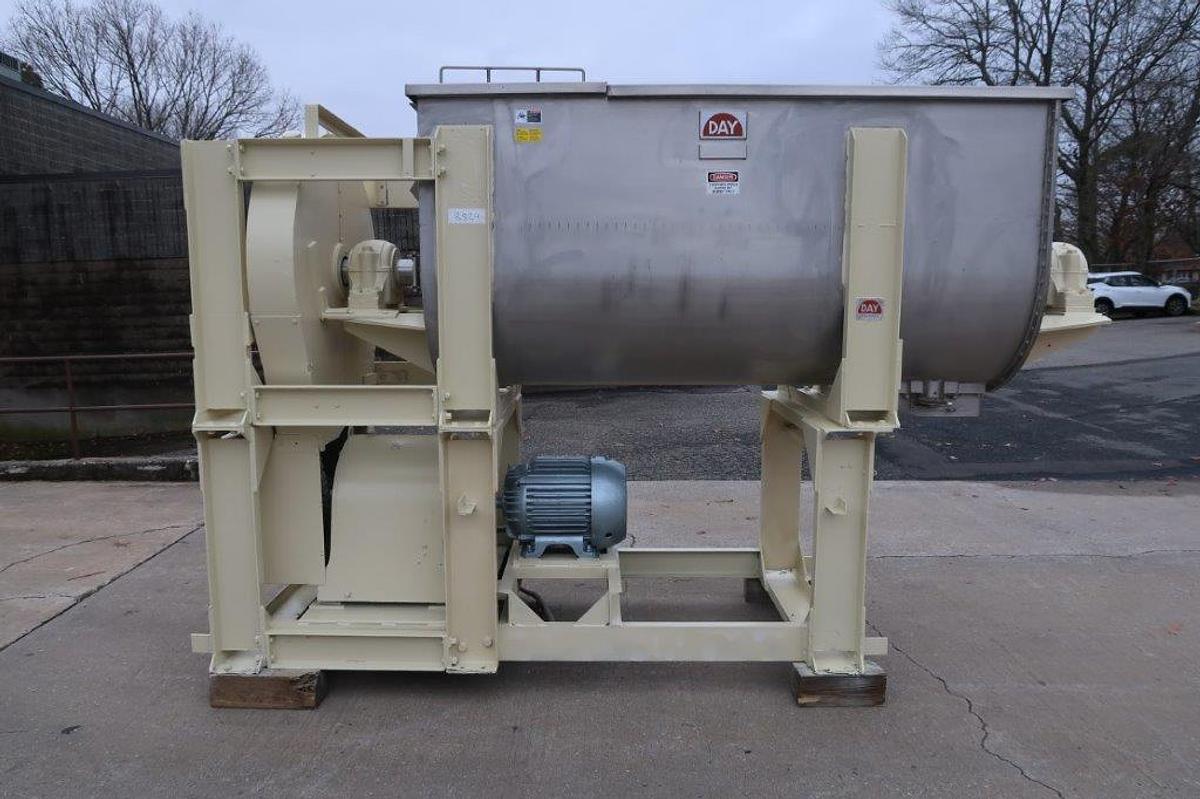
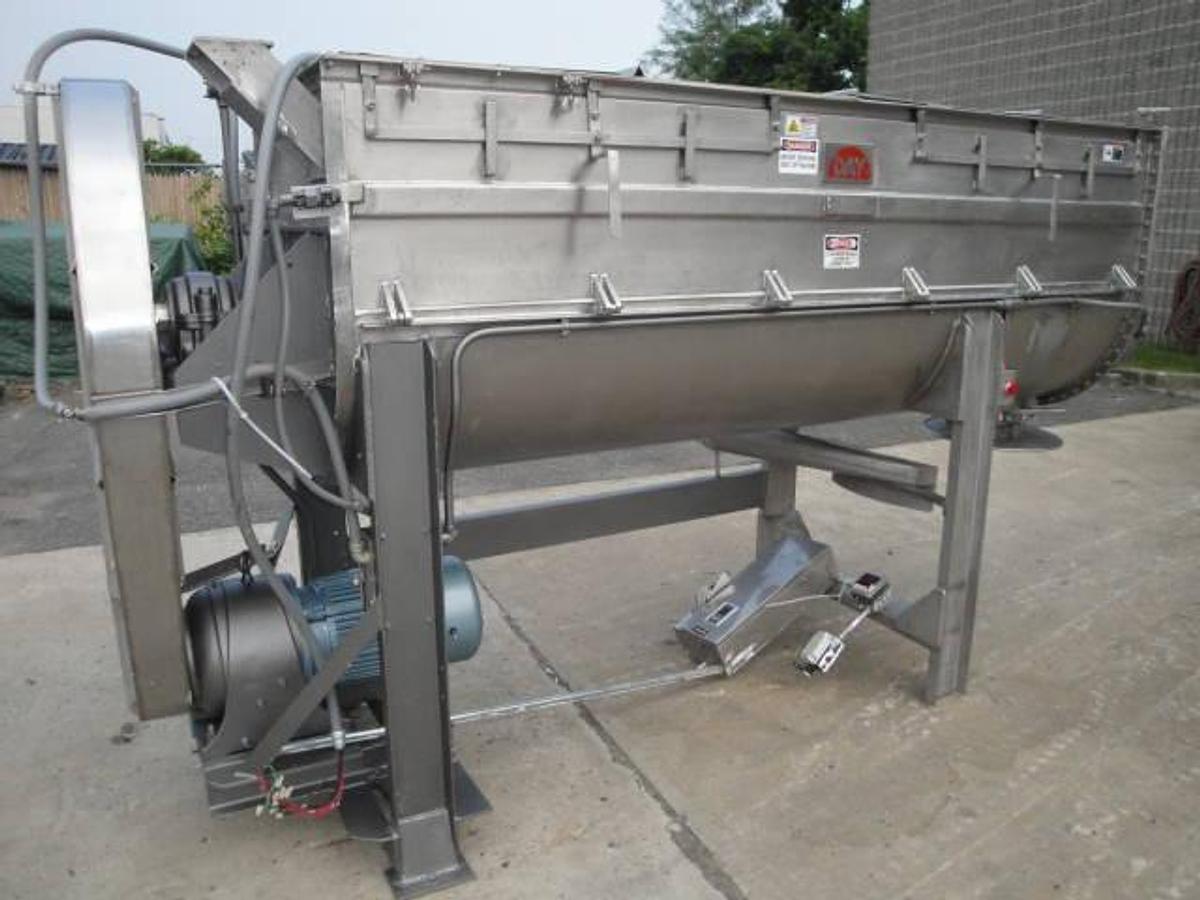
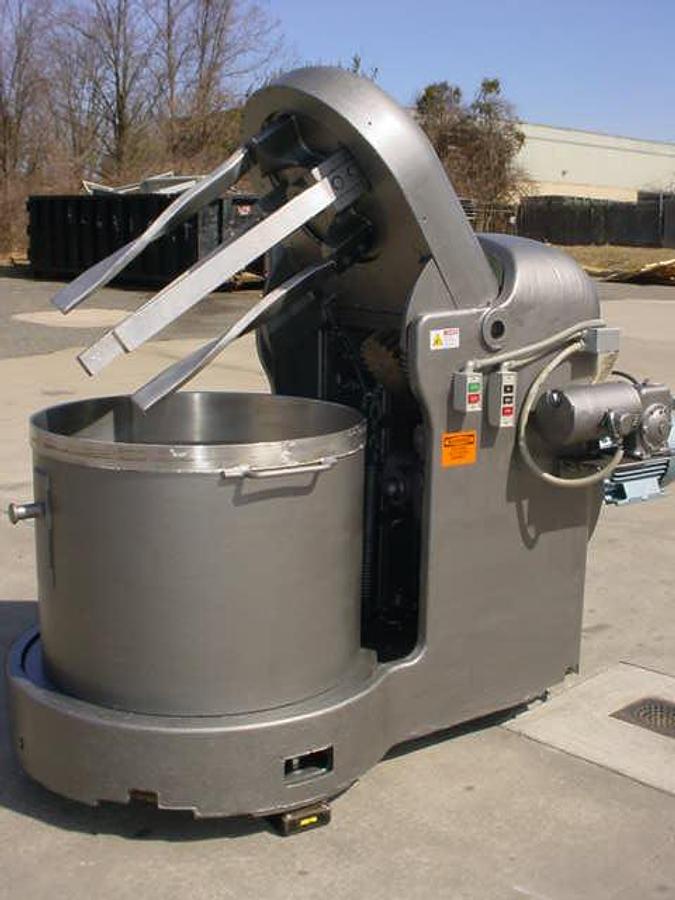
Double ribbon blenders are among the most commonly available Day machines on the used market, and they come in a broad range of capacities, from compact 1.3 cubic foot units suited for small-batch or lab work all the way up to 200 cubic foot production models capable of handling large-scale industrial output. Sigma arm mixers are typically used for high-viscosity materials that require intensive kneading action, while pony mixers handle lower-viscosity blending tasks in capacities around 50 to 100 gallons. The variety across the Day lineup means buyers can often find a machine that closely matches their specific process needs.
What capacity range is available for used Day industrial ribbon blenders?
Used Day ribbon blenders span a very wide capacity range, making them a practical option for operations of almost any scale. On the smaller end, laboratory and pilot-scale units start at around 1.3 cubic feet, which is useful for formula development, testing, or small specialty batches. Mid-range production models are commonly found in the 17.5 to 75 cubic foot range, and larger industrial units extend to 160 and 200 cubic feet or beyond, with motors reaching up to 75 horsepower to handle the demands of high-volume blending.
When selecting a capacity, buyers typically factor in batch size requirements, material bulk density, and the fill ratio of the blender, since ribbon blenders are generally operated at 40 to 60 percent of their rated volume to allow proper material movement. Buying a used machine in the right capacity range rather than oversizing can also reduce energy costs and improve blending consistency. The used market for Day blenders tends to include a solid cross-section of sizes, so matching capacity to production needs is usually achievable without settling for a poor fit.
Are used Day industrial mixers suitable for food-grade or pharmaceutical applications?
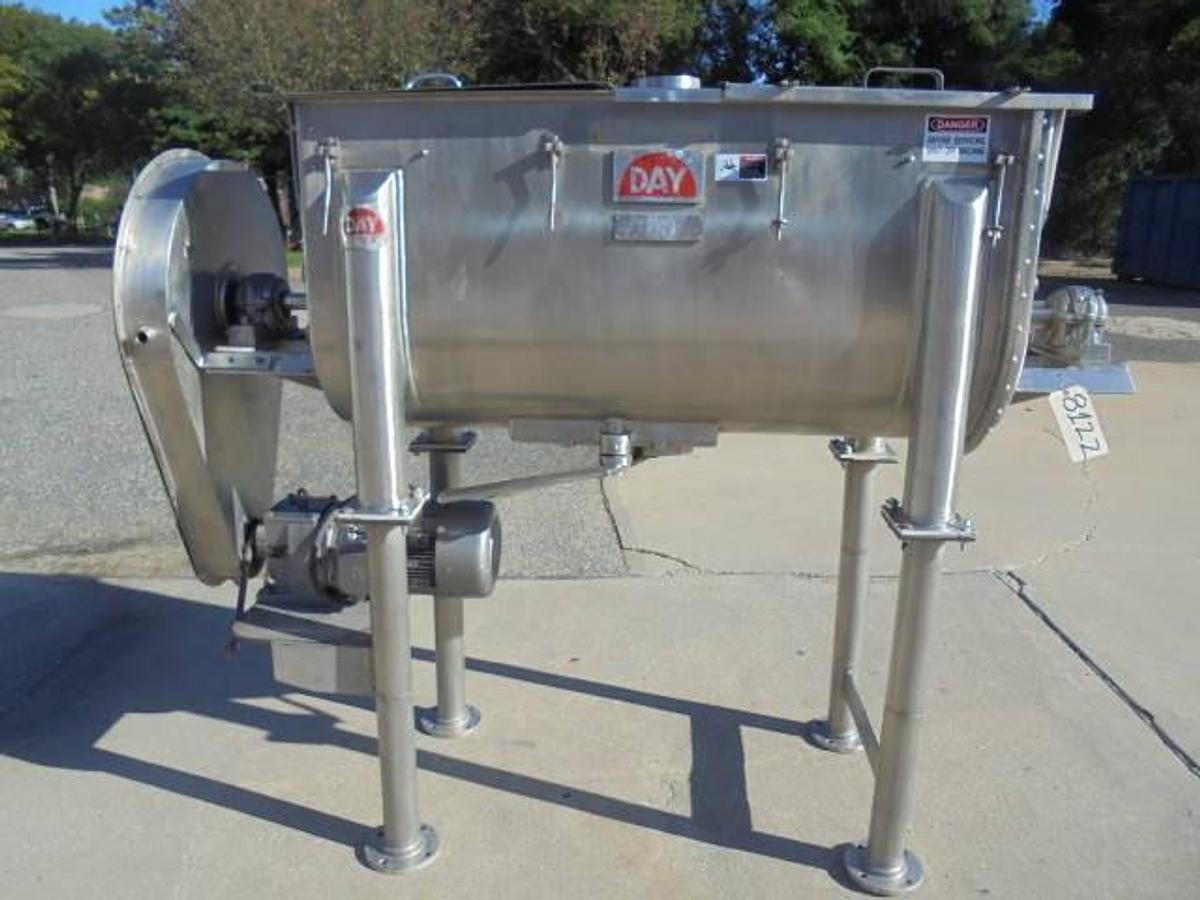
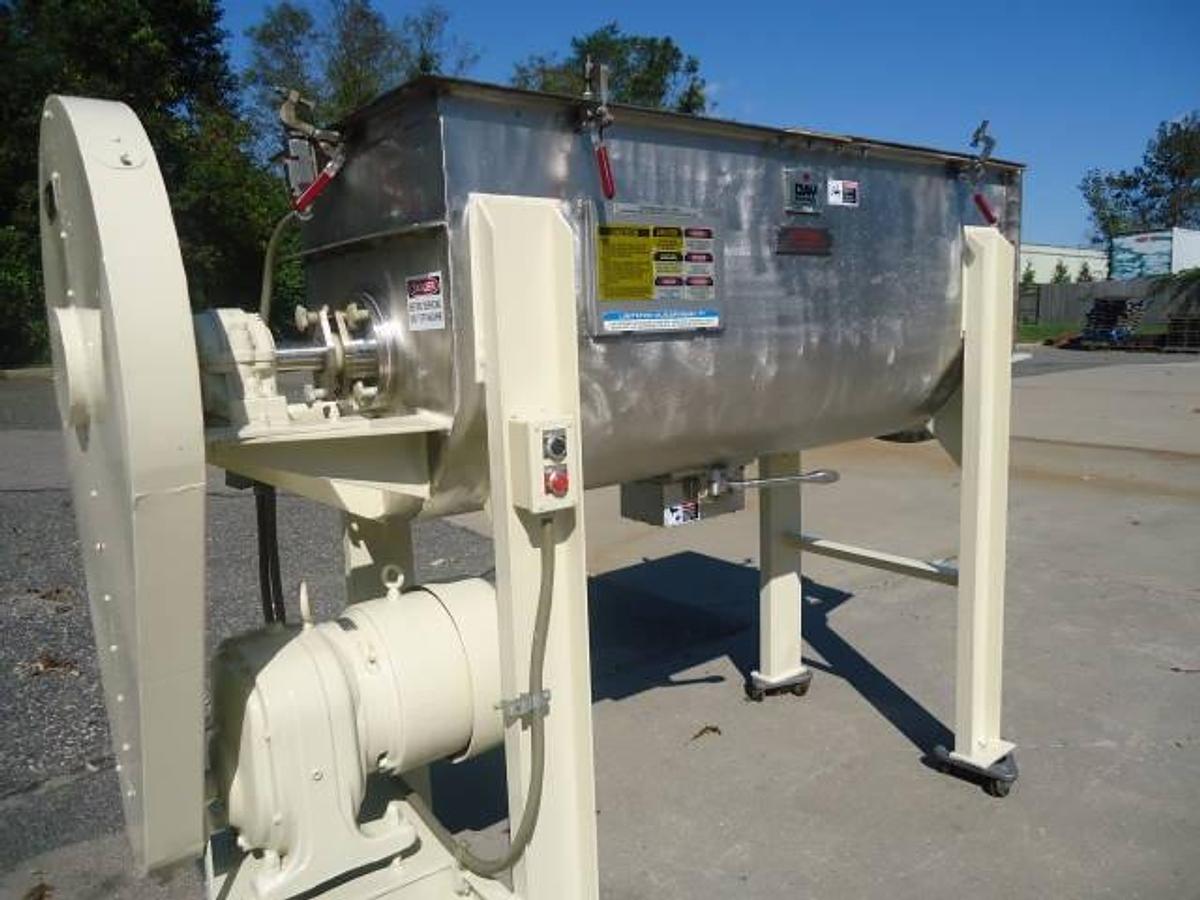
Many used Day mixers and blenders were built with food-grade and pharmaceutical-grade processing in mind, and a number of models feature sanitary stainless steel construction that meets the hygienic standards required in those industries. Machines designated as sanitary models typically include features like center bottom discharge valves, polished interior surfaces, and minimal crevices where product can accumulate, all of which are important for cleanability and compliance with FDA or cGMP guidelines. For example, Day has produced sanitary double ribbon blenders with 8-inch center bottom discharge configurations specifically suited to these demanding environments.
That said, buyers purchasing used equipment for regulated industries should conduct a thorough inspection before putting a machine into service. Surface condition, seal integrity, and the history of materials previously processed in the machine are all relevant factors. A used equipment dealer specializing in process and mixing equipment can typically provide detailed photos, video walkthroughs, or in-person inspections to help buyers assess whether a specific machine meets their sanitary requirements. Consulting with a qualified equipment engineer or validation specialist is also advisable before deploying used mixing equipment in a regulated production environment.
What materials are Day industrial mixer and blender vessels typically made from?
Stainless steel is the dominant construction material across the Day mixer and blender lineup, and it appears consistently across their ribbon blenders, sigma arm mixers, and pony mixers. The use of stainless steel makes these machines resistant to corrosion, easier to clean, and compatible with a wide range of chemical, food, and pharmaceutical materials. Both 304 and 316 grade stainless steel appear in Day equipment, with 316 grade offering greater resistance to chlorides and other corrosive substances, making it the preferred choice for more aggressive chemical applications or certain pharmaceutical processes.
Some Day models also feature jacketed vessels, which allow for temperature control during mixing by circulating heating or cooling media through the jacket. This is particularly relevant for materials that require elevated temperatures to achieve proper blending, or for processes where heat generated during mixing needs to be managed. When evaluating a used Day machine, buyers should inspect the vessel interior for wear, pitting, or surface degradation, as the condition of the stainless steel directly affects both the machine's longevity and its suitability for sanitary or chemically sensitive applications.
Can Day industrial mixers handle high-viscosity materials?
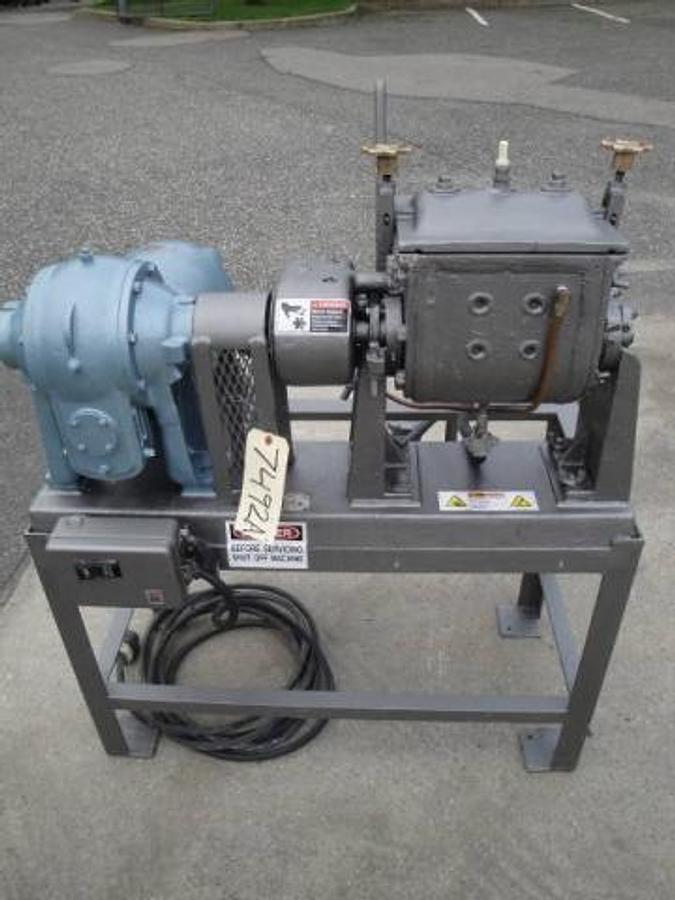
Day's sigma arm (double arm) mixers are specifically designed for high-viscosity materials that standard ribbon blenders or paddle mixers cannot effectively process. The sigma blade configuration generates an intensive kneading and folding action that works well for materials like adhesives, sealants, rubber compounds, thick pastes, and doughs. These machines are built with heavy-duty drive systems to handle the significant torque loads that come with processing dense, resistant materials, and variable speed options on some models allow operators to adjust mixing intensity based on the formulation.
Ribbon blenders, while primarily suited to free-flowing powders and granules, can also handle moderately cohesive or slightly sticky materials depending on the ribbon configuration and motor size. Day ribbon blenders available on the used market come with motors ranging from 7.5 HP on smaller units to 75 HP on the largest models, which gives buyers some indication of the mixing power available for more demanding materials. For very high-viscosity applications, a sigma or kneader-type mixer is generally the more appropriate choice, and buyers should match the machine type to their material's rheological properties before purchasing.
What should buyers know about inspecting a used Day mixer or blender before purchase?
Inspecting a used Day mixer or blender thoroughly before committing to a purchase is one of the most important steps a buyer can take. Reputable used equipment dealers typically offer in-person inspections, virtual walkthroughs, or detailed video captures of the machine so buyers can assess its current condition. Key areas to examine include the condition of the mixing elements (ribbons, sigma blades, or paddles), the integrity of seals and gaskets, the state of the vessel interior, and the condition of the drive components including the motor, gearbox, and any variable speed controls.
It is worth noting that most used equipment dealers do not have the permitting or production infrastructure to run actual product through a machine during an inspection, so testing is generally limited to a dry mechanical run to verify that the machine operates. Some machines may still be in service at the facility where they are located, which can allow for a more complete operational assessment. Buyers should ask specific questions about the machine's service history, the materials it previously processed, and whether any components have been replaced or repaired. For regulated industries, consulting with a validation or process engineer before finalizing a purchase is a practical step.
What is the difference between a Day ribbon blender and a Day sigma arm mixer?
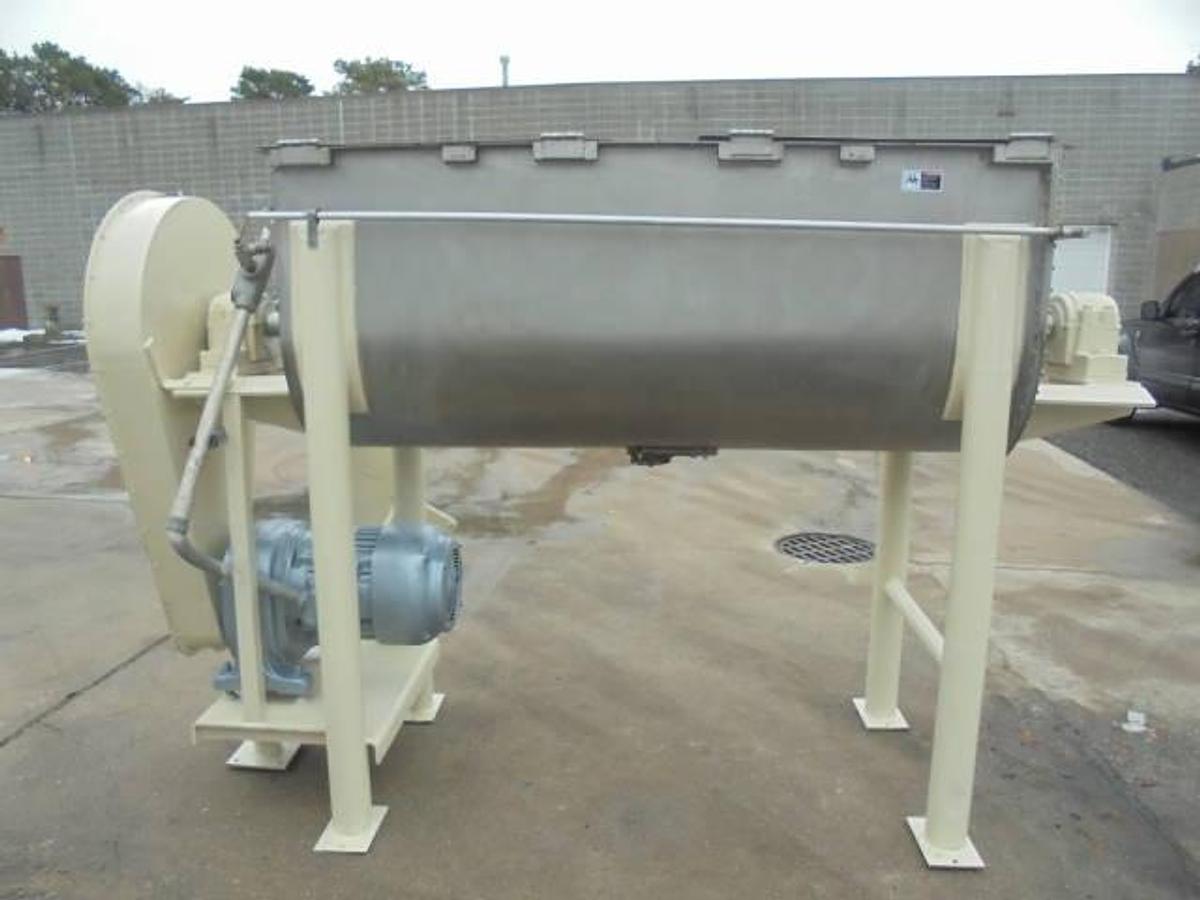
Ribbon blenders and sigma arm mixers are designed for fundamentally different mixing tasks, even though both appear in the Day equipment lineup. A ribbon blender uses a helical ribbon agitator that rotates inside a horizontal trough, moving material simultaneously in opposing directions to achieve a thorough blend. This design works exceptionally well for dry powders, granules, and light pastes, and it is one of the most widely used blender configurations in food, chemical, and agricultural industries. Day ribbon blenders are available in a wide range of sizes and are among the most commonly found Day machines on the used market.
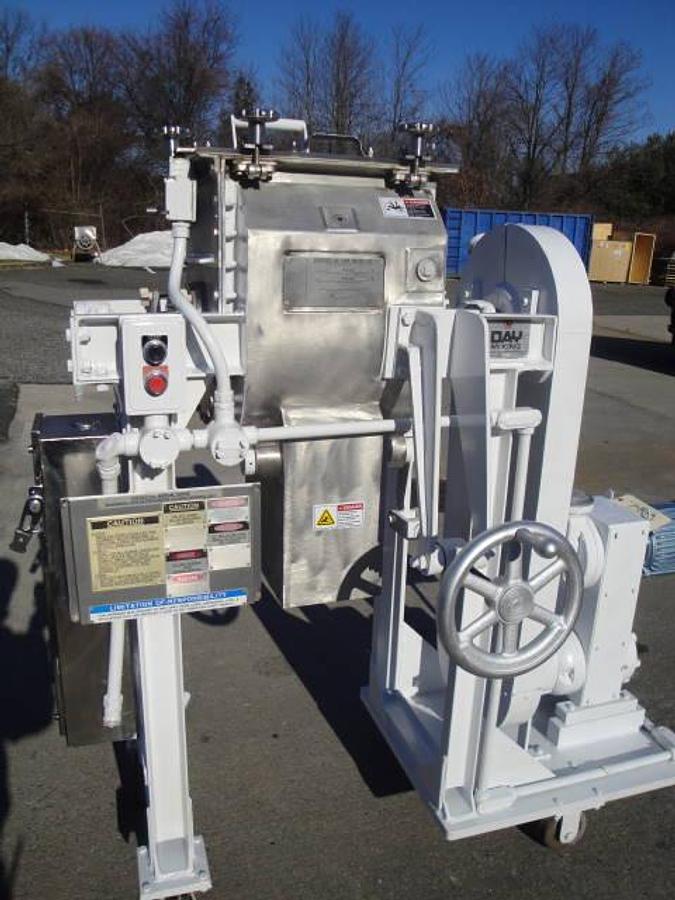
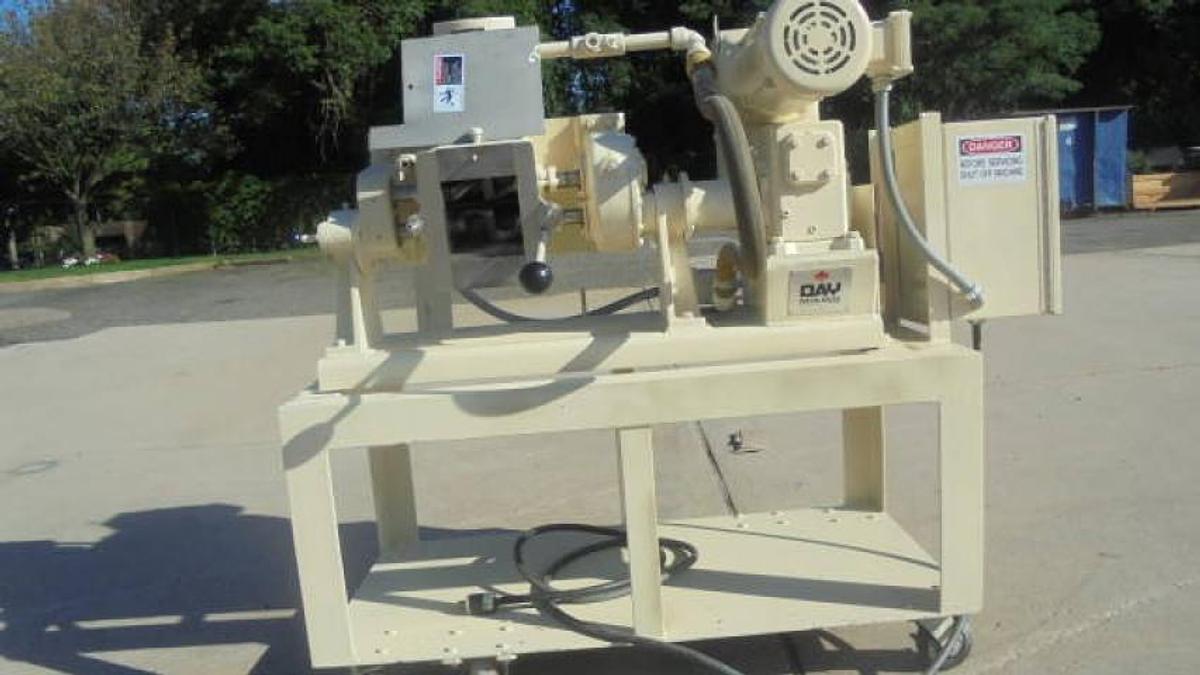
Sigma arm mixers, by contrast, use two counter-rotating, interlocking sigma-shaped blades that knead, fold, and shear material with considerable force. This action is necessary for processing high-viscosity materials like adhesives, gum compounds, rubber, and thick pastes that a ribbon blender simply cannot move effectively. Day lab-scale sigma arm mixers are also available with jacketed bowls and variable speed drives, which adds temperature control and process flexibility. Choosing between the two comes down almost entirely to the viscosity and physical characteristics of the material being processed, so buyers should have a clear understanding of their material properties before selecting a machine type.
What motor sizes are typically found on used Day ribbon blenders?
Motor size on a ribbon blender is a direct indicator of the machine's mixing power and its ability to handle denser or more cohesive materials. Used Day ribbon blenders on the market span a wide range of motor configurations. Smaller units in the 1.3 to 23 cubic foot range typically carry motors between 7.5 and 10 horsepower, which is sufficient for free-flowing powders and light granules. Mid-size machines in the 36 cubic foot range are commonly found with 10 to 15 horsepower motors, while larger units push significantly higher, with 200 cubic foot models equipped with motors up to 75 horsepower.
Buyers should evaluate motor size relative to the bulk density and cohesive properties of the materials they plan to process. Underpowering a blender for a dense or sticky material leads to overloading, excessive wear, and inconsistent blending results. Some Day blenders also feature explosion-proof (XP) motor configurations, which are required in facilities handling flammable powders or operating in classified hazardous areas. When reviewing a used machine, confirming the motor's horsepower rating, electrical specifications, and whether it carries an XP rating (if needed) are all important steps before finalizing a purchase.
How does the used equipment buying process typically work for industrial mixers like Day blenders?
Purchasing a used industrial mixer involves several steps that differ meaningfully from buying new process equipment. The process generally starts with identifying a machine that matches the buyer's capacity, material compatibility, and configuration requirements. Once a candidate machine is found, the buyer should request as much documentation and visual information as possible, including photos, videos, motor nameplates, and any available service records. Reputable dealers who specialize in process and mixing equipment are better positioned to answer technical questions and provide accurate machine histories than general-purpose auction platforms.
Payment terms for used industrial equipment typically require full payment prior to shipment, though some dealers extend terms to established repeat customers. Shipping costs vary depending on the size and weight of the machine, the level of crating or palletization required to protect it in transit, and whether heavy-duty rigging is needed for loading and unloading. Larger blenders and mixers often require forklift or crane rigging at both origin and destination, which adds to the total landed cost. Buyers should request a complete breakdown of packaging, rigging, and freight costs upfront so there are no surprises when the machine arrives. Used equipment is generally sold as-is, so the inspection phase carries significant weight in the overall purchasing decision.
Are replacement parts and technical support available for used Day industrial mixers?
Parts availability and manufacturer support are practical considerations that buyers should research before purchasing any used industrial mixer, and Day equipment is no exception. The level of support available from the manufacturer can vary depending on the age and model of the machine, as older or discontinued models may have limited parts availability through factory channels. Contacting Day Equipment Corporation directly before purchasing a used machine is a worthwhile step to understand what replacement parts, technical documentation, and service support they can provide for a specific model and serial number.
For many wear components on ribbon blenders and sigma mixers, such as seals, gaskets, drive belts, and agitator ribbons, third-party fabrication or aftermarket sourcing is often a viable option even when factory parts are not readily available. Buyers with in-house maintenance capabilities or access to a local machine shop may find that keeping an older Day blender running is straightforward for routine wear items. More complex components like gearboxes or variable speed drives may require more effort to source, so factoring in the age and mechanical condition of a machine during the inspection phase helps buyers anticipate future maintenance needs before committing to a purchase.