Category
Manufacturer
Model
Damon/Iec
Damon/Iec focuses on providing manufacturing equipment primarily for the automotive and aerospace industries. They are well-known for their precision machining tools and assembly line automation solutions. Their technology is designed to improve production efficiency and product quality.
FAQ:
What is Damon/IEC and what types of centrifuges did they manufacture?
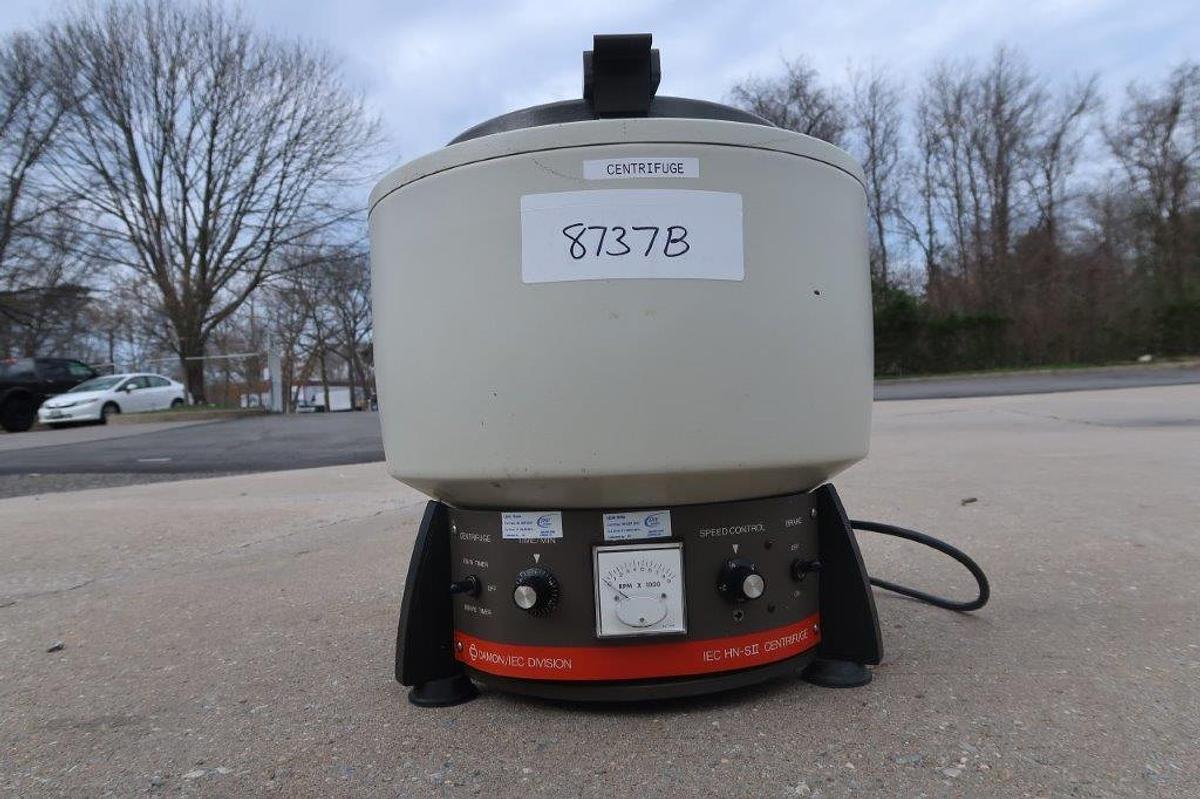
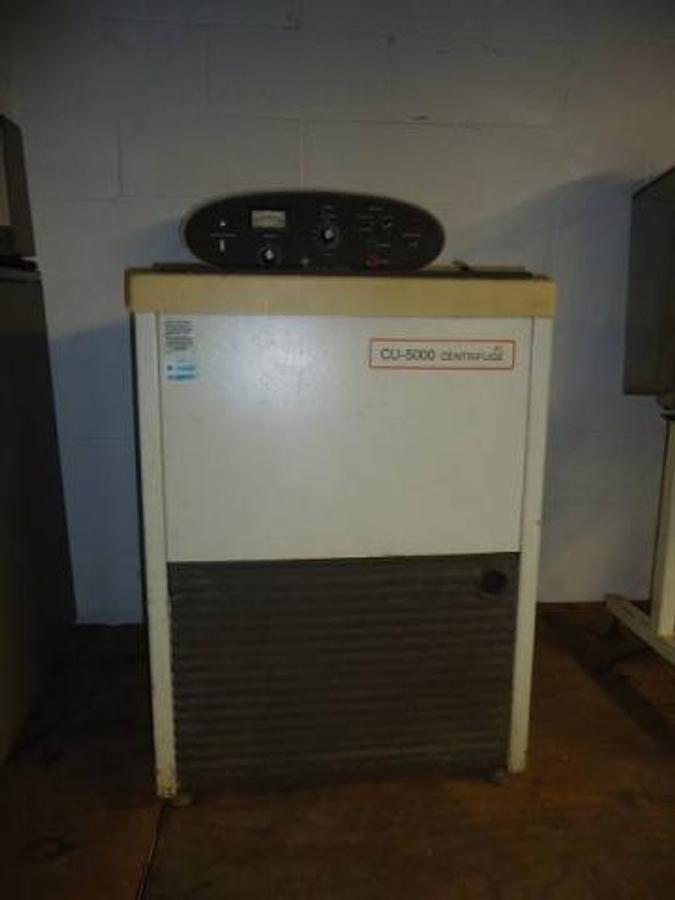
Damon/IEC, short for International Equipment Company, was a well-regarded American laboratory instrument manufacturer whose centrifuges became fixtures in clinical, hospital, and research laboratory settings from the 1970s through the 1990s. The brand built a strong reputation for producing durable, reliable benchtop and tabletop centrifuges designed to handle the demands of routine laboratory work. Common models included the Centra series (Centra-4, Centra-7R, Centra-8R) and the HN-SII tabletop unit, each targeting slightly different throughput and speed requirements. The CU-5000 is another model that surfaces regularly on the used equipment market.
The centrifuges were primarily deployed in clinical diagnostics, blood banking, urinalysis, and general laboratory sample preparation. Their mechanical simplicity and solid construction meant that many units remained in service long after production ended, which is a large part of why they continue to be sought after today. Budget-conscious labs, teaching institutions, and facilities in developing regions frequently look to these machines as cost-effective alternatives to purchasing current-generation equipment.
What is the typical price range for a used Damon/IEC centrifuge?
Used Damon/IEC centrifuges generally sell in the range of $200 to $1,500, though the actual price for any specific unit depends on several factors. Model, overall condition, whether a rotor is included, and the presence of refrigeration capability all push the price up or down considerably. A basic HN-SII tabletop unit in working condition with a standard rotor will typically land at the lower end of that range, while a refrigerated Centra model in good cosmetic and mechanical condition with multiple rotor options can approach the higher end.
Buyers should factor in more than just the sticker price. Shipping costs for lab centrifuges vary based on size, weight, and the level of packaging or crating required to prevent damage in transit. Larger units may also require rigging for loading and unloading, which adds to the total landed cost. Asking the seller for a complete breakdown of packaging, freight, and any applicable handling fees before committing to a purchase gives a much clearer picture of what the equipment will actually cost to put into service.
What are the maximum RPM and RCF ratings for common Damon/IEC centrifuge models?
Specifications vary by model, but the IEC HN-SII tabletop centrifuge is a low-speed unit designed for routine clinical work, typically reaching a maximum of around 3,000 RPM, which translates to roughly 1,500 to 2,000 x g depending on the rotor in use. The Centra series covers a broader performance range. The Centra-4, for example, is rated for speeds up to approximately 3,400 RPM, while the higher-end Centra-7R and Centra-8R refrigerated models can reach speeds in the 6,000 to 7,500 RPM range, making them suitable for a wider variety of sample types and separation protocols.
When evaluating a specific used unit, it is worth confirming the rotor that comes with the machine and cross-referencing its rated maximum RPM and RCF with the centrifuge's own specifications. A rotor rated below the centrifuge's maximum speed is not a problem operationally, but it does limit the RCF achievable. Buyers planning to run specific protocols should verify that the rotor included, or one they can source separately, meets the g-force requirements of their application before finalizing a purchase.
Which Damon/IEC centrifuge model is best suited for clinical or laboratory use?
The right model depends on the specific application. For basic clinical tasks like serum separation, urinalysis, and hematocrit determination, the HN-SII tabletop centrifuge is a practical and compact choice. It handles standard clinical tubes and is straightforward to operate, which makes it a good fit for physician office labs, small clinics, or educational settings where simplicity and footprint matter more than high-speed capability. The CU-5000 is another model that has been used in clinical and general laboratory environments and tends to offer a bit more capacity.
For labs that need refrigeration to protect temperature-sensitive samples, the Centra-7R and Centra-8R models are the logical options within the IEC lineup. These refrigerated units maintain rotor chamber temperature during runs, which is important for certain blood fractionation, cell culture, and research applications. When shopping for a used unit intended for clinical use, it is a good idea to confirm that the specific rotor configuration available with the machine matches the tube sizes and volumes used in your protocols, since rotor availability for legacy IEC models can be inconsistent on the secondary market.
What rotor types and tube capacities are compatible with Damon/IEC centrifuges?
IEC centrifuges were designed to work with a range of fixed-angle and swinging-bucket rotors, depending on the model. The HN-SII, for instance, commonly uses a swinging-bucket rotor configured for standard 15 mL conical tubes and smaller clinical tubes, making it well-suited for serum and plasma separation in a clinical setting. The Centra series accommodated a broader selection of rotors, including fixed-angle heads for microtubes and larger swinging-bucket assemblies for higher-volume applications.
Because these are legacy machines, rotor availability on the used market is not always predictable. Some buyers find that a used centrifuge is listed without a rotor, which means sourcing a compatible head separately. It is worth confirming with the seller exactly which rotor, if any, is included with the unit and whether the rotor has been inspected for cracks, corrosion, or other signs of wear. Rotors are safety-critical components, and a damaged rotor on any centrifuge, regardless of age, poses a real risk during operation. Consulting IEC's historical documentation or reaching out to the manufacturer's current support channels can help identify which rotor part numbers are compatible with a specific model.
Are replacement parts and rotors for Damon/IEC centrifuges still available?
Parts availability for Damon/IEC centrifuges is more limited than it was when these machines were in active production, but it has not dried up entirely. Some rotors, brushes, and mechanical components still surface through specialty laboratory equipment dealers, parts suppliers that stock legacy lab equipment, and the used equipment market itself. The Centra series and HN-SII have enough installed base from their production years that parts occasionally become available as other units are decommissioned and parted out.
Before purchasing a used IEC centrifuge, it is worth contacting the manufacturer's current support organization (Thermo Fisher Scientific acquired the IEC brand) to ask directly about parts and service support for the specific model and serial number in question. Age and model generation significantly affect what level of support is available. For buyers who are purchasing a unit as a backup instrument or for lower-stakes applications like teaching labs, the parts situation may be acceptable. For anyone planning to rely on the machine as a primary clinical instrument, having a candid conversation with the seller and the manufacturer about long-term parts availability is a sensible step before committing.
How should a buyer verify the condition of a used Damon/IEC centrifuge before purchasing?
Reputable used equipment dealers typically offer inspection options that allow buyers to assess a machine's condition before committing to a purchase. In-person inspections are the most thorough approach, giving a buyer the chance to examine the unit directly, check for cosmetic damage, inspect the rotor and rotor chamber, and observe the machine running. When travel is not practical, many dealers can arrange a video inspection or provide detailed video footage of the centrifuge powered on and spinning, which gives a reasonable sense of whether the motor runs smoothly, whether there is unusual vibration or noise, and what the overall condition looks like.
It is important to understand that most used equipment dealers are not set up to run actual production or protocol testing with customer samples. They generally do not hold the permitting required to process biological material, so functional testing is typically limited to confirming that the unit powers on, reaches speed, and operates without obvious mechanical issues. Buyers with specific calibration or performance requirements may want to factor in the cost of having the unit inspected or recalibrated by a qualified service technician after delivery. Choosing a dealer with a long track record in laboratory equipment and a willingness to answer detailed questions about the machine's history goes a long way toward reducing purchase risk.
Do used Damon/IEC centrifuges come with a warranty?
Used laboratory equipment, including Damon/IEC centrifuges, is typically sold on an as-is basis by dealers in the secondary market. This is standard practice across the used equipment industry and reflects the reality that machines of this age and provenance cannot be warranted the way a current-production instrument would be by its manufacturer. The responsibility for assessing condition and fitness for purpose falls primarily on the buyer, which is why inspection options, dealer reputation, and thorough pre-purchase due diligence matter so much.
Buyers should look for dealers who have a demonstrated history in laboratory and scientific equipment specifically, since that specialization generally means better knowledge of what to look for when evaluating a centrifuge and a more accurate representation of its condition. Asking the dealer directly about what pre-sale checks were performed on the unit, whether the rotor was inspected, and what the machine's known history is will provide useful context. Consulting with the manufacturer's current support team about the specific model can also help set realistic expectations about what kind of after-purchase support, if any, is available for a machine of that age.
What should buyers know about shipping a used Damon/IEC centrifuge?
Centrifuges contain precision-balanced rotors and sensitive motor assemblies that can be damaged if not packaged properly for transit. When purchasing a used Damon/IEC centrifuge, buyers should ask the seller specifically how the unit will be prepared for shipping. Proper packaging typically involves securing or removing the rotor, cushioning the unit against vibration and impact, and palletizing or crating the machine to prevent movement during freight handling. The level of packaging required, and its cost, will vary based on the size and weight of the specific model.
Larger centrifuge models may require forklift-accessible rigging for both loading at the origin and unloading at the destination, which adds to the overall cost. Buyers should request a full breakdown of packaging, freight, and any rigging fees from the seller before finalizing a purchase so the total landed cost is clear. Arranging for a freight receiver or appropriate unloading equipment on the delivery end is the buyer's responsibility in most transactions, and overlooking this step can cause delays or damage on arrival.
Why do labs still seek out used Damon/IEC centrifuges when newer models are available?
The durability and mechanical simplicity of IEC centrifuges from the 1970s through the 1990s is a genuine selling point. These machines were built with relatively straightforward motor and drive systems that have proven to hold up over decades of use, and many units that surface on the used market are still fully functional. For labs operating on tight budgets, that combination of low acquisition cost and proven reliability makes a used IEC centrifuge an attractive option compared to paying a significant premium for a current-generation instrument with more features than the application actually requires.
Teaching laboratories, small clinical practices, veterinary offices, and facilities in resource-limited settings frequently purchase used IEC centrifuges for exactly this reason. They need a machine that can reliably spin down samples for basic separations, and a well-maintained HN-SII or Centra-series unit does that job without the cost of a modern instrument. Buyers planning to use the machine as a primary clinical instrument in a regulated environment should factor in calibration verification and any applicable compliance requirements, but for lower-stakes or backup applications, a used IEC centrifuge often represents a practical and cost-effective choice.