Category
Manufacturer
Model
Criveller
Criveller is renowned for their wine and beverage production equipment, including crushers, presses, and bottling systems. They provide comprehensive solutions to the wine and craft beverages industry, ensuring efficient production from fermentation to bottling.
FAQ:
What types of wine equipment does Criveller manufacture?
Criveller produces a broad range of wine and beverage production equipment covering nearly every stage of the winemaking process. Their lineup includes grape crushers and destemmers, wine presses, fermentation tanks, filtration systems, bottling lines, and barrel handling equipment. They also manufacture stainless steel jacketed sanitary tanks used for temperature-controlled fermentation and storage, which are among the more commonly traded pieces of Criveller equipment on the used market.
Beyond winemaking, Criveller has supplied equipment to craft breweries and distilleries, which reflects the versatility of their engineering. The company built its reputation by designing systems that scale across different production volumes, so you find their equipment in small boutique wineries as well as large commercial facilities. This range of applications means that used Criveller machines tend to appear across a variety of configurations and capacities, giving buyers flexibility when sourcing secondhand equipment.
What should I know before buying used Criveller wine equipment?
Buying used wine equipment requires more due diligence than purchasing from a manufacturer, because machines are sold in as-is condition without the backing of a factory warranty. The most important step is arranging a thorough inspection before committing to a purchase. Reputable used equipment dealers will typically offer in-person inspections, video walkthroughs, or photo documentation so buyers can assess the current condition of the machine. For Criveller equipment still installed at a production facility, some dealers can coordinate direct site visits where the machinery may even be observed in operation.
Beyond the physical inspection, prospective buyers should contact Criveller directly to ask about parts availability and technical support for the specific model they are considering. Older machines or discontinued models may have limited parts support, which affects long-term operating costs. Checking the age of the unit, its maintenance history if available, and the electrical specifications (Criveller builds to North American standards) will help you avoid costly surprises after delivery. Selecting a dealer with a long track record of selling wine and beverage industry machinery specifically is one of the most reliable ways to reduce risk on a used equipment purchase.
How is used Criveller wine equipment priced compared to buying from the manufacturer?
Used Criveller equipment is generally priced at a significant discount relative to purchasing the same type of machine through a manufacturer or authorized distributor. The actual savings depend on the age of the machine, its condition, the specific model, and current market demand for that type of equipment. A stainless steel jacketed fermentation tank or a grape crusher/destemmer in good working condition will command a higher price than a unit that shows heavy wear or is missing components.
It is worth factoring in the full landed cost when evaluating pricing on used equipment. Shipping, rigging, palletization or crating, and any refurbishment work needed after arrival can add meaningfully to the purchase price. A machine that appears inexpensive on paper may require more investment once freight and reconditioning are accounted for. Requesting a detailed quote that breaks out all of these costs from the dealer before finalizing a purchase is standard practice and gives you an accurate picture of what you are actually spending.
What is a Criveller grape crusher/destemmer and how does it work?
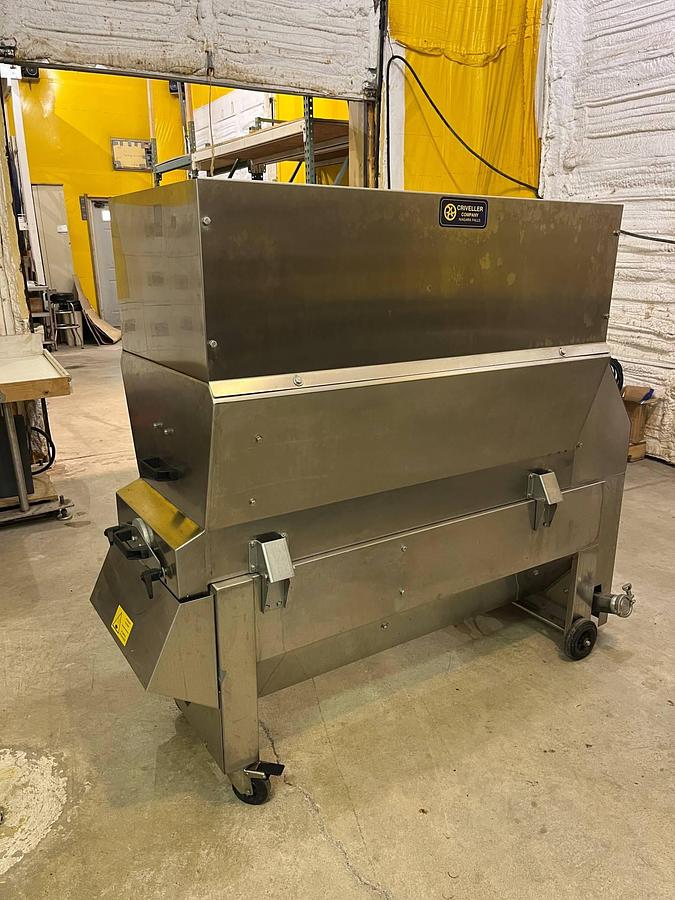
A grape crusher/destemmer is one of the first pieces of equipment grapes encounter after harvest. The machine separates grape berries from their stems and, depending on the setting, can gently break the skins to begin releasing juice. Criveller builds these machines with a rotating cage or drum that knocks berries free from the stems, while a crusher roller or beater bar handles the berry breakage. The stems exit separately, while the crushed must moves on to the press or fermentation vessel.
The quality of this step has a direct impact on wine character, because over-aggressive crushing or stem inclusion can introduce harsh tannins and green flavors. Criveller destemmers are designed to handle the fruit gently while still processing it efficiently, which is why they are used across a range of winery sizes. On the used market, these machines are among the more commonly available Criveller units, and buyers should inspect the rollers, cage, and motor carefully during any pre-purchase evaluation to confirm the components are in serviceable condition.
What is a dimple jacketed stainless steel tank used for in winemaking?
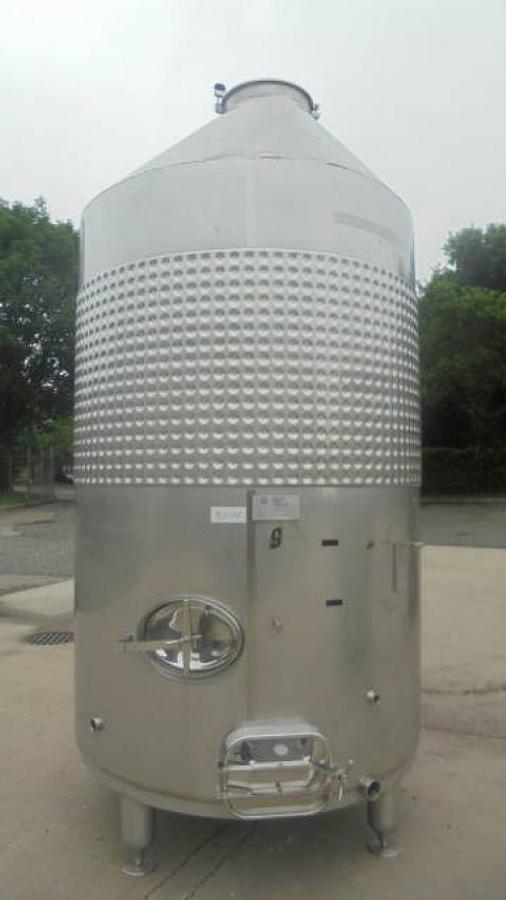
A dimple jacketed tank has a layer of channels or indentations welded to the exterior of the tank wall, through which a cooling or heating medium (usually glycol or water) is circulated. This design allows winemakers to control fermentation temperature precisely without placing coils or heat exchangers inside the tank itself, which keeps the interior surface clean and sanitary. Temperature control during fermentation has a major influence on yeast activity, aroma development, and the overall style of the wine.
Criveller manufactures these tanks in vertical orientations with sanitary fittings suited to wine and beverage production. A 1,980-gallon capacity tank, for example, is sized for a mid-scale commercial operation and would typically be used for primary fermentation or bulk storage. On the used market, stainless steel tanks hold their value reasonably well because stainless is durable and the tanks can often be repurposed across different products. Buyers should inspect the jacket integrity, all welds, the interior surface finish, and any valves or fittings for wear or damage before purchase.
Does Criveller equipment meet North American electrical and safety standards?
Criveller equipment is manufactured to meet North American electrical and safety standards, which is a practical advantage over machinery imported directly from European producers. European equipment often runs on different voltage and phase configurations and may require electrical modifications or special permits to operate legally in Canada or the United States. Criveller, which has deep roots in both the Canadian and US markets, builds machines intended for direct installation in North American facilities.
For buyers purchasing used Criveller equipment, this means the electrical components are already configured for standard North American supply, reducing the cost and complexity of getting the machine running after installation. That said, buyers should still verify the specific voltage and phase requirements of any used machine they are considering, as specifications can vary by model and production year. An electrician familiar with food and beverage processing equipment can help confirm compatibility with the facility's existing power supply before the machine arrives.
How does the inspection process work when buying used wine equipment?
Used equipment dealers typically offer three main inspection options: an in-person visit to the dealer's facility or the machine's current location, a live video call where a dealer representative walks through the equipment on camera, or a set of detailed photos and video recordings provided in advance. Each approach has tradeoffs. In-person inspections give the most complete picture, especially for larger machines where surface condition, structural integrity, and component wear are easier to assess firsthand. Video inspections are practical for buyers who cannot travel and can still reveal a great deal about a machine's condition when conducted thoroughly.
For equipment that is still installed and running at a production facility, some dealers can arrange for the buyer to observe the machine in operation, which is the most informative scenario possible. Keep in mind that most used equipment dealers do not have the permits or production infrastructure to run actual product through a machine at their own location, so functional testing in those cases is limited to running the equipment dry or observing mechanical movement. Buyers should come prepared with a checklist of specific components to inspect and ask detailed questions about the machine's service history, hours of use, and any repairs that have been made.
What are typical shipping and logistics considerations for used wine equipment?
Shipping used wine production equipment involves more planning than standard freight because these machines are often heavy, bulky, and sensitive to vibration or impact during transit. Proper packaging is critical. Depending on the size and fragility of the equipment, this can range from basic palletization with stretch wrap and corner protection to full custom wooden crating. The level of packaging required directly affects shipping costs, and buyers should ask dealers for a detailed breakdown of crating, rigging, and freight charges before agreeing to a purchase price.
Larger machines like tanks, presses, or bottling lines may require specialized rigging equipment for loading at the origin and unloading at the destination. Forklift capacity, dock height, and access at the receiving facility all need to be confirmed in advance. For international shipments between Canada and the United States, customs documentation and any applicable duties should be factored into the total landed cost. Getting a full landed cost estimate, including all freight, rigging, and handling fees, before finalizing any used equipment purchase is standard practice and avoids unexpected expenses after the deal is done.
What payment terms are standard when purchasing used wine equipment from a dealer?
Most used equipment dealers require full payment before a machine is released for shipping. This is standard practice across the industry and reflects the as-is nature of used equipment transactions, where dealers typically do not hold machines on extended credit terms for buyers they have not worked with before. Payment is usually accepted by wire transfer, and some dealers may accept other forms of cleared funds depending on the transaction size.
Buyers who have an established relationship with a dealer and have completed previous purchases may sometimes be offered different terms, but this is at the dealer's discretion and not a standard expectation on a first transaction. It is reasonable to ask a dealer about their payment process early in the conversation so there are no surprises when it comes time to close the deal. For large purchases, confirming the payment process, timeline for release, and shipping schedule in writing before transferring funds is a straightforward way to protect both parties.
Is Criveller equipment suitable for small wineries and craft producers, or is it designed only for large commercial operations?
Criveller has built equipment for a wide range of production scales, from small artisan wineries producing a few hundred cases per year to large commercial facilities processing thousands of tons of fruit each harvest. Their product lineup reflects this range, with crushers, presses, and tanks available in configurations suited to boutique operations as well as high-volume production. This breadth is one reason Criveller equipment appears frequently on the used market in varied sizes and capacities.
For small and mid-size producers, buying used Criveller equipment can be a practical way to access well-built, industry-standard machinery at a lower capital outlay than purchasing equivalent equipment through a manufacturer. A compact grape crusher/destemmer or a smaller-capacity fermentation tank, for example, can serve a craft winery's needs for many years if it is in good condition at the time of purchase. The key is matching the machine's capacity and specifications to the actual production volume of the operation, which is something a knowledgeable used equipment dealer familiar with the wine industry can help assess.