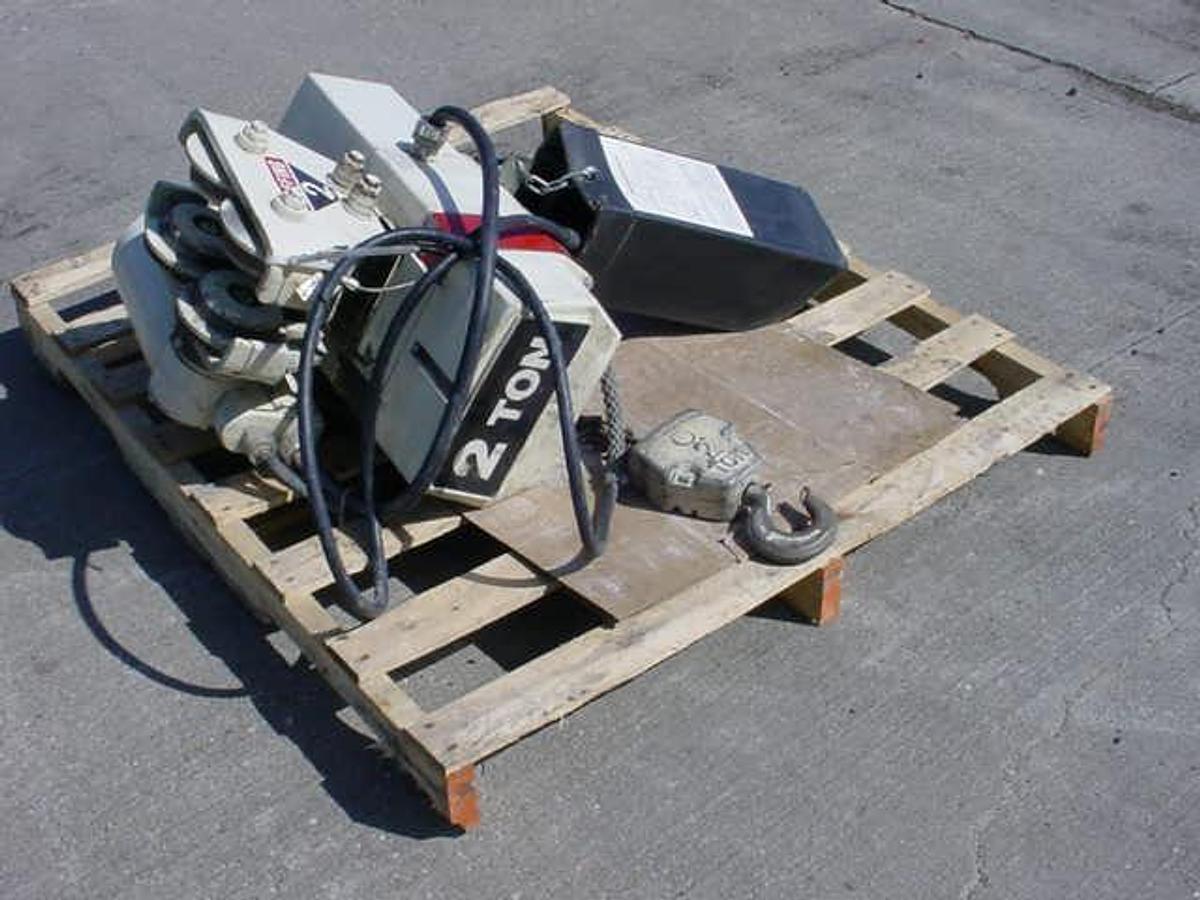
Category
Subcategory
Manufacturer
Model
Coffing
Coffing is an industry leader in material handling solutions, particularly known for their hoists and lifting equipment used across multiple industries, including construction and warehousing. Their products are valued for safety and ease of use, providing reliable support for heavy lifting and maneuvering tasks. Coffing’s commitment to innovation and safety makes them a top choice for lifting solutions.
FAQ:
What is the history and background of Coffing hoists?
Coffing is one of the oldest and most recognized hoist brands in North America, with roots tracing back to 1899. That kind of longevity in a specialized industrial market is rare, and it reflects a track record of producing equipment that holds up in demanding real-world conditions. Over the decades, Coffing has become a go-to name in material handling, particularly for hoists and lifting equipment used in construction, warehousing, manufacturing, and other heavy industries.
Coffing operates as a brand under Columbus McKinnon Corporation (CM), one of the largest manufacturers of lifting and motion control products in the world. This relationship matters for buyers because it means parts, technical documentation, and manufacturer support are backed by a well-resourced parent company. For anyone sourcing used Coffing equipment, the brand's age and its position within Columbus McKinnon's portfolio are strong indicators that support infrastructure is likely to remain available for many existing models.
What types of hoists does Coffing manufacture?
Coffing produces a broad lineup of hoists designed to cover a wide range of industrial lifting applications. Their product range includes lever hoists, hand chain hoists, electric chain hoists, and wire rope hoists. Each type is built for different load capacities, duty cycles, and working environments. The JLC series is a well-known lever hoist line suited for controlled, precise positioning. The LHH series covers hand chain hoists for applications where manual operation is preferred or required. The EC series addresses electric chain hoist needs, which are common in production and warehousing environments where speed and repetitive lifting matter.
The variety in the Coffing lineup means buyers can often find a model matched closely to their specific application, whether that involves occasional maintenance lifts or high-frequency production line use. When evaluating used Coffing hoists, it helps to identify the series and model number, as these details directly indicate the hoist's rated capacity, lift speed, and intended duty cycle. Consulting the manufacturer's published specifications for a given model is a reliable way to confirm whether a particular unit fits the intended job.
What is the difference between a manual chain hoist and an electric chain hoist from Coffing?
A manual chain hoist, such as those in Coffing's LHH series, relies entirely on the operator pulling a hand chain to raise or lower a load. These units have no motor or electrical components, which makes them simpler, lighter, and well-suited for locations without power access or where loads are lifted infrequently. Manual hoists are also generally easier to maintain and inspect since there are fewer components that can wear or fail. They work well for maintenance tasks, rigging, and positioning where speed is less critical.
Electric chain hoists, like those in the Coffing EC series, use a motor to raise and lower loads at the press of a button, making them far more practical for repetitive or high-volume lifting. Electric models typically include built-in safety features such as upper and lower limit switches, overload protection, and thermal protection on the motor to prevent damage from overheating during extended use. The tradeoff is greater mechanical complexity, which means more potential points of wear over time. When buying a used electric hoist, inspecting the motor, brake system, limit switches, and control pendant is especially important to assess the unit's current working condition.
What safety features are built into Coffing electric hoists?
Coffing electric hoists are designed with several layers of safety that are standard across their electric product lines. Upper and lower limit switches are among the most critical, automatically stopping the hoist at the top and bottom of its travel range to prevent over-travel that could damage the load, the hoist, or the supporting structure. Overload protection is another standard feature, designed to cut power if the hoist is asked to lift beyond its rated capacity, which protects both the equipment and the people working around it.
Thermal overload protection on the motor is also built into most Coffing electric models. This feature monitors motor temperature and shuts the unit down if it overheats, which is particularly relevant in high-duty-cycle applications where the hoist runs frequently over short periods. When evaluating a used Coffing electric hoist, verifying that these safety systems are still functioning correctly is a key part of any inspection. Limit switches and overload devices can degrade over time, so testing them under controlled conditions before putting a used unit into service is a reasonable precaution.
What safety certifications do Coffing hoists carry?
Coffing hoists are designed and manufactured to comply with applicable ASME (American Society of Mechanical Engineers) standards, which govern the design, construction, and testing of hoists and lifting equipment in North America. ASME B30.16 covers overhead hoists specifically, and Coffing's product engineering reflects those requirements. OSHA regulations also apply to hoist use in the workplace, particularly under 29 CFR 1910.179 for overhead and gantry cranes and related material handling equipment. Compliance with these standards is a baseline expectation for any hoist used in a commercial or industrial setting.
For used equipment, it is worth noting that certifications apply to the design and manufacturing of the equipment at the time it was built. A used hoist that has been well-maintained and is in good working order can still meet applicable safety standards in practice, but buyers are responsible for ensuring the equipment is inspected and verified before use. Some industries or facilities require documented load testing or third-party inspection of lifting equipment before it is placed into service, regardless of whether it is used or recently manufactured. Checking with the relevant facility safety officer or a qualified rigging inspector is a practical step.
What weight capacities are available for Coffing hoists?
Coffing hoists are available across a wide range of load capacities, making them adaptable to everything from light maintenance work to heavy industrial lifting. Manual chain hoists and lever hoists in the Coffing lineup typically start at around half a ton and go up to several tons depending on the model. Electric chain hoists cover a similar lower range but extend into higher capacities suited for production environments. Wire rope hoists generally handle the heaviest loads and are used in applications requiring both high capacity and longer lifts.
When shopping for a used Coffing hoist, the rated capacity is stamped or labeled on the unit and should match what is listed in the manufacturer's published specifications for that model and series. It is important not to exceed the rated capacity under any circumstances, and buyers should factor in any dynamic loads or shock loading that could occur in their application, since these can effectively increase the stress placed on the hoist beyond the static load weight. If the capacity label on a used unit is worn or unclear, the model number can be cross-referenced with Coffing's published documentation to confirm the correct rating.
Are Coffing hoists suitable for outdoor or harsh environment use?
Some Coffing hoist models are built or can be configured for use in outdoor or demanding environments, but suitability depends heavily on the specific model and its enclosure rating. Electric hoists intended for harsh conditions typically feature sealed or protected enclosures to guard against moisture, dust, and corrosive atmospheres. Standard indoor models, by contrast, may not hold up well when exposed to rain, humidity, or chemical exposure over time. Checking the IP (Ingress Protection) rating or the manufacturer's stated environmental specifications for a given model is the right starting point.
For used Coffing hoists being considered for outdoor or harsh-environment applications, a thorough inspection is especially important. Corrosion on the chain, hook, or load block, degraded seals on an electric motor, or worn protective coatings can all indicate that a unit has been exposed to conditions it was not designed for, or that it has seen significant wear. A used hoist that was previously used indoors in a clean facility may not be appropriate for outdoor deployment without additional protective measures. Discussing the intended application with a qualified rigging or lifting equipment specialist before purchase is a sensible step.
How do I determine the correct Coffing hoist for my application?
Selecting the right hoist starts with understanding four key variables: the maximum load weight, the required lift height, the frequency of use, and the available power supply. Load capacity must account for the actual weight of the load plus any rigging hardware attached to the hook. Lift height determines the length of chain or wire rope needed. Frequency of use, often described as duty cycle, determines whether a manual hoist is practical or whether an electric model is necessary. Power supply availability determines whether an electric hoist is even an option in a given location.
Beyond those basics, the working environment matters. A hoist used in a food processing facility has different requirements than one used in a steel fabrication shop. Mounting configuration is also a factor, since some applications call for a hook-mounted hoist while others require a trolley system that allows the hoist to travel along a beam or runway. For used Coffing hoists specifically, matching the model's rated duty cycle to the intended application is critical. A unit that was lightly used in its previous life may be perfectly suited to a moderate-duty application, while a hoist that shows signs of heavy use may be better suited for light, infrequent lifts.
Are replacement parts and service readily available for used Coffing hoists?
Because Coffing is part of the Columbus McKinnon family of brands, parts support tends to be more accessible than it would be for an obscure or discontinued brand. Columbus McKinnon maintains parts inventories and technical resources for Coffing equipment, and many industrial hoist service shops are familiar with the product line given how widely Coffing equipment has been used across North America for well over a century. That said, parts availability for any specific used hoist depends on its age and model. Older or discontinued models may have limited parts availability compared to units from more recent production runs.
Before purchasing a used Coffing hoist, it is worth consulting directly with the manufacturer or an authorized service center to understand what parts and support are available for that specific model. This is particularly relevant for electric hoists, where components like motor brushes, brake pads, limit switch assemblies, and control pendants may need replacement after years of use. A used hoist with good bones but worn consumable parts can often be restored to reliable working condition if parts are available, making pre-purchase parts research a worthwhile step in the buying process.
What should buyers know about purchasing used Coffing hoists from a dealer?
Buying used lifting equipment requires more diligence than purchasing standard used machinery, because hoists are safety-critical devices. The condition of the chain or wire rope, the integrity of the hook and load block, the function of the brake system, and the operation of any safety devices all need to be assessed before a unit is put into service. Reputable used equipment dealers will typically offer in-person inspections, virtual walkthroughs, or video documentation of a machine's current condition. Taking advantage of these options is strongly recommended, and buyers should ask specific questions about what testing or inspection the dealer has performed on the unit.
Used hoists are typically sold as-is, which puts the responsibility for assessing condition squarely on the buyer. Selecting a dealer with a long track record in industrial equipment and specific experience with lifting devices is important. Payment in full prior to shipping is standard practice among used equipment dealers, and buyers should ask for a clear breakdown of packaging, rigging, and freight costs before committing to a purchase, since these can add meaningfully to the total landed cost. Once the equipment arrives, having it inspected by a qualified rigging professional or hoist service technician before first use is a prudent step regardless of how good it looked during the pre-purchase inspection.