Category
Manufacturer
Model
Cleveland
Cleveland is a distinguished equipment supplier in the metalworking and machining sectors, focusing on lathes and milling machinery. Their machines are renowned for precision and high performance, catering to both small-scale workshops and large manufacturing facilities. Cleveland’s reputation is built on combining traditional craftsmanship with modern technology.
FAQ:
What types of Cleveland commercial equipment are commonly available on the used market?
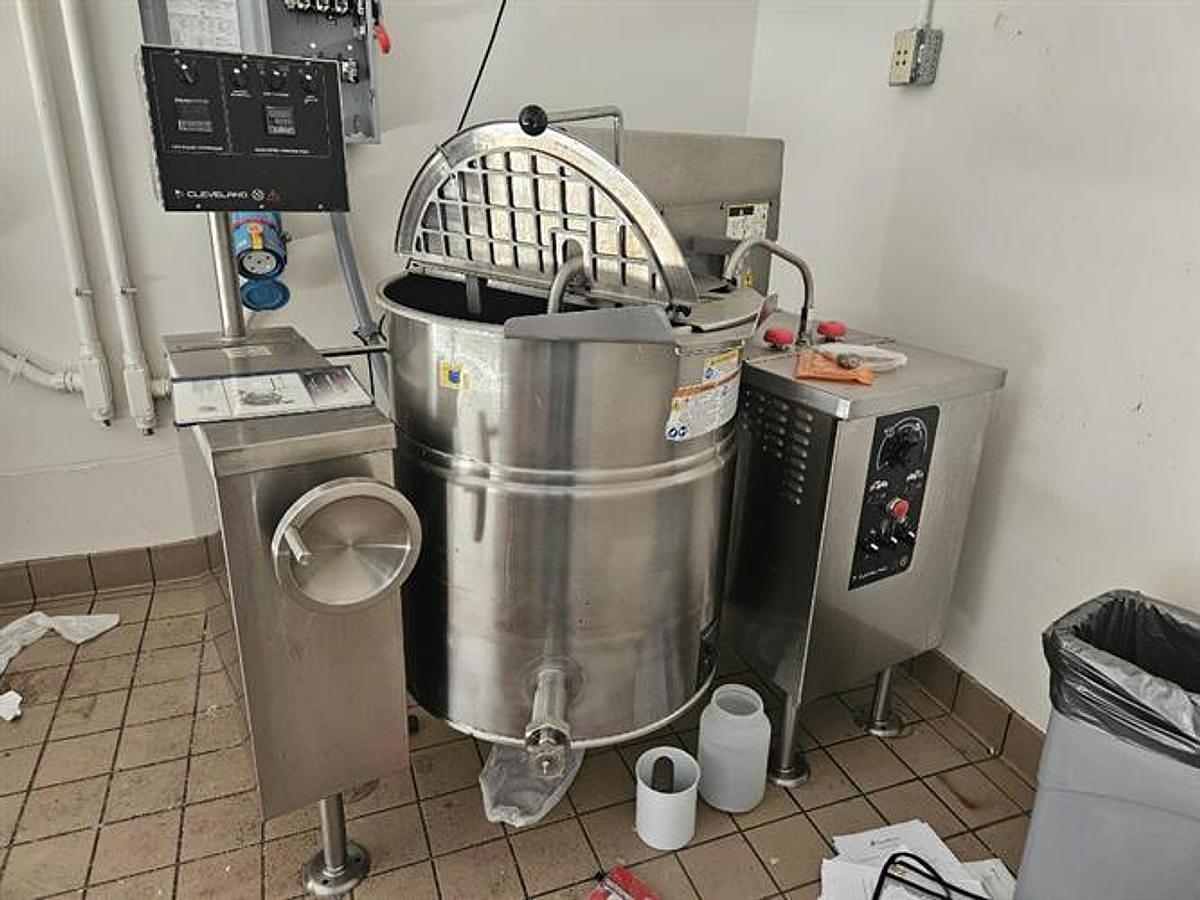
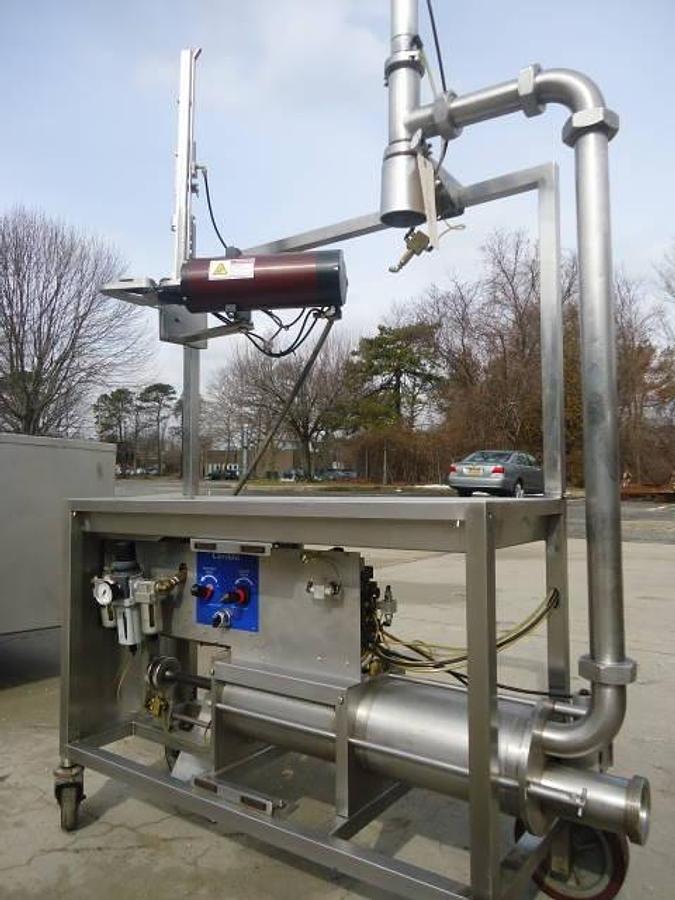
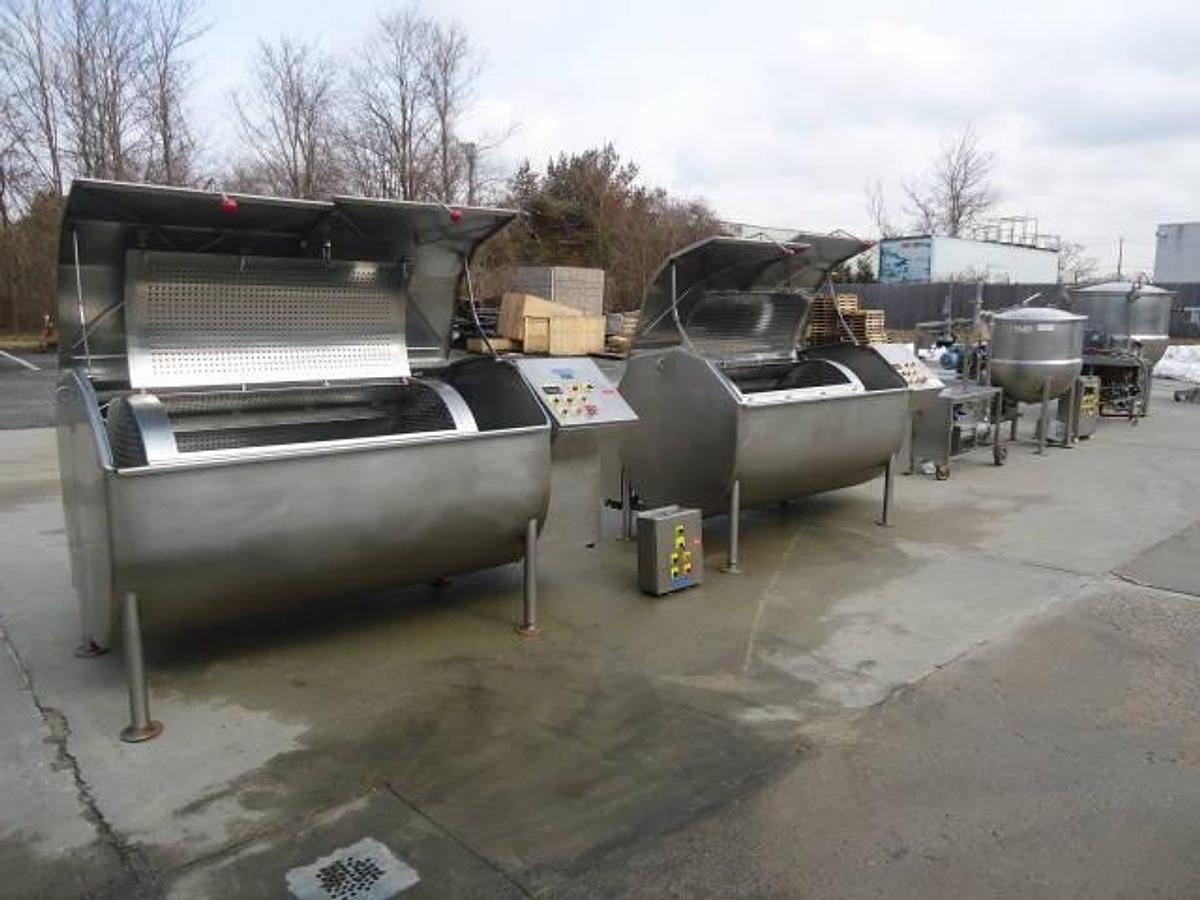
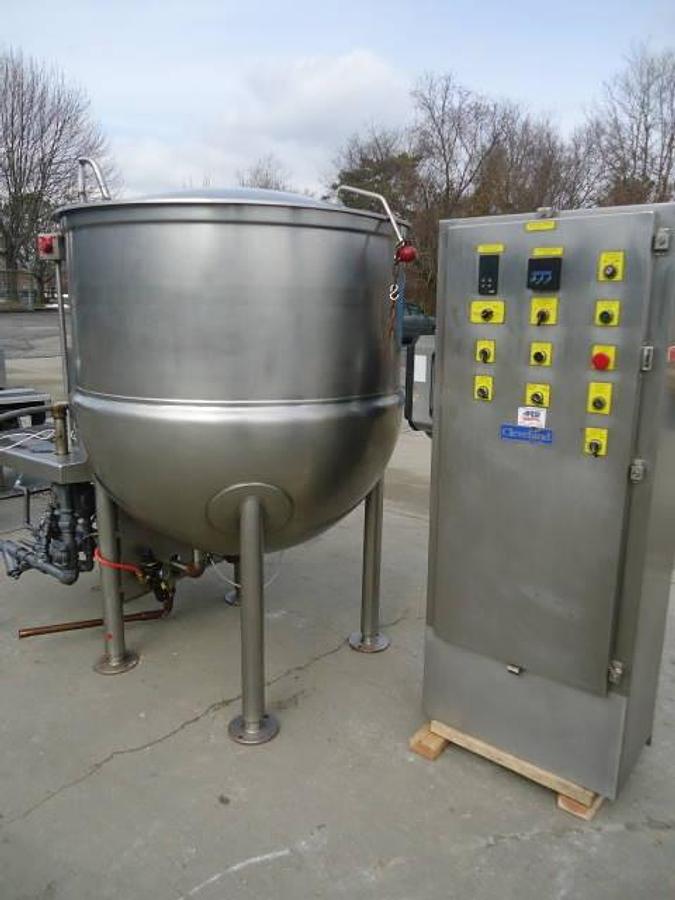
Cleveland is a well-established brand in the commercial foodservice industry, known primarily for steam cooking equipment. On the used market, buyers most commonly find steam-jacketed kettles in a range of capacities (from compact 12-gallon units up to 300-gallon production kettles), tumble chillers, cook-chill processing lines, and metering filling stations. Many of these units are built from stainless steel and designed for continuous, high-volume operation, which is why they hold up well as used equipment and remain in demand long after their initial installation.
Beyond the core kettle lineup, used Cleveland equipment often includes agitated and scraper kettles, self-contained gas-fired units, and complete cook-chill packaging systems. These machines are used across hospitals, school cafeterias, hotel kitchens, catering operations, and large-scale food processing facilities. Because Cleveland equipment is built to industrial standards, used units in good working order can deliver many additional years of reliable service when properly maintained. Buyers should review available inventory carefully, as specific models, capacities, and configurations vary depending on what has come off production floors at any given time.
What is a steam-jacketed kettle and what is it used for in commercial food production?
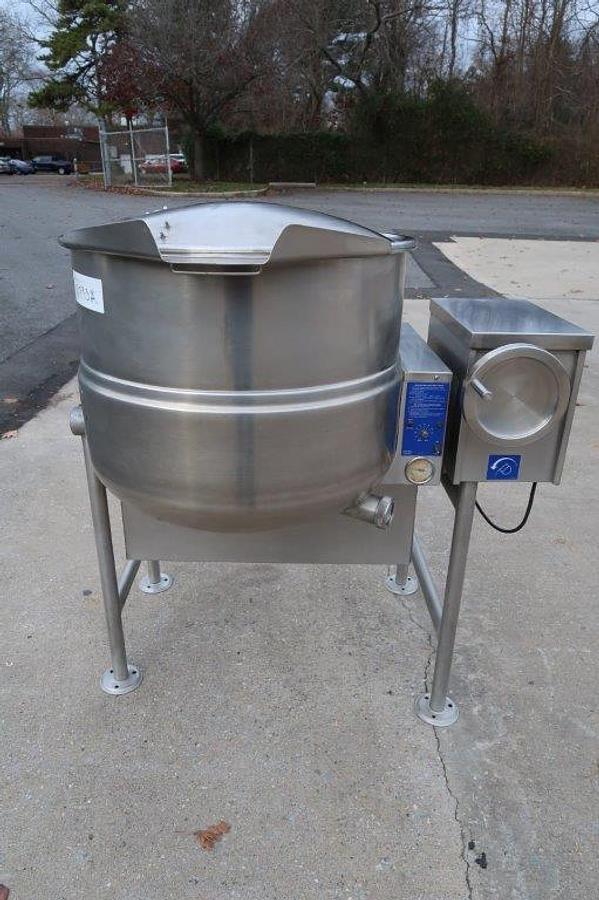
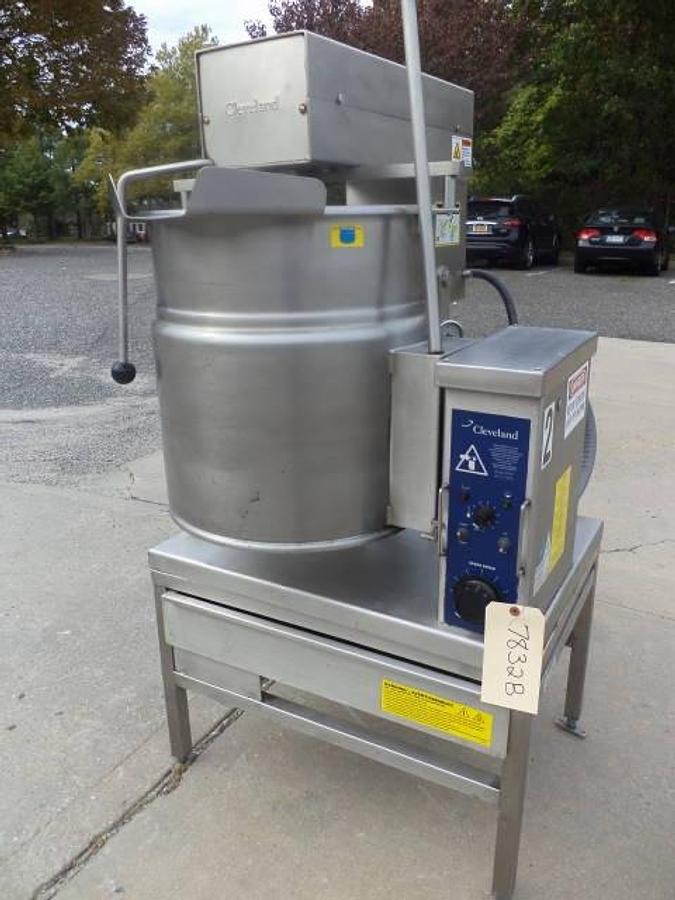
A steam-jacketed kettle is a cooking vessel with a double-walled construction. Steam is circulated between the inner and outer walls, which heats the contents of the kettle evenly from all sides rather than just the bottom. This design prevents scorching and hot spots, making it especially well suited for soups, sauces, stocks, gravies, puddings, and other products that require gentle, consistent heat over extended cooking periods. Capacities range from small countertop units of 10 to 20 gallons up to large stationary kettles exceeding 200 or 300 gallons for industrial food production.
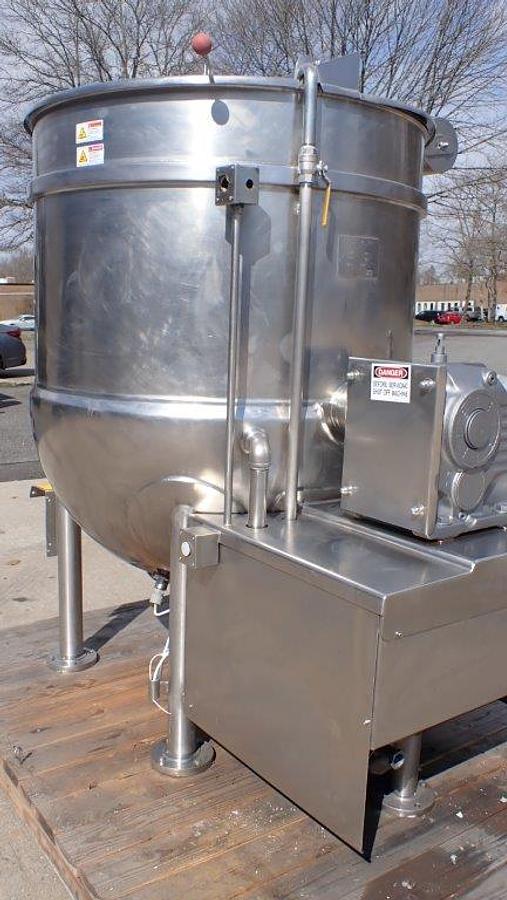
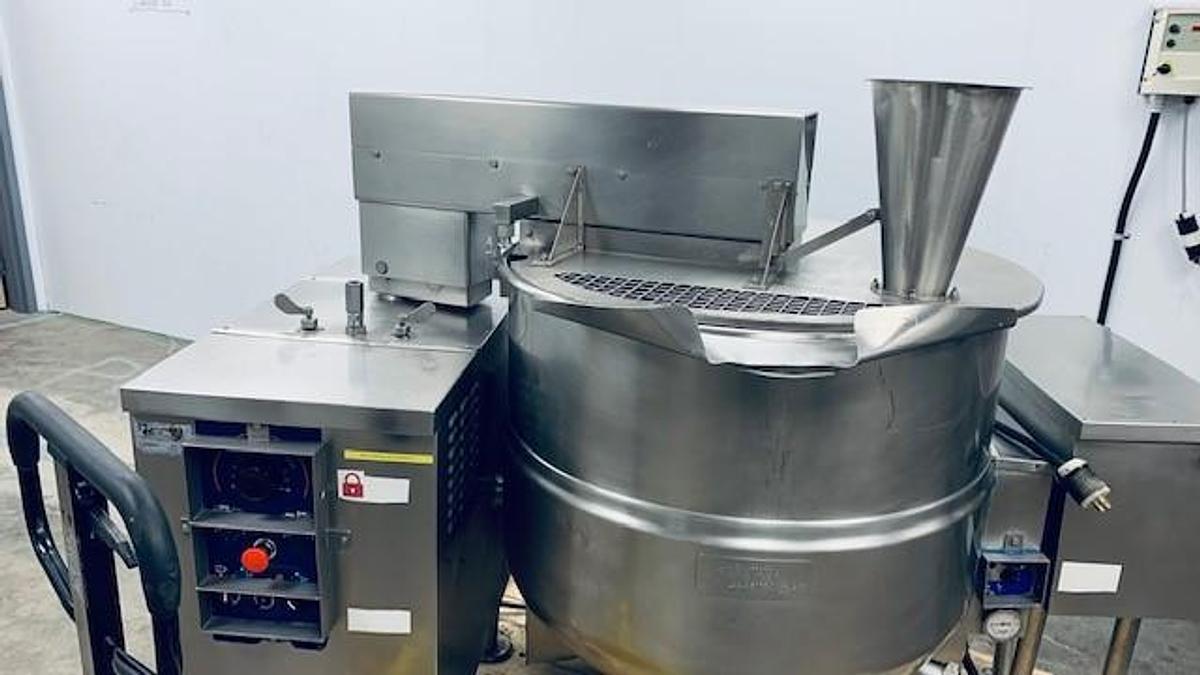
In high-volume operations, steam-jacketed kettles are often paired with agitation or scraper systems. Agitated kettles use a motorized paddle or scraper blade to continuously move product away from the heated walls, which is critical for thick or starchy products that would otherwise stick and burn. Tilting models allow operators to pour or transfer contents without manual ladling. Cleveland has long been recognized in the foodservice industry for producing kettles that combine precise temperature control with durable stainless steel construction, which is why used Cleveland kettles remain a sought-after option for operations looking to expand or replace aging equipment without the cost of buying unused machines.
What is a cook-chill system and which industries use this type of equipment?
A cook-chill system is a food production method where large batches of food are cooked to a safe internal temperature and then rapidly chilled to below 40 degrees Fahrenheit before being stored or packaged for later use. The rapid chilling step is critical because it moves food through the temperature danger zone (40 to 140 degrees Fahrenheit) as quickly as possible, limiting bacterial growth and extending the safe shelf life of prepared foods. A complete cook-chill line typically includes a steam-jacketed kettle for cooking, a tumble chiller or blast chiller for rapid cooling, and a filling and packaging station for portioning and sealing the finished product.
This approach is widely used in central production kitchens, hospital food service departments, correctional facilities, school nutrition programs, and large catering operations. It allows a relatively small production team to prepare large quantities of food in advance, reducing labor costs and improving consistency across multiple service locations. Cleveland has been a recognized supplier of cook-chill equipment for decades, and used Cleveland cook-chill lines and tumble chillers appear regularly on the secondary market as institutions upgrade or consolidate their production operations. Buyers evaluating a used cook-chill system should inspect all components carefully, since the performance of the chilling equipment is just as important as the cooking side.
What should buyers inspect when purchasing used Cleveland kettles or cook-chill equipment?
Used commercial kettles and cook-chill equipment require a thorough inspection before purchase because the condition of key components directly affects both safety and performance. On a steam-jacketed kettle, buyers should examine the integrity of the steam jacket itself, looking for any signs of corrosion, pitting, or prior repairs to the stainless steel walls. The jacket pressure rating (often stamped or labeled on the unit) should be verified, since Cleveland kettles are built to specific PSI ratings that determine how they can be operated. Agitator motors, scraper blades, tilt mechanisms, and lid assemblies should all be checked for proper function and wear.
For tumble chillers and cook-chill lines, the refrigeration components, pump systems, and sealing mechanisms deserve close attention. Reputable used equipment dealers will typically accommodate in-person inspections at their facility, and many also offer video walkthroughs or recorded demonstrations for remote buyers. Some equipment may still be installed and operational at a production facility, in which case an inspection can sometimes be arranged on-site. Keep in mind that most equipment dealers are not set up to run full production tests, since that requires food-grade permitting beyond what a resale operation typically holds. Buyers should also consult with Cleveland's service network to understand parts availability and support for the specific model and age of equipment under consideration.
Does used Cleveland equipment come with a warranty?
Manufacturer warranties are generally tied to the sale of unused equipment through authorized distribution channels and are not transferable to subsequent buyers. Used equipment is almost universally sold on an as-is basis, meaning the buyer accepts the machine in its current condition without a warranty from the dealer. This is standard practice across the used foodservice and industrial equipment industry, not specific to any one brand or seller. The as-is nature of the transaction places the responsibility for evaluating condition squarely on the buyer, which is why a thorough pre-purchase inspection is so important.
To reduce risk when buying used, buyers should prioritize dealers with a long track record in the foodservice equipment sector and a demonstrated familiarity with Cleveland products specifically. A dealer who understands the equipment can give a more accurate account of its condition and history. It is also worth contacting Cleveland's service and parts departments directly before committing to a purchase, since the availability of replacement parts and technical support can vary significantly depending on the age and model of the equipment. Older or discontinued models may have limited parts availability, which is a practical consideration that should factor into the purchase decision.
What is the typical price range for used Cleveland steam-jacketed kettles?
Pricing for used Cleveland steam-jacketed kettles varies considerably based on capacity, configuration, age, and overall condition. Smaller self-contained electric or gas-fired units in the 10 to 40-gallon range tend to be more affordable, while larger stationary kettles in the 100 to 300-gallon range command significantly higher prices, particularly when they include agitation, scraper systems, or high-pressure jacket ratings. A used 40-gallon self-contained gas kettle in good working condition might sell for a fraction of what an equivalent unused unit would cost, which is the primary appeal of the used market for budget-conscious buyers.
Complete cook-chill processing and packaging lines represent the higher end of the pricing spectrum, since they bundle multiple pieces of equipment into a single sale. Buyers should also factor in shipping, rigging, and any reconditioning costs when calculating the total landed cost of a used kettle. A lower purchase price can be offset by higher freight costs if the equipment is heavy or oversized, or by the cost of repairs needed after delivery. Requesting a detailed quote that covers packaging, crating, loading, and freight before agreeing to a purchase price is a practical way to avoid unexpected expenses.
How does shipping and freight work when buying large used foodservice equipment like Cleveland kettles?
Shipping large commercial kettles and food processing equipment is more involved than standard freight. These machines are heavy, often awkwardly shaped, and sensitive to impact or tipping during transit. Proper packaging is critical and typically involves palletization at a minimum, with full wooden crating required for more fragile or complex units. The level of packaging directly affects freight costs, so buyers should ask the dealer specifically how the equipment will be prepared for shipment and what those packaging charges will be before finalizing the sale.
For larger or heavier equipment, professional rigging is required for both loading at the dealer's facility and unloading at the buyer's location. Rigging involves specialized equipment and trained personnel to safely move heavy machinery, and those costs are separate from the freight carrier charges. Buyers who are not prepared for unloading at their facility should arrange for a rigging crew in advance. The full landed cost of used equipment includes the purchase price, packaging, rigging, freight, and any local delivery or installation charges. Getting a complete breakdown of these costs upfront allows for an accurate comparison against other sourcing options.
What are Cleveland tumble chillers and how do they work?
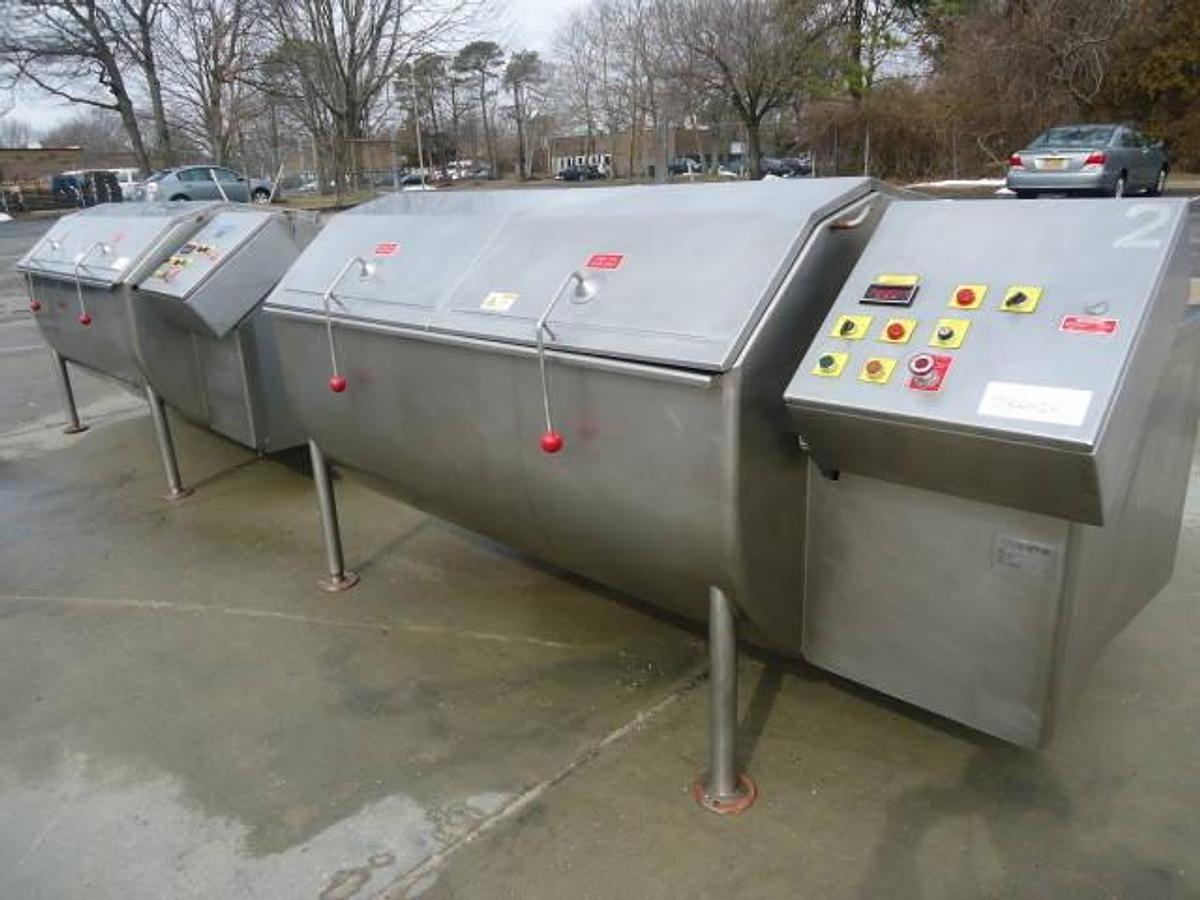
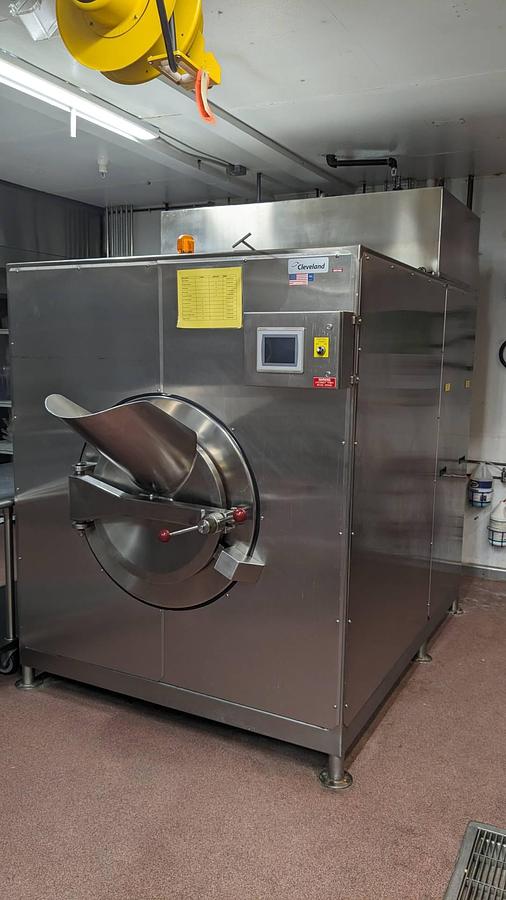
A tumble chiller is a piece of refrigerated equipment designed to rapidly cool large quantities of cooked food that have been sealed in flexible plastic bags. The bags of hot food are loaded into a rotating drum that is continuously flooded with ice water or chilled water. The tumbling action keeps the bags moving through the cold water, which dramatically accelerates the rate of heat transfer compared to placing hot food in a standard refrigerator or walk-in cooler. This allows large batches to be chilled from cooking temperature to safe storage temperature in a fraction of the time it would take with conventional cooling methods.
Cleveland manufactures tumble chillers in several capacities, with models like the P-TC-120 and P-TC-220 representing mid-range and larger production volumes respectively. These units are a core component of cook-chill production systems and are commonly found in central production kitchens, healthcare facilities, and institutional food operations. On the used market, Cleveland tumble chillers are valued for their stainless steel construction and relatively straightforward mechanical design. Buyers evaluating a used tumble chiller should pay particular attention to the condition of the refrigeration system, the drum and drum drive mechanism, and the integrity of the water circulation components.
What payment terms should buyers expect when purchasing used commercial equipment?
The standard practice among used equipment dealers is to require full payment before the equipment is released for shipping or pickup. This applies to the large majority of transactions, particularly for first-time buyers working with a dealer they have not previously done business with. Payment is typically accepted by wire transfer, though some dealers also accept credit cards or other methods. Buyers should confirm accepted payment methods with the dealer before proceeding, since payment processing times can affect how quickly an order is prepared for shipment.
Some dealers extend payment terms or other arrangements to established customers with a history of repeat purchases, but this is not a standard offering for new buyers. Financing through third-party equipment lenders is another option worth exploring, particularly for higher-value purchases like complete cook-chill lines or large production kettles. Buyers should arrange financing in advance so that payment can be made promptly once a purchase decision is reached, since popular pieces of used equipment can sell quickly. Understanding the full payment process before beginning negotiations helps avoid delays and ensures a smoother transaction.
How can buyers verify the condition of used Cleveland equipment before purchasing remotely?
Remote buyers have several practical options for verifying the condition of used equipment before committing to a purchase. Most reputable dealers will provide detailed photographs covering all sides of the machine, close-ups of key components, and images of any visible wear, damage, or repairs. Video walkthroughs are increasingly common and can give a much better sense of overall condition than photos alone. Some dealers will record a video of the machine being powered on or cycled through basic functions, which provides useful evidence that major systems are operational at the time of sale.
For higher-value purchases, arranging an in-person inspection is worth the effort. Some equipment is still installed at the facility where it was used, and dealers can sometimes coordinate access for a buyer or a third-party inspector to view the machine on-site. Even if the machine is no longer running production, being able to walk around it, check the welds and surfaces, operate the tilt or agitation mechanism manually, and review any available maintenance records provides a much clearer picture than remote documentation alone. Buyers should also ask the dealer directly about the machine's history, including how long it was in service, what it was used to produce, and whether any repairs or part replacements were made during its operating life.