Category
Manufacturer
Model
Clamco
Clamco is renowned for its expertise in creating packaging equipment primarily for the food and beverage industry. Their product line includes shrink wrap machines and bagging machines, which are essential for ensuring product safety and extending shelf life. Clamco’s equipment is widely recognized for its reliability and ease of integration into existing production lines.
FAQ:
What types of Clamco packaging equipment are available on the used market?
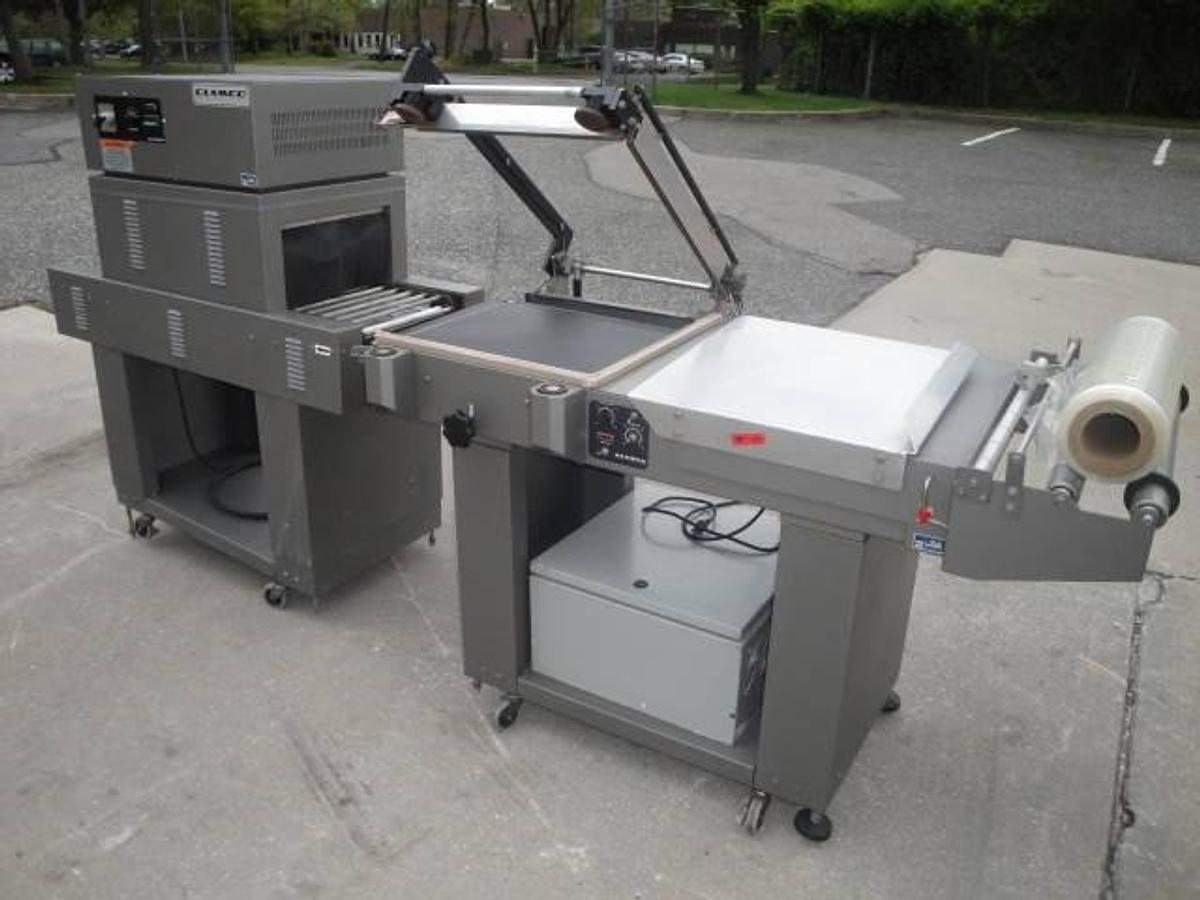
Clamco produces a focused line of shrink packaging equipment that shows up regularly on the used market. The most common machines include L-bar sealers, shrink tunnels, and combination systems that pair an L-bar sealer with a shrink tunnel in a single portable setup. These machines are built primarily for shrink wrapping applications, where a film is sealed around a product and then passed through a heated tunnel to create a tight, professional finish.
Beyond shrink wrap systems, Clamco also manufactures bagging machines used in food and beverage production. Their equipment spans a range from compact, portable units suited to lower-volume operations all the way to semi-automatic and fully automatic systems designed for continuous production lines. Buyers searching the used market will find machines in various sizes, with tunnel openings and sealer bar lengths that accommodate different product dimensions. Checking the specific model specs is important, since a 15-inch by 8.5-inch shrink tunnel, for example, has a very different capacity than a larger industrial unit.
What industries commonly use Clamco shrink packaging machines?
Clamco equipment has a strong foothold in the food and beverage industry, where shrink wrapping is used to protect products, extend shelf life, and present goods attractively at retail. Bakeries, meat processors, produce packers, and bottled beverage producers are among the most frequent users. The tamper-evident nature of shrink film also makes these machines a practical choice for any food product where consumer safety and presentation matter.
Outside of food and beverage, Clamco machines are used across retail, printing and publishing, pharmaceuticals, and general industrial product packaging. Retailers use shrink wrap to bundle multi-packs or protect items during shipping. Publishers use it to wrap books, magazines, and promotional kits. Pharmaceutical and health product companies rely on it for tamper-evident packaging. Because the machines are relatively compact and straightforward to operate, they fit well in both small business environments and mid-size manufacturing facilities without requiring dedicated technical staff to run them.
What is the difference between a Clamco L-bar sealer and a shrink tunnel?
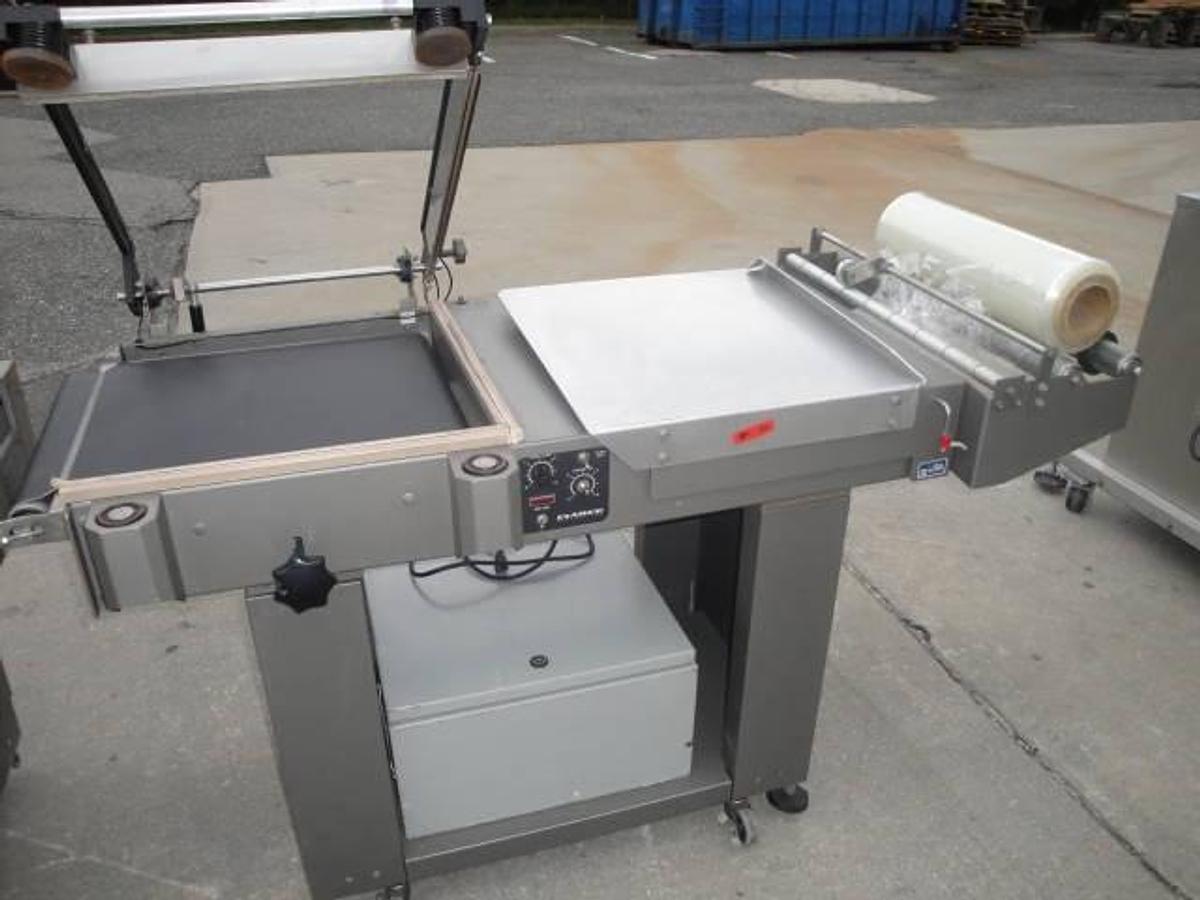
An L-bar sealer and a shrink tunnel are two separate pieces of equipment that work together in a complete shrink packaging line, though they perform different functions. The L-bar sealer cuts and seals the shrink film around a product using an L-shaped sealing bar that trims two sides simultaneously. The result is a loosely wrapped package enclosed in film, ready for the next step. Clamco offers L-bar sealers in portable configurations, which makes them practical for operations that need flexibility in where the machine is positioned on a production floor.
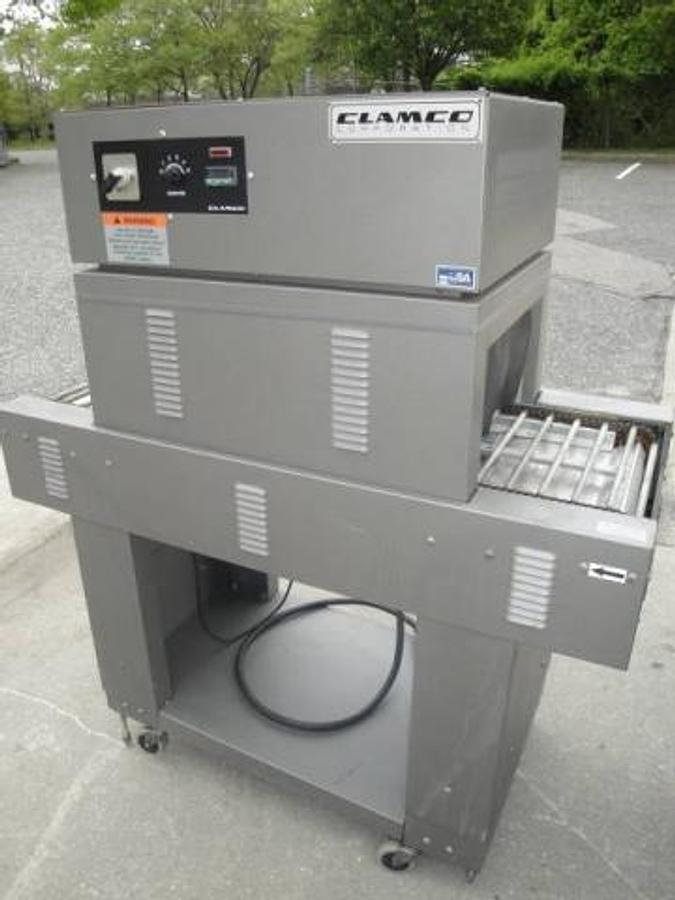
The shrink tunnel is the second stage of the process. The loosely wrapped package travels through a heated chamber, and the heat causes the film to contract tightly around the product, creating a smooth, secure wrap. Clamco shrink tunnels, such as their 15-inch by 8.5-inch model, use controlled heat distribution to produce consistent results across a range of product shapes and sizes. Many buyers look for combination units that integrate both the L-bar sealer and shrink tunnel into a single portable system, which reduces floor space requirements and simplifies the workflow. On the used market, both standalone units and combination systems are available.
Is Clamco packaging equipment a good fit for small businesses?
Clamco has built a reputation for producing equipment that balances performance with affordability, which has made the brand accessible to small and mid-size operations alongside larger manufacturers. Their portable L-bar sealers and compact shrink tunnels are particularly well suited to lower-volume environments where a business needs reliable shrink wrapping capability without investing in a full industrial production line. A small bakery, specialty food producer, or retail shop, for instance, can use a Clamco portable combination system to package products professionally without a large footprint or significant infrastructure.
Buying used Clamco equipment amplifies this accessibility even further. A small business can acquire a machine that was originally purchased for a larger operation at a fraction of the cost, provided the equipment has been well maintained. The key considerations for small buyers are throughput requirements, the size of products being packaged, and the availability of compatible shrink film. Clamco machines are generally considered straightforward to operate, which reduces the learning curve for staff who have not previously worked with shrink packaging equipment. Prospective buyers should still inspect any used machine carefully or request a video inspection to confirm the unit is in proper working order before purchasing.
What should buyers know about purchasing used Clamco equipment versus buying from a manufacturer?
Buying used Clamco packaging equipment offers meaningful cost savings compared to purchasing through a manufacturer or authorized distributor, but it comes with a different set of considerations. Used equipment is sold as-is, meaning there is no manufacturer-backed coverage, and the condition of the machine depends entirely on how it was used and maintained by the previous owner. This puts the responsibility of due diligence squarely on the buyer. Selecting a reputable used equipment dealer with a track record in packaging machinery is one of the most important steps a buyer can take to reduce risk.
Reputable dealers will typically offer in-person inspections, virtual walkthroughs, or video documentation of the machine's current condition. Some equipment may still be installed and running at a production facility, which gives buyers the opportunity to see it operating before committing to a purchase. It is also worth contacting Clamco directly to understand what level of support, parts availability, and documentation can be expected for a specific model and age of machine, since older models may have more limited support than recent production runs. Getting clarity on these points before purchasing helps buyers make a fully informed decision.
How does the inspection process work when buying used Clamco machinery?
Inspections are a standard part of buying used packaging equipment, and most reputable dealers will accommodate them in some form. The most thorough option is an in-person inspection at the dealer's facility or, in some cases, at the plant where the equipment is still installed. Seeing a machine in person allows a buyer to assess its physical condition, check for wear on key components, and get a sense of how well it has been maintained. Some machines may still be in active production at a facility, which provides an opportunity to observe actual operation.
For buyers who cannot travel, virtual inspections and video documentation are common alternatives. A dealer can walk through the machine on a video call or provide recorded footage showing the equipment running through its cycle. Keep in mind that most used equipment dealers are not set up for full production testing, since running actual product requires different permitting and facility conditions than a typical dealer operation. The goal of any inspection, whether in person or virtual, is to get an accurate picture of the machine's current working order so there are no surprises after purchase. Buyers should ask specific questions about the sealing bar condition, tunnel heating elements, conveyor function, and any visible wear before finalizing a deal.
What are the typical shipping and logistics considerations for used Clamco packaging machines?
Shipping used packaging equipment involves more planning than a standard freight shipment, and the costs can vary significantly depending on the size of the machine, its weight, and the level of packaging required to protect it in transit. Smaller portable units like Clamco's L-bar sealers may ship on a standard pallet with appropriate bracing and wrapping, while larger combination systems or shrink tunnels may require custom crating to prevent damage. Buyers should ask the dealer specifically what packaging method will be used and whether crating is included in the quoted price or billed separately.
For heavier or bulkier machines, rigging may be required for loading at the dealer's location and unloading at the buyer's facility. Rigging involves the use of forklifts, cranes, or other equipment to safely move heavy machinery, and this service typically carries an additional cost. Buyers should request a full breakdown of all shipping-related charges, including palletization or crating, freight, and any destination rigging, to understand the true landed cost of the equipment before committing to a purchase. Freight carriers that specialize in industrial machinery are generally better equipped to handle this type of shipment than standard parcel or LTL carriers.
What payment terms are typical when purchasing used packaging equipment?
Most used equipment dealers require full payment before a machine is released for shipping. This is standard practice in the industry and reflects the fact that used equipment transactions do not carry the same financing infrastructure as purchases through manufacturers or large distributors. Buyers should expect to pay in full prior to shipment, and should factor this into their purchasing timeline, particularly if funds need to be transferred or approved through an internal procurement process.
Some dealers may offer extended payment terms to repeat customers or buyers with an established relationship, but this is the exception rather than the rule for first-time transactions. Payment is typically accepted via wire transfer, though the specific methods accepted will vary by dealer. Buyers should clarify payment expectations early in the conversation, along with the timeline between payment and shipping, so there are no delays once a purchase decision is made. It is also reasonable to ask whether a deposit can hold a machine while financing or budget approval is arranged, as popular models can sell quickly.
Are replacement parts readily available for used Clamco packaging machines?
Parts availability for used Clamco equipment depends largely on the age and specific model of the machine. Clamco is a U.S.-based manufacturer with an established presence in the shrink packaging market, and for many of their models, consumable components like sealing wire, Teflon tape, and heating elements are widely available through packaging supply distributors. These are the parts that see the most wear in regular operation, so their availability is a practical concern for any buyer planning to run the equipment regularly.
For older or discontinued models, sourcing certain mechanical or electrical components can be more challenging. Before purchasing a used Clamco machine, it is worth contacting the manufacturer directly to ask about parts support for that specific model and production year. Clamco's response will give buyers a realistic picture of what ongoing maintenance will look like and whether any critical components might be difficult to source down the road. A dealer who specializes in packaging equipment may also have access to spare parts or be able to point buyers toward reliable suppliers, which is one advantage of working with an industry-focused dealer rather than a general machinery reseller.
What should buyers look for when evaluating a used Clamco shrink tunnel?
The heating system is the most critical component to evaluate in a used shrink tunnel. Clamco shrink tunnels rely on consistent, even heat distribution to produce a clean, tight wrap, and uneven heating is one of the most common signs of wear or damage in a used unit. Buyers should ask whether all heating elements are functional and whether the temperature controls respond accurately. If a video inspection is available, watching the tunnel come up to operating temperature and observing the heat distribution across the chamber is a useful way to spot potential issues.
The conveyor belt is another area worth close attention. Belts that are frayed, stretched, or heat-damaged will need replacement, and the cost of a new belt should be factored into the overall purchase price. The tunnel's housing and insulation should also be inspected for any visible damage that could affect heat retention and energy efficiency. Buyers should ask about the machine's service history if the dealer has that information, and should confirm the tunnel's interior dimensions match the size of products they intend to package. A 15-inch by 8.5-inch opening, for example, sets a firm upper limit on product size, so matching tunnel capacity to production needs is a basic but important step before purchasing.