Category
Manufacturer
Model
Cavalla
Cavalla develops cutting-edge fabrication equipment for the metals processing industry. They are particularly focused on sheet metal processing, providing efficient machines like laser cutters and press brakes. Cavalla’s technology enhances precision and productivity in metal component manufacturing.
FAQ:
What types of fabrication equipment does Cavalla manufacture?
Cavalla produces fabrication equipment focused primarily on the metals processing industry, with a particular emphasis on sheet metal processing. Their product line includes laser cutters and press brakes designed to enhance precision and productivity in metal component manufacturing. Beyond sheet metal equipment, Cavalla also manufactures powder compacting presses, such as rotary powder compacting press models, which are used in the production of compacted powder components across a range of industrial applications.
The diversity of Cavalla's catalog reflects the broad demands of fabrication facilities that need equipment capable of handling both cutting and forming operations, as well as specialized compaction processes. Buyers researching used Cavalla equipment will typically encounter machines across these categories, and availability at any given time depends on what has come off production floors and entered the secondary market.
What is a rotary powder compacting press and what is it used for?
A rotary powder compacting press is an industrial machine that uses a rotating turret fitted with multiple punch-and-die sets to compress powdered materials into solid, uniform tablets or compacted parts. The rotary design allows for high-speed, continuous production, making these machines well-suited for applications in pharmaceuticals, cosmetics, nutraceuticals, and certain metallurgical or chemical manufacturing processes. The compaction force applied by the press determines the density and hardness of the finished part, which is a critical quality parameter in most applications.
Cavalla produces rotary powder compacting press models, including the AN-8 and AN77 variants. Used rotary powder compacting presses from established manufacturers can represent significant cost savings compared to purchasing equivalent equipment through other channels, provided the buyer conducts a thorough inspection to confirm the machine's mechanical condition, tooling compatibility, and suitability for their specific powder formulation and output requirements.
What should buyers know about purchasing used Cavalla fabrication equipment?
Buying used fabrication equipment requires a different level of due diligence than sourcing equipment through other channels. Since used machines are sold as-is, the responsibility for assessing condition falls squarely on the buyer. This makes it critical to work with reputable dealers who have a demonstrated history in the fabrication equipment sector and who can provide accurate, detailed information about each machine's operating history, current condition, and any known issues. Buyers should always request an inspection, whether in person, via video call, or through video documentation provided by the dealer.
It is also worth consulting directly with the equipment manufacturer before completing a purchase, particularly for older models. Manufacturers can advise on parts availability, the level of technical support they can provide for a specific model, and any known maintenance considerations. This step helps buyers avoid acquiring a machine that may be difficult or costly to service. Understanding the full picture of a machine's condition and supportability before purchase is far more valuable than price alone.
How should buyers inspect used fabrication equipment before purchasing?
Inspections are a standard part of the used equipment purchasing process and can take several forms. Many dealers offer in-person inspections at their facility, which gives the buyer or their technician the opportunity to examine the machine directly, check for wear on critical components, review the electrical systems, and assess the overall mechanical condition. For buyers who cannot travel, video inspections or detailed video captures of the machine in its current state are a practical alternative that most reputable dealers will accommodate.
In some cases, equipment may still be installed and operating at the facility where it was used, and the dealer can arrange an inspection at that location. Keep in mind that even when a machine appears to be in working order, dealers typically do not have the permitting or infrastructure to run full production tests with actual materials. The inspection is therefore focused on confirming mechanical integrity, completeness of components, and visible condition rather than a live production run. Buyers with specific technical requirements should consider bringing a qualified technician or engineer to any in-person inspection.
What industries use the type of fabrication equipment Cavalla produces?
Cavalla's fabrication equipment spans two distinct industrial segments. Their sheet metal processing machines, including laser cutters and press brakes, serve industries such as automotive manufacturing, aerospace component production, HVAC fabrication, construction materials, consumer electronics enclosures, and general metal fabrication shops. These industries rely on precise cutting and forming equipment to produce consistent, high-quality metal parts at volume.
Their rotary powder compacting presses serve a separate set of industries, most notably pharmaceutical tablet manufacturing, nutraceutical and supplement production, cosmetics (particularly pressed powders and compacts), and certain specialty chemical or metallurgical applications where powdered materials need to be formed into solid shapes. The breadth of Cavalla's product range means that buyers from a wide variety of manufacturing backgrounds may find relevant equipment in their used inventory at any given time.
What is the typical price range for used fabrication equipment like Cavalla machines?
Pricing for used fabrication equipment varies considerably based on machine type, age, condition, brand reputation, and current market demand. Entry-level or smaller used press brakes and laser cutters can range from a few thousand dollars to tens of thousands, while larger, more capable systems from established manufacturers can command prices well into the six-figure range. Rotary powder compacting presses, depending on their capacity, tooling configuration, and condition, typically fall somewhere in the range of $10,000 to $100,000 or more for well-maintained industrial models.
Beyond the purchase price, buyers should factor in the total landed cost of the equipment. This includes shipping and freight, any rigging or specialized loading and unloading required for heavy machinery, crating or packaging costs, installation, and any refurbishment or calibration work needed before the machine enters production. These additional costs can be substantial, particularly for large or heavy equipment, so getting a clear picture of all-in costs from the dealer before committing is an important step in the evaluation process.
How does shipping and delivery work for used fabrication equipment?
Shipping used fabrication equipment, particularly large industrial machines, involves more planning than standard freight. Machines need to be properly prepared for transit, which typically means palletizing, crating, or custom packaging to prevent damage from vibration, shifting, or impact during transport. The level of packaging required depends on the size, weight, and fragility of the equipment, and the associated costs will vary accordingly. Buyers should ask the dealer specifically what packaging is included in the quoted price and what additional costs may apply.
Heavier equipment often requires specialized rigging for loading at the dealer's facility and unloading at the buyer's location. This can include forklifts, cranes, or other heavy-lift equipment, which adds to the overall shipping cost. Buyers should confirm with the dealer what rigging services are included, what the buyer is responsible for arranging on their end, and what the estimated freight cost is to their specific location. Getting a full breakdown of shipping, rigging, and delivery costs before finalizing a purchase helps avoid unexpected expenses and ensures the buyer can plan for proper receipt of the equipment.
What are typical payment terms when buying used fabrication equipment?
Most used equipment dealers require full payment before a machine is released for shipping. This is standard practice in the industry and reflects the nature of used equipment transactions, where the dealer needs to confirm funds before coordinating logistics. Payment is typically accepted by wire transfer, though specific accepted methods vary by dealer. Buyers should confirm acceptable payment forms and any associated processing requirements early in the purchasing process to avoid delays.
Some dealers may extend payment terms to established repeat customers with whom they have a prior business relationship, but this is the exception rather than the rule for first-time buyers. Buyers interested in financing or leasing options for used equipment may need to work with third-party equipment financing companies, as not all dealers offer in-house financing. Arranging financing in advance, if needed, is advisable so that the buyer is in a position to move quickly once they identify the right machine.
Are replacement parts readily available for used Cavalla fabrication equipment?
Parts availability for used fabrication equipment depends on several factors, including the age of the machine, the model, and the manufacturer's current support posture for that product line. Before purchasing any used machine, it is a good practice to contact the manufacturer directly to ask which parts are still stocked or available to order, and whether technical support is available for that specific model. Manufacturers can often indicate whether a machine is still within a supported service window or whether it is considered end-of-life from a parts standpoint.
For machines like powder compacting presses, tooling (punches and dies) is often the most frequently replaced consumable, and these may be available from the manufacturer or from third-party tooling suppliers who produce compatible tooling for standard formats. For sheet metal equipment such as press brakes and laser cutters, wear items like tooling, laser consumables, and hydraulic components are often available through the manufacturer or aftermarket suppliers. Buyers should research parts availability for any specific Cavalla model they are considering before completing a purchase, as this directly affects the long-term usability and cost of ownership of the machine.
What is a chill table used for in fabrication or manufacturing?
A chill table, sometimes called a cooling table or chill plate, is a flat work surface designed to rapidly cool or maintain low temperatures on materials or products placed on it. In manufacturing contexts, chill tables are used to quickly bring down the temperature of freshly processed materials, which can be critical for dimensional stability, preventing warping, or accelerating production cycle times. They are used across a range of industries including cosmetics manufacturing, food production, plastics processing, and certain metalworking applications.
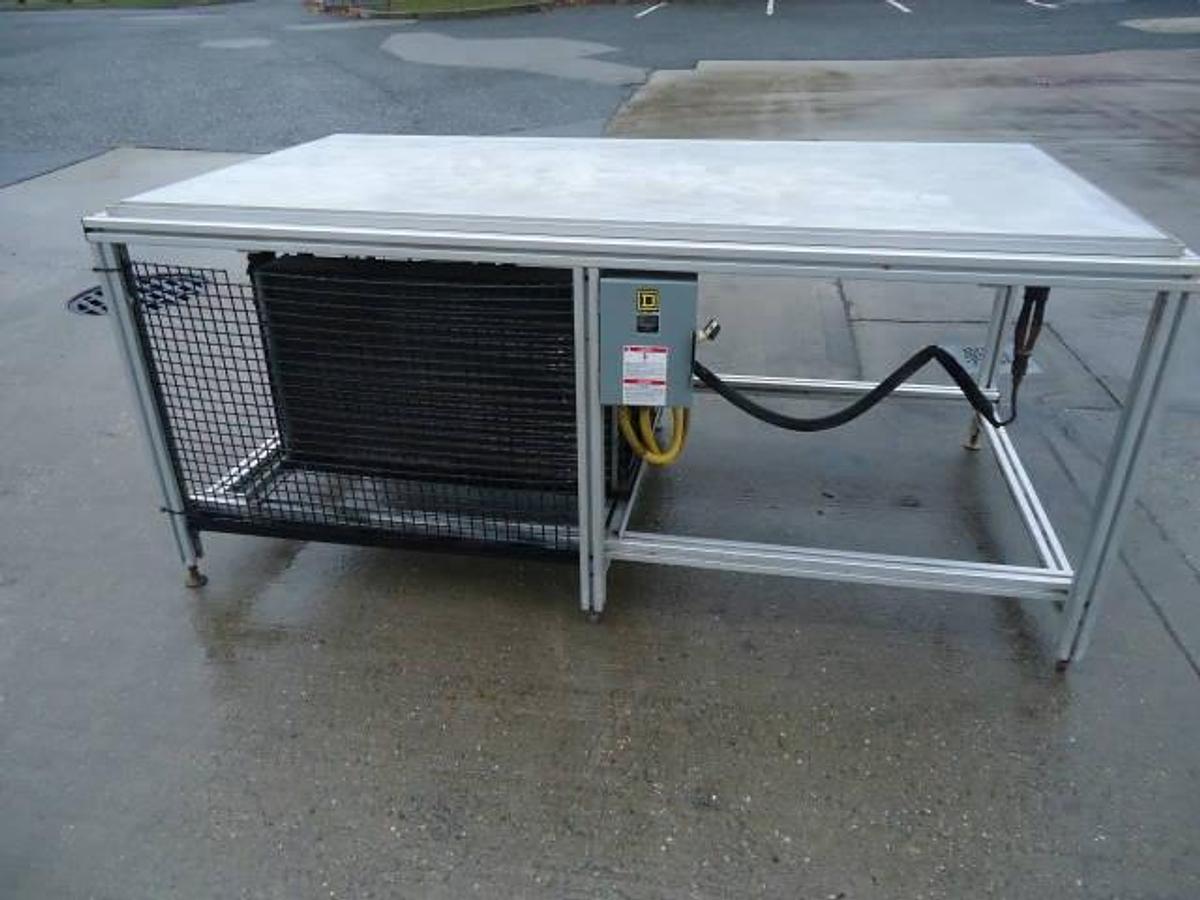
Cavalla produced a 36 inch by 72 inch lipstick chill table, which points to their involvement in cosmetics manufacturing equipment as well as fabrication machinery. In cosmetics production, chill tables are used to rapidly solidify poured lipstick or other formulations after they are filled into molds, allowing for faster throughput on the production line. The presence of this type of equipment in Cavalla's product history illustrates that their manufacturing capabilities extended beyond metals processing into other precision manufacturing sectors. Buyers sourcing used chill tables should confirm the table's dimensions, cooling capacity, and temperature range to ensure compatibility with their specific process requirements.