Category
Manufacturer
Model
FAQ:
What types of products can CDA bottling machines fill?
CDA bottling machines are designed to handle a wide range of liquid and semi-liquid products across multiple industries. Common applications include water, juices, wines, spirits, oils, sauces, dairy products, cleaning agents, cosmetics, personal care products, and pharmaceutical liquids. The specific filling mechanism on a given machine determines what viscosities and product types it can handle accurately, so buyers should confirm compatibility with their product before purchasing.
CDA builds machines for the food and beverage, cosmetic, and pharmaceutical sectors, meaning their equipment is engineered to meet the hygiene and precision standards those industries demand. Used CDA machines available on the market often come from production facilities in these sectors, so they have typically been running real production volumes. Buyers sourcing a used CDA filler should verify the machine's previous product application and whether any product-contact parts need to be cleaned, refurbished, or replaced before running a different product type.
What types of bottles and containers are compatible with CDA filling machines?
CDA filling machines are built to work with a broad range of container types, including glass bottles, PET plastic bottles, HDPE bottles, and various jar formats. Container compatibility depends on the specific machine model, as different models are configured for different neck finishes, bottle heights, diameters, and cap types. Many CDA machines feature tool-free or quick-release format changeover systems, which allow operators to switch between different bottle sizes and shapes without extensive downtime or specialized tooling.
For buyers considering a used CDA machine, it is worth confirming which bottle formats the machine was originally configured for and whether the necessary change parts for other formats are included in the sale. Change parts for bottle guides, filling nozzles, and capping heads are often model-specific, so sourcing additional format parts after purchase may require working directly with CDA or a qualified parts supplier. Checking with CDA on parts availability for a particular model year is a practical step before finalizing any purchase.
What is the typical output speed of CDA bottling machines?
CDA produces machines across a wide range of output speeds, from compact units suited to small-batch production up to high-speed lines capable of handling several thousand bottles per hour. Entry-level or semi-automatic CDA models may produce anywhere from a few hundred to around 1,000 to 1,500 bottles per hour, while fully automatic monoblock systems can reach speeds of 3,000 to 6,000 bottles per hour or more depending on the configuration and bottle format.
Actual throughput on a used machine can vary based on the age of the machine, the condition of wear components, and how the machine has been maintained. Buyers should ask for documentation of the machine's rated speed as well as any available production history. For used equipment, a pre-purchase inspection, either in person or via video, is the most reliable way to assess whether the machine is currently capable of running at or near its rated capacity. Speed ratings listed in machine specifications reflect ideal conditions, so real-world output should be factored into production planning.
Are CDA bottling machines fully automatic or semi-automatic?
CDA manufactures both fully automatic and semi-automatic machines, and their product lineup spans standalone units as well as integrated monoblock systems that combine filling, capping, and labeling in a single machine. Fully automatic models are designed for continuous, high-volume production with minimal operator intervention, while semi-automatic models require an operator to load containers or initiate each cycle, making them better suited for smaller operations or lower production volumes.
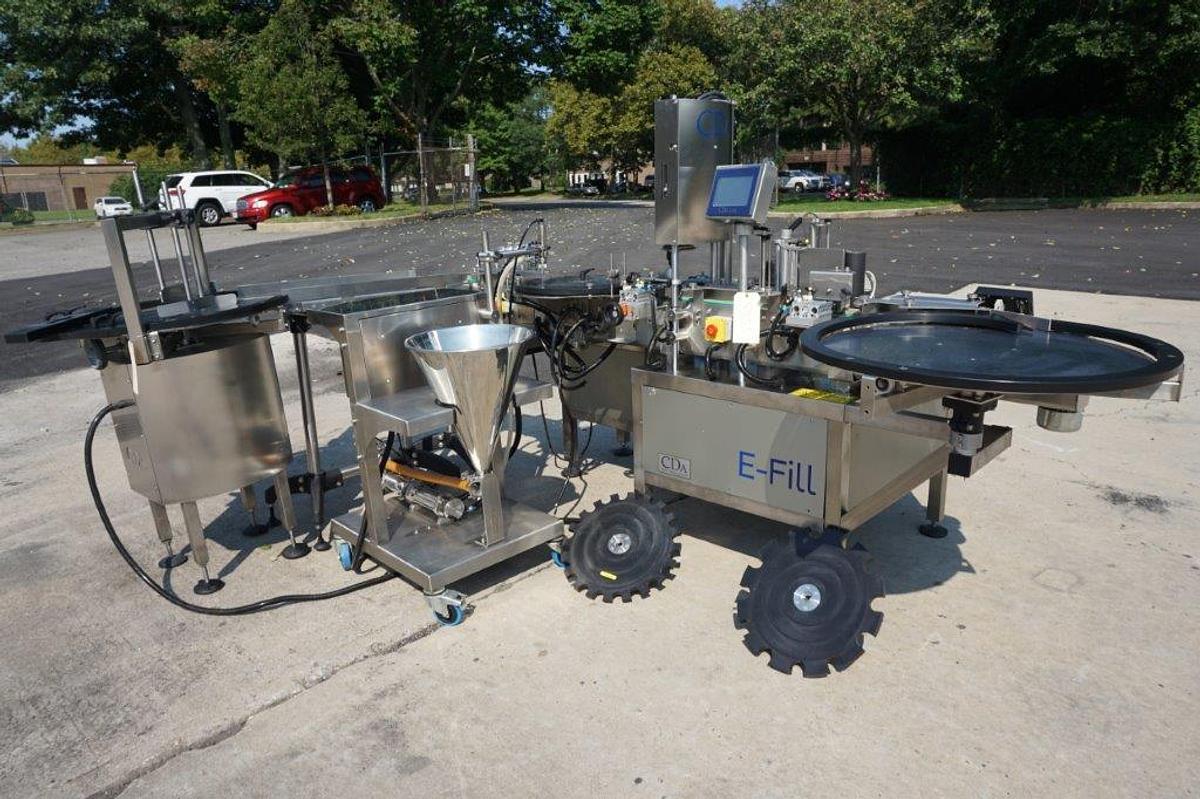
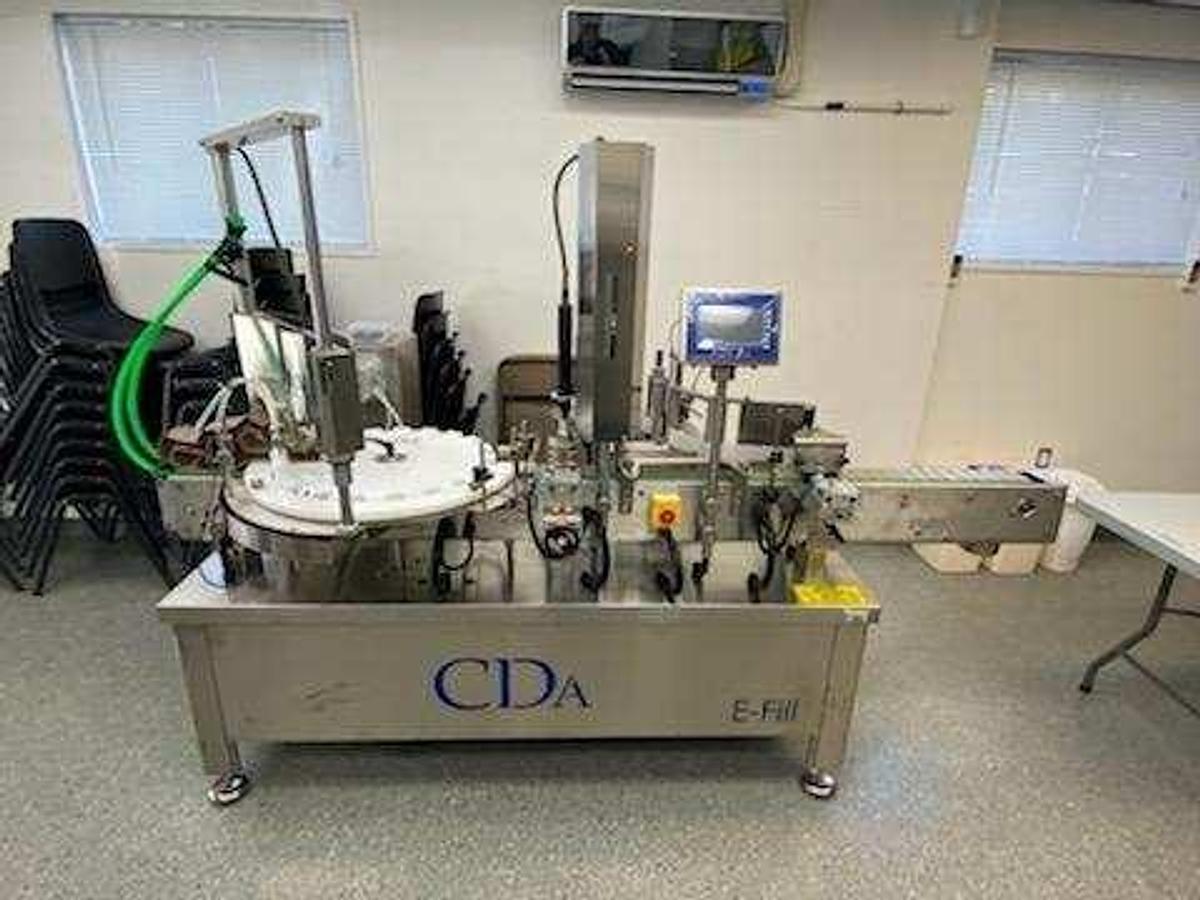
In the used equipment market, CDA monoblocks are a commonly available format. A monoblock integrates multiple functions, such as filling, capping, and labeling, into one compact footprint, which reduces the need for transfer conveyors between stations and can simplify installation. Buyers should review the specific model's automation level and confirm that all functional modules on the machine are intact and operational, since a used monoblock with a non-functioning labeling head, for example, may require repair or parts sourcing before it can run a complete production cycle.
What is the price range for used CDA bottling machines?
Used CDA bottling machines vary considerably in price depending on the machine type, age, configuration, and overall condition. A used semi-automatic CDA filler or labeler might be available in the range of a few thousand to tens of thousands of dollars, while a fully automatic CDA monoblock combining filling, capping, and labeling can command prices ranging from $30,000 to well over $100,000 depending on its specifications and production history.
Pricing for used equipment also reflects the cost of any reconditioning work that has been done, the availability of spare parts for that model, and current market demand. Buyers should factor in additional costs beyond the listed machine price, including freight, rigging, installation, and any refurbishment needed to bring the machine to production-ready condition. Requesting a detailed quote from the dealer that breaks out all of these costs will give a clearer picture of the true landed cost before committing to a purchase.
What is a CDA monoblock bottling machine?
A CDA monoblock is an integrated bottling machine that combines two or more functions, typically filling, capping, and labeling, into a single synchronized unit. Rather than having separate standalone machines connected by conveyors, a monoblock handles the entire bottling sequence within one compact frame. This design reduces floor space requirements, simplifies line balancing, and minimizes the number of transfer points where containers can tip or jam.
Monoblocks are popular in small-to-medium production environments where floor space is limited and the production volume does not justify a full multi-machine bottling line. Used CDA monoblocks are available on the secondary market and can represent strong value for buyers who need an all-in-one solution. When evaluating a used monoblock, it is important to assess each functional module independently, since a problem in one section of the machine affects the entire line. Inspecting the filling heads, capping mechanism, and labeling system separately during a pre-purchase inspection is a sound approach.
How do you inspect a used CDA bottling machine before buying?
Inspecting a used CDA machine before purchase is one of the most important steps a buyer can take to avoid unexpected costs after delivery. Most reputable used equipment dealers will accommodate in-person inspections at their facility, or they can provide detailed video walkthroughs of the machine showing its current condition, major components, and any visible wear. In some cases, the machine may still be installed at the original production facility, where an inspection can be arranged between the buyer, the dealer, and the plant owner.
During an inspection, buyers should look at the condition of filling nozzles, seals, and product-contact surfaces, the integrity of the capping and labeling components, the state of the electrical panels and controls, and any signs of corrosion, damage, or missing parts. Keep in mind that most equipment dealers do not have the permits or setup required to run actual product through a machine during a demonstration, so functional testing is typically limited to dry cycling or running water. Consulting with CDA directly about the support and parts availability for the specific model and year being considered is also a practical step, since older models may have limited parts availability.
What certifications do CDA bottling machines carry?
CDA is an Italian manufacturer, and their machines are typically built to CE certification standards, which indicate compliance with European Union health, safety, and environmental requirements. CE marking is a significant consideration for buyers in regulated industries such as food, beverage, cosmetics, and pharmaceuticals, as it reflects that the machine meets defined engineering and safety standards at the time of manufacture. For buyers operating in North America or other markets, CE certification is generally viewed as a positive indicator of build quality, even if local regulatory requirements differ.
For used machines, buyers should confirm whether the CE documentation and original technical manuals are available as part of the sale. Having access to the original documentation makes it easier to work with local electricians or engineers during installation, and it provides a reference for maintenance and troubleshooting. The age of the machine and any modifications made after manufacture can affect how applicable the original certification documentation remains, so buyers in highly regulated industries should consult with their compliance teams when evaluating used equipment.
Is a used CDA bottling machine a practical option for a small business or startup?
A used CDA machine can be a practical and cost-effective path for small businesses or startups that need production-grade bottling equipment without the capital outlay of purchasing new machinery. CDA builds machines across a range of scales, including compact semi-automatic and small-footprint monoblock units that are sized for lower production volumes. Buying used brings the acquisition cost down significantly, which can make professional bottling equipment accessible at a stage of business where cash flow is a real constraint.
That said, small businesses considering used equipment should go in with realistic expectations. Used machines are sold as-is, and there is no manufacturer coverage on pre-owned equipment. Buyers should budget for potential refurbishment costs, spare parts, and installation support. Choosing a dealer who specializes in bottling and packaging machinery, rather than a general industrial equipment reseller, tends to reduce risk because specialized dealers are more likely to accurately represent the machine's condition and application history. Having a qualified technician review the machine before or shortly after purchase is a worthwhile investment for any buyer, but especially for a smaller operation where unexpected downtime has an outsized impact.
What should buyers know about shipping a used CDA bottling machine?
Shipping a used CDA bottling machine involves more planning than typical freight because these machines are heavy, precision-built pieces of equipment that can be damaged if improperly secured or handled during transit. Machines should be properly palletized or crated before shipping, and the level of packaging required depends on the size and weight of the unit. Larger monoblocks or complete bottling lines may require professional rigging for loading and unloading, which adds to the overall shipping cost. Buyers should ask the dealer specifically about how the machine will be packaged and what rigging services are included or available.
Shipping costs vary based on the machine's dimensions and weight, the origin and destination, and the type of freight service used. For large machines, flatbed trucking or specialized heavy equipment transport is often required. Buyers should request a fully itemized quote that covers crating or palletization, loading rigging, freight, and unloading at the destination so that the total landed cost is clear before the purchase is finalized. International shipments add customs documentation and import duties to the equation, which should also be factored into the budget.