Category
Manufacturer
Model
Brothers Legrow
Brothers Legrow stands out in the cutting-edge machinery sector, offering solutions primarily aimed at small-scale production and craft industries. Their equipment includes compact processing units and artisanal manufacturing tools that support niche market operations. Brothers Legrow emphasizes efficiency and quality, enabling small businesses to thrive in a competitive environment.
FAQ:
What is a centrifugal vegetable spin dryer and what is it used for?
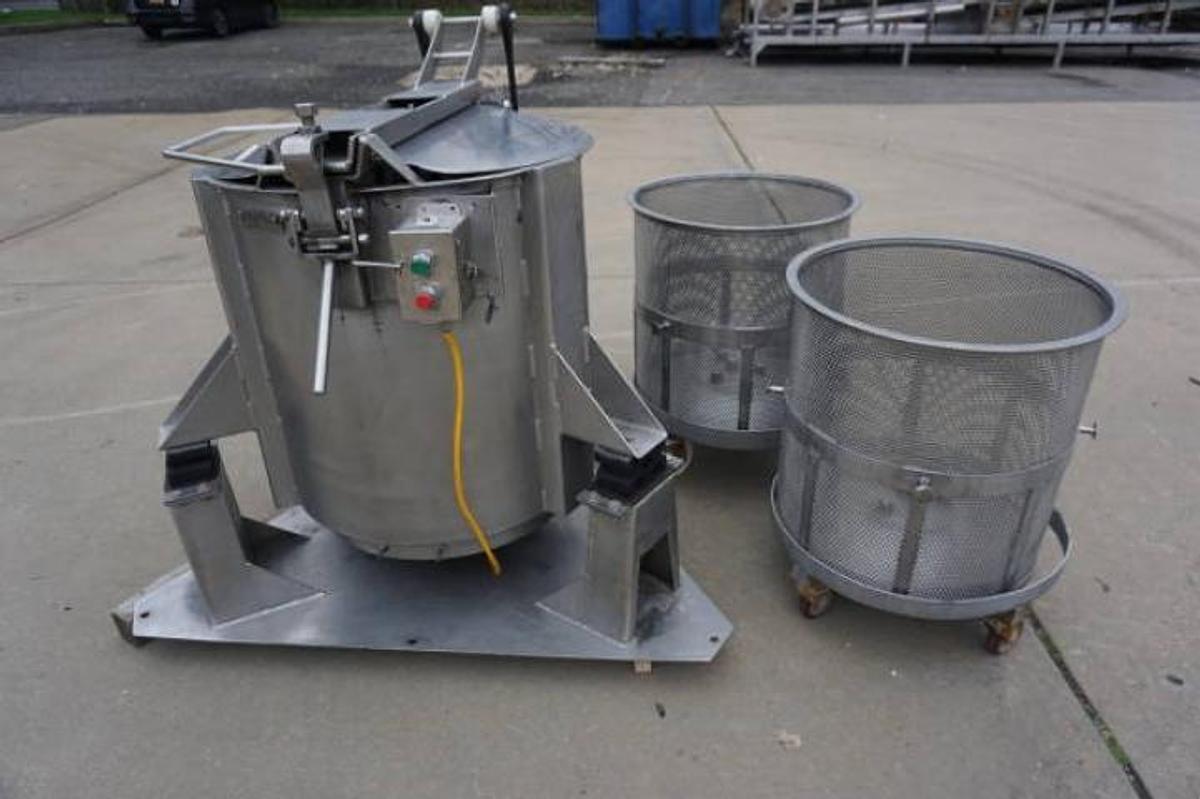
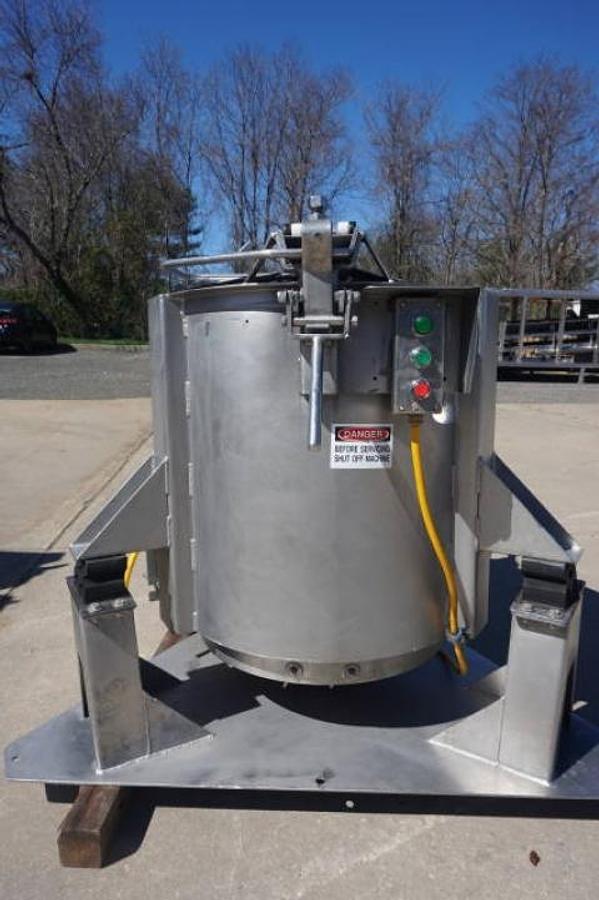
A centrifugal vegetable spin dryer is a piece of food processing equipment that uses high-speed rotation to remove excess moisture from vegetables, leafy greens, herbs, and similar produce. The spinning action forces water out through a perforated stainless steel basket, leaving product significantly drier than hand-pressing or gravity draining could achieve. This is particularly useful in commercial kitchens, food processing operations, and craft or small-batch production settings where consistent moisture levels directly affect product quality, shelf life, and presentation.
These machines are commonly rated by capacity, with a 200 lb. model being well-suited for small-to-mid-scale production environments. The 5 HP motor drives the basket to high RPM, generating enough centrifugal force to handle dense loads efficiently without damaging delicate produce. Stainless steel construction is standard for food-grade equipment because it resists corrosion, cleans easily, and meets sanitation requirements typical in food handling environments. Basket diameter, such as a 30-inch drum, determines how much product can be processed per cycle, which is a key spec to match against your actual production throughput needs.
What should buyers look for when purchasing a used centrifugal spin dryer?
The most important things to assess on a used centrifugal spin dryer are the condition of the stainless steel basket and drum, the motor, and the bearing assembly. The basket should be free of cracks, significant dents, or corrosion that could compromise food safety or structural integrity at high RPM. Bearings are a high-wear component on spin dryers since they absorb the load of a full basket spinning at speed, so any roughness, noise, or play in the shaft is worth factoring into your evaluation. The motor should run smoothly without unusual vibration or heat buildup.
It is also worth checking whether the lid, safety interlocks, and drain components are intact and functional. Spin dryers rely on safety mechanisms to prevent the lid from opening during operation, and missing or damaged interlocks can be both a safety issue and a compliance concern. Ask the seller for any available service history, and if possible, arrange an in-person or video inspection to see the machine run before committing to a purchase. Buying from a dealer who specializes in food processing or small-scale production equipment gives you a better chance of getting accurate, detailed condition information compared to a general resale platform.
What is the warranty situation when buying used food processing equipment?
Used food processing equipment is almost universally sold on an as-is basis, meaning the buyer takes on responsibility for the machine's condition at the time of purchase. Manufacturer warranties are tied to the sale of machines and do not transfer to subsequent owners in most cases. This is standard practice across the used equipment industry, not something unique to any particular dealer or machine type. The practical implication is that the buyer's due diligence before purchase carries real financial weight.
To protect yourself, focus on selecting dealers with a verifiable track record in the specific equipment category you are buying from. Dealers who specialize in food processing or production equipment will generally provide more accurate condition descriptions than generalist resellers. It is also worth contacting the equipment manufacturer directly to ask about parts availability and technical support for the specific model and age of machine you are considering. Older or discontinued models may have limited parts availability, which affects long-term serviceability and should factor into your pricing expectations.
How does the capacity rating on a spin dryer affect which model to choose?
Capacity on a centrifugal spin dryer refers to the maximum weight of product the machine can handle per cycle, and choosing the right capacity is one of the most important spec decisions you will make. A 200 lb. rated machine means the basket and motor are engineered to handle loads up to that weight without stressing the bearings or drive components. Running a machine consistently at or near its rated maximum will wear it faster than operating it at moderate loads, so if your production regularly approaches the upper limit, sizing up is generally the smarter choice.
Basket diameter is closely related to capacity and affects how product loads into the machine. A 30-inch diameter basket accommodates bulkier items and allows for more even distribution of product during spinning, which reduces vibration and improves drying consistency. For buyers comparing multiple used units, matching both the weight capacity and basket diameter to your actual production volume gives you a clearer picture of real-world fit than looking at either spec in isolation. If you are buying used, also consider that a machine previously operated well within its rated capacity will typically show less wear than one that was regularly pushed to its limits.
Can I inspect used food processing equipment before buying it?
Most reputable used equipment dealers will accommodate inspection requests, either in person, by video call, or through detailed video recordings of the machine in its current state. The goal of any inspection is to get an honest picture of the equipment's working condition, including visible wear, any missing components, and how the machine runs under power. For food processing equipment specifically, you also want to assess sanitation-related details like the condition of seals, interior surfaces, and any components that contact product directly.
Keep in mind that dealers generally do not have the permitting or production infrastructure to run actual food product through a machine during a demonstration. What they can typically show is the machine running under power, the basket spinning, and any relevant operational features. If the equipment is still installed at a production facility, the dealer may be able to coordinate an inspection at that location, where you might even see the machine in active use. Either way, getting eyes on the equipment before purchase is one of the most effective ways to reduce risk when buying used, and any dealer worth working with will support that process.
What does stainless steel construction mean for food processing equipment, and why does it matter?
Stainless steel is the material of choice for food contact surfaces in processing equipment because it is non-porous, corrosion-resistant, and able to withstand the repeated cleaning and sanitizing cycles that food safety protocols require. In a centrifugal spin dryer, the basket, drum, and interior surfaces that come into contact with produce are typically fabricated from food-grade stainless steel, which resists the acids and moisture present in fresh vegetables and herbs. This matters both for product safety and for the longevity of the machine itself, since lower-grade metals would corrode quickly in a wet, food-processing environment.
For buyers evaluating used stainless steel equipment, the condition of the steel is a meaningful indicator of how the machine was maintained. Surface staining or discoloration does not necessarily indicate structural compromise, but pitting, deep corrosion, or cracking in the basket or drum walls is more serious and worth scrutinizing carefully. A well-maintained stainless steel machine can remain serviceable for many years, which is part of why used food processing equipment retains meaningful value in the secondary market. When inspecting a used unit, pay particular attention to welds, drain areas, and any spots where moisture tends to pool, as these are the most common sites for corrosion to develop over time.
How is shipping and delivery handled for used food processing equipment?
Shipping costs and logistics for used food processing equipment depend on the size and weight of the machine, the destination, and the level of packaging required to protect it in transit. Smaller units may ship on a standard pallet with shrink wrap and strapping, while larger or more fragile equipment may require custom crating to prevent damage. Buyers should ask the dealer specifically what packaging is included in any quoted shipping price, since the difference between basic palletization and full crating can be significant both in cost and in the level of protection provided.
For heavier equipment, loading at the origin point and unloading at the destination may require a forklift or other rigging, which adds to the total landed cost. Freight carriers that handle industrial equipment are different from standard parcel carriers, and transit times and handling standards vary accordingly. Before finalizing a purchase, get a clear breakdown of all costs involved in getting the machine to your facility, including packaging, freight, any liftgate service if you do not have a loading dock, and any rigging fees. Understanding the full landed cost upfront avoids surprises and lets you compare the total investment accurately across different purchasing options.
What are typical payment terms for purchasing used equipment from a dealer?
Used equipment dealers typically require payment in full before a machine is released for shipping or pickup. This is standard practice in the industry and reflects the fact that used equipment transactions do not carry the same financing infrastructure that manufacturers or large distributors sometimes offer on new machinery. For first-time buyers with a particular dealer, expect to pay in full prior to shipment. Some dealers extend more flexible terms to repeat customers with an established purchasing history, but this is at the dealer's discretion rather than a standard offering.
Common payment methods include wire transfer, certified funds, or business check, with wire transfer being the most widely accepted for larger transactions because it clears quickly and reduces risk for both parties. Credit card payments are less common for high-value equipment purchases due to processing fees, though some dealers accommodate them for smaller transactions. If financing is important to your purchase decision, it is worth exploring third-party equipment financing options independently, as some lenders specialize in used machinery and can move quickly once you have identified the specific equipment you want to buy.
What industries and applications commonly use centrifugal spin dryers for produce?
Centrifugal spin dryers for produce are used across a range of food-related industries where removing surface moisture from vegetables, greens, or herbs is a routine part of the production process. Commercial kitchens and catering operations use them to prepare large volumes of salad greens efficiently. Specialty food producers, including those making fresh-cut salads, herb-based products, or ready-to-eat vegetable dishes, rely on them to control moisture content before packaging. Cannabis cultivation and processing operations have also adopted food-grade spin dryers for post-harvest moisture reduction, which is one reason these machines appear frequently in the small-batch and craft production segment.
Farmer cooperatives, food hubs, and small-scale processors that aggregate and prep produce for retail or foodservice distribution also use centrifugal dryers to improve product presentation and extend shelf life by reducing the surface moisture that accelerates spoilage. The compact footprint of a 200 lb. capacity machine makes it practical for operations that do not have the floor space or volume to justify industrial-scale drying equipment. Used machines in this category are particularly appealing to businesses that want proven, food-grade equipment at a lower capital outlay than purchasing comparable units from a manufacturer.
How do you evaluate whether a used equipment dealer is reputable before making a purchase?
The most reliable indicators of a reputable used equipment dealer are longevity in the business, specialization in a relevant equipment category, and transparency throughout the sales process. A dealer with years of transaction history in food processing or production equipment is more likely to provide accurate condition assessments than a generalist reseller who handles many different machine types without deep category knowledge. Look for dealers who can speak knowledgeably about the specific makes and models they carry, including common wear points, parts availability, and typical service requirements.
Transparency around inspection access is another strong signal. Dealers who readily offer in-person or video inspections and provide detailed condition disclosures are demonstrating confidence in what they are selling. Conversely, dealers who are vague about condition or resistant to inspection requests are worth approaching with caution. Reading third-party reviews, asking for references from past buyers, and checking how long the dealer has been operating under their current business identity all contribute to a clearer picture. For high-value purchases, taking the time to verify a dealer's reputation before committing is straightforward due diligence that most experienced equipment buyers treat as non-negotiable.