Category
Manufacturer
Model
Binacchi
Binacchi specializes in producing machinery for the soap and detergent industries, known for their saponification and finishing lines. Their equipment supports manufacturers in optimizing production by improving efficiency and product quality. Binacchi’s technology is essential for operations aiming to produce consistently high-quality soap and detergent products.
FAQ:
What types of soap machinery does Binacchi manufacture?
Binacchi is an Italian manufacturer that specializes in equipment for the soap and detergent industries. Their product range covers the full production process, from raw material processing through to finished bar soap. Key equipment categories include saponification systems, mixers and amalgamators, vacuum plodders, soap refiners, soap cutters, and stamping presses. Each machine type serves a specific stage in the production line, and buyers can source individual pieces to fill gaps in an existing setup or assemble a more complete line over time.
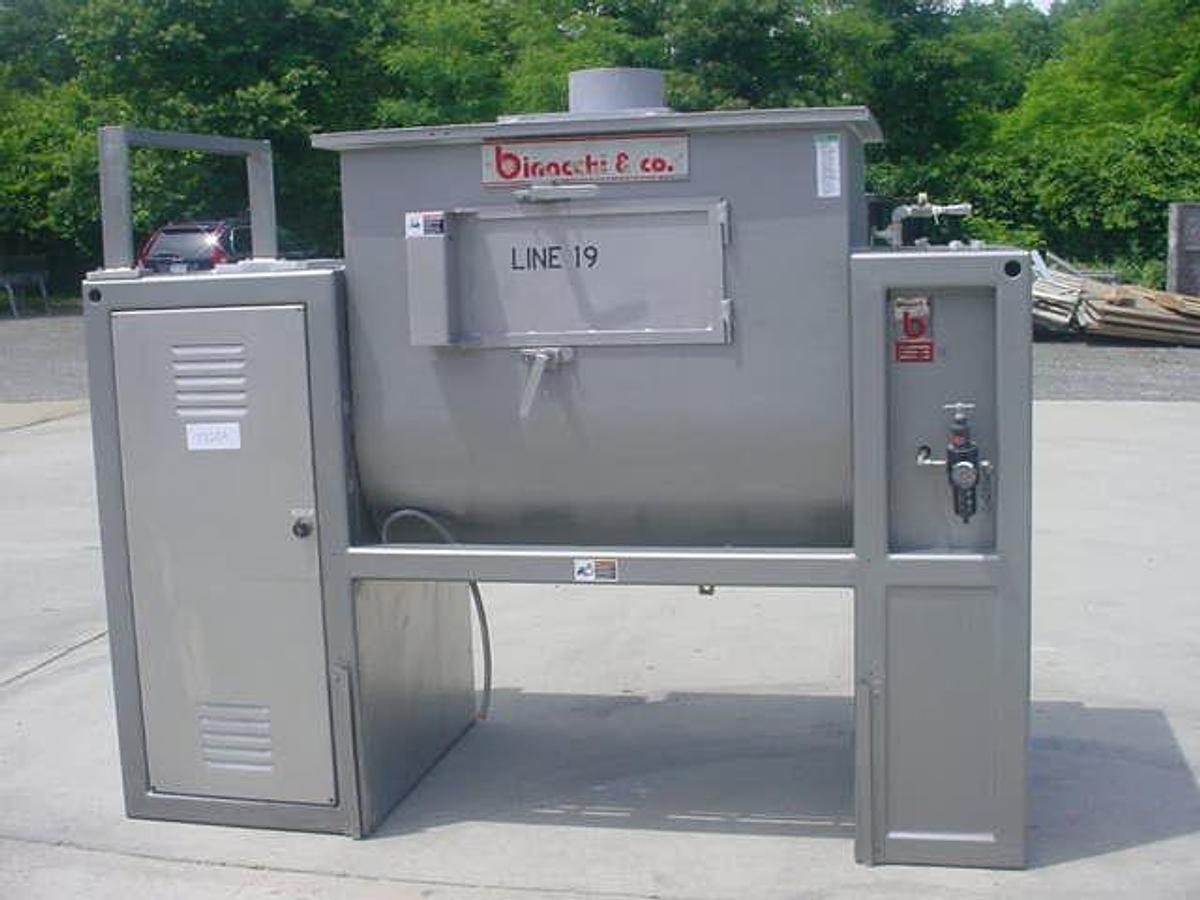
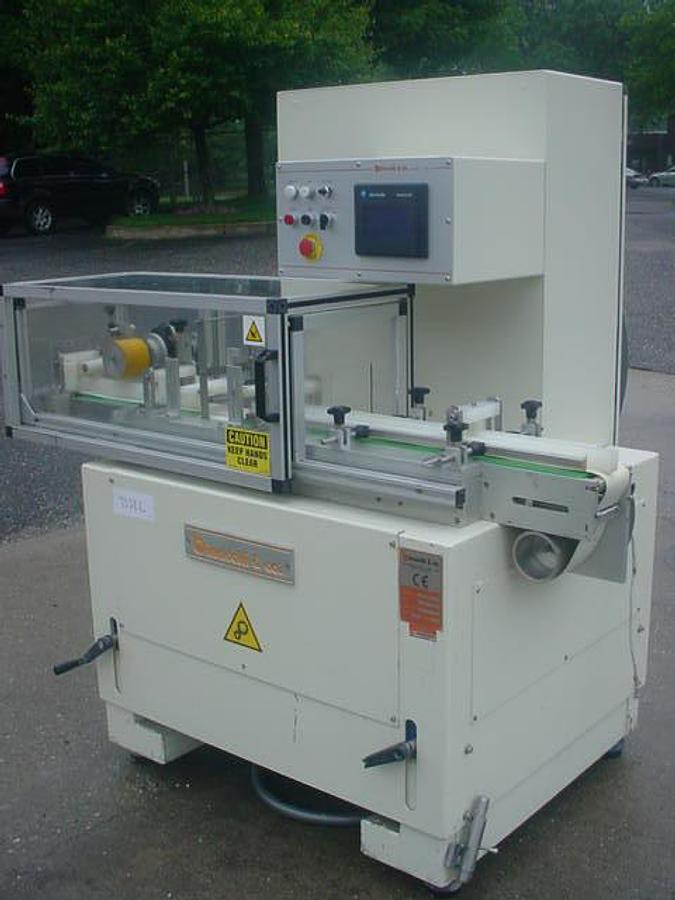
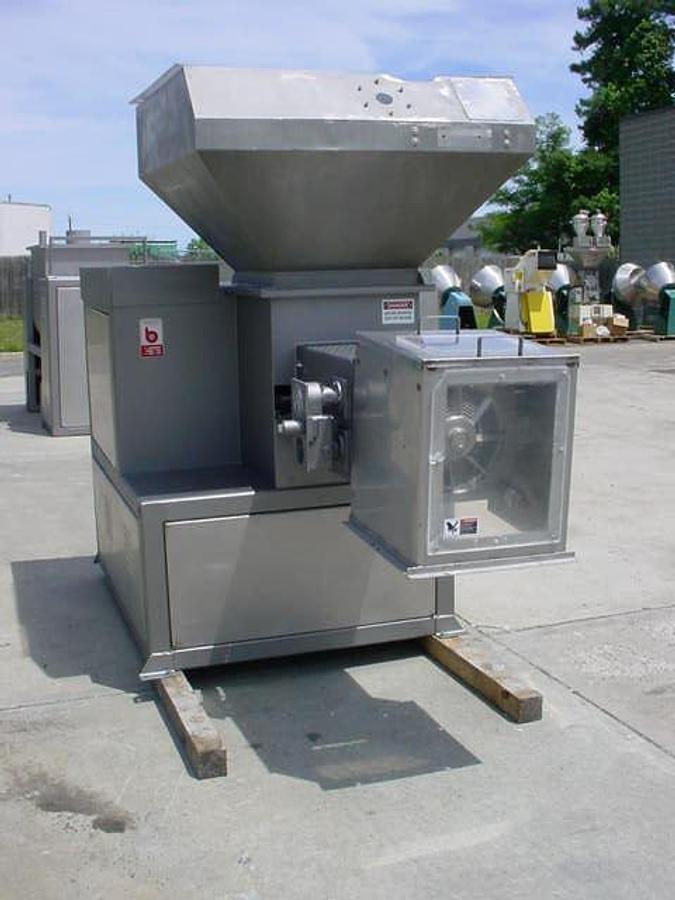
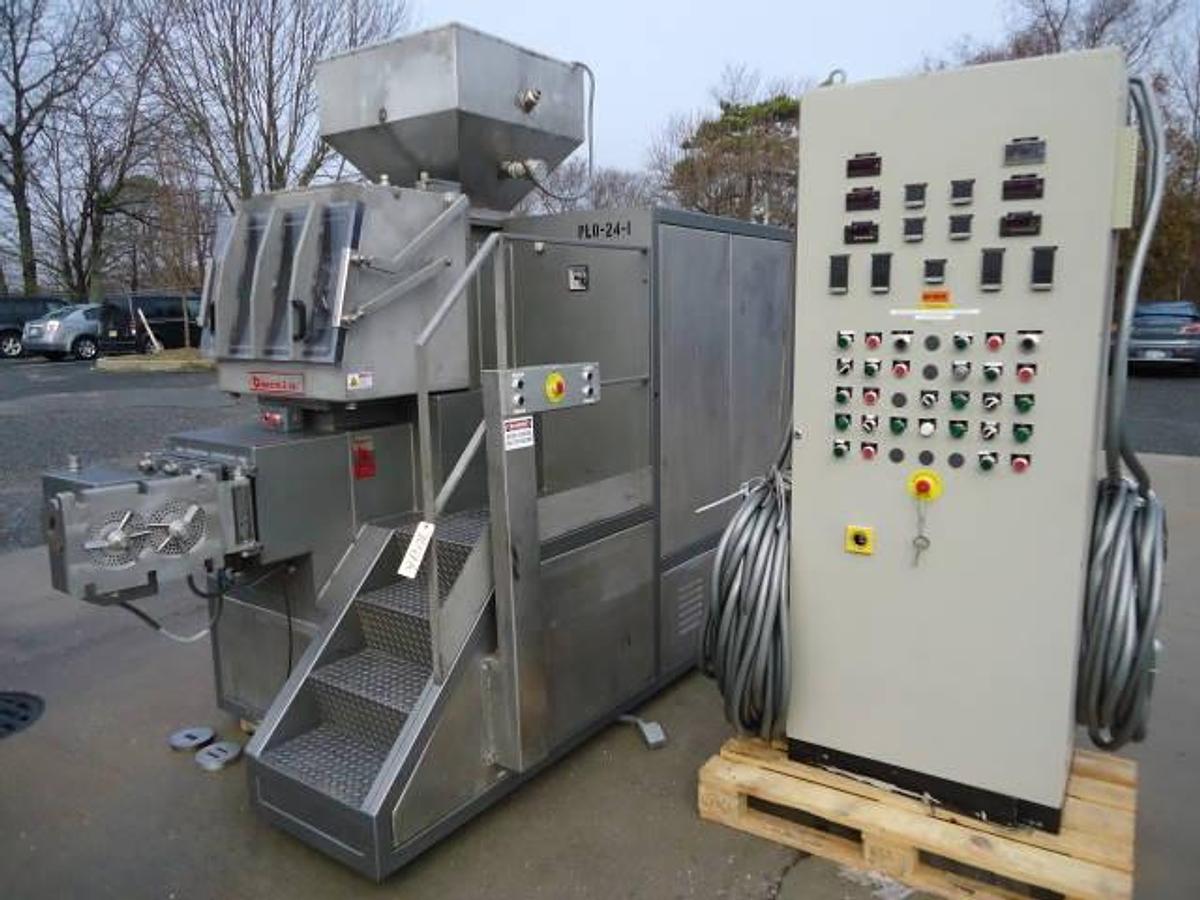
On the used market, Binacchi machines that appear most frequently include dual-screw vacuum plodders (such as the DVPB160), soap presses (such as the USN-300 rated at 4,500 kilograms), soap cutters (such as the BBE/Simplo at 650 kilograms), 300mm soap refiners, and large-capacity stainless steel mixers and amalgamators in the 1,900-kilogram range. These machines are primarily designed for bar soap production and are built for continuous industrial use, which is why they retain strong interest on the secondary market even after years of service.
What is the typical production capacity of Binacchi soap machinery?
Production capacity varies significantly depending on the specific machine and its position in the production line. A soap press like the Binacchi USN-300, rated at 4,500 kilograms, is built for high-throughput industrial stamping operations, while a cutter rated at 650 kilograms per hour suits a smaller or mid-scale line. Mixers and amalgamators in the 1,900-kilogram range are designed to process large batches, making them appropriate for manufacturers running multi-shift operations.
When evaluating capacity for a used machine, buyers should look at the rated output figures alongside the machine's age and condition, since wear on screws, barrels, and dies can reduce effective throughput below the nameplate specification. A thorough inspection, either in person or via video, is the best way to assess the actual working condition of the equipment before purchase. Buyers who need precise throughput figures for production planning should also consult with the manufacturer directly, as Binacchi can often provide technical documentation for specific model numbers that clarifies rated versus practical output under different operating conditions.
Is used Binacchi soap machinery suitable for small-scale or startup soap producers?
Binacchi equipment is fundamentally designed for industrial-scale production, so smaller machines in their lineup, such as a 650-kilogram-per-hour cutter or a mid-size refiner, can be appropriate for a growing operation that has moved beyond artisan batch sizes and needs consistent, repeatable output. The challenge for smaller buyers is that industrial soap machinery, even at the lower end of the capacity range, requires proper facility infrastructure: adequate floor space, three-phase electrical supply, and in many cases, steam or chilled water connections.
For startup operations, purchasing a single used Binacchi machine to anchor a production line can be a cost-effective strategy, particularly when the alternative is buying all-new equipment at a significantly higher price point. That said, buyers should factor in the full cost of ownership, including shipping, rigging, installation, any refurbishment needed, and ongoing spare parts sourcing, before comparing the used price against other options. A reputable used equipment dealer who specializes in soap and detergent machinery can help buyers identify which specific Binacchi models align with their production targets and facility capabilities.
What should buyers inspect when purchasing used Binacchi soap machinery?
Used soap machinery requires careful evaluation because wear patterns in this industry are specific to the materials being processed. For a vacuum plodder, the most critical components to assess are the screw flights and barrel liner, since soap is abrasive and these surfaces wear over time, directly affecting the quality and density of the extruded log. On a soap press or stamper, buyers should examine the dies, the condition of the hydraulic or mechanical drive system, and the alignment of the stamping heads. On mixers and amalgamators, look at the condition of the agitator blades, seals, and the drive gearbox.
Most reputable used equipment dealers will accommodate in-person inspections or, for international buyers, detailed video walkthroughs and photographic documentation of the machine's key wear points. Some machines may still be installed at a production facility where they can be observed running, which gives the clearest picture of actual operating condition. Keep in mind that dealers generally do not have the permitting required to run full soap production, so functional testing with actual product is rarely possible at a dealer's location. Buyers should also contact Binacchi directly to understand what technical documentation, spare parts, and support are available for the specific model and approximate production year they are considering.
How does the saponification and finishing line process work in Binacchi soap production equipment?
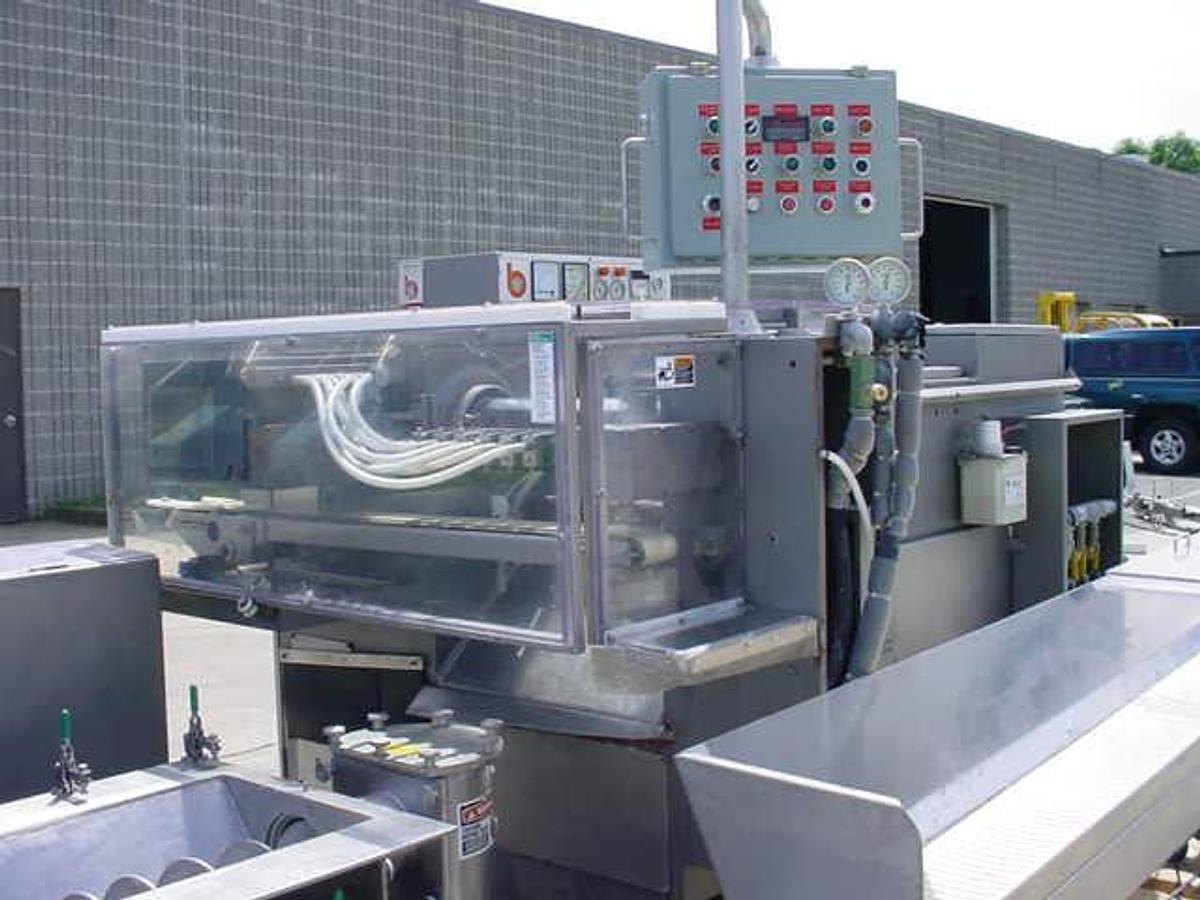
A complete bar soap production line moves through several distinct stages, and Binacchi manufactures equipment for multiple points in that process. Saponification is the chemical reaction stage where fats or oils are combined with an alkali to produce soap base and glycerin. Once the base soap is produced, it goes through a series of mechanical finishing steps: mixing and amalgamating (to blend in additives, colorants, or fragrances), refining (to improve texture and homogeneity by forcing the soap through fine perforated plates), plodding (to extrude the refined soap into a continuous log under vacuum, which removes air and improves bar density), cutting (to divide the log into individual bar-sized pieces), and finally stamping or pressing (to emboss the bar with shape and branding).
Binacchi's equipment is known within the industry for supporting manufacturers in optimizing both efficiency and product quality across these finishing stages. Their dual-screw vacuum plodders, for example, are specifically engineered to produce a dense, air-free soap log that results in harder, longer-lasting bars. Buyers sourcing individual machines from the used market should map each piece of equipment to the specific stage in their production process where they need additional capacity or a replacement, rather than assuming a single machine can substitute for a complete line.
What are the main factors that affect the price of used Binacchi soap machinery?
Several variables drive the price of used Binacchi equipment on the secondary market. Machine type and size are the most obvious factors: a large-capacity soap press or a dual-screw vacuum plodder commands a higher price than a standalone cutter or refiner. Age and condition matter significantly, with machines that have been well-maintained, recently serviced, or still in active production typically priced higher than those that have been decommissioned and sitting idle. The availability of technical documentation, original manuals, and known service history also adds value because it reduces uncertainty for the buyer.
Beyond the machine price itself, buyers should build a realistic total landed cost before making a purchasing decision. This includes freight and shipping charges, which vary based on the weight and dimensions of the machine and the level of crating or rigging required. Import duties and taxes apply when purchasing from an international seller, and Binacchi being an Italian manufacturer means that buyers outside the European Union should check applicable tariff classifications for industrial food-processing or chemical-processing machinery. Installation, commissioning, and any parts needed to bring the machine to full working order should also be included in the budget.
Are spare parts available for used Binacchi soap machinery, and how should buyers plan for maintenance?
Spare parts availability is one of the most important practical considerations for buyers of used Binacchi equipment, particularly for older models. As an Italian manufacturer, Binacchi's primary support infrastructure is based in Italy, which means international buyers may face longer lead times and higher costs for sourcing direct replacement parts. Buyers should contact Binacchi before completing a purchase to confirm whether the specific model and approximate production year they are considering is still supported, and which parts, if any, are no longer in production.
For machines where direct OEM parts are limited, there are practical alternatives. Many wear components, such as seals, bearings, and drive belts, are standard industrial parts that can be sourced locally regardless of the machine's country of origin. More specialized components like plodder screws, barrel liners, and stamping dies may need to be fabricated by a qualified machine shop if they are no longer available from the manufacturer. Buyers should budget for a reasonable initial parts inventory when commissioning used soap machinery, particularly for high-wear items, and should work with a dealer or technician familiar with the specific machine type to identify the components most likely to need replacement based on the machine's age and operating history.
What certifications or compliance standards apply to Binacchi soap machinery?
Binacchi, as an Italian manufacturer operating within the European Union, produces equipment that is subject to EU machinery safety directives, and machines built for the European market are typically CE marked to indicate conformity with applicable health, safety, and environmental protection standards. The CE marking on industrial machinery generally covers mechanical safety, electrical safety, and noise and vibration limits under the EU Machinery Directive. For buyers importing into the United States or other non-EU markets, CE certification is not a legal requirement but is generally regarded as a meaningful indicator of the manufacturer's engineering standards.
For used machines, buyers should be aware that the original certification applies to the machine as it was built and configured at the time of manufacture. Modifications, repairs, or the replacement of major components after the original build can affect the certification status. Buyers operating in regulated environments, such as facilities that produce cosmetic or pharmaceutical-grade soap, should verify with their local regulatory authority what documentation is required for the specific equipment they are importing, and should request any available technical files or conformity declarations from the seller as part of the purchase process.
How is used Binacchi soap machinery typically shipped, and what should buyers expect for delivery logistics?
Industrial soap machinery is heavy, often bulky equipment that requires specialized handling throughout the shipping process. Smaller machines like a soap cutter may ship on a standard pallet with appropriate banding and protective wrapping, while larger pieces such as a 1,900-kilogram mixer, a vacuum plodder, or a 4,500-kilogram press require custom timber crating and, in many cases, heavy rigging equipment for loading and unloading. Buyers should ask the seller for detailed information on how the machine will be packaged before agreeing to shipping terms, since inadequate crating is one of the most common causes of transit damage.
For international shipments, the process typically involves loading the crated machine into a shipping container (either full container load or less-than-container-load depending on size), ocean freight to the destination port, customs clearance, and final delivery by flatbed truck to the buyer's facility. Unloading at the destination requires a forklift or crane with sufficient capacity, which is the buyer's responsibility to arrange. Total transit time from Europe to North America typically runs four to eight weeks depending on the port of origin, shipping line schedules, and customs processing times. Sellers will normally require full payment before the machine is released for shipment, and buyers should confirm all packaging, rigging, and freight costs upfront to understand the complete landed cost of the equipment.
How does buying used Binacchi soap machinery compare to purchasing all-new equipment?
The primary advantage of purchasing used Binacchi machinery is cost. Industrial soap production equipment represents a significant capital investment, and a well-maintained used machine can be acquired for a fraction of the price of a comparable piece of equipment purchased directly from a manufacturer. For operations that are scaling up, replacing aging equipment, or adding capacity to an existing line, the used market provides access to proven, purpose-built Italian engineering at a price point that makes the investment feasible at an earlier stage of growth.
The trade-offs are worth understanding clearly. Used equipment comes without manufacturer warranties and is sold as-is, which places the responsibility for assessing condition squarely on the buyer. This makes the quality of the inspection process and the reputation of the dealer critical factors in the purchasing decision. Buyers should select dealers with a demonstrated track record in the soap and detergent machinery sector, who can provide thorough documentation and facilitate meaningful inspections. The other consideration is the total cost of ownership over time: a used machine may require more frequent maintenance, and parts sourcing can be more complex than for a machine still in active production by the manufacturer. Factoring those costs into the comparison gives a more accurate picture of the real value difference between used and new-from-manufacturer options.