Category
Manufacturer
Model
Beseler
Beseler is known in the packaging industry for providing robust and reliable shrink packaging and sealing machines. Their systems cater to a wide range of industries, ensuring efficient and high-quality packaging solutions. Beseler’s equipment is highly regarded for its durability and ease of use, making them a staple in maintaining efficient production lines.
FAQ:
What types of Beseler shrink packaging machines are available on the used equipment market?
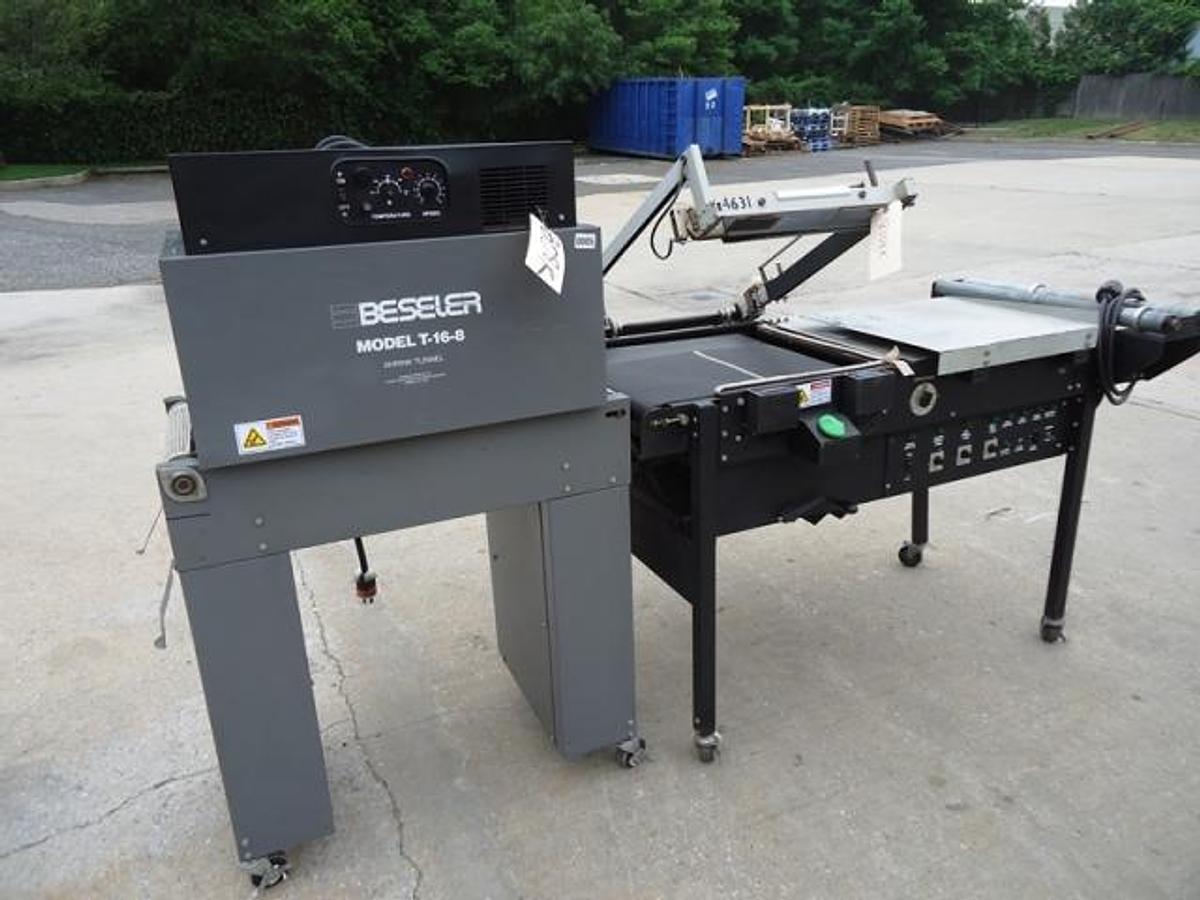
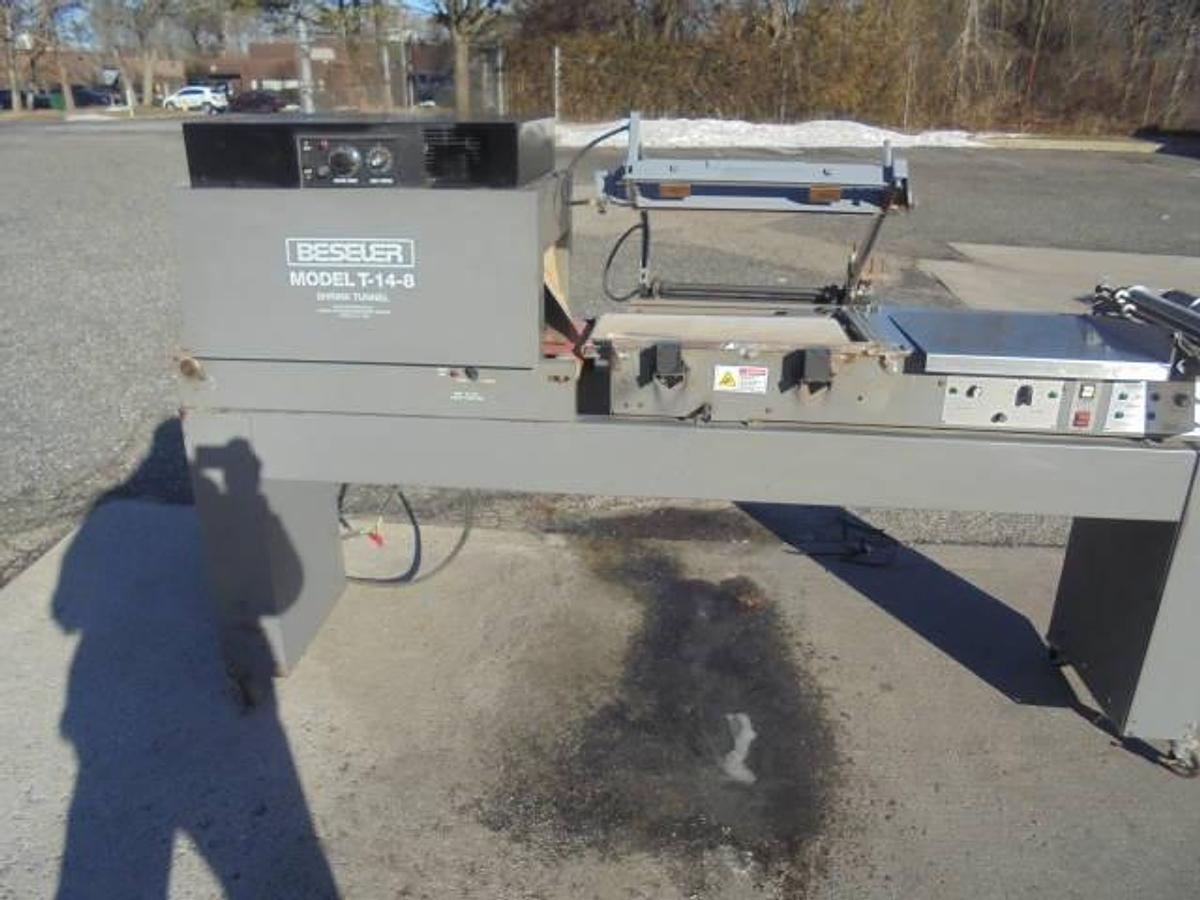
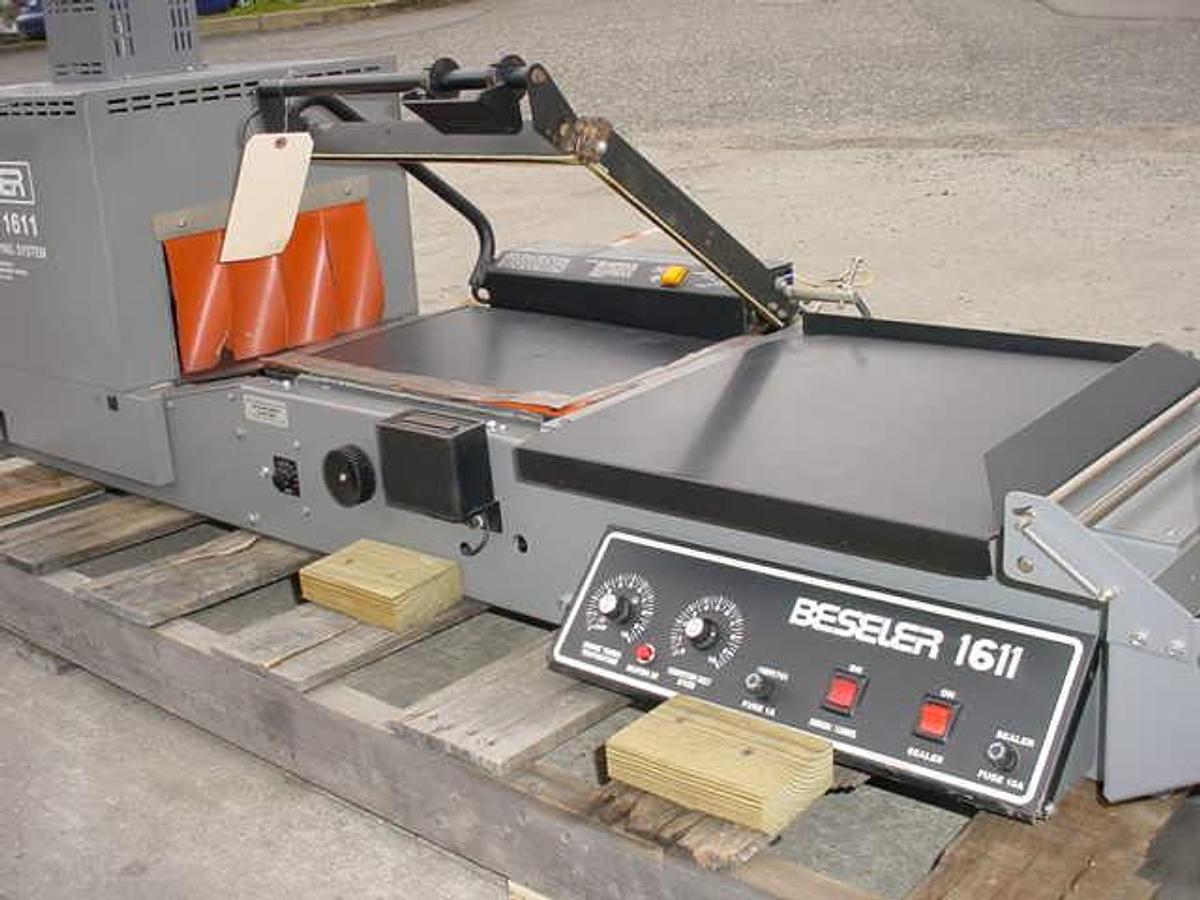
Beseler has produced several configurations of shrink packaging equipment over the years, and the used market reflects that range. The most commonly available units include L-bar sealers paired with shrink tunnels, tabletop L-sealer and shrink tunnel combinations, and semi-automatic combination L-sealer and shrink tunnel systems. Each configuration serves a different production environment, from compact tabletop units suited to lower-volume or space-constrained operations to more capable semi-automatic systems designed for moderate to high production throughput.
The L-sealer design is a widely used format in shrink packaging because it allows operators to seal film around a product on two sides simultaneously before passing it through a heat tunnel to create a tight, finished shrink wrap. Beseler's portable and tabletop variants are particularly popular among smaller operations or facilities that need flexibility in where the equipment is stationed. Semi-automatic models reduce manual handling and can meaningfully increase packaging speed compared to fully manual alternatives. When shopping the used market, buyers will typically encounter these three main configurations, and availability shifts depending on what has recently come off production lines at various facilities.
What industries commonly use Beseler shrink packaging equipment?
Beseler shrink packaging machines have found use across a broad range of industries, which is one reason the brand built a strong reputation in the packaging equipment sector. Common applications include food and beverage packaging, where shrink wrap provides tamper evidence and product protection; consumer goods manufacturing, where retail-ready presentation matters; pharmaceutical and personal care product packaging; and industrial parts packaging, where shrink film protects components during storage and transit. The durability and ease of use associated with Beseler equipment made it a practical choice for production environments where reliability and minimal downtime are priorities.
Small and mid-sized businesses have historically been well-served by Beseler's tabletop and portable configurations, while larger facilities with higher throughput requirements have leaned toward the semi-automatic combination systems. The machines are not limited to any single product type, and their compatibility with both polyolefin and PVC shrink films gives operators flexibility in how they approach different packaging requirements. Buyers sourcing used Beseler equipment should consider whether the specific model they are evaluating matches the production volume and product dimensions typical to their operation, since different configurations have meaningfully different capacity ceilings.
What shrink film types are compatible with Beseler shrink packaging machines?
Beseler shrink packaging machines are generally compatible with the two most common categories of shrink film used in commercial packaging: polyolefin (POF) and PVC. Polyolefin film is the more widely used option in food-contact applications because it is FDA-compliant, produces minimal odor during sealing, and delivers a clean, clear finished appearance. PVC film is often chosen for non-food applications where cost is a primary driver, though it requires adequate ventilation during use due to the fumes produced when heated. Both film types are available in a range of gauges, and the appropriate gauge depends on the product weight, shape, and the level of protection required.
For buyers evaluating a used Beseler machine, it is worth confirming the sealing wire or bar configuration and the heat tunnel's temperature range, as these factors influence which films the machine handles most effectively. Centerfold and single-wound film rolls are the standard formats used with L-bar sealers. Some older Beseler models may have temperature controls calibrated around a specific film type, so operators switching between film types may need to adjust settings during a transition period. Consulting the machine's documentation or the equipment dealer can help clarify the film compatibility specifics for a particular model and production year.
Are used Beseler shrink packaging machines suitable for small businesses?
Used Beseler shrink packaging machines can be a practical fit for small businesses, particularly the tabletop and portable L-sealer configurations. These units are compact enough to fit in limited floor space, do not require dedicated high-voltage electrical service in most cases, and are straightforward to operate without extensive technical training. For a small business packaging moderate volumes of products daily, a used tabletop Beseler unit can deliver consistent results at a fraction of the cost of purchasing comparable equipment from a manufacturer's current lineup.
The key consideration for small business buyers is matching the machine's throughput capacity to actual production needs. Tabletop units are well-suited to lower-volume runs, while semi-automatic combination systems are better aligned with businesses that package several hundred or more units per shift. Buying used also means buyers should factor in the machine's condition, age, and the availability of replacement parts before committing to a purchase. Requesting a video inspection or in-person viewing from the equipment dealer is a reasonable step to assess current working condition. Small businesses that do their due diligence on these points often find that used Beseler equipment delivers strong value relative to its acquisition cost.
What should buyers inspect when evaluating a used Beseler shrink packaging machine?
A thorough inspection of a used Beseler shrink packaging machine should cover several mechanical and functional areas. The sealing wire or sealing element is a wear item that degrades with use, so buyers should assess its condition and ask whether it has been recently replaced. The heat tunnel's heating elements and conveyor belt should be examined for wear, uneven heat distribution, or damage. Control panels and temperature regulators should be tested to confirm they respond accurately and hold set points consistently. Any signs of prior repairs, patched wiring, or non-standard modifications are worth noting and discussing with the dealer.
Used equipment dealers will typically accommodate in-person inspections or provide video walkthroughs of the machine in its current state. Some machines may still be installed at an active production facility, which can allow a buyer to see the equipment running under real conditions. Keep in mind that most equipment dealers are not set up to run actual production tests with a buyer's specific product, as that requires different facility permitting. Buyers should also ask the dealer about the machine's history, including how long it was in service, what products it packaged, and whether any major components have been replaced. This context helps estimate remaining service life and potential maintenance needs after acquisition.
How does the shrink tunnel component of a Beseler combination machine work?
The shrink tunnel is the second stage of the shrink packaging process, following the sealing step performed by the L-bar sealer. After a product is sealed inside a loose film pouch, it travels on a conveyor belt through an enclosed chamber where heated air is circulated around the package. The heat causes the film to contract and conform tightly to the shape of the product, producing the finished shrink-wrapped appearance. Tunnel temperature, conveyor speed, and airflow volume all influence the quality of the final shrink, and experienced operators adjust these variables based on the film type, film gauge, and product dimensions being run.
Beseler's combination units integrate the sealer and tunnel into a single footprint, which simplifies workflow and reduces the floor space required compared to using separate standalone machines. The conveyor connecting the two stages keeps products moving at a consistent pace, and adjustable speed controls allow operators to dial in the right dwell time inside the tunnel for a given film and product combination. On used machines, the condition of the conveyor belt and the heating elements inside the tunnel are the two components most likely to show wear from extended production use. Buyers should specifically ask about these components during any inspection, as they are the parts most likely to require attention after purchase.
What is the difference between a tabletop Beseler L-sealer and a semi-automatic combination system?
The tabletop Beseler L-sealer is a compact, manually operated unit designed for lower-volume packaging applications. An operator manually positions the product within the film, lowers the sealing bar to cut and seal the film around the product, and then either passes the package through a separate shrink tunnel or uses a built-in tunnel if the unit is a combination model. These machines are valued for their small footprint, portability, and relatively simple operation. They are well-matched to businesses packaging dozens to low hundreds of products per shift.
A semi-automatic combination L-sealer and shrink tunnel system automates portions of the process to increase throughput and reduce operator fatigue. In a semi-automatic setup, the sealing cycle is typically initiated by the operator but executes automatically, and the conveyor feeds sealed packages into the shrink tunnel without manual transfer. This reduces the per-unit handling time and allows a single operator to manage higher packaging volumes over a shift. Semi-automatic systems are generally larger machines with more robust electrical and mechanical components, and they are better suited to production environments where packaging is a continuous or high-frequency activity. When evaluating used examples of either type, buyers should consider not just current condition but also how well the machine's design matches their actual daily packaging volume.
How available are replacement parts for used Beseler shrink packaging machines?
Parts availability for used Beseler machines varies depending on the model and the age of the equipment. Wear items like sealing wires, Teflon tape, conveyor belts, and heating elements are often available through third-party packaging equipment parts suppliers even for older machines, since many of these components are standardized across the industry. More model-specific components, such as control boards or proprietary sealing bar assemblies, may be harder to source for legacy models that are no longer in active production.
Before purchasing a used Beseler machine, buyers are advised to contact the manufacturer or an authorized service provider to ask directly about parts support for the specific model and serial number they are considering. This step can reveal whether critical components are still stocked or if they would need to be fabricated or sourced from the secondary market. Reputable used equipment dealers who specialize in packaging machinery can often advise on parts availability based on their experience with similar machines. Buyers who select equipment dealers with deep industry experience in packaging equipment are generally better positioned to get accurate guidance on long-term maintainability before committing to a purchase.
What are typical payment and shipping expectations when buying a used Beseler shrink packaging machine?
Most used equipment dealers require full payment prior to releasing a machine for shipment. Some dealers extend payment terms to repeat customers with an established purchase history, but buyers approaching a dealer for the first time should expect to pay in full before the machine ships. It is worth asking the dealer about accepted payment methods early in the process to avoid delays once a purchase decision is made.
Shipping costs for used shrink packaging equipment depend on the size and weight of the machine, the destination, and the level of packaging required to protect the equipment in transit. Tabletop units may ship on a standard pallet, while larger semi-automatic combination systems often require custom crating and may need forklift or rigging services for loading and unloading at both ends of the shipment. These rigging and crating costs are typically separate from the base freight charge. Buyers should request a detailed breakdown of all shipping-related costs from the dealer before finalizing a purchase, so the full landed cost of the machine is understood upfront. For very large or heavy machines, freight quotes can vary significantly between carriers, so it may be worth asking whether the dealer can obtain multiple quotes.
How should buyers assess the condition of a used Beseler shrink packaging machine before purchasing?
Assessing the condition of a used Beseler machine starts with requesting as much documentation and visual evidence as the dealer can provide. This includes detailed photographs of the sealing bar assembly, the heat tunnel interior, the conveyor belt, the control panel, and any visible wiring or mechanical components. Video inspections have become a standard offering among used equipment dealers and can give buyers a much clearer picture of a machine's current state than photos alone. If the machine is still installed at a production facility, some dealers can arrange an in-person visit where a buyer or their representative can observe the equipment firsthand.
Buyers should ask specific questions about the machine's service history: how long it was in production, what types of products and films it ran, whether any major components have been replaced, and whether it was decommissioned or pulled from active use. It is also worth asking the dealer about the age of the sealing wire and conveyor belt, since these are consumable components that may need immediate replacement after acquisition. Keep in mind that most equipment dealers are not set up to run live production tests, so buyers should set realistic expectations about what can be demonstrated during an inspection. Selecting a dealer with a long track record in packaging equipment specifically, rather than a general machinery aggregator, tends to result in more reliable condition assessments and more informed guidance on what to expect from the equipment post-purchase.