Category
Subcategory
Manufacturer
Model
Bepex
Bepex is a forerunner in supplying engineered processing systems, with solutions spanning food, chemicals, and minerals industries. Their machinery is known for drying, mixing, and agglomeration, supporting complex production requirements. Bepex’s innovative equipment aids manufacturers in achieving refined and efficient production operations, adapting to their specific needs.
FAQ:
What types of Bepex equipment are commonly available on the used market?
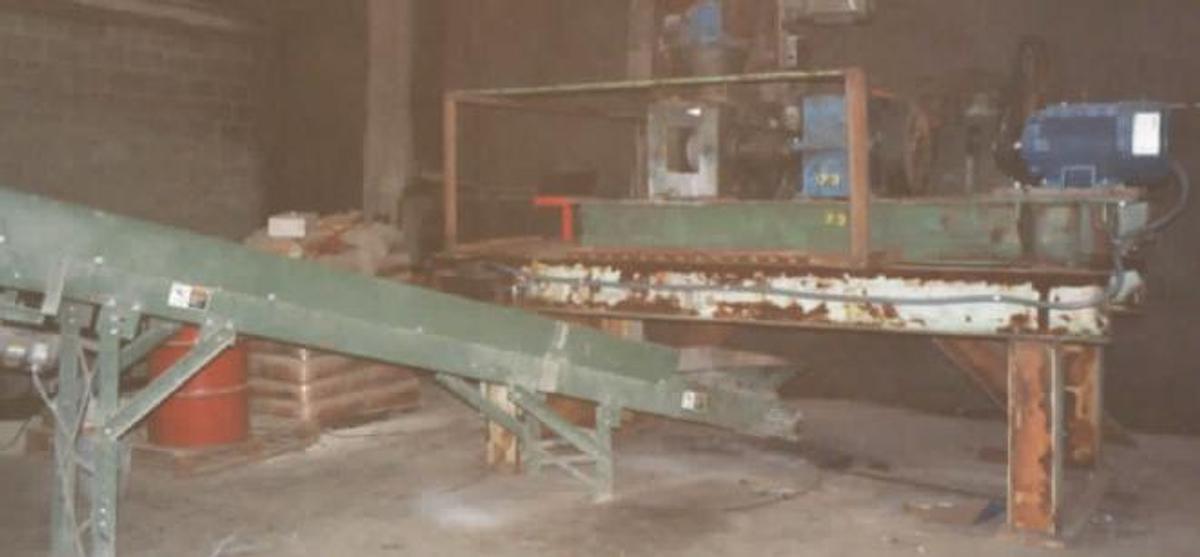
Bepex produces a wide range of industrial processing machinery, and many of these units circulate regularly on the used equipment market. Common categories include paddle dryers, disc dryers, screw conveyors, agglomerators, compactors, granulators, and briquetting machines. Each of these serves a distinct function within a production line, from thermal processing and drying to particle size reduction and material compaction. The Bepex 50 MS Briquetting Machine is one specific model that appears among used listings, and it represents the kind of heavy-duty size-reduction equipment Bepex is known for building.
Because Bepex has been supplying engineered processing systems across food, chemical, and mineral industries for decades, their equipment tends to have a long service life when properly maintained. That longevity means used units can still deliver meaningful production value long after their initial installation. Buyers searching the used market should clarify which specific function they need, such as drying, mixing, or agglomeration, before narrowing down to a model, since Bepex's product line is broad enough that the right machine depends heavily on the application.
What industries use Bepex processing equipment?
Bepex equipment is built to handle demanding processing requirements across several industrial sectors. Food processing is one of the most prominent applications, where Bepex dryers and agglomerators are used to process ingredients, reduce moisture content, and create uniform particle sizes. The chemical industry relies on Bepex compactors and granulators for handling bulk solids, powders, and specialty compounds. Mineral processing operations use Bepex machinery for tasks like drying raw materials and compacting mineral powders into usable forms. Pharmaceutical manufacturing also uses certain Bepex equipment for granulation and drying of active ingredients.
This cross-industry versatility is one reason used Bepex machines hold their appeal on the secondary market. A dryer or compactor that was originally installed in a food plant may be entirely suitable for a chemical processing application, depending on the materials involved and the condition of the unit. Buyers should assess whether the machine's prior use involved any materials that could affect its suitability for their intended application, and consulting with the manufacturer about compatibility between a specific model and a proposed new use case is always a practical step.
How do I determine which Bepex model is right for my processing application?
Matching a Bepex machine to a specific application starts with a clear understanding of the process requirement. The key variables include the type of material being processed (powder, granule, paste, slurry), the desired output (dried product, compacted briquette, uniform granule), throughput capacity in pounds or kilograms per hour, and any temperature or pressure constraints the process involves. Bepex's product line is organized around these functional categories, so knowing whether you need thermal processing, size reduction, or agglomeration will quickly narrow the field to the relevant machine types.
For used equipment purchases specifically, buyers should also factor in the machine's existing configuration. Used Bepex units may have been set up for a particular material or production rate, and while some adjustments are possible, the core mechanical specifications of the machine are fixed. Reviewing the model's technical documentation and cross-referencing it against your process requirements is essential before committing to a purchase. Reaching out to Bepex directly to discuss whether a particular model and age of machine can support your application is a worthwhile step, as the manufacturer can advise on what level of support and parts availability to expect for older units.
What should I inspect when buying used Bepex equipment?
Buying used industrial processing equipment requires a methodical approach to inspection. For Bepex machinery, the most important areas to evaluate include the condition of wear components such as paddles, screws, seals, and heating elements, as well as the structural integrity of the housing and any thermal insulation. Operational hours and maintenance history are critical data points. A machine that was regularly serviced and operated within its rated capacity will typically be in far better shape than one that was run hard with deferred maintenance. Asking the seller for any available service records or maintenance logs is a reasonable request.
Inspections can typically be arranged in person, via video call, or through video footage captured by the dealer. Some used Bepex machines may still be installed and operating at a production facility, which offers the opportunity to observe the equipment running under real conditions. Keep in mind that most used equipment dealers do not have the permitting or infrastructure to run actual production tests, so a functional test in the full production sense is rarely possible through a dealer. The goal of any inspection is to get an accurate, honest picture of the machine's current mechanical condition so that buyers can make an informed decision and budget for any refurbishment that may be needed before putting the equipment into service.
Does used Bepex equipment come with a warranty?
Used industrial equipment is typically sold on an as-is basis, which means the buyer assumes responsibility for assessing the machine's condition prior to purchase. Warranties are generally a feature of purchases made directly through manufacturers for brand-new equipment. When buying through a used equipment dealer, it is rare to receive any formal warranty coverage, and buyers should not expect one as a standard part of the transaction.
This makes the inspection process especially important. Buyers should select dealers with a demonstrated track record in industrial processing equipment, as established dealers have a reputational incentive to represent machines accurately and facilitate thorough pre-purchase inspections. It is also worth contacting Bepex directly before finalizing a purchase to understand what level of technical support, parts availability, and service documentation they can provide for the specific model and age of machine you are considering. Older models may have limited parts availability, which is a practical factor in assessing the true cost and viability of a used unit.
Are replacement parts available for used Bepex machines?
Parts availability for used Bepex equipment varies depending on the model, age, and how long a particular product line has been in production. Bepex has been manufacturing engineered processing systems for a long time, and for many of their core product lines, the manufacturer or authorized service providers can still supply replacement components. Wear parts like seals, paddles, and conveyor screws are often the first items that need attention after acquiring a used machine, and availability for these components tends to be better than for major mechanical assemblies.
Before purchasing a used Bepex unit, prospective buyers should contact the manufacturer to ask specifically about parts availability for that model. This conversation can reveal whether the machine is still within a supported product generation or whether it falls into a category where parts are harder to source. For machines where manufacturer parts are no longer readily available, third-party fabrication of certain components may be an option, though this adds complexity and cost. Understanding the parts landscape ahead of time helps buyers avoid situations where a machine is mechanically sound at purchase but becomes difficult to maintain over time.
What is the typical price range for used Bepex equipment?
Pricing for used Bepex equipment varies considerably based on the machine type, size, age, and condition. Smaller units like benchtop or pilot-scale compactors or granulators may be available in a range starting from a few thousand dollars, while larger industrial-scale dryers, paddle processors, or briquetting machines can run into the tens of thousands or higher depending on their specifications and working condition. Machines that have been recently refurbished, come with documentation, or are still in active production service at the time of sale tend to command higher prices than units pulled from decommissioned facilities with unknown maintenance histories.
Buyers should also factor in the full landed cost of the equipment, not just the list price. Shipping, rigging, crating, and any refurbishment or reconditioning needed before the machine goes into service can add meaningfully to the total investment. Getting a clear breakdown of packaging, loading, freight, and unloading costs from the seller before agreeing to a purchase is essential for accurate budgeting. For high-value Bepex units, arranging an in-person or video inspection before finalizing pricing is a practical way to confirm that the condition of the machine aligns with the asking price.
How does shipping work for large Bepex processing equipment?
Shipping industrial processing equipment like Bepex dryers, compactors, and briquetting machines involves logistics that go well beyond standard freight. These machines are heavy, often awkwardly shaped, and require proper crating or palletization to prevent damage during transit. The level of packaging required depends on the size and fragility of the equipment, and sellers will typically quote shipping costs based on the packaging method needed. Buyers should ask specifically what packaging is included in the quoted price and whether additional crating or custom skidding is available if the machine warrants it.
For larger Bepex units, specialized rigging equipment is often needed to load the machine at the origin and unload it at the destination. Rigging costs are typically separate from freight charges and should be factored into the total cost calculation. Buyers are responsible for ensuring they have adequate unloading capability at their facility, whether that means a forklift of sufficient capacity, a crane, or a rigging contractor. Asking the seller for the machine's approximate weight and dimensions early in the process helps buyers plan for receiving the equipment properly and avoid unexpected costs or delays on arrival.
What are the payment terms typically used when purchasing used Bepex equipment?
Used industrial equipment dealers generally require full payment before a machine is released for shipping. This is standard practice across the used machinery market and reflects the nature of high-value equipment transactions where the seller needs assurance of cleared funds before arranging logistics. Payment is commonly made by wire transfer, though some dealers may accept other forms depending on the transaction size and the relationship between buyer and seller.
Buyers who have an established history with a particular dealer may occasionally be offered payment terms, but this is not a standard expectation for first-time transactions. For buyers making a significant investment in a used Bepex machine, it is reasonable to request a thorough inspection before submitting payment, and reputable dealers will typically accommodate this. Understanding the full cost of the purchase, including the machine price, shipping, rigging, and any applicable taxes or import duties for international buyers, before wiring funds helps avoid surprises and ensures both parties are aligned on the transaction details.
Can used Bepex equipment be retrofitted or modified for a different application?
Retrofitting or modifying used Bepex equipment is possible in some cases, but the feasibility depends heavily on the specific machine and the nature of the intended change. Bepex designs its equipment for engineered processing applications, meaning the core mechanical and thermal specifications are built around particular operating parameters. Minor modifications, such as adjusting feed rates, changing material contact surfaces, or updating control systems, are more commonly achievable than fundamental changes to a machine's processing function. For example, a paddle dryer originally configured for a food ingredient may be adaptable for a chemical drying application with appropriate cleaning and surface treatment, but converting a compactor into a granulator would not be practical.
Before pursuing any modification, consulting with Bepex or a qualified process engineer familiar with the equipment is strongly recommended. The manufacturer can advise on what changes are structurally and functionally viable for a given model, and whether any modifications would affect the machine's performance or safety ratings. Buyers considering a used Bepex machine for a non-standard application should raise this question during the evaluation phase rather than after purchase, as the answer may significantly influence whether a particular unit is the right fit for the intended use.