Category
Manufacturer
Model
Bematek
Bematek is recognized for its high-shear mixing technology, targeted towards industries such as food, chemical, and pharmaceuticals. Their mixers and homogenizers ensure consistent product quality and efficiency in manufacturing processes. Bematek’s equipment is key for applications requiring precise dispersion and emulsion, making them a trusted supplier in complex processing environments.
FAQ:
What is a Bematek colloid mill and how does it work?
A Bematek colloid mill is a high-shear processing machine designed to reduce particle size, create stable emulsions, and produce fine dispersions in liquid or semi-liquid materials. The core of the machine is a rotor-stator assembly where material is fed into a narrow gap between a rapidly spinning rotor and a stationary stator. As product passes through this gap, intense mechanical shear forces break down particles, droplets, and agglomerates to achieve a uniform, consistent output. The gap between the rotor and stator is adjustable, which gives operators direct control over the degree of size reduction and the final product texture.
Bematek built its reputation specifically around high-shear mixing technology, and their colloid mills reflect that focus. The machines are widely used in food manufacturing, pharmaceutical production, and chemical processing, where consistent dispersion and emulsification are critical to product quality. Common applications include sauces, mayonnaise, peanut butter, pharmaceutical emulsions, cosmetic creams, and pigment dispersions. Wetted components are typically constructed from stainless steel, which makes these mills suitable for sanitary environments and chemically aggressive materials alike.
What industries use Bematek colloid mills?
Bematek colloid mills serve a broad range of industries, but they are most heavily used in food processing, pharmaceuticals, and chemical manufacturing. In food production, these mills handle viscous and semi-solid products that require fine, stable emulsions, things like salad dressings, nut butters, tomato-based sauces, and dairy-based products. The ability to achieve tight particle size control while maintaining hygienic contact surfaces makes them a practical choice for food-grade operations.
In pharmaceutical and cosmetic manufacturing, Bematek colloid mills are used to produce creams, ointments, and emulsified drug formulations where uniform particle distribution directly affects product efficacy and stability. Chemical processors use them for pigment dispersions, adhesives, and other formulations that require thorough blending of immiscible or hard-to-mix components. The machines are available in configurations that support both continuous inline processing and batch production, which adds flexibility across different production scales and facility setups.
What is the difference between a colloid mill and a standard homogenizer?
Both colloid mills and homogenizers reduce particle size and create emulsions, but they work through different mechanisms and are suited to somewhat different applications. A colloid mill uses a rotor-stator arrangement where material passes through a controlled mechanical gap. The shear generated in that gap breaks down particles and blends immiscible phases. The gap is physically adjustable, so operators can dial in a specific level of processing intensity. This makes colloid mills particularly effective for viscous materials, pastes, and slurries that would be difficult to push through the small orifices used in pressure homogenizers.
A high-pressure homogenizer, by contrast, forces liquid through a small valve under very high pressure, generating turbulence, cavitation, and shear that break down droplets and particles. High-pressure homogenizers tend to produce finer and more uniform particle sizes, especially in low-viscosity liquids, but they are generally less suited to thick or particulate-heavy materials. Bematek produces both inline high-shear mixers and colloid mills, and the right choice between the two depends on the viscosity of the product, the target particle size, and the throughput requirements of the process.
What should buyers look for when evaluating a used Bematek colloid mill?
Buying a used Bematek colloid mill requires careful evaluation of several mechanical and cosmetic factors. The rotor and stator are the heart of the machine, and wear on these components directly affects processing performance. Buyers should inspect the gap adjustment mechanism for smooth, consistent operation and check the rotor and stator surfaces for pitting, scoring, or uneven wear. Seals and gaskets are wear items that may need replacement after purchase, so understanding their condition upfront helps estimate the true cost of getting the machine into service. The motor and drive components should also be checked for any signs of overheating, unusual noise, or bearing wear.
Reputable used equipment dealers will typically accommodate in-person inspections, video walkthroughs, or recorded video captures of the machine so buyers can assess condition before committing. Some machines may still be in active production at a facility, which can actually be a positive sign of ongoing functionality. Keep in mind that most dealers are not set up for full product testing, since running actual production requires different permitting than a standard equipment dealership holds. Buyers should also contact Bematek directly to understand what level of technical support, parts availability, and documentation exists for the specific model and age of machine they are considering.
Are used Bematek colloid mills a reliable option compared to buying new equipment?
Used Bematek colloid mills can be a very practical and cost-effective choice for the right buyer. Bematek has a long track record in high-shear processing equipment, and their machines are built with stainless steel construction and industrial-grade components that tend to hold up well over time. A used unit in good mechanical condition can deliver the same processing performance as a newer machine at a fraction of the purchase price, which is especially attractive for operations scaling up production or adding redundant capacity.
The key to a successful purchase is thorough due diligence. Used equipment is sold as-is, so the responsibility for assessing condition falls on the buyer. Selecting a dealer with a strong history in industrial and food processing equipment, requesting detailed inspection access, and verifying parts availability with the manufacturer are all important steps. Buyers should also factor in the potential cost of replacing wear components like seals, rotors, or stators when calculating the total investment. When those steps are taken carefully, a used Bematek colloid mill can represent excellent value for a wide range of processing applications.
What materials of construction are used in Bematek colloid mills, and why does it matter?
Bematek colloid mills are typically constructed with stainless steel wetted parts, which refers to all surfaces that come into direct contact with the product being processed. The CZ-110-PB model, for example, uses Type 316L stainless steel, which is a low-carbon grade with superior corrosion resistance compared to standard 304 stainless. This matters significantly in food, pharmaceutical, and chemical applications where the material being processed may be acidic, saline, or otherwise corrosive. 316L stainless is also a common requirement in sanitary and FDA-regulated processing environments.
The choice of stainless steel grade affects both the longevity of the machine and its suitability for specific products. In pharmaceutical and cosmetic production, surface finish is equally important. Sanitary colloid mills often feature polished interior surfaces that minimize product retention and make cleaning more effective. When evaluating a used Bematek mill, buyers should confirm the stainless grade, inspect wetted surfaces for pitting or corrosion, and verify that the machine meets the hygiene standards required for their specific application. For chemical processing with aggressive solvents or acids, consulting with a materials engineer before purchase is a reasonable precaution.
What models of used Bematek colloid mills are typically available on the market?
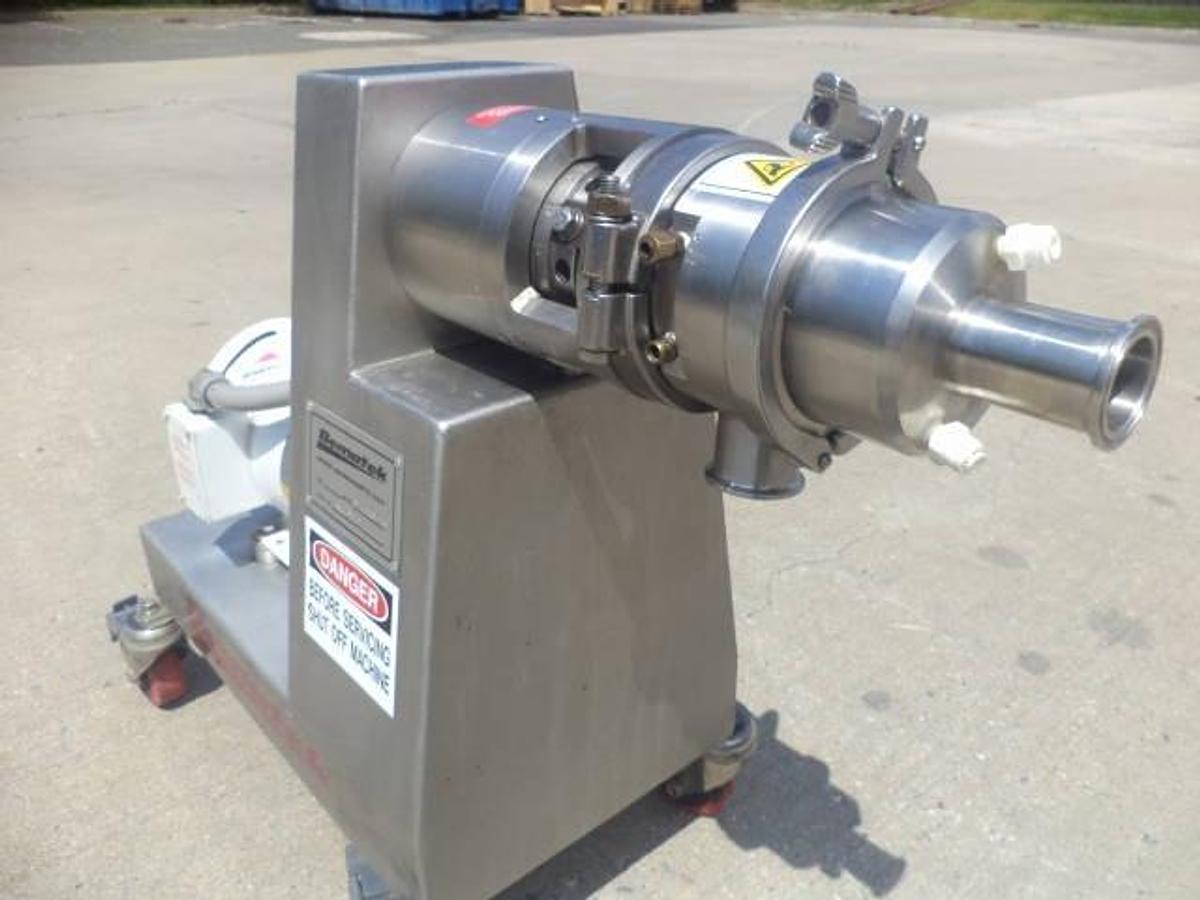
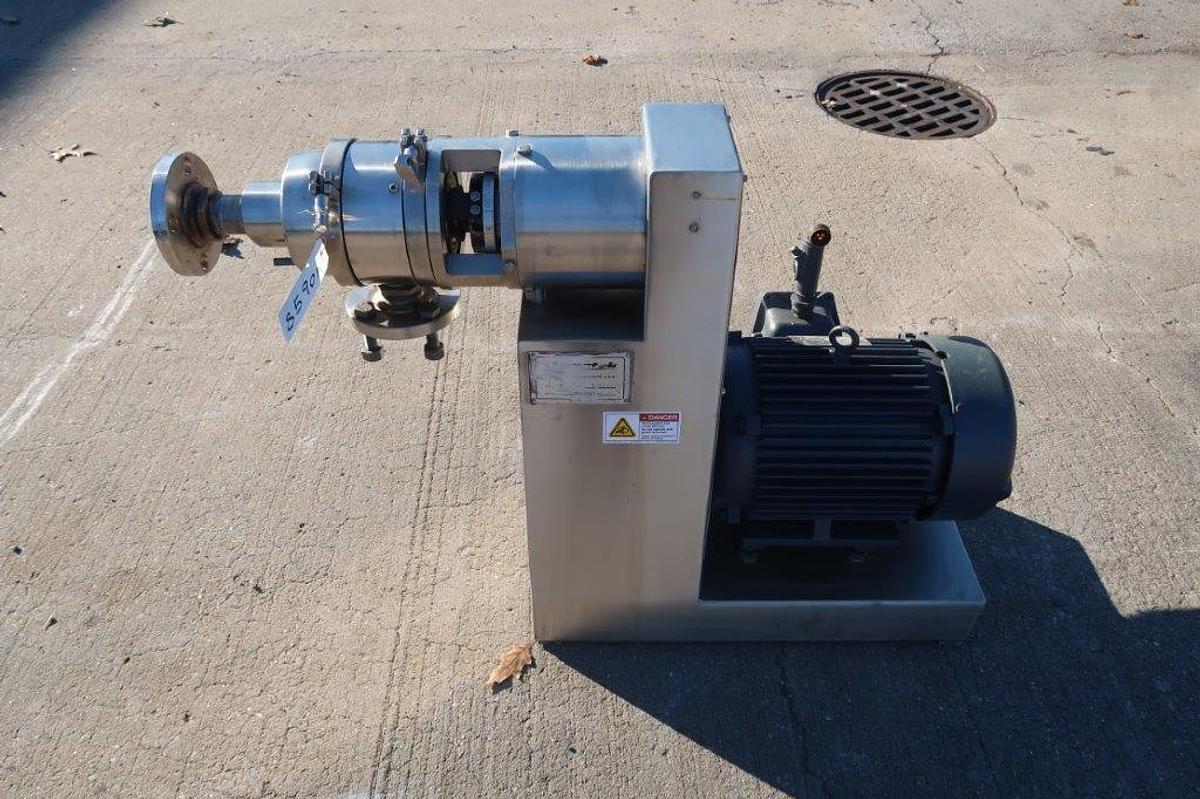
The used equipment market for Bematek colloid mills includes a range of models suited to different production scales and applications. Among the models that appear in the secondary market are the Bematek 10HP Stainless Industrial Homogenizing Colloid Mill with explosion-proof motor configuration, and the Bematek CZ-110-PB, which features a grooved rotor and Type 316L stainless steel construction. The 10HP designation gives a sense of the processing power available, while the grooved rotor on the CZ-110-PB model provides enhanced shear characteristics for certain applications.
Availability of specific models on the used market fluctuates based on what facilities are decommissioning or upgrading. Buyers with specific capacity or configuration requirements should work with dealers who specialize in food processing and pharmaceutical equipment, since these dealers are more likely to source relevant inventory and understand the technical nuances of different Bematek configurations. Checking with specialized dealers periodically is often more productive than relying on general industrial auction sites, particularly when looking for a specific model with particular material specifications or motor ratings.
How does rotor-stator gap adjustment affect performance in a Bematek colloid mill?
The gap between the rotor and stator is one of the most important process variables in a colloid mill. A tighter gap produces more intense mechanical shear, which results in finer particle sizes and more thorough emulsification. A wider gap reduces shear intensity, which is appropriate for materials that are more fragile, or for applications where a coarser grind is acceptable. The ability to adjust this gap precisely is what makes colloid mills versatile across a wide range of product viscosities and target specifications.
In Bematek colloid mills, the gap adjustment mechanism is designed to be repeatable, meaning operators can document a specific setting and return to it consistently across production runs. This repeatability is particularly valuable in pharmaceutical and food manufacturing where batch-to-batch consistency is a regulatory and quality requirement. When inspecting a used Bematek mill, verifying that the gap adjustment mechanism operates smoothly and without slippage is an important part of the evaluation. Worn or damaged adjustment components can compromise process control and may need to be addressed before the machine is put back into production.
What should buyers understand about shipping and logistics when purchasing a used Bematek colloid mill?
Colloid mills are precision machines with close-tolerance components, and how they are packaged for shipment has a direct impact on whether they arrive in the same condition they left the seller. Smaller bench-top or pilot-scale units can often be palletized with adequate blocking and bracing, while larger industrial models may require custom crating to protect the motor, adjustment mechanisms, and stainless steel surfaces during transit. Buyers should ask the dealer specifically about the packaging method being used and whether the cost of crating is included in the quoted price or billed separately.
Larger Bematek colloid mills may also require professional rigging for loading and unloading, particularly if the machine is being removed from a production facility or delivered to a location without a loading dock. Rigging costs can add meaningfully to the total landed cost of the equipment and should be factored into the budget from the start. Most used equipment dealers require full payment prior to shipping. Buyers should request a clear breakdown of all costs, including freight, insurance, rigging, and packaging, before finalizing the purchase so there are no surprises when the machine arrives.
How can buyers verify parts availability for an older Bematek colloid mill before purchasing?
Parts availability is a practical concern with any used industrial equipment, and colloid mills are no exception. Wear components like rotor-stator sets, mechanical seals, and gaskets will eventually need replacement, and the ease of sourcing those parts affects the long-term operating cost of the machine. The best first step is to contact Bematek directly with the model number and serial number of the machine being considered. The manufacturer can confirm whether replacement parts are still stocked or available to order, and whether technical documentation like manuals or drawings can be provided for that specific model.
Some older Bematek models may have parts that are no longer manufactured, in which case buyers need to evaluate whether aftermarket alternatives exist or whether a machine shop could fabricate certain components. Dealers who specialize in food processing and pharmaceutical equipment often have practical knowledge about parts availability for the brands they carry and can provide useful guidance before a purchase is made. Asking the dealer about the service history of a specific machine, and whether any components were recently replaced, also helps buyers understand what is likely to need attention in the near term after acquisition.